Hakata Gion Yamakasa
Hakata Gion Yamakasa is Fukuoka's oldest and loudest festival: two weeks of float processions each July, ending with teams racing one-ton floats through Hakata's streets before dawn.
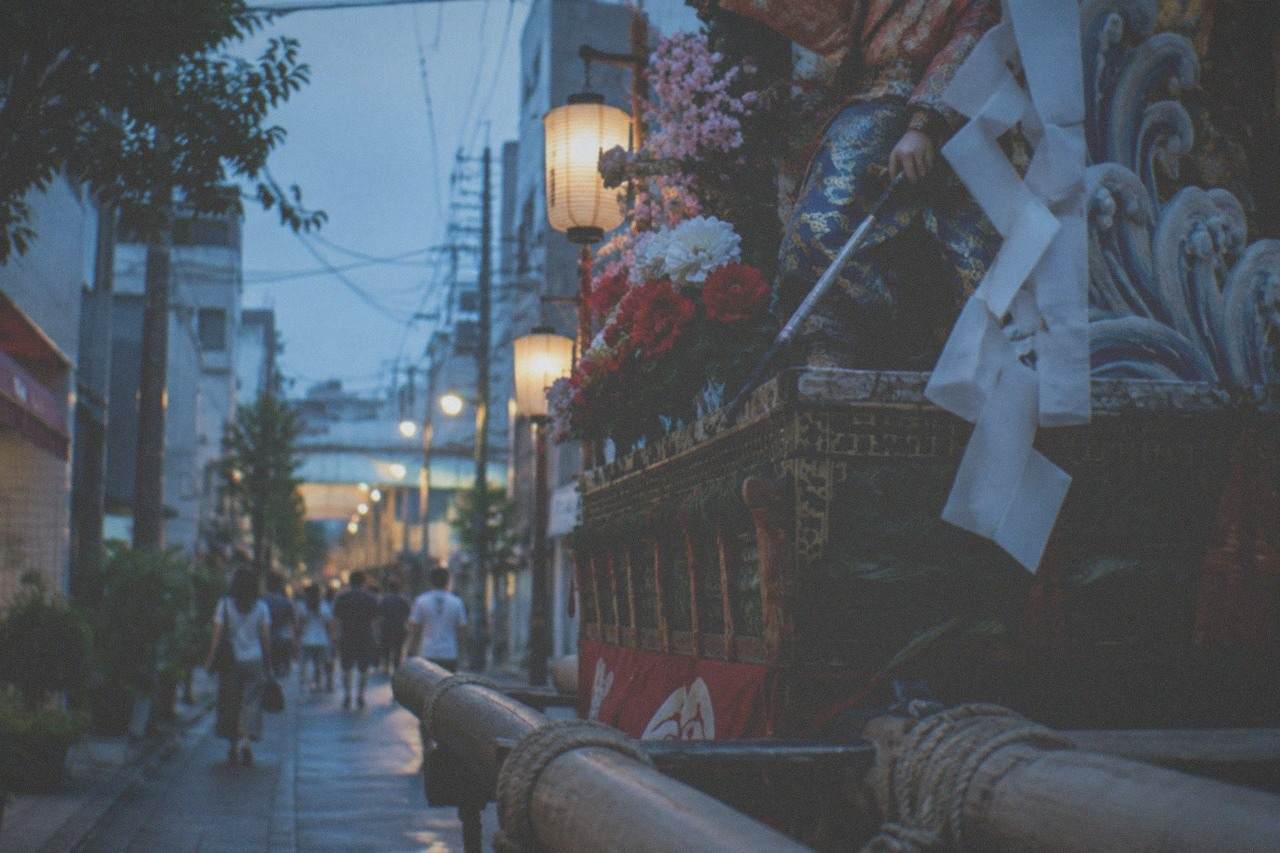
Short answer
Hakata Gion Yamakasa runs July 1 to 15 each year, centred on Kushida Shrine in Hakata ward. Decorative kazariyama floats go on display July 1, carrying events build from around July 10, and the climax is the Oiyama race on July 15, starting at 4:59 a.m. over a roughly 5 km course. It is free to watch and needs no ticket.
Every July, the streets of Hakata fill with the sound of taiko drums and the sight of men in shimekomi carrying floats that weigh as much as a small car. Hakata Gion Yamakasa is the festival that defines this city, a two-week event with roots going back more than seven centuries, and it is staged entirely in public, on ordinary streets, for free. There is no ticket, no gate and no booking: you simply turn up, pick a stretch of pavement, and watch.
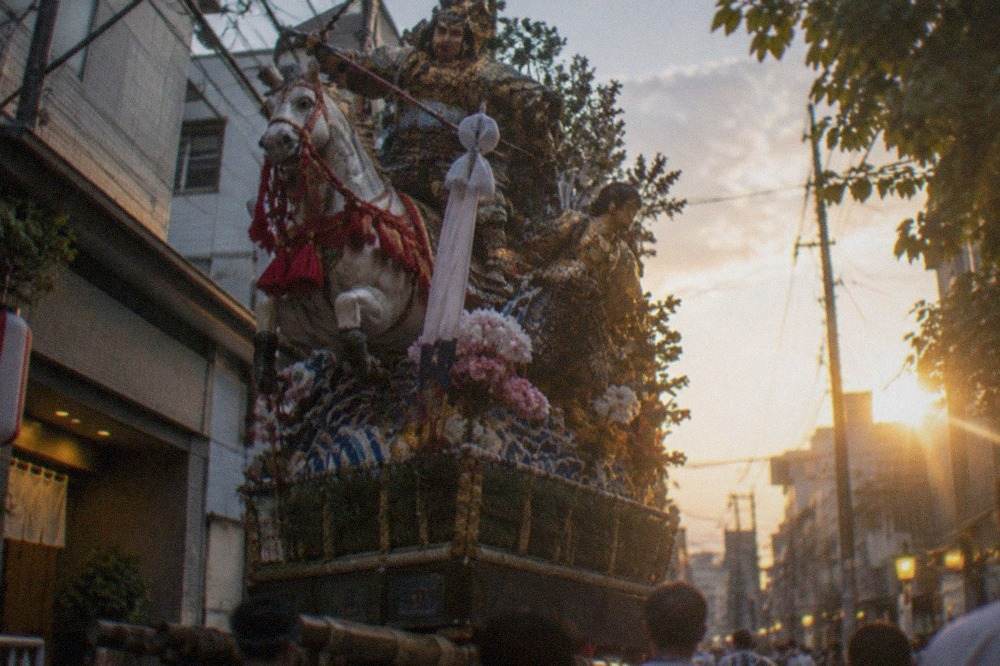
This guide covers what the festival is, how the two weeks unfold, where the best viewing spots are, and what to eat while you wait for the floats to pass. One point before anything else: Hakata is not a separate city from Fukuoka. Hakata is the ward and the station name inside Fukuoka, and the festival takes place there, which is why locals say the whole city moves to Hakata's rhythm in July.
What Is Hakata Gion Yamakasa?
Hakata Gion Yamakasa is a Shinto festival held every year from July 1 to July 15, centred on Kushida Shrine in Hakata ward, Fukuoka. It is organised by the shrine's parish districts, features elaborate Yamakasa floats, and ends with the Oiyama race on July 15, in which teams carry roughly one-ton kakiyama floats over a course of about 5 km. The festival has been staged for centuries and is recognised as one of Japan's major festival traditions.
The festival's origins trace to the Kamakura period, when a priest is said to have been carried through plague-stricken Hakata on a float, sprinkling holy water. Whether every detail of that story holds up to historians, the ritual core survives: Yamakasa is a purification rite performed by the men of Hakata's traditional districts, called nagare, for the health and protection of the city.
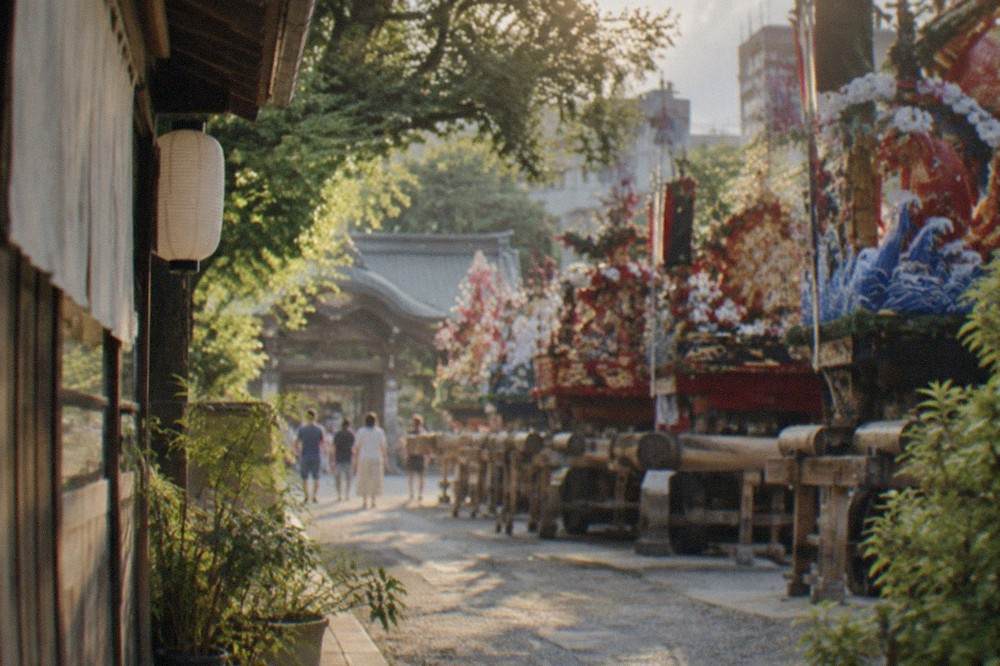
There are two kinds of float. The kazariyama are the towering, ornately decorated floats you will see standing on street corners during the first week: up to several metres tall, covered in carvings, dolls and scenes from myth or history. They are display pieces and are not carried. The kakiyama are the working floats: shorter, plain, and built to be lifted and run with, each weighing about a ton. The same neighbourhood that fields a racing team also maintains its kazariyama, and each year's new kakiyama is blessed at Kushida Shrine before it ever touches the racing course.
The festival is run by seven nagare, the traditional districts of old Hakata, each fielding its own team. Rivalry between them is genuine and long-running, and the timing of the Oiyama run is measured to the fraction of a second. The whole city takes sides, and shopfronts hang the banners of their local nagare. More on Fukuoka's shrine traditions is in our Fukuoka temples and shrines guide.
When and Where Does Yamakasa Take Place?
Yamakasa runs annually from July 1 to July 15, centred on Kushida Shrine in Hakata ward. The kazariyama display floats go up on July 1, carrying events intensify from around July 10, and the Oiyama finale is run on July 15, starting at 4:59 a.m. over a course of roughly 5 km through Hakata's streets. The racing route passes Kushida Shrine, the Gion district, and back along the main roads toward the shrine.
The geography matters if you are planning a visit. The course threads through the dense streets east of the Naka River, the same grid of lanes that makes up Hakata old town, and the atmosphere spills outward from there. During the festival fortnight, the whole area around Hakata station and its surroundings is hung with banners, and the decorative floats stand at fixed public spots you can walk between in a single evening.
| Date | Event | What you see |
|---|---|---|
| July 1 | Kazariyama display begins | Tall decorated floats erected at street spots across Hakata |
| Around July 10 | Kakiyama events begin | Carrying practice, neighbourhood processions, night runs |
| July 12 to 14 | Shudanyamamise and Oiyamanarashi | Public showing and full-course practice runs, timed |
| July 15, 4:59 a.m. | Oiyama | Seven teams race the ton-weight floats over about 5 km |
The 4:59 a.m. start time is not a rounding of "early morning". It is the traditional start, signalled by taiko drums at Kushida Shrine, and teams are timed over the course to the hundredth of a second. Spectators begin staking out positions from around 3 a.m., and by 4 a.m. the streets are packed. The official site of the festival's promotion committee publishes the year's detailed schedule, including any small shifts in the subsidiary events.
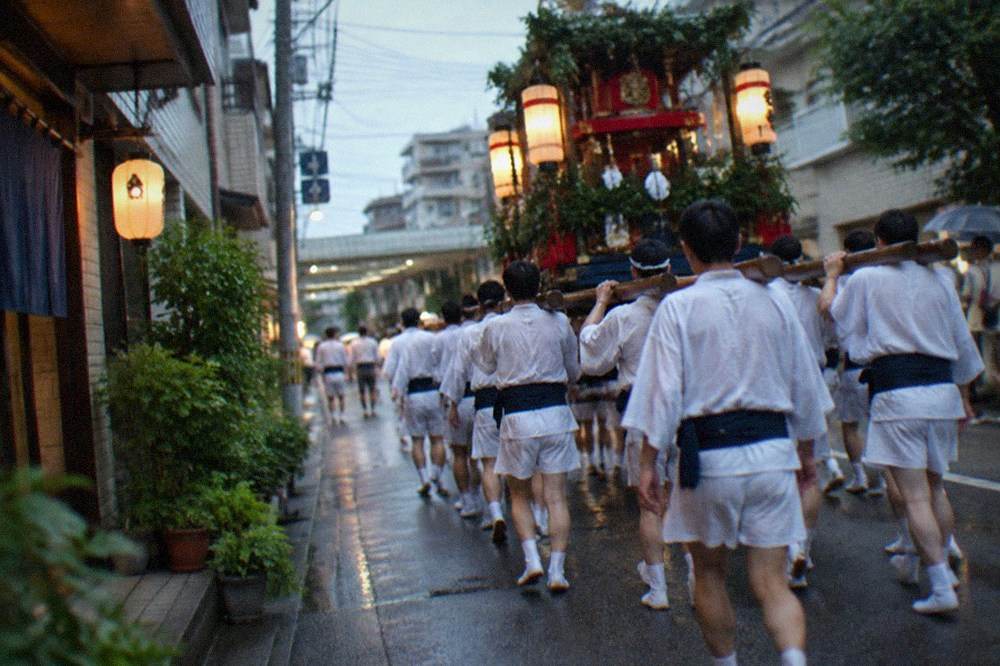
If you cannot face a 3 a.m. start, the practice nights are the insider's alternative. The timed rehearsal runs in the small hours of July 12 to 14 draw locals rather than tourists, the streets are less crowded, and you can walk the course freely between passes. The floats move fast and the teams shout in unison, which is the whole point: Yamakasa is not a slow parade.
What Happens During the Two Festival Weeks?
The fortnight builds in stages. Week one is display and ritual: the kazariyama floats are erected on July 1, ceremonies are held at Kushida Shrine, and the neighbourhoods prepare. From around July 10 the kakiyama carrying events begin, with evening practice runs through the streets, and the final days bring the timed public rehearsals before the Oiyama race on July 15. Each stage is free to watch from public streets.
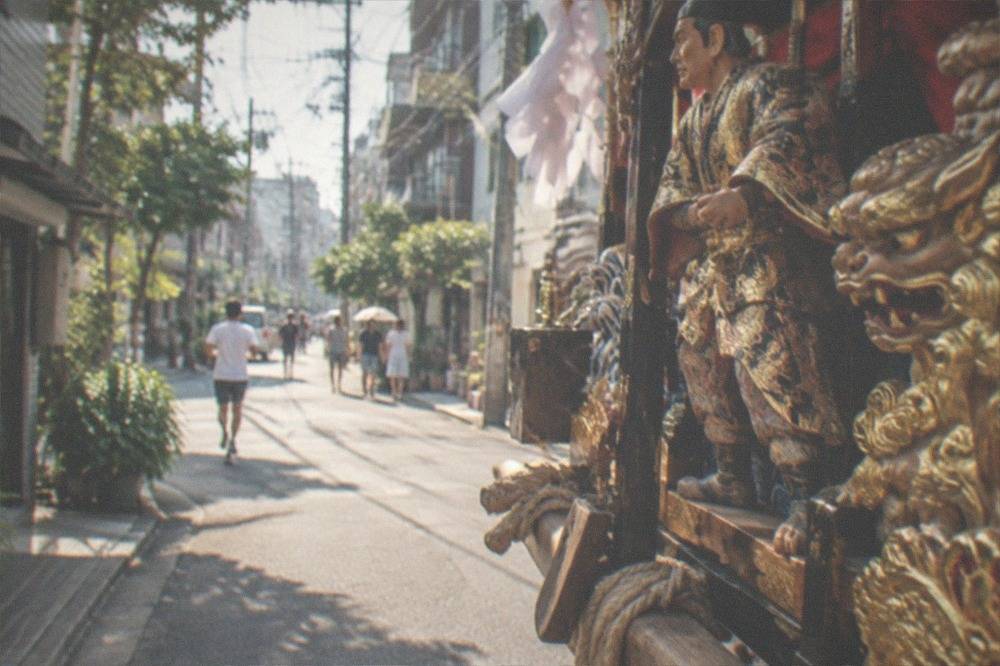
The first week is the gentle one, and it suits visitors who want photographs rather than crowds. The kazariyama are genuinely spectacular: each is newly decorated each year with themes drawn from history, kabuki or current events, and they stand at fixed points where you can walk right up to them. Hakata's traditional districts take enormous pride in their floats, and the craft on show, from carving to textile work, connects directly to the merchant culture documented at the Hakata Machiya Folk Museum.
From about July 10 the tone changes. The kakiyama come out at night, and the sound of a team running a float through narrow streets, thirty men shouting "oisa" in time, is something you hear long before you see it. Water is thrown over the float and the carriers from doorways and balconies as they pass, a cooling ritual that also involves the crowd. Expect to get wet if you stand close.
The final days are the most structured. The Shudanyamamise is a public showing in which the teams present themselves and their floats to the city, and the Oiyamanarashi is the full rehearsal over the complete course, run at racing pace in the early morning. Locals treat the rehearsal as seriously as the race, and the timings from it are discussed in bars for days.
What Is the Oiyama Race?
The Oiyama is the festival's climax, run on July 15 and starting at 4:59 a.m., signalled by drums at Kushida Shrine. Seven district teams, one at a time, lift a kakiyama weighing about a ton and run a course of roughly 5 km through Hakata's streets, each timed to the hundredth of a second. The winning team earns bragging rights for the year, and the ritual closes the festival.
The order of running is set by tradition and rotation, and the interval between teams means the race lasts well into the morning. Each team's run begins with a ritual at Kushida Shrine, where the float is lifted and the team receives the shrine's blessing before charging out onto the course. The first stretch, from the shrine gate, is the fastest and most photographed: the float tilts, the carriers accelerate, and the corner turns are taken at speed.
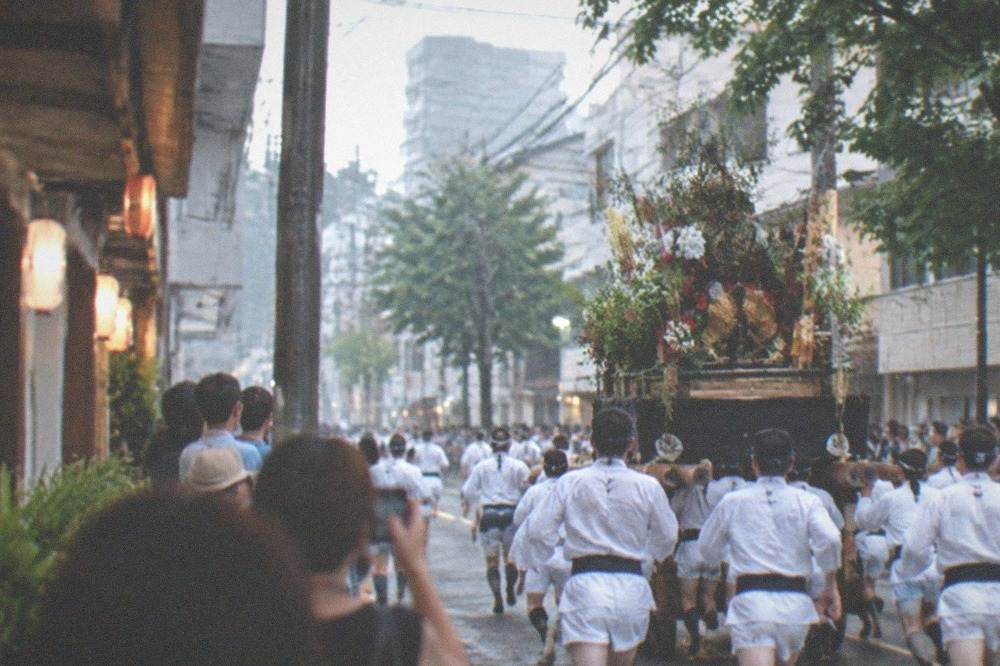
Spectators line the whole route, but the character of the viewing differs by section. Near Kushida Shrine you get the ritual and the send-off. Along the middle of the course the crowds are thinner and you can see the running technique. At the major corners, where the floats swing wide, you get the drama and the densest crowd. There are no stands and no reserved areas: pavement is first come, first served, and the prime corners fill hours before the start.
The race is over by mid-morning, and the city then goes about its day, which is the most Hakata thing about it. Office workers who ran the course at 5 a.m. are at their desks by 9. The floats return to their neighbourhoods, the kazariyama come down over the following days, and the districts begin planning next year.
Where Are the Best Spots to Watch?
The best viewing depends on what you want. Kushida Shrine's gate gives the ritual send-off and the drum start at 4:59 a.m. The course corners give the fastest, most dramatic passes. The July 12 to 14 night rehearsals give the same racing in thinner crowds, and the kazariyama display spots around Hakata give easy daytime photographs all fortnight. Every option is free, with no ticketing.
| Spot | What you see | Crowd level | Best time |
|---|---|---|---|
| Kushida Shrine gate | Drum start, ritual lift, first charge | Very heavy | 4:00 to 6:30 a.m., July 15 |
| Major course corners | Fast passes and wide swings | Heavy | From 4:30 a.m., July 15 |
| Gion and middle course | Running technique, local crowd | Moderate | Race morning |
| Streets of Hakata | Night practice runs | Light | Evenings, July 10 to 14 |
| Kazariyama display points | Decorated floats, photographs | Light | Any time, July 1 to 15 |
For the race itself, arrive no later than 4 a.m. for the shrine gate and the main corners. The streets close to traffic, and the subway runs extra early services on race morning, so a hotel in Hakata rather than Tenjin puts you within walking distance of the course. If you are staying further out, check the first train times the night before.
The rehearsal nights reward a different kind of visitor. You can walk the course, hear each team pass several times, and stand at the front without arriving in darkness. Families with children and anyone who values sleep over tradition should treat July 13 or 14 as their main event and watch the Oiyama from a distance, or from a hotel window overlooking the route.
What to Eat Around the Festival?
Festival food in Hakata means the city's street-food staples rather than dedicated festival stalls: tonkotsu ramen from the famous shops, yatai food stalls in Nakasu, Tenjin and Nagahama, and local snacks like hitokuchi gyoza. During Yamakasa the yatai run late into the night, which suits the practice-run schedule, and the ramen shops near the course fill with teams and spectators in the small hours after events.
Hakata ramen is the obvious anchor: the thin noodles in rich, milky tonkotsu broth were born in this city, and the custom of kaedama, ordering an extra helping of noodles into your remaining broth, exists because the portions are deliberately modest. Our Hakata ramen guide covers the dish's history and the kaedama custom in full, and the wider Kyushu ramen scene shows how the style spread.
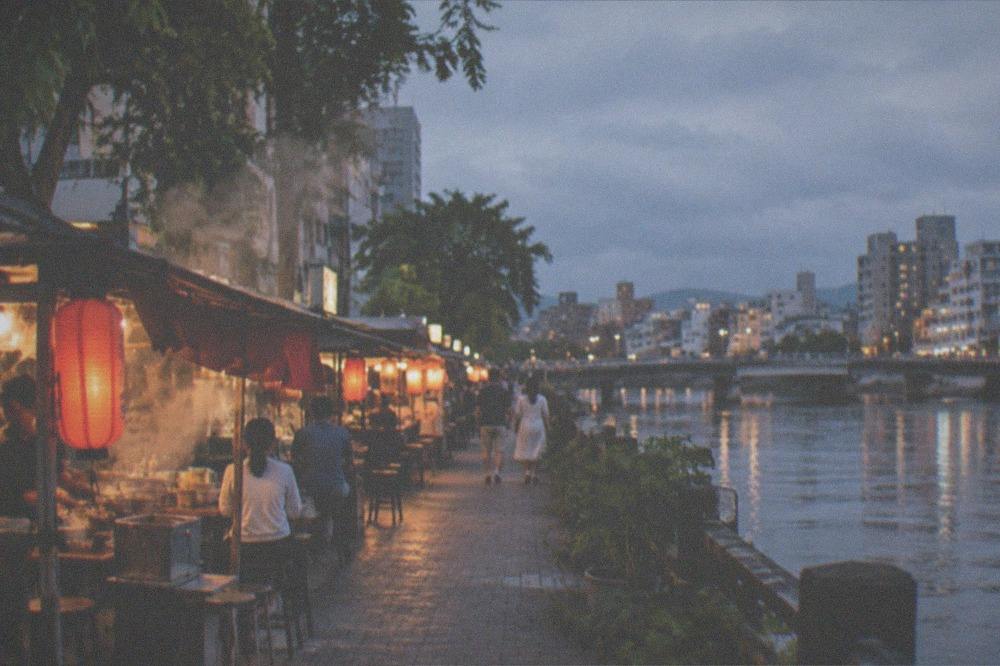
The yatai deserve a special note here, because they are Fukuoka's other great street tradition and they pair naturally with festival nights. The city has about 100 licensed stalls, more than any other Japanese city, and a city ordinance requires every stall to display its prices openly, banning vague "market price" listings. You cannot book a stall, and you do not need to: you walk up and take a seat. More detail is in our Fukuoka street food guide.
| Dish | What it is | Where to find it during Yamakasa |
|---|---|---|
| Hakata ramen | Thin noodles in milky tonkotsu broth, with kaedama refills | Ramen shops around Hakata and the course, open into the small hours |
| Yatai stall food | Ramen, yakitori and oden cooked at counter seats | Nakasu riverside, Tenjin streets and Nagahama, from evening onward |
| Hitokuchi gyoza | One-bite dumplings eaten between drinks | Izakaya around Hakata old town |
| Goma saba | Mackerel dressed in sesame, a local izakaya classic | Sit-down izakaya in Hakata and Nakasu |
| Motsunabe | Beef or pork offal hot pot, a winter favourite still served in July | Hakata restaurants, best with a group |
Between events, the small dishes are worth seeking out. Hitokuchi gyoza, one-bite dumplings, are a Fukuoka speciality eaten quickly between beers, and the udon culture of the region is older and stranger than most visitors expect. Goma saba, mackerel dressed in sesame, is the classic local izakaya dish if you end up in a proper restaurant instead of at a stall.
Tips for Visiting During Yamakasa
Plan for early starts, crowds and heat. Book accommodation well ahead, stay on the subway network, arrive at the course by 4 a.m. for the Oiyama, and use the July 12 to 14 rehearsals if you prefer thinner crowds. July is statistically Fukuoka's wettest month, so carry rain gear, and expect the festival to run regardless of weather short of a typhoon. There is no ticket to buy for anything.
July is an interesting month to stage an outdoor festival, and the numbers explain why locals call the carriers brave. Japan Meteorological Agency normals for Fukuoka show July as the city's wettest month, 299.1 mm of rain against June's 249.6 mm, despite June being the tsuyu rainy season. Daytime maximums average 31.2 degrees Celsius and nights barely fall below 25. A 4:59 a.m. start is not only tradition; it is also the only tolerable hour for running a ton of wood through the streets.
Practical points worth knowing: the subway is the reliable way in on race morning, and stations near the course get extremely busy between about 3:30 and 6:30 a.m. Wear shoes you can stand in for hours, bring water, and keep valuables in a front pocket. The crowd is dense but good-natured, and the local etiquette is simple: do not step into the road, do not block doorways, and follow the marshals' instructions when a float is approaching.
Language is less of a barrier than you might fear, but a few phrases help, and our Fukuoka language phrases guide covers the useful ones. If you are arriving during the festival, getting from Fukuoka Airport to the city is straightforward on the subway, and luggage storage options matter if you plan to watch the race before a check-in or after a check-out.
If two weeks of festival energy leaves you wanting something quieter, the city's craft traditions offer a contrast: a Hakata doll painting session connects to the same carving and decoration arts you see on the kazariyama floats, and the old town around the festival course rewards slow walking once the floats have gone in.
Yamakasa and the city's other great festival, Hakata Dontaku in May, bracket the Fukuoka year, and neither has any ticketing at all. Both are simply held, in public, by the people who live here, which is the honest answer to why this Fukuoka Japan Travel Guide treats them as the city's defining events rather than tourist attractions. Come for the race, stay for the ramen at 6 a.m., and you will understand why the teams keep coming back.
Common Questions About Hakata Gion Yamakasa
What Is Hakata Gion Yamakasa?
It is Fukuoka's great July festival, held annually from July 1 to 15 and centred on Kushida Shrine in Hakata. District teams carry and race Yamakasa floats, with decorative kazariyama on display and the Oiyama race closing the event on July 15.
Do you need tickets for Hakata Gion Yamakasa?
No. The festival has no ticketing at all. Every event, from the kazariyama displays to the Oiyama race, is watched from public streets for free.
What time does the Oiyama race start?
The Oiyama starts at 4:59 a.m. on July 15, signalled by taiko drums at Kushida Shrine. Spectators stake out positions from around 3 a.m.
Can visitors join a Yamakasa team?
The racing teams are made up of members of Hakata's traditional districts, and participation is organised through those neighbourhoods, not through bookings. Visitors watch rather than carry.
Is Hakata Gion Yamakasa worth going to if I cannot wake up before dawn?
Yes. The night practice runs from around July 10 to 14 offer the same carrying and racing in thinner crowds, and the kazariyama display floats can be seen all fortnight at any hour.
What is the difference between kazariyama and kakiyama?
Kazariyama are tall, ornately decorated display floats that are never carried. Kakiyama are the plain working floats, each weighing about a ton, that teams race through the streets.