Hakata Ramen
Hakata ramen is the bowl Fukuoka built its food reputation on: cloudy pork bone broth, thin noodles, and a topping list you can count on one hand. This guide explains what it is, how to order it, and where in the city to eat it well.
Short answer
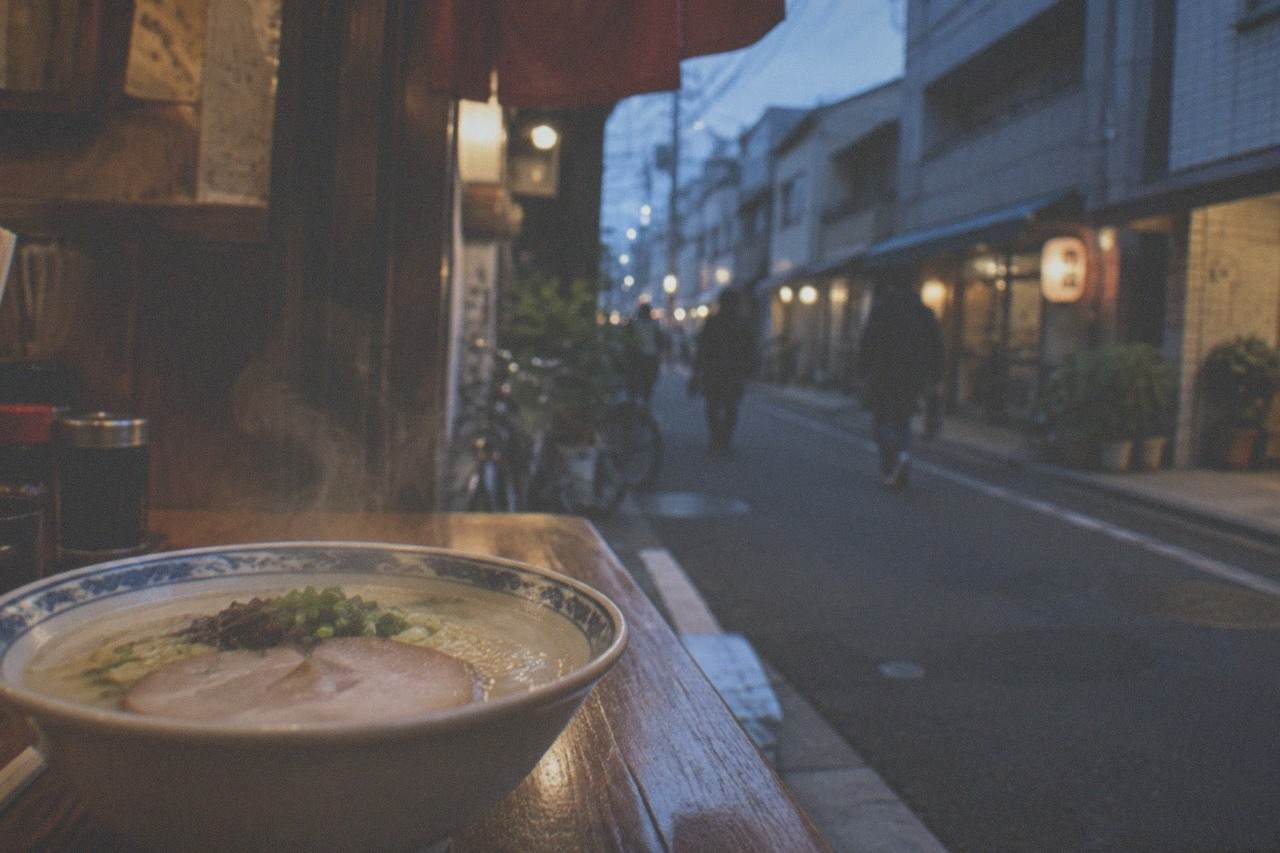
Hakata ramen is a rich, milky tonkotsu pork bone broth served with very thin, straight noodles and simple toppings: sliced chashu pork, green onion, pickled ginger and sesame. It is named after Hakata, the ward of Fukuoka that holds the city's main station and its food stalls. Ask for kaedama to add a fresh bundle of noodles to your leftover broth.
Hakata ramen is the bowl that put Fukuoka on Japan's food map, and its name carries the one distinction every visitor should learn first: Hakata is not a separate city. Hakata is the ward of Fukuoka that holds the main rail station, the port and the old merchant quarter, and the ramen style that bears its name grew out of that neighbourhood's noodle stalls. Walk out of Hakata Station today and you are standing in the district where this broth was standardised, portion by portion, at counters that still serve it.
What Is Hakata Ramen?
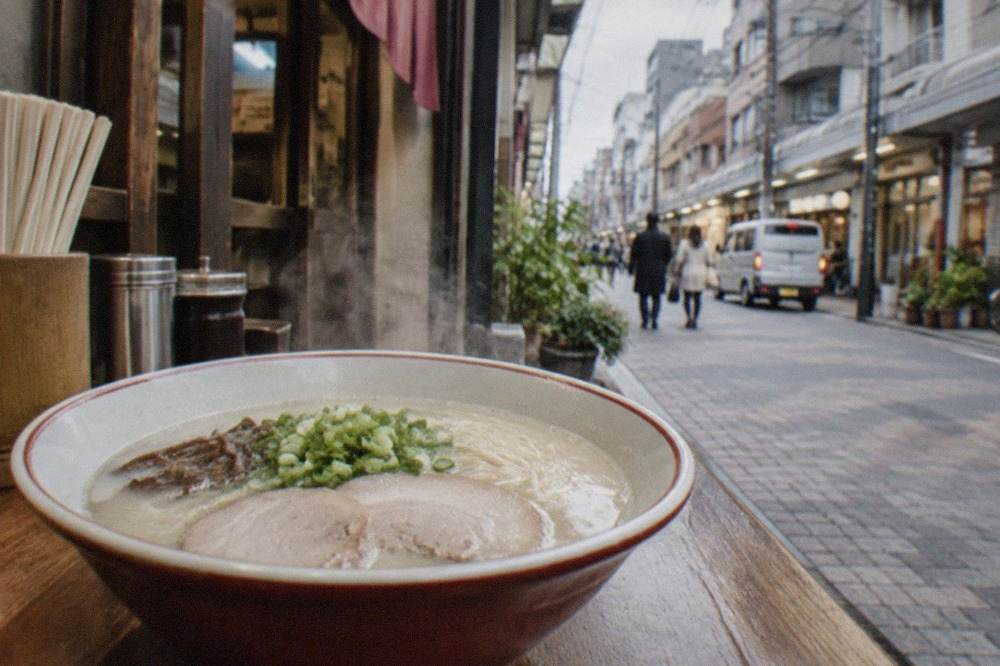
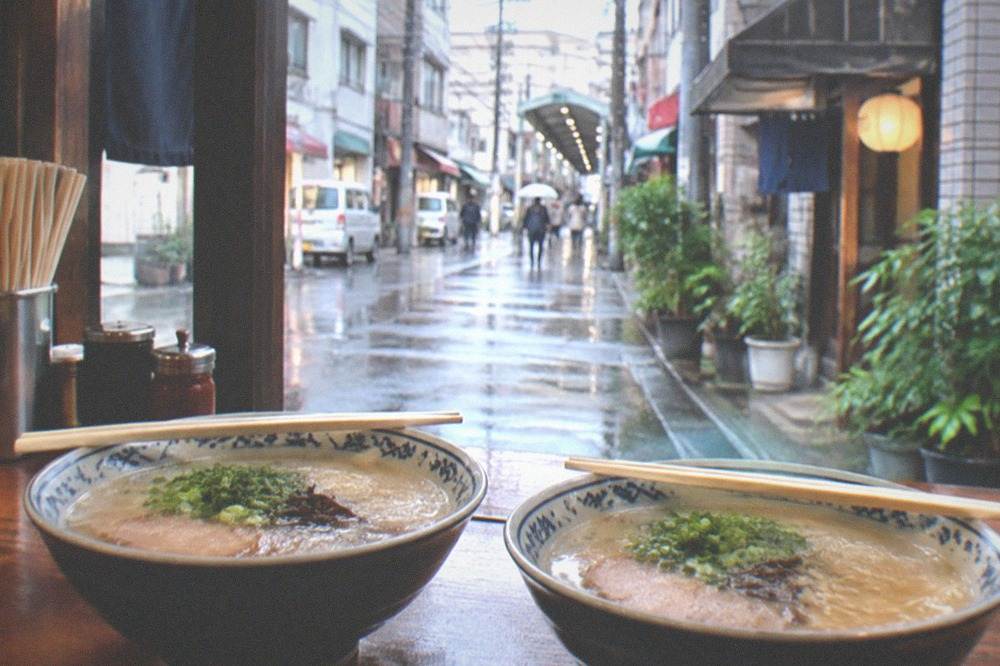
Hakata ramen is a regional ramen style defined by a thick, opaque tonkotsu broth made by boiling pork bones for many hours until the collagen renders and the liquid turns milky white. It is served with very thin, straight noodles, firm by default, and a short topping list: sliced chashu pork, finely cut green onion, pickled ginger and often sesame or a swirl of chili oil. The style comes from Hakata, Fukuoka's merchant ward, and it is the city's best known export dish.
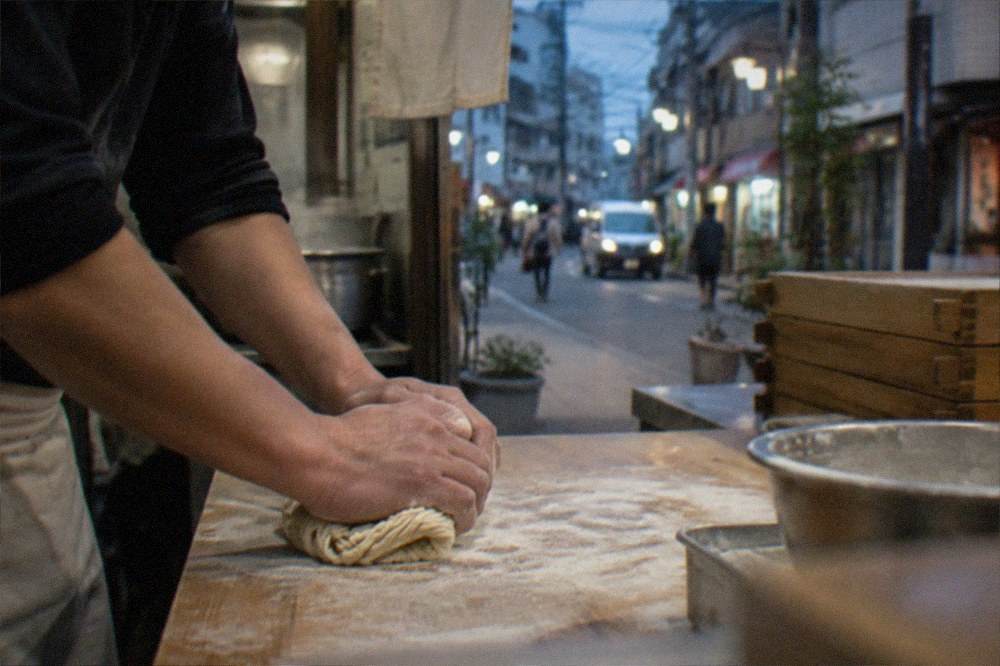
The name tells you where it came from and how it was eaten. Hakata was, and remains, a district of shift workers, dock hands and market traders who needed hot, fast, filling food at odd hours. Tonkotsu answered that need: heavy enough to feel like a meal, quick enough to cook to order because the broth was already done and the thin noodles took only a minute or two in the basket. The format was built for speed, and it never left.
That history also explains the portions. A classic Hakata bowl is smaller than the ramen portions you meet in Tokyo. This is deliberate. The broth is intense, the noodles cook in under a couple of minutes, and the whole system is designed around a second serving: kaedama, the extra noodle refill you order into the broth you already have. You are not expected to leave full on one bowl, you are expected to calibrate.
| Element | What it is | Why it matters |
|---|---|---|
| Broth | Tonkotsu, pork bone, boiled to a milky white | The defining feature of the style |
| Noodles | Very thin, straight, low water content, cooked firm | Cook in seconds and hold texture in rich broth |
| Chashu | Thin slices of braised pork belly or shoulder | The standard protein topping |
| Topping set | Green onion, pickled ginger, sesame | Sharpness and crunch against a heavy soup |
| Bowl size | Small by ramen standards | Built for kaedama refills |
For a broader look at how the city eats, our Fukuoka street food guide puts this bowl in context beside the other things worth queueing for, and this Fukuoka Japan Travel Guide is the home of the wider coverage.
What Makes the Tonkotsu Broth Different?
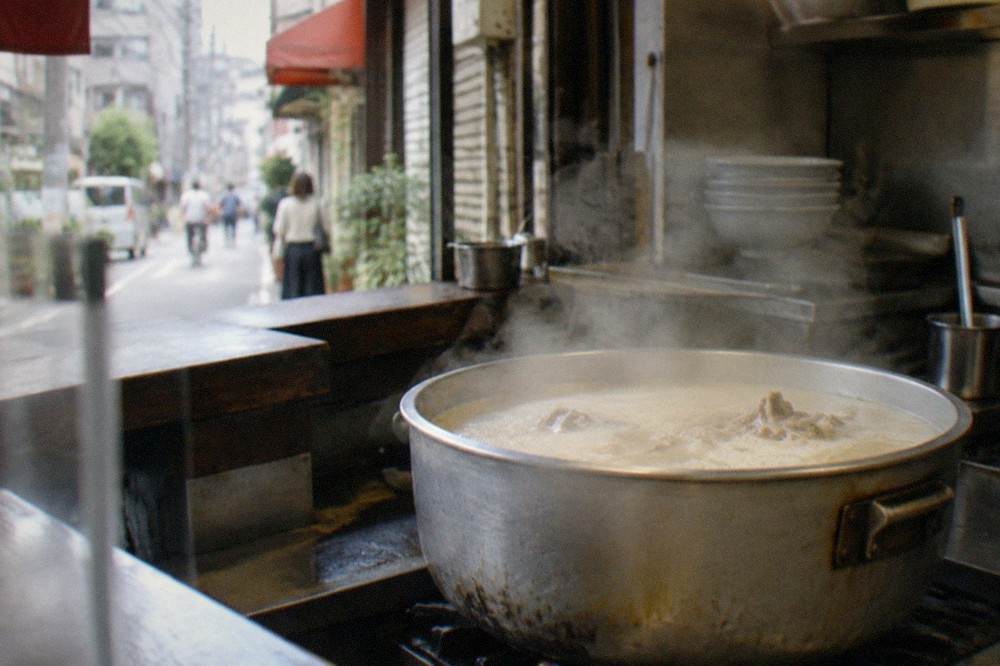
Tonkotsu means "pork bone", and the difference from other ramen broths is method rather than seasoning. Instead of a clear chicken or dashi stock, the kitchen boils pork bones, trotters and sometimes heads at a rolling boil until the fat, collagen and marrow emulsify into the liquid and it turns cloudy white. The result is heavy, sticky on the lips and savoury in a way clear broths are not. Shops guard their bone ratios and boil times as trade secrets.
The visual cue is the one to trust: a proper tonkotsu should look like thinned milk, not tea. That colour is not cream added at the end, it is the bone itself, broken down and suspended in the liquid. A broth that runs clear has not been boiled hard enough or long enough, and a shop that serves one is not serving Hakata ramen in the strict sense, whatever the sign says.
Because the base is so rich, the seasoning on top of it matters more than usual. Most Hakata shops finish the bowl with a shio (salt) or shoyu (soy sauce) tare, and the choice between them changes the whole profile: a shio-tonkotsu tastes rounder and porkier, a shoyu-tonkotsu has more edge and darkens the soup slightly. Some shops ask which you want when you order, so it is worth knowing the difference before you are standing at the ticket machine.
The other thing the richness creates is the mayu option. Mayu is garlic roasted in oil until it turns black, and a spoonful gives the bowl a smoky bitterness that cuts the fat. It is divisive. Order it once and decide for yourself, but know that it is a Hakata-area habit rather than a universal ramen thing, and that shops that offer it usually list it as an optional topping rather than including it by default.
One honest note for first timers: tonkotsu is a heavy soup by design, and there is no light version. If you want a lighter bowl, order a shio tare, ask for less fat, and stop at one kaedama. The style will still be there tomorrow.
Why Are the Noodles So Thin, and What Is Kaedama?
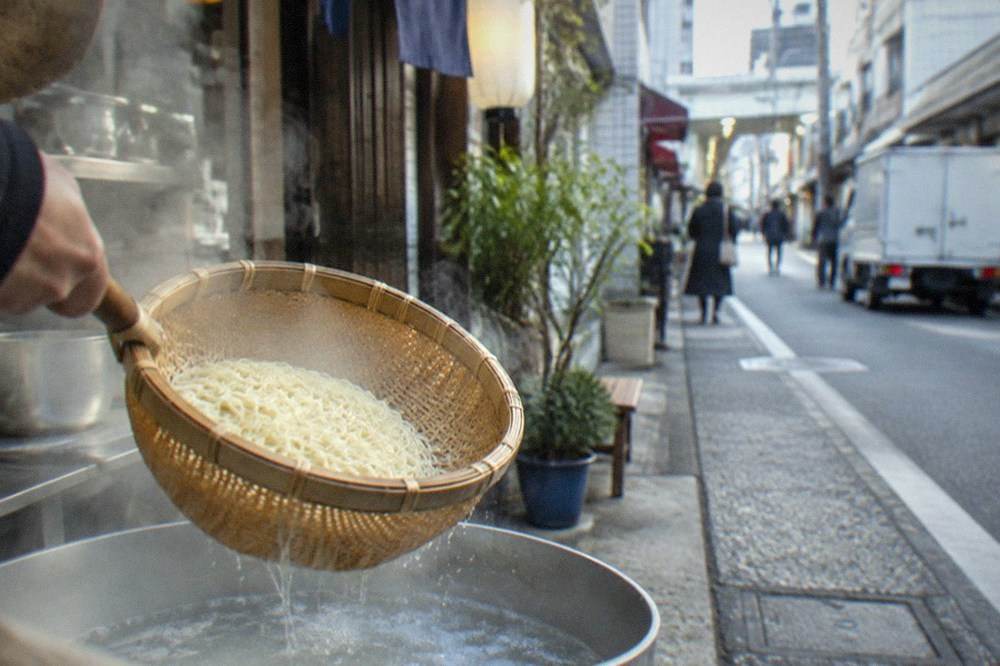
Hakata noodles are among the thinnest used for ramen in Japan, straight rather than wavy, and made with a low water content so they stay springy. They cook in roughly a minute, which suits a broth that is already finished, and they are deliberately served firm, or katame, because a thin noodle goes soft quickly in a hot, oily soup. Kaedama is the refill system built around this: order more noodles, not more soup.
The thin noodle is not a cost cutting measure, it is engineering. A thick noodle would soak up tonkotsu and go limp before you finished the bowl. A thin, low-moisture noodle resists the soup for the few minutes it takes to eat it, and if you want it even firmer you say "katame" when you order. Most shops will cook it softer on request too, but the local default is firm, and visitors who are used to softer noodles sometimes mistake that firmness for undercooking. It is not.
Kaedama works like this: eat your noodles, leave the soup, and order kaedama while there is still enough broth left. The kitchen drops a fresh bundle into the basket, you slide it into your bowl, and you have a second serving for a fraction of the price of a second bowl, since you are not paying again for broth, chashu or the seat. Toppings can be added to the refill for a small extra charge. The unwritten rules are simple and worth keeping.
| Kaedama rule | Why |
|---|---|
| Order while soup remains | The refill needs broth to land in |
| Add fresh toppings if you want them | The original chashu will be spent |
| Eat the refill promptly | Thin noodles soften fast in hot soup |
| One or two refills is normal | The soup thins with each round |
The kaedama habit connects straight back to the stalls: a yatai counter has one pot of broth and a basket of noodles, and the refill is the natural unit of a night there. More on where those stalls sit later in this guide.
Ramen in Fukuoka is only one chapter of Kyushu's noodle culture, and the Kyushu ramen guide covers the other regional bowls worth a detour, from Kagoshima's softer take to Kumamoto's garlic-heavy cousin.
Eating well in this city is not only about noodles, and a guided evening can cover several bases at once. These options pair a ramen stop with the wider Hakata food scene:
Where Should You Eat Hakata Ramen in Fukuoka?
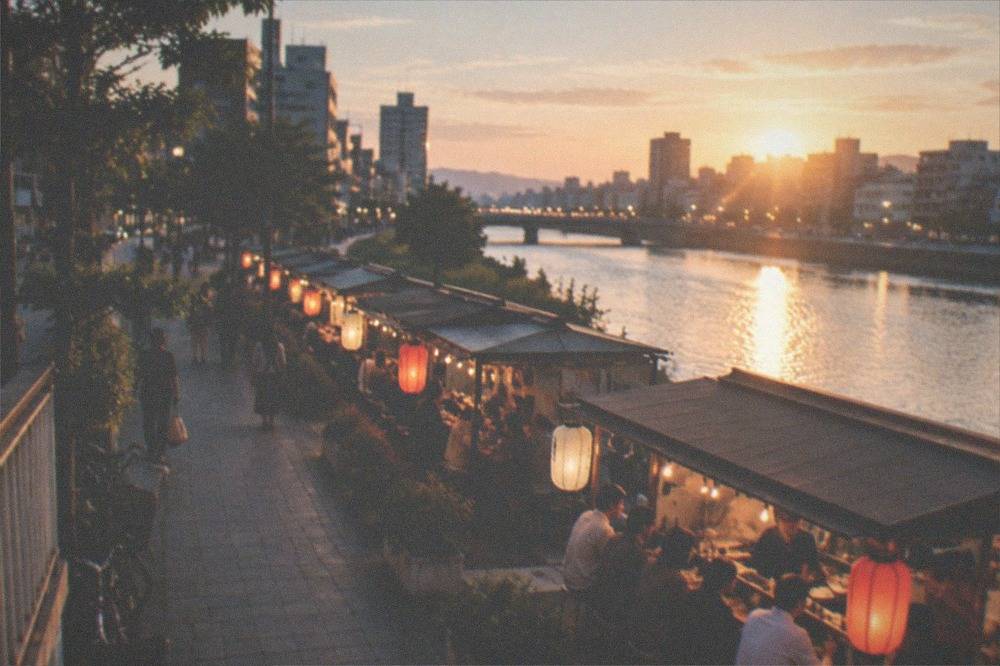
Eat it in three kinds of places: a yatai food stall for the atmospheric version, a specialist ramen shop for the deepest broth, and a department store or station food hall for a fast, reliable bowl between sights. Fukuoka runs about 100 licensed yatai across the city, concentrated in Nakasu along the Naka River, in Tenjin's business streets and in Nagahama near the old fish market, and every one of them takes walk-ins.
The yatai is where the style was born and it is the version worth planning an evening around. About 100 of these licensed stalls operate across the city, according to Fukuoka City's own food stall policy pages, and the count has held steady since the city opened public recruitment for new operators. A city ordinance requires every stall to display its prices clearly, and any dish that varies with the market must show that day's actual figure rather than a vague "market price", so you will not be guessing what a bowl costs when you sit down. There is no need to book anything to eat at one, and no way to book a stool even if you wanted to.
| Yatai area | Character | What to expect |
|---|---|---|
| Nakasu | Riverside stalls along the Naka River | The photogenic row, most tourist facing |
| Tenjin | Scattered along business streets | After work locals, more variety |
| Nagahama | Near the former fish market | Historically the ramen focused row |
Rain and strong wind close a lot of stalls, and individual operators open on their own judgement, so a row that was full last night can be quiet tonight. That unpredictability is part of the deal. If a first timer wants the stall experience without the guesswork, a guided crawl solves it, and the private Nakasu food stall tour leads a small group from counter to counter with tastings included.
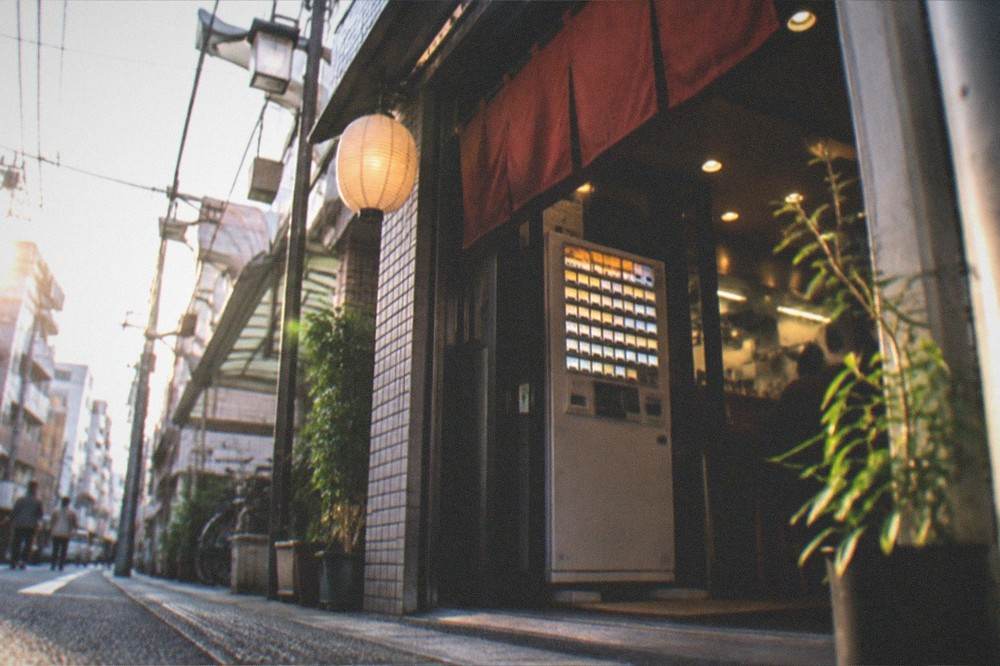
For the shop version, look for small, single-broth specialists rather than big menus. A shop that serves only tonkotsu is a shop that has been boiling the same bones for years, and the depth shows. Many use ticket machines at the door: put in cash, press the button with the picture of the bowl you want, hand the ticket to the counter. It removes the language problem almost entirely.
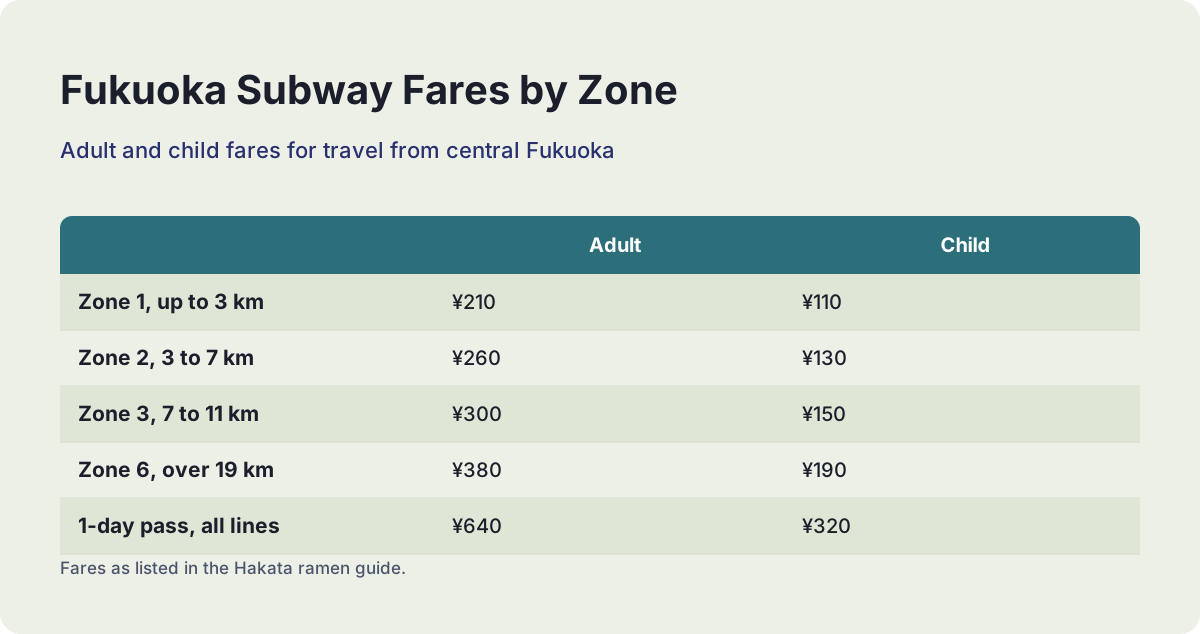
Getting between the districts is cheap on the subway. The official fare bands are below, published by the city subway operator, and a day pass pays for itself after roughly three longer rides.
| Subway fare | Adult | Child |
|---|---|---|
| Zone 1, up to 3 km | ¥210 | ¥110 |
| Zone 2, 3 to 7 km | ¥260 | ¥130 |
| Zone 3, 7 to 11 km | ¥300 | ¥150 |
| Zone 6, over 19 km | ¥380 | ¥190 |
| 1-day pass, all lines | ¥640 | ¥320 |
If you are arriving from the airport, the airport to city guide covers the subway run into Hakata, and the Fukuoka airport guide explains the terminal layout. Stashing bags first helps too: see luggage storage in Fukuoka, because a yatai stool has no room for a suitcase.
How Does Hakata Ramen Compare with Other Styles?
Against Japan's other major ramen styles, Hakata is the richest and among the simplest in topping terms. Sapporo miso uses a butter-thick miso broth with curly noodles, Tokyo shoyu is a lighter chicken and dashi soup with wavy noodles, and Kitakata serves thick flat noodles in a clear pork and fish stock. Hakata alone built its identity on boiled bone, a thin noodle and a refill system, which is why it travels so well as a format.
The comparison matters because ramen in Japan is regional to the point of dialect. A bowl in Sapporo is a different dish on every axis: broth base, noodle shape, fat content, toppings. Hakata sits at one extreme of that spectrum, the heaviest and the most broth-forward, while Tokyo styles sit toward the lighter end. Neither is better, but they answer different appetites, and knowing which one you are in the mood for is half of ordering well.
| Style | Broth base | Noodle | Signature addition |
|---|---|---|---|
| Hakata tonkotsu | Boiled pork bone | Very thin, straight | Kaedama refill system |
| Sapporo miso | Miso, often with butter | Thick, curly | Corn and butter |
| Tokyo shoyu | Chicken and dashi with soy | Medium, wavy | Menma bamboo shoots |
| Kitakata | Clear pork and fish stock | Thick, flat, firm | Simple chashu |
Hakata's influence shows up in the copycats more than the originals. Kyushu-wide, shops serve tonkotsu with thin noodles and call it Hakata style, and the format has been exported across Japan and abroad. But the density of specialist shops in one small city is the thing you cannot replicate: in Fukuoka you can eat three serious tonkotsu bowls from three kitchens in a single afternoon if you plan to, and the Hakata area guide maps the neighbourhoods where they cluster.
What Should You Order Alongside the Bowl?
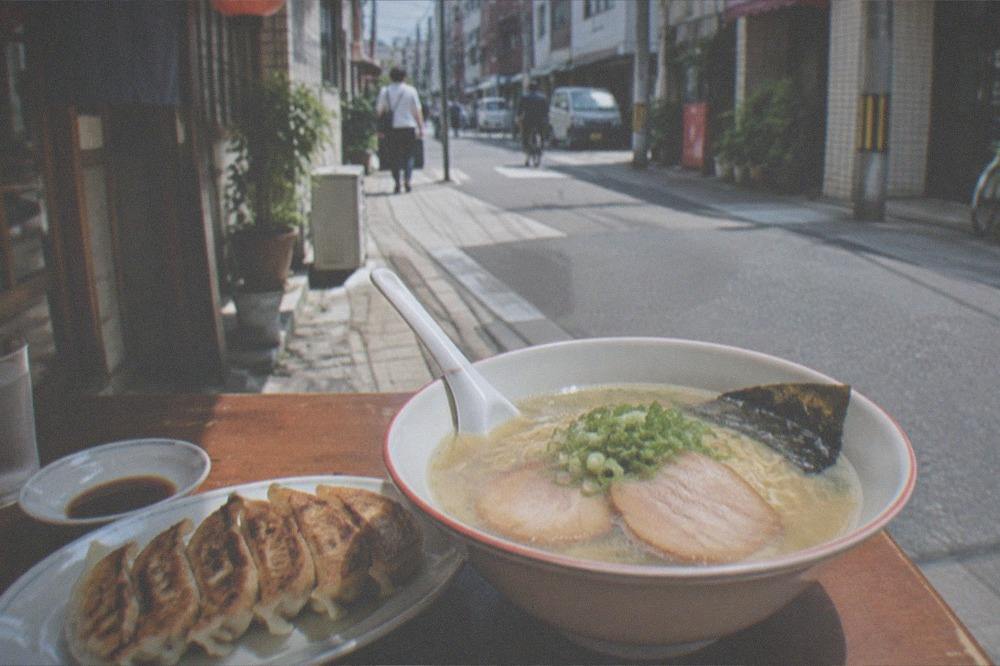
The classic companions are hitokuchi gyoza, small one bite dumplings, and a bowl of rice, either plain or with egg yolk mixed in, that absorbs the leftover tonkotsu after the noodles are gone. Pickles, extra chashu and a beer are the other usual orders. The one thing regulars avoid is ordering so much that the soup never gets drunk: the broth is the dish, and everything else is there to help you finish it.
Hitokuchi gyoza are the natural partner, small enough to eat in one bite and crisp where the bowl is soft. The pairing is so standard that many shops sell both and expect the order together, and our hitokuchi gyoza guide covers where they are made well. Rice is the quieter companion and arguably the smarter one: a small bowl dropped into the remaining soup after kaedama turns the broth into a second course that costs almost nothing.
Not every local noodle is a heavy broth, and that is worth knowing on a longer trip. The Fukuoka udon guide covers the city's other noodle tradition, a lighter dashi style, and breakfast in Fukuoka includes the morning stalls where a bowl of something hot starts the day before the ramen shops even open.
For evenings when you want more than one stop, a guided night out stitches stalls, izakaya and karaoke together:
Ordering inside a yatai comes with its own manners. The stalls are small, often fewer than ten seats, so keep bags off the counter, finish before lingering, and expect to share conversation with whoever is next to you, which is the whole point of the format. The etiquette is worth a page of its own elsewhere on this site, and the short version is that a stall is a shared counter, not a restaurant table: order one thing at a time, leave when you are done, and let the next person have the seat.
Can You Learn to Make Hakata Ramen Yourself?
Honestly, not the broth, and any course claiming otherwise in a few hours is overselling. What you can learn is the rest of the bowl: noodle handling, the tare, the topping work and the assembly that makes a shop bowl taste like a shop bowl. Fukuoka has cooking classes aimed at visitors that cover gyoza and ramen assembly alongside the classics, and they are a good half day for anyone who cooks at home.
The broth is the barrier. A serious tonkotsu is a large pot, a hard boil and many hours, which is an industrial process, not a lesson. Classes work around this by teaching with a prepared base and focusing on the parts that carry the learning: how firm to cook thin noodles, how to slice chashu, how to balance a shoyu tare against a rich soup. Those are real, transferable skills, and they change how you order once you know them.
The Fukuoka cooking class guide lists the current options. If a class is not your pace, the tasting route works instead: a guided food tour with a local lets you sample several kitchens in one evening and hear why each one differs, and there are tea and sake tasting days that make a good contrast to all the pork.
What Should First-Time Visitors Know Before Ordering?
Three things carry most of the value. First, Hakata and Fukuoka are the same city, so any shop in the centre is a local shop. Second, order your noodle firmness, katame for firm, and use kaedama for refills rather than ordering second bowls. Third, the yatai are cash forward and weather dependent, while shops and stations are not, so plan stalls for a dry evening and keep a ramen shop as a backup. Everything else is detail you can pick up at the counter.
The ticket machines deserve a word because they intimidate people who need them least. The buttons carry pictures and often English labels, the machine gives change, and the ticket is handed over, not kept. If a shop is counter service without a machine, a pointed finger at the menu and "kore" ("this one") does the job, and a handful of Japanese words goes further than you would expect: firm is "katame", extra noodles is "kaedama", and a simple "sumimasen" gets the cook's attention.
One question visitors reliably ask is answered elsewhere on this site in full: for a deeper look at the style's identity, see what is special about Hakata ramen. The short version is that the style is inseparable from how it is served, at a small counter, fast, with a refill culture built for workers on a break, and that this format survived into the tourist era more intact here than in Japan's bigger capitals.
Fukuoka's festival year also shapes when a bowl tastes best in context: the stalls around Kushida Shrine sit at the centre of the July Yamakasa festival rush, when the whole district runs on noodles and little sleep, and the Dontaku crowds in May fill the same streets two months earlier. Neither festival needs a ticket, and both are worth planning a meal around, though book nothing: the stalls take walk-ins only.
If a full evening of stalls, tastings and local guidance appeals, or you want to compare a bike or craft experience against a food tour, these are the options this guide recommends:
Common Questions About Hakata Ramen
What Is Hakata Ramen?
Hakata ramen is a tonkotsu ramen style from the Hakata ward of Fukuoka: a milky white broth made by boiling pork bones for many hours, served with very thin, firm, straight noodles and simple toppings such as chashu pork, green onion, pickled ginger and sesame. It is the city's signature dish and the style most closely identified with Fukuoka's food stalls.
What is kaedama?
Kaedama is an extra serving of noodles ordered into the broth left in your bowl after you have eaten the first serving of noodles. It costs a fraction of a second bowl because you are only paying for noodles, and it exists because Hakata's thin noodles cook in about a minute. Order it while soup remains, and add fresh toppings if you still want them.
Why are Hakata ramen noodles so thin?
Because the tonkotsu broth is heavy and hot, and a thick noodle would go soft in it before the bowl was finished. The thin, low-moisture noodle cooks in roughly a minute, stays firm through the meal, and suits a broth that is already fully prepared. You can ask for it firmer (katame) or softer when you order.
Is Hakata ramen the same as tonkotsu ramen?
Nearly, but not exactly. Tonkotsu is the broth, and shops across Japan serve it. Hakata ramen is the full local format: tonkotsu broth, thin firm noodles, the small bowl size, the shio or shoyu tare balance the city settled on, and the kaedama refill system. A tonkotsu bowl with thick wavy noodles is not Hakata ramen.
Where did Hakata ramen originate?
In the Hakata district of Fukuoka, the historic merchant and dockland ward around the city's main station. It grew out of noodle stalls serving workers who needed fast, filling food at odd hours, which is why the bowl is small, the noodles cook quickly and the refill system exists. For more on the neighbourhood, see our Hakata area guide.
Do I need to book to eat at a yatai?
No. The food stalls take walk-ins only and there is no booking system for a stool. They are weather dependent and close in rain or strong wind, so pick a dry evening. Guided yatai crawls are the exception worth considering: they hold a route through the stalls and include tastings, which removes the guesswork on a short trip.