Temples and Shrines in Fukuoka
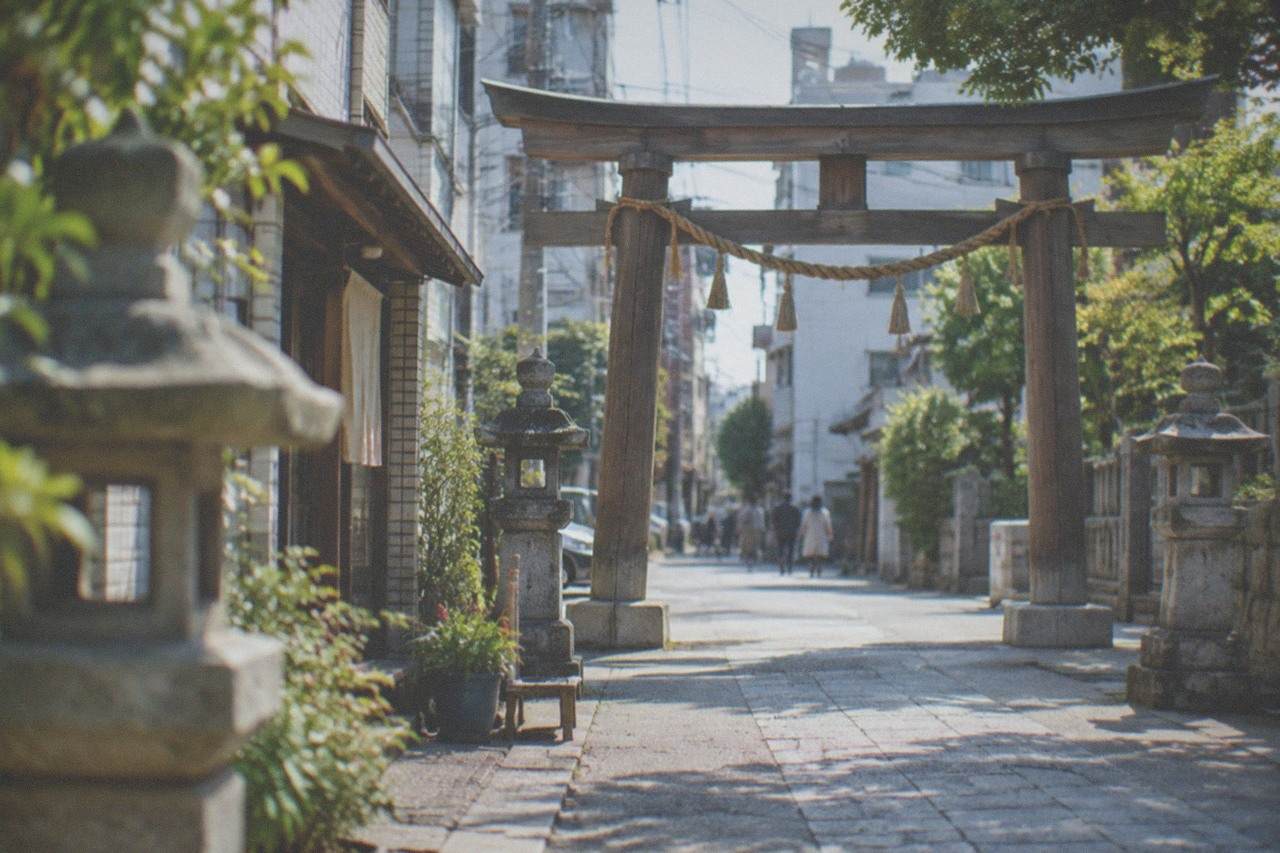
Fukuoka packs an unusual number of shrines and temples into a compact city centre, most of them free to enter and walkable from Hakata Station. This guide covers which ones to see, how to behave once you are there, and which ones justify a train ride.
Short answer
Fukuoka's key shrines and temples are Kushida Shrine, Sumiyoshi Shrine and Hakozakigu, plus the temples Tochoji, Shofukuji and Jotenji, nearly all in or near Hakata ward and free to enter. Dazaifu Tenmangu, the region's most famous shrine, is a short Nishitetsu train ride away and also charges no entrance fee.
Fukuoka is one of Japan's oldest cities and one of its most compact, which is a good combination for anyone interested in shrines and temples. The historic merchant quarter of Hakata, now a ward in the middle of the city, holds half a dozen significant sacred sites within walking distance of each other, and almost none of them charge admission. A traveller based near Hakata Station can see a festival shrine, a great wooden Buddha and Japan's Zen temple heritage before lunch, then decide whether to ride the train out to Dazaifu for the region's most famous shrine of all.
Which Shrines Should You See First in Fukuoka City?
Start with Kushida Shrine, the grand shrine of Hakata and the spiritual anchor of the entire district. It sits about ten minutes on foot from Hakata Station, entry to the grounds is free, and it is the shrine the city's biggest festival is built around. After Kushida, walk to nearby Sumiyoshi Shrine, one of the oldest in the region, and plan a subway trip east to Hakozakigu, the head shrine on this stretch of coast whose two annual festivals are among Kyushu's largest.
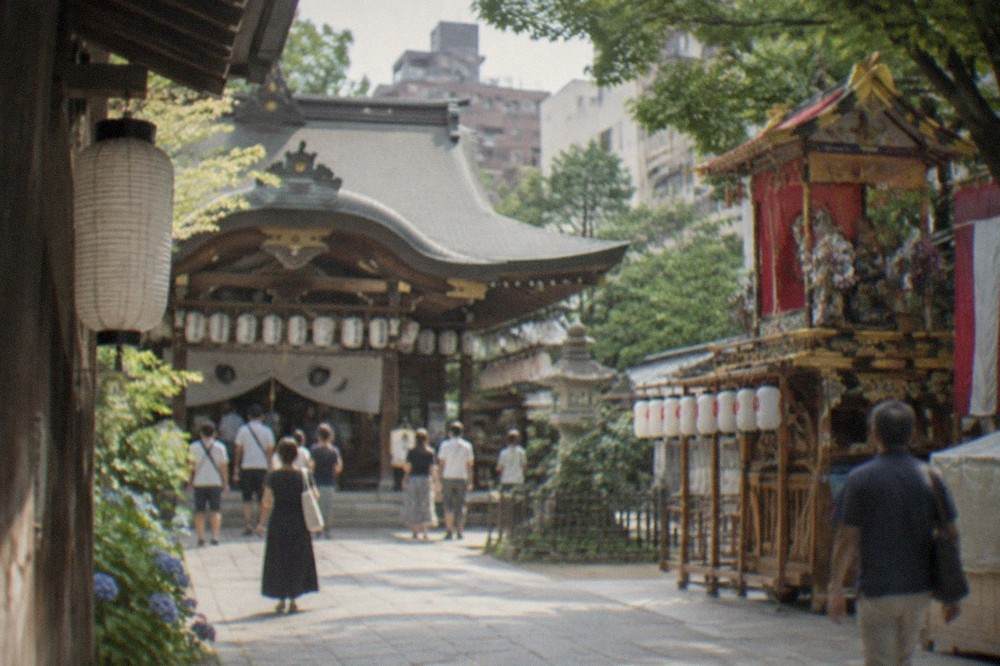
Kushida Shrine is the place to begin, and not only because it is close. The shrine is the start and finish point of Hakata Gion Yamakasa, the July festival in which teams race roughly one-ton floats through the streets, and one of the decorated kazariyama floats is kept on display at the shrine itself for most of the year. Even outside festival season the grounds are busy, atmospheric and free, with a fountain whose water is said to have made Hakata's merchants wealthy. The shrine's approach also drops you straight into the Hakata old town streets, so it slots naturally into a morning of wandering.
Sumiyoshi Shrine, a few blocks west, is a quieter contrast. It is dedicated to the guardian deity of the sea and of safe travel, which suited a port city whose fortunes depended on ships, and its architecture follows an older style than most shrines in the country. Locals know it as a power spot for business and safety, and it rarely has a crowd.
Hakozakigu, on the subway's Hakozaki Line east of the centre, is the third of the big three. It faces the water on Genkai Bay's Hakata Bay shore, and its grounds hold a camphor tree believed to be centuries old. Two of Kyushu's great festivals happen here: Tamaseseri, the New Year ball-scramble on January 3, and Hojoya, the seven-day September fair with hundreds of stalls along the approach. If your dates line up with either, Hakozakigu should move to the top of your list.
| Shrine | Area | Known for | Entry |
|---|---|---|---|
| Kushida Shrine | Hakata old town | Hakata Gion Yamakasa festival origin, displayed kazariyama float | Free grounds |
| Sumiyoshi Shrine | Hakata, west of Kushida | Ancient sea and travel deity, distinctive architecture | Free grounds |
| Hakozakigu | Hakozaki, east side | Tamaseseri on January 3, Hojoya in September | Free grounds |
| Dazaifu Tenmangu | Dazaifu, outside the city | Tenjin, the deity of learning, plum blossoms | Free entry |
Entry costs barely feature in shrine visiting in Fukuoka, which makes this side of the city ideal for a low-budget day. If you are building a full free day around these stops, our guide to free things to do in Fukuoka folds them in with parks and viewpoints.
Which Temples in Hakata Are Worth Your Time?
Three temples define Hakata's Buddhist side: Tochoji, home to the Fukuoka Daibutsu, a giant seated wooden Buddha; Shofukuji, a Zen temple of national historical importance hidden in the backstreets; and Jotenji, a small temple whose grounds are credited as the birthplace of the mochi and udon traditions Hakata is famous for. All three are within a short walk of Kushida Shrine and none charges for entry.
Tochoji is the most visited of the three. Its Great Buddha Hall holds the Fukuoka Daibutsu, one of the largest seated wooden Buddha statues in Japan, and the temple also has a cemetery holding the graves of the Shibuya family, the leaders of medieval Hakata's merchant community. The temple belongs to the Shingon tradition, and its compact grounds take twenty to thirty minutes to see properly.
Shofukuji is the one for visitors who want the deeper history. Founded in the Kamakura period by the monk Eisai, the man credited with bringing Zen Buddhism and green tea to Japan, it holds a claim as the country's first Zen training temple. Its grounds are deliberately austere: gates, moss, trees and halls that are usually closed to the public. You come here for stillness rather than sights, and the walk from Hakata Station takes about fifteen minutes through ordinary residential streets, which is part of the point.
Jotenji is the smallest and easiest to miss, sitting on a stone-paved square just east of Kushida Shrine. Its grounds hold monuments to Yoshizakiya, the merchant said to have perfected umegae mochi, and to the origins of Hakata's udon and soba culture. It is a two-minute stop, but it ties the temple story directly to the food story, and Hakata's street food scene, which our Fukuoka street food guide covers in detail, grew out of exactly this district.
| Temple | Tradition | What to see | Entry |
|---|---|---|---|
| Tochoji | Shingon Buddhism | Fukuoka Daibutsu, merchant-family graves | Free |
| Shofukuji | Rinzai Zen | Historic gates and grounds, Japan's early Zen heritage | Free grounds |
| Jotenji | Rinzai Zen | Monuments to mochi, udon and soba origins | Free |
Because the three temples and Kushida Shrine sit inside the same few blocks of Hakata ward, the whole cluster works as a single morning loop. Start at Tochoji, cut through to Kushida, cross to Jotenji, and finish with the walk to Shofukuji. Describing these sites is one thing; having a local walk you through what you are looking at is another, and the selection below covers options that do exactly that.
Is Dazaifu Tenmangu Worth the Train Ride from Fukuoka?
Yes. Dazaifu Tenmangu is the head shrine of Tenjin worship across Japan, dedicated to the deified scholar Sugawara no Michizane, and it draws millions of visitors a year to a small town that exists almost entirely to serve it. Entry is free, the approach street is lined with umegae mochi shops, and the Nishitetsu train from Tenjin in Fukuoka takes around half an hour with one easy change.
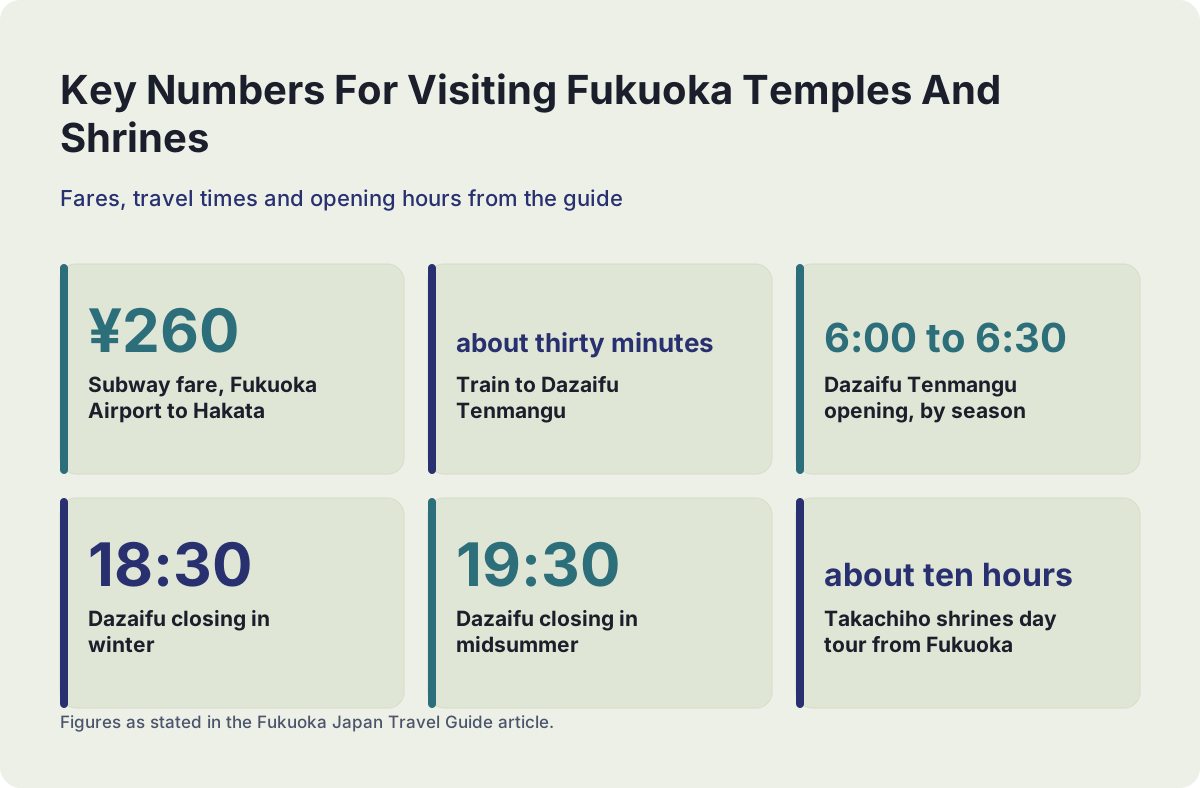
The shrine's own FAQ is unusually direct on the money question: there is no entrance fee at Dazaifu Tenmangu. The grounds, the main sanctuary approach and the famous pond-and-bridges garden layout are all open without a ticket, and the shrine opens early, around 6:00 to 6:30 depending on the season, closing between 18:30 in winter and 19:30 in midsummer. The shrine's official FAQ page is the place to confirm seasonal hours before a visit.
The approach, called Omotesando, is half the experience. A pedestrian street of teahouses leads to the shrine, and nearly every shop sells umegae mochi, the grilled rice-cake sweets tied to a legend about a humble offering made to Michizane. Beyond the shrine, the Kyushu National Museum and the quiet moss garden of Komyozenji give the town a full day of depth, particularly in late November when the maples turn.
Getting there is simple but trips people up: there is no JR line to Dazaifu. You take the Nishitetsu train from Nishitetsu Fukuoka (Tenjin) station toward Futsukaichi, change there, and ride two more stops. The journey is about thirty minutes in total. Our Fukuoka two-day itinerary slots Dazaifu into day two alongside the city-centre sights, which is the pacing most first-time visitors end up wanting.
If shrines are the reason you are travelling at all, it is worth knowing the idea extends well beyond this one town. Guided day tours run from Fukuoka to the great shrine country of Miyazaki and Takachiho, where the mythology runs even deeper.
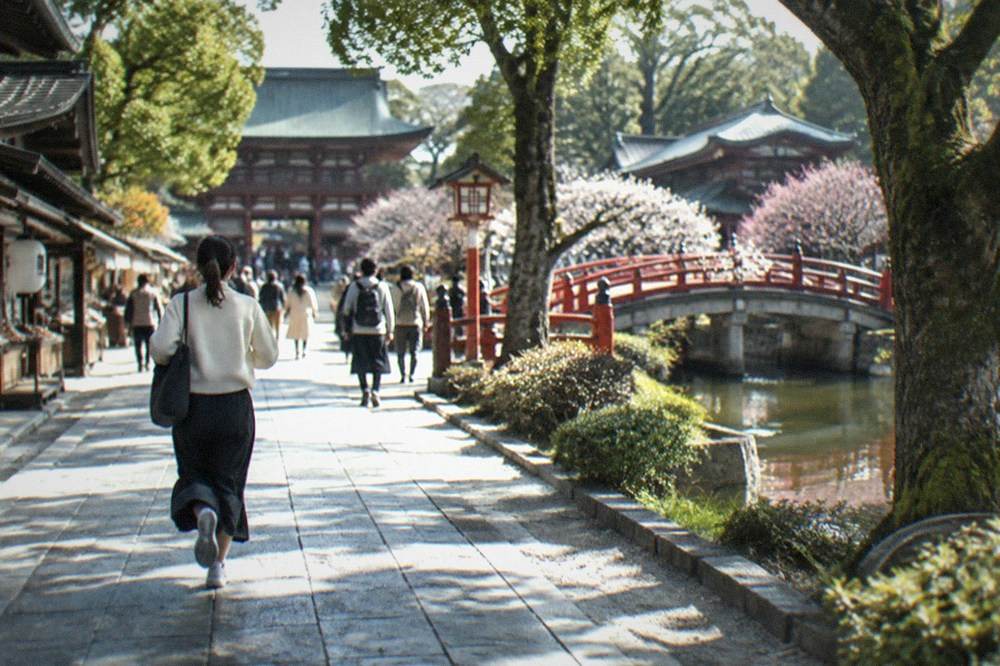
How Do You Behave at a Shrine or Temple in Japan?
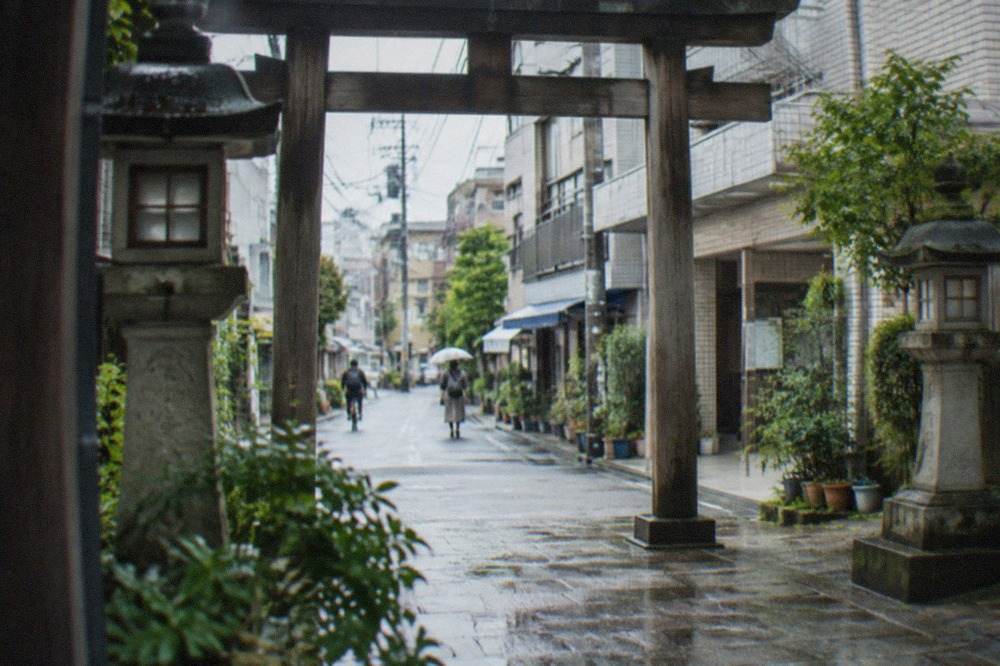
The etiquette is simpler than it looks: bow at the torii gate, purify your hands and mouth at the water pavilion, and at a shrine make two bows, two claps and one final bow at the main hall. At a temple, bow and offer a prayer without clapping. Photograph respectfully, keep your voice low, and skip any building or path that is roped off. None of this is policed aggressively, but locals notice.
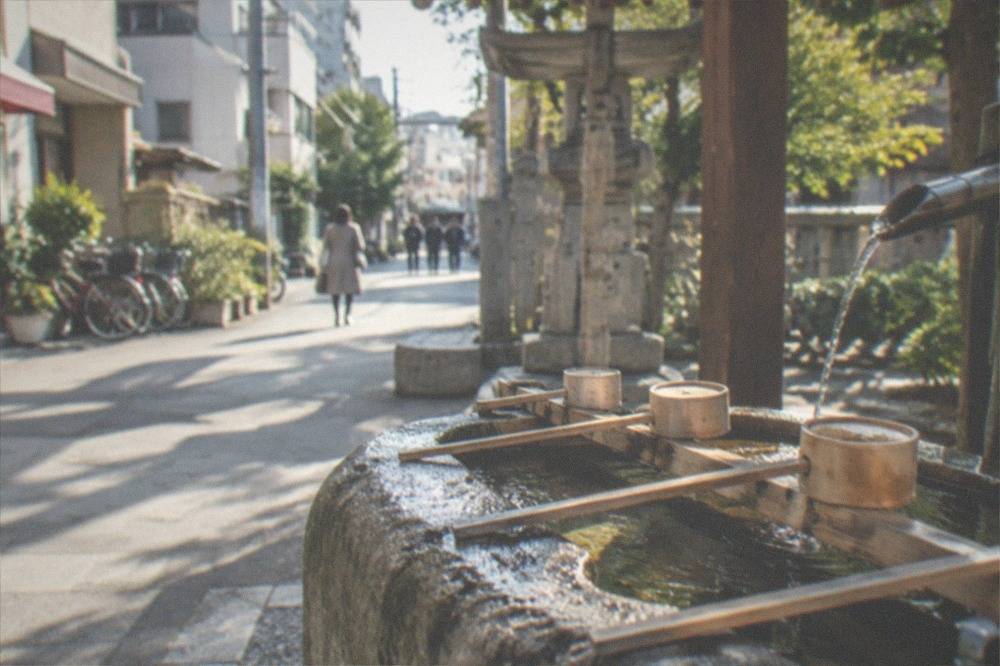
The purification fountain, called the temizuya, is the first stop inside most shrine grounds. Fill the ladle with one hand, rinse the other hand, then your mouth with water poured into your palm, never directly from the ladle, and rinse the ladle handle by holding it upright so the remaining water runs down it. The whole sequence takes ten seconds once you have done it once. The rest of the planning pages sit on Fukuoka Japan Travel Guide.
At the main hall of a shrine, the standard sequence is two bows, two claps, a moment of prayer, then a single bow. Throw a coin into the offering box first; any amount is fine, and five-yen coins are considered lucky because the word for them sounds like the word for connection. At Buddhist temples there is no clapping: you simply bow, offer a coin, and pray quietly. Goshuin, the calligraphic seal stamps collected in a special book, are available at most major sites for a few hundred yen and make a genuinely good souvenir, since the stamp is brushed by hand on the day.
| Situation | What to do | What to avoid |
|---|---|---|
| Entering through the torii | Bow once, walk to the side of the path | Walking straight down the centre |
| At the temizuya | Rinse hands and mouth with the ladle | Drinking directly from the ladle |
| At the shrine hall | Two bows, two claps, one bow | Clapping at a Buddhist temple |
| Taking photos | Grounds and exteriors freely | Photos inside halls where banned, posing on sacred spots |
| Offering | A coin of any value into the box | Tossing notes or leaving objects |
A guided walk is a good way to absorb this without rehearsing it, and a half-day city tour that covers the etiquette and the history together saves a lot of second-guessing at each gate.
What Is the Difference Between Hakata and Fukuoka?
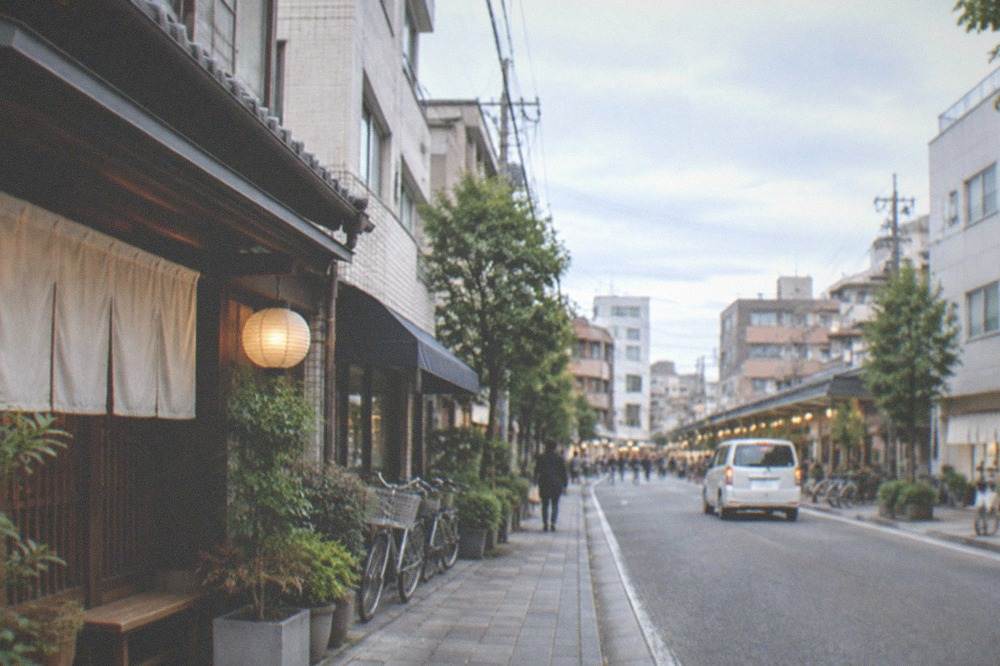
There is no difference in place: Hakata and Fukuoka are the same city. Fukuoka is the city's name, and Hakata is one of its wards and the name of its main station, a legacy of the medieval port town that sat here before the modern city absorbed it. Travellers do not go "from Hakata to Fukuoka", and there is no JR Fukuoka Station, the rail hub is Hakata Station. The old town where most temples sit is simply Hakata ward, inside Fukuoka.
The history explains the naming. For centuries two settlements stood side by side: the merchant port of Hakata facing the bay, and the castle town of Fukuoka on the western side of the Naka River. When they merged in 1889, the new city took the name Fukuoka, but the station, the bay, the dialect and the famous ramen all kept the Hakata name, and so did the ward containing the old merchant quarter. That is why the temples in this guide cluster in "Hakata" while the city around you is Fukuoka.
The practical consequences are worth knowing before you navigate. Your train from Tokyo, Osaka or the airport arrives at Hakata Station, not a Fukuoka station, and the airport connection is the subway's Kuko Line from Fukuoka Airport, a fare of ¥260 to Hakata. Our article on Hakata versus Fukuoka unpacks the naming in full, and the Hakata station area guide covers where to base yourself relative to it.
For shrine visitors the naming is actually convenient. Because the sacred sites are concentrated in the old merchant town, staying in the Hakata area puts you within a short walk of nearly everything in this guide, and a private walking tour with a local is an efficient way to have the district's layered history explained street by street.
Which Shrines Sit Outside the City Centre?
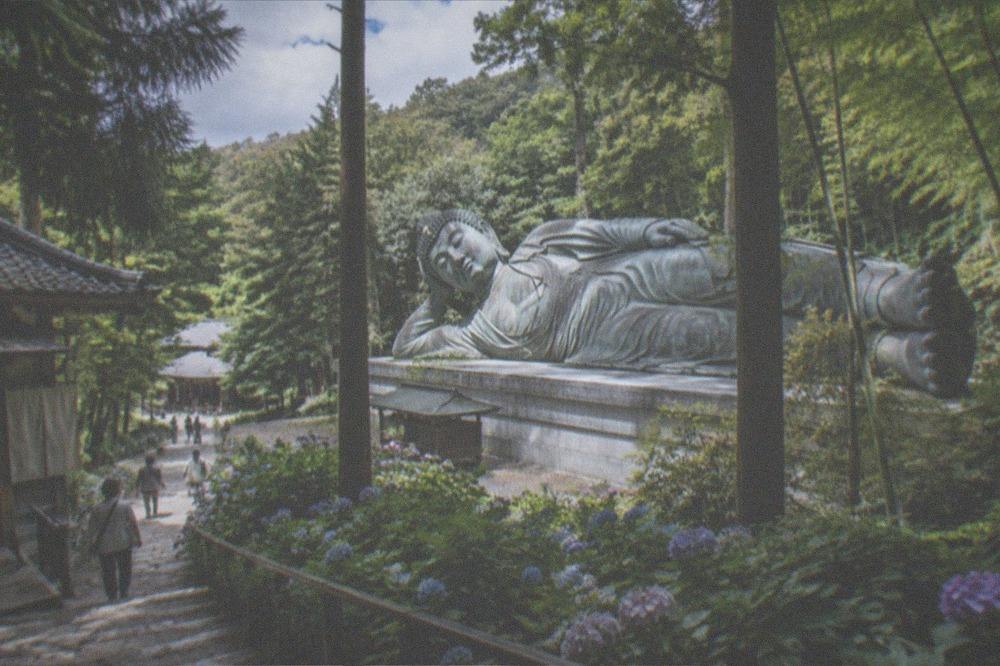
Four sacred sites reward travelling beyond central Fukuoka: Nanzoin in the eastern hills, with one of the world's largest reclining bronze Buddhas lying in a forest clearing; Atago Shrine on a hilltop west of Ohori Park; Munakata Taisha on the coast north of the city, the head shrine of a maritime deity; and Dazaifu Tenmangu, covered above. All are free to enter, and all but Munakata work as half-day trips.
Nanzoin is the standout. The temple's reclining Buddha stretches over forty metres through a wooded valley in Sasaguri, reached by a Nishitetsu bus or a walk from Nanzoin-mae station on the JR line toward Sasaguri. The statue lies outdoors in a bed of green, and visitors traditionally place papers carrying their aches on the statue's body. It is one of the most photographed religious sites in the prefecture, and almost no first-time visitor has heard of it before arriving in Fukuoka.
Atago Shrine, above the Ohori and Nishijin districts, is a local favourite for its hilltop view over the city and bay. The climb is a long stone stairway through trees, and the shrine's vermilion gates make it a favourite photo stop. Munakata Taisha, further afield on the way to Kitakyushu, is a grand shrine complex dedicated to the three goddesses of the sea, with its own island sanctuary that is itself a protected site.
| Site | Direction from centre | Getting there | Best known for |
|---|---|---|---|
| Nanzoin | East, Sasaguri hills | JR Sasaguri line to Nanzoin-mae, then walk | Reclining bronze Buddha in the forest |
| Atago Shrine | West, above Nishijin | Subway to Nishijin, then stairway climb | Hilltop view over Fukuoka and the bay |
| Munakata Taisha | North coast, Munakata | JR toward Togo, then local bus | Head shrine of the sea goddesses |
| Hakozakigu | East, Hakozaki | Subway Hakozaki line to Hakozakitaimiya | Two of Kyushu's three great Hakata festivals |
Festival timing can decide which of these you visit. Hakozakigu's official site publishes the details of both of its major festivals, and the dates are fixed by tradition.
Which Tours and Itineraries Pair Well with Temple Visits?
The best pairings depend on how deep you want to go. A city essentials tour covers the Hakata temple cluster with a guide in half a day; a private customisable tour lets you add Dazaifu or Nanzoin to a city itinerary; and a dedicated shrines day tour carries you into Miyazaki and Takachiho, where the Amaterasu mythology sits at the heart of Japan's origin story. For independent travellers, the temple loop fits neatly into day one of almost any itinerary.
The Miyazaki and Takachiho shrines day tour is the natural extension for visitors whose interest in shrines goes beyond sightseeing. Takachiho is where the sun goddess Amaterasu is said to have hidden in a cave, the myth at the root of the imperial lineage story, and the gorge shrine there performs a nightly yokagura dance retelling it. The tour runs about ten hours from Fukuoka and is rated 4.6 from 384 reviews, from $59 per person, with an optional boat ride on the gorge. For a visitor who has seen Hakata's temples and Dazaifu, it is the next step out.
Back inside the city, the practical pairing advice is simple. Give the Hakata cluster a morning, since the streets are quieter before the shops open and the shrine grounds are at their calmest. Give Dazaifu either a full morning or a full day depending on whether you add the Kyushu National Museum. Rain matters less here than in most itineraries; shrine approaches and museum interiors are largely covered, which is why our Fukuoka rainy day itinerary leans on temples and museums. And if you are arriving with luggage rather than a hotel booking, the Hakata station guide and the city's luggage storage options let you start the temple loop straight off the train.
Common Questions About Temples and Shrines in Fukuoka
Do you have to pay to enter shrines and temples in Fukuoka?
No. Kushida Shrine, Sumiyoshi Shrine, Hakozakigu, Tochoji, Shofukuji, Jotenji, Nanzoin and Dazaifu Tenmangu all allow free entry to their grounds, and Dazaifu Tenmangu's own FAQ states plainly that there is no entrance fee. Museums attached to some sites, such as the Kyushu National Museum, charge separately.
Can you visit Kushida Shrine, Tochoji and Shofukuji on foot in one morning?
Yes. All three sit within a fifteen-minute walk of Hakata Station, and the full loop with Jotenji added takes most visitors two to three hours at a relaxed pace. The route runs through the Hakata old town streets, so the walk itself is part of the sightseeing.
What is the difference between a shrine and a temple in Japan?
A shrine, marked by a torii gate, belongs to the Shinto tradition and its local deities, and worship involves the bow-clap-bow sequence. A temple belongs to Buddhism, has halls and statues of the Buddha, and prayer there is silent, with no clapping. Fukuoka has both in the same few blocks of Hakata.
Is Dazaifu Tenmangu a full-day trip from Fukuoka?
It can be a half-day or a full day. The shrine itself and the mochi shops take two to three hours, but adding the Kyushu National Museum, Komyozenji's moss garden and a leisurely lunch easily fills a day. The Nishitetsu ride from Tenjin takes around thirty minutes with one change at Futsukaichi.
When is the best time of year to see Fukuoka's shrines?
Early morning is the best time of day, and late March into early April is the best season, when Dazaifu's plum blossoms give way to cherry blossoms across the city parks. Festival dates are the exception: January 3 at Hakozakigu, July 1 to 15 around Kushida Shrine, and September 12 to 18 back at Hakozakigu each bring a completely different atmosphere.