Hakata Hitokuchi Gyoza
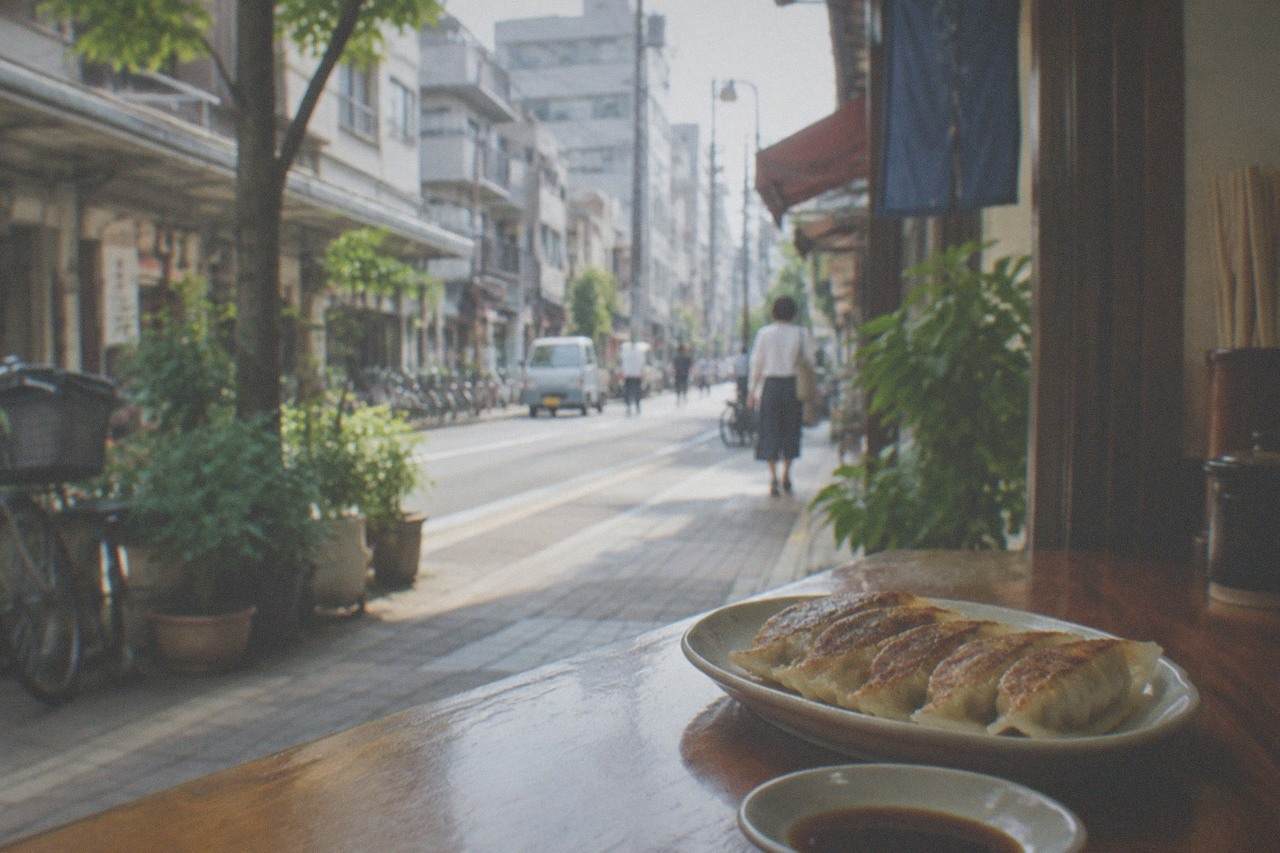
Hitokuchi gyoza is Fukuoka's take on the pan-fried dumpling: small enough to eat in one bite, crisp on the base, and sold everywhere from station basements to the stalls along the Naka River. This guide explains what makes the Hakata version different, where to look for it, and how to fit it into a day of eating in the city.
Short answer
Hakata hitokuchi gyoza is a bite-sized version of the pan-fried dumpling found across Japan. The Hakata style is smaller than a standard gyoza, usually served in batches of five or six, and typically eaten with a vinegar and soy dip or a spicy miso sauce. You will find it in izakaya, food halls, and the city's roughly 100 yatai stalls, especially around Hakata, Tenjin, and Nakasu.
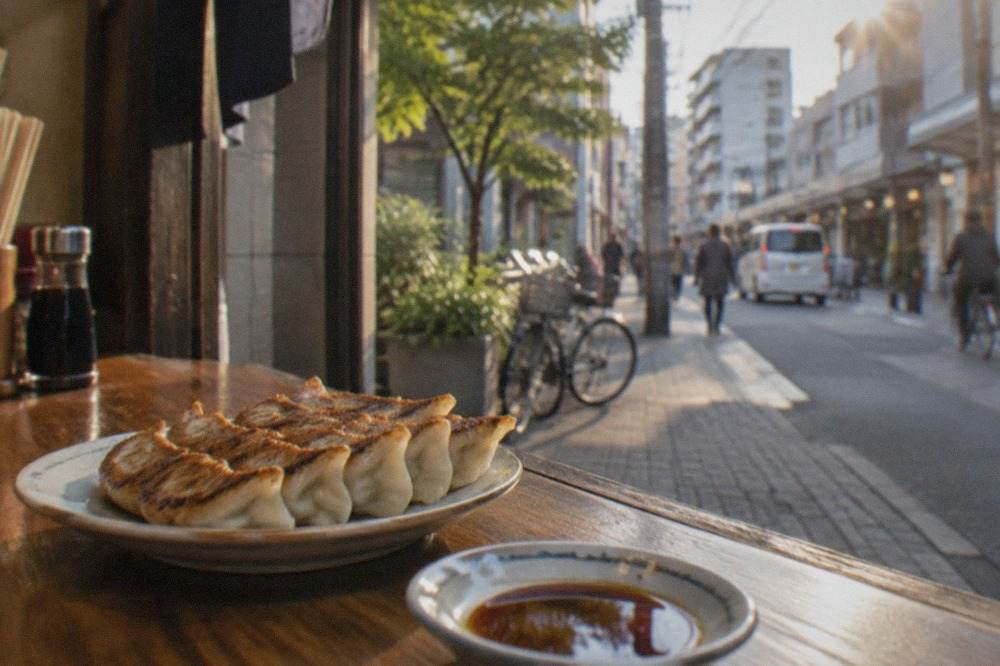
Fukuoka eats standing up more than most Japanese cities, and hitokuchi gyoza is built for exactly that. The name translates plainly: hitokuchi means "one mouthful", and the dumpling delivers on it. Where a standard gyoza is a three-bite parcel that falls apart mid-way, the Hakata version is a compact crescent you can finish in a single go, base down, seam up, dipped and gone. It is the kind of food that suits a night of moving between stalls, which is how this city tends to dine.
This page covers the dumpling itself, how it differs from what you would be served in Tokyo or Osaka, where to look for it in Fukuoka, what a plate typically involves, and how to fold it into a wider food crawl. The city has a stronger dumpling culture than most first-time visitors expect, and it sits right beside its more famous exports like the tonkotsu ramen described in our Hakata ramen guide.
What Is Hakata Hitokuchi Gyoza?
Hakata hitokuchi gyoza is a miniature pan-fried dumpling, small enough to eat in one bite, that has become a signature snack of Fukuoka's Hakata district. It is filled most often with pork and cabbage, cooked flat-side down until the base is crisp, and served in small batches so it arrives hot. The size is the whole point: it cooks faster, it eats cleanly without a plate and knife, and it pairs naturally with beer, ramen, or a night of stall-hopping.
The word "hitokuchi" is not a brand or a single shop's trademark. It is a description of size, and in Fukuoka it has hardened into a local style. A typical piece is roughly half the length of a standard gyoza, with a thinner wrapper and a higher ratio of crisp base to soft filling. Because each piece is small, shops cook them in larger batches and turn them over quickly, which means you rarely wait long and rarely get a lukewarm plate.
The filling stays close to the classic formula: minced pork, cabbage, garlic and ginger. Where the Hakata style diverges is in the sauce. Many local shops serve their hitokuchi gyoza with a spicy miso dip rather than the plain vinegar and soy combination you get elsewhere in Japan, a nod to the Kyushu palate that also shows up in the region's love of Kyushu ramen and its heavier, pork-based soups. Some shops also offer a mentaiko-spiked sauce, borrowing the pollack roe that Fukuoka is famous for.
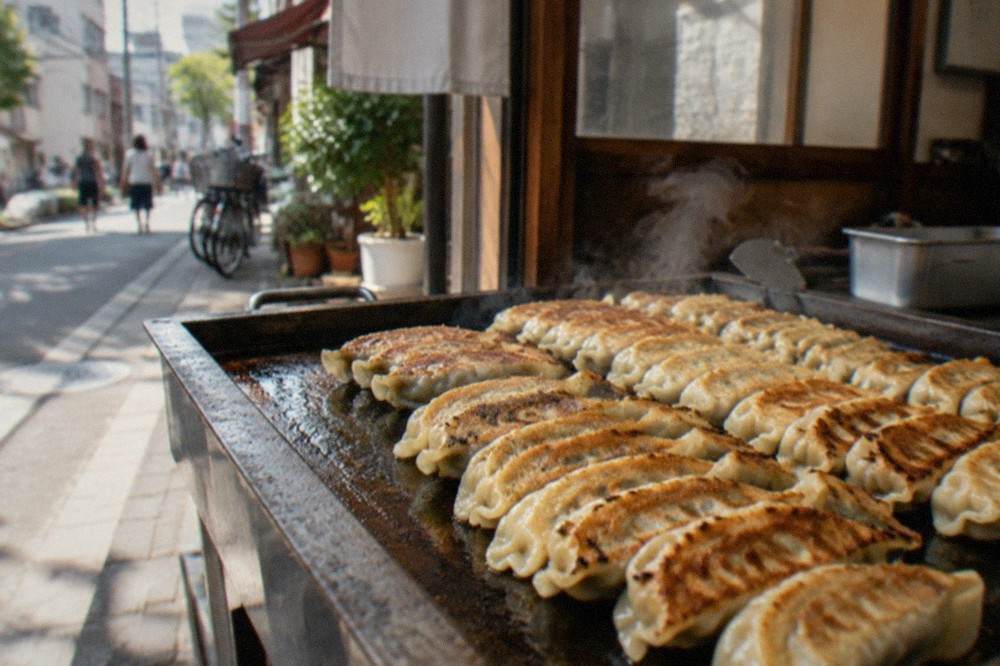
What surprises many visitors is how everyday the dish is. This is not festival food or a special-occasion restaurant dish. It appears in station basement food halls, in shopping mall basements, in izakaya at lunch, and in the yatai stalls that line the Naka River in the evening. Fukuoka's city government counts about 100 licensed yatai across the city, the largest number of any Japanese city, and a dumpling griddle is common equipment in them.
Where Did Hitokuchi Gyoza Come From?
The bite-sized gyoza is a Fukuoka adaptation of a Chinese dumpling that spread across Japan after the war, and the small format is widely credited to local shops that wanted a fast, cheap snack to serve alongside ramen and beer. The dumpling itself came from China; the one-bite sizing is Hakata's own contribution, shaped by the city's stall culture and its tradition of eating small portions while moving between venues.
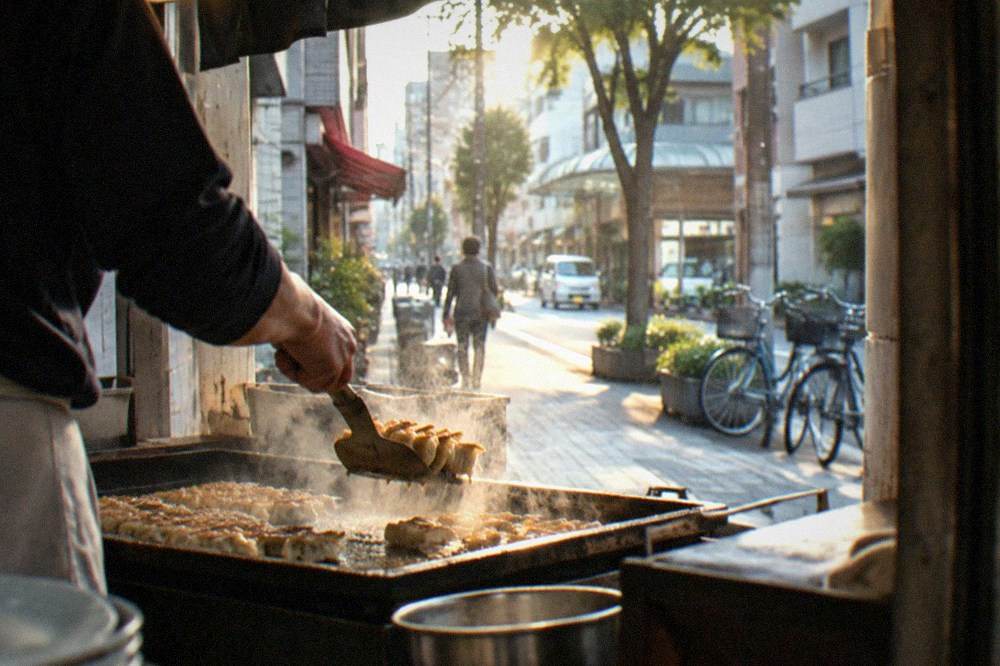
Gyoza arrived in Japan by way of Chinese immigrants and returning soldiers, and it became a nationwide staple in the postwar decades. Most of Japan standardized on a medium parcel, five or six to a plate. Kyushu, and Hakata in particular, took the format smaller. The reasons are practical rather than mystical: a small dumpling suits a small griddle, which is all a street stall has room for, and it suits a customer who is eating standing up or perched on a stool with limited elbow room.
The stall connection matters. Fukuoka's yatai culture is regulated by a city ordinance that requires every stall to display its prices clearly where customers can see them, and bans vague "market price" labelling on anything priced by the day's cost. That transparency made small, clearly priced plates a natural fit for the stalls. A customer can see exactly what a plate of dumplings costs before sitting down, order one, and move on. The city's own yatai Q&A page documents both the price-display rule and the count of roughly 100 stalls.
The style has since moved indoors and uptown. Department store food halls in Tenjin stock hitokuchi gyoza for takeaway, izakaya in Hakata list it as a starter, and some shops sell it frozen by the bag for locals to cook at home. But the format still reads as street-adjacent: quick, cheap, informal, and best eaten within a minute of leaving the pan.
If you want to understand the food culture that produced the dumpling rather than just taste it, guided experiences help. A food-focused tour walks you through the neighbourhoods and the ordering conventions at the same time.
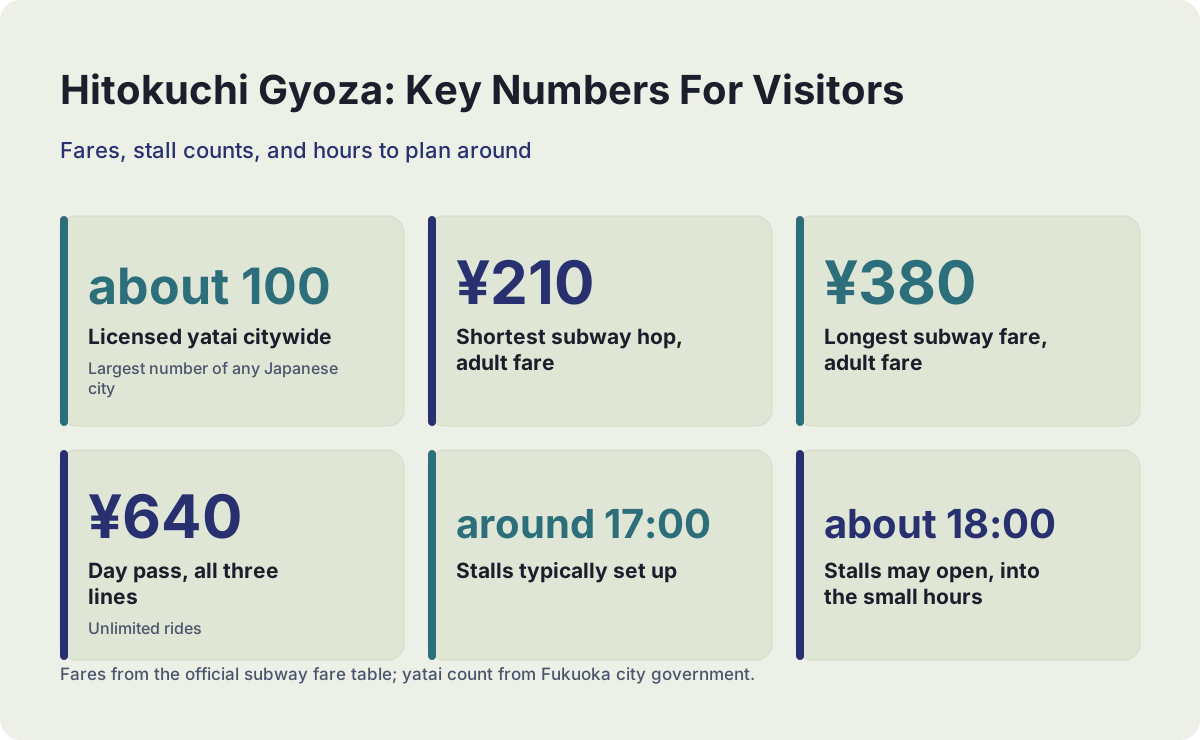
How Is It Different from Regular Gyoza?
The differences are size, wrapper, and sauce. A hitokuchi piece is roughly half the size of a standard gyoza, its wrapper is thinner so the base crisps faster, and in Fukuoka it is frequently served with a spicy miso or mentaiko sauce instead of the plain vinegar-soy dip used elsewhere. It is also more often treated as a snack to accompany drinks or ramen than as a standalone main dish.
The comparison is easiest to see side by side.
| Feature | Standard gyoza | Hakata hitokuchi gyoza |
|---|---|---|
| Size | Two to three bites | One bite |
| Wrapper | Medium thickness | Thinner, more delicate |
| Typical serving | Five or six per plate | Five or six, but smaller |
| Common dip | Vinegar and soy sauce | Spicy miso, mentaiko sauce, or vinegar-soy |
| Usual setting | Ramen shops, izakaya, home cooking | Stalls, station food halls, izakaya, takeaway counters |
| Role in a meal | Main or side dish | Snack, side, or drinking food |
The thinner wrapper is the technical change that makes everything else possible. A small dumpling with a thick wrapper would be mostly dough, so Hakata shops roll the skin fine and rely on the filling for body. The trade-off is fragility in the pan, which is why hitokuchi gyoza is cooked in shallow oil and handled carefully, and why it does not travel well once plated. Eat it at the counter.
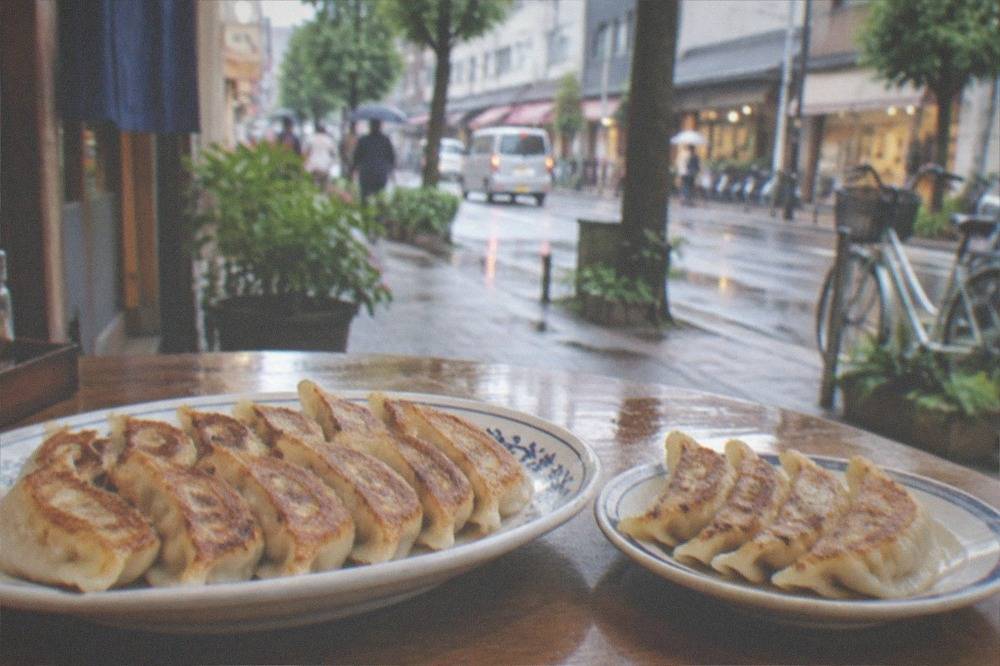
The sauce deserves its own sentence. Fukuoka's palate runs to punchy, fermented and mildly spicy flavours: the same instinct that produces mentaiko and the region's tare-heavy ramen shows up in the gyoza dips. If you are served a dark, reddish paste with your dumplings, that is the miso-based dip, and it is meant to be used generously. If you prefer the classic combination, most shops have vinegar and soy on the counter and will not blink if you reach for it.
For visitors building a food day around the city, the dumpling slots in neatly. It is small enough that eating a plate does not spoil the next stop, which is exactly the logic behind our Fukuoka street food guide and the crawl-first approach it recommends.
Where to Eat Hitokuchi Gyoza in Fukuoka?
Look in three places: the yatai stalls concentrated in Nakasu, Tenjin and Nagahama in the evening; the basement food halls of department stores and Hakata Station, which sell it fresh and frozen during the day; and izakaya across Hakata and Tenjin, where it appears as a starter. No single shop owns the dish, so quality matters more than a specific address, and the stalls are the most atmospheric place to try it.
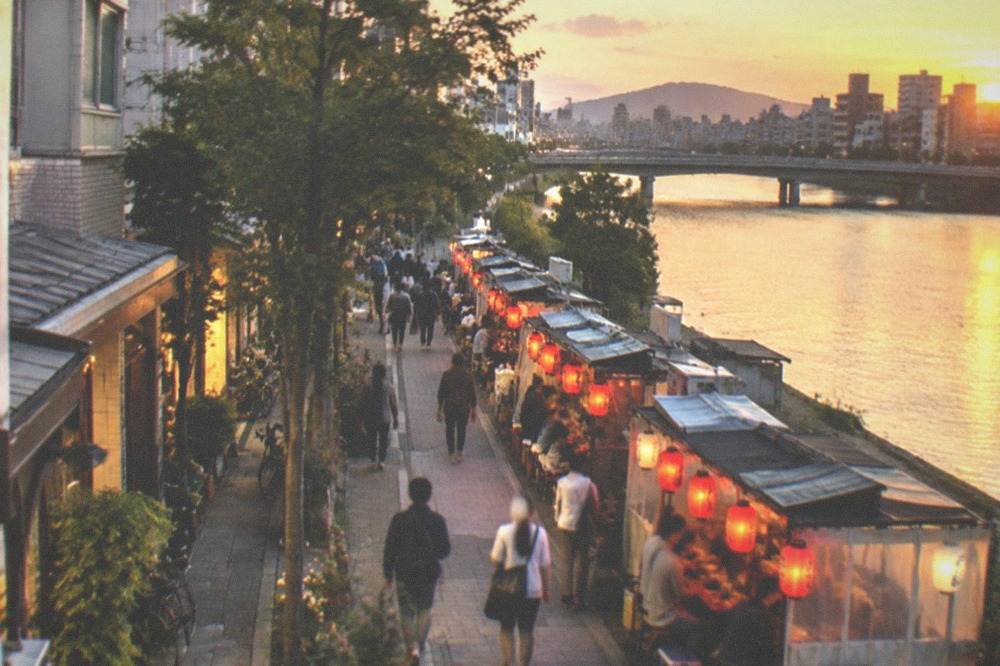
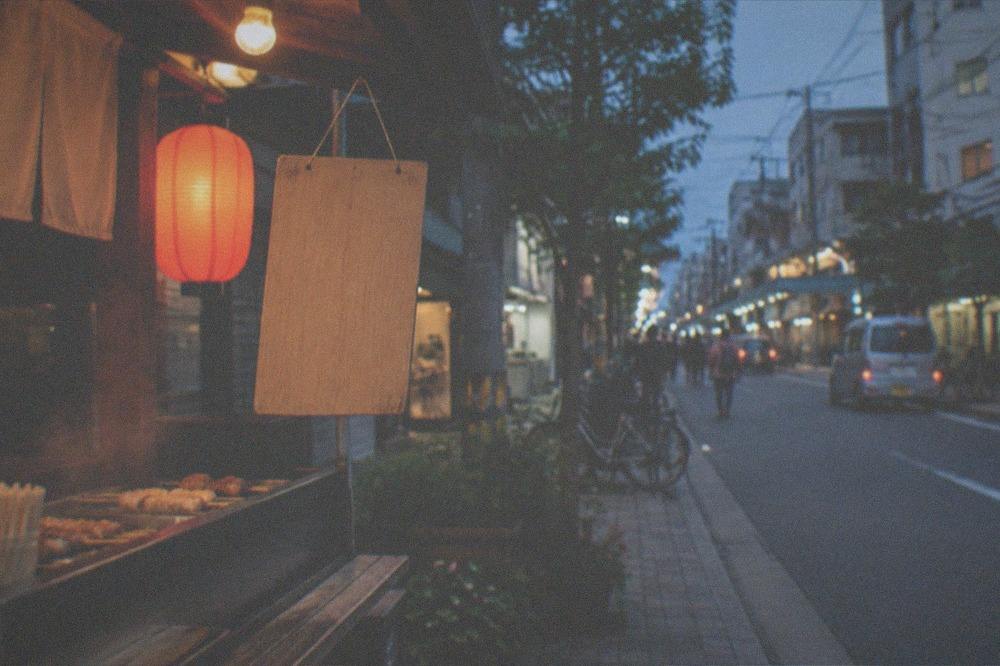
The stall experience is the one most visitors come for. The three main concentrations are Nakasu along the Naka River, the most photogenic row; Tenjin, where stalls scatter along the business district streets and the crowd skews local; and Nagahama, near the old fish market, historically the ramen-focused row. Stalls typically set up from around 17:00 and may open from about 18:00 into the small hours, though every operator decides their own hours and rain closes many of them. There is no city-mandated closing day, so the honest advice is to walk the rows and see what is lit up.
Daytime is the food hall's turn. The basements around Hakata Station and in Tenjin's department stores sell freshly cooked plates at lunchtime and bags of frozen hitokuchi gyoza all day, which is also the answer to the souvenir question: the dumpling freezes well and many shops package it specifically for the trip home. If you are arriving through the airport or the station, the Hakata Station guide covers the layout, and the food halls are all within a short walk of the ticket gates.
| Setting | Best time | What to expect | Notes |
|---|---|---|---|
| Yatai stalls (Nakasu, Tenjin, Nagahama) | Evening, from around 18:00 | Counter seating, small menu, prices posted visibly | Cash is safest; some stalls take cards |
| Station and department store food halls | Lunch and afternoon | Takeaway plates and frozen bags | Easy to combine with shopping |
| Izakaya in Hakata and Tenjin | Evening | Gyoza as a starter alongside drinks and other dishes | Good for a sit-down meal |
| Ramen shops | Any opening hours | Gyoza as the classic side order | The traditional pairing |
One practical note on getting around: the three stall areas sit on or near the subway lines, and a single adult fare runs from ¥210 for the shortest hops up to ¥380 for the longest, with a ¥640 day pass covering unlimited rides on all three lines. The official fare table lists every band, so you can check a specific trip before you travel. Nakasu and Tenjin are also close enough to walk between if the weather is kind.
A guided stall tour removes the language and ordering anxiety in one move, and the private Nakasu option below is built around exactly this kind of eating.
How Much Does a Plate Cost?
You will not find a fixed citywide price, because the city publishes none and stall prices vary by operator, so treat any plate as a modest, clearly posted amount rather than a known figure. What is verified is the system: Fukuoka's yatai ordinance requires every stall to display prices where customers can see them, and forbids "market price" labelling on anything that varies day to day. Read the board before you sit, and there will be no surprises.
This is worth dwelling on, because it is the honest answer to a question every visitor quietly has: will I be overcharged at a street stall? In Fukuoka, the city government has legislated the answer. The Yatai Basic Ordinance, in force since 2013, requires visible pricing, and city inspectors check compliance periodically. A stall cannot hand you a bill built on vague "market price" items. If a dish costs more that day because the ingredient costs more, the actual day's price must be displayed. More of these guides are collected on Fukuoka Japan Travel Guide.
| Cost element | What to expect | Planning note |
|---|---|---|
| A plate of hitokuchi gyoza | A small, clearly posted amount per plate | Check the displayed board before ordering |
| Drinks at a stall | Posted per item | Totals climb faster on drinks than on food |
| Payment method | Cash is the safe assumption | Some stalls accept cards or QR payment, but not all |
| Tipping | Not part of the routine | Prices on the board are the full prices |
Budgeting a food crawl is therefore simpler than in many cities: the posted price is the price, and there is no service charge layer to decode. Decide how many stops you want, assume a plate and a drink at each, and the arithmetic writes itself from the boards in front of you.
How Do You Eat It Properly?
Pick the piece up with chopsticks, dip the crisp base lightly in the sauce, and eat it in one bite, which is the entire design brief of the format. There is no elaborate ritual: the dumpling is small precisely so it needs no biting in half, no cutting, and no plate arrangement. If you are at a yatai, order one plate at a time rather than several at once, because the second plate is cooked fresh and arrives hotter than one held under a lamp.
Stall etiquette is mostly common sense with a local accent. Seats at a yatai are few, so a party that has finished eating should give up the stools rather than linger over empty plates. Ordering one dish at a time is normal and expected, not slow. Talking to the stall owner and to the strangers on the next stool is part of the format; a yatai counter is one of the few places in Japan where conversation with strangers is actively built into the seating plan.
The dipping question comes down to what is on the counter. If there is a miso-based sauce, it is for the gyoza. Vinegar and soy are usually in small bottles within reach. Mentaiko-based dips, where offered, go on the dumpling and not much else. There is no wrong order, but locals tend to alternate: one piece with sauce, one plain, to taste the filling itself.
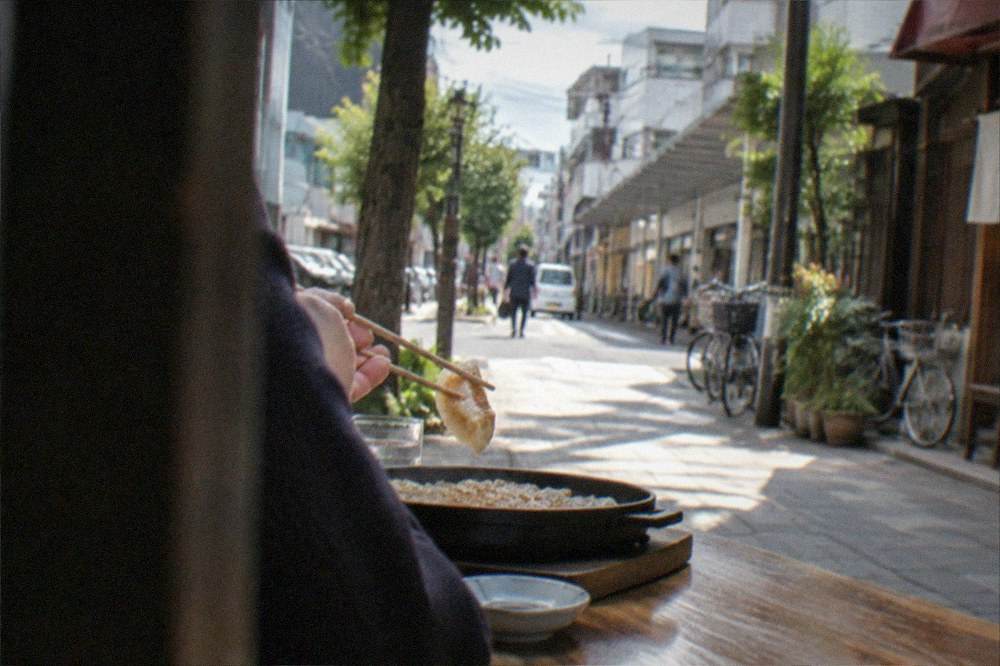
If you want the ordering and etiquette handled for you on the first night, an evening tour that includes the stalls does exactly that.
What Should You Pair with It?
The classic pairings are beer and ramen. A cold lager cuts the richness of the pork filling and the crisp base, and tonkotsu ramen followed by a plate of gyoza is a standard Hakata sequence rather than an indulgence. Beyond those two, the dumpling sits comfortably beside motsunabe, mentaiko dishes, and the local udon, which Fukuoka serves in a softer style than the rest of Japan.
The ramen pairing deserves explanation, because it is not arbitrary. Hakata tonkotsu ramen is rich, and the standard bowl is small by national standards, designed so a customer can finish it and still have room. The gyoza plate is the natural second act: a different texture, a different cooking method, and a sharp sauce that resets the palate. Many ramen shops in the city sell both for exactly this reason, and the sequence of ramen then gyoza then kaedama noodle refill is a well-established local pattern.
| Pairing | Why it works | When to choose it |
|---|---|---|
| Tonkotsu ramen | The classic Hakata sequence; small bowls leave room | Any meal, any hour |
| Beer | Cuts the richness of the pork filling and crisp base | Evening, especially at stalls |
| Motsunabe | Hearty offal hot pot; gyoza as the lighter bookend | Winter evenings |
| Fukuoka udon | Soft local noodles, mild broth, opposite end of the spectrum | Lunch |
| Mentaiko dishes | Shared Kyushu flavour profile | Anytime, as a side |
The udon point surprises visitors who know the dish from Sanuki, where the noodles are firm. Fukuoka's own udon tradition runs softer, with a mild dashi broth, and a plate of crisp hitokuchi gyoza next to a bowl of it is a contrast that works on every axis. At breakfast hours, the dumpling is less common, and the Fukuoka breakfast guide covers what the city actually eats in the morning instead.
For a fuller sense of how the local flavour family fits together, a tasting-led day trip into the tea and sake country south of the city is the most enjoyable way to understand what Kyushu's pantry tastes like. The YokaBus expedition below is the strongest option in the roster for that.
Can You Learn to Make It Yourself?
Yes, and Fukuoka is a good city for it: cooking classes in the city cover gyoza among other dishes, and the frozen bags sold in station food halls mean you can practise the pan-frying at home even without a class. The skill is in the pan, not the folding. The wrapper is thin, the oil is shallow, and the water-and-lid finish that steams the filling while the base crisps is the technique worth learning.
The pan method is worth describing, because it explains the dish. The dumplings go into a shallow layer of hot oil, flat side down, and cook until the base sets. A splash of water goes in, the lid goes on, and the steam finishes the filling while the base stays dry and crisp. Lift the lid too early and the wrapper tears; leave it too long and the base burns. It is a two-minute procedure with a narrow window, which is why a freshly cooked plate at a counter beats a held one every time.
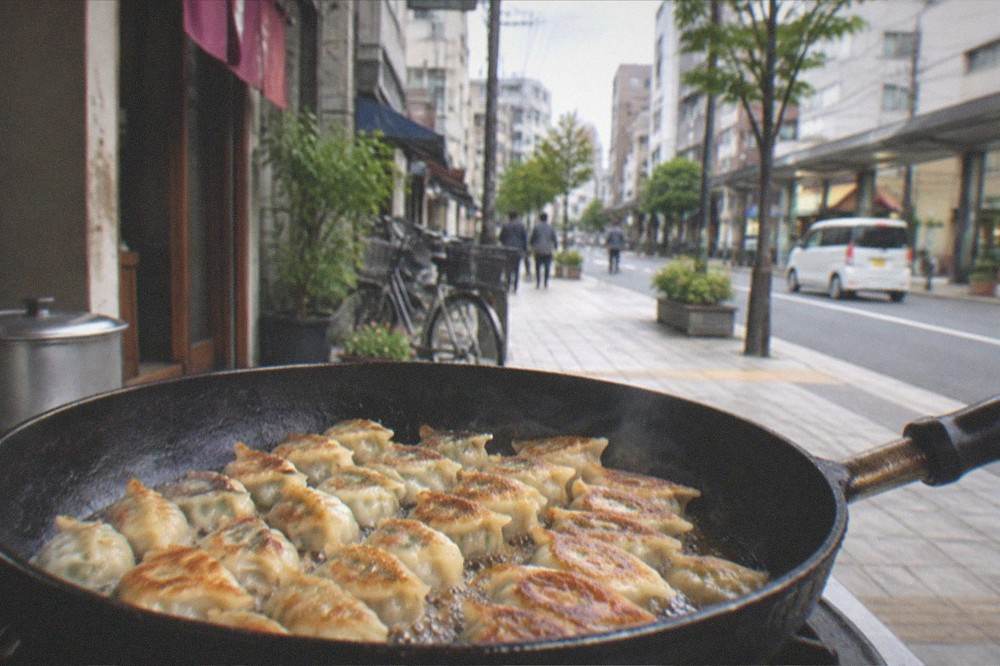
A hands-on class shortens the learning curve and covers more than the dumpling alone. The Fukuoka cooking class guide lays out the options in the city, from single-dish sessions to full menus. For visitors who want the eating without the homework, the evening tours and stall tours already mentioned do the work instead.
If your interest is less in cooking and more in the culture around the food, the trio below spans a tasting day trip, a traditional tea ceremony, and a city highlights walk, three different angles on the same question of what Fukuoka's food and heritage actually are.
Common Questions About Hakata Hitokuchi Gyoza
What Is Hakata Hitokuchi Gyoza?
It is a bite-sized version of the pan-fried dumpling popular across Japan, closely associated with Fukuoka's Hakata district. Each piece is small enough to eat in one bite, with a thin wrapper, a crisp base, and usually a pork and cabbage filling. It is typically served with a spicy miso or mentaiko dip in Fukuoka, rather than the plain vinegar and soy combination used elsewhere.
Where can I eat hitokuchi gyoza in Fukuoka?
In the yatai stalls of Nakasu, Tenjin and Nagahama in the evening, in the basement food halls of Hakata Station and Tenjin's department stores during the day, and in izakaya across the city as a starter. The stalls are the most atmospheric option and prices must be displayed by city ordinance, so you can check the cost before sitting down.
How is it different from ordinary gyoza?
Size, wrapper and sauce. A hitokuchi piece is roughly half the size of a standard gyoza, the wrapper is thinner so the base crisps faster, and Fukuoka shops often serve it with a spicy miso or mentaiko sauce. It is also treated more as a snack or side dish than as a main.
Is hitokuchi gyoza expensive?
There is no fixed citywide price and the city publishes no average, so the honest answer is to read the posted price board, which Fukuoka's yatai ordinance requires every stall to display clearly. The format is designed as an affordable snack, and drinks will usually move a stall bill faster than food will.
Do I need to book anything to eat at a yatai?
No. Yatai stalls take walk-ins and cannot be booked. Only guided food tours of the stalls are bookable. If you want the ordering and etiquette handled for you on your first night, a guided stall or evening tour is the bookable option, but eating at a stall itself requires nothing more than turning up.
What should I drink with it?
Beer is the classic pairing, cutting through the richness of the pork filling and the crisp base. Tonkotsu ramen followed by a plate of gyoza is the standard Hakata sequence, and the small local ramen bowls leave room for it. Tea or a soft drink works fine at daytime food hall counters.