What Is Special About Hakata Ramen?
Hakata ramen is Fukuoka's signature tonkotsu noodle soup: pork-bone broth, ultra-thin noodles, and the kaedama refill system. Here is what makes it different.
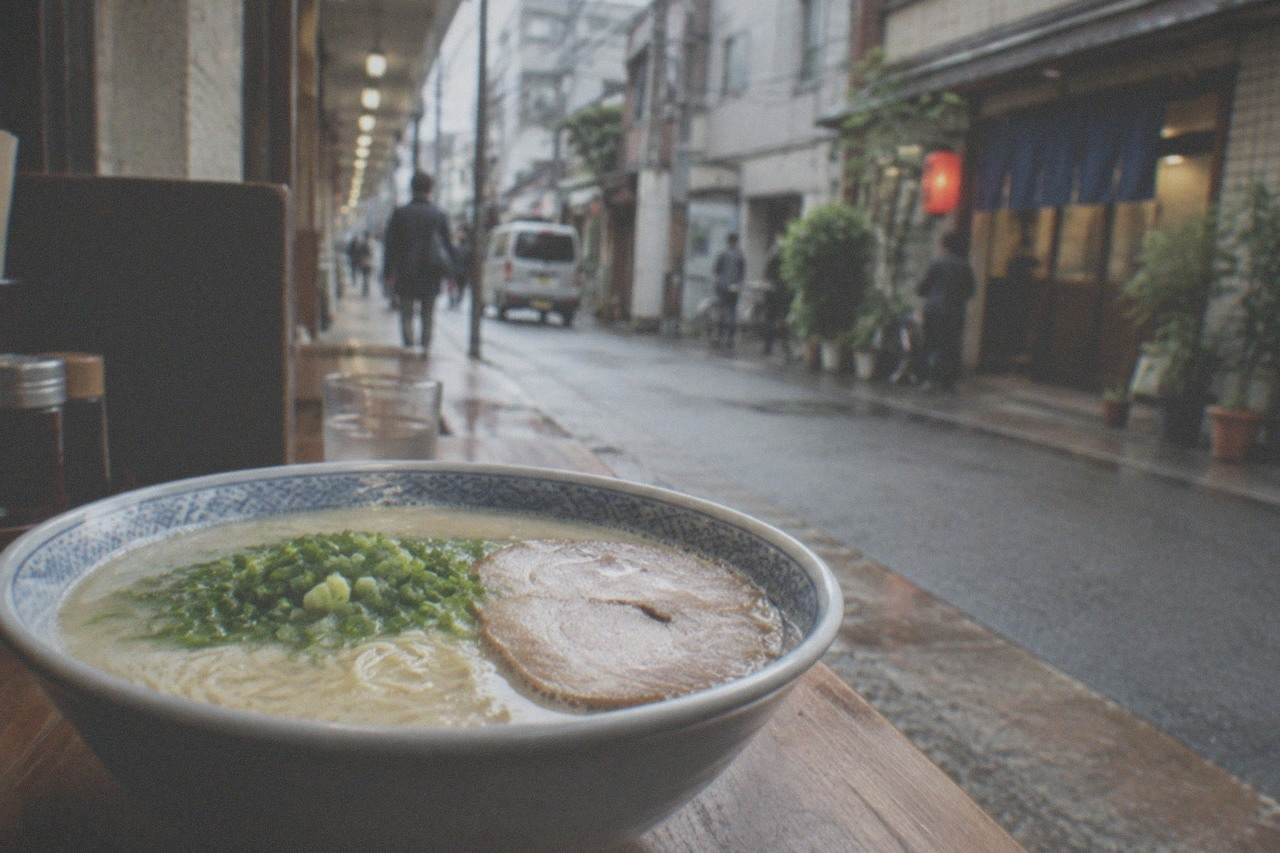
Hakata ramen is the bowl that put Fukuoka on Japan's food map, and it is one of the few regional ramen styles whose name travels further than the city that invented it. You will find it in Tokyo, in Osaka, and in ramen shops across the world, but the version served in the alleys and stalls of Hakata, the ward that gives the ramen its name, is still the reference point. This page explains what is actually different about it: the broth, the noodles, the ordering system, and where in the city to eat it well.
What Is Special About Hakata Ramen?
Hakata ramen is a tonkotsu ramen: a soup built on pork bones boiled until the collagen breaks down and the broth turns opaque, creamy and white, served with very thin, straight noodles that cook in seconds and are designed to be refilled, a system called kaedama. The style comes from Hakata, the ward and main station area of Fukuoka City, and its defining traits are the intensity of the broth, the thinness of the noodles, and the customisation of noodle firmness and oil level when you order.
The word "Hakata" is the part that confuses visitors first. Hakata is not a separate city from Fukuoka: it is a ward of Fukuoka and the name of the city's main railway station. The ramen style is called Hakata ramen because it was born in the Hakata area, in the food stalls and small shops around what is now the station district. So when a menu in another country says Hakata ramen, it is claiming descent from this specific neighbourhood in northern Kyushu. The naming question comes up often enough that this site covers it separately in Hakata or Fukuoka, which name to use, and the short answer is that both names point to the same city.
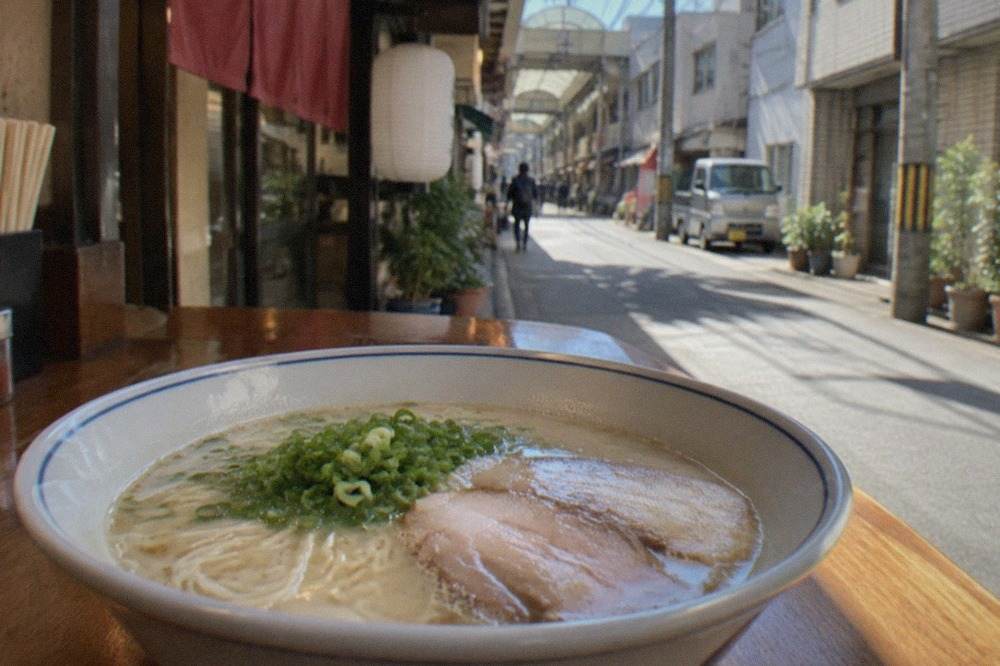
What separates a good Hakata bowl from an ordinary bowl of ramen elsewhere is that nothing about it is neutral. The broth is the loudest element on the table, the noodles are the shortest-lived, and the ordering sheet gives you more control over texture than most ramen styles anywhere in Japan. The sections below take those one at a time.
Why Is the Tonkotsu Broth Different?
Tonkotsu broth is made by boiling pork bones at a rolling boil for many hours until the collagen, marrow and fat emulsify into the liquid and it turns from clear grey to opaque white. Hakata ramen is defined by this broth: rich, heavy and faintly sweet from the pork, served hot enough that the thin noodles do not cool it down. Most other major ramen styles in Japan use clear or lightly cloudy soups instead.
The emulsification is the technical heart of it. A clear broth means the fat and the water stayed separate; a white tonkotsu means they were forced together by sustained, violent boiling, which is why traditional Hakata shops are loud, steamy places with pots that never stop moving. The result is a soup with body: it coats the thin noodles instead of sliding off them, which is exactly why the noodles can be so thin and still carry flavour.
Because the broth is so heavy, the toppings stay deliberately minimal. The classic Hakata bowl is chashu (thin sliced braised pork), chopped green onion, and sometimes a spoon of pickled ginger or wood ear mushroom. Piled-on toppings would fight the soup rather than complement it. This restraint is also why the style survives translation so well: the base is one unmistakable flavour, and everything else is seasoning around it.
The regional context matters too. Tonkotsu is the dominant ramen style across Kyushu, and Hakata ramen is its most famous expression, but it is not the only one. The broader Kyushu ramen scene, including the lighter Kurume style that many credit as tonkotsu's origin, is covered in the Kyushu ramen styles guide, and Kurume's shops generally produce a sharper, more pungent bowl than Hakata's.
If you want to understand the broth by tasting rather than reading, the honest advice is to eat it at the source at least once before comparing it to the versions overseas. A guided tasting walk through the stall rows is one way to do that with a local making the introductions, and there are also self-guided options in the Fukuoka food tours overview.
Why Are the Noodles So Thin?
Hakata noodles are among the thinnest ramen noodles in Japan, straight, low-water-content noodles that cook in well under a minute and go soft quickly, which is presented as a feature rather than a flaw: because a single serving is small, the shop expects you to order a refill, kaedama, of fresh noodles dropped into the broth you already have. The thinness, the small portion and the refill system are one design, not three separate habits.
Kaedama is the part that genuinely surprises first-time visitors, so it deserves a precise explanation. You order a bowl. You eat the noodles and leave some broth. You call "kaedama kudasai", pay a small extra charge, and the cook drops a fresh ball of noodles into your remaining soup. The soup itself is not refilled: the point of the system is that you finish the broth at full strength, with noodles that are never soggy.
Two practical notes. First, ask for the kaedama before your noodles go soft, not after; the system rewards pace. Second, the extra charge is for the noodles only, and it is posted on the menu, which in Fukuoka's food stalls is not just custom but law: the city's yatai ordinance requires every stall to display its prices where customers can easily see them, and forbids vague "market price" labelling on dishes priced by the day, as the city's own yatai Q&A explains. That rule is one of the quiet advantages of eating ramen in this city.
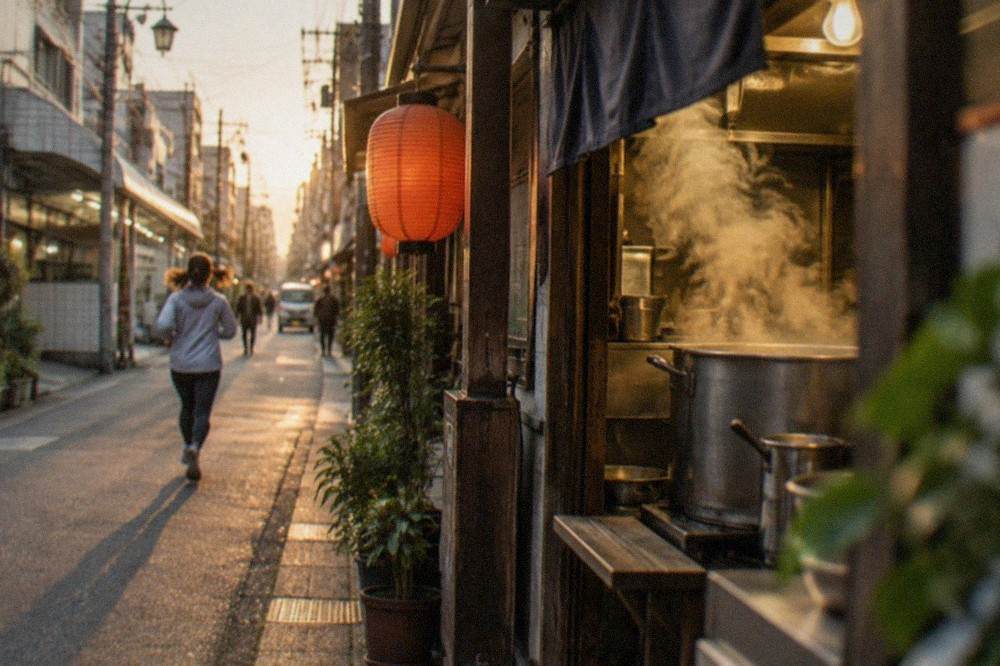
The other signature habit is ordering your noodle firmness, katame. A typical Hakata order includes a hardness level, from katamen (hard, the noodles barely warmed through) to yawa (soft), with the middle setting as the default. Thin noodles plus a firm order plus a fast refill is the full Hakata technique, and shops expect it. The table below collects the words you need.
| Term | What it means | When to order it |
|---|---|---|
| Katame / katamen | Firm noodles, cooked seconds less | If you eat slowly or plan multiple kaedama |
| Futsu | Standard firmness | The safe default at any shop |
| Yawa / yawame | Soft noodles | If you dislike bite or are ordering for a child |
| Kaedama | Noodle refill into your existing broth | When noodles are nearly gone but broth remains |
| Men kata omedetou | Congratulations on ordering hard noodles | A shop's joke greeting to katame regulars |
Where Should You Eat Hakata Ramen in Fukuoka?
The two classic settings are the yatai food stall and the specialist ramen shop, and they offer different experiences: stalls give you a counter of about seven seats, a cook two metres away and a conversation, while shops give you a deeper menu, a vending-ticket machine and longer hours. Fukuoka has about 100 licensed yatai across the city, more than any other city in Japan, concentrated in Nakasu, Tenjin and Nagahama, and ramen is a staple of the stall scene alongside yakitori and oden.
The stall experience is the one Fukuoka is famous for, and it is the setting most first-time visitors want. Stalls open in the early evening, typically around 18:00 to 18:30, and close in the small hours; the city permits road occupancy from 17:00 to 04:00. They are weather-sensitive by nature, since a stall is a cart with a tarp roof, and rain closes many of them. There is no city-mandated closing night, so the honest rule is to check the stall rows in person and have a backup shop in mind. The etiquette of the stalls, from the seating to the bill, is covered in full in the yatai etiquette guide.
The shop experience is where the purists argue the best bowl lives. Specialist Hakata ramen shops run deeper broth programs, some boiling bones for more than a day, and many operate almost around the clock, which makes them the late-night and early-morning option when the stalls are shut. The Hakata ramen guide on this site goes shop by shop through the neighbourhoods around the station, which is the densest ramen district in the city.
If you would rather not choose your stall alone, the Nakasu food stall rows are the most photogenic and the most visitor-friendly, and a guided walk exists for exactly this: the Fukuoka: Nakasu Food Stall Private Guided Tour with Tastings is a private, two-hour walk through the stalls with tastings included, from $94 per person and rated 4.7 from 70 reviews. A guide who knows the stall owners also solves the language problem at the counter, which is the single biggest friction point for visitors eating at yatai. The rest of the planning pages sit on Fukuoka Japan Travel Guide.
For the differences between stall ramen and shop ramen specifically, including whether the broth really differs, see the companion answer what makes yatai ramen unique, and for what a bowl costs, is yatai ramen expensive covers the pricing without the guesswork.
How Do You Order Like a Local?
Ordering a Hakata bowl like a local means three moves: state or ticket your bowl, specify noodle firmness when the shop offers it, and time your kaedama so the fresh noodles land while the broth is still hot and half-full. Beyond that, the local habits are modest: slurping is normal and expected, finishing the broth is the compliment, and adding the pickled ginger or sesame at the table is a matter of taste rather than a rule.
The firmness question is the one that marks you as someone who knows the style. Many Hakata shops ask "katame?" as a default, and the answer "futsu de" (normal) is always safe. Ordering katame signals you intend to eat fast and take refills, which some cooks treat as a small badge of honour. Nothing bad happens if you do not answer with a firmness; the shop will cook to its standard.
Slurping deserves one honest sentence, because visitors worry about it. Slurping cools the noodles and pulls broth and noodle together, and in a shop where the noodles soften in ninety seconds it is functionally useful, not just tolerated. Nobody will judge a quiet eater either, but a Hakata shop at peak hour is a loud room, and that is the culture working as intended.
One more local habit worth copying: eat at the counter, not at a table, if the shop has both. The counter puts you in sightline of the pots, and in the stall rows it puts you in the conversation, which is half of what the yatai scene is for. The wider street-food context, including the other dishes worth ordering at a stall, is in the Fukuoka street food guide.
Where Did Hakata Ramen Come From?
Hakata ramen descends from the tonkotsu tradition of Kurume, a city about an hour south of Fukuoka, where pork-bone ramen is generally credited with being born in the early postwar years at street stalls; cooks in Hakata adapted the heavier Kurume broth by thinning the noodles, shrinking the portion and inventing the kaedama refill to serve workers quickly, and the style spread from the Hakata stalls to the whole country.
The stall origins matter to how the bowl is designed. A yatai is a tiny cart with a few seats, one pot and no storage, so every element of the classic Hakata order is optimised for that reality: thin noodles cook almost instantly, small portions keep the queue moving, and refills let a customer eat as much as they want without the cook guessing portions in advance. The style is a piece of engineering for small kitchens, which is why it translated so well to the compact ramen shops that later spread it nationwide.
The name is the final piece. "Hakata" attached itself to the style because the stalls around Hakata station and the Nakasu riverfront were where travellers encountered it, and the station's role as Kyushu's main rail gateway carried the name outward. Today the station area remains the densest concentration of Hakata ramen shops in the world, and the Hakata area guide maps it for a walking crawl.
Common Questions About Hakata Ramen
What Is Special About Hakata Ramen?
A milky, long-boiled pork-bone (tonkotsu) broth, very thin straight noodles cooked to order at your chosen firmness, and the kaedama refill system that keeps every serving of noodles fresh. It originated in the Hakata ward of Fukuoka and is the city's signature dish.
Is Hakata ramen the same as tonkotsu ramen?
Not exactly. Tonkotsu describes the broth type, the pork-bone soup, which is used across Kyushu in several regional styles. Hakata ramen is one specific expression of tonkotsu: thinner noodles, smaller portions and kaedama refills. Every Hakata ramen is a tonkotsu ramen, but not every tonkotsu ramen is a Hakata ramen.
What does kaedama mean?
Kaedama is a noodle refill. You keep the broth in your bowl and the cook drops a fresh ball of thin noodles into it for a small extra charge, which is posted on the menu. It exists because Hakata portions are small and the thin noodles soften quickly.
Is Hakata ramen only available in Fukuoka?
No. The style has spread across Japan and internationally, and chains built on Hakata-style tonkotsu operate worldwide. The versions in Fukuoka, and especially in the Hakata station area and the yatai stalls, are still considered the reference standard.
Can you eat Hakata ramen at a yatai stall?
Yes. Fukuoka has about 100 licensed yatai and ramen is a standard stall dish. Stalls open in the early evening, close in the small hours, and shut in bad weather, so have a ramen shop as a backup on rainy nights.