Fukuoka Photo Spots
Fukuoka is a compact, walkable city with a bay on one side and mountains on the other, and its best photographs come from a handful of well-defined places: the yatai stalls along the Naka River, the stone walls of Maizuru Park, the observation deck of Fukuoka Tower, and the coastal day trips that sit within an hour of the centre.
Short answer
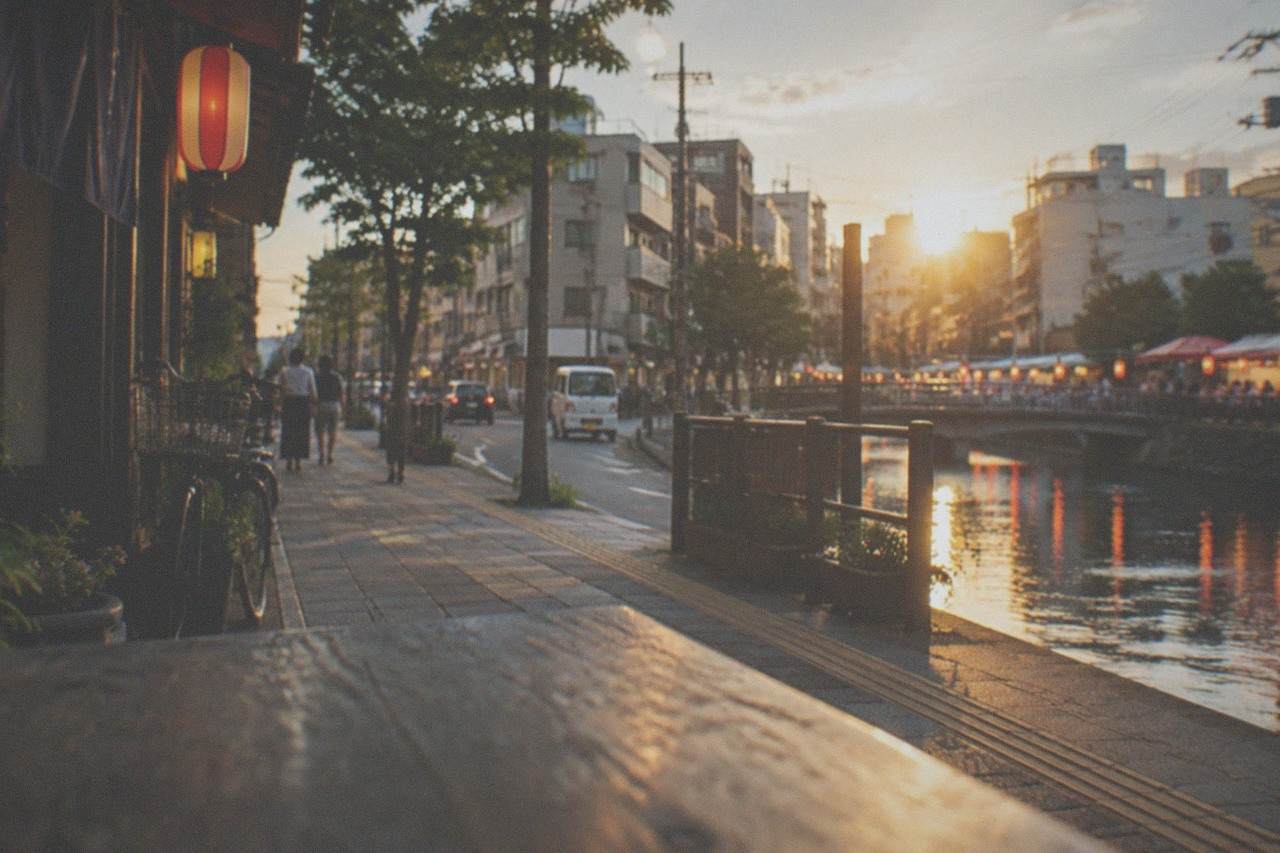
The best photo spots in Fukuoka cluster around the Naka River yatai stalls in Nakasu, the castle ruins and cherry trees of Maizuru Park, Ohori Park's Japanese Garden at ¥250 entry, Fukuoka Tower's 123 m deck at ¥1,000, and the Momochi waterfront. Dazaifu, Itoshima and Nokonoshima add the big day-trip frames. July is the wettest month at 299.1 mm, so plan light around it.
Fukuoka rewards a camera more than most Japanese cities its size, and it rewards it for an unusual reason: almost everything worth photographing sits inside a 5 km radius of Hakata Station. The yatai stalls glow along the Naka River a fifteen minute walk from the station's Hakata exit. The castle ruins and Ohori Park sit one subway stop apart on the west side of the centre. Fukuoka Tower and the Momochi waterfront close out the bay to the northwest, and the whole circuit can be done on foot, by subway or by rental bicycle in a single long day. This page from Fukuoka Japan Travel Guide walks through where the best frames actually are, what each one costs to enter, and when the light is right.
What Are the Best Photo Spots in Fukuoka?
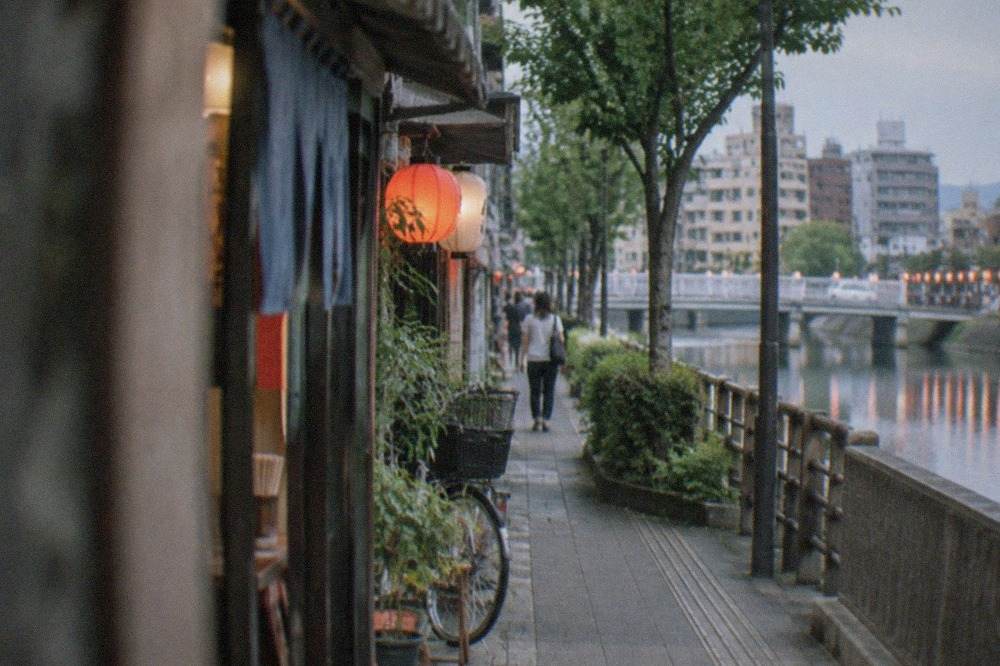
The short list is the Naka River yatai row in Nakasu, the Kushida Shrine approach in Hakata old town, the castle walls and roughly 1,000 cherry trees of Maizuru Park, the pond and borrowed scenery of Ohori Park, the 234 m silhouette of Fukuoka Tower on the Momochi waterfront, and, for day trips, the approach to Dazaifu Tenmangu and the coastline of Itoshima. Each one is either free to enter or costs a few hundred yen, and all but the day trips sit on the city subway.
That list is deliberately weighted toward things you can photograph without a ticket. Fukuoka's paid viewpoints are cheap, a subway day pass costs ¥640 and covers all three lines, and the single most photogenic scene in the city, the row of lanterns strung over the yatai stalls on the Naka River, costs nothing to stand in front of. The sections below group the spots by the kind of photograph they produce, because that is how most people actually shoot: night colour first, old timber and stone second, water and skyline third, then the bigger landscapes that need a train or a bus.
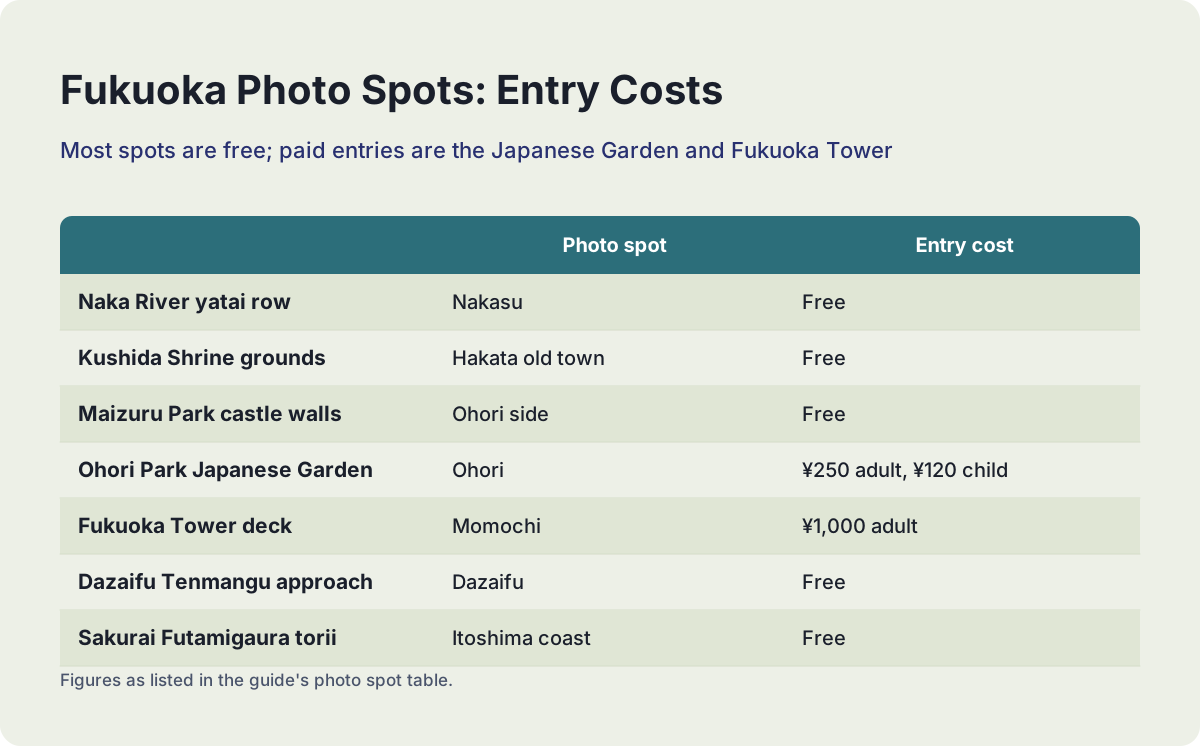
| Photo spot | Neighbourhood | Entry cost | Best light |
|---|---|---|---|
| Naka River yatai row | Nakasu | Free | Dusk to about 21:00 |
| Kushida Shrine grounds | Hakata old town | Free | Morning, before crowds |
| Maizuru Park castle walls | Ohori side | Free | Late afternoon, spring blossom |
| Ohori Park Japanese Garden | Ohori | ¥250 adult, ¥120 child | Morning, soft light on the pond |
| Fukuoka Tower deck | Momochi | ¥1,000 adult | Sunset into blue hour |
| Dazaifu Tenmangu approach | Dazaifu | Free | Morning, shop lanterns lit |
| Sakurai Futamigaura torii | Itoshima coast | Free | Sunset, low tide |
Night Colour: The Yatai Stalls and the Naka River
The single most photographed scene in Fukuoka is the row of yatai food stalls along the Naka River in Nakasu, best shot between dusk and about 21:00, when the lanterns are lit, the stalls are full, and the river carries their reflections. There are about 100 licensed yatai across the city, and the ordinance that governs them requires every stall to post its prices where customers can easily see them.
Fukuoka has more yatai than any other Japanese city, and the city itself says so on its own yatai Q&A page. The stalls occupy their plots from 17:00 until 4:00 the next morning under the city's rules, though most open the shutters around 18:00 to 18:30 and close in the small hours. Rain and strong wind shut many of them, so a clear evening is when the riverbank looks the way the postcards promise. There is no city-mandated closing day, and the count has been held at about 100 by a public recruitment system that has been filling vacancies since around 2016.
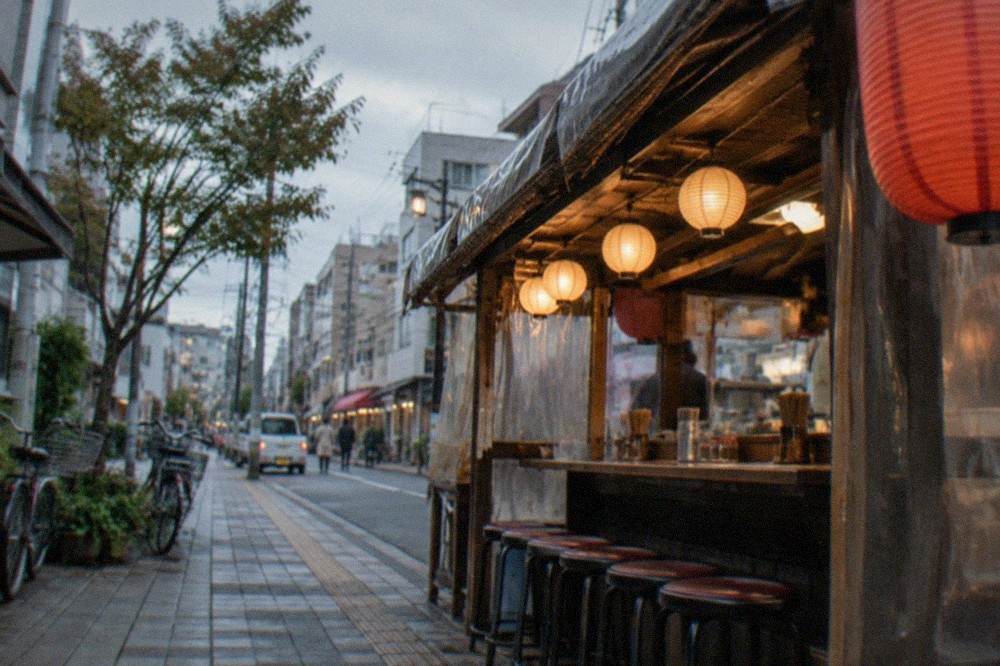
For a photographer the row works from both banks. The east bank near Seiryu Park gives you the full line of stalls reflected in the water; the west bank puts you close enough to catch steam rising off a ramen pot against the lantern glow. Cross the bridge mid-span for the compression shot with the Nakasu neon behind. If you want the scene with food in it rather than just architecture, the etiquette and the dish-by-dish detail are covered in the yatai guide, and the wider eating landscape, motsunabe, mentaiko, tonkotsu ramen and the rest, is in the Fukuoka food guide. The stalls take walk-ins only; there is no booking a seat, though guided yatai crawls exist and are listed further down this page.
Two blocks south, Canal City Hakata adds a different night frame: a canal running through the middle of a shopping complex, with fountains, running water and light shows in the evenings. Entry is free, the complex is open every day of the year, and the shops run 10:00 to 21:00. It photographs best from the upper walkways looking down the water axis rather than from canal level.
If photographing the stalls at their most atmospheric appeals more than shooting them from across the water, a guided evening changes the frame entirely.
The trio above spans three very different ways to buy photographs in Fukuoka: a kimono photogenic half day in the city itself, a full-day coach tour into Miyazaki's gorges, and a private local walk you can bend toward whichever spots on this page you care about. The evening yatai experience is a different product again, and the nightlife guide covers where the city goes after the stalls close.
Old Hakata: Shrines, Temples and Timber Streets
Hakata's old town, the district between Hakata Station and the Naka River, holds the city's oldest photographic subjects: Kushida Shrine with its great Yamakasa float on display, Tochoji's Fukuoka Daibutsu, the Zen gates of Shofukuji, and the machiya timber facades of the Kawabata arcade. All of these are free to enter, and all sit within a ten minute walk of each other.
Kushida Shrine is Hakata's parish shrine and the focal point of the Hakata Gion Yamakasa festival every July, when teams race roughly one-ton floats over a 5 km course from the shrine in the small hours of July 15. Through the rest of the year a decorated kazariyama float stands on the grounds, and it is one of the few festival objects in Japan you can photograph at eye level without a barrier. The shrine's history and festival role are covered in the Kushida Shrine guide. Tochoji, a few blocks west, houses the Fukuoka Daibutsu, a seated wooden Buddha that photographs well from the hall's entrance; the temple is free. Shofukuji, founded in the 12th century, keeps its gates closed to casual photography of the interior, but the outer gates and the approach make quiet frames. Details for both are in the Tochoji guide and the Shofukuji guide.
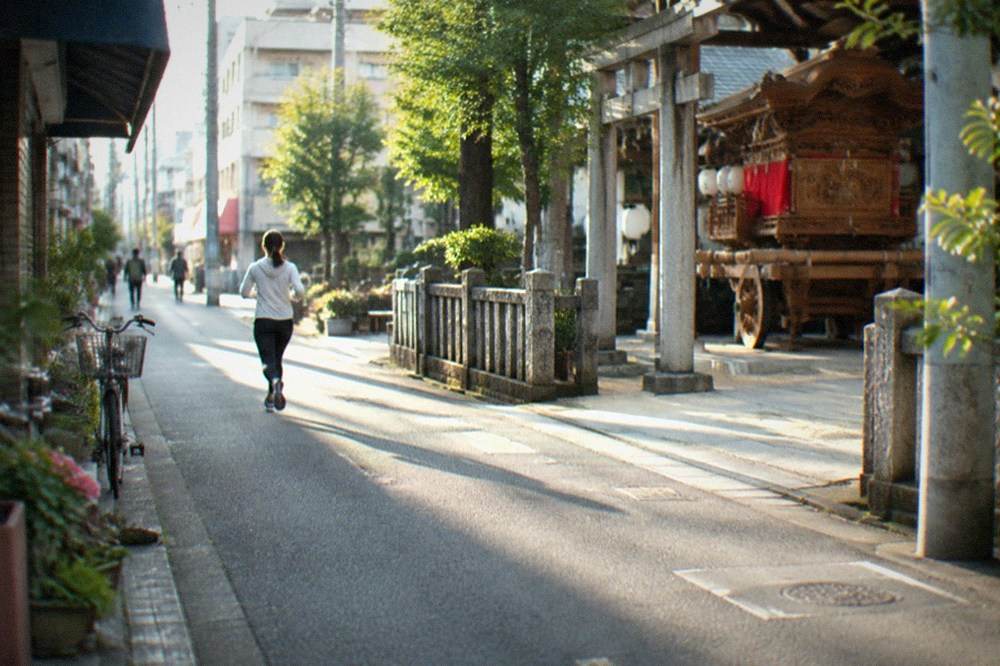
The connecting tissue between these sights is the Hakata old town streetscape itself: the Kawabata shopping arcade, the machiya of the Hakata old town, and the museum that preserves a whole street of them at the Hakata Machiya Folk Museum. Shoot these streets in the last hour before sunset, when the timber throws warm shadow and the shop lanterns start to come on. If your interest runs to the festival rather than the architecture, the Hakata Gion Yamakasa guide covers the July race, and the Fukuoka festivals guide places it among Dontaku in May and Hojoya in September.
| Old town subject | What you get | Entry | Shooting note |
|---|---|---|---|
| Kushida Shrine | Yamakasa kazariyama float, main hall | Free | Float is at eye level, no barrier |
| Tochoji | Fukuoka Daibutsu seated Buddha | Free | Shoot from the hall entrance |
| Shofukuji | Zen gates and treed approach | Free | Interiors closed to the public |
| Kawabata arcade | Covered machiya shopping street | Free | Last hour before sunset |
| Canal City Hakata | Canal, fountains, evening light shows | Free | Best from the upper walkways |
A local who knows which alley the tour buses skip turns this district from a checklist into a set of frames, and the private option below is the most direct way to arrange that.
Stone, Water and Cherry Trees: Maizuru Park and Ohori Park
The west side of the centre gives Fukuoka its landscape photographs: the stone walls and roughly 1,000 cherry trees of Maizuru Park around the Fukuoka Castle ruins, and the large pond of Ohori Park with its islands and bridges, both free to enter, with the Ohori Park Japanese Garden beside it at ¥250 for adults and ¥120 for children.
Maizuru Park wraps the ruins of Fukuoka Castle, and the park itself states plainly on its own site that entry is free except during ticketed events. The walls, gates and the Tenshudai, the stone base of the former keep, are the bones of the best historical landscape in the city, and in late March into early April the roughly 1,000 cherry trees turn the whole park into the city's main hanami ground. One thing to know before you frame a shot of the keep base: the Tenshudai is closed to entry from 26 May 2026 until the end of December 2026 for an archaeological excavation, after a document found in December 2024 described a keep that may never have existed. The park's walls and cherry trees remain fully open; only the climb onto the base itself is off. The Fukuoka Castle ruins guide carries the full story of the dig.
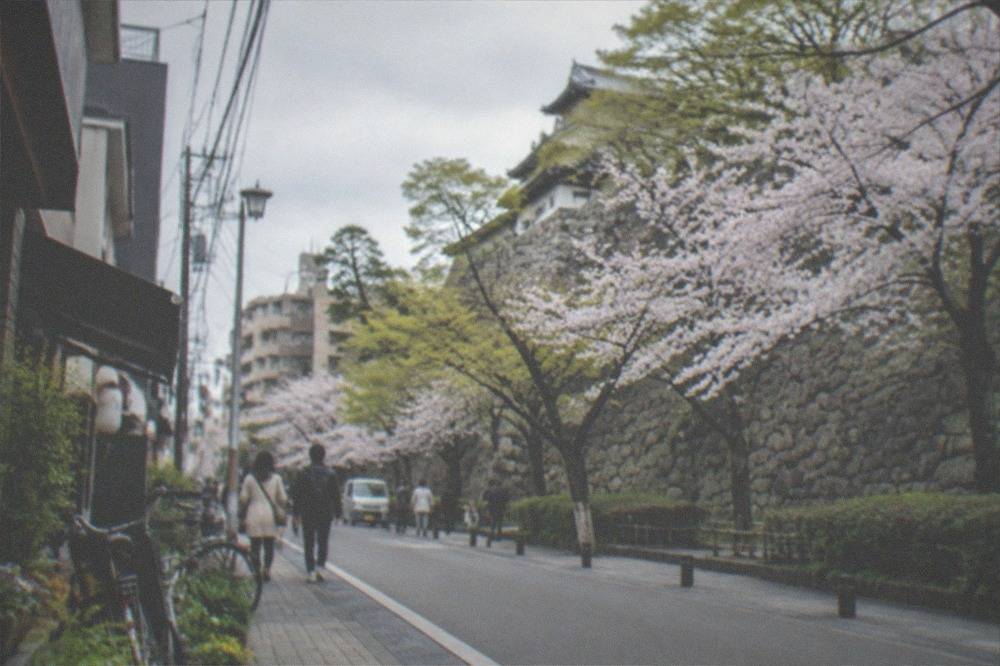
Ohori Park, a short walk west, was built around a pond that was once the castle's outer moat, and it photographs across the water with the Fukuoka Art Museum and the city skyline behind. The Japanese Garden inside the park is the refined version: a ¥250 ticket, last entry 17:45 in the May to September season and 16:45 from October to April, and free entry for visitors 65 and over and for children under 6, per the garden's official site. The Ohori Park guide and the Ohori Park Japanese Garden guide cover both. For the seasonal timing of the cherry trees, the cherry blossom guide tracks the typical late March bloom, and the best time to visit guide weighs the seasons against each other.
| Park subject | Entry | Season detail | Photo note |
|---|---|---|---|
| Maizuru Park walls and gates | Free | Roughly 1,000 cherry trees, late March to early April | Walls stay open during the Tenshudai dig |
| Tenshudai keep base | Free normally | Closed 26 May 2026 to end of December 2026 | Excavation of the possible "phantom keep" |
| Ohori Park pond and bridges | Free | Year round | Skyline behind the water from the east bank |
| Ohori Park Japanese Garden | ¥250 adult, ¥120 child | Last entry 17:45 May to Sep, 16:45 Oct to Apr | Free for 65 and over and under 6 |
The tour above is the one product in the city's roster built specifically around photographs: a half day, from $80 per person, visiting Fukuoka's photogenic spots in a kimono, with the city's own certification behind it. Its rating currently stands at 5.0 from a single review, which is worth knowing plainly: it is a well-reviewed but very new listing, not a long-established one.
Skyline and Bay: Fukuoka Tower and the Momochi Waterfront
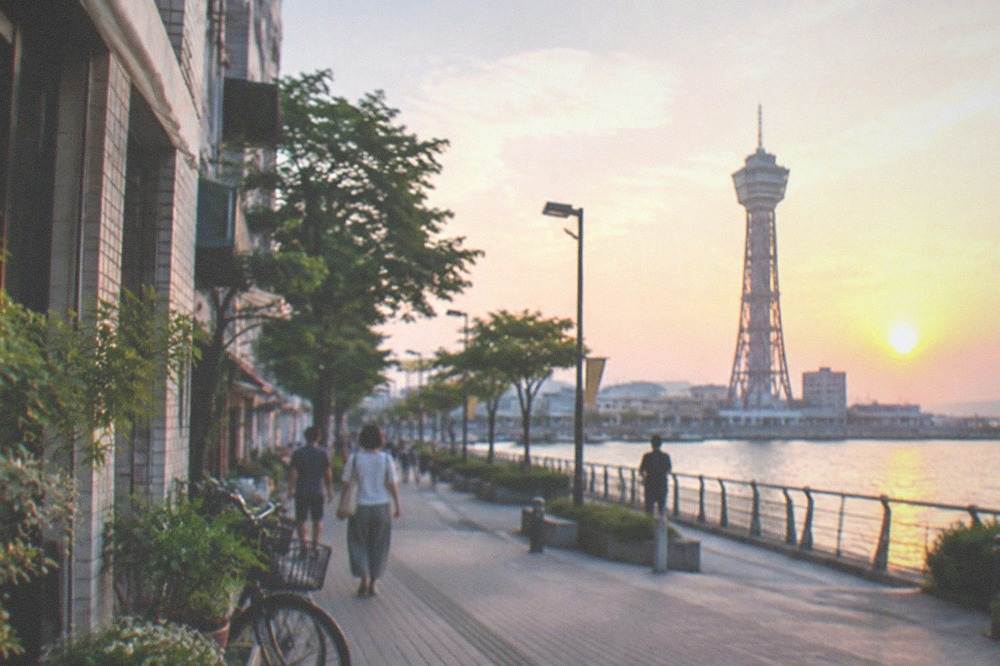
Fukuoka Tower, a 234 m lattice tower on the Momochi waterfront, is the city's paid viewpoint: ¥1,000 for adults, ¥500 for elementary and junior high students and ¥200 for children aged 4 and over, with observation decks at 123 m, 120 m and 116 m, open 9:30 to 22:00 with last admission at 21:30.
The tower photographs from outside as much as from inside. Its triangular lattice catches sunset across Hakata Bay, and the deck at 123 m looks back over the Momochi Seaside Park, the beach and the city. The tower's official page lists the full price ladder, including a ¥900 rate for Fukuoka residents 65 and over with ID, and its one annual closure, 28 and 29 June 2027, on its charges page. The Fukuoka Tower guide covers the deck views in detail, and the Momochi Seaside Park guide covers the waterfront below it, which is free to walk and is where most of the tower-against-sky shots are actually taken from.
For a fuller rundown of every deck and hill in the city, the Fukuoka viewpoints guide compares them all, including the free ones. If you are staying on the east side of the centre, the where to stay guide explains the Hakata versus Tenjin trade-off, which matters here because the tower is a 20 minute subway ride from Hakata Station but an easy tram-and-walk from the Ohori and Nishijin side.
The Day-Trip Frames: Dazaifu, Itoshima and the Islands
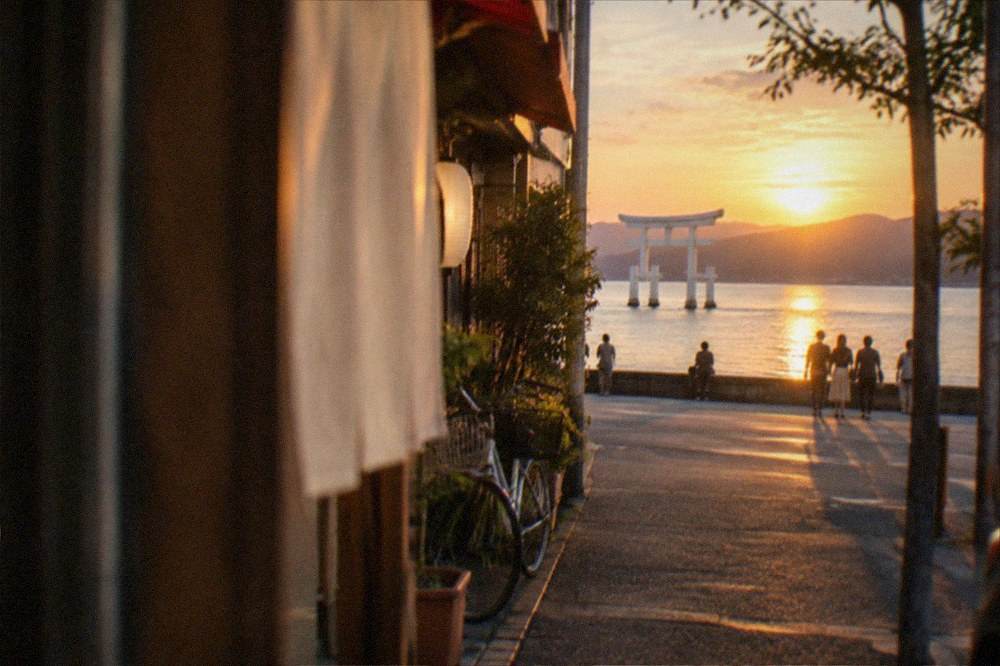
The biggest landscapes near Fukuoka need a train or a bus: the approach to Dazaifu Tenmangu with its taiko bridge and plum trees, the white torii standing in the sea at Sakurai Futamigaura on the Itoshima coast, and the flower fields of Nokonoshima Island Park, a ten minute ferry from Meinohama. Dazaifu Tenmangu states plainly that there is no entrance fee.
Dazaifu Tenmangu, a Nishitetsu ride from Tenjin, is the classic half-day frame: a lake, arched bridges, and an approach lined with shops selling umegae mochi. The shrine's own FAQ states there is no entrance fee, and its grounds open from 6:00 or 6:30 depending on season, closing 18:30 from December to March, 19:30 from June to August and 19:00 the rest of the year, per the shrine's FAQ page. The Dazaifu Tenmangu guide and the Dazaifu day trip guide cover the route, including the Tabi Kippu combined train-and-mochi ticket. In mid to late November the moss garden at nearby Komyozenji, maples over green, is one of the best small garden photographs in Kyushu, and the autumn leaves guide times it.
Itoshima, west along the bay, is the coast: Sakurai Futamigaura's torii in the water, Shiraito Falls, and a string of beaches and oyster shacks. The Itoshima day trip guide covers it, and a guided option is listed below. Nokonoshima, an island ferry from Meinohama, turns brilliant with rapeseed flowers in spring and cosmos in autumn; treat the island park as pay-at-gate, since the site's own pricing pages could not be verified, and the Nokonoshima Island Park guide carries what is known. On the same bay side, Uminonakamichi Seaside Park charges ¥450 for adults, junior high and under free, and its gate takes cash only, a detail almost no guide mentions but the park's own site does.
| Day-trip frame | Travel from the centre | Entry | Signature shot |
|---|---|---|---|
| Dazaifu Tenmangu | Nishitetsu from Tenjin | Free | Taiko bridge and approach lanterns |
| Komyozenji moss garden | Walk from Dazaifu | Small garden fee applies | Maples over moss, mid to late November |
| Sakurai Futamigaura | Bus or car, Itoshima coast | Free | White torii in the sea at sunset |
| Nokonoshima Island Park | Ferry from Meinohama | Pay-at-gate, fee unverified | Spring rapeseed, autumn cosmos |
| Uminonakamichi Seaside Park | Subway and ferry or bus | ¥450 adult, cash only gate | Open lawns against Hakata Bay |
The tour above is the strongest day-trip value in the roster for photographers heading out of the city: from $59 per person, rated 4.6 across 384 reviews, ten hours into Miyazaki and the Takachiho Gorge, whose columnar cliffs and rowboat river are the single most dramatic landscape within a day's reach of Fukuoka. The Takachiho gorge trip guide covers the independent version if you would rather go by rail.
Light, Weather and Timing: When Each Spot Performs
Fukuoka's light is best in the shoulders of the year: spring and autumn give long golden hours and comfortable walking temperatures, while July is the city's wettest month at 299.1 mm against June's 249.6 mm, despite June being the tsuyu rainy season, and August is hotter than July but drier and sunnier, with 200.9 sunshine hours.
That July figure surprises people because every guide assumes the rainy season, June, is the wet month. The Japan Meteorological Agency's 1991 to 2020 normals for the Fukuoka station say otherwise, and July is also Yamakasa month, which means the wettest month is also the most photogenic festival month, if you are willing to work around showers. The Fukuoka weather guide carries the full month-by-month table, and the typhoon season guide explains the July to October window without the alarm that most overseas coverage attaches to it.
For a shooting calendar, the practical read is this. Winter, December to February, is the driest stretch of the year and gives the clearest night air for the yatai and tower shots, at the cost of early sunsets. Late March into early April brings the cherry trees at Maizuru Park, Nishi Park and Tenjin Central Park, with the blossom illuminations during the festival period. Mid to late November into early December brings the maples at Komyozenji and Kamado Shrine near Dazaifu, and the city parks hold their colour longer. Summer is the season of festivals rather than scenery: Dontaku in May, Yamakasa in July, Hojoya in September, all covered in the festivals guide.
| Season | Rain | Light for photography | What is in frame |
|---|---|---|---|
| Dec to Feb | 67.5 to 74.4 mm monthly, the driest stretch | Clear night air, early sunsets | Yatai lanterns, tower illuminations |
| Mar to Apr | 103.7 to 118.2 mm | Long golden hours | Roughly 1,000 cherry trees at Maizuru Park |
| Jun to Jul | 249.6 to 299.1 mm, the wettest pair | Overcast, dramatic cloud | Yamakasa floats and races in July |
| Aug | 210.0 mm, 200.9 sunshine hours | Strong, hot, bright | Bay and beach frames at Momochi |
| Nov to early Dec | 91.4 mm | Soft, cool, long sunsets | Maples at Komyozenji and Kamado Shrine |
Getting between these spots is cheap and simple. The subway day pass at ¥640 covers all three lines from the airport out to Meinohama and the airport line in between, and the getting around guide compares it with the bus and the Fukuoka Tourist City Pass, which costs ¥2,500 for the city version or ¥2,800 with Dazaifu included, is restricted to overseas tourists on a short-stay visa with a passport check at the counter, and is still mispriced on most competing guides. If you are arriving with camera gear rather than a suitcase, the airport to city guide covers the ¥260 subway fare from the airport to Hakata, and the luggage storage guide covers where to park bags you do not want on your back while shooting.
The private option above, from $65 per person and rated 4.9 across 164 reviews, is the flexible one: two to eight hours with a local who will build the route around your shot list, whether that is the yatai row at dusk or the castle walls before the crowds. The private tours guide compares it with the other private products in the roster, and the walking tours guide covers the group alternatives.
Common Questions About Photo Spots in Fukuoka
What Are The Best Photo Spots In Fukuoka?
The Naka River yatai row in Nakasu, the Kushida Shrine grounds and the kazariyama float, the castle walls and cherry trees of Maizuru Park, the Ohori Park pond and Japanese Garden, the 123 m deck of Fukuoka Tower, and, further out, the Dazaifu Tenmangu approach, the Sakurai Futamigaura torii on the Itoshima coast and the flower fields of Nokonoshima.
Is the yatai row free to photograph?
Yes. The stalls stand on public riverbank in Nakasu, Tenjin and Nagahama, and there is no charge to walk the row or shoot from the bridges. The stalls take walk-ins only, you cannot book a seat, and the city ordinance requires every stall to post its prices visibly, so a bowl of ramen while you wait for the light is a known cost rather than a surprise.
Which photo spots cost money to enter?
The paid ones are cheap: Fukuoka Tower at ¥1,000 for adults, the Ohori Park Japanese Garden at ¥250, Uminonakamichi Seaside Park at ¥450 with a cash-only gate, and Marine World Uminonakamichi at ¥2,500. The castle ruins, Ohori Park itself, Kushida Shrine, Tochoji, Shofukuji, Dazaifu Tenmangu and the Momochi waterfront are all free.
When is the best light for photographing Fukuoka?
Winter gives the clearest, driest air and early sunsets that pair well with the yatai lanterns. Late March into early April adds the cherry blossom at Maizuru Park, and mid to late November into early December adds the maples around Dazaifu. July is the wettest month at 299.1 mm, but it is also Yamakasa month, so festival frames come with a rain plan.
Can I photograph inside the shrines and temples?
Grounds and exteriors at Kushida Shrine, Tochoji and Shofukuji are generally fine to shoot, and Dazaifu Tenmangu charges no entrance fee at all. Shofukuji keeps its interior halls closed to the public, so plan on gates and the approach rather than interior shots there. As anywhere in Japan, look for signs at individual halls and follow them.
Is Fukuoka Castle's keep base open for photographs?
The park and its stone walls are free and open, but the Tenshudai, the keep base, is closed to entry from 26 May 2026 until the end of December 2026 for an archaeological excavation prompted by a document found in December 2024. The walls, gates and cherry trees photograph normally; only the climb onto the base itself is closed.