Fukuoka Tower
A 234-metre lattice tower on the western edge of Hakata Bay, with three observation decks, a 22:00 closing time and a ticket counter that still takes cash.
Short answer
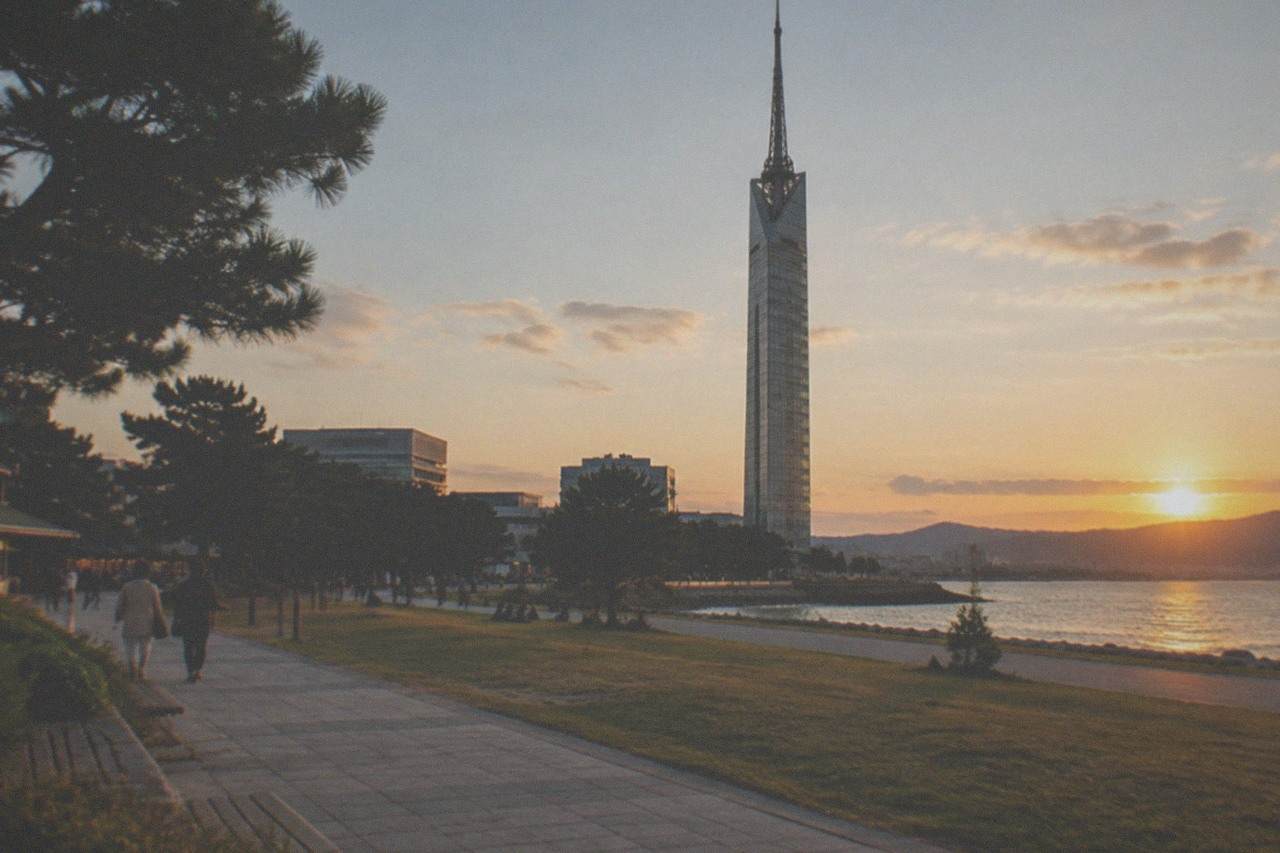
Yes, for most visitors. Fukuoka Tower charges ¥1,000 for adults, ¥500 for elementary and junior high students and ¥200 for ages four and over, and stays open until 22:00 with last entry at 21:30. The upper deck sits at 123 metres above Hakata Bay, which makes it the highest viewpoint in the city and the best place to watch the sun drop behind Itoshima.
A 234-metre tower wrapped in half-mirrored panels stands on the Momochi waterfront, and for most of the year it is open until ten at night. Fukuoka Tower is the tallest observation tower on this coast, and unlike most city towers it sits directly on Hakata Bay, so the view from its upper deck at 123 metres runs west along the Itoshima peninsula and out over the Genkai Sea rather than simply across rooftops. The tower is easy to reach from the city centre, cheap by Japanese observation-deck standards, and it anchors a Momochi outing that can stretch from a beach walk to a ballpark game on the right evening. This page sets out what the tower costs, when it is open, how to get there, and what else is worth doing within a short walk of the base.
What Is Fukuoka Tower?
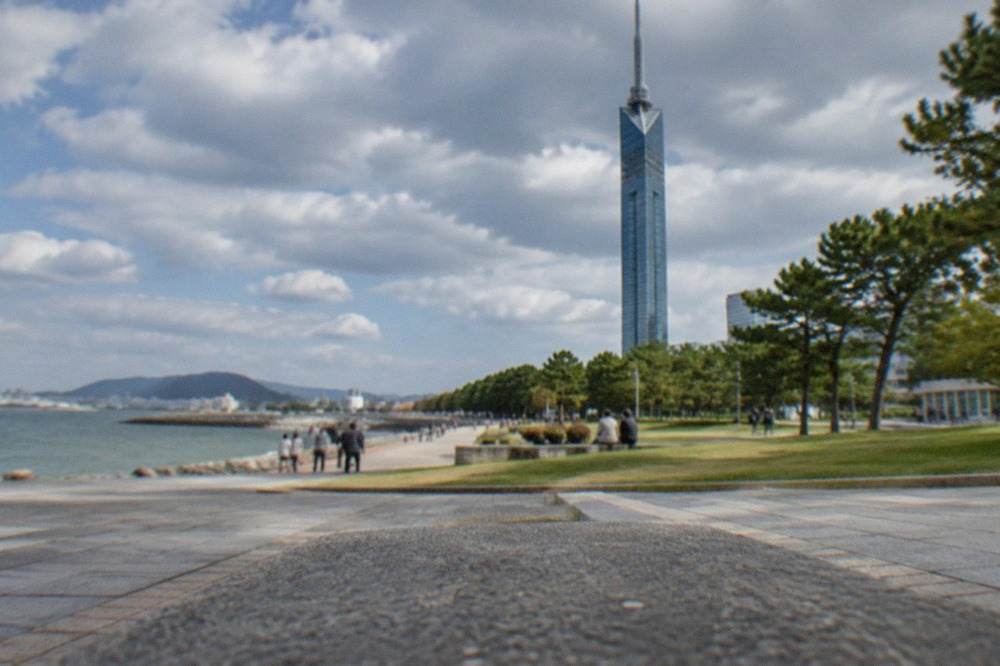
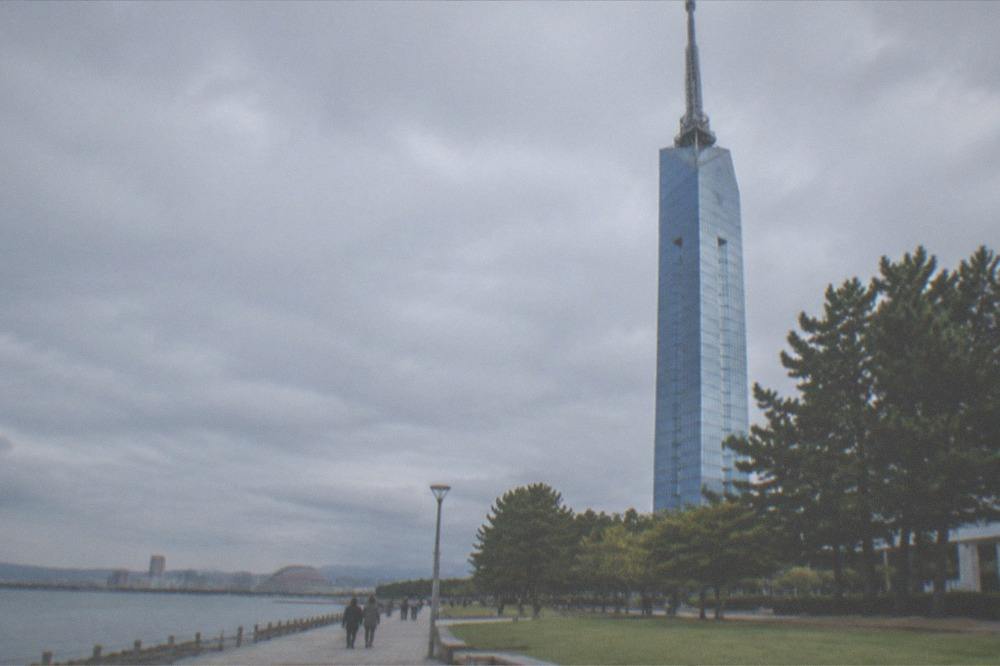
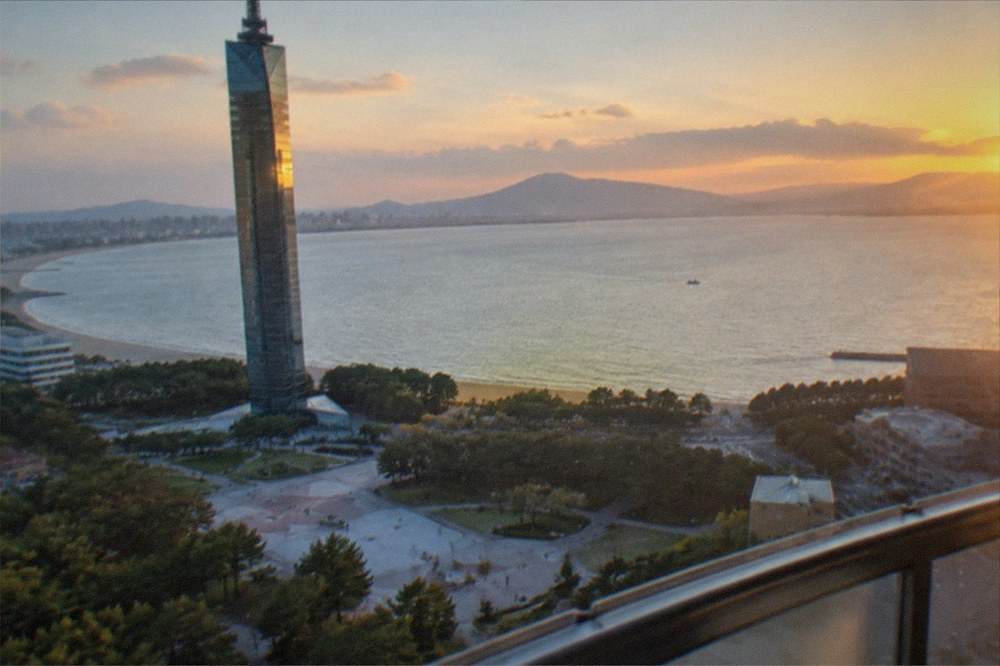
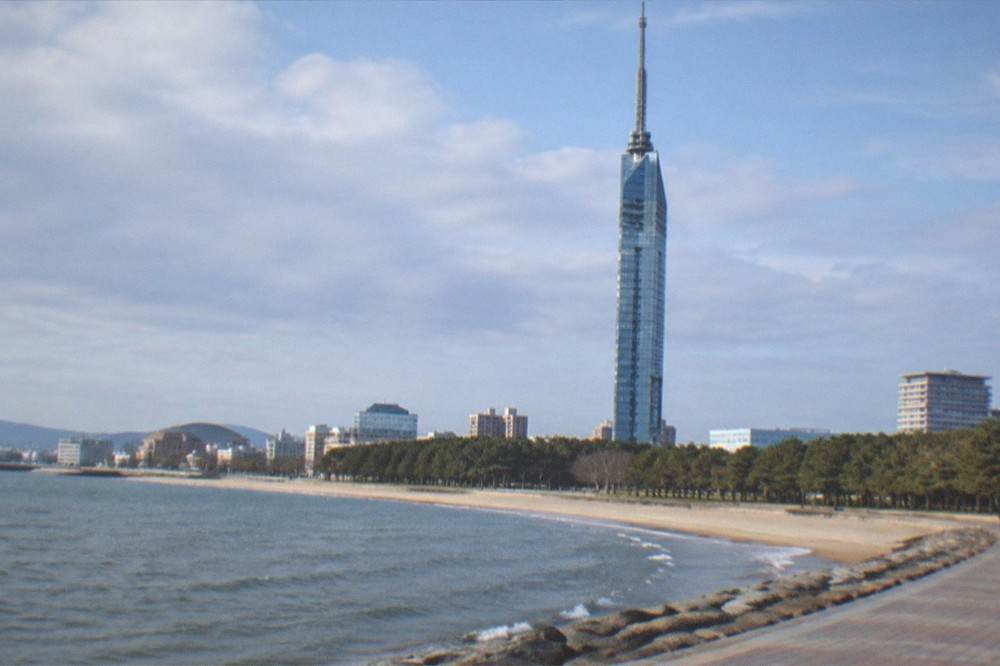
Fukuoka Tower is a 234-metre seaside observation tower in the Momochi district of Fukuoka, on the western shore of Hakata Bay, with observation decks at 123 metres, 120 metres and 116 metres. It is one of the tallest towers of its kind in Japan and it stays open until 22:00, later than almost every other paid viewpoint in the city. The tower is the anchor of the Momochi Seaside Promenade, the district of hotels, beaches, museums and the city's baseball dome that was reclaimed from the bay in the late twentieth century. Its exterior is a lattice of half-mirrored glass that shifts from silver to orange as the sun drops, which is why almost every photo of Fukuoka on a tourism brochure was taken either of this tower or from it.
The three decks stack close together near the top of the shaft. The main deck at 123 metres is the one most visitors use: it has the cafe seating, the windows and the ring of telescopes. The lower decks host smaller viewing areas and, at times, seasonal displays. On a clear day you can see the Itoshima peninsula to the west, the hills behind the city to the north, Shikanoshima island across the bay, and on the very best days the coastline curving away toward Karatsu.
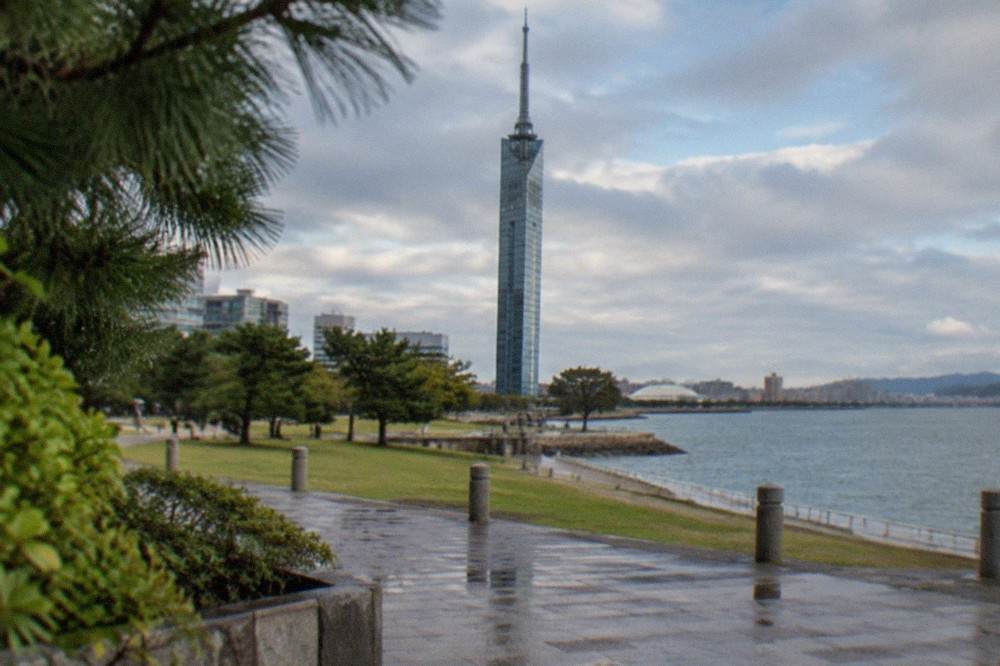
What surprises many first-time visitors is how quiet the upper deck can be on a weekday afternoon. The tower draws its biggest crowds at sunset and during school holidays, and the rest of the time it functions as a calm, air-conditioned room 123 metres above the water. If you are deciding between the tower and the free viewpoints around the city, the honest framing is that the free options give you a taste of the panorama while the tower gives you the whole of it, from a fixed, elevated platform, with a place to sit down.
Is Fukuoka Tower Worth Visiting?
For most travellers, yes. The tower is the highest public viewpoint in Fukuoka, the evening view over Hakata Bay is the best in the city, and at ¥1,000 for an adult it costs less than many observation decks in Tokyo or Osaka. It is worth it for anyone with two spare hours around sunset, and it is skippable for anyone whose itinerary is already packed with shrines, food halls and day trips into Kyushu. The value of the visit tracks almost entirely with two things: the weather, and the time of day you go up.
The case for the tower is strongest in the late afternoon. Momochi faces west across Hakata Bay toward Itoshima, so the deck catches the sunset full on, and after dark the city side lights up behind you. Going up at 17:30 on a clear evening and coming down at 19:00 covers both halves of that in a single ticket, since admission is for the day and there is no separate night rate. The tower also stays open to 22:00, which means it works as a post-dinner stop in a way that shrine grounds and museums do not.
The case against is mostly about weather and priorities. Fukuoka's cloudiest months are the June to July rainy period, when the top deck can sit inside a cloud bank and you will pay full price for a view of white. And if you are in the city for two nights with a food crawl and a yatai evening already booked, an hour at the tower can be the thing that gets cut. For a longer answer on the trade-offs of the city itself, see whether Fukuoka is worth visiting.
For most itineraries, though, the tower earns its slot. It pairs naturally with the Momochi beach promenade below it, with Ohori Park on the route back into the city, and with the evening illumination runs the tower itself stages through the year. Here are the three ways we would spend the same budget if a tower visit does not fit your trip:
How Much Do Fukuoka Tower Tickets Cost?
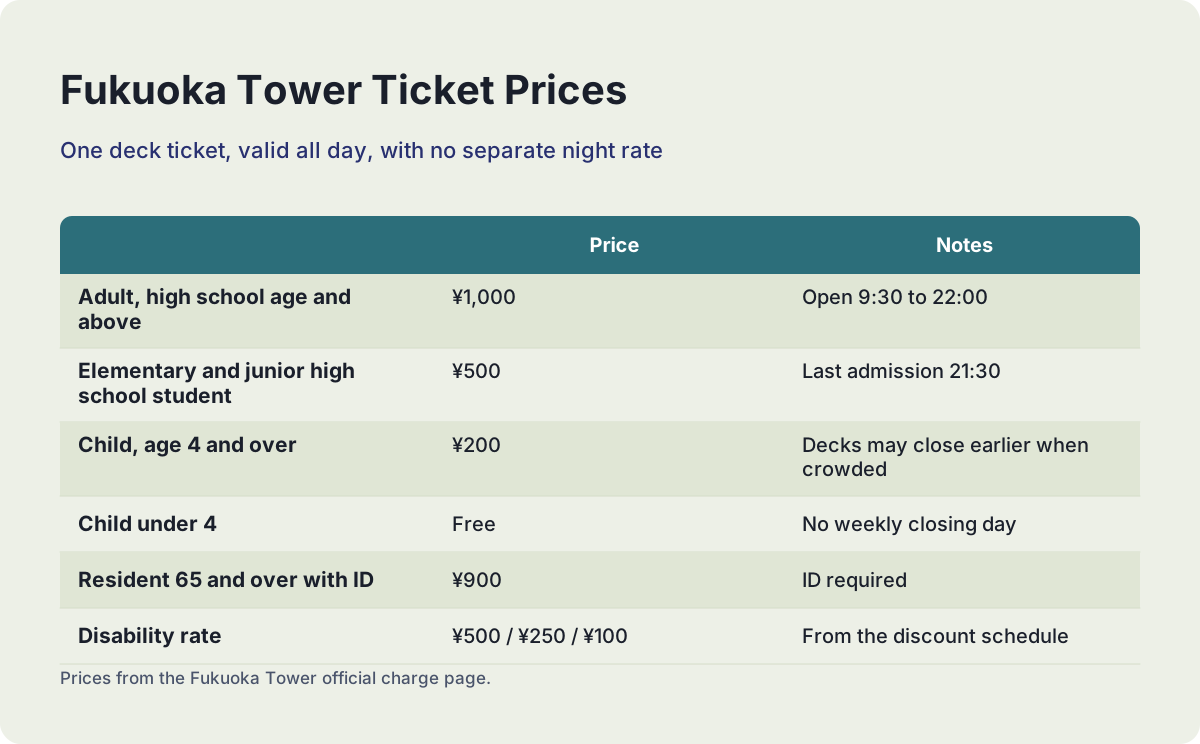
An adult ticket to Fukuoka Tower costs ¥1,000, elementary and junior high school students pay ¥500, and children aged four and over pay ¥200, with children under four free. Hours are 9:30 to 22:00 with last admission at 21:30, and the operator's official charge page lists the full discount schedule, including a ¥900 rate for residents aged 65 and over with ID. That is the whole pricing structure: there is one deck price, no separate top-deck upcharge, and no timed entry tiers.
The counter takes cash alongside a long list of cashless options. Visa, Mastercard, JCB, American Express, Diners, Discover and UnionPay cards are accepted, and the mobile wallets PayPay, d-barai, Rakuten Pay, au PAY, Alipay+ and WeChat Pay all work at the gate, per the operator's own charge page. That matters in Japan, where plenty of ticket counters are still cash only: Uminonakamichi Seaside Park, across the bay, is a working example, since its entrance gate takes cash only.
| Who | Price |
|---|---|
| Adult, high school age and above | ¥1,000 |
| Elementary and junior high school student | ¥500 |
| Child, age 4 and over | ¥200 |
| Child under 4 | Free |
| Resident 65 and over with ID | ¥900 |
| Disability rate | ¥500 / ¥250 / ¥100 |
Prices come from the tower's official charge page, which you can read yourself at the Fukuoka Tower admission page. The operator may close the decks earlier than 22:00 when the building is crowded, and the last admission of 21:30 stands even on those nights.
If you would rather not carry the cash or queue on a busy evening, an e-ticket bought ahead of the visit is available for the same attraction. It is priced from $7 per person and is rated 5 from 1 review, which is a new listing rather than an established one, so treat that score as a single data point rather than a verdict.
The tower ticket is also one of the cheapest paid entries in its own neighbourhood, which is worth knowing when you plan the whole Momochi afternoon. The comparison below uses each venue's own published gate prices.
| Momochi and bay area | Adult entry |
|---|---|
| Fukuoka Tower | ¥1,000 |
| Ohori Park Japanese Garden | ¥250 |
| Uminonakamichi Seaside Park | ¥450 |
| Fukuoka City Zoo and Botanical Garden | ¥600 |
| Marine World Uminonakamichi | ¥2,500 |
| Ohori Park, Kushida Shrine, Tochoji | Free |
What Are the Opening Hours and Closures?
Fukuoka Tower is open 9:30 to 22:00 every day, with last admission at 21:30, and the decks may close earlier on busy days. The one fixed closure on the calendar is 28 and 29 June 2027, the tower's annual maintenance shutdown, which the operator publishes in advance. Beyond that, the tower runs every day of the year including public holidays and the New Year period. There is no weekly closing day, which is unusual for a Fukuoka attraction: most of the city's museums and the Ohori Park Japanese Garden close one weekday a week.
That seven-day schedule changes how you can use the tower. A museum visit has to dodge its Monday closure, but the tower can slot into any evening, including a holiday Monday or the nights around New Year when other attractions shut. Last entry at 21:30 also means a late dinner reservation and a tower visit are compatible: go up at 20:00, come down by 21:15, and be at a ramen counter in Hakata by 21:45.
The maintenance closure is worth diarising if your trip lands in late June. The tower's stated closure dates for the next annual shutdown are 28 and 29 June 2027, so a mid-2027 visitor loses the deck on exactly those two days. Everything else in Momochi, including the promenade and the free viewpoints along it, stays open regardless, and the beach itself never closes.
One seasonal note: the tower stages illumination displays on its exterior through the year, and these change with the calendar. Recent seasonal programmes have included an autumn moon-viewing motif in September and a Christmas tree theme from early November into December. The operator announces each year's schedule on its own site, so check the tower's news page for whichever month you are visiting.
How Do You Get to Fukuoka Tower?
Fukuoka Tower sits in Momochi, on the western side of the city, roughly 20 to 30 minutes from the Hakata and Tenjin core by bus or taxi. There is no subway station at the tower's door: the closest stations on the subway's Airport Line sit a substantial walk away, so most visitors arrive by bus, taxi or rental bicycle, or as one stop on a private driving tour. Momochi is a flat, seaside district, so the last stretch on foot or by bike is easy going.
The city's buses reach Momochi from Hakata Station and from Tenjin, with routes serving the Momochi hotels and the dome that run every few minutes through the day. Taxis are metered and reasonable for a group: the fare from Hakata or Tenjin to the tower is a fraction of what a Tokyo ride of the same length would cost, and the ride is short enough that the taxi is often the right call for a family carrying kids and beach gear. Anyone planning a wider loop around the city should read the guide to Fukuoka's best viewpoints, which places the tower among the free and paid options across the city.
If you are building the tower into a day that uses the subway elsewhere, the fare structure is worth knowing. The subway is distance-zoned, and the airport ride that every visitor ends up taking costs ¥260 from the terminal to Hakata Station, a fare that falls inside the official 3 to 7 km band on the operator's fare table. The airport itself is unusually close to the city centre, which is one of Fukuoka's genuine advantages over almost every other Japanese city.
| Subway zone | Distance | Adult | Child |
|---|---|---|---|
| Zone 1 | up to 3 km | ¥210 | ¥110 |
| Zone 2 | 3 to 7 km | ¥260 | ¥130 |
| Zone 3 | 7 to 11 km | ¥300 | ¥150 |
| Zone 4 | 11 to 15 km | ¥340 | ¥170 |
| Zone 5 | 15 to 19 km | ¥360 | ¥180 |
| Zone 6 | over 19 km | ¥380 | ¥190 |
Fares above are from the operator's own fare table, published at the Fukuoka City Subway fare page. A subway day pass costs ¥640 for adults and ¥320 for children, and covers all three lines from first to last train on the day of use.
For visitors who want the transport maths done in one place, the three passes below cover the subway, the buses, or both. Only short-stay overseas visitors can buy the Tourist City Pass, and a passport check is part of the purchase.
| Pass | Adult price | What it covers |
|---|---|---|
| Subway 1-day pass | ¥640 | All three subway lines, one day |
| Nishitetsu city bus day pass | ¥1,200 | City buses, one day |
| Fukuoka Tourist City Pass | ¥2,500 | Subway, buses, trains and ferries, one day |
| Tourist City Pass + Dazaifu | ¥2,800 | Adds the Dazaifu rail corridor |
When Is the Best Time to Go Up?
The best time to visit Fukuoka Tower is the last hour of daylight. Momochi faces west, the deck at 123 metres has an unobstructed line to the horizon over the bay, and a 17:00 or 18:00 entry lets you watch the sun drop behind Itoshima and then see the city lights come up before the 22:00 close. The second-best window is early morning, when the decks are near empty and the air is at its clearest. The worst value is a cloudy afternoon in the rainy season, when the top deck can be inside the cloud.
The seasonal angle matters more here than at most attractions, because the view is the product. Fukuoka's climate data shows why the timing advice in generic guides is often wrong. Everyone assumes June, the tsuyu rainy season month, is the wettest time to visit. It is not. July is wetter than June in Fukuoka: 299.1 mm of rain against June's 249.6 mm in the Japan Meteorological Agency's 1991 to 2020 normals for the city. August, meanwhile, is both the hottest month, averaging a 28.4 °C mean, and one of the sunniest, with 200.9 sunshine hours.
| Month | Mean temp | Rainfall | Tower outlook |
|---|---|---|---|
| March | 10.8 °C | 103.7 mm | Clear, cool mornings |
| May | 19.9 °C | 133.7 mm | Best all-round month, 204.1 sunshine hours |
| June | 23.3 °C | 249.6 mm | Tsuyu: humid, grey, soft light |
| July | 27.4 °C | 299.1 mm | Wettest month, evening breaks possible |
| August | 28.4 °C | 210.0 mm | Hot, hazy, long light until evening |
| October | 19.6 °C | 94.5 mm | Clear skies, 175.9 sunshine hours |
| December | 9.1 °C | 67.5 mm | Crisp air, early sunsets |
The sleeper pick in that table is December. A 9.1 °C mean is cold by Kyushu standards but it comes with the driest air of the year, 67.5 mm of rain across the month, and a sunset early enough that you can go up at 17:00, be down by 18:30, and still make a full evening of Fukuoka in winter. October runs it close: 94.5 mm of rain and 175.9 sunshine hours is about as reliable as this coast gets.
Summer evenings are a different trade. The tower stays open to 22:00 all through the July and August heat, and by 19:00 the deck has cooled and the city lights are on. The risk is the typhoon season, which runs roughly July through October: when a storm passes near the coast the operator will shut early, and a day or two either side of a system can be grey and blowing. Check the forecast for your dates rather than the season average, and have an indoor plan, such as the Fukuoka Art Museum or the Asian Art Museum across the park, as the fallback.
What Else Is There to Do Near the Tower?
Momochi packs a beach promenade, a ballpark, an aquarium-grade waterfront park and the teamLab Forest digital art space into the same district as the tower, all within a flat 30-minute walk. The district is the most coherent seaside outing in Fukuoka: you can swim or sunbathe on the man-made beach, eat at the seaside cafes, and finish at the tower deck for sunset, without ever needing a bus. If you only allocate one evening to Momochi, this is the order that works.
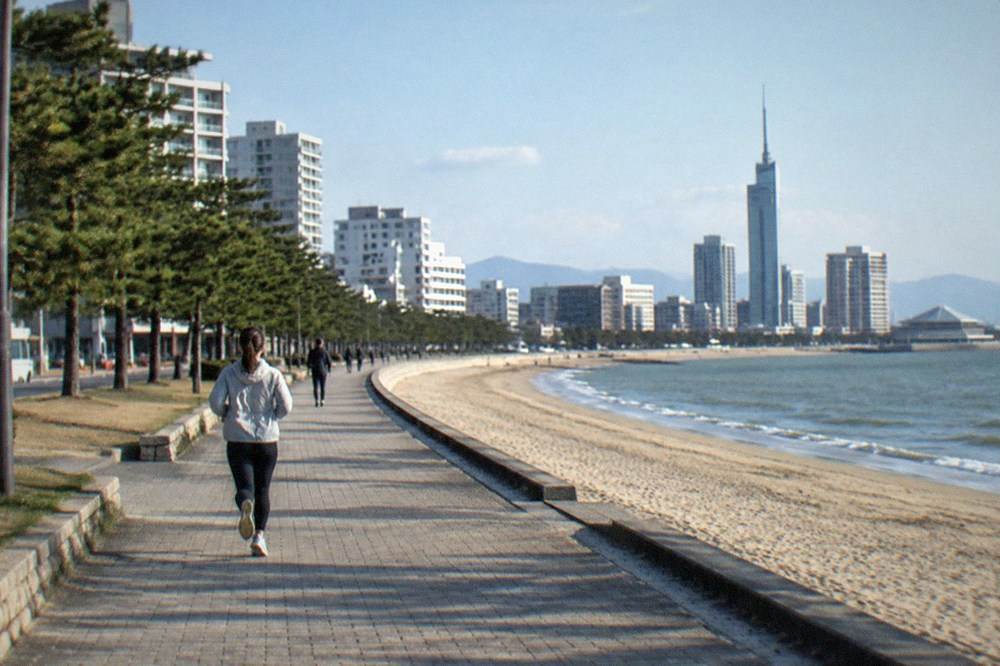
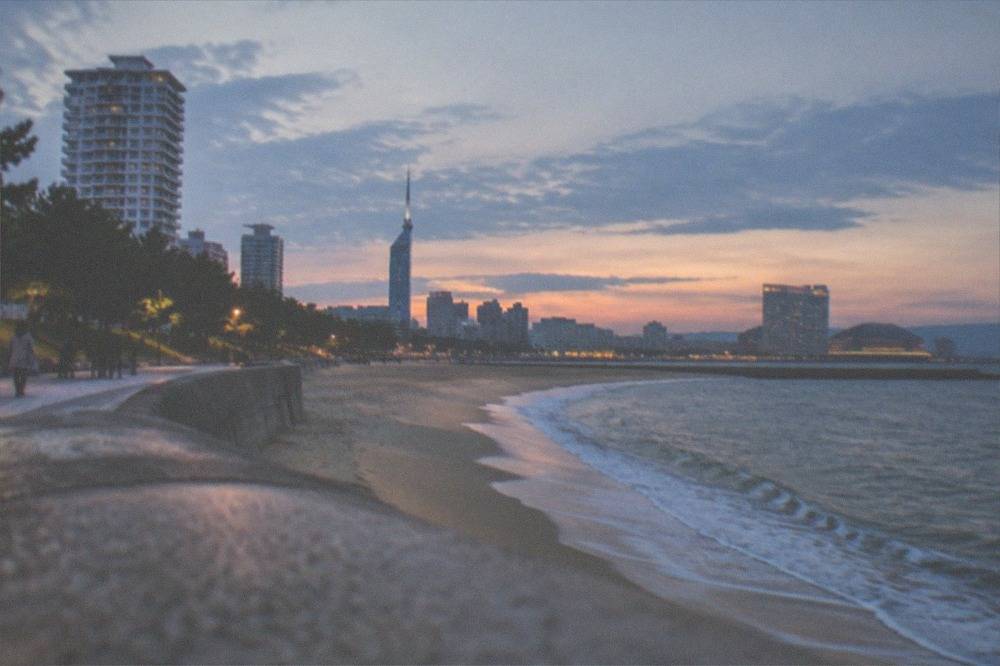
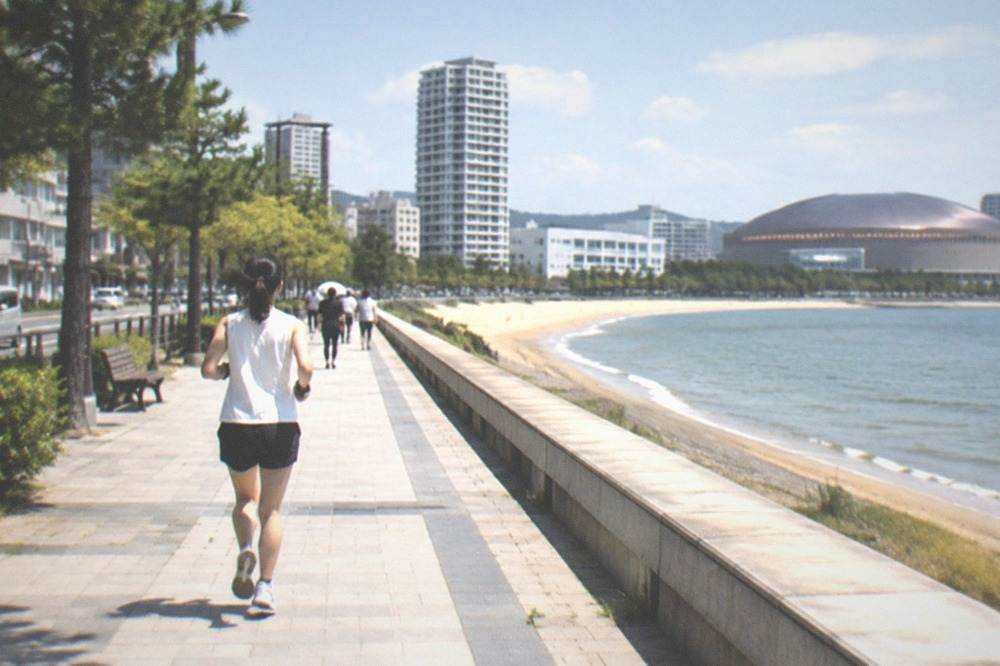
The promenade below the tower is the free half of the visit. Momochi's beaches run along the seaward edge of the district, with the sand, the palm line and the walkway out to the lighthouse-style structures at the water. On a summer weekend this fills with families and swimmers, and on a weekday morning in October you can have a stretch of it to yourself. The tower sits at the northern end of this stretch, which is why almost every visit ends rather than starts there.
North of the tower, past the hotels, the district shades into the ballpark and its entertainment block. The PayPay Dome is the home stadium of the SoftBank Hawks, and on game nights the whole neighbourhood turns green and the post-game crowd spills into the izakaya and yatai stalls around the station side of the district. A game night plus the tower is the single best Momochi evening there is: go up at 17:30, come down for first pitch. Next to the dome, teamLab Forest Fukuoka runs its immersive digital art rooms, a strong rainy-day pairing with the tower since both are indoors.
For a fuller night in the city rather than a night by the water, there is a cruise that runs the bay after dark and takes in the illuminated waterfront from the water rather than from 123 metres. It is a different product from the tower ticket: three hours, priced from $96 per person, rated 5 from 4 reviews, a small pool that says more about how new the product is than about its quality. The two stack rather than compete: the deck for the panorama, the water for the close-up of the lit skyline.
Can You See Fukuoka Tower Without Paying for the Deck?
Yes, and quite well. The tower is free to photograph from anywhere on the Momochi promenade, the beach is free to walk, and several points along the waterfront give you a genuine view over Hakata Bay toward Shikanoshima without a ticket. What you cannot get for free is the height: every free vantage in the district sits at sea level, and the deck at 123 metres is the only place in the city where the whole bay, the Itoshima coastline and the urban grid appear in one frame. That distinction is the entire purchase decision.
The honest way to use the free options is as the warm-up. Walk the promenade at 16:30, decide from the sand whether the sky is clear enough to justify the ¥1,000, and buy a ticket only when the horizon is sharp. On a hazy or wet evening, the promenade itself, the Tochoji temple hall and the free museum buildings across the park at Ohori are better uses of the hour than a white-out deck.
The tower also works as a landmark rather than a destination for some itineraries. Day trips west along the coast, toward Yufuin and the Itoshima peninsula beaches, pass the tower on the way out of the city, and the sight of it above the bay is the standard memory of leaving Momochi. For travellers deciding between a paid deck and the free sights, Kushida Shrine and Shofukuji temple are both free, both in the old Hakata core, and both reachable on the same bus corridor back into town.
One planning note for families: the tower is one of the few paid attractions in the city where small children cost almost nothing, since the age 4 and over rate is ¥200 and under-4s are free. The deck is fully enclosed, the ride up is by lift, and there is no awkward staircase or gravel approach, which makes it a rest stop in a Momochi day that is otherwise all beach and promenade.
What Do Reviews Say About the Tower?
The tower's own ticket product is new enough that its review pool is thin, so the more reliable signal comes from the attraction itself rather than the booking listings: the tower is a fixture of every Fukuoka itinerary published by the city's tourism bodies, and the evening deck is the image the city leads with in its own promotion. As with any viewpoint, the spread of opinion tracks the weather on the day of the visit more than anything the operator controls.
A few patterns hold across what visitors write. Sunset visits get the strongest responses, because the west-facing aspect delivers exactly the photo the brochures promise. Cloudy-day visits get the weakest, and that is a scheduling problem rather than a product problem, which is why this page keeps pushing the 17:00 entry. Families rate it highly for the price, since a parent and a small child pay ¥1,200 together. The lift queue at sunset on a public holiday is the most common complaint, and going up an hour before the sun drops solves it.
The deck also earns points as a rainy-day stop, which surprises people. The building is fully enclosed, the windows run floor to ceiling, and on a wet evening the deck is dry, warm and uncrowded while the promenade below empties out. A grey day kills the panorama, but a light-rain evening with the city lights reflecting on wet glass is its own kind of view, and it is the reason some travellers end up at the tower twice, once for the sunset and once in the rain.
Planning Checklist: Costs, Hours and Timing
A tower visit needs exactly four figures committed to memory: ¥1,000 for an adult ticket, 9:30 to 22:00 opening hours, 21:30 for last admission, and roughly one hour before sunset as the ideal arrival window. Everything else on this page is reasoning around those four numbers, and the table below compresses the whole planning picture into one place to screenshot before you leave your hotel. All figures come from the operator's own charge and admission pages.
| Item | Figure |
|---|---|
| Adult admission | ¥1,000 |
| Child 4 and over | ¥200 |
| Hours | 9:30 to 22:00, last entry 21:30 |
| Height of tower | 234 m |
| Main deck height | 123 m |
| Next fixed closure | 28 and 29 June 2027 |
| Best entry time | 60 to 90 minutes before sunset |
| Payment | Cash, major cards, major QR wallets |
A sensible Momochi afternoon, using everything above, runs like this. Bus or taxi out from Tenjin around 15:30. An hour on the promenade and the beach while the light is still flat. The dome and the teamLab block if the sky turns, or if there is a game night. Up the tower an hour before sunset, down by full dark. Then back into the city core for dinner, where the evening food stalls around Nakasu and the Hakata old town are a short ride away. This is the same arc most locals would run, which is the strongest argument that it works.
If your dates are flexible, aim for May or October: the clearest skies, the most comfortable walking weather, and sunsets early enough in October that the tower slot finishes before dinner rather than replacing it. Book the tower ticket for whichever evening your forecast is best, keep the pass as a same-day purchase if the weather shifts, and treat the deck as what it is: the one paid viewpoint in Fukuoka that looks west over open water, which no other tower on this coast can claim. The rest of the Fukuoka Japan Travel Guide covers the districts, the food and the day trips that fill the rest of that itinerary.
For travellers building the wider Kyushu loop, the tower is a city evening, and the coast and the countryside are the day trips. If the tower evening is booked, the options below are the ones that fill a free day in or around the city, from a driving day up the coast to a fully customised private tour of the city itself.
Common Questions About Fukuoka Tower
Is Fukuoka Tower Worth Visiting?
For most visitors, yes. It is the highest viewpoint in the city, the ¥1,000 adult price undercuts most Japanese observation decks, and the 9:30 to 22:00 hours make it one of the few paid attractions that works after dinner. It is skippable on a packed two-day itinerary or on a wet evening in the rainy season, when the deck can sit inside the cloud.
How tall is Fukuoka Tower?
The tower stands 234 m tall. The main observation deck is at 123 m, with two further decks at 120 m and 116 m, all above the Momochi waterfront on Hakata Bay.
How much does it cost to go up Fukuoka Tower?
Adults pay ¥1,000, elementary and junior high students ¥500, and children aged four and over ¥200, with under-fours free. Residents aged 65 and over with ID pay ¥900, and disability rates are ¥500, ¥250 or ¥100 depending on the ticket type.
What time does Fukuoka Tower close?
The tower closes at 22:00, with last admission at 21:30, and it opens at 9:30 every day of the year. The operator may close earlier on very crowded days, and the fixed annual maintenance closure next falls on 28 and 29 June 2027.
When is the best time to visit Fukuoka Tower?
About an hour before sunset. Momochi faces west across Hakata Bay, so the deck catches the sun dropping behind Itoshima, and after dark the city lights come up behind you. Early morning is the quietest window, and December and October give the clearest air on average.
Can you walk from the subway to Fukuoka Tower?
Not comfortably. The nearest stations sit a substantial walk inland from the waterfront, so most visitors arrive by bus from Hakata Station or Tenjin, by taxi, or as part of a driving or private tour of the Momochi area. The promenade itself is completely flat once you are there.