Kawabata Shopping Arcade
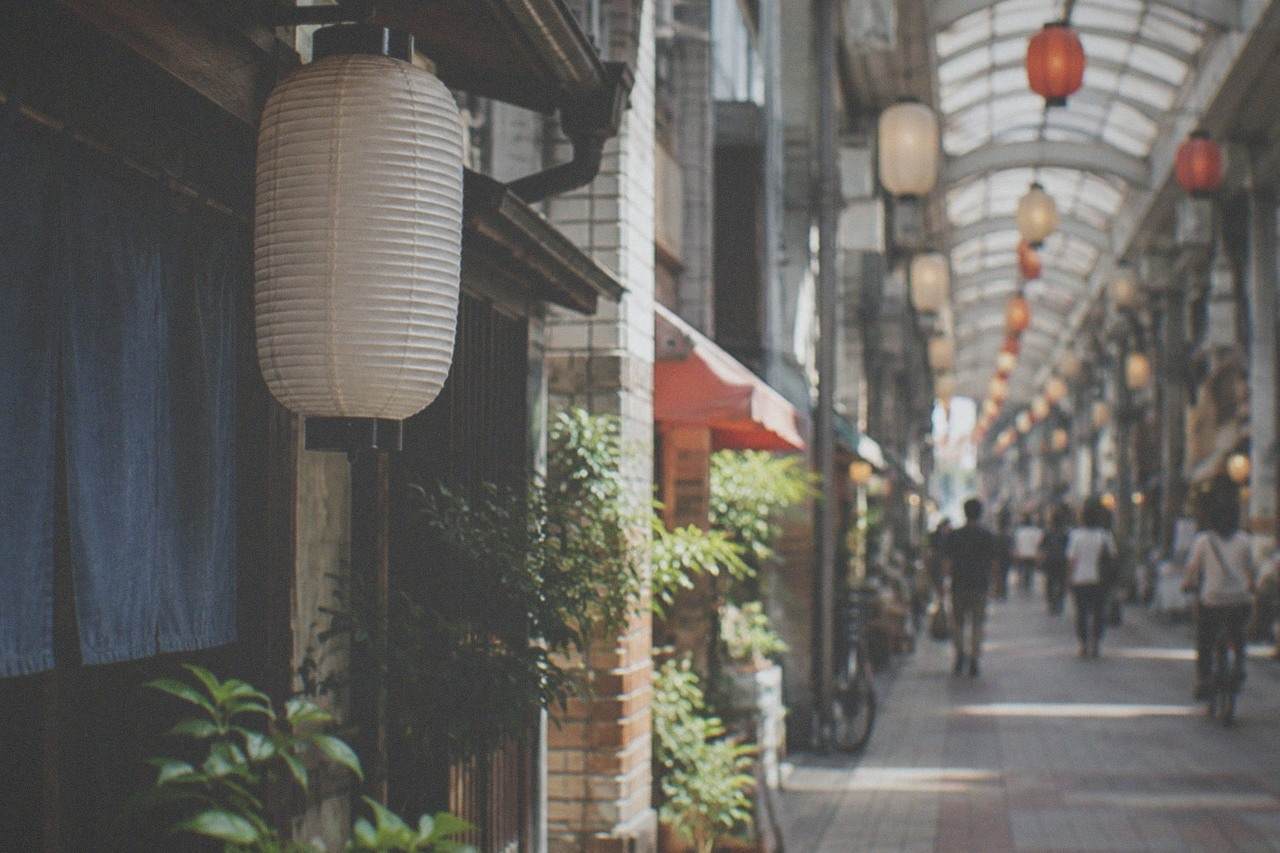
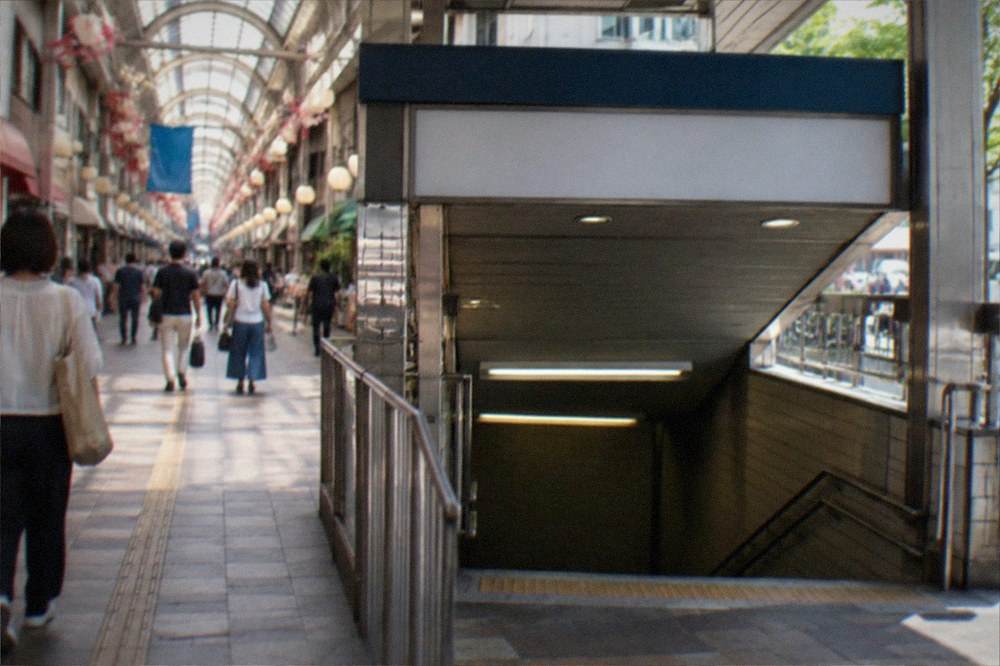
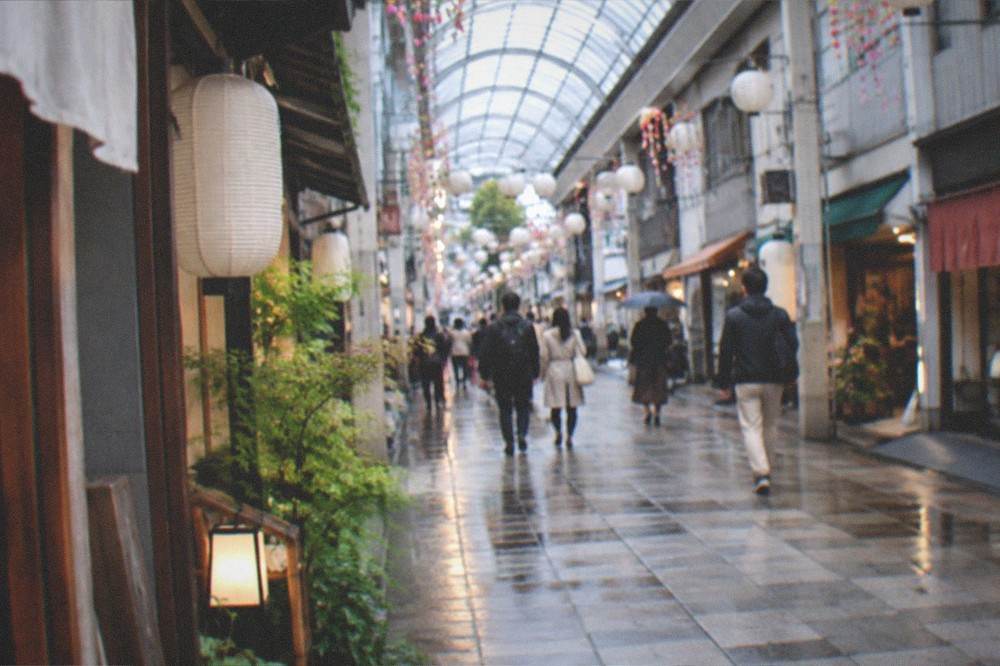
Kawabata Shopping Arcade is the covered street that runs from near Hakata Station down toward the Naka River, lined with old-school shops, sweets stalls and a surprising number of places to try a craft. This guide covers what is actually there, what it costs to reach, and how to fold it into a day in Hakata.
Short answer
Yes. Kawabata Shopping Arcade is worth visiting, especially in the evening when its lanterns light up and the Nakasu yatai stalls open at the river end. It is free to walk, a short walk from Hakata Station, and it links Kushida Shrine, Hakata Old Town and the Naka River in one short, covered stroll.
Kawabata Shopping Arcade is the covered street that connects the Hakata Station side of the city with the Naka River, and it is one of the few places in Fukuoka where the old merchant town still feels continuous rather than reconstructed. A canopy shields a run of small shopfronts: confectioners selling Hakata sweets, knife shops, kimono retailers, tiny bars and a cluster of craft studios. At the river end the arcade spills out within a few minutes' walk of the Nakasu yatai stalls, which makes it one of the best evening walks in the city. This Fukuoka Japan Travel Guide page covers what to expect, what things cost to reach, and how to pair the arcade with the sights around it.
Is Kawabata Shopping Arcade Worth Visiting?
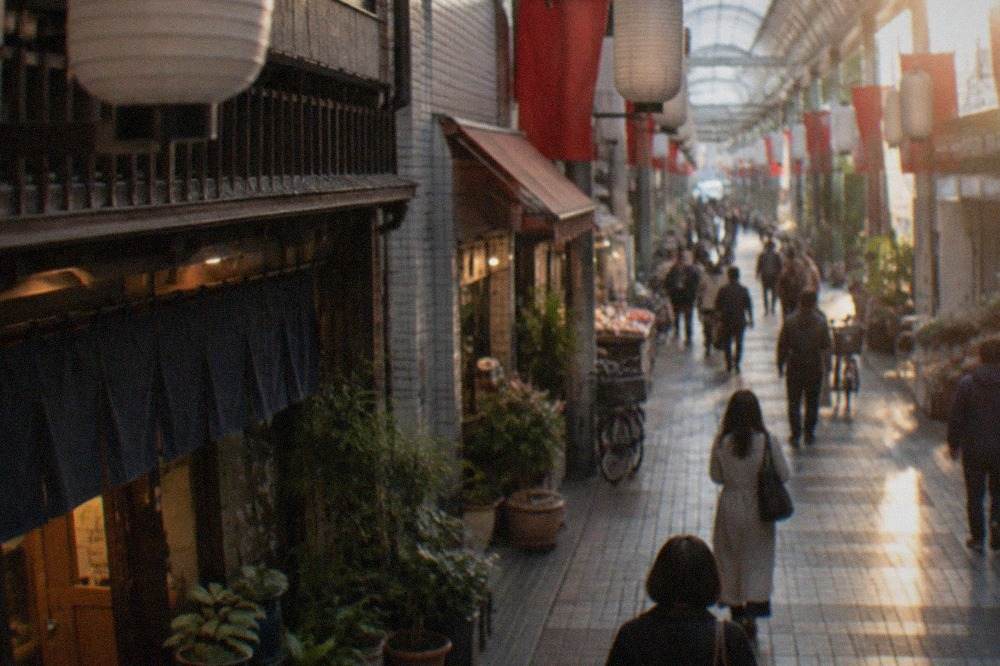
Yes, for most visitors it earns an hour, and in the evening it earns two. The arcade is free to walk, covered against rain, and it stitches together four things worth seeing: Hakata Old Town's merchant architecture, the approach to Kushida Shrine, the craft workshops sprinkled along the street, and the yatai stalls at the Naka River end. Shoppers comparing it with a big mall will find it small; visitors wanting a sense of old Hakata will find it the best single street in the city.
The honest framing is that Kawabata is not a shopping destination in the Tenjin sense. You do not come here for flagship stores or a long list of international brands. You come because the street has a character that survived, and because it sits on the most walkable chain of sights in Hakata. Start at the Hakata Station end, drift south, detour into Hakata Old Town for the temples, and finish at the river around dusk when the lanterns come on.
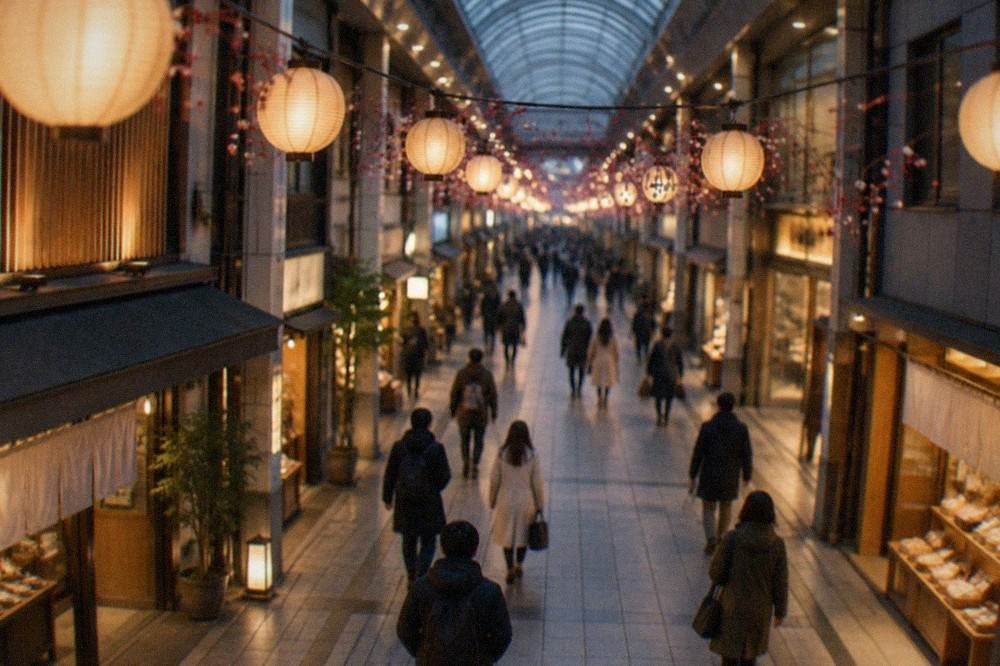
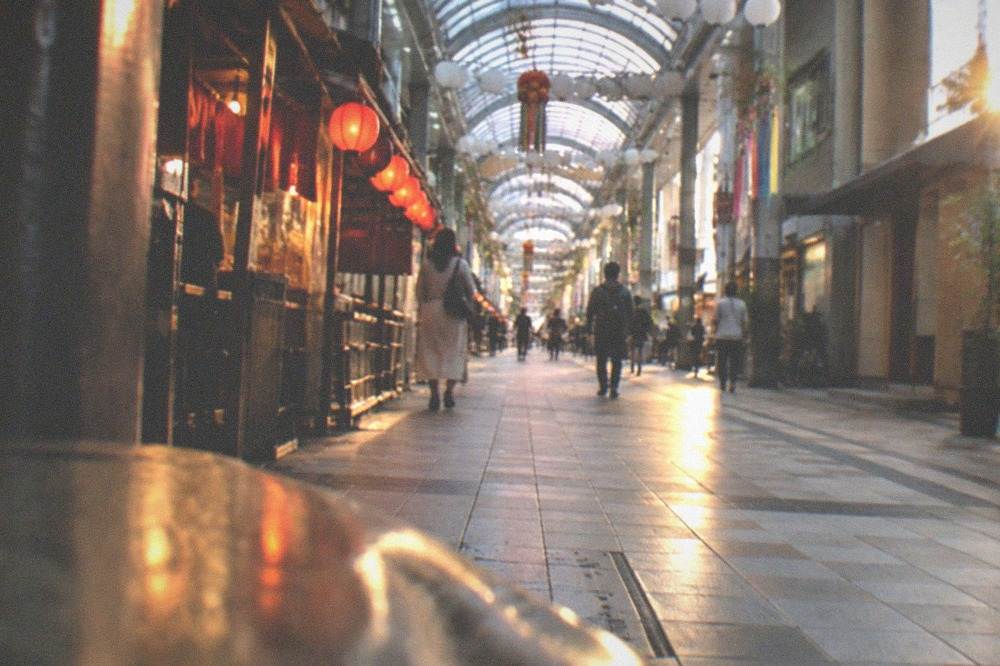
Timing matters more here than at most attractions. By day the arcade is a pleasant, slightly sleepy covered street with a handful of famous confectioners and some interesting craft shops. From late afternoon onward the lanterns switch on, the small bars start to open, and the short walk to the Naka River puts you at the Nakasu yatai stalls, which typically begin setting up around 17:00 and open around 18:00 to 18:30. An arrival at 16:30 sees both faces of the street in one visit.
What You'll Find Along the Arcade
The arcade's stock in trade is traditional Hakata goods: sweets such as umegae mochi-style rice cakes and Hakata torimon, knives and kitchenware, kimono and textiles, small izakaya and standing bars, and a growing set of hands-on craft studios. Prices at the food stalls are posted, as the city's yatai and merchant rules require visible pricing, so there is no guessing. Expect small shops with short menus rather than department-store variety, and expect most transactions to still be in cash or IC card.
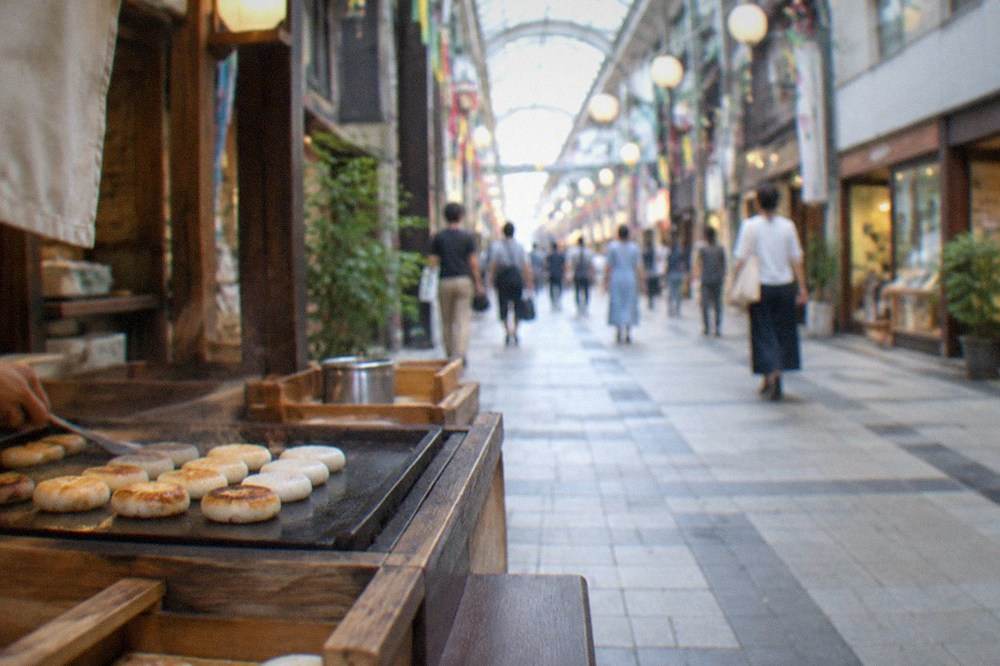
The confectioners are the anchor tenants. Several have traded here for generations, and the rice-cake sweets associated with nearby Dazaifu are sold in fresh, griddled form from a couple of counters. These are best eaten on the spot, hot, rather than carried home. Textile shops sell Hakata-ori woven cloth, the striped silk and cotton traditionally woven in this district, in the form of ties, table runners and small accessories that pack well as gifts.
The craft studios are the quiet surprise. Along the street and in the side lanes you will find calligraphy, doll painting and other short workshops aimed at visitors, several bookable online in advance. These suit a rainy afternoon or an hour between the arcade and dinner, and they are the kind of thing most visitors only discover in Kyoto, not realising Fukuoka runs the same experiences at comparable prices.
| What | Where in the arcade | Best for | Note |
|---|---|---|---|
| Griddled rice cakes | Confectioner counters near the middle | Eating hot on the spot | Prices posted at the counter |
| Hakata-ori textiles | Weaving and gift shops | Gifts that pack flat | Small items from a few thousand yen |
| Knives and kitchenware | Long-established hardware shops | Cooks | Cash often preferred |
| Standing bars and izakaya | Scattered, denser at the river end | An evening drink | Small counters, few seats |
| Craft workshops | Side streets and upper floors | Families, rainy hours | Book ahead online |
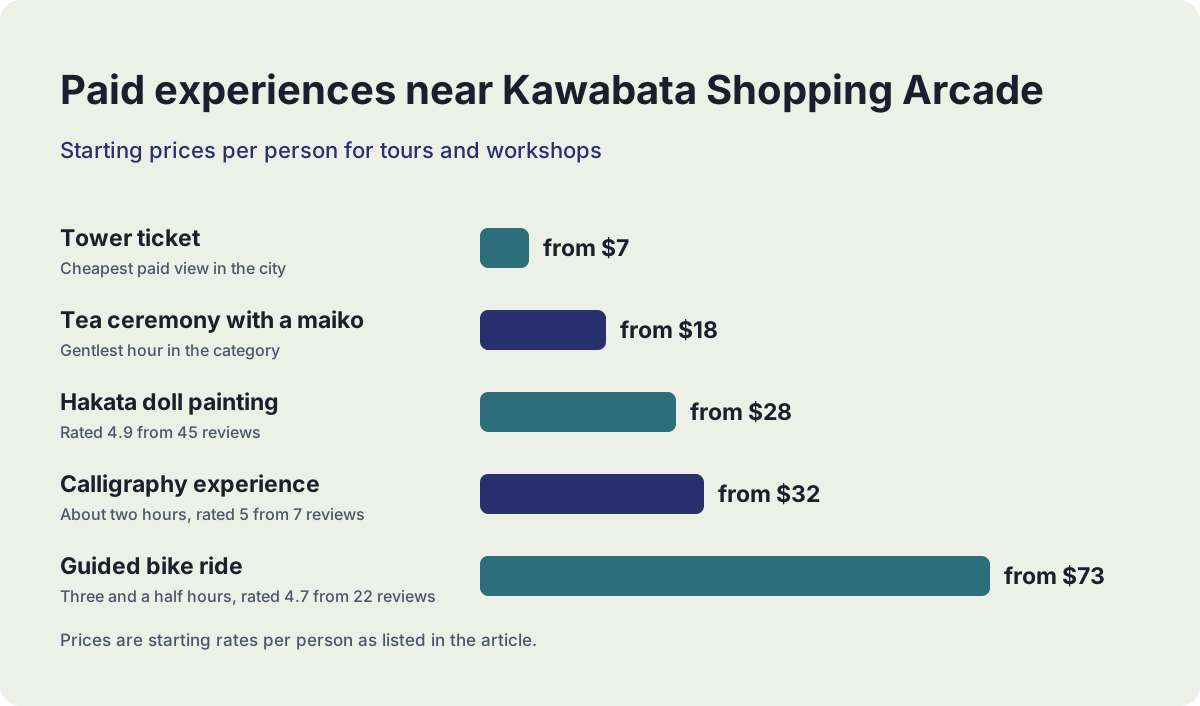
If a hands-on session appeals, the options below are the ones that pair most naturally with an arcade stroll, a tower view or a ride around the city.
The calligraphy experience in particular is a natural fit: it runs about two hours, costs from $32 per person, and holds a 5 rating from 7 reviews, a small pool but an enthusiastic one. The tower ticket, from $7, is the cheapest paid view in the city, and the guided bike ride covers the Hakata riverside the arcade sits beside.
Kawabata, Kushida Shrine and Hakata Old Town
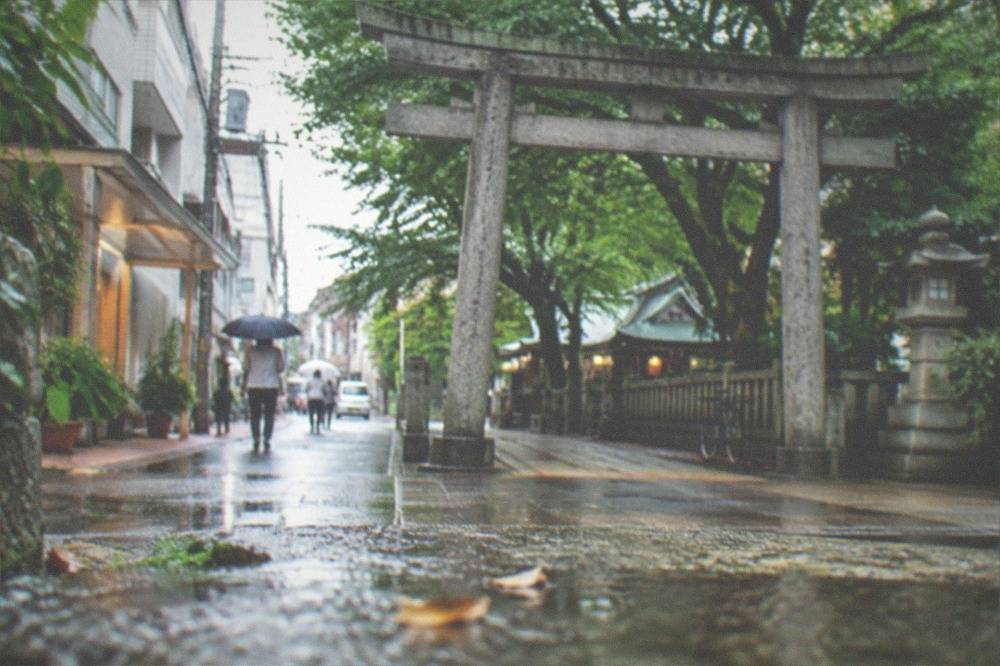
The arcade's biggest advantage is position. Kushida Shrine, Hakata's most important shrine, sits a two-minute walk off the covered street, and the compact temple cluster of Hakata Old Town, including Tochoji with its Great Buddha and the Zen gate of Shofukuji, sits just beyond it. A visitor can walk the arcade, visit the shrine, see two temples and reach the river in under an hour at a relaxed pace, all without transport.
Kushida Shrine is the spiritual anchor of the old merchant district, and the whole Yamakasa festival apparatus of the neighbourhood belongs to it. In July the decorative kazariyama floats are displayed around the shrine, and in the days before the July 15 Oiyama race the area hums with practice runs. At other times of year it is a calm, free-to-enter grounds with trees, lanterns and the famous ginkgo that gives the shrine its character.
The temples need less time but reward a detour. Tochoji houses one of the largest seated Great Buddha statues in Japan and is free to enter. Shofukuji, a short walk further, was the first Zen temple in Japan and is best appreciated from its grounds and gates, which is what most visitors see. Neither requires a ticket, and both sit within a ten-minute walk of the arcade's midpoint, which is exactly why this corner of Hakata works so well as a half-day.
| Sight | Walk from the arcade's midpoint | Entry | Time needed |
|---|---|---|---|
| Kushida Shrine | 2 minutes | Free | 20 to 30 minutes |
| Tochoji (Great Buddha) | 5 minutes | Free | 20 minutes |
| Shofukuji | 8 minutes | Free | 15 minutes |
| Hakata Machiya Folk Museum | 3 minutes | Fee applies | 30 to 45 minutes |
| Naka River and Nakasu yatai | 5 minutes | Free to walk | Open-ended |
The folk museum on the shrine's edge is worth a mention for visitors who want context for the merchant houses on the surrounding lanes; it charges admission and its hours are not published in a form this site can verify, so check before planning a stop. For most people the shrine, the temples and the arcade itself are plenty.
Food in and Around the Arcade
Eating is the arcade's second act. By day the street runs on griddled rice cakes, coffee shops and lunch counters serving Hakata standards: tonkotsu ramen, motsunabe hot pots in winter, and mentaiko-topped rice. By night the small bars open, and the five-minute walk to the Naka River delivers you to the Nakasu yatai stalls, about a hundred of which operate city-wide, with prices required by city ordinance to be posted where customers can see them.
The yatai are the reason to end an arcade walk at the river end rather than looping back to the station. These mobile stalls are Fukuoka's signature dining experience and the city has more of them than anywhere else in Japan, roughly a hundred licensed operations according to the city's own Q&A page (Fukuoka City yatai information). They cluster in three areas, and Nakasu, the row along the Naka River closest to Kawabata, is the most photogenic of the three.
The ordinance detail is worth knowing before you sit down. Fukuoka's yatai rules ban the vague "market price" label that catches visitors out elsewhere: any dish priced on the day's market must show that day's actual price, and inspectors check. That makes the yatai one of the more transparent casual-dining setups in Japan, which is not the reputation they carry, but it is the reality.
Rain closes many stalls, and there is no city-mandated closing day: individual operators decide, which is why the row looks different on different nights. If the stalls are shuttered, the arcade's own small bars and the Nakasu yatai street page's alternatives cover the evening. For a deeper look at stall etiquette and what to order, the site's dedicated pages on yatai and Hakata ramen go further than this arcade guide can.
How Kawabata Compares with Canal City and Tenjin
Kawabata is the traditional option of Fukuoka's three main shopping walks. Canal City Hakata is the entertainment complex, with a canal, fountains, a cinema and shops open 10:00 to 21:00 and restaurants to 23:00 every day of the year. Tenjin, reached in about five subway stops, is the department-store and boutique district, plus the Tenjin underground mall. Kawabata is the shortest and the most atmospheric, and it is the only one of the three that feels like old Hakata.
Canal City is close: it sits a few minutes' walk across the river from the arcade's southern end, which makes an easy pairing. Walk the arcade in the late afternoon, cross to Canal City for the fountain shows and dinner, and come back along the river for the yatai. Canal City's own service page publishes its hours (Canal City Hakata service information), and entry is free.
| Shopping area | Character | Hours | Best for |
|---|---|---|---|
| Kawabata Shopping Arcade | Covered old-merchant street | Varies by shop; evening lanterns | Sweets, crafts, atmosphere |
| Canal City Hakata | Canal-side entertainment complex | Shops 10:00 to 21:00, restaurants 11:00 to 23:00, open daily | Fountains, dining, cinema |
| Tenjin and underground mall | Department stores and boutiques | Typical mall hours | Fashion, electronics, rain-proof browsing |
| Hakata Station city | Station retail complex | Long daily hours | Last-minute gifts, transit convenience |
Visitors with limited time should choose by interest. Shoppers want Tenjin or Hakata Station's retail decks. Families and evening visitors want Canal City. Anyone who wants to feel what Hakata looked like before the towers, and who wants the yatai within walking distance, wants Kawabata. The three are close enough that a full day can honestly include all of them on foot and one subway hop.
Getting to Kawabata Shopping Arcade
The arcade's north end is a short walk from Hakata Station, and its south end is a short walk from Nakasu-Kawabata subway station on the Hakozaki Line. A single subway fare costs between ¥210 and ¥380 depending on distance, and a one-day pass costs ¥640 for adults if you plan to ride more than twice. From the airport, the fare to Hakata is ¥260 on the Kuko Line, and the airport is unusually close to the city centre.
Hakata Station is the practical landmark. Exit toward the river side and the covered street begins within a few hundred metres. Nakasu-Kawabata station sits at the arcade's southern end, one stop from Hakata on the subway, and Gion station, near Kushida Shrine, sits between them on the Hakozaki Line. All three put you on the walk with no transfer.
Cyclists have a good option too. Hakata's riverside is flat, the arcade sits right on it, and a guided ride is one of the few tours that genuinely covers this district.
The ride costs from $73 per person, runs three and a half hours, and holds a 4.7 rating from 22 reviews. It suits visitors who want the riverside, the arcade and the old town explained rather than discovered by accident, and it ends you back in the centre with a working mental map of Hakata.
| From | Best route | Cost | Notes |
|---|---|---|---|
| Hakata Station | Walk | Free | A few hundred metres to the arcade's north end |
| Fukuoka Airport | Subway Kuko Line to Hakata, then walk | ¥260 | Unusually close airport to city centre |
| Tenjin | Subway to Nakasu-Kawabata | ¥210 to ¥260 | One or two stops |
| Dazaifu | Nishitetsu train, transfer at Futsukaichi | Around ¥480 one way | Half-day pairing, see the Dazaifu guide |
Crafts and Hands-On Experiences Near the Arcade
The arcade and its side streets host short craft workshops that most visitors never book: calligraphy, doll painting, amulet making and tea ceremony, each around one to two hours and priced from about $18 to $32 per person. These are the best rainy-day and too-hot-afternoon options in Hakata, and they sit within a short subway ride of the arcade rather than a pilgrimage across the city.
The calligraphy session is the strongest all-rounder. It runs about two hours, costs from $32 per person, and carries a 5 rating from 7 reviews. An instructor walks you through brush handling and a few characters, and you leave with your own work on paper, which is a better souvenir than anything on the arcade's shelves. Sessions book up on wet days, so reserving ahead is wise.
The alternatives cover different moods. Hakata doll painting, from $28 and rated 4.9 from 45 reviews, lets you colour a traditional figure, and the tea ceremony with a maiko, from $18, is the gentlest hour in the category. All three work for beginners and for children old enough to sit still, and none requires Japanese.
Pairing the Arcade with a View or a Longer Day
Kawabata works as the spine of a half-day, but it also pairs cleanly with the rest of the city. Fukuoka Tower, reached by bus or a short subway-plus-walk from the arcade end, costs ¥1,000 for adults, ¥500 for elementary and junior high students and ¥200 from age 4, and stays open until 22:00 with last admission at 21:30. Ohori Park and the castle ruins sit a few subway stops west and make the standard morning-before-arcade combination.
The tower is the easy evening add-on, and its admission ticket is the cheapest paid view in the city.
The ticket costs from $7 per person and carries a 5 rating from a single review, which is honest rather than impressive: this is a straightforward gate ticket, not a guided product. What the tower adds to an arcade day is the skyline view across Hakata Bay and the Genkai Sea side of the city, which puts the compactness of the Hakata district you just walked into perspective.
For a fuller plan, the site's itinerary pages lay out one-day through five-day versions of exactly this chain: Ohori Park and the [Fukuoka Castle ruins](/attractions/fukuoka-castle-ruins/) in the morning, the arcade and old Hakata in the afternoon, yatai at the river at night. Visitors staying longer can hand the arcade afternoon to Dazaifu or Yanagawa instead and keep the evening walk unchanged.
Practical Tips for Visiting Kawabata Shopping Arcade
Go late afternoon, bring cash, and check the calendar rather than the clock. The arcade is covered, so rain affects it less than any other walk in the city, but individual shops close on their own schedules and the yatai at the river end close in rain and wind. There is no universal closing day for the stalls, and no single published hours list covers the arcade's shops, so treat the 16:30-to-21:00 window as the reliable core.
A few specifics make the difference between a good visit and a rushed one. Wear shoes that handle a couple of kilometres, because the arcade's real length includes the shrine, the temples and the river. Keep small yen notes for the confectioners and the bars. If you are buying Hakata-ori cloth or knives, ask about packing; both pack flat or box well, but not every shop ships overseas. And if the weather turns, the covered street plus the craft workshops plus Canal City across the river form a fully rain-proof afternoon.
Visitors with mobility considerations will find the arcade itself flat and continuous, one of the more accessible old streets in Japan, though the side lanes and some shop interiors have steps. Families will find the griddled sweets and the craft sessions hold children's attention better than the shops do. Solo travellers get the simplest deal of all: a standing bar counter at the river end needs no companion and no booking.
For anyone still deciding how the arcade fits a wider Kyushu plan, the trio below covers the craft session, the tower view and the guided ride, the three bookable experiences closest to this walk.
Common Questions About Kawabata Shopping Arcade
Is Kawabata Shopping Arcade worth visiting?
Yes. It is free to walk, covered against rain, and it links Hakata Station, Kushida Shrine, the old-town temples and the Nakasu yatai stalls in one short stroll. It is small as a shopping destination, but as a taste of old Hakata with dinner at the end of it, it is one of the best hours in the city.
How far is Kawabata Shopping Arcade from Hakata Station?
The arcade's north end begins a short walk from the station's river side, a few hundred metres in total. The full covered street runs to the Naka River, and Nakasu-Kawabata subway station, one stop from Hakata, sits at the southern end.
What is the best time of day to visit the arcade?
Arrive around 16:30. You see the shops in daylight, the lanterns come on as dusk falls, and you finish at the river just as the yatai stalls open, typically around 18:00 to 18:30. Rain closes many stalls, so a clear evening is the ideal.
Are the yatai food stalls near Kawabata expensive?
Prices at yatai must be posted visibly under the city's ordinance, and any dish priced on the day's market must show that day's actual price rather than a vague "market price" label. The city publishes no average spend, so read the posted menu before sitting down.
Can I combine Kawabata Shopping Arcade with Canal City?
Yes, easily. Canal City sits a few minutes' walk across the river from the arcade's southern end. Its shops run 10:00 to 21:00 and its restaurants to 23:00, every day of the year, so the standard evening is arcade, then Canal City for dinner, then back along the river to the stalls.
Is there anything to do in the arcade when it rains?
More than almost anywhere else in Hakata. The street itself is covered, and the craft workshops in and around it, including calligraphy, doll painting and tea ceremony, run one to two hours indoors. Canal City across the river is fully enclosed as well.