Shofukuji Temple
Shofukuji sits a short walk from the noise of Hakata Station, a walled Zen compound that most day visitors to Fukuoka never reach. This guide covers what the grounds hold, what a visit costs, how to get there, and whether it deserves a slot in your itinerary.
Short answer
Shofukuji is free to enter, sits about 15 minutes on foot from Hakata Station, and offers a quiet moss-and-stone contrast to the shopping streets around it. There are no published opening hours and temple interiors are generally closed, so plan a short daytime visit to the grounds and pair it with nearby Tochoji, Jotenji and Kushida Shrine.
Hakata runs at full volume. Canal-side malls, ramen queues, station concourses the size of small towns. Then, a few blocks north of Gion, the sound drops away behind a wall, and you are standing in one of the quietest corners of the city. Shofukuji is Fukuoka's Zen temple, a compound of gates, trees and stone paths folded into the streets at the edge of Hakata's old town, and it costs nothing to walk into. This page covers what is actually there, how to reach it, what it pairs with, and the honest answer to whether it earns a place in a short trip.
Is Shofukuji Temple Worth Visiting?
Yes, for almost every traveller, provided you frame it correctly: Shofukuji is a free, unhurried grounds visit of roughly 30 to 60 minutes, not a half-day attraction. Entry costs nothing, the compound sits within walking distance of both Hakata Station and Kushida Shrine, and the temple holds a genuine place in Japan's Zen history that most first-time visitors to Kyushu never hear about. It is worth it as the calm counterweight to a packed Hakata itinerary.
The honest framing matters because a surprising number of visitors arrive expecting an interior experience and find a mostly outdoor one. The temple buildings themselves are generally not open to the public, and there are no published opening hours to plan around. What you get is the grounds: the approach, the gates, the moss, the trees and the sense of a working religious precinct rather than a ticketed attraction. If you accept that, it delivers a great deal for zero yen.
For whom it works least: a traveller with a single day in the city and a long wish list. On a tight schedule, the question of whether Fukuoka is worth visiting at all usually resolves around food and the harbour, and a Zen garden you cannot enter may fall off the list. For everybody else, it slots naturally into the cluster of Hakata old-town sights and takes less than an hour of your day.
What Can You See on the Temple Grounds?
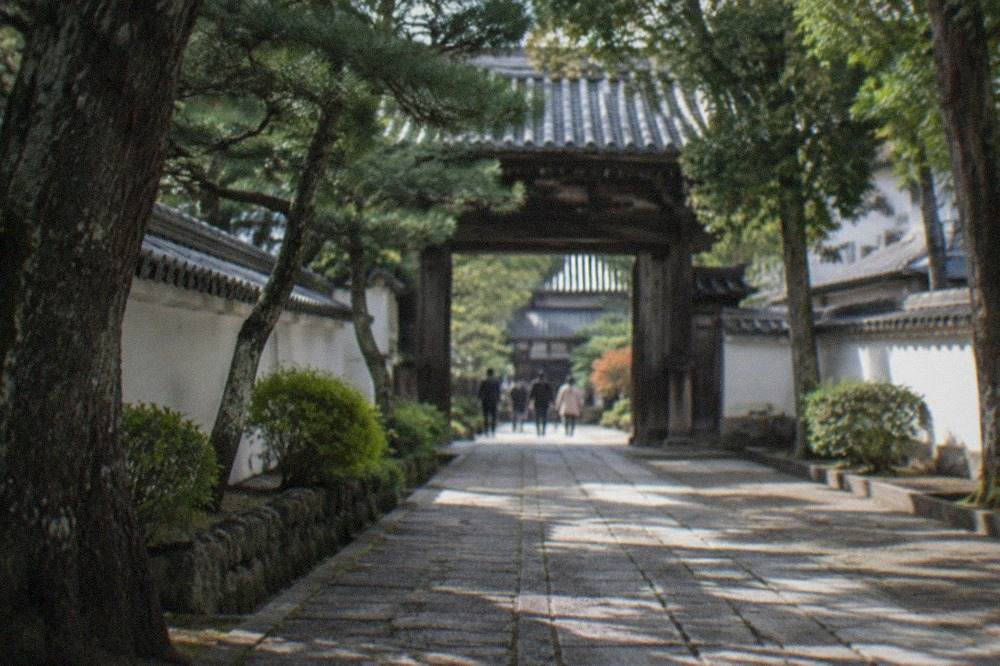
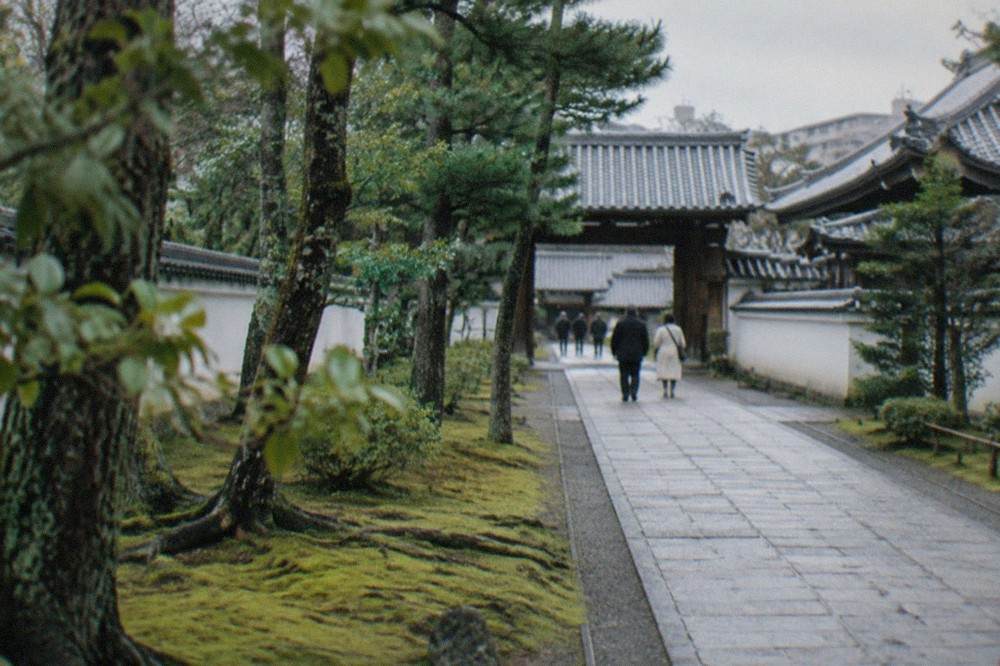
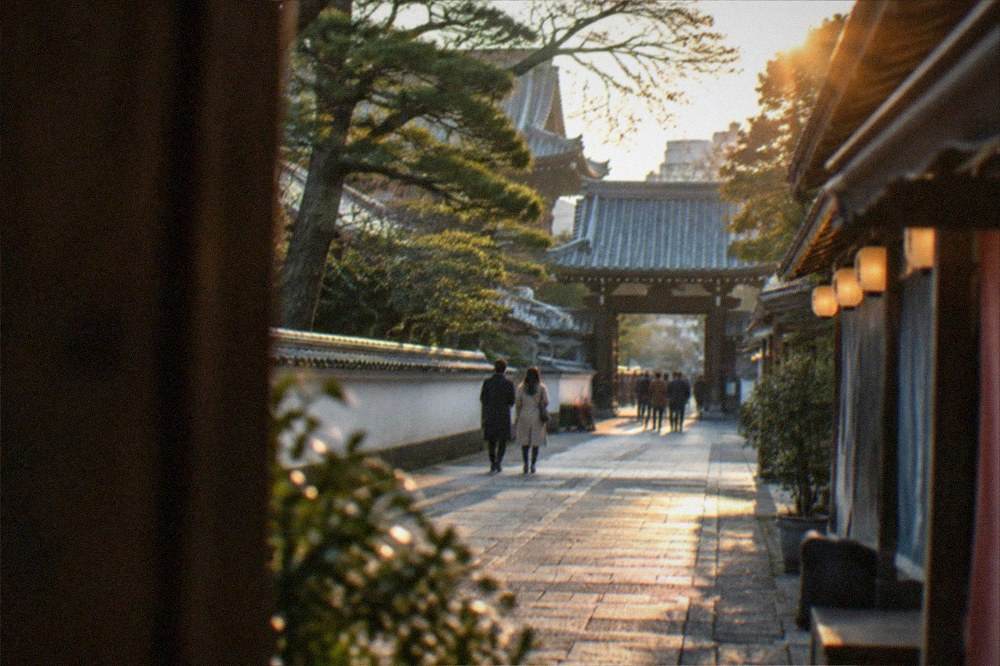
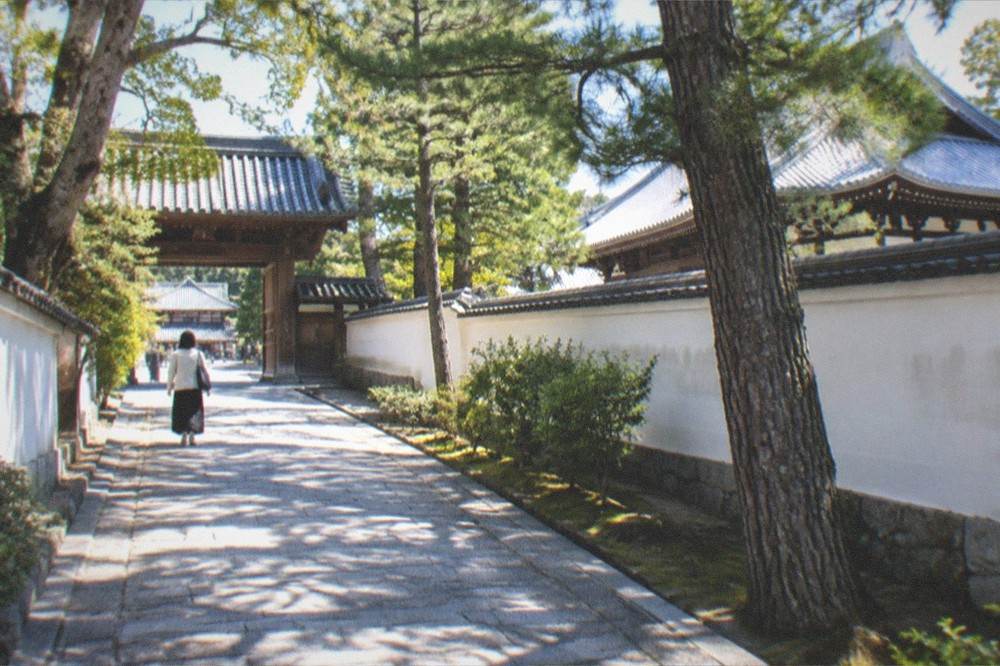
The grounds deliver three things well: a series of wooden gates that frame your walk inward, deep moss and mature trees that make the compound feel older than the city around it, and the quiet of a functioning Zen precinct. The buildings themselves are usually closed, so the experience is the approach and the atmosphere rather than interiors. Photographers get the most out of the gate frames and the moss; history readers get the most out of knowing what kind of temple this is. Budget 30 to 60 minutes.
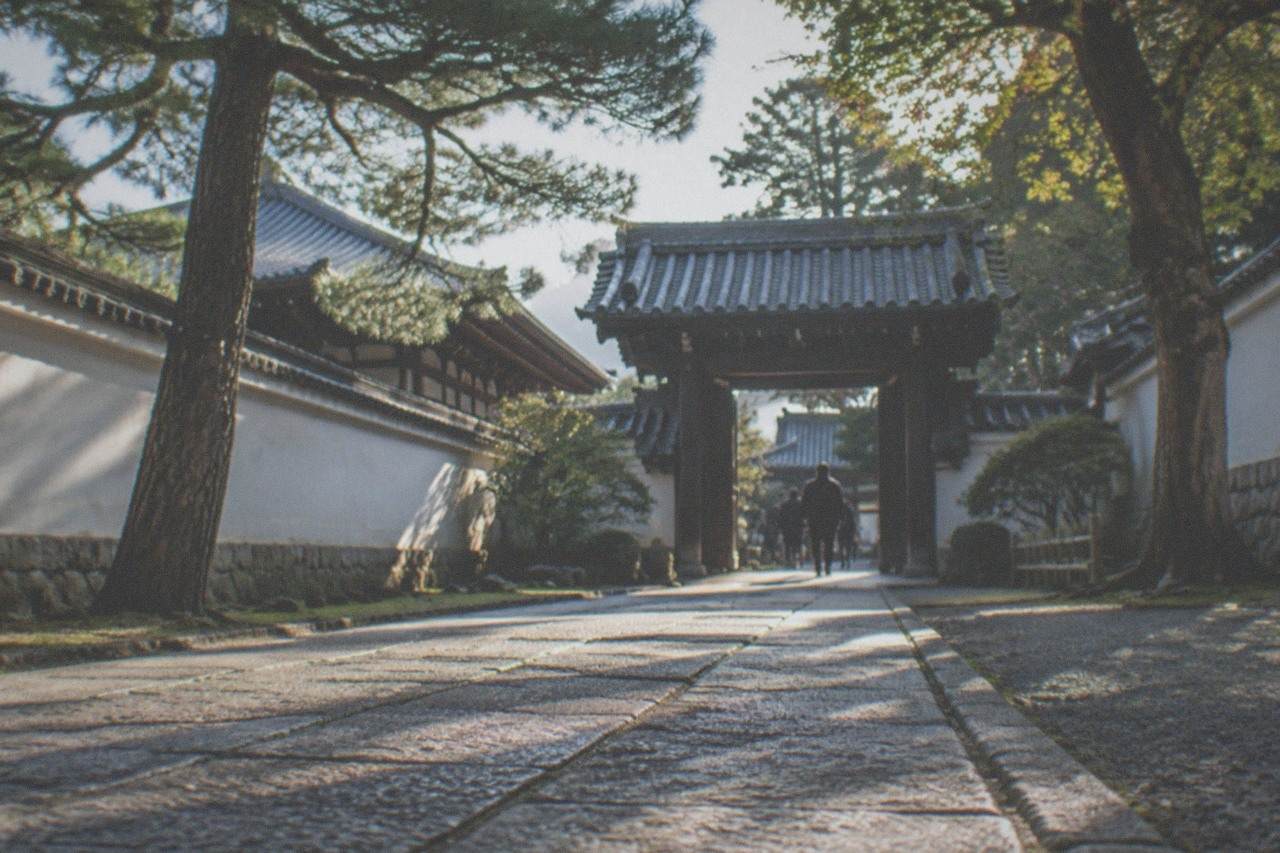
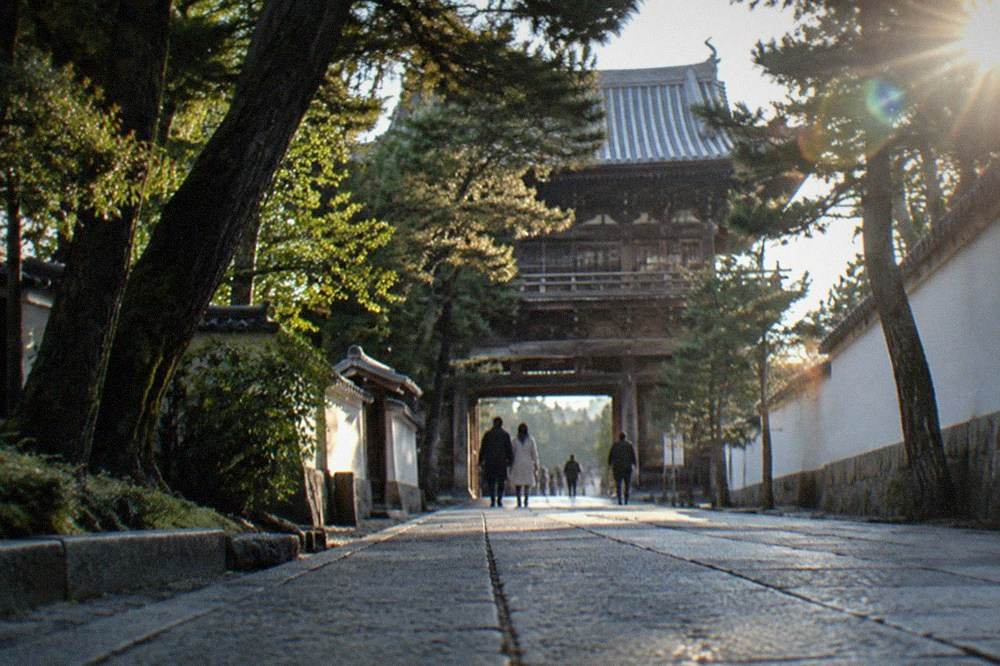
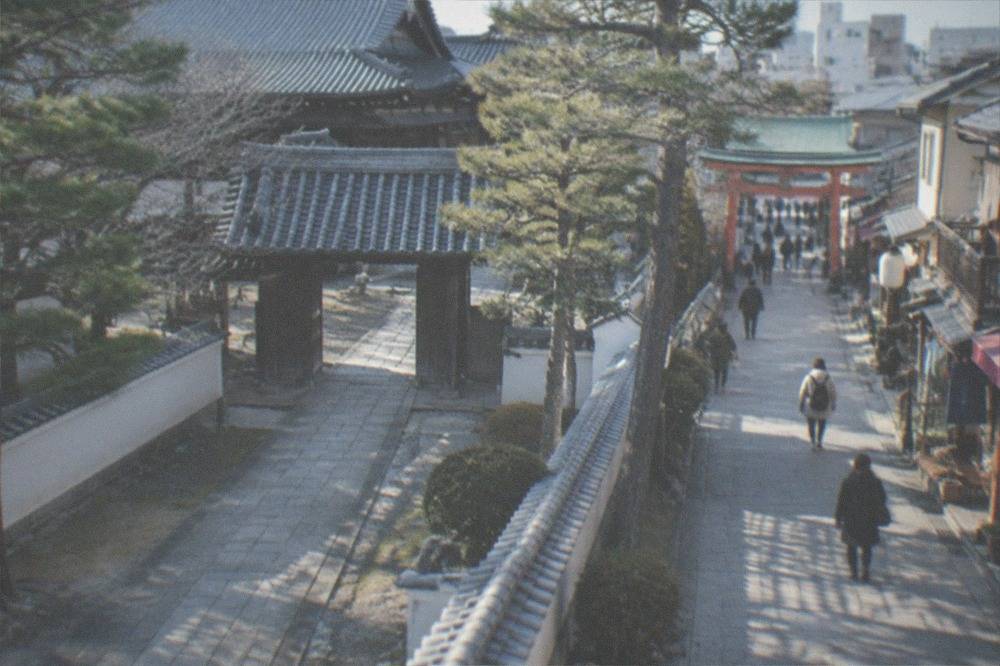
Approach a Zen temple the way it was designed to be approached, slowly and from the outside in. The outer streets of Gion and Hakata's old merchant quarter press close around the walls, and then you cross into the precinct and the scale changes. The gates are the structural spine of any visit: dark, heavy timber constructions set one behind another, each one narrowing your field of view and pulling your pace down. That progression is not decoration, it is the point. The architects of these compounds wanted the noise of the world to fall away in stages.
The moss is the other headline. Where Ohori Park gives Fukuoka a broad, open, waterside green, Shofukuji gives it a compressed, shaded, close-textured one. After rain, and Fukuoka gets rain in every month of the year, the greens go almost electric, and the stone paths read at their best. The compound's trees matter to that effect: mature canopy keeps the light dappled even in summer, which is when the rest of the city is at its most punishing.
Two practical notes shape the visit. First, the interiors are generally not open, so do not plan your route around seeing a main hall, an altar or anything under a roof. Second, there are no published opening hours, so a daytime visit is the safe plan; the grounds are part of the everyday life of the neighbourhood, and the daylight hours are when everything reads best anyway. Treat it like a garden you wander rather than a museum you ticket.
The temple's own pages are the right place for anything specific to a visit, since this guide deliberately avoids printing details that nobody has verified. The official Shofukuji site carries the temple's own information, and anything not confirmed there or in a primary source is left out of this page rather than guessed.
If the grounds leave you wanting a guided layer, two rostered options fit naturally here. A morning sumo practice and Hakata old town walk moves through exactly this district with a local guide, from $77 per person, rated 4.2 from 22 reviews on the live listing, two hours. For a broader city intro, the half-day Fukuoka Essentials history and culture tour covers the Hakata old quarter plus further neighbourhoods, from $74 per person, rated 4.9 from 48 reviews.
How Do You Get to Shofukuji?
Shofukuji is best reached on foot from Hakata Station, roughly a 15-minute walk through the Gion district, or as a stop on a walking loop of old Hakata that also takes in Tochoji, Jotenji and Kushida Shrine. The subway fare structure starts at ¥210 for the shortest adult single trip, so walking is not only the pleasant option but the cheap one. There is no JR station for the temple, and the nearest rail hub is Hakata Station, which is the correct name: there is no JR Fukuoka Station.
The walk from Hakata Station is the recommended one, and the route is half the experience. Leaving the station's Hakata-guchi side, you cross into the Gion district, a grid of narrow streets that was the merchant heart of old Hakata, then arrive at the temple walls. Allow the full 15 minutes rather than rushing, because the streets en route are themselves one of the city's better free experiences, full of small shrines, shopfronts and the ordinary texture of a neighbourhood that predates every tower on the skyline.
If you are arriving from elsewhere in the city, the subway is the backbone. Fukuoka City Subway single fares run from ¥210 for an adult trip of up to 3 km up to ¥380 for the longest trips, with child fares at half, and a one-day pass costs ¥640 for unlimited travel on all three lines. The useful detail for anyone flying in: Fukuoka Airport sits unusually close to the centre, and the airport-to-Hakata subway fare is ¥260. That closeness is verified and unusual among big-city airports, but no journey time in minutes is printed here, because no official page publishes one, whatever the guidebooks say.
One naming trap worth repeating, because it costs visitors real confusion. Hakata is a ward of Fukuoka and the name of the main station, not a separate city. The station is Hakata Station, there is no JR Fukuoka Station, and you never travel "from Hakata to Fukuoka" because they are the same place. Anyone giving you directions to "Fukuoka Station" means Hakata, and any guide that treats the two as separate destinations has not understood the city it is describing.
For visitors from further afield who want the temple folded into a wider Kyushu plan, there is a rostered option that pairs nicely with a Hakata base. The Beppu Hells, Nyoirinji Temple and Yufuin day trip runs from Fukuoka with the Beppu Hells tickets already included, from $48 per person, rated 4.7 from 285 reviews, a full-day tour that contrasts Shofukuji's quiet with Kyushu's steaming hot-spring country. It is a natural fit for a second or third day after the city sights are done.
How Does Shofukuji Compare to Hakata's Other Temples?
Shofukuji is the quietest and most atmospheric of the central Hakata temples, but it is not the most visitor-friendly. Tochoji, a few streets south, has the giant reclining Buddha that most travellers photograph, and Kushida Shrine, a little further east, is the city's festival shrine with the most visual drama. Shofukuji rewards visitors who value stillness over spectacle, and the smart move is to walk all three in one loop, in that order, which takes a relaxed half-day on foot.
The comparison is genuinely useful, because Hakata packs several religious sites into a walkable rectangle and travellers routinely pick the wrong one for their interests. Tochoji is the crowd-pleaser: a temple with a large seated Buddha figure that gives visitors something to actually go inside and look at. Jotenji, small and easy to miss, sits between Shofukuji and the station and is the temple credited with Hakata's most famous contributions to Japanese daily life, including, by local tradition, the origination of the manju sweet and even of udon and soba noodles in Japan. Kushida Shrine is the civic heart, the starting point of the Hakata Gion Yamakasa festival each July.
Shofukuji's role in that line-up is the retreat. It is the one you visit to decompress, not to check something famous off a list. Its pond is not there, its gate is not gilded, and that absence is the appeal. Consider what each site is for before you route yourself:
| Site | Nearest landmark | Entry | Best for | Realistic visit |
|---|---|---|---|---|
| Shofukuji | Gion district, north of the station | Free, no published hours | Quiet, moss, gates, Zen atmosphere | 30-60 min |
| Tochoji | 5 min south of Shofukuji | Free | The giant Buddha figure, interior spectacle | 30-45 min |
| Jotenji | Between Shofukuji and the station | Free | Quick look, local lore, garden front | 15-20 min |
| Kushida Shrine | Furthest east of the four | Free | Festival floats, Yamakasa history, old trees | 30-45 min |
A full loop of all four, walked without hurry with a coffee stop, is a half-day of old Hakata done properly. Walking order matters less than pacing, but the natural flow from the station is Jotenji, Shofukuji, Tochoji, Kushida Shrine, and that order ends you close to the riverside and the yatai stalls for the evening.
The Yokanavi and city tourist-board material covers the old quarter as a single district, and the Fukuoka City tourist pass page is worth a look if you plan to move beyond it: the pass covers subway, buses, trains and ferries for a day, with a passport check at purchase for overseas visitors on a short-stay visa.
What Does a Visit to Shofukuji Cost?
The grounds are free to enter, there is no ticket, and no published admission structure exists for the public areas. The real cost of visiting Shofukuji is your time and whatever you spend getting there, which, walked from Hakata Station, is zero yen. A budget of ¥210 to ¥640 in local transport covers the temple plus the whole old-Hakata loop, since the subway's cheapest single fare is ¥210 and the all-day pass is ¥640.
That makes Shofukuji one of the true zero-cost sights in a city that is already light on ticket prices. For context, the big paid attractions nearby are modest by Japanese big-city standards: Fukuoka Tower charges ¥1,000 for adults, and both city art museums charge ¥200 for their permanent collections. The temple sits at the free end of that scale, alongside Ohori Park, the castle ruins at Maizuru Park, and the other shrines and temples of the old town. The full index of guides sits on Fukuoka Japan Travel Guide.
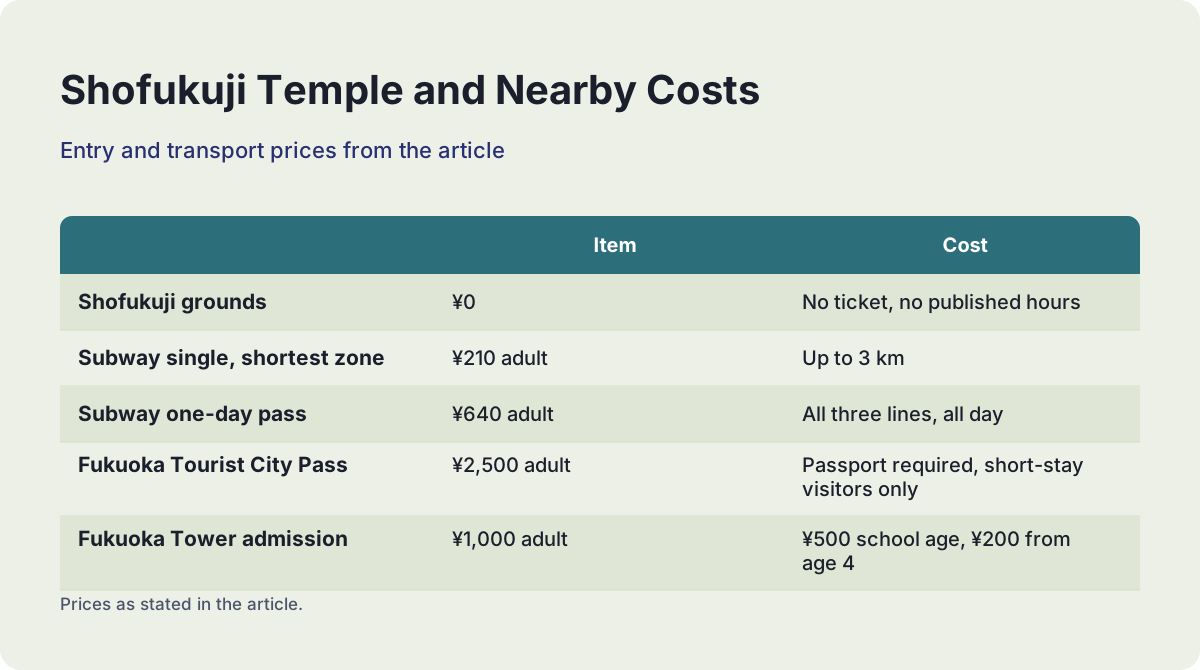
Worth flagging for anyone building a budget: the Fukuoka Tourist City Pass is ¥2,500 for one day of unlimited subway, bus, train and ferry travel, or ¥2,800 in the version that adds Dazaifu, and it requires a passport check because it is restricted to overseas visitors on short-stay visas. For a purely central Hakata day on foot, the pass is overkill, and the free sights plus a walking loop will spend nothing at all.
| Item | Cost | Notes |
|---|---|---|
| Shofukuji grounds | ¥0 | No ticket, no published hours |
| Subway single, shortest zone | ¥210 adult | Up to 3 km |
| Subway one-day pass | ¥640 adult | All three lines, all day |
| Fukuoka Tourist City Pass | ¥2,500 adult | Passport required, short-stay visitors only |
| Fukuoka Tower admission | ¥1,000 adult | ¥500 school age, ¥200 from age 4 |
The pattern holds across Hakata: this is a city where the best-known sights cost little or nothing, and the money goes on food. Ramen, yakitori skewers and motsunabe hot pots do the heavy spending, while the temples and shrines stay open and free.
When Is the Best Time to Visit Shofukuji?
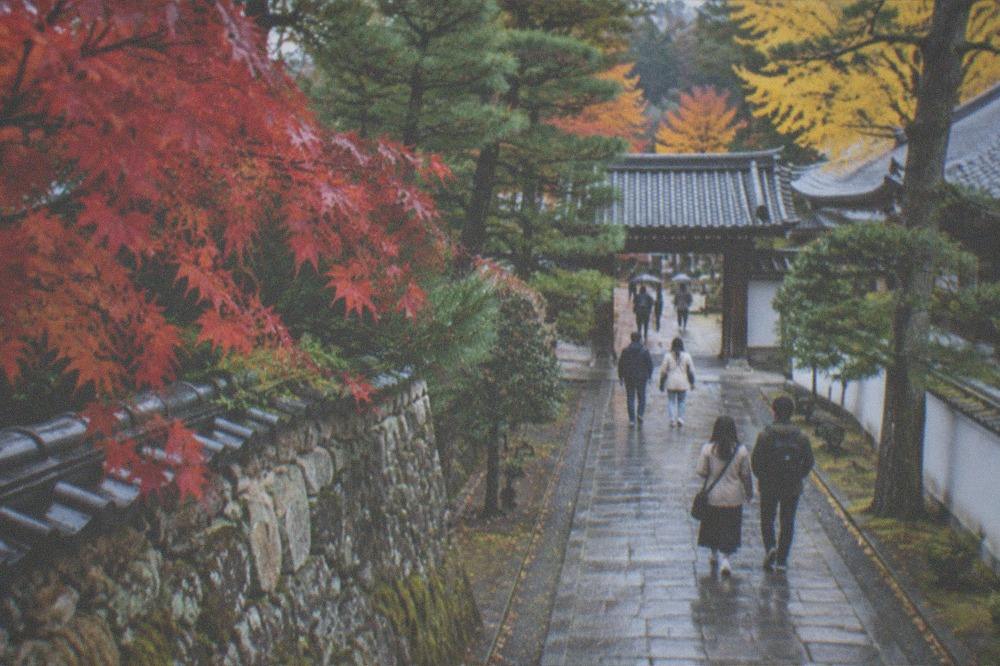
The best visiting window is a weekday morning in spring or autumn, when the moss and trees read at their best and the Gion streets around the temple are quiet. Rain changes the visit in an unexpected way: wet weather deepens the colours of the grounds and can make Shofukuji more photogenic, not less. Avoid the midday heat of July and August, when the city averages 31 to 32 degrees at its daily peak.
The climate record gives the honest answer on seasons. Fukuoka's official meteorological normals show July as the wettest month of the year, 299.1 mm, wetter even than June, 249.6 mm, despite June carrying the tsuyu rainy-season label. That surprises most visitors, who assume the rainy season peaks in June. The driest and brightest stretch runs from October through December, with October delivering 94.5 mm of rain and 175.9 sunshine hours, which pairs well with the autumn leaf colour that fills the city's parks from mid-November.
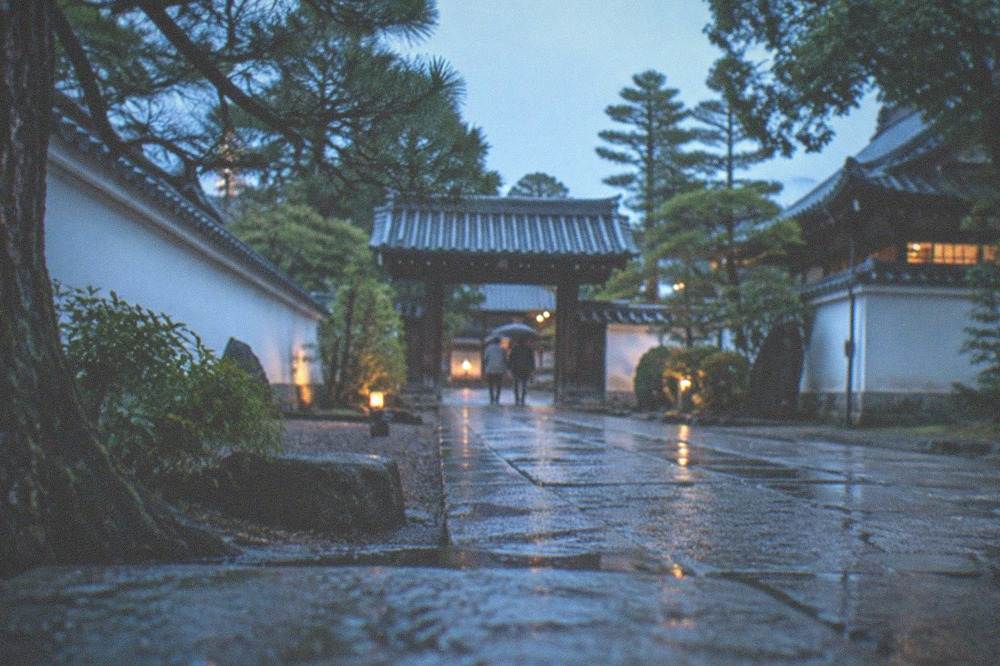
Typhoon season, which runs roughly July through October, is a real planning factor rather than a scare story, and the practical response is flexibility, not avoidance: a temple of trees and moss is the wrong place to be in a storm but the right place the morning after one. A rainy-day plan that keeps the indoor alternatives and the museums on standby makes the whole season easier, and winter itself is a decent option, with December averaging just 67.5 mm of rain and a mild 12.6-degree daily high.
The crowd picture is simpler. Shofukuji has no peak-hour crush, but the Gion streets and the Kushida Shrine approach fill on festival weekends, and July's Hakata Gion Yamakasa, which runs July 1 to 15 and centres on Kushida Shrine, brings the whole district to life. Whether that is a reason to come or a reason to reroute depends entirely on your tolerance for crowds. The festival has no ticketing at all, it is a street event, which tells you how it treats its audience: you just turn up.
How Do You Pair Shofukuji with the Rest of a Hakata Day?
The natural pairing is the old-town walking loop described above: Jotenji, Shofukuji, Tochoji and Kushida Shrine in one relaxed morning, lunch in the Kawabata arcade area, and an evening at the yatai stalls. Add the Fukuoka Art Museum or Ohori Park for the afternoon if you have the energy, or the Fukuoka Tower and Momochi waterfront if the sky is clear. A single well-walked day covers the temple and everything around it without any tour, car or ticket.
Start from Hakata Station after breakfast and work the loop north-east in the order the geography hands you. The whole walk is flat, signposted in places, and short: nothing in the loop is more than ten minutes from anything else, which is why old Hakata rewards walkers so generously. By the time you have circled back toward the river, you will have seen four religious sites, a stretch of the old merchant grid, and, if you detour one block east, the covered Kawabata shopping arcade, the traditional retail strip that survived as the merchant quarter's descendant.
The evening belongs to the yatai, and here Shofukuji's district has an advantage: the stalls are close. There are about 100 licensed yatai across the city, concentrated in Nakasu along the river, in Tenjin, and in Nagahama, and the riverside rows are a short walk from the temple district. The city's own ordinance governing the stalls bans market-price menus, so a stall must post its prices visibly, with any day-priced dish showing that day's actual figure, a rule the Fukuoka City yatai guidance sets out directly. Stalls take walk-ins, and you cannot book a seat at one, so timing and patience are the whole strategy, and rain closes many of them, so check the evening sky.
| Time of day | Plan | Notes |
|---|---|---|
| Morning | Old-town temple loop | Shofukuji mid-morning, all four sites on foot |
| Midday | Kawabata arcade, lunch | Covered arcade, one block east of the loop |
| Afternoon | Art museum or Ohori Park | Both reachable by subway, ¥210 single |
| Evening | Yatai stalls in Nakasu | Walk-in only, prices posted by ordinance |
For a second or third day, the roster offers several directions. The YokaBus tea fields, Yame and Yanagawa river boat tour heads into the prefecture's tea country, from $92 per person, rated 4.9 from 29 reviews, a 9.5-hour day that swaps city stone for rural green. Nearer at hand, Nanzoin and its reclining Buddha make a famous suburban counterpart to Shofukuji's quiet, on a much larger and more theatrical scale.
Who Should Skip Shofukuji?
Skip Shofukuji if your visit is one day or less, if you only enjoy attractions you can enter, or if you are travelling with small children who need room to run. The temple gives you a walk, not a show, and there are no interiors, exhibits or facilities to occupy anyone who does not find gates and moss interesting. On a short trip, give the slot to Tochoji's Buddha, the tower's view or the yatai instead, and save Shofukuji for a longer stay.
That is the honest cut-off, and it is better said plainly than buried in enthusiasm. A one-day visitor sees more of Fukuoka at Fukuoka Tower or the riverside than in a Zen precinct with nothing to enter. Families should note the practical texture too: the grounds are compact, the paths are for walking, and the precinct is a religious space where noise and running are out of place. Uminonakamichi Seaside Park, with its animal forest and open lawns, is the correct family counterweight, though its gate takes cash only.
Who should absolutely go: photographers, anyone rebuilding from a long flight, temple and garden collectors, and travellers who have seen the loud half of Hakata and want the quiet half. Repeat visitors to Fukuoka often rank it exactly this way, the city's sights get shorter each trip while the calm corners get longer.
For travellers who want the whole city interpreted rather than navigated solo, a private guide is the roster's most flexible option. The Fukuoka private tour with a local, highlights and hidden gems runs from $65 per person, rated 4.9 from 164 reviews, in a 2 to 8 hour format that can weight itself toward old Hakata and its temples on request.
What Should You Know Before You Go?
Go in the daytime, since there are no published hours to rely on. Do not expect interiors: the buildings are generally closed to the public. Enter for free, keep your voice low, stay on the paths, and treat the moss and gates as the attraction they are. Pair the visit with the three other sites within ten minutes' walk, and give the whole old quarter a half-day. Photography is fine from the paths; tripods, drones and interior shots are not appropriate in a working religious precinct.
Dress means nothing here beyond comfortable shoes; a Zen precinct asks for quiet, not formality. There is no ticket to book and nothing to reserve, which makes Shofukuji the rare sight that can be added to any plan at the last minute. If the weather turns, the covered arcade and the museums are close, and the temple itself is arguably better after rain than before it.
Two further pointers complete the picture. Hakata's station area rewards an early start, and the district's small restaurants and coffee shops fill the walk back toward the station with reasons to linger. And the wider city is easy from this base: Tokyo, Osaka and Kyoto to Fukuoka connections all arrive at Hakata Station, so the temple is often the first or last Fukuoka sight a long-distance traveller sees, fifteen unhurried minutes from the platform.
Common Questions About Shofukuji Temple
Is Shofukuji Temple Worth Visiting?
Yes, if you want quiet and atmosphere over spectacle. The grounds are free, the moss and gates are genuinely beautiful, and the temple sits within a 15-minute walk of Hakata Station and three other major sights. It is not worth it if you only enjoy attractions you can enter, since the buildings are generally closed to the public.
Does Shofukuji Temple Have Opening Hours?
No published hours exist that this site could verify from a primary source, so plan a daytime visit. The grounds form part of the everyday neighbourhood rather than a ticketed attraction, and the daylight hours are when everything reads best.
How Much Does It Cost To Enter Shofukuji?
Nothing. The grounds are free to enter, with no ticket or published admission structure. Your only costs are transport, and the temple is close enough to Hakata Station to walk there for free.
How Far Is Shofukuji From Hakata Station?
About a 15-minute walk through the Gion district, and the route through the old merchant grid is worth the time in itself. There is no station for the temple itself, and the city's main rail hub is Hakata Station, not a Fukuoka Station, which does not exist.
Can You Go Inside The Temple Buildings?
Generally not. The interiors are usually closed to the public, and the visit is an outdoor experience of the approach, the gates, the moss and the trees. Plan for a walk rather than a museum visit and the temple delivers everything it promises.
What Else Is Near Shofukuji?
Tochoji with its giant Buddha, Jotenji, and Kushida Shrine are all within about ten minutes' walk, and together they make a natural half-day loop of old Hakata. The covered Kawabata shopping arcade and the riverside yatai stalls of Nakasu are close by for food and evening atmosphere.