What to Eat in Fukuoka
Fukuoka eats later and louder than almost any city in Japan. This is the home of tonkotsu ramen, of about 100 licensed yatai food stalls, and of a pork-and-cod-roe cooking tradition that locals will happily argue about for hours.
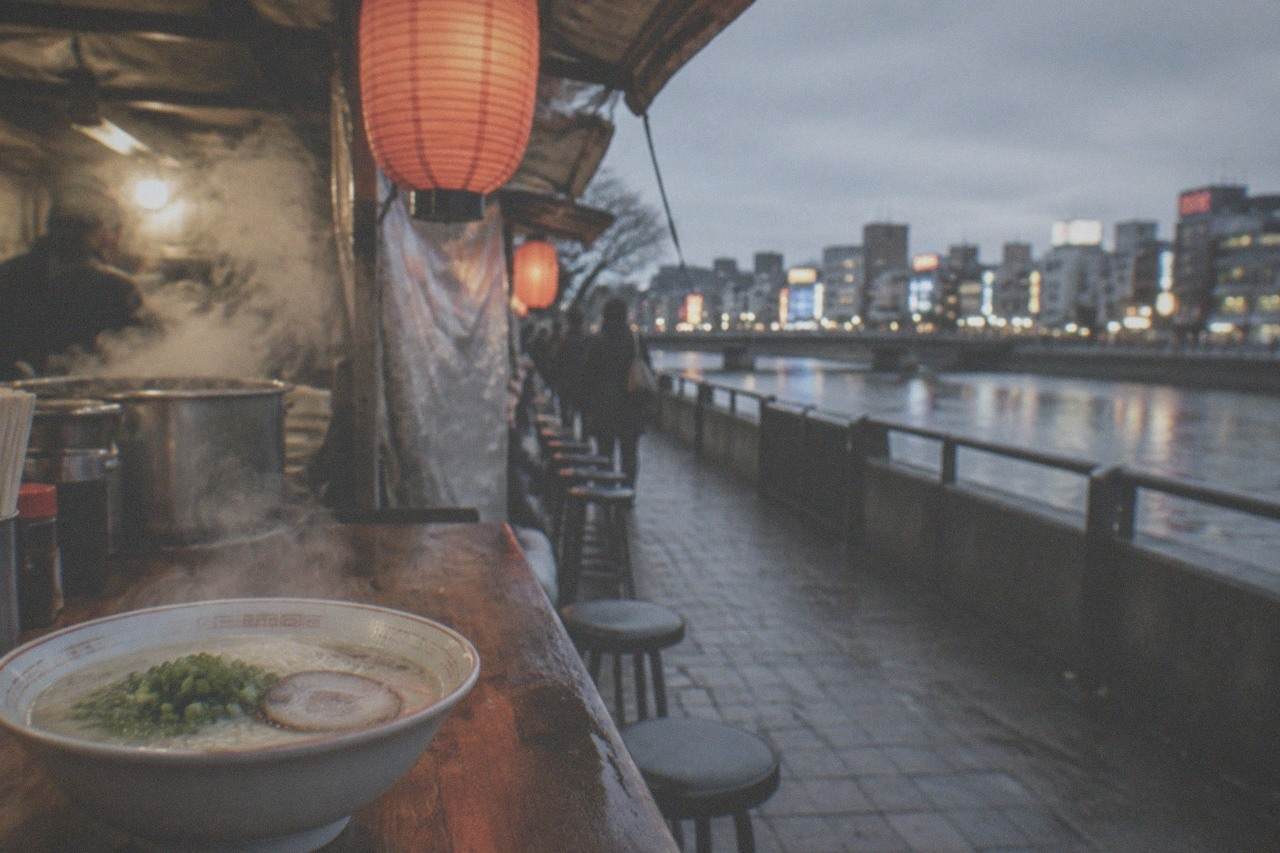
Short answer
The signature dish of Fukuoka is tonkotsu ramen, the milky pork bone broth served with thin noodles that most people call Hakata ramen. The city supports about 100 licensed yatai street stalls, more than any other city in Japan, alongside two other local classics: motsunabe hot pot and mentaiko cod roe.
Fukuoka has a claim that few Japanese cities can make: it feeds its visitors on the street. About 100 licensed yatai stalls operate across the city centre, more than any other city in Japan, each one a tiny kitchen with seats folded around it like a horseshoe. Add a signature ramen style copied around the world, a hot pot that locals order by the pot rather than the plate, and a cod roe industry that started here as a fish market by product, and you have one of the most rewarding eating cities in the country. This guide, from the Fukuoka Japan Travel Guide team, walks through the signature dish, the stall culture, the supporting classics and how to fit them all into a trip.
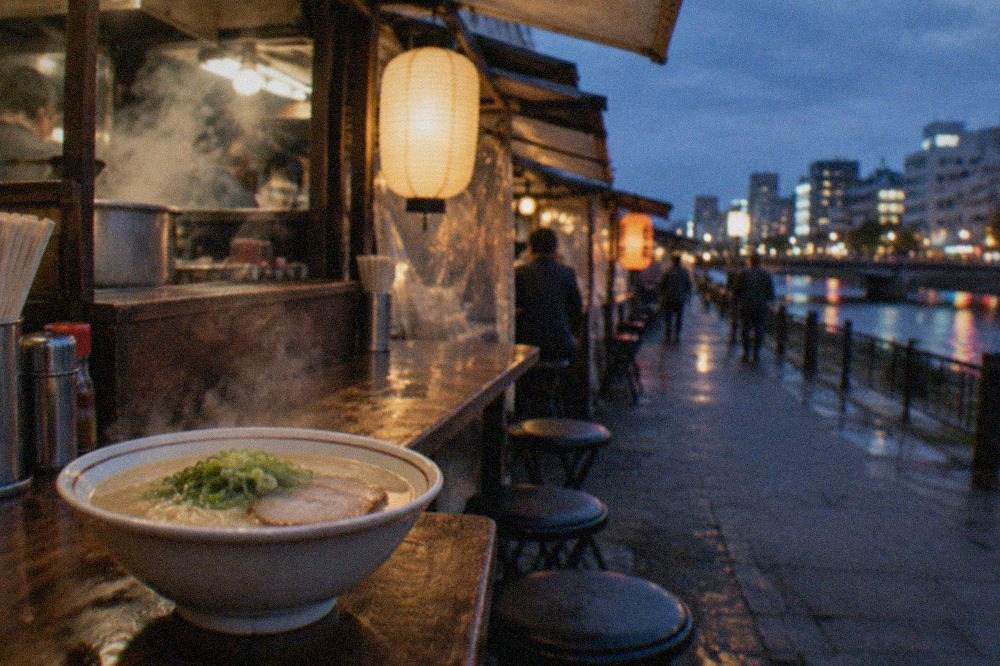
What Is the Signature Dish of Fukuoka?
The signature dish of Fukuoka is tonkotsu ramen, the rich pork bone broth served with ultra-thin noodles that most menus label Hakata ramen. It was born in the Nagahama and Hakata areas, and it comes with a local custom the rest of Japan borrowed: kaedama, a cheap refill of extra noodles dropped into your remaining broth. Alongside it, motsunabe offal hot pot and mentaiko spicy cod roe complete the trio most locals would name as the taste of the city.
Tonkotsu broth is made by boiling pork bones for hours until the collagen renders out and the liquid turns opaque white. The style emerged around the old Nagahama fish market district, where stall owners served dock workers a fast, filling bowl. The noodles are cut thin, partly so they cook in seconds at a street stall, and that speed created the kaedama custom: thin noodles go soft quickly, so rather than serving one large bowl, Hakata shops serve a modest portion and sell extra noodle refills while the broth is still hot.
Ordering has its own vocabulary. Noodle firmness is chosen by the customer, from katamen, firm, through futsu, standard, to yawa, soft. Regulars often start firm and go softer with each refill as the broth thins. First-timers should not worry too much: standard firmness is the default, and staff at most central shops deal with English menus and pointing every day.
| Local term | What it means | Why it matters |
|---|---|---|
| Katamen | Firm noodles | Holds texture while you eat slowly |
| Futsu | Standard firmness | The safe default order |
| Yawa | Soft noodles | What regulars choose for later refills |
| Kaedama | An extra ball of noodles | Ordered mid-bowl, dropped into your hot broth |
| Tonkotsu | Pork bone broth | The signature base of Hakata ramen |
The dish has spread so far that it circles back: ramen shops across Japan and overseas print "Hakata style" on their menus, and the thin-noodle, kaedama format is now standard wherever rich pork broth is served. Eating it at the source still tastes different, mostly because the broth here is made fresh daily in small batches rather than centralised. For a deeper dive into the style and where to find it, see our Hakata ramen guide, and for the short version of this exact question, our signature dish of Fukuoka answer page.
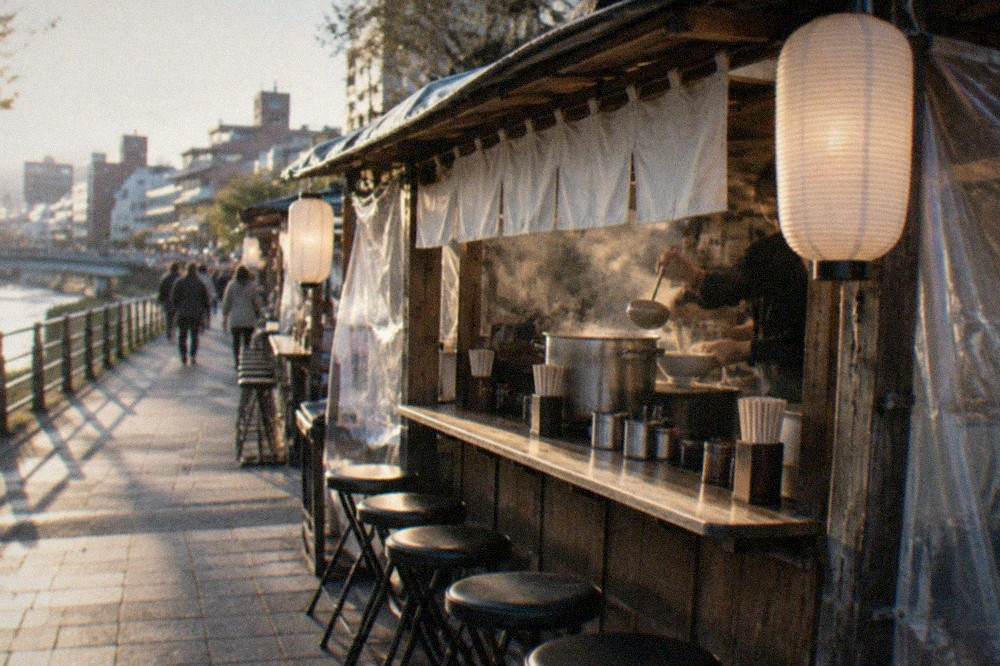
Where to Eat the Best Tonkotsu Ramen
The honest answer is that the best tonkotsu ramen in Fukuoka is not one shop but a type of place: a small counter shop or yatai stall that boils its own bones daily and serves one broth, one noodle and a short topping list. Chains in Hakata and Tenjin are reliable and consistent, but the bowls people remember come from six-seat counters where the owner is also the cook, and where kaedama refills arrive without being asked twice.
Practically, this means you should spread your ramen across the trip rather than hunting one legendary name. Eat one bowl at a stall by the Naka River, one at a counter shop near Hakata Station where the office crowd queues at lunch, and one late at night in Nagahama, the district where the style was born. Compare the broth after three bowls and you will notice real differences: some shops keep it heavy and smoky, others round it with chicken feet or a slick of black garlic oil.
Timing matters more than geography. Counter shops turn over quickly at lunch but fill after 10 p.m. as the nightlife crowd comes looking for a base layer. Stalls are weather-dependent and close in rain or strong wind, so a rainy evening is the moment for an indoor counter, and a clear one is the moment for the riverside. Our Hakata Station area guide covers the cluster of shops around the station itself, which is where most visitors end up on their first night.
A guided option is worth considering if you want the local-only spots without the trial and error. A private local guide can route you through the back lanes of Hakata to the shops that never appear in English, and a food-focused day tour pairs the city classics with stalls you would walk straight past on your own.
Yatai: How Fukuoka's Street Stalls Work
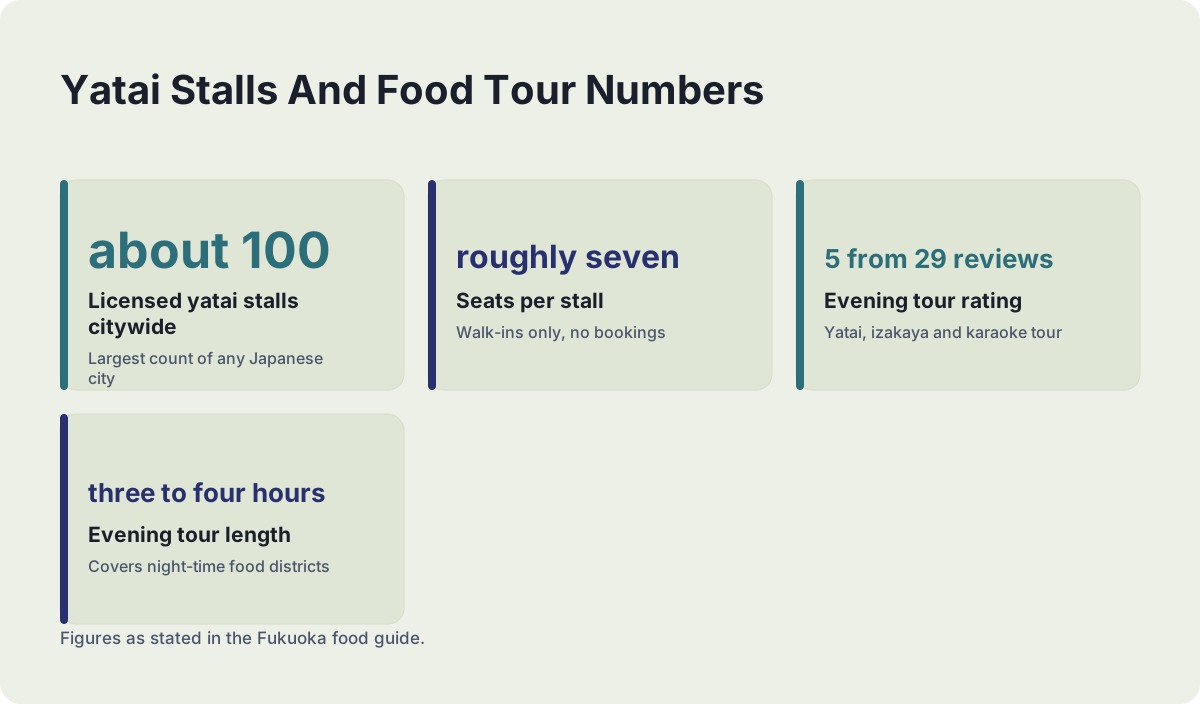
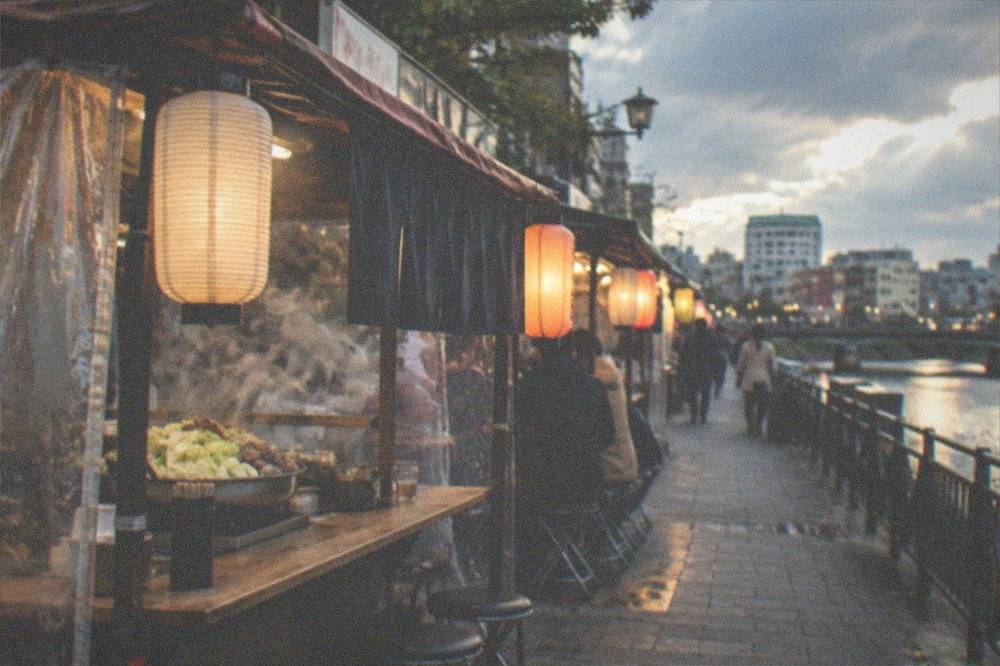
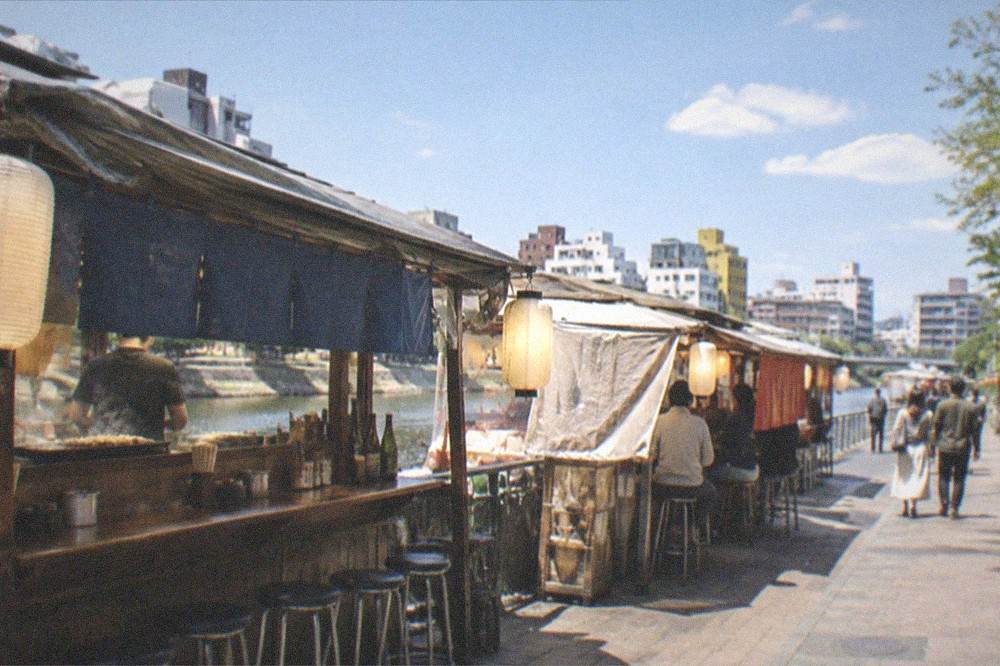
A yatai is a licensed mobile food stall, and Fukuoka has about 100 of them, the largest count of any Japanese city. They open in the early evening, seat roughly seven people at a stretch, take walk-ins only, and cannot be booked. City rules require every stall to post its prices visibly, and any dish priced on the day's market must show that day's actual figure rather than a vague "market price", so the menu you can read is the price you pay.
The stalls cluster in three areas, each with a different character. Nakasu, along the Naka River by Seiryu Park, is the photogenic row that appears on every Fukuoka postcard and the most tourist-facing of the three. Tenjin's stalls are scattered along Watanabe-dori and Showa-dori in the business district, where the crowd skews local and after-work. Nagahama, near the old fish market, is the historic home of the ramen stall and the birthplace of the tonkotsu style itself. The city's own yatai Q&A page confirms the count and the rules, and the Yatai Basic Ordinance is what stands behind the posted-price requirement.
| Area | Atmosphere | Best for |
|---|---|---|
| Nakasu | Riverside, lively, most photographed | A first yatai night, tonkotsu ramen at the source |
| Tenjin | Scattered, after-work locals, some newer stalls | A quieter seat, conversation with regulars |
| Nagahama | Historic, ramen-focused, near the old fish market | The classic stall ramen experience |
Two practical warnings. First, stalls close at the owner's discretion: there is no city-mandated closing day, but rain and strong wind empty the rows, so have an indoor backup. Second, seating is tight and shared, which is the point. You will be elbow to elbow with strangers, and the stall owner runs the conversation. Say a greeting when you sit, order from the posted menu, and expect to be poured a drink if you want one. Our Fukuoka yatai guide covers the etiquette in detail, and our yatai etiquette answer handles the common first-timer worries.
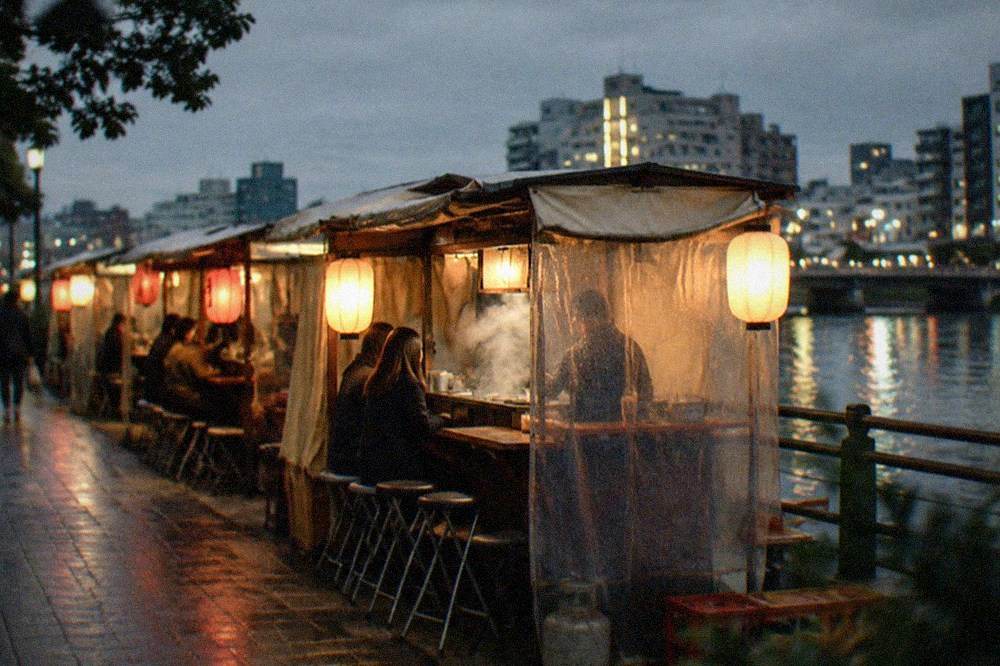
Because you cannot book a stall, the guided crawls that exist are the only way to reserve this experience in advance. The Nakasu food stall private guided tour walks the riverside rows with a local guide and builds the tastings into the price, which removes the language barrier entirely. Check availability if a stall night is a priority on your dates.
Motsunabe, Mentaiko and the Other Hakata Classics
Motsunabe is Fukuoka's other signature dish: a hot pot of beef or pork offal simmered at the table with cabbage, garlic and chili, finished with champon noodles in the remaining broth. Mentaiko, pollock roe cured in chili, is the city's great souvenir and breakfast ingredient. Both are winter-weight foods that locals treat as the taste of home, and both taste meaningfully better in Fukuoka than anywhere else.
Motsunabe began as a working-class Hakata dish, cooked in restaurants that served it by the pot for groups. It remains a shared meal: you order one pot for the table, the staff set it boiling, and the broth, garlic-heavy and restorative, gets a final handful of noodles so nothing is wasted. Summer menus often swap it out, which tells you something about how heavy it is. Mentaiko has a different story: it arrived via Korean cooks working the Hakata fish markets, and the local industry that grew from those market stalls now supplies the whole country. You will find it on rice at breakfast, inside onigiri, tossed with pasta and folded into tamagoyaki.
| Dish | What it is | When locals eat it |
|---|---|---|
| Motsunabe | Offal hot pot with garlic and chili, noodles to finish | Winter, in groups, at a specialist restaurant |
| Mentaiko | Chili-cured pollock roe | Breakfast on rice, any season |
| Goma saba | Mackerel cured in sesame and vinegar | As a starter, with sake |
| Hitokuchi gyoza | Small single-bite dumplings | As a snack or a side order |
The supporting cast matters too. Goma saba, mackerel cured in sesame, is the local izakaya opener, and hitokuchi gyoza, tiny one-bite dumplings, are the Hakata side order that turns up beside ramen and beer alike. Our Fukuoka street food guide collects the rest of the roster, and if mentaiko ends up in your suitcase, the Fukuoka souvenirs guide covers what travels well.
Fukuoka Street Food Beyond the Big Three
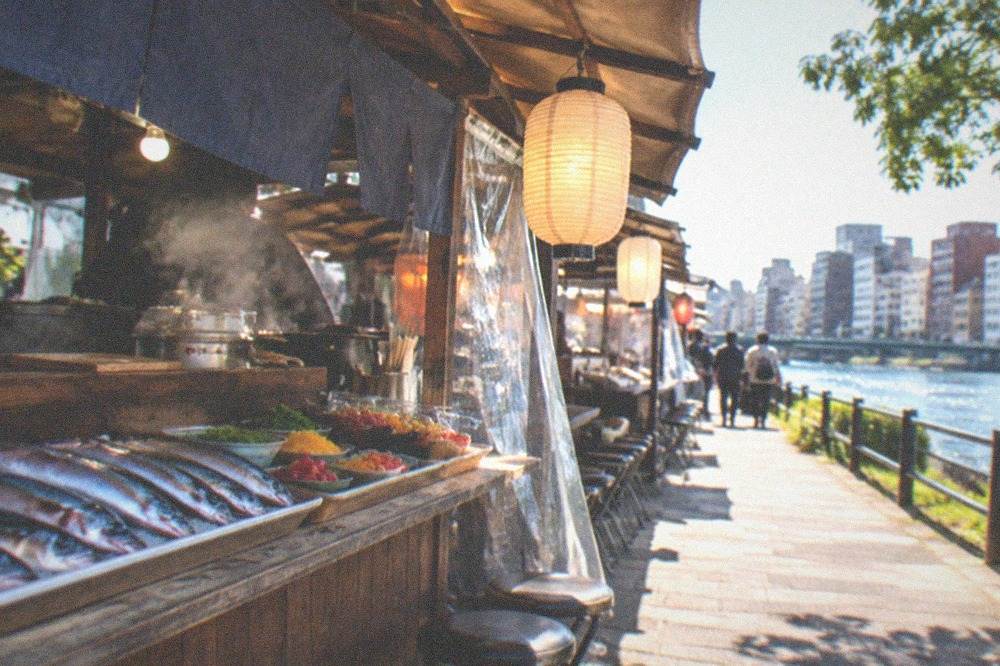
Beyond ramen and yatai, Fukuoka's street food identity runs through udon, dumplings and market halls. Hakata is one of Japan's great udon towns, with a distinctive soft noodle style, and the Kawabata Shopping Arcade near the river serves small portions designed for walking and grazing. The city's markets, particularly Yanagibashi near Hakata Station, are where cooks shop and where visitors can eat the raw ingredients of the local cuisine at source.
Fukuoka udon surprises people who arrive expecting the firm Sanuki style. Here the noodles are soft, the broth is a clear dashi, and the toppings run to gobo tempura, burdock root fried crisp, and sukiya, sweet simmered beef. The style is old, tied to Hakata's merchant history, and it is the local comfort food in a way ramen, a relative newcomer, is not.
Yanagibashi Market, a short walk from Hakata Station, is the cook's market: fishmongers, pickle stalls and small counters selling saba and mentaiko by the piece. It is a working market rather than a tourist one, which means the eating is cheap, direct and best done in the morning. Between the market and the arcade, the stretch between Hakata Station and the Naka River is the most walkable food corridor in the city.
Breakfast, Sweets and Coffee
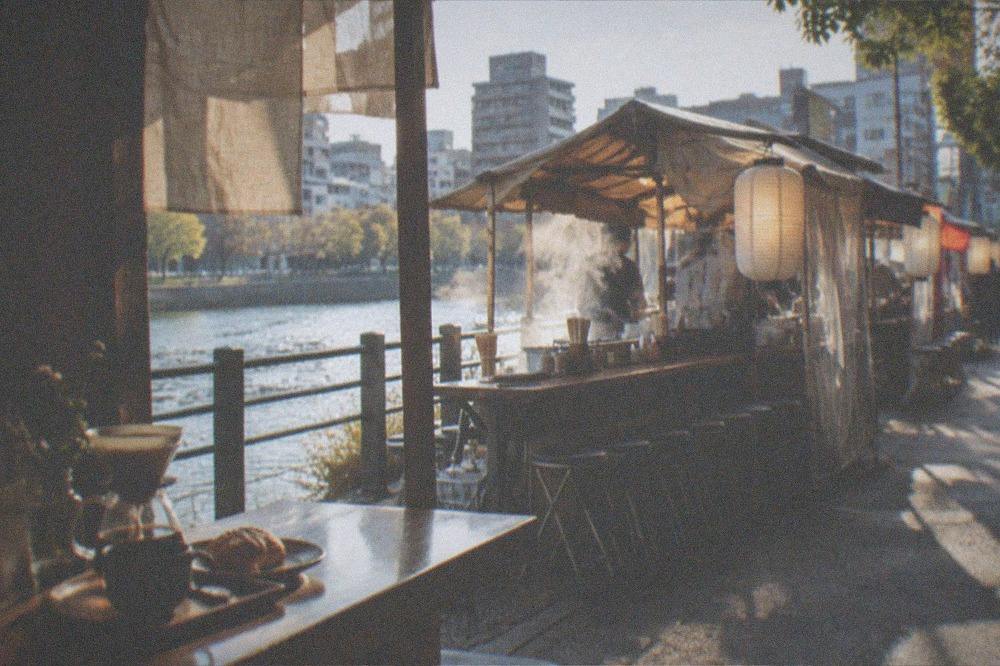
Fukuoka breakfasts run from mentaiko on rice at a hotel buffet to the city's own bakery tradition, and the coffee scene is unusually strong for a city this size. The morning meal here is not an afterthought: Hakata's position as a port city put bread and coffee into the local diet early, and the old kissaten cafes around Hakata and Tenjin still serve a full "morning set" that lands before most attractions open.
The classic local breakfast is simple: rice, miso soup, mentaiko and a piece of grilled fish. Most hotel breakfasts include it, and it is worth choosing a hotel that does. Outside the hotel, two things stand out. One is the morning set at a kissaten, a coffee with a small food item, a habit borrowed from Nagoya but well established here. The other is the bakery scene, which grew out of the city's historic trading links and now ranges from old-school cream-filled loaves to serious sourdough. Our Fukuoka breakfast guide maps the best of both worlds for early risers.
Sweets deserve a mention too. Hakata's traditional confection is umegae mochi, a grilled mochi wrapped around sweet red bean paste, sold in Dazaifu and copied across the city. Zenzai, a warm sweet red bean soup with mochi, is the winter version. Neither is a destination dish on its own, but both are the kind of thing you end up eating twice in a week without planning to.
Vegetarian, Vegan and Halal Eating
Vegetarian and vegan eating in Fukuoka takes planning but is far from impossible: the obstacles are fish stock in dashi and pork in ramen, and the workarounds are specific restaurants rather than menu tweaks. Halal eating is harder still, because pork and alcohol are structural to the local cuisine, but the city's university population supports a small set of certified and Muslim-friendly kitchens, mostly around Tenjin and the Daimyo area.
The honest framing is this: tonkotsu ramen and motsunabe are off the table for both groups, and yatai stalls are a poor bet because a single stall's broth serves everyone. What works instead is a short list of dedicated restaurants, the vegetable-forward kaiseki and shojin traditions, and the izakaya habit of ordering many small dishes, some of which will be plant-based. Our vegetarian and vegan guide and halal food guide name specific kitchens that cook without dashi or pork, which is the only approach that actually works here.
| Dietary need | The obstacle | The reliable approach |
|---|---|---|
| Vegetarian | Fish-based dashi in most broths | Dedicated veg restaurants, shojin-influenced menus |
| Vegan | Dashi plus egg and dairy in sauces | Vegan-identified kitchens, not menu swaps |
| Halal | Pork and alcohol across local dishes | Certified and Muslim-friendly kitchens near Tenjin |
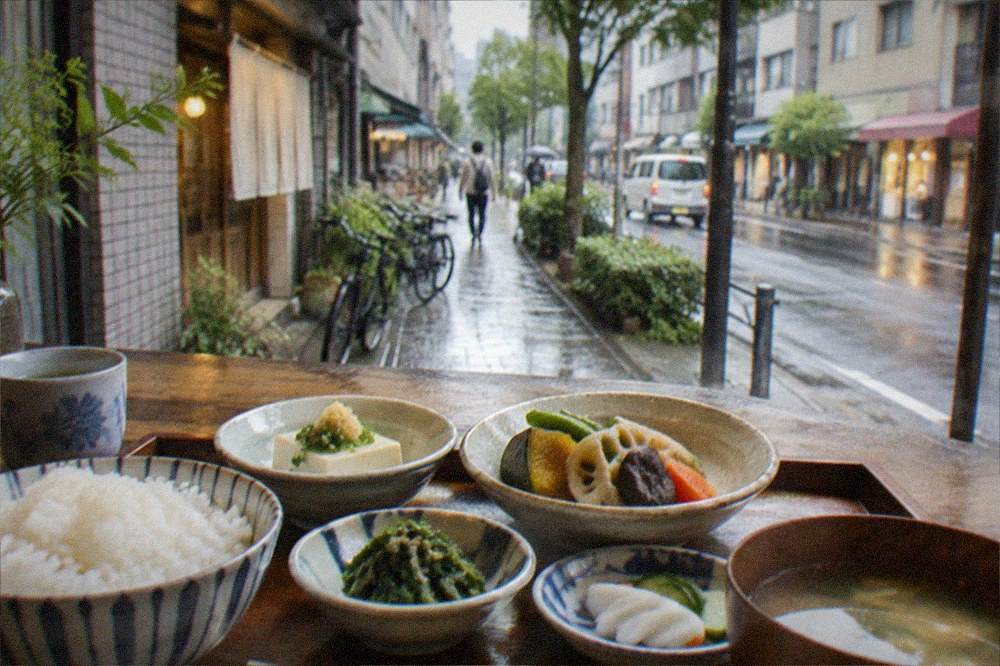
One useful habit for any of these diets: tell the staff clearly at the door rather than ordering around the problem. Japanese kitchens take dietary requests seriously when they are stated upfront, and a restaurant that cannot accommodate you would rather say so before you sit down.
Guided Food Tours and Tastings
A guided food tour in Fukuoka solves three real problems at once: the language barrier at yatai and counter shops, the difficulty of finding broth-obsessed ramen kitchens without local knowledge, and the risk of filling up at the first stall and missing the rest. The city's tour options cover stall crawls in Nakasu, evening izakaya and karaoke circuits, and full-day tasting expeditions into the tea and sake country of southern Fukuoka Prefecture.
The stall crawls are the most popular format, and for good reason. A guide who knows the stall owners gets you a seat, an explanation and a running translation, which turns a potentially awkward first night into the highlight of the trip. Evening tours extend the same idea into izakaya lanes and can end with karaoke, which is a very Fukuoka way to finish a food night. Sake and tea tastings suit travellers who want the drinking culture explained rather than just sampled, and the Yame tea district south of the city is one of Japan's most decorated tea regions, close enough for a day trip.
The Fukuoka food tours guide compares the formats in detail. Two worth flagging here: the evening yatai, izakaya and karaoke tour, rated 5 from 29 reviews, runs three to four hours and covers the night-time food districts in one guided sweep.
For a slower, drink-focused evening, the Nishinakasu sake tasting pairs three local pours with appetizers and a guide who explains what Fukuoka's rice and water actually do to the flavour. It is a seated, indoor alternative for a rainy night, which the stall rows will not give you.
A One-Day Fukuoka Food Crawl
One focused day is enough to eat the city's signature foods if you pace it: a market breakfast near Hakata Station, udon or a bakery stop mid-morning, ramen at a counter shop at lunch, an afternoon of grazing through Kawabata Arcade, and a yatai night along the Naka River. The whole route is walkable or a single subway ride apart, and it ends where the evening starts, which is the point.
The plan below assumes a start near Hakata Station, which is where most visitors stay. It front-loads the market and the daytime dishes because the yatai rows do not open until the evening, and it keeps the walking between stops short. Adjust freely, but keep the sequence: heavy dishes early, light grazing in the middle, ramen last. Umegae mochi fans can extend the crawl to Dazaifu on a second day, where the grilled mochi is sold along the shrine approach, and Dazaifu Tenmangu's own FAQ confirms the shrine grounds charge no entrance fee, making it an easy food-and-culture pairing.
| Time | Stop | What to eat |
|---|---|---|
| Morning | Yanagibashi Market | Fresh saba, mentaiko, market counters |
| Midday | Hakata Station counters | Udon, or a bakery morning set |
| Lunch | A tonkotsu counter shop | Hakata ramen, firm noodles, one kaedama |
| Afternoon | Kawabata Shopping Arcade | Hitokuchi gyoza, sweets, grazing snacks |
| Evening | Nakasu yatai rows | Stall ramen or yakitori, drinks with strangers |
For a longer version with accommodation and neighbourhood advice, our Fukuoka food crawl itinerary stretches this into two days, and our where to stay in Fukuoka guide explains why staying near Hakata Station or Tenjin puts the whole route on foot. If you would rather have a local route the stalls and counters for you, these are the tours that fit a food-first trip.
Common Questions About What to Eat in Fukuoka
What Is The Signature Dish Of Fukuoka?
Tonkotsu ramen, the milky pork bone broth with thin noodles that most menus call Hakata ramen. It originated around the Nagahama and Hakata areas and comes with the kaedama custom of ordering extra noodle refills mid-bowl.
What food is Fukuoka famous for?
Besides tonkotsu ramen, Fukuoka is famous for motsunabe offal hot pot, mentaiko chili-cured cod roe, goma saba sesame-cured mackerel, hitokuchi gyoza dumplings and its distinctive soft style of udon.
Do you need to book a yatai stall in advance?
No. Yatai stalls take walk-ins only and cannot be booked. Only guided yatai crawls are bookable, and those are the way to reserve the experience if you want a guaranteed seat and an interpreter.
Is yatai food expensive?
Prices vary by stall and by what you order, and the city requires every stall to post its prices visibly, so you can read the full menu before you sit down. Any dish priced on the day's market must show that day's actual figure.
What is kaedama?
Kaedama is a refill of noodles ordered while your broth is still hot. Because Hakata ramen uses very thin noodles that soften quickly, shops serve a modest portion and sell extra refills rather than one large bowl.
Where should a first-timer eat in Fukuoka?
Start with one counter bowl of tonkotsu ramen near Hakata Station, one market breakfast at Yanagibashi, and one evening at the Nakasu yatai rows. That single day covers the signature dish, the market culture and the stall culture in one walkable route.