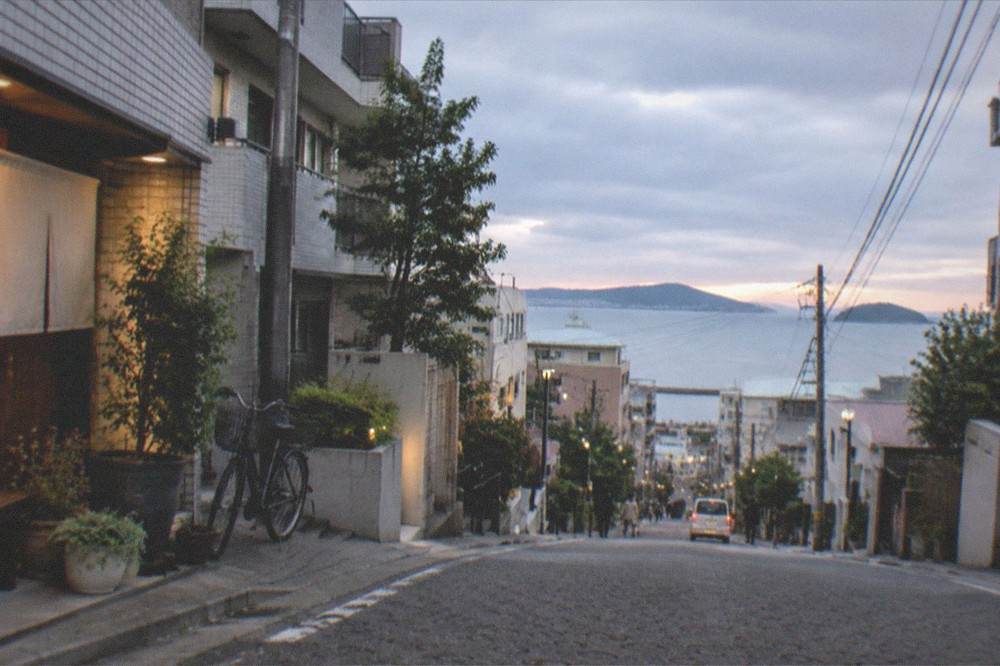
Kyushu: The Island Fukuoka Sits On
Kyushu is the large island at the southwestern end of the Japanese archipelago, and Fukuoka, its biggest city, sits on its northern coast facing Hakata Bay and the Genkai Sea. This guide covers where the island is, what it contains, and how to use Fukuoka as the base for seeing it.
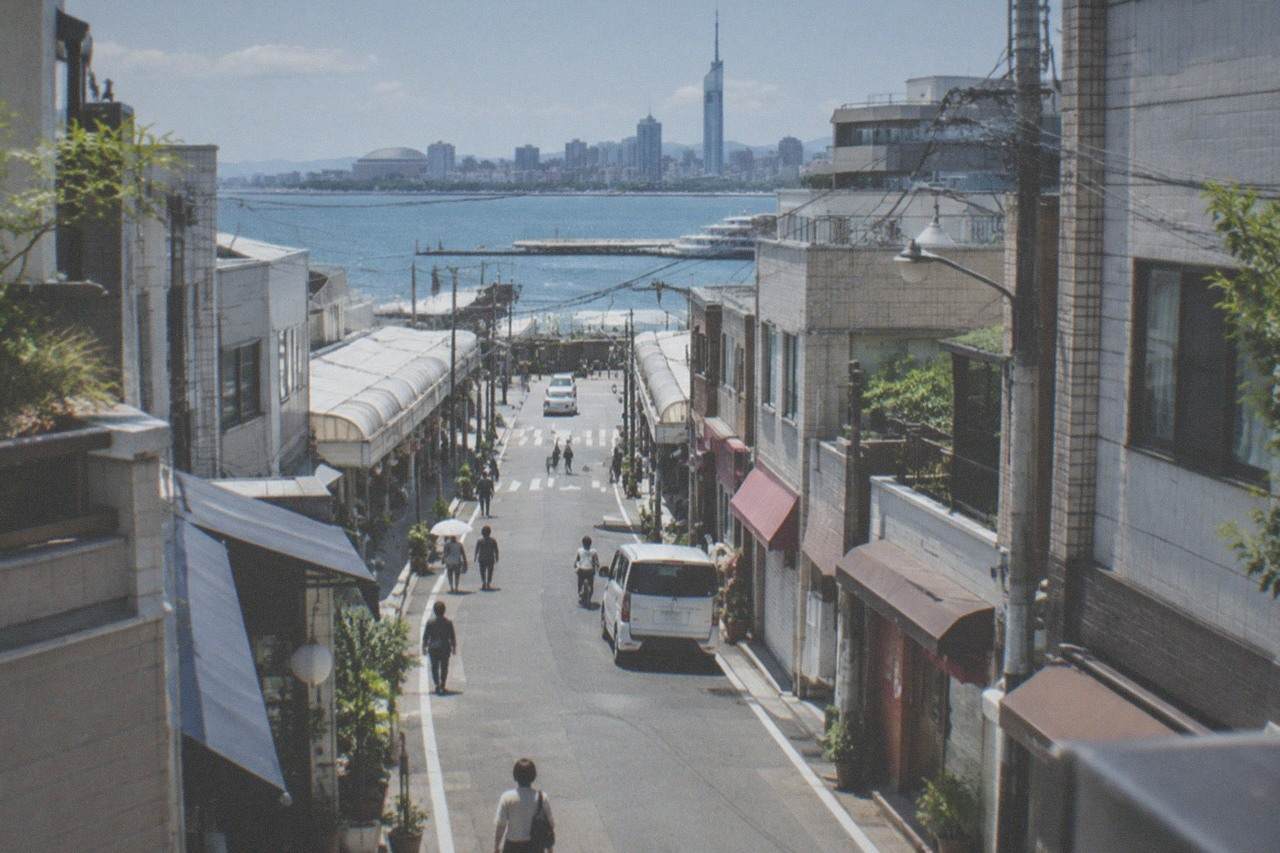
Short answer
Kyushu is the third largest of Japan's four main islands, lying southwest of Honshu across the Kanmon Strait. It holds seven prefectures, Fukuoka, Saga, Nagasaki, Kumamoto, Oita, Miyazaki and Kagoshima, and Fukuoka City on its north coast is the region's transport hub, with the island's busiest airport and its main Shinkansen terminus at Hakata.
Kyushu is the island at the far southwestern corner of Japan, the one Honshu hands you to once you cross the Kanmon Strait, and Fukuoka City sits on its northern shore with its back to the Genkai Sea. Most international travellers arrive here without quite registering that they have landed on a separate island at all, because the Shinkansen slides under the strait in a tunnel and the airport sits so close to the city centre. This page pins down exactly where Kyushu is, what it contains, and why Fukuoka works as the natural base for exploring it. A good companion read is our Kyushu map guide, which covers the geography in visual form.
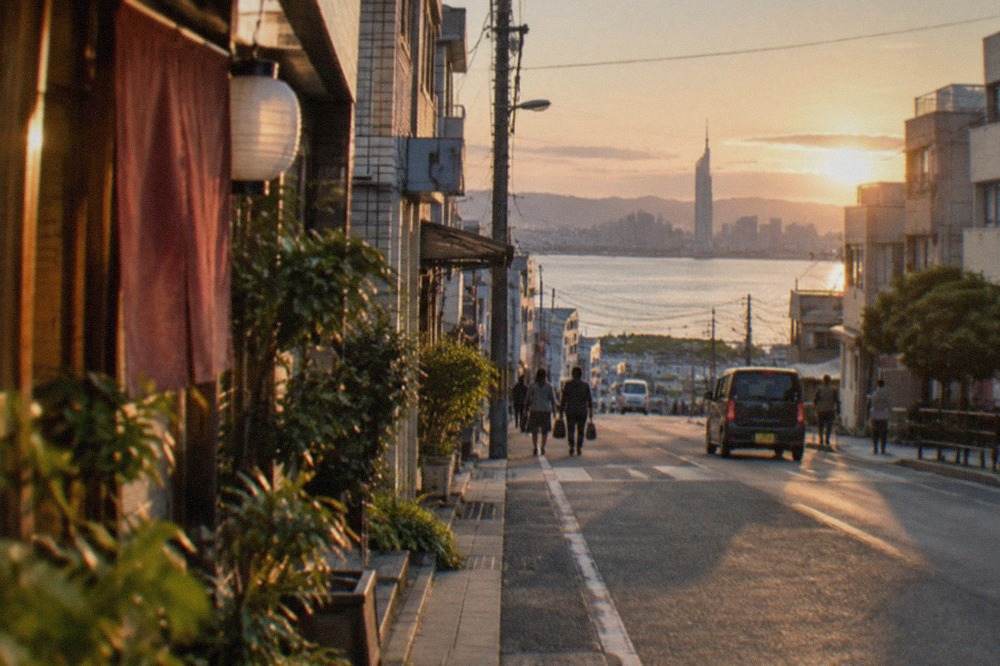
Where Is Kyushu in Japan?
Kyushu is the third largest of Japan's four main islands, positioned at the southwestern end of the archipelago, separated from Honshu by the narrow Kanmon Strait and lying roughly 900 km west of Tokyo. Its northern coast faces the Genkai Sea and Hakata Bay, where Fukuoka sits. Shikoku lies to the northeast across the Bungo Channel, and the Korean Peninsula is the nearest large landmass to the northwest.
That last point matters more than most guides admit. Fukuoka is closer to Busan, across the sea, than it is to Tokyo by rail distance, and the city has been the gateway between Japan and the continent for well over a thousand years. Trade, raiders and Buddhism all entered the country through this coast, and the archaeology of Hakata Bay reflects it. Fukuoka is not a Pacific city and it is not tropical: it faces north onto the Genkai Sea, a stretch of the Sea of Japan, and the bay it sits on opens onto that sea rather than the Pacific, which is on the far side of the island. Readers planning around the seasons should skim when to visit Fukuoka and the Fukuoka weather guide, both of which draw on the same official climate normals used below.
Within Japan's own administrative map, Kyushu is both an island and a region. The region named Kyushu, literally "nine provinces", a name left over from the old provinces it once held, is usually counted as the seven prefectures listed in the next section. Okinawa sits further southwest on its own island chain and is administered separately, which is why the count is seven and not eight. This is a real point of confusion in search results, and it is worth settling early: Okinawa is part of the broader Kyushu-Okinawa region for some statistics, but the island of Kyushu itself does not include it.
Which Prefectures Make Up Kyushu?
Kyushu holds seven prefectures: Fukuoka and Saga in the north, Nagasaki and Kumamoto in the west and centre, Oita in the northeast, and Miyazaki and Kagoshima in the southeast. Fukuoka is the most populous, Kumamoto and Kagoshima are the largest by area, and Nagasaki covers the most islands. Together with Okinawa, which is separate, they form the Kyushu region, Japan's third most populous region after Kanto and Kansai.
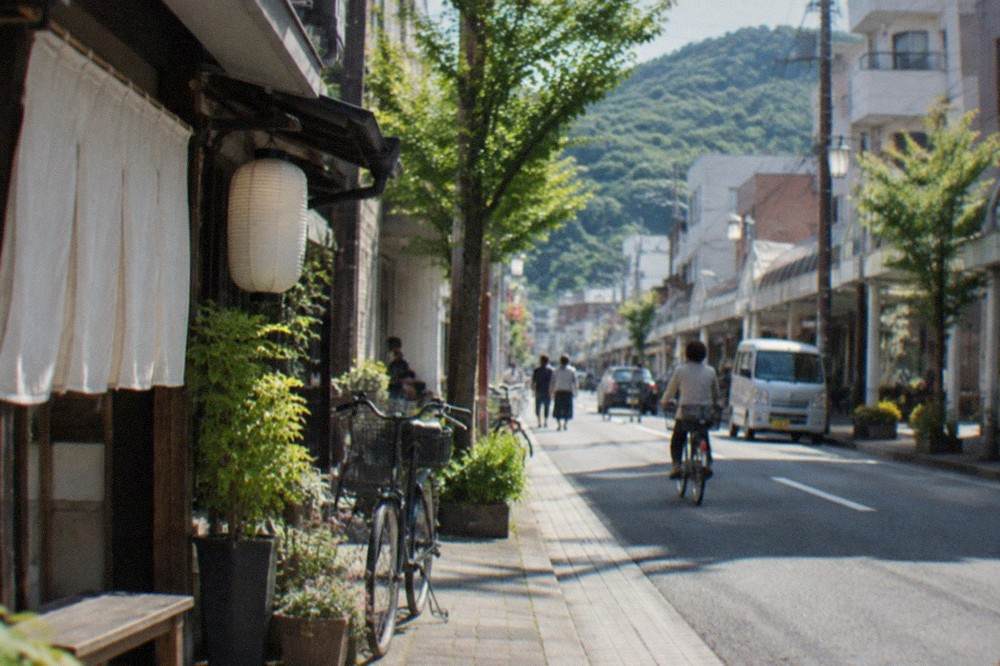
The island's geography is dominated by a mountainous spine running down its middle, with the Aso caldera in Kumamoto one of the largest volcanic craters on earth and the visible reminder that Kyushu was built by volcanoes rather than by sediment. The consequence for travellers is simple: rail lines hug the coast, the plains where people actually live are scattered, and the famous sights, Beppu's hot springs, Takachiho's gorge, Kurokawa's onsen town, are strung along the edges and the valleys. Nobody sees the whole island on a single trip, and nobody should try. A realistic pattern is three or four nights in Fukuoka with day trips out along the rails, which is exactly what our Kyushu itinerary from Fukuoka is built around.
| Prefecture | Main city | What draws visitors |
|---|---|---|
| Fukuoka | Fukuoka City (Hakata) | Ramen and yatai stalls, Dazaifu, Itoshima coast |
| Saga | Saga City | Yoshinogari ruins, Arita and Imari pottery towns |
| Nagasaki | Nagasaki City | Port history, Gunkanjima, Huis Ten Bosch |
| Kumamoto | Kumamoto City | Kumamoto Castle, Mount Aso, Kurokawa Onsen |
| Oita | Oita City | Beppu hot springs, Yufuin, the Hells tour |
| Miyazaki | Miyazaki City | Takachiho Gorge, coastal shrines, mild winters |
| Kagoshima | Kagoshima City | Sakurajima volcano, hot springs, southern islands |
The trio of tours below gives a reasonable first taste of the island from a Fukuoka base: one coastal and relaxed, one deep into the Miyazaki mountains, and one that only exists because Fukuoka hosts a November sumo tournament.
How Do You Get to Kyushu?
Most international visitors reach Kyushu through Fukuoka Airport (FUK), which handles around 28 million passengers a year and sits on the city subway's Kuko line, from which the ride to Hakata Station costs ¥260. The Shinkansen reaches Hakata from Honshu through the Kanmon tunnels, and hydrofoil and cruise ferries run to Busan. Within the island, JR Kyushu's rail network radiates from Hakata.
Fukuoka Airport's second runway, 2,500 m, opened on 2025-03-20 according to the transport ministry's own announcement, modestly increasing capacity at what was already the island's main gateway. The airport's closeness to the city centre is genuinely unusual for Japan and is one of Fukuoka's practical selling points, but the widely repeated "five minutes to Hakata" claim does not appear on any official page, so we won't print it as fact. What is verified is the fare: the airport sits in the 3 to 7 km fare band on the city subway, which makes the trip ¥260. Our Fukuoka Airport guide covers the terminals and onward connections in detail, and our getting from Fukuoka Airport to Hakata page covers the transfer step by step. Domestic travellers arrive by rail from Tokyo, Osaka and Kyoto along the Sanyo line into Hakata Station, which is the island's terminus. There is no JR Fukuoka Station, the station is called Hakata, a point worth repeating because it confuses ticket searches every day.
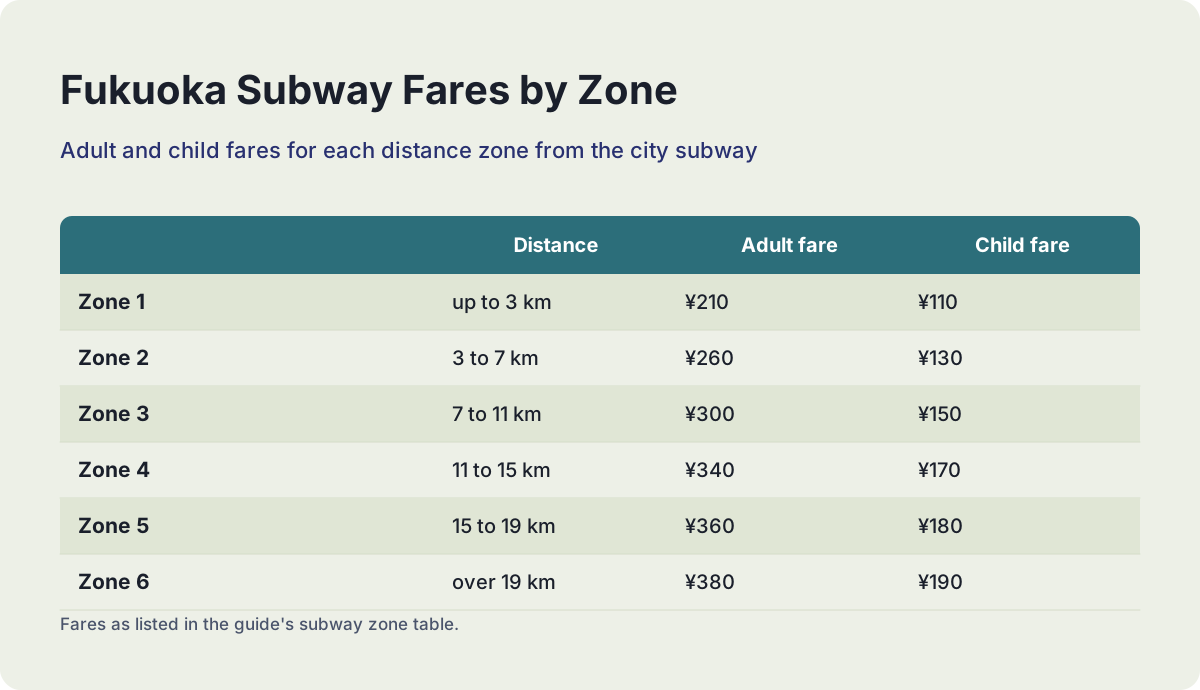
For moving around once you are here, the useful table is the city subway fare band, since almost every day trip starts or ends with a subway ride to a station or a bus terminal:
| Subway zone | Distance | Adult fare | Child fare |
|---|---|---|---|
| Zone 1 | up to 3 km | ¥210 | ¥110 |
| Zone 2 | 3 to 7 km | ¥260 | ¥130 |
| Zone 3 | 7 to 11 km | ¥300 | ¥150 |
| Zone 4 | 11 to 15 km | ¥340 | ¥170 |
| Zone 5 | 15 to 19 km | ¥360 | ¥180 |
| Zone 6 | over 19 km | ¥380 | ¥190 |
Fares and zone bands are published by the city subway operator at the official fare table. For the regional network, the JR Kyushu Rail Pass and the Japan Rail Pass in Fukuoka guides explain what each pass covers and where it stops paying for itself. One trap worth flagging: Hakata to Kokura by Shinkansen runs on the JR West Sanyo line, so JR Kyushu passes do not cover that stretch even though both ends are on Kyushu.
What Is the Weather Like Across the Island?
Fukuoka, on Kyushu's north coast, averages 17.3 °C across the year with 1,686.9 mm of rain, per the Japan Meteorological Agency's 1991 to 2020 normals for the city station. July is the wettest month at 299.1 mm, ahead of June's 249.6 mm despite June being the tsuyu rainy season. August is hotter and drier than July, averaging 28.4 °C with 210.0 mm of rain.
That July figure surprises people who assume the rainy season owns the wettest month, and it matters for planning: Yamakasa, the city's biggest festival, runs July 1 to 15 through the same period that is statistically the island's dampest. The south and east of the island run warmer still, Miyazaki's coast is Japan's mildest in winter, while the mountains around Aso and Kurokawa are cooler in summer and snowy in winter. Typhoon season runs roughly July through October and is a genuine planning factor anywhere on the island, though it rarely closes a whole trip. Our typhoon season in Fukuoka page explains what actually happens and what to do about it, and the live JMA typhoon feed is the primary source for active storms: the agency publishes current tropical systems at its official typhoon data feed.
| Month | Mean °C | Daily max °C | Rain mm |
|---|---|---|---|
| Jan | 6.9 | 10.2 | 74.4 |
| Apr | 15.4 | 19.9 | 118.2 |
| Jul | 27.4 | 31.2 | 299.1 |
| Aug | 28.4 | 32.5 | 210.0 |
| Oct | 19.6 | 23.7 | 94.5 |
| Dec | 9.1 | 12.6 | 67.5 |
What Are the Best Day Trips Into Kyushu from Fukuoka?
Fukuoka's location at the top of the island makes day trips its superpower. Dazaifu, Yanagawa, Itoshima, Nokonoshima, Shikanoshima, Karatsu, Mojiko and Kitakyushu all reach in half a day or so, while Yufuin, Beppu, Mount Aso, Takachiho, Kumamoto and Nagasaki are full days of 8 to 12 hours by rail or tour bus. Trying to compress a full-day destination into a half-day plan is the most common planning error on this coast.
The distinction matters because the rails fan out fast from Hakata and then stop. The Nishitetsu line runs south to Dazaifu and Yanagawa, JR runs west along the coast to Karatsu and Mojoko, and the slow ferries cross Hakata Bay to Nokonoshima and Shikanoshima, both of which sit inside the bay itself. Beyond that band, the distances bite: Beppu and Yufuin in Oita are best treated as a full-day outing, Takachiho in Miyazaki is a long mountain run, and Nagasaki is at the far end of a full day even by limited express. Guided coach tours cover most of these long runs, and the Takachiho option below, rated 4.8 from 713 reviews and running 11 hours, is the single most-reviewed day trip on this site, which is a fair signal about where first-time visitors actually end up going. Other pages covering the same trip are gathered on Fukuoka Japan Travel Guide.
For a half-day option that stays closer to the city, the Itoshima peninsula runs west of Fukuoka along the Genkai Sea coast, reached by rail plus bus or by car, and is a half to full day rather than a quick hop. Its fishing harbours, oyster shacks and the famous couple stones at Sakurai Futamigaura are the relaxed counterweight to the big-name trips, and the Itoshima Hidden Gems Day Tour covers it in a single 8.5-hour outing rated 4.6 from 31 reviews.
| Destination | Prefecture | Realistic time | How it is reached |
|---|---|---|---|
| Dazaifu | Fukuoka | Half day | Nishitetsu rail with one transfer |
| Yanagawa | Fukuoka | Half to full day | Nishitetsu rail |
| Itoshima coast | Fukuoka | Half to full day | Rail plus bus, or car |
| Nokonoshima | Fukuoka | Half day | Ferry across Hakata Bay |
| Karatsu and Mojiko | Saga / Kitakyushu | Full day | JR coastal lines |
| Yufuin and Beppu | Oita | Full day, 10 hours | Limited express or coach |
| Takachiho Gorge | Miyazaki | Full day, 11 hours | Coach tour |
| Nagasaki | Nagasaki | Full day, 12 hours | Limited express |
Ferry-bound readers should note that Uminonakamichi Seaside Park's gate takes cash only, which is one of those small operational facts that can sink an afternoon. And anyone with children should read Fukuoka with kids before committing to a long day-trip day, because the bay playgrounds usually win against a four-hour coach ride.
Where Does Fukuoka Sit Within Kyushu?
Fukuoka City sits on Kyushu's northern coast at the mouth of the Naka River, facing Hakata Bay, which opens onto the Genkai Sea. With a population around 1.6 million, it is the largest city on the island, its economy outclasses every other Kyushu city, and Hakata Station is the terminus of both the Shinkansen and most of the island's limited express network.
Two naming traps catch nearly every first-time visitor, and both are worth killing off here. First, Hakata and Fukuoka are the same city, not two places you travel between: Hakata is the ward and the station name, Fukuoka is the city, so a hotel "in Hakata" and a hotel "in Fukuoka" can be on the same block. Second, there is no JR Fukuoka Station. If a rail app asks for "Fukuoka" it means the Nishitetsu terminal at Tenjin, which is not the one you want for the Shinkansen. These are not pedantic points, they are the difference between catching a train and standing on the wrong platform, and our Hakata station guide exists because of them.
The city's food culture is a direct product of its position on the island. Kyushu is Japan's kitchen-garden prefecture belt, its farms supply the pork and wheat that became tonkotsu ramen, and Hakata's port brought the mentaiko and the Chinese trade that shaped the local table. A structured way into it is a Fukuoka food tour, and the background reading is in the Fukuoka food guide. The night version of the same idea, the yatai stall, is covered properly in Fukuoka's yatai guide: about 100 licensed stalls operate across the city, the city's own ordinance requires every stall to display its prices where customers can see them, and the stalls take walk-ins only, so no booking is involved or needed for the stalls themselves.
How Long Should You Spend on Kyushu?
Fukuoka city itself rewards two to three days, and the island beyond it rewards however much more you can give it. A realistic first trip is four to six nights based in Fukuoka: two days for the city's temples, food and bay, then one day trip out for every further day, choosing between Dazaifu, Itoshima, Beppu or Takachiho rather than trying to combine them. A pass-based rail loop needs a full week.
The arithmetic is honest. Each of the big day destinations eats 8 to 12 hours including travel, so two day trips back to back is a heavy pace, and three is only for the energetic. Tour-first visitors can compress more, because a coach tour handles the connections and the timing, but the fatigue is the same. Two itineraries that already do this thinking for you are the Kyushu itinerary from Fukuoka and our shorter city itineraries, and the planner guide explains how to match trip length to season. For anyone leaving Fukuoka for the next stage, where to go after Fukuoka ranks the onward options, and the practical notes on getting to Fukuoka from Tokyo or from Osaka cover the arrival side.
What Does Kyushu Cost Compared to the Rest of Japan?
Kyushu is broadly cheaper than Tokyo or Osaka for hotels and local transport, though the gap narrows every year as Fukuoka's visitor numbers climb. The verified, publishable numbers are the small ones: the subway fare bands from ¥210 to ¥380, the ¥640 subway day pass, and the ¥1,200 Nishitetsu bus day pass. Long-distance rail and the big day tours are the line items that decide a budget.
Fukuoka's growth is real and it shows in hotel rates: the city posted Japan's highest growth rate of any designated city in the 2025 census, and foreign entrants through its airport and port have been setting records. Budget travellers should read Fukuoka on a budget and the trip cost guide, which break down the actual spend categories. The island's cheap pleasures are real too: shrine grounds, temple grounds, Ohori Park, the castle ruins and Canal City are all free to enter, and the two city art museums charge only ¥200 for adults with free entry for under-15s, so the sightseeing half of a Kyushu budget is smaller than most visitors expect before they arrive.
| Item | Typical figure | Note |
|---|---|---|
| Subway single ride | ¥210 to ¥380 | Zone-based, official table |
| Subway day pass | ¥640 | All three lines, one day |
| Nishitetsu bus day pass | ¥1,200 | City buses, one day |
| Art museum entry | ¥200 | Both city museums, adults |
| Fukuoka Tower | ¥1,000 | Adults, high school and above |
| Yatai meal | Posted prices only | Ordinance requires visible pricing |
Common Questions About Kyushu
Where Is Kyushu In Japan?
Kyushu is the third largest of Japan's four main islands, at the southwestern end of the archipelago, separated from Honshu by the Kanmon Strait. Fukuoka City sits on its northern coast on Hakata Bay, which opens onto the Genkai Sea.
What are the seven prefectures of Kyushu?
Fukuoka, Saga, Nagasaki, Kumamoto, Oita, Miyazaki and Kagoshima. Okinawa lies further southwest on its own island chain and is administered separately from the island of Kyushu.
Is Fukuoka on Kyushu?
Yes. Fukuoka is the largest city on the island and its main transport hub, with the island's busiest airport and the Shinkansen terminus at Hakata Station. Hakata is a ward of Fukuoka, not a separate city.
Can you do a day trip from Fukuoka to Beppu or Yufuin?
Yes, but treat it as a full day of around 10 hours. Beppu and Yufuin are in Oita, in the island's northeast, and guided tours and limited express trains both run the route from Hakata. A half-day plan does not work for Oita.
How many days do you need for Kyushu?
Four to six nights based in Fukuoka is the realistic first trip: two or three days for the city and its bay, then one day trip per further day. A rail loop of the whole island needs a full week.
Does it snow in Kyushu?
Rarely on the coast, and regularly in the mountains. Fukuoka's January mean is 6.9 °C with light snowfall some years, while the Aso area and the mountains of Kumamoto and Miyazaki get real winter snow every year.
For trip-building beyond this page, read the Kyushu map guide next, then work through the itineraries. The island rewards depth more than breadth, and the visitors who enjoy Kyushu most are the ones who pick two or three corners of it and take the rest at ramen speed.