Typhoon Season in Fukuoka
Typhoon season in northern Kyushu runs roughly July through October, and the official rainfall data shows July, not the June rainy season, is actually Fukuoka's wettest month. Here is what that means for a trip.
Short answer
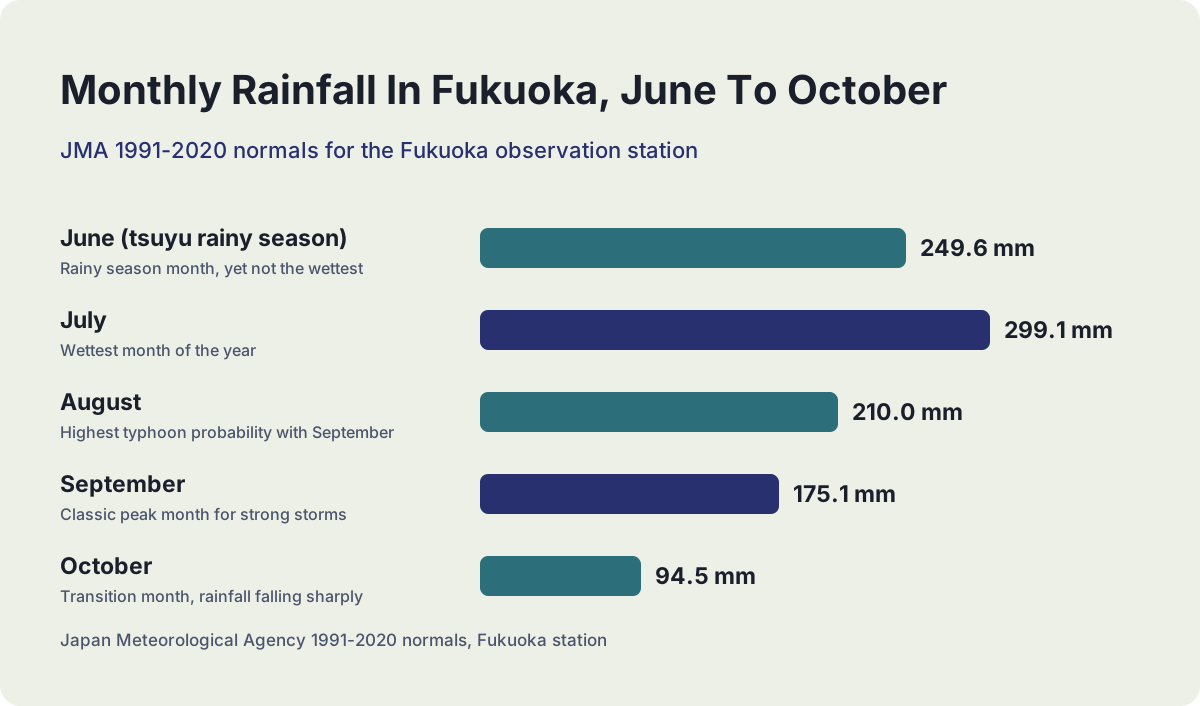
Typhoon season in Fukuoka and Kyushu runs roughly July through October, with the greatest risk in August and September. Fukuoka's wettest month is July at 299.1 mm, ahead of June's 249.6 mm. Storms rarely ruin a whole trip: most pass in a day, the subway keeps running, and museums, malls and indoor food halls absorb the wet hours.
Northern Kyushu sits squarely in the western Pacific's typhoon belt, and every summer a handful of storms curve up toward the Genkai Sea and Fukuoka's waterfront. The Japan Meteorological Agency's 1991-2020 normals for the Fukuoka observation station record 1,686.9 mm of rain across a typical year, and a large share of it arrives between June and October. Yet the same data undercuts the alarmist framing most guides reach for: July, at 299.1 mm, is Fukuoka's wettest month, ahead of June's 249.6 mm, and August banks 200.9 sunshine hours, the second sunniest month of the year after May. Typhoon season is a real planning factor, not a reason to stay away.
This page lays out the calendar, the official numbers, and the practical playbook: what a typhoon day actually looks like in Fukuoka, what closes first, how to track storms, and how to build an itinerary that bends instead of breaks. The planning basics, from month-by-month conditions to packing, are covered in the Fukuoka weather guide, which pairs well with this one.
When Is Typhoon Season in Fukuoka and Kyushu?
Typhoon season in Fukuoka and the wider Kyushu region runs roughly from July through October, with the statistically busiest stretch in August and September. Unlike tsuyu, the June rainy season, which brings steady grey drizzle for weeks, typhoons are discrete events: one to three named storms typically affect northern Kyushu each year, each one mattering for a day or two rather than a month. Fukuoka's position on Hakata Bay, facing the Genkai Sea, means storms tracking up the East China Sea sometimes pass directly over the city.
The word "roughly" is doing honest work in that answer. The JMA does not publish a fixed opening and closing date for typhoon season, because tropical cyclones do not respect a calendar. Storms have reached Kyushu as early as late June and as late as November, but the overwhelming majority arrive in the July-to-October window. If you are choosing between months, the pattern in the official normals is worth reading closely.
| Month | Mean temp | Daily max | Rainfall | Sunshine hours |
|---|---|---|---|---|
| June | 23.3 °C | 27.2 °C | 249.6 mm | 145.2 h |
| July | 27.4 °C | 31.2 °C | 299.1 mm | 172.2 h |
| August | 28.4 °C | 32.5 °C | 210.0 mm | 200.9 h |
| September | 24.7 °C | 28.6 °C | 175.1 mm | 164.7 h |
| October | 19.6 °C | 23.7 °C | 94.5 mm | 175.9 h |
Those figures come from the JMA 1991-2020 normals for the Fukuoka station, and they tell a more interesting story than the raw "typhoon season" label suggests. July's 299.1 mm makes it the wettest month of the year even though June is the tsuyu month, a fact almost no competing guide mentions. August is hotter and drier than July. And by October the rainfall has fallen away to 94.5 mm, less than a third of July's total, which is why October is quietly one of the most reliable months in the whole calendar.
The other framing point: neither tsuyu nor typhoon season makes Fukuoka unvisitable. The city's summer is hot, humid and green, its biggest festival, Hakata Gion Yamakasa, runs July 1 to 15 in the middle of the wettest month, and the November Kyushu Basho sumo tournament lands after the worst of the season has passed. Travellers who want the driest possible window should look at spring in Fukuoka instead, but summer visitors are not gambling the way the word "typhoon" implies.
How a Typhoon Actually Reaches Fukuoka
Typhoons that reach Fukuoka typically form east of the Philippines or near Guam, then track north-west across the East China Sea toward Kyushu's Genkai Sea coast. When one makes a direct hit, the city usually faces about a day of disruption: a windy, wet build-up, the storm's passage, and then a clear, washed-out sky.
Understanding the geography helps you read forecasts intelligently rather than anxiously. Fukuoka sits on the north shore of Kyushu facing the Genkai Sea, which is the mouth of the East China Sea, not the open Pacific. Storms therefore arrive from the south-west, and the city's long waterfront, from Momochi Seaside Park around to Hakata Port, takes the brunt of the wind when a track passes close. Nagasaki, Saga and the Itoshima peninsula to the west often see conditions earlier and harder.
The JMA classifies storms by wind strength near the centre, and the numbers that matter for a visitor are the advisory thresholds, not the category labels. When a storm's forecast cone crosses northern Kyushu, the agency issues advisories for heavy rain, flooding, high waves and wind, in English as well as Japanese. The JMA's live typhoon data feed is the authoritative source for what is actually in the basin right now, and the agency's English typhoon pages render the same information in human-readable form.
Two practical reading habits are worth forming. First, look at the forecast track, not just the headline: a typhoon 300 km offshore still grounds ferries and makes the yatai stalls stay shut, while a weaker system passing overhead may only cost you half a day of rain. Second, watch the size. Large, disorganised storms soak a wide area for two days; compact, intense ones tear through in an afternoon. Neither pattern justifies cancelling a week-long trip.
The regional picture matters too. A storm over Okinawa or southern Kyushu can disrupt your travel plans even when Fukuoka itself stays dry, because flights into Fukuoka Airport and the Shinkansen from Tokyo and Osaka thread past the weather. If you are arriving from the north, the Tokyo to Fukuoka and Osaka to Fukuoka guides cover the rail and air corridors and what a suspension means for a through ticket.
If a storm week is looming, the three tours below are the formats that handle bad-weather risk best: a coach day trip where the operator manages the roads, a coastal tour that can reroute inland, and an indoor arena event that does not care what the sky is doing.
What a Typhoon Day Actually Looks Like in Fukuoka
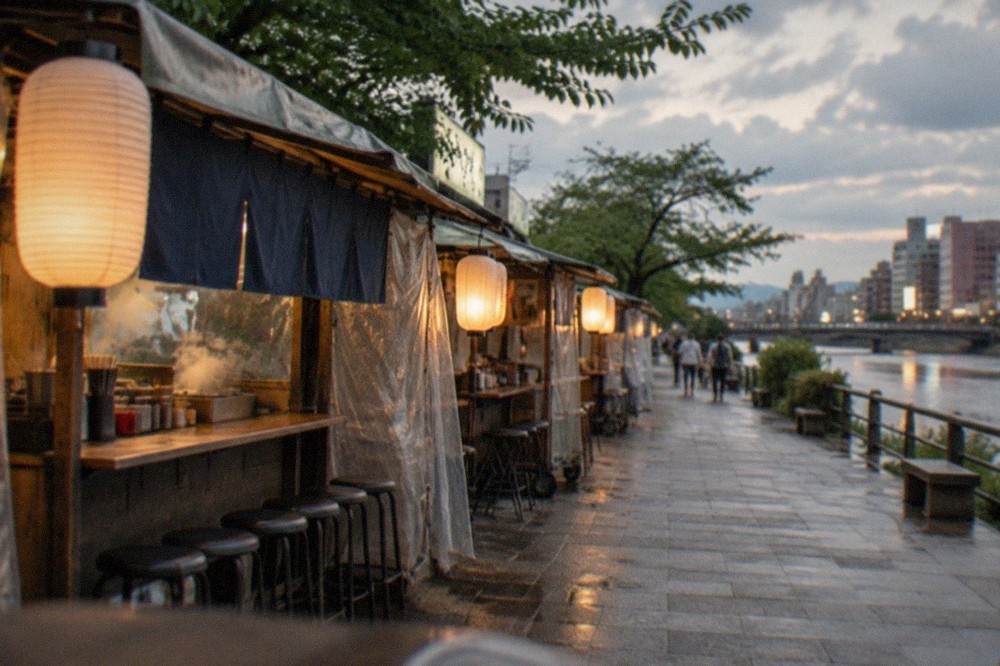
A typhoon day in Fukuoka is rarely a citywide shutdown. The pattern is consistent: the yatai food stalls stay closed, ferries to Nokonoshima and Shikanoshima stop sailing, and parks and viewpoints empty out, while the subway runs a full service, malls like Canal City Hakata stay open until 21:00, museums keep normal hours, and the indoor food halls fill up by lunchtime. Rain peaks for a few hours, wind gusts rattle the shutters, and by the following morning the streets are dry and swept.
The yatai are the clearest early indicator. Fukuoka's roughly 100 licensed street stalls are open-air by design, the city's rules permit road occupancy from 17:00 to 04:00, and rain or strong wind closes most of them at the operator's discretion. There is no mandated closing day and no city-ordered shutdown; stall owners simply make the call each evening. If the riverside row along the Naka River in Nakasu is dark at 19:00, a storm is close. The Fukuoka yatai guide covers where the stalls cluster and how the system works.
Ferries are next. The crossings to Nokonoshima and Shikanoshima suspend early, and Uminonakamichi Seaside Park, out on the sandbar, is exposed enough that its outdoor zones become unpleasant well before conditions turn dangerous. Note for anyone heading there in any weather: the park gate takes cash only, a detail the park itself states plainly and almost no guide passes on. The park closes on selected Tuesdays through the year too, so it is never a guaranteed day out.
What keeps running is the part most visitors rely on anyway. The Fukuoka City Subway is underground or covered for almost all of its length, and a single adult fare runs from ¥210 for up to 3 km up to ¥380 beyond 19 km, with a one-day pass at ¥640 covering all three lines. Canal City Hakata is open every day of the year, with shops from 10:00 to 21:00 and restaurants from 11:00 to 23:00. Both city art museums charge just ¥200 for the collection galleries and stay dry, quiet and open through most weather, though each has its own weekly closed day.
| When a storm approaches | Usually affected | Usually unaffected |
|---|---|---|
| Yatai stalls (Nakasu, Tenjin, Nagahama) | Close at the operator's discretion | Indoor izakaya and ramen shops |
| Ferries to Nokonoshima, Shikanoshima | Suspend early | Subway, all three lines |
| Uminonakamichi Seaside Park | Outdoor zones unpleasant or closed | Canal City Hakata, open year-round |
| Mountain and gorge day trips | Roads may close or reroute | Museums, malls, arcades |
| Beaches and coastal viewpoints | No-go in high wind | Tenjin Underground Mall |
The one genuinely bad scenario is a direct hit timed to your travel day, when flights and the Shinkansen suspend service for safety until the track or runway is inspected. Even then, suspensions are measured in hours, and the operators rebook passengers onto the next service. Build one flexible day into any July-to-October itinerary and the downside shrinks to a lost afternoon.
For travellers who want a storm-proof plan, the Fukuoka Tourist City Pass is worth knowing about: ¥2,500 for the city version and ¥2,800 for the version that adds Dazaifu, both requiring a passport check at the counter because the pass is restricted to overseas visitors on a short-stay visa. It covers subway, buses, trains and ferries for a day, and it pairs with the where to stay in Fukuoka planning pages when you are deciding how much transit a day of museum-hopping really needs.
If you have your heart set on a gorge-and-railway day out, the Takachiho option below is the one most worth locking in early, because it includes a long coach leg the operator manages for you.
Which Months Carry the Most Risk?
August and September carry the highest typhoon probability for Fukuoka, with September the classic peak month for strong storms reaching northern Kyushu. July's rainfall total is higher, at 299.1 mm, but much of July's rain is not typhoon rain: it is the heavy summer showers that follow the rainy season. October is a transition month, still inside the window but with sharply falling rainfall, and by November the risk is effectively over. The November sumo tournament, the Kyushu Basho, sits safely on the far side of the season.
The month-by-month risk is not a matter of guesswork; it falls straight out of the climate record and the seasonal cycle. July delivers the wettest averages, but a July storm is more likely to be a glancing blow than a direct hit. September combines two factors: sea surface temperatures at their annual peak, which fuel stronger storms, and the autumn westerlies that steer them toward Kyushu more reliably. If you are travelling in September, plan for the possibility of one disrupted day out of seven.
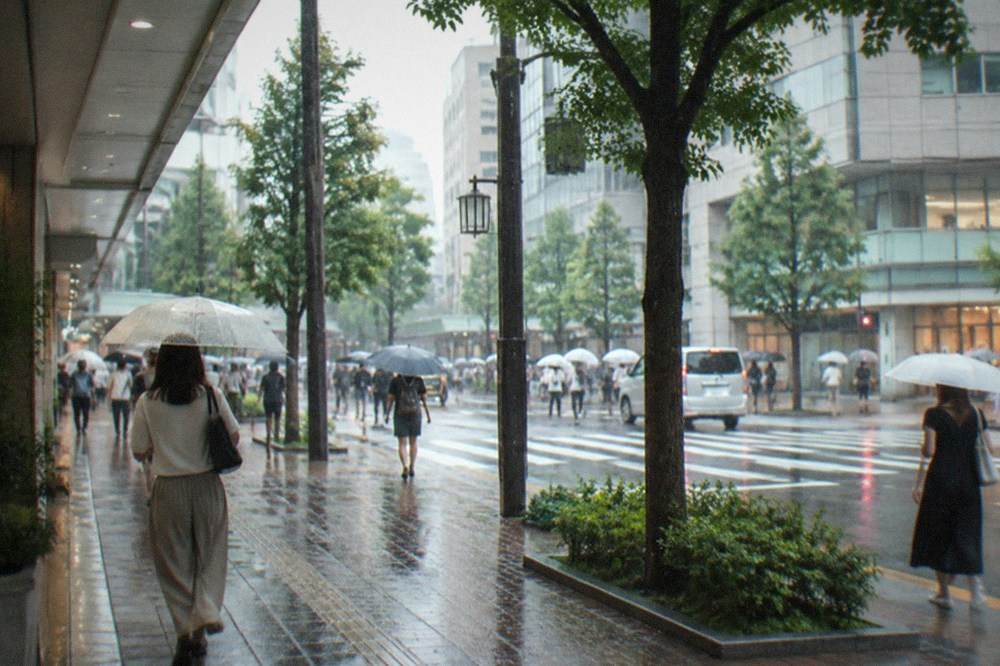
October deserves its own paragraph because it is the month travellers most often write off unnecessarily. Rainfall drops to 94.5 mm, sunshine holds at 175.9 hours, and daily maxima sit at a comfortable 23.7 °C. The typhoon window is still nominally open, and late-season storms do happen, but the base rates fall fast. Autumn colour in the city parks peaks from mid-to-late November into early December, well after the risk has passed, making late October and November the sweet spot for anyone who wants warm days without the storm lottery.
For the shoulder seasons, the comparison is straightforward. Spring is drier and cooler but carries its own crowds around cherry blossom season, a trade-off covered in the best time to visit Fukuoka guide. Summer, storms included, is when the city is at its most alive: Yamakasa in July, the yatai at full strength, and the festival calendar at its peak. A traveller who accepts one possible wet day in exchange for festival season is making a perfectly reasonable trade.
How to Track Storms Before and During Your Trip
Track typhoons using the Japan Meteorological Agency's English typhoon pages, which publish every named storm's position, central pressure, wind strength and forecast track. Check the forecast cone a few days before departure and again daily once you arrive, and pay attention to JMA advisories rather than international apps, because JMA's track forecasts for Japanese waters are the most accurate and the only ones local authorities act on. An eSIM or pocket wifi makes this a two-minute morning habit.
The habit matters more than the tool. A typhoon's track becomes reasonably firm about three days out, so the decision window for a day trip or a Shinkansen leg is the two or three days before it, not the morning of. If a storm's cone crosses Kyushu on your Dazaifu day, move Dazaifu to the day after and do the museums on the wet day. The Kyushu travel guide and the Kyushu map pages help you pick which inland alternatives are worth swapping in.
Connectivity is the quiet enabler here. A working data connection turns storm tracking from a chore into a glance, and the eSIM and wifi guide for Fukuoka covers the practical options for short trips. Hotel front desks and the tourist information counters at Hakata Station, Tenjin and Fukuoka Airport also post current advisories and will help rebook transport, in English, at no charge.
| Information need | Best source | When to check |
|---|---|---|
| Active storms near Japan | JMA typhoon pages, English | Daily during July to October |
| Heavy rain and wind advisories | JMA warnings for Fukuoka Prefecture | Morning of each outing |
| Flight status | Airline's own status page | 24 to 48 hours before flying |
| Shinkansen suspensions | JR operator announcements | Day of travel |
| Ferry status | Operator notices at the terminal | On the day, ferries stop early |
One caution about international weather apps: their default layers often show a storm's position without the JMA forecast track, or they overstate wind footprints for clicks. Use them for the satellite view if you like, but make decisions on the JMA numbers. Local hotels, tour operators and transit staff all do.
What Closes, What Reroutes, and What Refunds
Outdoor attractions, ferries, yatai and coastal viewpoints close or suspend first; the subway, malls, museums, arcades and the Tenjin Underground Mall keep operating almost regardless of weather. Guided tours reroute rather than cancel where possible, and most operators offer free cancellation or date changes when a storm forces the change, so the financial risk of booking ahead in typhoon season is smaller than travellers assume. Read the cancellation terms on the live listing before you book, not after.
The refund question is the one that causes the most anxiety, and the honest answer is reassuring. Coach-based day tours into Kyushu, which is where most of Fukuoka's sellable day trips go, are run by operators who watch the same JMA forecasts you do. When a route becomes unsafe, they cancel or reschedule, and the standard booking terms refund in full. The Saga day trip pages cover the destinations most often affected, and the Kyushu itinerary from Fukuoka shows how to sequence a week so one lost day does not cascade.

For the specific attractions, the pattern is predictable. Fukuoka Tower, at 234 m with observation decks at 123 m and below, may restrict upper-deck access in high wind, and it has its own annual closure on 28 and 29 June 2027. The Fukuoka Castle ruins in Maizuru Park are open grounds, so they never "close" for rain, though the Tenshudai, the main keep base, is shut for archaeological excavation until the end of December 2026 regardless of weather. Indoor museums and the aquarium-style attractions are the reliable backbone of a wet day, and both city art museums cost just ¥200 for the collection galleries.
The Takachiho gorge and railway tour, one of the most-booked day trips out of Fukuoka, is a good case study in how a storm affects a plan. The gorge is inland and mountainous, so heavy rain upstream can close the boat ride and the walking path even when Fukuoka itself is dry, and the operator's coach routing changes accordingly. It is rated 4.8 from 713 reviews, runs about 11 hours, and is priced from $48 per person, which makes it one of the better-value full days on the roster. Booking it with free cancellation terms, and checking the forecast the morning before, is the whole strategy.
The coastal Itoshima tour is the mirror case: it is most beautiful in clear weather and most exposed when a storm tracks up the Genkai Sea, so it is the one to hold loosely in an August itinerary. Rated 4.6 from 44 reviews and running about 10 hours from $77, it is a full-day commitment, and the operator's weather calls are made route by route. The peninsula itself is covered in the wider Kyushu map guide if you end up going independently on a better day.
Should You Cancel a Trip Booked for Typhoon Season?
No, almost never. A typhoon typically costs the average Fukuoka visitor just one day out of a full week, and the city handles that day well: the subway is weatherproof, indoor attractions are excellent and inexpensive, and the food culture simply moves inside. The peak storm months of August and September also bring festival season, warm sea swimming and the best local produce. Travellers who cancel entire trips over a distant forecast cone are usually reacting to a storm that will miss by hundreds of kilometres.
The arithmetic is what settles it. Even in the peak months, the probability that a named storm directly disrupts any given week is modest, and the disruption itself is bounded: transport suspensions are measured in hours, attractions reopen the next morning, and the yatai, the most weather-sensitive thing in the city, simply reopen when the sky clears. A trip is only genuinely fragile if every single day is a fixed, non-refundable outdoor commitment, which is a bad itinerary design in any season.
The better design principle is to alternate. Put the outdoor anchors, Dazaifu, Itoshima, the coastal parks, the viewpoints, on the days with the firmest forecasts, and keep a bank of indoor options, museums, Canal City, the underground mall, a cooking or calligraphy session, that can absorb any 24 hours without waste. The Fukuoka food guide and the Fukuoka nightlife pages are full of the indoor, evening-weighted options that make a storm evening feel like a plan rather than a consolation.
One more reassurance for families: the city's kid-friendly options skew heavily toward indoor attractions precisely because Fukuoka's weather is what it is, so a storm day with children is a solved problem locally. The same applies to solo travellers, for whom a flexible day is the cheapest kind of travel insurance there is.
A Practical Storm-Week Playbook
Before you leave, do four things: buy a data eSIM or pocket wifi, book refundable transport and tours, plan one fully indoor day for every five days of travel, and bookmark the JMA typhoon page. Once on the road, check the forecast each morning, shift outdoor plans into the clear windows, and never argue with a ferry suspension. The most useful purchase is the subway one-day pass at ¥640, which turns a wet museum day into a flat-cost, door-to-door operation.
The playbook, in order of when it matters:
| Timing | Action | Why it helps |
|---|---|---|
| Two weeks out | Book tours with free cancellation terms | Removes the financial risk of a storm day |
| A few days out | Read the JMA forecast cone | Firm enough at three days to plan around |
| Day before | Confirm any Shinkansen or flight leg | Suspensions are announced in advance |
| Morning of | Check advisories, then commit to indoor or outdoor | The forecast is reliable at this range |
| During the storm | Subway, malls, museums, underground mall | The city's weatherproof layer |
| Day after | Rebook the outdoor day you lost | Attractions reopen quickly |
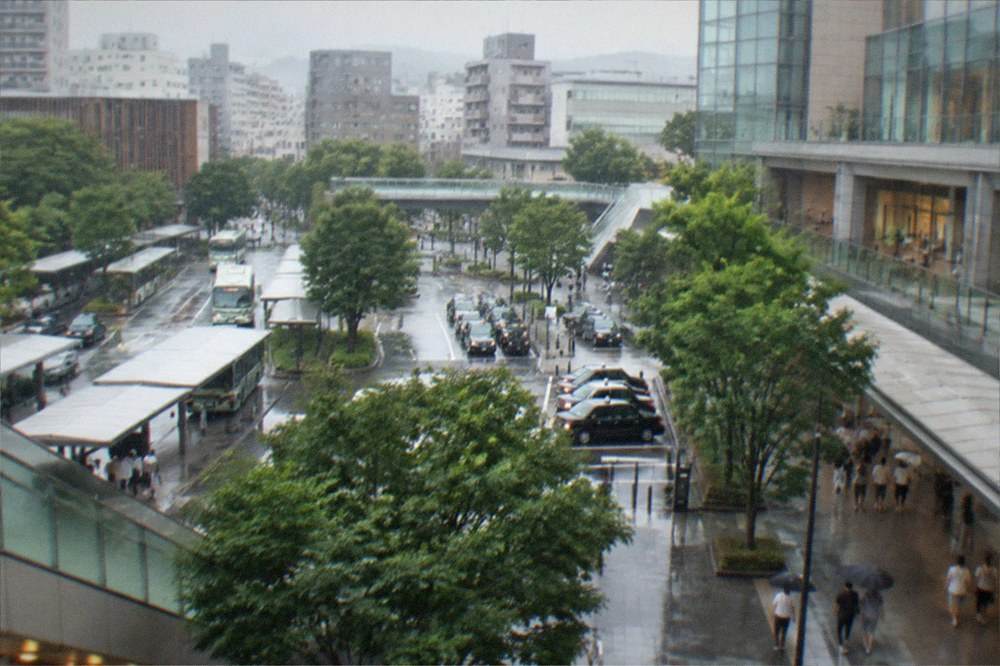
Packing for the season is simple and cheap. A compact umbrella is sold at every convenience store, so do not sacrifice luggage space for one. What is worth bringing: quick-dry clothing, a light waterproof layer, and shoes that can take a soaked pavement. The humidity of a Fukuoka August, with daily minima around 25.4 °C, means anything cotton stays damp, which matters more than the rain itself. Storm days also push visitors indoors into closer quarters with locals, and the small courtesies covered in the Fukuoka etiquette guide matter most on exactly those days.
Finally, keep the season in proportion when reading anything, including this page. The JMA's own normals show a city with four real seasons, generous annual sunshine, and a summer that is hot and green rather than hostile. This Fukuoka Japan Travel Guide page is written to be read alongside the rest of the site's planning material, because typhoon season is a fact of the calendar, a thing to plan around with a morning glance at a forecast, not a warning to stay away. The travellers who do best here are the ones who booked the trip anyway and moved one day of it.
For a storm-resilient week, these three picks cover the three postures worth booking: the coach day trip with operator-managed routing, the coastal tour for your clearest day, and the indoor tournament experience that no weather touches.
Common Questions About Typhoon Season in Fukuoka
When Is Typhoon Season In Fukuoka And Kyushu?
Roughly July through October, with the highest probability of a direct hit in August and September. July is Fukuoka's wettest month at 299.1 mm, but much of that is ordinary summer rain rather than typhoon rain. By October the risk falls sharply, and by November it is effectively over.
Is Fukuoka Safe During Typhoon Season?
Yes, with the ordinary precautions. Authorities issue English-language advisories, transport suspends before conditions turn dangerous, and the systems are drilled. Follow the advisories, stay off beaches and coastal viewpoints during a storm, and use the subway and indoor attractions on the worst day.
Do Flights To Fukuoka Get Cancelled By Typhoons?
Sometimes, when a storm crosses the flight path or passes near the airport. Suspensions are announced in advance and measured in hours, and airlines rebook affected passengers. Check your airline's status page 24 to 48 hours before flying during the season rather than relying on third-party apps.
What Is There To Do In Fukuoka On A Rainy Day?
More than in most Japanese cities. The subway is weatherproof, both city art museums charge ¥200 for the collection galleries, Canal City Hakata is open every day of the year with shops to 21:00, and the Tenjin Underground Mall links a whole district under cover. Cooking classes, calligraphy sessions and the teamLab Forest ticket absorb a full day indoors.
Should I Cancel My Trip If A Typhoon Is Forecast?
Almost never. A forecast cone three days out covers a wide area, and most storms miss the city by hundreds of kilometres. If a direct hit is confirmed, you lose a day, not a trip, and refundable bookings plus a bank of indoor plans reduce the cost to nearly zero.
What Is The Wettest Month In Fukuoka?
July, at 299.1 mm in the JMA 1991-2020 normals, ahead of June's 249.6 mm despite June being the tsuyu rainy season month. August is drier than both and is the second sunniest month of the year at 200.9 sunshine hours.