Kyoto to Fukuoka
The Shinkansen ride from Kyoto ends at a station called Hakata, which confuses first-time visitors more than any other detail of the trip. This guide covers the trains, the arrival, the city's transport and passes, and what to do with the days that follow.
Short answer
Board a westbound Shinkansen at Kyoto Station and ride the Tokaido and Sanyo lines to Hakata, the central station of Fukuoka city. Hakata and Fukuoka are one and the same city, so the ride ends your journey, not starts a second one. Once there, the subway runs from ¥210 to ¥380 per ride and a one-day pass costs ¥640.
How Do You Get from Kyoto to Fukuoka by Shinkansen?
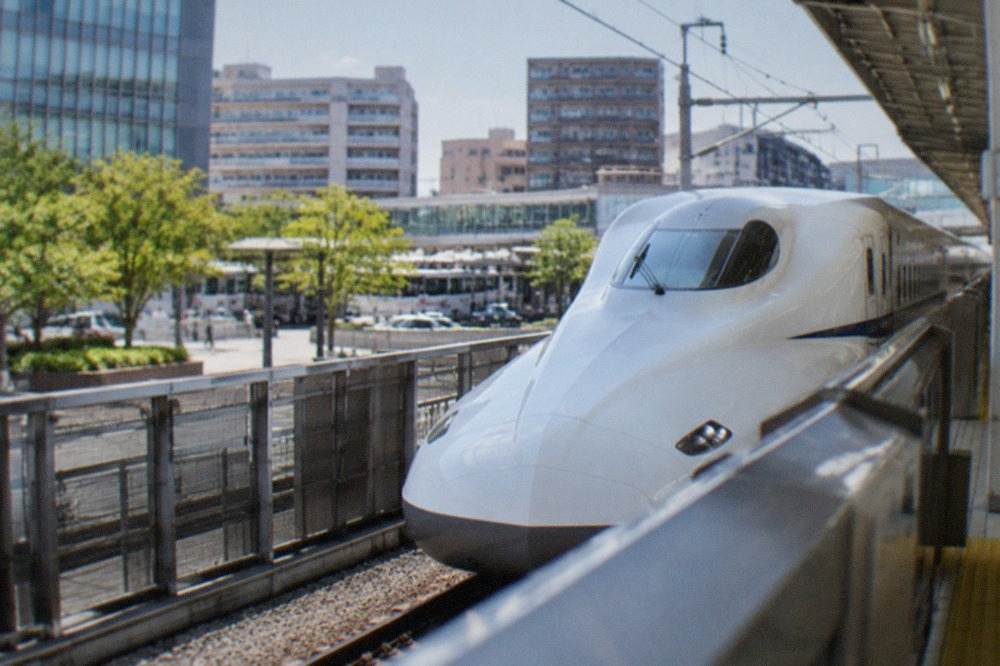
You board a westbound Shinkansen at Kyoto Station and stay on it, or on a direct connection, until it terminates at Hakata Station in Fukuoka. The route runs the Tokaido Shinkansen line out of Kyoto and continues onto the Sanyo Shinkansen line through Osaka, Himeji, Hiroshima and Kokura. There is no station called Fukuoka on the JR network, because the city's main station has carried the name Hakata since long before the bullet trains arrived.
The single most common mistake travellers make on this route is not about trains at all. It is about names. Guides and booking sites speak of "Hakata" and "Fukuoka" as though they were two destinations, and arriving visitors spend real minutes wondering whether they still need to travel onward from one to the other. They do not. Hakata is the ward around the main station, and Fukuoka is the city that ward sits inside. The journey from Kyoto ends the moment you step off the train at Hakata.
The ride itself is one of the great rail trips in Japan, tracing the Seto Inland Sea coast for most of its length. Kyoto sits at the western end of the Tokaido corridor, and from there the line hugs the water past Okayama and Hiroshima before bending south through the Kanmon Strait tunnel between Honshu and Kyushu. Kokura, just inside Kyushu, is the last major stop before Hakata. Roughly speaking, you spend the trip moving from Japan's ancient capital to its youngest major growth city, and the contrast is part of the pleasure.
A few practical points shape every version of this trip. The trains are reserved-seat heavy, meaning that during peak travel seasons the seats sell out in advance and walk-up travel can leave you standing or waiting for a later departure. Kyoto Station is enormous and hosts multiple competing rail operators, so the Shinkansen platforms sit behind their own gates, separate from the local and commuter lines. And Hakata, at the far end, is a compact station where everything from subway entrances to bus terminals sits within a few minutes' walk of your arrival platform. For a broader comparison of arrival cities, see our Kyoto versus Fukuoka comparison.
Which Trains Run the Route, and Where Do You Change?
Direct trains run from Kyoto all the way to Hakata, so most travellers never change trains at all. The through services are the fastest category of train on the corridor, and the slower categories either run the full route with more stops or require a change, most often at Kokura or at a station along the way such as Osaka or Okayama. The change at Kokura is short and well signed, and it is the standard fix when a direct train is full.
The train categories matter more here than on most Japanese routes, because the corridor crosses an operator boundary. The Tokaido line from Kyoto toward Osaka is run by JR Central, and the Sanyo line from Osaka onward to Hakata is run by JR West. In practice this changes nothing about how you board, but it matters a great deal if you are carrying a rail pass, because pass coverage does not always follow the tracks. One detail worth knowing before you plan a pass-based trip: the section between Kokura and Hakata belongs to the Sanyo Shinkansen, and some Kyushu-oriented passes do not cover it.
| Train category | Runs Kyoto to Hakata direct? | Typical use | Notes |
|---|---|---|---|
| Fastest through category | Yes | The default choice for most travellers | Reserved seats strongly advised in peak season |
| Mid-speed through category | Yes | Cheaper or pass-friendly alternative | More stops, longer overall ride |
| Slower or分支 categories | Sometimes | Filling gaps between direct departures | Often requires a change at Kokura, Osaka or Okayama |
| Kyushu services from Kokura | No, board at Kokura | Continuing onward inside Kyushu | Separate operator, check pass coverage |
Seat reservation is the quiet hero of this route. The through trains carry both reserved and non-reserved cars on many departures, and the difference in comfort over a ride of this length is significant. If you are travelling with luggage, the reserved cars with oversized baggage areas are the ones to target, and Japan's rail operators treat oversized bags as a booking category of their own. Reserve as early as your plans allow, above all around national holidays, when the corridor is one of the busiest in the country.
Travellers coming from Tokyo or points east sometimes piece this trip together as one long ride, and if that is your plan, our Tokyo to Fukuoka guide covers the eastern half in detail. Travellers starting in Kansai but skipping Kyoto should look at the Osaka to Fukuoka route, which shares the same tracks from Osaka onward.
Deciding how to cover the last stretch, or the whole corridor, with a pass deserves a moment of honesty. Pass rules are strict about operator boundaries, and the boundary on this route sits near the middle of your journey. Read the pass terms before you commit to one, not after.
Why Does the Train Arrive at a Station Called Hakata?
Hakata Station is Fukuoka's main station, and Hakata is also the name of the ward around it. Fukuoka and Hakata are one city, not two, and you never travel between them. The naming is a historical accident: two towns merged centuries ago and each kept a name, with Hakata surviving on the station, the port and the ward, and Fukuoka on the city itself. Knowing this saves you from booking the wrong onward leg.
The history is worth thirty seconds because it explains everything else. The merchant town of Hakata and the samurai town of Fukuoka sat side by side on Hakata Bay; when they merged, the compromise was to name the city Fukuoka and leave the name Hakata on the port, the shrine festival and eventually the station. To this day, the city's famous ramen is called Hakata ramen, its grand July festival is the Hakata Gion Yamakasa, and its airport's international terminal sits in Hakata ward. A visitor who treats "Hakata" and "Fukuoka" as interchangeable is, in daily speech, correct.
This is also why there is no such thing as a JR Fukuoka Station. The station in every timetable, every booking site and every local's directions is Hakata. If a hotel listing or a tour description tells you to travel "from Hakata to Fukuoka", that listing was written by somebody who has never been here. The staff of this Fukuoka Japan Travel Guide treat that error as the single clearest sign a travel article was copied rather than reported.
Hakata Station itself rewards a little orientation. The Shinkansen platforms sit on the upper level, and the exits feed into a concourse that connects directly to the subway, the bus terminals and a large shopping complex. The station is walkable end to end in a few minutes, and the tourist information desks near the central concourse are the right first stop for paper maps, pass purchases and questions about closures. Luggage lockers cluster around the concourse edges and fill early, so if you arrive mid-morning with bags and a check-in time hours away, the coin lockers near the Shinkansen gates are the most reliable bet.
How Do You Get from Hakata Station Into the City?
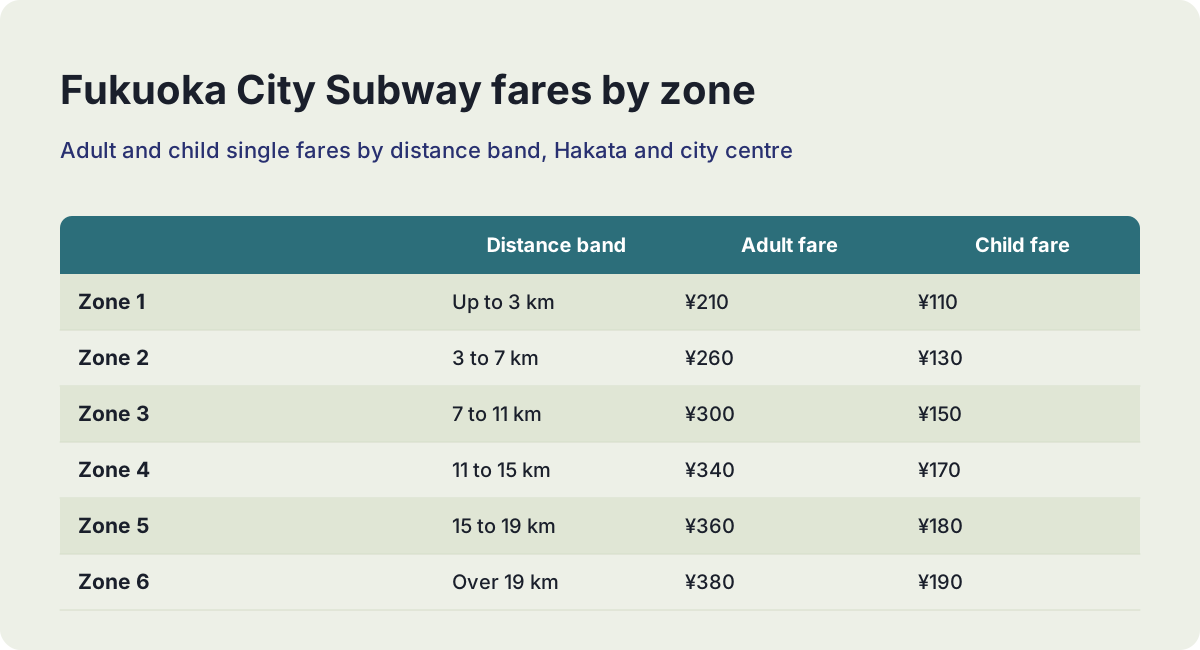
The Fukuoka City Subway connects Hakata Station to the whole city centre, with adult single fares from ¥210 to ¥380 depending on distance, and a one-day pass at ¥640 that covers all three lines. The subway's Airport Line runs straight through the centre from Meinohama to Fukuoka Airport, passing through Hakata, Nakasu and Tenjin. For most visitors arriving at Hakata Station, one or two subway stops is the entire onward journey.
The fare structure is zone-based and official, published by the subway operator itself, and it is simple enough to check on the spot. The operator's fare table bands the network by distance:
| Zone | Distance band | Adult fare | Child fare |
|---|---|---|---|
| 1 | Up to 3 km | ¥210 | ¥110 |
| 2 | 3 to 7 km | ¥260 | ¥130 |
| 3 | 7 to 11 km | ¥300 | ¥150 |
| 4 | 11 to 15 km | ¥340 | ¥170 |
| 5 | 15 to 19 km | ¥360 | ¥180 |
| 6 | Over 19 km | ¥380 | ¥190 |
The one-day pass, called Chikamaru-kun by locals, pays for itself after about three mid-distance rides and is sold at station ticket machines and customer service centres, including at the airport's international tourist information office. It is valid from first train to last train on the day you first pass it through a gate, and it carries small discounts at a list of partner attractions on the same day. If your first day in the city involves more than a station-to-hotel round trip, buy it on arrival rather than later.
The airport deserves a mention here because so many travellers mix rail and air on this corridor. Fukuoka Airport is unusual among major Japanese airports for sitting inside the city itself, on the subway's Airport Line, rather than an hour outside it. The fare from the airport to Hakata is ¥260, within the official 3 to 7 km band, and a free shuttle bus runs between the international and domestic terminals. One caution: the widely repeated claim of a five-minute airport-to-Hakata journey is not confirmed on any official page, so budget a little more and check the live timetable. Our Fukuoka airport guide and the airport to Hakata answer page cover the details.
If you would rather not manage subway tickets and luggage at the end of a long travel day, a private arrival transfer from the airport is the one bookable option that solves exactly that problem.
Buses and trams also feed the station, and the wider network, including the Nishitetsu trains toward Dazaifu, is covered in our getting around Fukuoka guide. For now, the subway is the headline: cheap, frequent, signed in English, and rarely more than a couple of stops from your bed.
Is the Fukuoka Tourist City Pass Worth Buying on Arrival?
The Fukuoka Tourist City Pass costs ¥2,500 for adults and ¥1,250 for children for the city version, and ¥2,800 / ¥1,400 for the version that adds Dazaifu, with a passport check at purchase because it is restricted to overseas tourists on short-stay visas. It covers one day of unlimited subway, bus, train and ferry travel plus attraction discounts. It beats the plain subway pass only if you ride the buses or trains heavily, not just the subway.
The pass is run by the city's own tourism body and the official pass page publishes the prices, the coverage and the purchase points. It is worth reading before you buy, because the restriction surprises people: it exists for visitors on short-stay entry status, and counter staff check passports. The digital version is further restricted to visitors from a short list of countries, so most travellers should expect to buy the paper pass at one of the official counters, including the ones at the airport and at both the Tenjin and Hakata subway customer centres.
One exclusion catches people out every week. The Dazaifu version of the pass does not cover the Tabito liner bus, which is otherwise the most direct way to reach the shrine town from the station. If Dazaifu is your plan, either budget for that bus separately or ride the covered Nishitetsu trains instead, which reach Dazaifu with a single easy change.
| Ticket | Adult price | What it covers | Best for |
|---|---|---|---|
| Single subway fare | ¥210 to ¥380 | One ride, distance-banded | One or two short hops |
| Subway one-day pass | ¥640 | All subway lines, one day | A day of subway-only sightseeing |
| Tourist City Pass (city) | ¥2,500 | Subway, buses, trains, ferries plus discounts | Heavy bus and rail use, one day |
| Tourist City Pass (+ Dazaifu) | ¥2,800 | The above, extended toward Dazaifu | Dazaifu plus city travel on one day |
The honest framing for a visitor who has just stepped off the Shinkansen: the subway pass is a transport tool, and the tourist pass is a behaviour bet. If your first day is a walking day around Hakata and Tenjin with maybe one subway ride, buy neither. If your first day is Dazaifu in the morning, the riverside in the afternoon and a ferry at dusk, the ¥2,800 version can genuinely pay for itself. If you are travelling on a tight overall budget, our Fukuoka on a budget guide works through the arithmetic for a full trip rather than a single day.
What Can You Reach from Fukuoka Once You Arrive?
Fukuoka works as a base for the whole of northern Kyushu, with comfortable day trips to Dazaifu, Yanagawa and Itoshima, longer days to Beppu, Yufuin, Kumamoto and Nagasaki, and full-day runs to Takachiho and the Aso region. The trains and buses all leave from or near Hakata Station, so the station that ended your Kyoto ride becomes the departure board for everything that follows. Two or three days is the realistic window to see the city plus one day trip.
This is the argument for making the rail journey at all. Kyoto sends you west toward a city that is younger, cheaper to eat in and closer to nature than anywhere else of its size in Japan. The day trips fall into two clear tiers by travel effort, and knowing which tier a destination sits in saves you from planning an impossible day.
| Destination | Tier | Travel character | Known for |
|---|---|---|---|
| Dazaifu | Half-day | Easy Nishitetsu ride with one change | Shrine town, plum trees, umegae mochi sweets |
| Yanagawa | Half-day | Canal town with river boat rides | Boating, old merchant houses, eel dishes |
| Itoshima | Half-day | Coastal peninsula | Beaches, Shiraito Falls, seaside cafes |
| Beppu and Yufuin | Full day | Hot spring resort towns on the eastern side of Kyushu | The "hells" hot springs, onsen, small-town streets |
| Kumamoto | Full day | Castle city with gardens and history | Kumamoto Castle, Suizenji garden |
| Nagasaki | Full day | Harbour city with layered foreign-trade history | The port, Glover Garden, memorials |
The full-day tier is where guided tours earn their keep, because the connections inside Kyushu can be slow and a tour bus turns three transfers into one seat. A route that bundles the Beppu hot springs with the frog temple and Yufuin is a strong first choice for travellers who want the famous onsen town without spending the day studying timetables.
For planning beyond the first excursion, our dedicated pages go deep on each of these: the Beppu day trip, the Nagasaki day trip and the Kumamoto day trip. If your instinct after all that is to keep going, the same rail network that brought you from Kyoto extends across the island, and the Busan ferry route even continues the journey overseas.
When Is the Best Time of Year to Make This Trip?
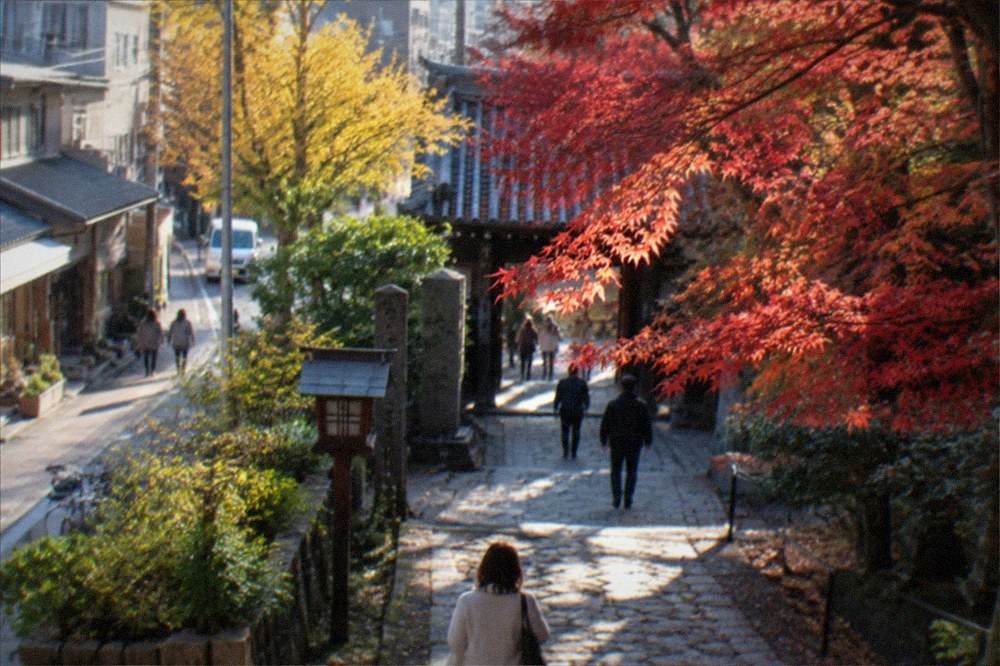
Spring and autumn are the most comfortable seasons for the ride: March to May brings cherry blossoms from late March, and mid-to-late November brings autumn colour. July is Fukuoka's wettest month, wetter than the June rainy season, with 299.1 mm of rain against June's 249.6 mm. Typhoon season runs roughly July through October and is a planning factor rather than a prohibition. Winter is mild, with a January mean of 6.9°C.
The rainfall fact is the one that catches even experienced Japan travellers, because the received wisdom says avoid the June rainy season and few sources mention that July is statistically wetter in Fukuoka. The official 1991 to 2020 climate normals put July at 299.1 mm of rain and June at 249.6 mm. The twist is that July is also Yamakasa month: the Hakata Gion Yamakasa festival runs the first half of July, and the city's biggest celebration of the year takes place in its wettest thirty-one days. Rain and festival are not in conflict, they are simply the same month.
| Season | Months | Character | Planning notes |
|---|---|---|---|
| Spring | March to May | Late-March cherry blossoms, mild air | Book seats early for blossom season |
| Rainy season | Roughly June | Overcast, frequent rain | Indoor days work well, crowds thin |
| Summer | July to August | Hot, humid, wettest in July | Yamakasa festival, typhoon watch begins |
| Autumn | September to November | Warm into October, colour from mid-November | The most reliable window overall |
| Winter | December to February | Mild, little rain, quiet | Illuminations, low season prices |
Festivals give the calendar shape more than weather does. If the trip can be timed, the major events are the Hakata Dontaku parade in early May, Yamakasa in the first half of July, and the Hojoya festival at Hakozakigu in mid-September. None of them is ticketed; they are street festivals you simply arrive into. The summer in Fukuoka guide covers the hot months in full, and the rainy-day itinerary at our indoor plans page rescues a wet first day with museums, arcades and indoor attractions.
One time-limited note for late 2026 visitors: the Tenshudai, the stone base of Fukuoka Castle's main keep in Maizuru Park, is closed to entry for an archaeological excavation until the end of December 2026. The dig is genuinely interesting; a document found in December 2024 describes a keep that may never have been built, and the city has tripled the excavation area to settle the question. The park itself remains open and free, and the castle page on this site explains the story.
Is the Ride Worth It for a Short Trip?
Yes, if the trip is three days or more, because the ride is a single seat or one easy change and the arrival drops you inside a compact, walkable city where the subway fare starts at ¥210. The route also opens northern Kyushu: Dazaifu, Itoshima and the hot spring towns sit within day-trip range of Hakata Station. For a two-day city break, fly instead; the rail journey rewards travellers with time either side of it.
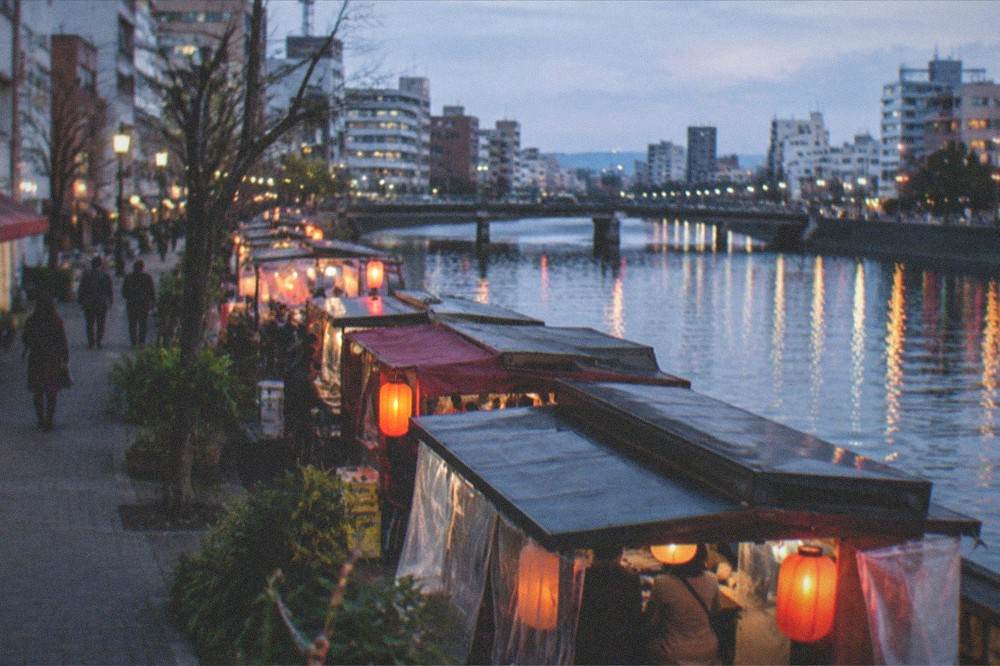
The shape of a good first visit is easier to sketch than most guides admit. Day one is the city core: Hakata's temples, the Kushida Shrine grounds, the canal-side shopping at Canal City, which opens at 10:00 with restaurants to 23:00 and is free to enter. Evening is the yatai, the licensed food stalls the city numbers at about one hundred, with the photogenic row along the Naka River in Nakasu. Day two branches out to Dazaifu or the Itoshima coast, and day three can reach Beppu or Nagasaki. The itinerary pages on this site cover every length from one day upward.
Families get a bonus on this route. The city's big indoor attractions sit on the subway or a short ride from it, and one of them, the Marine World aquarium at Uminonakamichi, sells e-tickets in advance through its listing, which removes the queue on a busy weekend. Note the wider park's gate takes cash only, a detail almost no guide mentions.
The final question is usually about sleeping, and the answer is short. Stay near Hakata Station if the trip is train-shaped, because every departure and return runs through it; stay in Tenjin if the trip is restaurant-shaped, because the eating and drinking streets cluster there. The trade-offs, prices by area and the family options are laid out in our where to stay in Fukuoka guide.
If the idea of a private ride from the airport to the hotel appeals for the flight-home half of the trip, the transfer service shown below is the same one described earlier on this page. It suits travellers landing with heavy bags, families with small children, or anyone whose train-and-plane itinerary ends late at night.
Whichever way you handle the arrival, the journey itself stays simple: one station in Kyoto, one station at the far end, and one city with two names waiting in between. The three options below cover the two ends of the trip, the airport transfer and the first big day out.
Common Questions About Kyoto to Fukuoka
How Do You Get From Kyoto To Fukuoka By Shinkansen?
Board a westbound Shinkansen at Kyoto Station and ride the Tokaido and Sanyo lines to Hakata Station, which is Fukuoka's main station. Direct trains cover the whole route, and a change at Kokura is the standard fallback when a direct train is full. Hakata and Fukuoka are the same city, so the ride ends your journey.
Is there a station called Fukuoka?
No. The city's main Shinkansen station is Hakata, and there is no JR Fukuoka Station. Any timetable or booking site listing Fukuoka as a Shinkansen stop is really listing Hakata under another name.
Do I need to change trains between Kyoto and Hakata?
Usually not. Direct through services run the full route, and slower trains that require a connection most often change at Kokura, Osaka or Okayama. Check whether your train is a through service when reserving, especially in peak season when direct seats sell out first.
How do I get from Hakata Station to my hotel?
The subway runs from Hakata Station through the whole city centre, with adult fares from ¥210 to ¥380 by distance and a ¥640 one-day pass covering all three lines. Most central hotels are one or two stops away. Buses and taxis also operate from the station, and a private airport arrival transfer is bookable if you are flying out or in instead.
When is the best month to make this trip?
Late March to May for cherry blossoms and mild weather, or mid-to-late November for autumn colour. July is the wettest month of the year in Fukuoka, wetter than June, but it is also Yamakasa festival month. Typhoon season runs roughly July through October and is a planning factor, not a reason to stay away.
How many days should I spend in Fukuoka after arriving?
Two days for the city itself, three or four if you want one or two day trips to places like Dazaifu, Beppu or Nagasaki. All regional trains and buses leave from or near Hakata Station, so the arrival station doubles as your base for exploring Kyushu.