Is Fukuoka Safe?
Fukuoka is a relaxed, walkable city where the realistic risks are weather and small practical mistakes rather than crime. Here is what the official record actually says, and how to plan around it.
Short answer
Yes, Fukuoka is a comfortable, low-hassle city for visitors, and no official source contradicts that. The honest planning risks are seasonal: July averages 299.1 mm of rain and typhoon season runs roughly July to October. The subway from the airport costs ¥260, yatai prices must be posted by city ordinance, and the Tourist City Pass costs ¥2,500 with a passport check.
Fukuoka is a compact, fast-growing port city of about 1.66 million people on Hakata Bay, and the question new visitors ask most is not what to eat or where to sleep but whether the city is straightforward to be in. The honest answer is that Fukuoka is a relaxed place by any reasonable traveller's measure, and the things most likely to disrupt your trip are weather and small logistical mistakes rather than anything happening to you. This page works through the official record: what the city itself publishes about its food stalls, what the subway and tourist pass actually cost, what the Japan Meteorological Agency's own numbers say about rain and typhoons, and how the practical parts of a Fukuoka trip fit together.
One framing note before anything else, because it matters for everything that follows. This site does not publish safety statistics that its research could not verify against an official source, and Japanese crime data for Fukuoka specifically fell into that gap. So rather than repeating the "one of the safest countries in the world" line every guide carries, this page sticks to what is verifiable: the city's own ordinances, the transport operator's own fare tables, and the weather service's own measurements. That turns out to be more useful anyway, because the parts of a Fukuoka trip that actually go wrong are rain, a missed last train and a cash-only gate, not crime.
Is Fukuoka Safe?
Yes, Fukuoka is safe in the everyday sense travellers mean: it is a walkable, well-lit, well-policied city where visitors routinely move around at night without incident, and nothing in the official record suggests otherwise. What deserves your attention is seasonal weather, transport timing and a few cash-versus-card quirks, each of which is documented and easy to plan around.
The city's character helps. Fukuoka is small for a major Japanese city, with its main districts, Hakata, Tenjin and Nakasu, all within a short subway hop of one another, and its biggest visitor draws are shrines, temples, parks and food stalls rather than anything remotely risky. The city's own tourism materials market it as an open, friendly place, and the 2025 census quick report shows it growing faster than any other designated city in Japan, +3.2 percent, which is not the profile of a place people are fleeing. Roughly 4.33 million foreign entrants passed through Fukuoka Airport and Hakata Port in 2025, a two-year record high, and the city has spent years building the infrastructure those numbers imply, including tourist information counters at Tenjin, Hakata Station and the airport.
What you should actually prepare for is mundane. Fukuoka's July is its wettest month, 299.1 mm of rain against June's 249.6 mm, which surprises people who assume the tsuyu rainy season in June is the peak. Typhoon season runs roughly July through October and occasionally shuts down ferries and outdoor events. A few specific gates and stalls take cash only. And the city's famous yatai food stalls close at the operator's discretion, so a rainy night can leave a street that was full of lanterns the night before completely dark. None of that is danger; all of it is planning, and the rest of this page handles it piece by piece.
Arriving at Fukuoka Airport and Getting Into the City
The subway ride from Fukuoka Airport to Hakata Station costs ¥260, the airport is unusually close to the city centre, and the transfer itself is simple enough that most visitors need no help at all. Two details matter: the station in the centre is Hakata, not "Fukuoka Station", and Hakata and Fukuoka are the same city, not two places you travel between.
Fukuoka Airport (FUK) sits on the subway's Kuko line, and its closeness to the centre is one of the city's genuine selling points: no other major Japanese city has its main international airport this close to downtown, a fact the airport's own access pages support. The fare is ¥260 for the two stops to Hakata, verified against the subway operator's official fare table, where the airport-to-Hakata leg falls in the 3 to 7 km band. You will see "five minutes to Hakata" printed across the internet; no official page states a journey time, so this site does not either. Say instead that the airport is unusually close, which is true and sourced, and leave the stopwatch claims to everyone else.
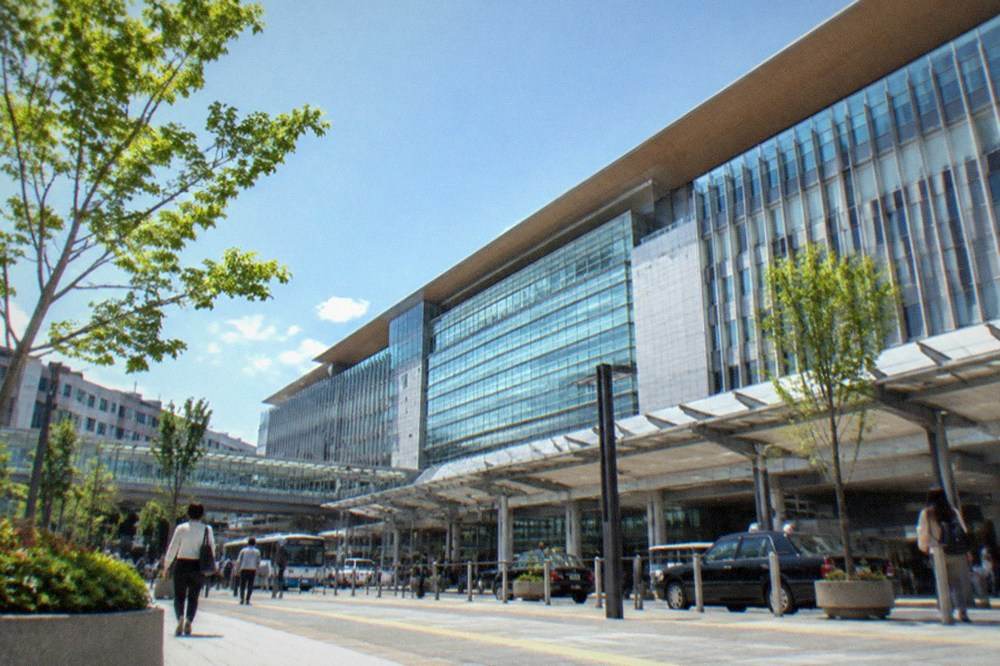
Two naming traps catch new arrivals, and both are worth fixing before you land. There is no JR Fukuoka Station: the city's main rail hub is Hakata Station, and it is the Shinkansen terminus for the whole region. And Hakata is a ward of Fukuoka and the station's name, not a separate destination. A guide that tells you to "travel from Hakata to Fukuoka" has misunderstood the city's basic geography. The practical arrival route is covered in detail in the airport to city guide, and the wider rail picture, including the Kuko, Hakozaki and Nanakuma subway lines, is in the Fukuoka subway guide.
If you are arriving late, with children, or with more luggage than you want to wrestle onto a subway platform, a pre-booked private transfer is the one genuinely sellable arrival product in this space. The Private Arrival Transfer from Fukuoka International Airport to Fukuoka City runs 30 minutes to an hour, is rated 5 from 2 reviews, and starts from $149 per person. Check availability if a met-at-the-arrival-hall start sounds like what you want; the subway will still be there for every other trip of your stay.
Money, Passes and the Traps That Actually Exist
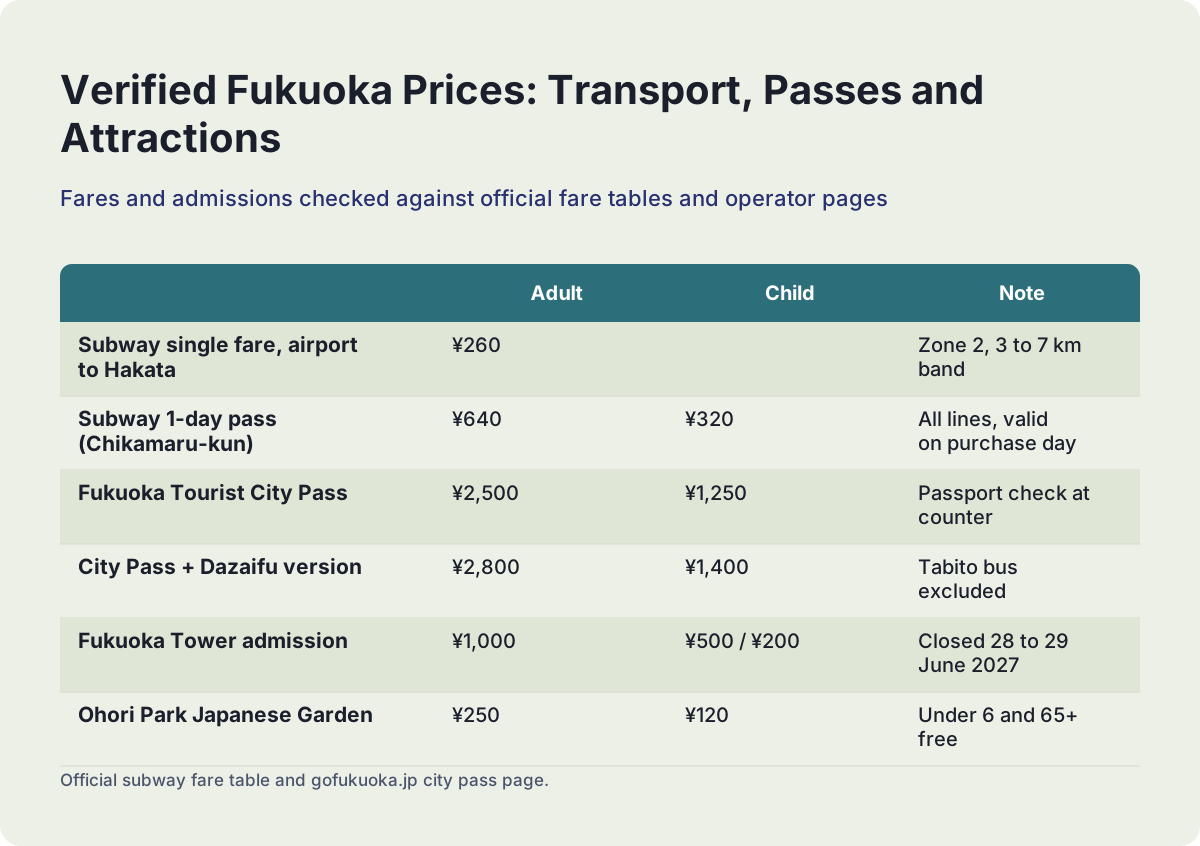
Fukuoka's real tourist traps are few and specific: the outdated pass prices copied across most competitor guides, a couple of cash-only gates, and the assumption that every attraction takes a card. The verified pass prices are ¥2,500 for the Fukuoka Tourist City Pass and ¥2,800 for the Dazaifu version, both requiring a passport check, and most competitors still quote prices years out of date.
The Fukuoka Tourist City Pass is the clearest example of why checking matters. The pass, operated by Fukuoka City and described on the official gofukuoka.jp city pass page, costs ¥2,500 for adults for the city version and ¥2,800 for the version that adds Dazaifu, with children at half price. It covers unlimited subway, buses, trains and ferries for one day, and it is restricted to overseas tourists on a short-stay visa, with a passport checked at the counter. Most competing guides still quote ¥820 or ¥1,340, prices from an earlier era. If you read a price for this pass anywhere that is not in the ¥2,500 to ¥2,800 range, the page you are reading has not been checked in years.
| Item | Verified price | Note |
|---|---|---|
| Subway single fare, airport to Hakata | ¥260 | Zone 2, 3 to 7 km band, official fare table |
| Subway 1-day pass (Chikamaru-kun) | ¥640 adult / ¥320 child | All three lines, valid on purchase day |
| Fukuoka Tourist City Pass | ¥2,500 adult / ¥1,250 child | Passport check at counter, overseas short-stay visitors only |
| City Pass + Dazaifu version | ¥2,800 adult / ¥1,400 child | Dazaifu Liner Bus "Tabito" excluded |
| Fukuoka Tower admission | ¥1,000 / ¥500 / ¥200 | Closed 28 to 29 June 2027 |
| Ohori Park Japanese Garden | ¥250 adult / ¥120 child | Under 6 and 65+ free |
The cash-versus-card picture is the other practical trap. Fukuoka is broadly card-friendly, and Fukuoka Tower lists everything from Visa to PayPay, Alipay+ and WeChat Pay at its admission desk. But specific gates break the rule: Uminonakamichi Seaside Park's own guide page states that payment at the park gate is cash only, a detail almost no guide mentions and which has stranded more than one card-carrying visitor at a family park entrance. Yatai stalls vary stall by stall, with some now taking cards and QR payments and others firmly cash. The working rule: carry a few thousand yen in coins and small notes, and you will never be caught out. The full picture on cash, cards and IC tickets is in the Fukuoka subway guide.
For day-to-day getting around, the ordinary single fares are cheap and the system is legible, which is itself a safety feature: a transport network you can understand at 10 p.m. after a long dinner is one you are unlikely to get stranded in. The subway runs three lines, the Kuko line from Meinohama to the airport, the Hakozaki line from Nakasu-Kawabata to Kaizuka, and the Nanakuma line from Hashimoto to Hakata, and the full anatomy of the network, including IC cards and the ¥640 day pass, is in getting around Fukuoka.
The Yatai: Safe Street Food, Backed by a City Ordinance
Fukuoka's roughly 100 licensed yatai food stalls are regulated by a city ordinance that requires every stall to display its prices where customers can easily see them and bans "market price" pricing on variable dishes, which makes the city's most famous street food also one of its most transparent. There is no booking system for a stall; you simply walk up, and if one is full you try the next.
The yatai are the food experience most first-time visitors want, and the question underneath the enthusiasm is always the same: will I get ripped off? Fukuoka's answer is unusually concrete. The city's Yatai Basic Ordinance, in force since 2013, requires prices to be displayed where customers can easily see them, and any dish whose cost varies with the day's market must show that day's actual price rather than a vague 時価, "market price", notation. City inspectors check periodically. The city's own yatai Q&A page confirms the count as "about 100" stalls, more than any other Japanese city, and the public recruitment system introduced around 2016 is what has held the number steady as operators retire.
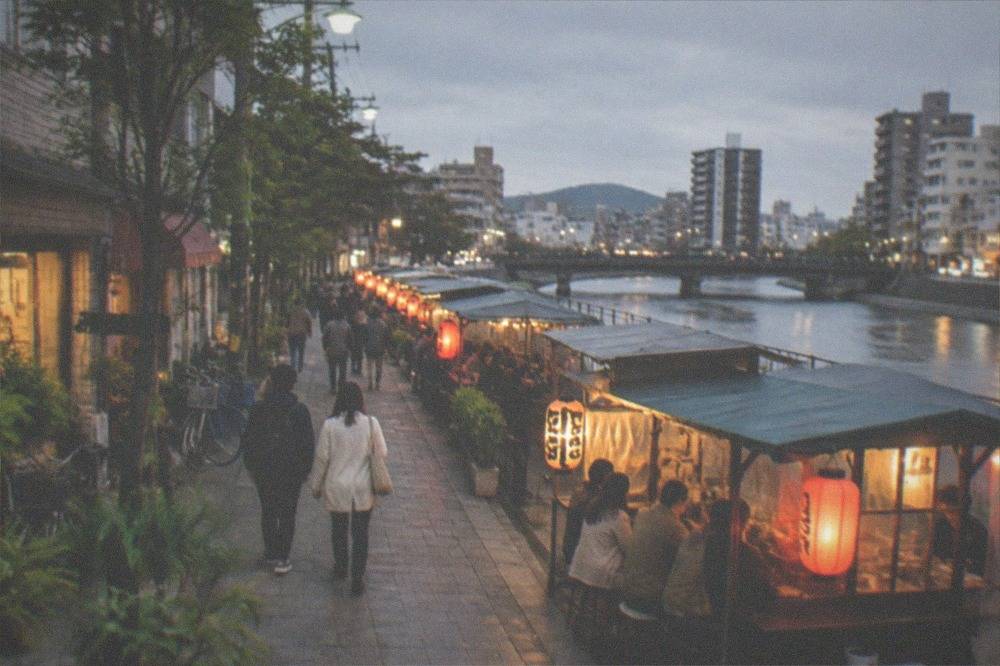
| Yatai area | Character | What to expect |
|---|---|---|
| Nakasu | The photogenic riverside row along the Naka River by Seiryu Park | Most tourist-facing, lanterns and river views, fills earliest |
| Tenjin | Scattered along Watanabe-dori and Showa-dori | After-work local crowd, more variety including newer stalls |
| Nagahama | Near the former fish market area | Historically the ramen-focused row, more local in feel |
The ordinance answers the rip-off question directly, but a few practical habits still help. Seats are tight, typically seven or eight around a counter, so a stall that is full is full, and the etiquette is to order fairly promptly and make room. The stalls operate in the road-occupancy window from 17:00 to 04:00, typically opening around 18:00 to 18:30 and closing in the small hours, but there is no city-mandated closing day: stalls close for rain, strong wind or the operator's own reasons, and a wet night can empty a whole street. Payment varies by stall, so bring cash. The full etiquette, dish guide and area-by-area walkthrough are in the Fukuoka yatai guide, and the wider food landscape is covered in the Fukuoka food guide.
One thing worth saying plainly: you cannot book a yatai stall, and no product on this site or anywhere else sells you a seat at one. What is bookable are guided yatai and food-stall crawls, where a local guide takes you to stalls they know, handles the ordering and translates. If that appeals, the options are compared in Fukuoka food tours.
Weather, Typhoons and the Numbers Nobody Quotes Correctly
Fukuoka's genuine safety variable is weather, and the official numbers flip the usual guide advice: July, not June, is the city's wettest month at 299.1 mm, and typhoon season runs roughly July through October. Neither makes the city unvisitable, but both belong in your planning, especially around ferries, festivals and coastal day trips.
The Japan Meteorological Agency's 1991 to 2020 normals for the Fukuoka station tell the real story. July averages 299.1 mm of rain against June's 249.6 mm, even though June is the tsuyu rainy season and July is when the city stages its biggest festival, Hakata Gion Yamakasa, from July 1 to 15. August is hotter than July and drier than both, 210.0 mm, while banking 200.9 sunshine hours, the second sunniest month of the year after May. The practical reading: a July trip needs an umbrella plan and a rain fallback more than a June one does, and the monthly breakdown for trip planning is in the Fukuoka weather guide and the best time to visit guide.
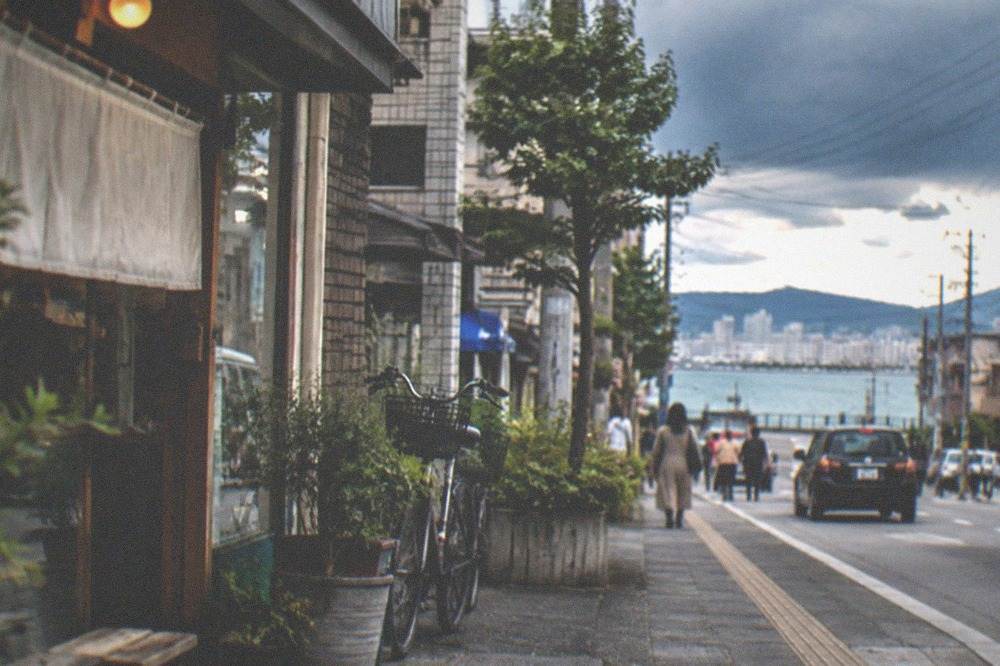
| Month | Mean temperature | Rainfall |
|---|---|---|
| January | 6.9 C | 74.4 mm |
| April | 15.4 C | 118.2 mm |
| July | 27.4 C | 299.1 mm |
| August | 28.4 C | 210.0 mm |
| October | 19.6 C | 94.5 mm |
| November | 14.2 C | 91.4 mm |
Typhoon season is the one natural hazard worth a paragraph of respect. Systems track through the western Pacific from roughly July to October, and the JMA's live typhoon feed was carrying an active storm in the region on the day this site's fact pack was compiled, which is exactly why weather-sensitive copy here comes from the live feed rather than a hard-coded reassurance. When a storm approaches, the disruptions are predictable: ferries to islands such as Nokonoshima pause, outdoor events including festival schedule items shift or cancel, and domestic flights at Fukuoka Airport can delay. Buildings, transport and the city itself handle typhoons routinely; your job is to check the forecast and not book a coastal day trip on the one windy Tuesday. The seasonal detail is in the typhoon season guide.
None of this is a warning against visiting. Fukuoka sits on Hakata Bay, on the Genkai Sea side of northern Kyushu, and its climate is temperate, with a mild 6.9 C January mean and a warm but not extreme 28.4 C August mean. The city does not close for rain, and its covered shopping arcades, underground mall at Tenjin and museum-heavy days make wet weather a routing problem rather than a lost day.
Getting Around at Night
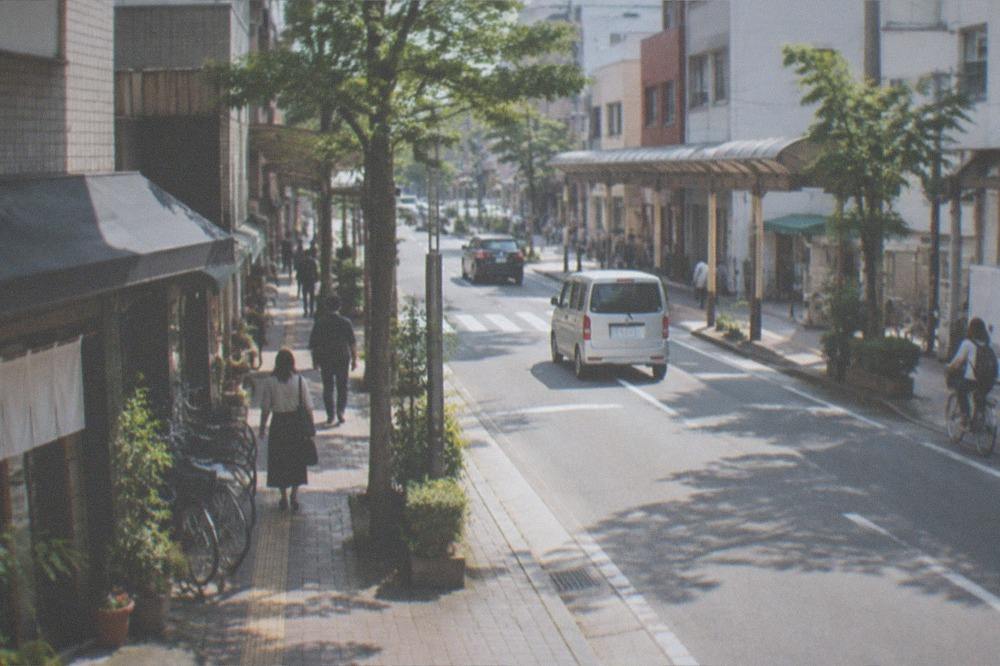
Fukuoka's nightlife districts, Nakasu, Tenjin and Daimyo, are compact, well-lit and connected by a subway that serves the whole city centre, and the realistic late-night risk is a missed connection rather than anything happening to you. The Nakasu yatai row, the bars of Daimyo and the Tenjin arcades all sit within a short walk or one subway stop of the main hotel districts.
The city's night geography is unusually forgiving. Hakata Station, the Tenjin business core and the Nakasu entertainment district form a rough triangle connected by the Kuko and Hakozaki subway lines, with single fares from ¥210 to ¥300 across the centre, and the streets between them are busy and lit well past midnight. Nakasu, the island district between the Naka River and the Hakata canal, holds the famous yatai row, the jazz venues and the late bars; Daimyo, west of Tenjin, is the compact bar-and-restaurant quarter. The practical guidance for a night out, including the last-train picture and the taxi alternative, is in the Fukuoka nightlife guide and the Nakasu area guide.
For visitors who would rather have a local structure around an evening, two guided products are worth knowing. Fukuoka Essentials: History, Culture, and Charms is a half-day city walk rated 4.9 from 48 reviews, from $74 per person, and it doubles as an orientation that makes later solo nights much easier, since you will have walked the key districts with someone who knows them.
And for a night with the city's skyline in it, the Fukuoka Night Cruise Tour, three hours from $96 per person, rated 5 from 4 reviews, puts the bay between you and the crowds, which is a different way to see the same illuminated waterfront most people only photograph from the Naka River bank.
A note on the evening food-stall scene and personal comfort: the yatai close in the small hours and the streets around Nakasu stay busy with people moving between them, which is the everyday, unremarkable reality of the district. If you are travelling alone and want the night laid out in advance, the solo itinerary in the Fukuoka solo travel guide sequences an evening that ends near your hotel rather than across the city.
Day Trips: The Same Standards Apply Outside the City
Fukuoka's day-trip range, Dazaifu, Yanagawa, Itoshima, Nokonoshima and the wider Kyushu circuit, is served by ordinary scheduled trains, buses and ferries, and the safety picture does not change when you leave the city limits. What changes is your distance from help, so the same cash, weather and last-service rules matter more, not less.
The near day trips are all on regular transport. Dazaifu, the shrine and museum town to the southeast, is reached on the Nishitetsu line with a transfer at Futsukaichi; the shrine itself states plainly on its own FAQ page that there is no entrance fee, and the town's approach street is a pedestrian lane of teahouses. Yanagawa is the canal town with the river boats, Itoshima the peninsula with the beaches and Shiraito Falls, Nokonoshima the island park a short ferry from Meinohama. Each has its own page on this site, and each follows the same rules as the city: carry cash for gates and small vendors, check the weather before coastal and island trips, and know your last return service. The full regional picture, including which trips are realistic as half days and which are full days, is in the day trips from Fukuoka guide and the Kyushu overview.
For trips that go further, into the Beppu hells, Yufuin or Takachiho, a booked coach tour removes the last-train question entirely. The Nyoirinji Temple, Beppu Hells Tickets Included and Yufuin day trip runs a full day from $48 per person, rated 4.7 from 285 reviews, with entry tickets for the hells bundled in, which is one less cash gate to think about at a remote site.
If you are travelling with children, the same logic applies with a steeper penalty for getting it wrong: the family-oriented routing, including the cash-only gate at Uminonakamichi and the zoo's free-admission days, is laid out in Fukuoka with kids.
A Practical Safety Playbook for Fukuoka
The realistic Fukuoka safety playbook is short: carry some cash for cash-only gates and stalls, check the typhoon feed in season, know that Hakata is the station name and the ward rather than a second city, and let the city's own price-display ordinance do the work of protecting you at the yatai. Everything else is ordinary city common sense.
| Situation | What to do | Why |
|---|---|---|
| Arriving at Fukuoka Airport | Take the Kuko line subway, ¥260 to Hakata | Official fare, no time claims needed; the airport is unusually close |
| Buying a transport pass | Tourist City Pass ¥2,500 / ¥2,800, bring your passport | Passport check is mandatory; old prices quoted elsewhere are wrong |
| Eating at a yatai | Check the posted prices, order, bring cash | Ordinance requires displayed prices; card acceptance varies |
| Visiting Uminonakamichi park | Bring cash for the gate | The park's own page states the gate is cash only |
| A typhoon in the forecast | Check the JMA feed, move ferries and coastal trips | Season runs roughly July to October; ferries pause first |
| A late night in Nakasu | Know your last subway service or budget for a taxi | The triangle of Hakata, Tenjin and Nakasu is short and lit |
The deeper point is that Fukuoka rewards preparation in proportion to how unthreatening it is. A city where the food stalls are regulated by a price-display ordinance, where the transport operator publishes exact fare bands, and where the weather service's own normals let you plan around the real rain peak is a city that has already done most of the work of keeping you safe. Your remaining jobs are small ones: cash for the gates, a passport for the pass, an umbrella in July, and a plan for the last train. The companion pages on this site, from where to stay in Fukuoka to the arrival and transport guides linked above, cover each of those in the depth it deserves, and the whole picture is what Fukuoka Japan Travel Guide exists to give you.
Common Questions About Safety in Fukuoka
Is Fukuoka Safe?
Yes. Fukuoka is a relaxed, walkable city where the realistic risks are weather and small logistical mistakes rather than crime. The verified planning facts: July is the wettest month at 299.1 mm, typhoon season runs roughly July to October, the airport-to-Hakata subway fare is ¥260, and yatai prices must be posted by city ordinance.
Is Fukuoka safe at night?
The main nightlife districts, Nakasu, Tenjin and Daimyo, are compact, well-lit and connected by the subway, and the streets stay busy well past midnight. The realistic late-night concern is a missed last train, not personal safety, so know your final connection or budget for a taxi.
Are the yatai food stalls safe to eat at?
Yes, and they are unusually transparent. Fukuoka's Yatai Basic Ordinance requires every stall to display its prices where customers can easily see them and bans "market price" pricing on variable dishes, with city inspectors checking periodically. There are about 100 licensed stalls, more than any other Japanese city.
Is Fukuoka safe for solo travellers?
Yes. The city centre is small and legible, the subway connects everything, and the food-stall culture is naturally social, with counter seating that makes a solo dinner easy. A guided walk or food tour on day one is a good way to build orientation before exploring alone.
Do I need to worry about typhoons in Fukuoka?
Only in season, roughly July through October, and only as a planning factor. When a storm approaches, ferries pause, outdoor events shift and flights can delay. Check the Japan Meteorological Agency's live typhoon feed before booking coastal or island day trips in those months.
Is Fukuoka safe to walk around, and does it take cards?
Yes, it is a walking city, with Hakata, Tenjin and Nakasu all close together. Cards are widely accepted, but carry cash too: Uminonakamichi Seaside Park's gate is cash only by its own published rule, and yatai stalls vary in what they accept.