Accessible Fukuoka
Fukuoka is one of Japan's more manageable cities for wheelchair users: a compact centre, a subway with elevators at every station, and an airport unusually close to downtown. This guide covers what works, what needs planning, and what to skip.
Short answer
Fukuoka is broadly wheelchair accessible. The subway serves the airport and city centre with elevators at all stations and a flat ¥210 to ¥380 fare by distance. Major sights like Ohori Park, Canal City Hakata and the art museums are step-free or close to it. The yatai street stalls and some older temple grounds are the hard parts, and both need workarounds this guide explains.
Fukuoka is a compact, flat, modern city, and those three words do most of the work when the question is wheelchair access. The centre is small enough that the distances between Hakata Station, Tenjin and Nakasu are walkable or rollable in a single afternoon, the subway was built late enough to include elevators and wide gates as standard, and the airport sits inside the city itself rather than an hour outside it. None of that makes Fukuoka barrier-free, and this guide does not pretend otherwise: the famous yatai food stalls are mostly inaccessible by design, some temple and shrine grounds keep their original steps and gravel, and a few of the biggest attractions need a phone call before you go. What follows is an honest map of what works, what needs planning, and where the genuine obstacles are, written for a wheelchair user, a companion, or anyone planning a trip for a parent or friend with limited mobility.
Is Fukuoka Wheelchair Accessible?
Yes, in the parts of the city most visitors actually use, and with planning in the parts they photograph. Fukuoka's subway has elevators at every station and a distance-based fare from ¥210 to ¥380. The airport sits inside the city on the subway's Kuko line for ¥260 to Hakata. Modern attractions like Canal City Hakata and the city art museums are step-free, and Ohori Park's waterside path is flat and paved. The friction points are the yatai stalls and some older shrine and temple grounds.
That summary deserves expansion, because "accessible" means different things to different travellers. For a powered-chair user travelling alone, Fukuoka's biggest asset is that its public transport is legible: three subway lines, one operator, one fare table, and station staff who are used to laying boarding ramps. For a manual-chair user with a companion, the city's flat geography matters more, and Fukuoka delivers there too, sitting on the low coast of Hakata Bay with its main districts packed into a few square kilometres.
The honest comparison is with Japan's other big cities. Fukuoka is smaller than Tokyo and Osaka, which cuts journey times and transfers, and its infrastructure is newer on average than Kyoto's. It is not a purpose-built accessible destination in the way some Western cities aspire to be, but the baseline is high because Japan's accessibility law, the Act on the Elimination of Discrimination against Persons with Disabilities, pushed transport operators and public buildings toward barrier-free design over the past two decades. Private businesses lag behind public ones, which is a pattern you will notice in restaurants more than anywhere else.
A useful framing for the rest of this guide: plan your days around the modern layer of the city, transport, malls, museums, parks and the bayfront, and treat the historic layer, old shrine approaches, temple halls and street stalls, as a series of individual decisions rather than a blanket yes or no. The sections below work through each layer in turn.
How Accessible Are Fukuoka Airport and the Subway?
Very, and this is the strongest part of the city's accessibility story. Fukuoka Airport is on the Kuko subway line, two stops from Hakata Station for a flat ¥260 adult fare, and the airport is unusually close to the centre, closer than almost any big-city airport in Asia. Every subway station has an elevator to platform level, station staff deploy boarding ramps on request, and the whole network uses one distance-based fare table, ¥210 to ¥380 for adults.
Start with the airport, because it sets the tone for the trip. Fukuoka Airport (FUK) is one of the very few major Japanese airports inside the city boundary, and the international terminal connects to the subway network directly. A free shuttle bus runs between the international and domestic terminals, which the airport's own access page puts at ten minutes. Arriving wheelchair users will find the terminal itself step-free from aircraft to exit, as Japanese airport standards require, and the subway station entrance is reachable without stairs.
The subway is the backbone of an accessible Fukuoka trip. All three lines, the Airport line from Meinohama to Fukuoka Airport, the Hakozaki line from Nakasu-Kawabata to Kaizuka, and the Nanakuma line from Hashimoto to Hakata, are operated by the city with step-free stations as the design baseline. Fares are distance-banded, from ¥210 for up to 3 km to ¥380 beyond 19 km, with child fares roughly half. A one-day pass, the Chikamaru-kun, costs ¥640 for adults and covers all three lines from first to last train, which is worth having on a day of heavy sightseeing. The full fare structure is published on the city subway's official fare page.
Practical notes that make the difference. Boarding uses the raised platform-gap plates that station staff position on request, so ask at the fare gate or press the assistance button on the platform, and expect a short wait while a staff member comes. Staff will also radio ahead so someone meets you at your destination station, which is how the system is designed to work. Wide automatic gates exist beside the standard ones at every station. Suica, PASMO and ICOCA cards are accepted alongside the local Hayakaken card, so you do not need to buy anything special to ride.
Buses are the weaker link. Nishitetsu runs most of the city's surface routes, and low-floor step-free buses are common on the central Tenjin and Hakata corridors, but boarding a wheelchair on a busy city bus still depends on the driver securing the chair and other passengers making room, and it is slower than the subway in every case. For door-to-door needs, taxis are plentiful at Hakata Station and Tenjin, and Fukuoka's taxi fleet includes wheelchair-accessible vehicles, though they are a small minority, so booking ahead through a hotel or the taxi company matters. The Fukuoka airport to city guide covers the full range of arrival options, and the Fukuoka subway guide goes deeper on routes and passes.
One caution that competitors get wrong constantly: you will read that the airport-to-Hakata run takes "five minutes" in almost every English guide to Fukuoka. No official page states a journey time, so this guide will not either. What is verified is the ¥260 fare and the fact that the airport is remarkably close to the centre, which is why the trip feels short. Also worth internalising early, because it prevents a day of confusion: Hakata is the name of the ward and the main station, Fukuoka is the city, and there is no JR Fukuoka Station. Travelling "from Hakata to Fukuoka" is not a thing, you are already there.
Which Fukuoka Attractions Have Step-Free Access?
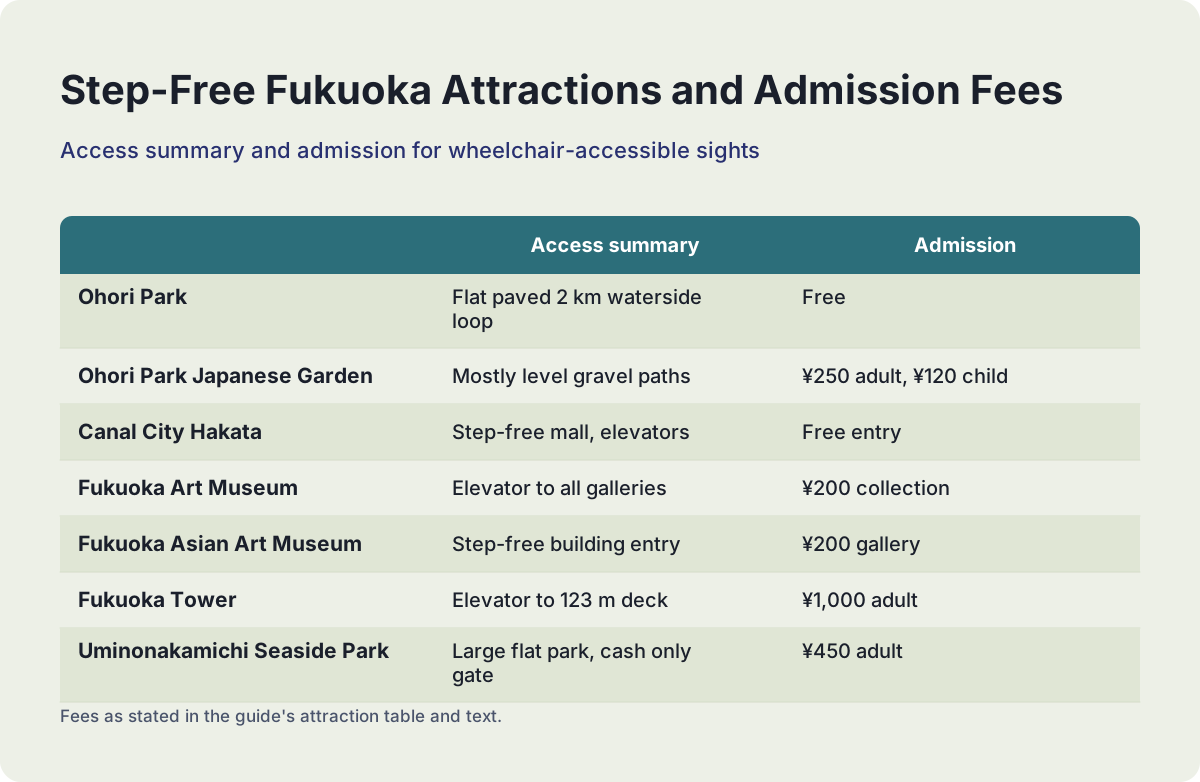
The modern attractions do, the parks mostly do, and the historic sites vary. Ohori Park's lakeside loop is flat and paved, Canal City Hakata is a step-free mall complex with elevators throughout, both city art museums are fully accessible with ¥200 admission to their collections, and Fukuoka Tower has elevator access to its 123 m deck for ¥1,000. The difficult ones are the yatai stalls, most of which have step-up seating, and older temple and shrine grounds with gravel or stairs.
Working through the major sights in order of accessibility confidence:
| Attraction | Access summary | Admission |
|---|---|---|
| Ohori Park | Flat paved 2 km waterside loop, step-free | Free |
| Ohori Park Japanese Garden | Mostly level gravel paths, accessible toilet nearby | ¥250 adult, ¥120 child |
| Canal City Hakata | Step-free mall, elevators, accessible toilets | Free entry |
| Fukuoka Art Museum | Fully step-free, elevator to all galleries | ¥200 collection |
| Fukuoka Asian Art Museum | Building entry free and step-free, Asia Gallery ¥200 | ¥200 gallery |
| Fukuoka Tower | Elevator to 123 m observation deck | ¥1,000 adult |
| Uminonakamichi Seaside Park | Large flat park, gate is cash only | ¥450 adult |
| teamLab Forest | Immersive art floors, ticketed | From $27 via listing |
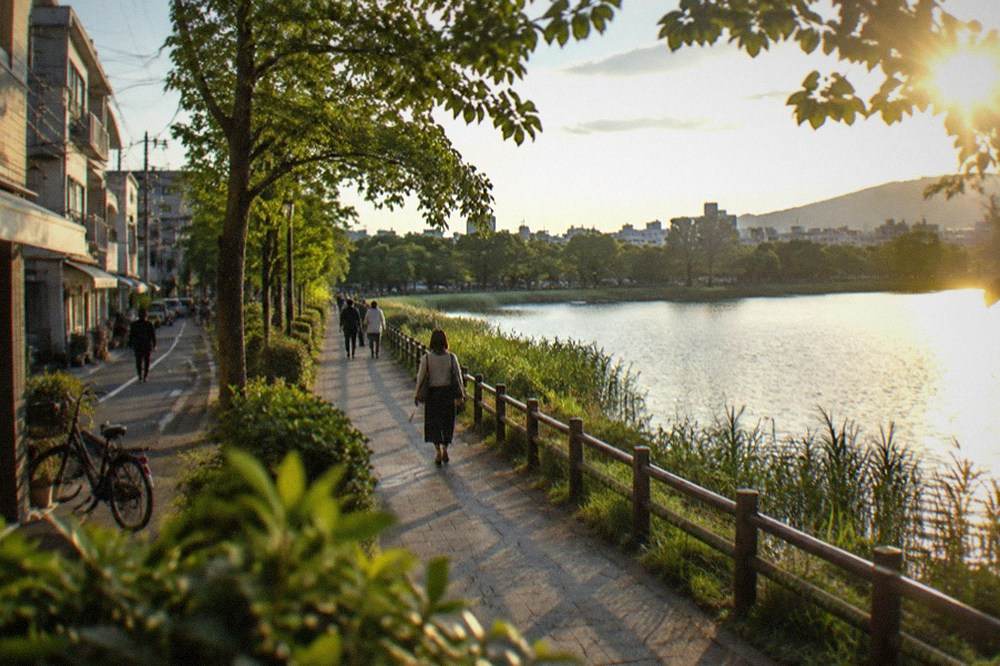
Ohori Park deserves its place at the top of any accessible itinerary. The park is a former moat of Fukuoka Castle turned into a public lake, and the roughly 2 km path around the water is flat, paved and continuous, which makes it one of the best rolling routes in any Japanese city. The attached Japanese Garden is more mixed: the official admission is ¥250 for adults and ¥120 for children, with visitors aged 65 and over free, and the garden's paths are largely level but surfaced in the gravel that Japanese garden design favours, which is pushable for most chairs but slow going for some.
The museums are the easiest wins in the city. The Fukuoka Art Museum sits on the edge of Ohori Park, is step-free throughout, and charges just ¥200 for its collection exhibition, with junior high school age and under free, and residents over 65 from Fukuoka, Kitakyushu, Kumamoto or Kagoshima admitted free with ID. The Fukuoka Asian Art Museum, seven floors up in the Riverain Center building near Nakasu, goes further: entry to the building and museum is free, and only the Asia Gallery charges, ¥200 general and ¥150 for high school and university students. Its elevator-served floors hold about 5,000 works from 23 Asian countries and regions. Both museums close one weekday a week, Mondays for the Art Museum and Wednesdays for the Asian Art Museum, with holiday shifts.
Canal City Hakata is a shopping and entertainment complex built around an artificial canal, open every day of the year, with shops from 10:00 to 21:00 and restaurants from 11:00 to 23:00. It is step-free end to end, with elevators connecting every level and accessible toilets in the common areas, and it doubles as a practical all-weather base: a rainy afternoon in Fukuoka could be spent entirely inside it.
Fukuoka Tower, the 234 m lattice tower at Momochi, runs elevators to its observation decks at 123 m, 120 m and 116 m. Admission is ¥1,000 for adults, ¥500 for elementary and junior high school students and ¥200 for children aged four and over, with a ¥900 rate for local residents aged 65 and over with ID. The tower closes for two days each year, 28 and 29 June 2027 being the next scheduled closure, and its hours run 9:30 to 22:00 with last admission at 21:30, sometimes earlier when busy.
Uminonakamichi Seaside Park, out on the sandbar across Hakata Bay, is a huge flat park with animal areas and flower fields, open 9:30 to 17:30 from March to October and 9:30 to 17:00 in winter, with entry until an hour before closing. Adult admission is ¥450, junior high and under free. One genuinely useful detail almost no guide mentions: the park gate takes cash only, no cards, so carry yen. The park also closes on selected Tuesdays that vary by season, plus 31 December and 1 January, so check the official calendar before committing a day to it.
The harder sights need honest words. Kushida Shrine, Tochoji and Shofukuji are all free to enter, but their grounds include original steps, thresholds and gravel surfaces, and this site does not publish opening hours for them because no official source states them. Dazaifu Tenmangu, the region's most famous shrine and a top day trip, charges no entrance fee and its approach is a flat shopping street, but the sanctuary precinct itself is historic terrain, so judge how far in to go once you arrive. Fukuoka Castle ruins in Maizuru Park are free and the grounds are largely reachable, but the Tenshudai closure noted above runs until the end of December 2026, so factor that into any 2026 visit.
For a guided introduction to the city that can be paced to a wheelchair user, two walking tours stand out. Fukuoka Essentials: History, Culture, & Charms is a half-day city overview from $74 per person, rated 4.9 from 48 reviews, and its 3 to 6 hour format means the route can be trimmed to the flat core districts. The Fukuoka Private and Personalized Walking Tour with a Local is a two-hour private walk from $64 per person, rated 4.7 from 46 reviews, short enough to be genuinely manageable and private, so the guide plans around your equipment and energy levels rather than a fixed route.
Where to Stay for Accessible Sightseeing?
Hakata Station and the Tenjin area are the two districts that work, because both sit directly on step-free subway lines and concentrate elevator-served hotels. Hakata Station is the transport hub, with the subway, JR lines and the airport two stops away, while Tenjin puts you within rolling distance of Ohori Park, the museums and the underground mall. Request an accessible room explicitly when booking, since Japanese hotels keep very few, often one or two per property.
Japanese hotel accessible rooms are genuinely accessible, with roll-in showers and grab rails, but they are scarce, and the scarcity is the planning problem rather than the quality. Book early, state your needs in writing, and confirm the bathroom configuration, because "barrier-free" in a Japanese listing can mean a walk-in shower rather than a roll-in one. International chain hotels around Hakata Station and Tenjin are the safest bets for consistent standards, and the where to stay in Fukuoka guide compares the districts in detail.
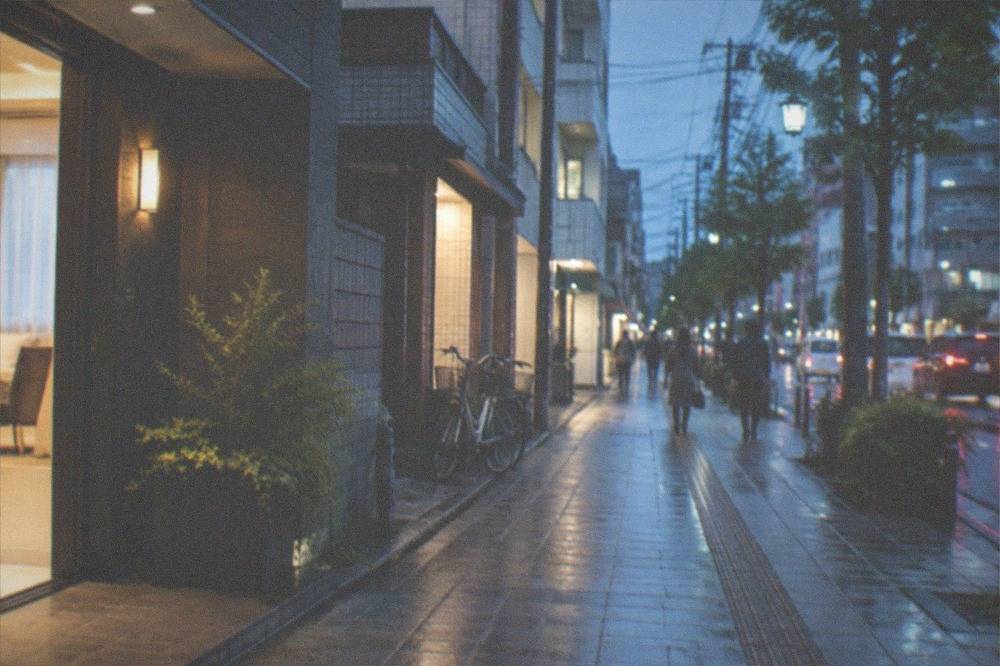
Location matters more here than in most cities, because the right base removes the taxi question. From a Hakata Station hotel you reach the airport on the Kuko line, Nakasu on the Hakozaki line one stop away, and Tenjin in a few minutes, all step-free. From Tenjin, Ohori Park and both art museums are one or two subway stops out, and the Tenjin Underground Mall, one of Japan's largest, is a flat, step-free, climate-controlled network of shops running between the Tenjin and Tenjin-Minami subway stations, which makes it useful both as a destination and as an all-weather route across the district. Everything else covered here is indexed on Fukuoka Japan Travel Guide.
A rough district guide for accessibility:
| Area | Why it works | Watch out for |
|---|---|---|
| Hakata Station area | Direct airport line, JR hub, dense hotel choice | Busy station concourses at rush hour |
| Tenjin | Underground mall, near Ohori Park and museums | Some older side streets with narrow pavements |
| Nakasu | Central, riverside, lively | Night-time crowding, uneven riverside edges |
| Ohori and Akasaka | Quiet, flat, parkside | Fewer hotels, more transfers |
| Momochi | Modern bayfront, wide pavements | Far from subway, needs buses or taxis |
Luggage is the other logistics question, and Fukuoka handles it well. The Fukuoka luggage storage guide covers station lockers and services, and note that accessible travellers can ask station staff for help with oversized items that do not fit the standard lockers, which is a service Japanese stations provide on request. For getting around with everything else, the getting around Fukuoka guide compares every mode, and the Hakata Station guide maps the hub itself.
Accessible Eating: Yatai, Restaurants and Markets?
Restaurants and malls are mostly fine, the yatai stalls are mostly not, and the workaround is to book a guided yatai crawl whose operators know which stalls can accommodate a chair. Fukuoka's roughly 100 licensed street stalls are small, step-up, counter-only structures by design, so few offer seated wheelchair access. The city's ordinance does at least require every stall to display its prices openly, and indoor alternatives like department store food floors and Canal City are fully step-free.
The yatai are Fukuoka's signature food experience and its signature accessibility problem, so it is worth understanding both halves. There are about 100 licensed stalls across the city, more than any other Japanese city, concentrated in Nakasu along the Naka River, in Tenjin along Watanabe-dori and Showa-dori, and in Nagahama near the old fish market. A yatai is a small mobile kitchen with a counter of seven or eight stools, and the stool-and-counter format is the barrier: there is no wheelchair space at the counter, and the stalls sit on the street with a step up. The Fukuoka yatai guide covers the culture and areas in depth.
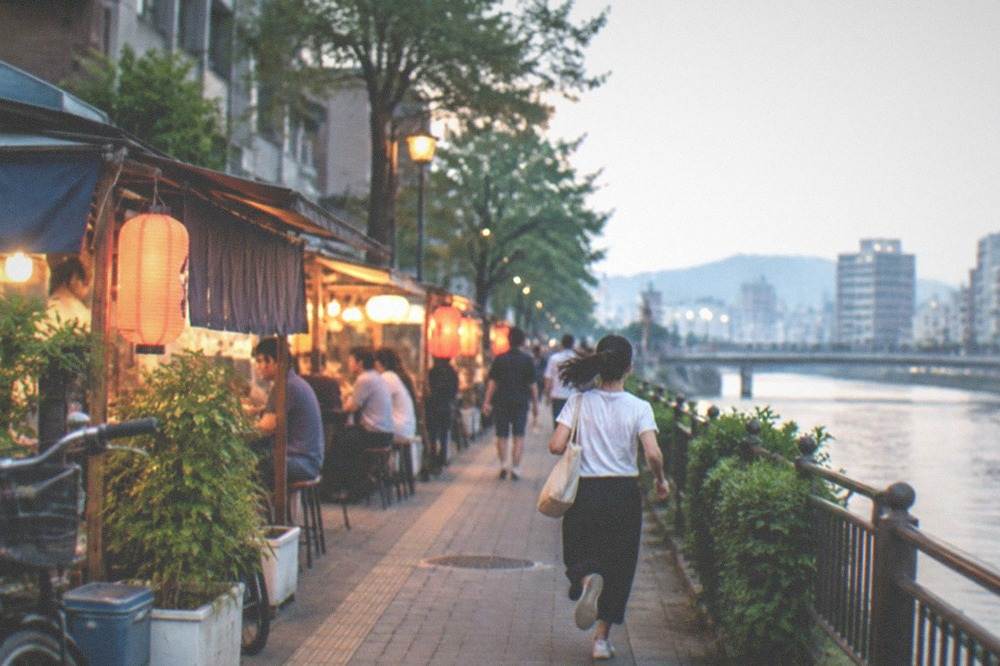
Two honest mitigations. First, the city's yatai ordinance requires every stall to display its prices where customers can easily see them, and bans vague "market price" pricing, so at least the transaction is transparent even when the seating is not. Second, some stalls can serve takeaway or a bowl passed to a companion, and a few operators in the revived Nagahama and newer Tenjin "neo-yatai" rows are more flexible than the traditional counters, but this is stall by stall, not a rule.
The structured alternative is a guided food tour, whose operators know the terrain and can build a route that works. The Fukuoka: Nakasu Food Stall Private Guided Tour with Tastings is a two-hour private walk from $94 per person, rated 4.7 from 70 reviews, and being private means the guide can steer toward stalls and standing spots that suit a wheelchair rather than a fixed pub-crawl route. The Fukuoka food tours guide compares all the options, and the wider Fukuoka food guide covers the city's dishes, including tonkotsu ramen, motsunabe and mentaiko, most of which you can eat seated in conventional restaurants.
Beyond the stalls, eating in Fukuoka is easier than in many Japanese cities because so much of it happens in step-free buildings. Department stores like those around Hakata Station and Tenjin have basement food halls and restaurant floors served by elevators, Canal City Hakata's canal-side restaurants are all inside the accessible complex, and the riverside Nakasu district has enough modern restaurant buildings to make a full dinner easy. The Fukuoka nightlife guide covers bars and evening districts with the same caveat: small independent bars up stairs are the norm in Daimyo and Imaizumi, so pick venues inside multi-storey buildings when it matters.
Are Fukuoka's Day Trips Accessible?
Some are, if you choose by transport rather than by destination. Dazaifu, Yanagawa and Itoshima all sit on Nishitetsu trains from Tenjin, and Nishitetsu's main stations have step-free access, while bus-based day tours into Kyushu use coaches with luggage bays but vary in boarding assistance. The Fukuoka Tourist City Pass, ¥2,500 for the city or ¥2,800 with Dazaifu, covers subway, Nishitetsu trains and buses for a day, though it requires a passport check and is restricted to overseas tourists on short-stay visas.
The pass is worth explaining properly because it is an information-gain item that most guides still get wrong. The Fukuoka Tourist City Pass costs ¥2,500 for adults covering the city, or ¥2,800 for the version that extends to Dazaifu, with child prices at half. It buys one day of unlimited rides on the subway, Nishitetsu trains and buses in designated areas, some JR lines and ferries, plus attraction discounts. The catches: it is restricted to overseas tourists on a short-stay visa, a passport is checked at the counter, and the Dazaifu Liner Bus "Tabito" is excluded even from the Dazaifu version. The official details are on the Fukuoka City pass page. Many competing guides still quote old prices hundreds of yen lower, so treat any cheaper figure you read elsewhere with suspicion.
For destinations, the accessibility logic is about the transport and the ground surface:
| Day trip | Transport | Access reality |
|---|---|---|
| Dazaifu | Nishitetsu train, transfer at Futsukaichi | Flat approach street, historic shrine precinct beyond |
| Yanagawa | Nishitetsu train | Canal boat boarding is step-down, town is flat |
| Itoshima coast | Nishitetsu train plus bus or tour coach | Beaches and viewpoints, uneven surfaces |
| Nokonoshima | Ferry from Meinohama | Island park paths, ferry gangway varies with tide |
| Yufuin and Beppu | JR or tour coach | Onsen towns are hilly, many inns have steps |
Dazaifu is the most realistic accessible day trip. The train from Tenjin runs on Nishitetsu with one transfer at Futsukaichi, the approach to the shrine is a flat pedestrian shopping street, and the shrine charges no entrance fee, so a wheelchair user can enjoy the town, the shops and the outer grounds even if the inner sanctuary's historic terrain decides how far in to go. Yanagawa, the "Venice of Kyushu" with its canal boats, is flat in the town itself, but the boats are boarded by stepping down into a low hull, which is the one part a wheelchair user will likely skip while a companion rides.
Coach day tours into Kyushu are a mixed case and worth a direct question to the operator before booking: vehicles are modern coaches, but not all carry a lift, and most assume passengers can board a few steps with assistance. The Miyazaki, Takachiho Gorge and Shrines Day Tour from Fukuoka runs about 10 hours from $59 per person, rated 4.6 from 384 reviews, and reaches parts of inland Kyushu, Takachiho Gorge especially, that would otherwise need multiple rural transfers, but gorge paths themselves are stepped and uneven in sections. The wider Kyushu guide covers the prefectures and rail options beyond the city, including the JR Kyushu Rail Pass for longer routes.
What Accessibility Support Exists for Foreign Visitors?
More than you might expect, but it needs to be requested rather than assumed. Subway staff provide boarding assistance and radio ahead between stations, the Tourist City Pass discounts accessible transport, and the city's tourist information desks at Hakata Station, Tenjin and the airport sell passes and answer access questions in English. What Fukuoka lacks is a central English accessibility booking hotline, so hotels, tour operators and attractions each need a direct request.
The pattern across Japan, and Fukuoka follows it, is that assistance is standard but not automatic. Station staff will deploy ramps, but you ask at the gate or use the assistance intercom. Hotels will store a wheelchair charger and lend a chair, but you email first. Tour operators will meet accessibility needs more often than not, but the request must be in the booking notes. The question most first-timers ask is whether to bring their own chair, and the answer is yes: rental equipment exists in Japan but sourcing it in Fukuoka needs advance arrangement through hotels or medical supply companies, and your own chair is always the right answer for a short trip.
A few practical notes that add up. Accessible toilets in Fukuoka follow the Japanese "multipurpose toilet" standard, which is generous by international norms, and they appear in every subway station, mall and park. For timing your visit, the best time to visit Fukuoka guide and the Fukuoka weather guide matter more for wheelchair users than for most travellers, because summer heat, with July and August means around 27 to 28 degrees Celsius, and the rainy and typhoon seasons change how far you comfortably roll in a day. July is actually Fukuoka's wettest month, at 299.1 mm of rain against June's 249.6 mm, a detail that surprises most visitors and is worth building into your plans.
Finally, the arrival. A private airport transfer removes the single most tiring leg of any accessible trip, the shuffle from an aircraft door through a terminal to a station to a hotel. The Private Arrival Transfer from Fukuoka International Airport to Fukuoka City costs from $149 per person, is rated 5 from 2 reviews, and takes 30 minutes to an hour door to door. Booking it before you fly, with your equipment noted, means the vehicle and the meeting point are settled before you land.
The same logic applies to the whole trip: Fukuoka's accessibility is good, but it rewards travellers who arrange the edges, the transfer, the hotel room, the tour notes, and let the flat, elevator-served middle of the city take care of itself.
Common Questions About Accessible Travel in Fukuoka
Is Fukuoka wheelchair accessible?
Yes, in its main visitor areas. The subway has elevators at every station, the airport connects to the city centre by a ¥260 subway ride, and major sights like Ohori Park, Canal City Hakata, the art museums and Fukuoka Tower are step-free or nearly so. The yatai food stalls and some older shrine and temple grounds are the main obstacles.
Does Fukuoka Airport have step-free access to the city?
Yes. The terminals are step-free, a free shuttle bus connects the international and domestic terminals, and the subway's Kuko line runs from the airport to Hakata Station for a flat ¥260 adult fare. No official source publishes a journey time, but the airport sits unusually close to the city centre, which is why the trip is famously short.
Are Fukuoka's subway stations step-free?
Yes, all stations on the Airport, Hakozaki and Nanakuma lines have elevator access to platform level, wide ticket gates and staff who deploy boarding ramps on request. Staff radio ahead so a colleague meets you at your destination station. Fares run from ¥210 to ¥380 by distance, and a one-day pass costs ¥640.
Can a wheelchair user eat at a yatai stall?
Mostly not seated at the counter, since the stalls are small step-up kitchens with stool seating. Some stalls can manage takeaway or serve a companion, and a private guided food tour can route around the issue. The city's ordinance at least requires every stall to display its prices openly.
Which Fukuoka hotels have accessible rooms?
International chain hotels around Hakata Station and Tenjin are the safest choices, but every Japanese hotel keeps only one or two accessible rooms, so book early and confirm the bathroom type in writing. A roll-in shower cannot be assumed from the phrase "barrier-free" in a Japanese listing.
Is the Fukuoka Tourist City Pass available to all visitors?
No. It is restricted to overseas tourists on short-stay visas, a passport is checked at purchase, and it costs ¥2,500 for the city version or ¥2,800 for the version that includes Dazaifu. It covers subway, Nishitetsu trains and buses, some JR lines and ferries for one day, but excludes the Dazaifu Liner Bus "Tabito".