Nakasu Yatai Street
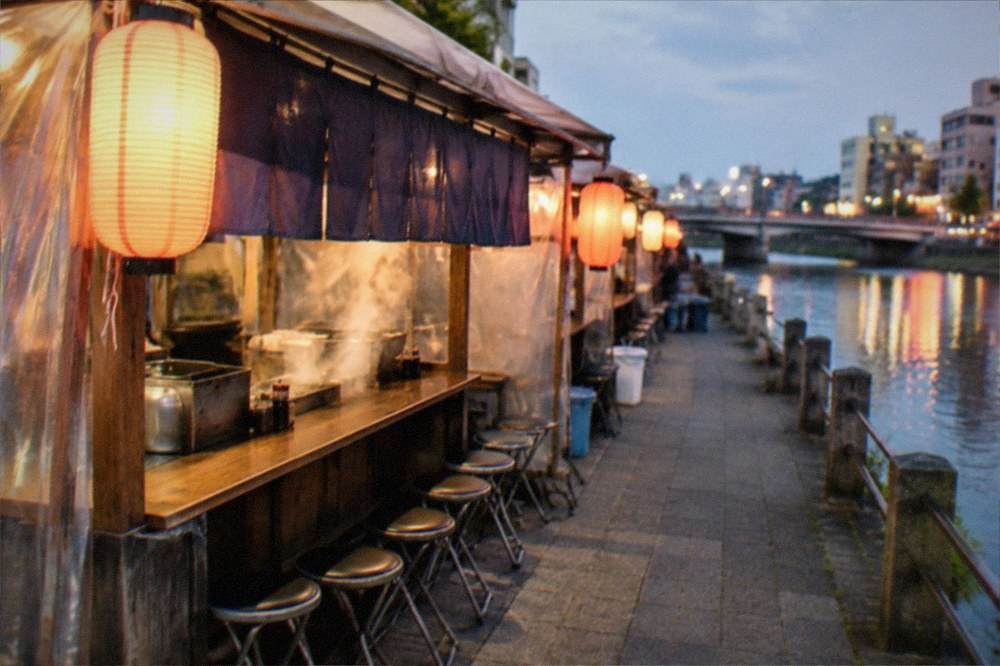
Nakasu Yatai Street is the photogenic row of licensed food stalls along the Naka River, part of a city-wide scene of about 100 yatai that Fukuoka regulates by ordinance. This guide covers where the stalls sit, what the rules actually say about prices, which dishes to order, and how to spend an evening there without guesswork.
Short answer
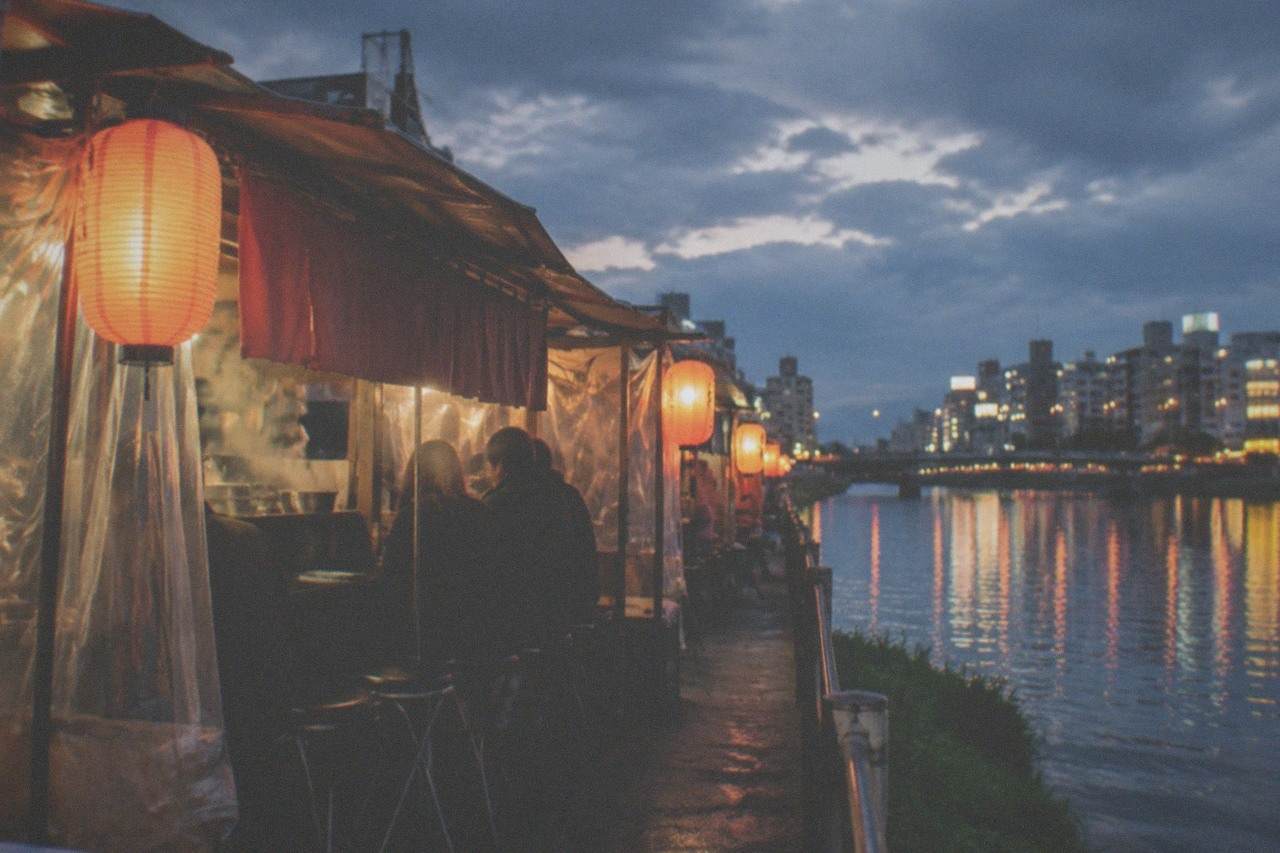
Nakasu Yatai Street is worth visiting for its riverside row of licensed food stalls, part of roughly 100 yatai across Fukuoka. A city ordinance requires every stall to post its prices, stalls take walk-ins and cannot be booked, and the Nakasu cluster along the Naka River is the most photogenic of the city's three main yatai areas.
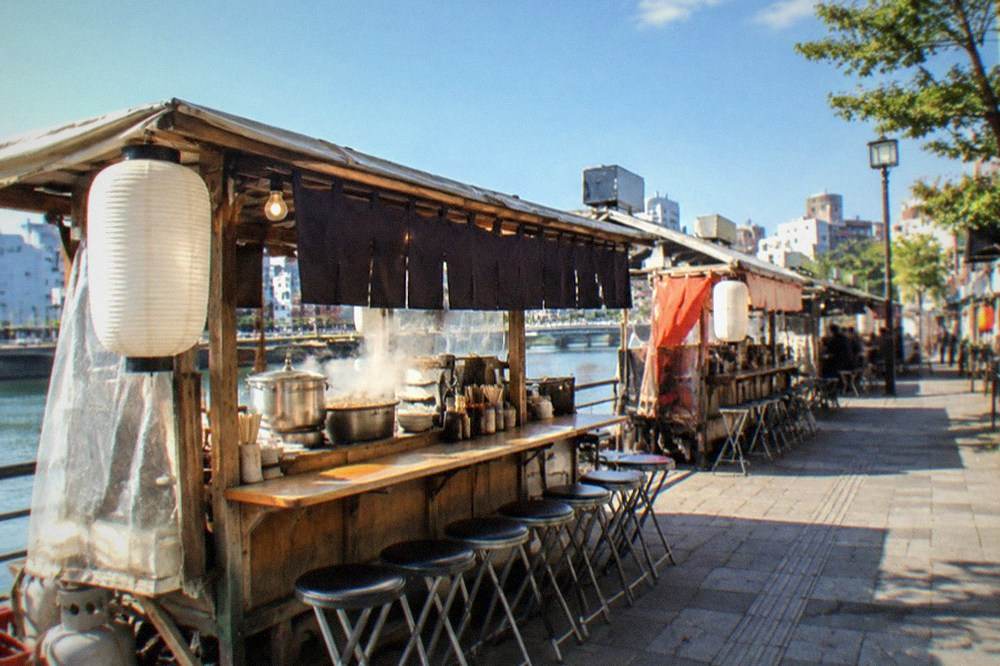
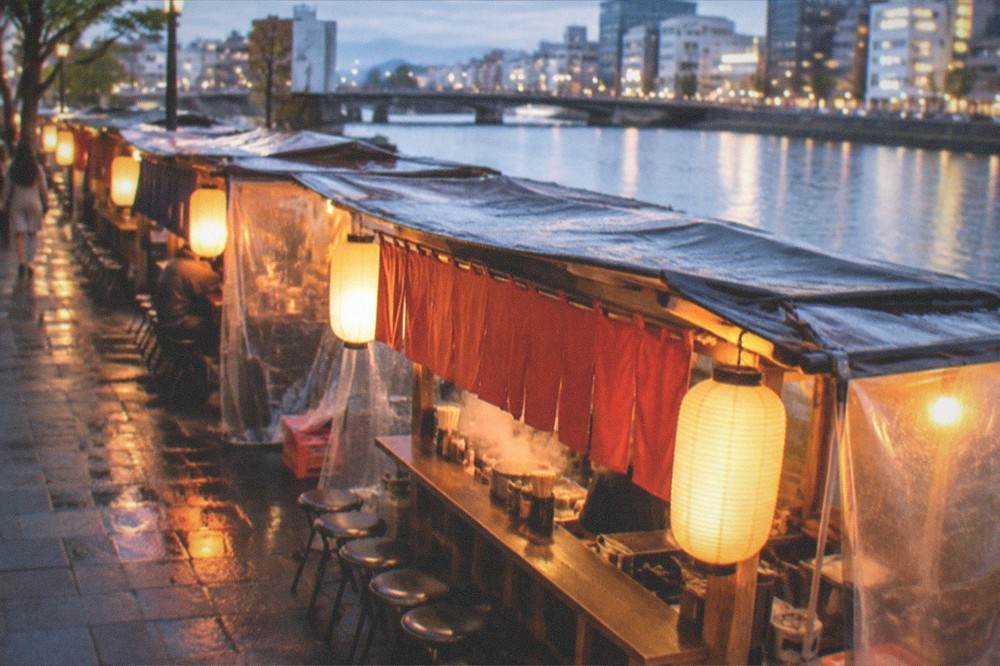
Fukuoka runs more licensed yatai, the mobile food stalls that cook and serve from a single cart, than any other city in Japan. The city's own figures put the count at about 100 stalls, and the most photographed cluster of them sits along the Naka River in Nakasu, lanterns glowing over the water, chefs working six-seat counters a few metres from the bridge railings. This page explains what the stalls are, what the rules say about pricing, what to order, and how to plan the evening.
Is Nakasu Yatai Street Worth Visiting?
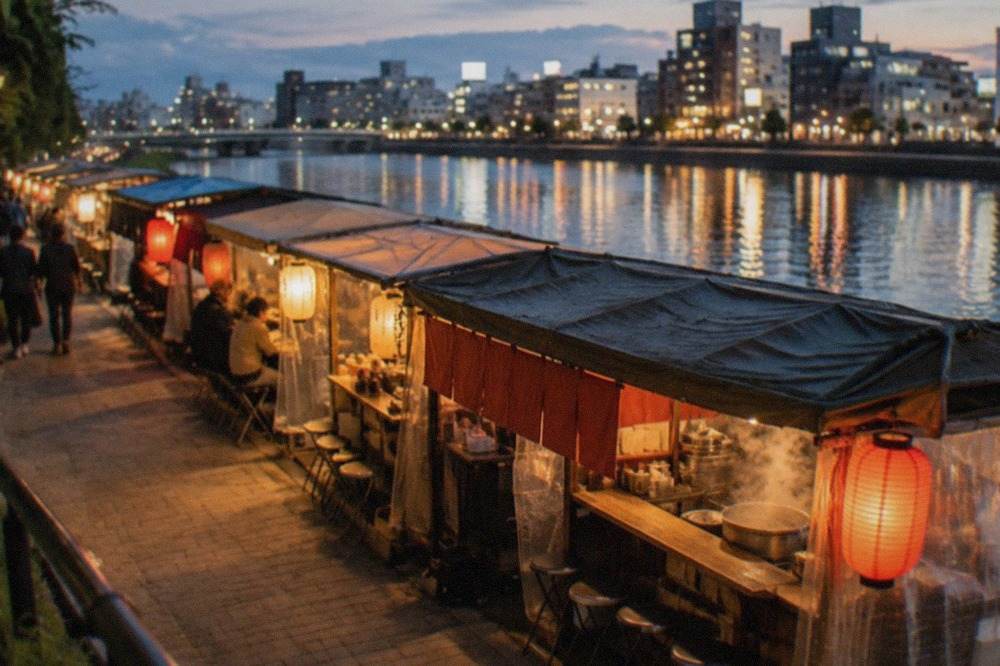
Yes, for most visitors it is worth an evening, and it is the single most distinctive food experience Fukuoka offers. Nakasu is the most photogenic of the city's three yatai clusters, sitting along the Naka River beside Seiryu Park, and the stalls take walk-ins with no reservation possible. Eating at one is a compressed dose of local food culture: tonkotsu ramen, yakitori and oden served across a counter that seats a handful of people at a time.
The honest framing is this: a yatai is not a restaurant with a view, and it is not a food court. It is a small cart with a counter, run by one operator and a helper or two, cooking a short menu at close range. You sit beside strangers, you watch your food being made, and you leave when you are finished. Some travellers find that cramped and brilliant. Others find it cramped.
What tips the balance for Nakasu specifically is the setting. The stalls sit along the river, so the scene doubles as one of the city's best night views, and the cluster sits within walking distance of Kushida Shrine, the Kawabata Shopping Arcade and Canal City Hakata. That makes it easy to fold into an evening rather than plan an evening around it, and this Fukuoka Japan Travel Guide treats it as a cornerstone of any first visit.
One point worth knowing before you go, because most guides get it backwards: Fukuoka's yatai basic ordinance, in force since 2013, requires every stall to display its prices where customers can easily see them, and bans the vague "market price" wording that catches visitors out elsewhere. The fear of being overcharged at a yatai is largely a leftover from a time before the rules existed.
What Exactly Is a Yatai?
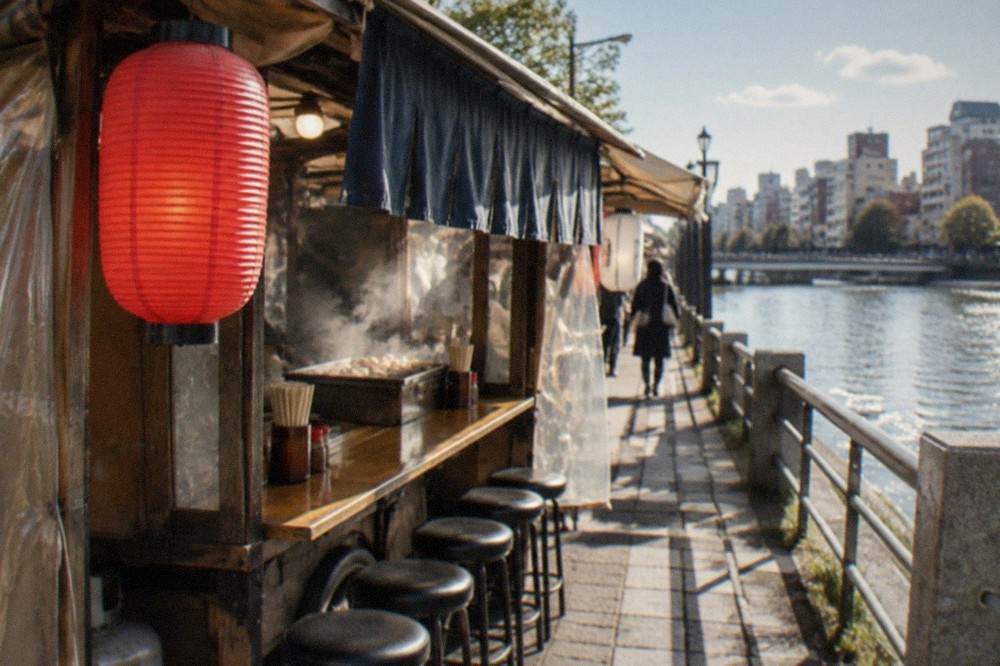
A yatai is a licensed, mobile food stall that cooks a short menu at a counter seating roughly six to ten people. Fukuoka regulates them under a city ordinance covering where they operate, how prices are displayed and how plots are allocated. The stalls are not informal or grey-market: each one holds a road-occupancy permit, and the city runs a public recruitment system that decides who gets a plot when an operator retires.
The format matters for planning. A stall typically opens in the early evening, once the operator has wheeled or trailered the cart into position and set up the kitchen, and packs up in the small hours. Exact hours vary stall to stall, depend heavily on the weather, and are at the operator's discretion, so there is no reliable "opens at six" answer. The practical approach is to arrive between about seven and nine in the evening, when most stalls that will open that night have opened.
The menu is deliberately short. A ramen stall sells ramen, maybe gyoza, maybe a beer. A yakitori stall sells skewers and drinks. This is not a limitation so much as the point: the operator cooks a handful of things hundreds of times a week, and does them well. Ordering is straightforward because the options are visible, and, thanks to the ordinance, so are the prices.
Payment is worth a note. Traditionally yatai were cash-only, and many still are, though some stalls now accept cards or QR payment. Assume cash until you see otherwise, and carry small notes, because a stall running a six-seat counter does not want to break a large bill at midnight.
If you would rather have a local handle the whole evening, stalls, izakaya and karaoke included, a guided option exists:
Where Do the Stalls Sit in Nakasu?
The Nakasu stalls line the Naka River around Seiryu Park, on the stretch between the Nakasu entertainment district and Kawabata, a few minutes on foot from Nakasu-Kawabata subway station. Nakasu is one of three main clusters in the city, alongside Tenjin and Nagahama, and the riverside position is what makes it the postcard version of the scene.
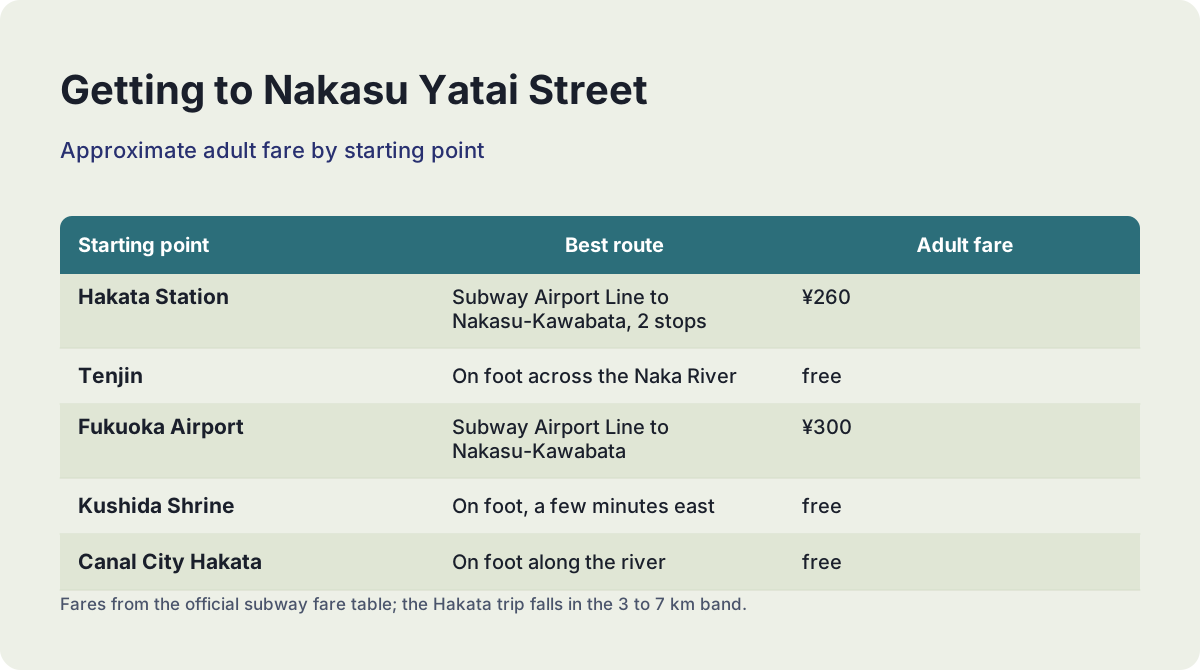
Getting there is simple. Nakasu-Kawabata station sits at the junction of the Airport and Hakozaki subway lines, and the river is a short walk from the exits. From Hakata station the subway fare falls in the city's 3 to 7 km band, which the official fare table prices at ¥260 for an adult. From Tenjin you can simply walk, since Nakasu sits between the two districts, and a stroll through Tenjin to the river takes only a few minutes.
| Starting point | Best route | Approximate adult fare |
|---|---|---|
| Hakata Station | Subway Airport Line to Nakasu-Kawabata, 2 stops | ¥260 |
| Tenjin | On foot across the Naka River | free |
| Fukuoka Airport | Subway Airport Line to Nakasu-Kawabata | ¥300 |
| Kushida Shrine | On foot, a few minutes east | free |
| Canal City Hakata | On foot along the river | free |
The three clusters genuinely differ, and treating them as interchangeable is the most common mistake in competing coverage. Nakasu is the tourist-facing row, the one on every photograph, with the river behind the stalls. Tenjin's stalls are scattered along streets in the business district and skew towards after-work locals, including some newer "neo-yatai" serving things like craft beer and pasta. Nagahama, near the old fish market area, has the strongest ramen tradition. The city itself simply says about 100 stalls across the commercial and residential districts, and each cluster keeps its own character.
How Much Does Eating at a Yatai Cost?
There is no city-published average, and this site will not invent one. What is verified is the rule that protects you: every stall must display its prices visibly, and any dish whose cost varies with the market must show that day's actual price rather than a "market price" label. You read the posted menu before you sit, which is a stronger protection than most cities give street-food visitors.
The cost question is best answered practically rather than statistically. A bowl of ramen or a set of skewers is casual-dining money, not fine-dining money, and drinks are priced on the same posted menu. Because the prices are displayed before you commit to a seat, you can comparison-shop by simply walking the row first, reading boards as you go, then choosing. That walk is half the experience anyway.
Two spending notes are worth carrying. First, there is no verified standard seating charge or cover charge across the stalls, so do not budget for one on assumption, and check the posted signs if anything looks like a charge. Second, the cash point from earlier stands: assume cash, carry small denominations, and do not plan to split a bill across three cards at a six-seat counter.
If a full evening of stalls feels like too much logistics after a travel day, a guided crawl handles the route, the ordering and the language in one go:
Yatai Etiquette: How to Behave at the Counter
Sit when invited, order from the posted menu, finish what you order, and leave the stool when you are done rather than lingering over one drink. The stalls are small businesses running tiny counters, so the etiquette is mostly spatial: keep bags off neighbouring seats, do not smoke unless the stall allows it, and ask before photographing the operator at work. None of it is complicated, but the counter is close enough that bad manners are obvious.
The seating logic drives everything else. A yatai counter seats a handful of people, and a stall's income depends on turning those seats over through the evening. Sitting down, ordering, eating, paying and moving on is the expected cycle. This is not a rule anyone will shout at you about, but occupying a stool for an hour over a single beer on a busy night is the behaviour locals notice.
Ordering is easier than most visitors expect. The menu is short and displayed, and pointing works fine. If a stall is full, the operator will wave you off or gesture to wait, and the correct response is to take the hint and try the next cart. Walking the row and picking the stall with a queue of locals in it is a legitimate strategy, and it is the one most Fukuoka residents would recommend without hesitation.
A few specifics worth knowing. Do not bring in food or drink from elsewhere. Do not ask a ramen operator for a menu item from the yakitori stall next door. And if you are travelling in a group larger than four, expect to split up, because few counters can seat a group together at all. Larger parties are exactly the case where a guided food crawl earns its fee, since the guide has standing relationships with specific stalls.
Which Dishes Should You Order First?
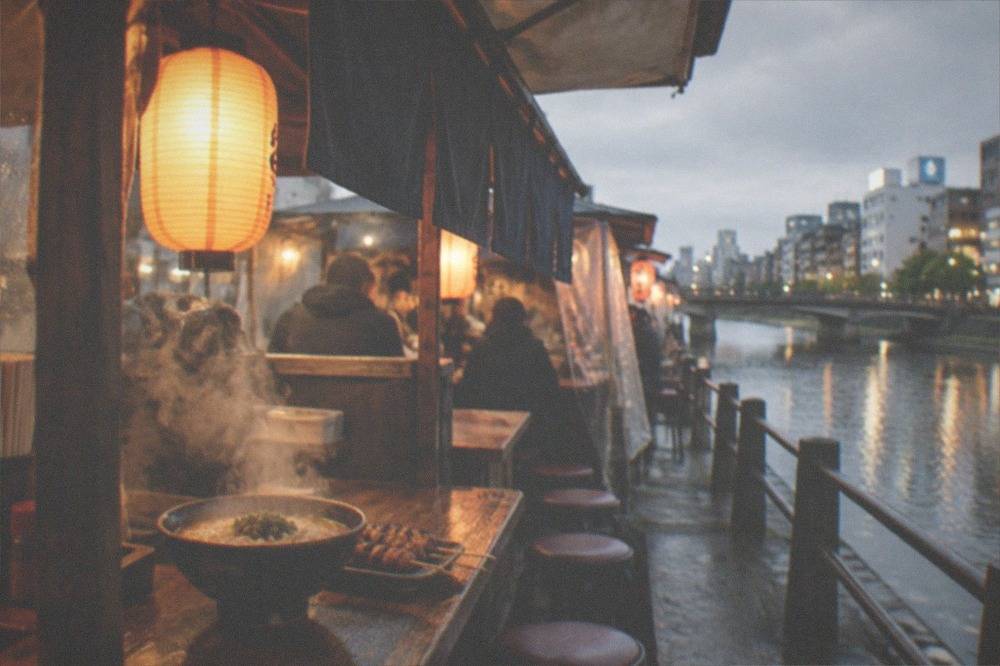
Start with the stall's signature rather than a bit of everything: tonkotsu ramen at a ramen cart, yakitori skewers at a grill cart, oden at a simmering pot. The short menu is the operator's specialisation, so the first order at any stall is whatever the cart is built around. From there, gyoza, tempura and a beer or a shochu highball round out a typical evening.
The city's food identity runs straight through these carts. Fukuoka is the home of tonkotsu ramen, the pork-bone-broth noodle bowl that the rest of the world calls Hakata ramen, and a yatai is one of the most authentic places to eat it, ladled from a pot metres from your stool. Motsunabe, the beef offal hot pot Fukuoka is famous for, is more of a restaurant dish, but its ingredients and its origins are part of the same food culture the stalls serve from.
| Dish | What it is | Why order it at a yatai |
|---|---|---|
| Tonkotsu ramen | Noodles in rich pork-bone broth, with chashu pork and green onion | The signature cart dish, cooked at arm's length |
| Yakitori | Grilled chicken skewers, salted or sauced | Skewers come off the grill in batches, ideal for grazing |
| Oden | Simmered daikon, egg, fishcakes and konnyaku in dashi broth | A winter staple ladled straight from the pot |
| Gyoza | Pan-fried dumplings | A common side at ramen stalls |
| Tempura | Lightly battered seafood and vegetables | Cooked to order and eaten immediately |
Mentaiko, the spicy cod roe Fukuoka spreads on rice by default, appears as a topping or a side at some stalls. If you see it on a posted menu, order it, because the city's two great food exports, tonkotsu broth and mentaiko, rarely share a counter anywhere else. A second stall for a second course is normal behaviour, and the row makes that easy.
For visitors who want the food culture explained while they eat it rather than reverse-engineered from signs, the private stall crawl with tastings is the deeper option:
When Do the Stalls Open and Close?
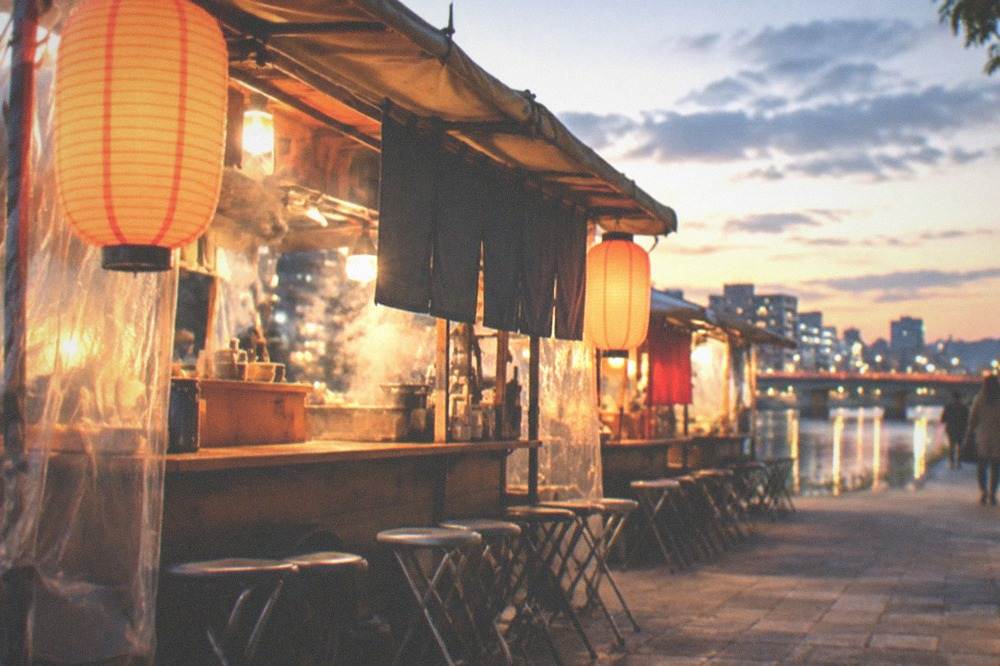
Stalls set up in the early evening and run into the small hours, with exact hours set by each operator and no city-mandated schedule. The verified rule is that road occupancy is permitted from late afternoon through the night, and individual stalls typically open around 18:00 to 18:30 and close in the early hours. Rain and strong wind close many stalls, so the scene is a fair-weather one with no guaranteed nightly count.
The practical planning advice follows from that. Aim for the 19:00 to 21:00 window, when the row is fully lit and most stalls that will open have opened, but before the post-midnight crowd thins the choice. Weekends are busier and the counters fill faster. If the weather looks bad, have a backup, because a rainy night can leave the riverside row largely shut.
There is no weekly closing day for the area as a whole. Individual operators close when they choose, and the recruitment system means the roster of who is open shifts over time as plots change hands. The honest answer to "will the stalls be open on a Sunday in November" is: most likely many will, some will not, and the way to find out is to walk the row.
Timing the visit against the rest of the evening is easy in Nakasu. The stalls sit minutes from Canal City Hakata, which keeps its shops open until 21:00 and restaurants later, so a common pattern is shopping or a canal-side fountain show first, then the stalls for a late dinner. The Hakata Machiya Folk Museum area and Hakata Old Town also sit within an easy walk for an earlier stop.
Guided Yatai Tours or Going Solo?
Going solo costs nothing but the food and is entirely normal, since stalls take walk-ins and cannot be booked. A guided crawl earns its fee when you want a local to choose the stalls, bridge the language gap or handle a group, and this site's roster includes three sellable yatai and food-crawl options alongside the general evening tours. The right answer depends on your confidence, not on any requirement to book.
To be plain about a point some coverage obscures: you do not need a tour to eat at a yatai, and no reader should come away thinking a reservation is required, because no such thing exists at the stalls themselves. The ordinance's posted prices, the short menus and the pointing-friendly format make solo visits genuinely easy for English speakers. Plenty of visitors do it with no Japanese at all.
Where a guide adds real value is selection and pacing. A local guide knows which carts are having a good month, which operators welcome tourists warmly, and how to structure a multi-stall crawl so you are not full after the first counter. For solo travellers who want company, or groups that a six-seat counter would split up, that is worth paying for. The evening tour that includes stalls, an izakaya and karaoke is the broadest option, while the private Nakasu stall tour with tastings focuses the whole experience on the row itself.
| Approach | Best for | Trade-off |
|---|---|---|
| Walk in solo | Confident travellers, flexible evenings | You choose stalls blind, and language is on you |
| Private stall crawl with tastings | Food-focused visitors, small groups | A fee, but the guide picks the stalls and orders |
| Guided evening tour with izakaya and karaoke | First nights, solo travellers wanting company | Less time at the stalls, more variety |
| Photograph the row, eat elsewhere | Visitors short on time or wanting comfort seating | You get the scene without the counter experience |
One more roster option suits a different kind of evening: a night views and local life tour that walks the illuminated city, though as a newer listing it carries no published rating yet, so judge it on its itinerary rather than review scores.
What Else Is Around Nakasu Yatai Street?
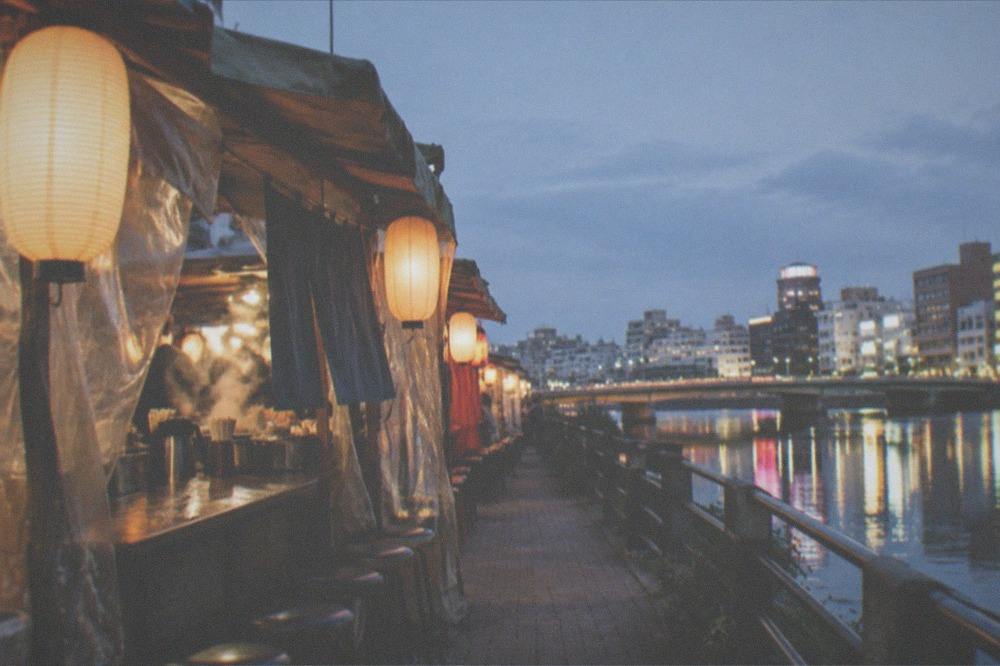
Nakasu sits between Tenjin and Hakata, so the stalls are ringed by walkable attractions: Kushida Shrine, the Kawabata Shopping Arcade, Canal City Hakata and the riverside promenade itself. Everything on that list is free to enter, which makes the area one of the city's most efficient evenings: sightseeing, shopping and street food within a fifteen-minute radius, with no transit leg between them.
Kushida Shrine, Hakata's tutelary shrine, sits a few minutes east of the stalls and is the spiritual anchor of the district. It is also the shrine at the centre of the Hakata Gion Yamakasa festival each July, when the neighbourhood's teams race carrying floats, so a visit before dinner connects the stalls to the culture around them. The shrine grounds are free, and the stalls themselves are a legacy of the festival's street-food tradition.
The Kawabata Shopping Arcade runs parallel to the river and offers a covered strip of old-school shops and snack stands, useful if the weather turns against the open-air stalls. Canal City Hakata, the canal-threaded shopping complex on the Hakata side, adds a fountain show, a cinema and a large food hall to the evening's options. For a longer loop, the Ohori Park area and [Fukuoka Castle ruins](/attractions/fukuoka-castle-ruins/) make a good earlier-in-the-day pairing before an evening in Nakasu.
| Nearby stop | Distance from the stalls | Cost |
|---|---|---|
| Kushida Shrine | A few minutes on foot | Grounds free |
| Kawabata Shopping Arcade | Alongside the river | Free to browse |
| Canal City Hakata | A short walk across the river | Free entry |
| Seiryu Park riverside | Immediately beside the stalls | Free |
| Tenjin underground mall | 10 to 15 minutes on foot | Free to browse |
How to Plan the Evening, Step by Step
Arrive in Nakasu between 19:00 and 21:00, walk the row and read the posted price boards before choosing a stall, start with the cart's signature dish, carry cash in small notes, and keep the group small. If the weather is bad, shift to the covered arcade or Canal City and check the row again later, since rain closes stalls unpredictably. That is the whole plan, and it fits on one line.
The sequencing that works best for a first visit: start from Hakata Station or Tenjin, reach the river by 19:00, and walk the full row once without sitting down. Read the boards, note which counters have locals at them, then pick your first stall, order its signature, and give the stool up when you finish. If you are still hungry, repeat at a different cart. Finish with the riverside view from the bridge, which is the shot the row is famous for, then walk home or onward to karaoke in the surrounding Nakasu entertainment district.
For a final bit of context on the wider scene, the stalls are a Fukuoka institution rather than a Nakasu one, and the city's official yatai Q&A page is the source that confirms the about-100 count and the price-display rules. The ordinance itself, which the city publishes on its own policy pages, is short and worth a skim if you are curious why the scene feels more orderly than street food elsewhere in Asia.
If the evening has sold you on the city more broadly, these are the options that pair best with a night at the stalls:
Common Questions About Nakasu Yatai Street
Is Nakasu Yatai Street Worth Visiting?
Yes, for most visitors. Nakasu is the most photogenic of Fukuoka's three yatai clusters, sitting along the Naka River, and the stalls take walk-ins with no booking possible. A city ordinance requires every stall to post its prices, so the biggest fear visitors carry, being overcharged, is largely handled by the rules.
Do I need a reservation to eat at a yatai?
No, and no such thing exists. Stalls take walk-ins only, seating a handful of people at a counter. The only bookable products are guided crawls run by tour operators, which reserve the guide's time, not a stool.
Will I get ripped off at a yatai?
Unlikely, and less likely than in most street-food cities. Fukuoka's yatai basic ordinance requires prices to be displayed where customers can easily see them, and bans "market price" labelling for variable dishes. City inspectors check periodically. Read the board before you sit.
How many yatai are there in Fukuoka?
About 100, according to Fukuoka City's own figures, spread across the commercial and residential districts with the main clusters in Nakasu, Tenjin and Nagahama. The count is held steady by a public recruitment system that fills plots as operators retire.
What time do the Nakasu stalls open?
Stalls set up in the early evening, typically opening around 18:00 to 18:30 and running into the small hours, but exact hours are set by each operator and shift with the weather. Aim for 19:00 to 21:00 for the fullest, brightest row.
Can I pay by card at a yatai?
Assume cash. Traditionally the stalls were cash-only, and many still are, though some now accept cards or QR payment. Carry small notes, since a six-seat counter cannot easily change large denominations.