Parks in Fukuoka
Fukuoka is a dense port city of about 1.66 million people, yet its park network is unusually generous: a moat-turned-lake in the centre, castle ruins under sakura, and a seaside park out on the bay.
Short answer
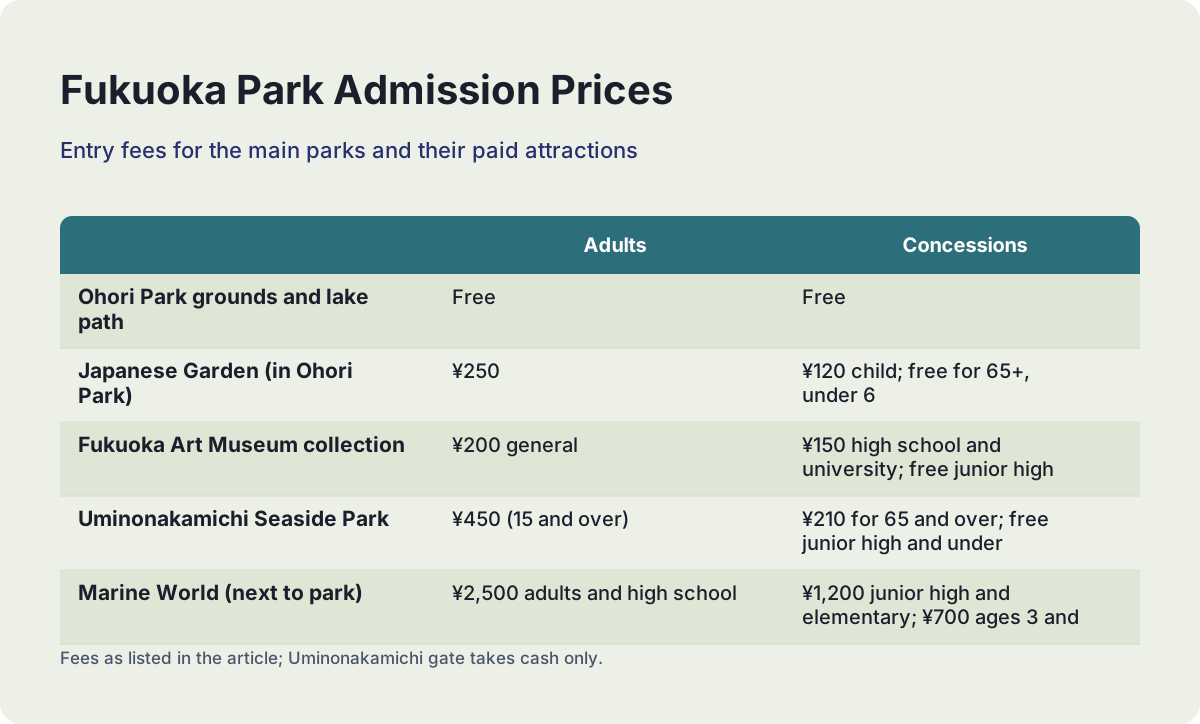
Fukuoka's best parks are Ohori Park for the lake walk and Japanese Garden, Maizuru Park for the castle ruins and roughly 1,000 cherry trees, Uminonakamichi Seaside Park on the bay, and the compact Rakusuien garden. The Japanese Garden charges ¥250, Uminonakamichi charges ¥450 with a cash-only gate, and Ohori Park itself is free.
Fukuoka packs a surprising amount of green into a city that grew around one of Japan's busiest ports. The headline act is Ohori Park, a former moat of Fukuoka Castle turned into a two-kilometre lake walk ten minutes from Tenjin. Around it sits a network that most visitors under-use: castle ruins that double as the city's main cherry blossom site, a Japanese garden with verified ¥250 admission, a huge seaside park out on Uminonakamichi, and a string of smaller gardens and neighbourhood lawns that fill with office workers at lunch. This guide walks through all of them, with the admissions, closures and transport details that actually hold up on the ground.
What Are the Best Parks in Fukuoka?
The best parks in Fukuoka are Ohori Park for the central lake and Japanese Garden, Maizuru Park for the Fukuoka Castle ruins and cherry blossoms, Uminonakamichi Seaside Park for animal and seaside space on the bay, and Nokonoshima Island Park for a ferry-away flower island. Ohori and the castle grounds are free; the Japanese Garden is ¥250 and Uminonakamichi is ¥450 at a cash-only gate.
That ranking is not just scenery. It reflects how the parks actually get used. Ohori is the city's running and strolling circuit, with a perimeter path that fills from early morning. Maizuru is the festival and hanami ground, the site of the castle's stone walls and roughly 1,000 cherry trees. Uminonakamichi is the full-day family option, reachable by ferry or the JR line out along the bay, with an Animal Forest and a dog run inside the gate. Nokonoshima is the seasonal showpiece, a short ferry from Meinohama, famous for spring flowers and autumn cosmos.
A word on geography before the detail. Hakata and Fukuoka are the same city: Hakata is the ward and the station name, Fukuoka is the city. No park in this guide requires travelling "from Hakata to Fukuoka", because that is not a journey anyone takes. Everything here sits inside the city or on its immediate bay, and the Fukuoka Japan Travel Guide covers each district in more depth if you want the neighbourhood context.
Ohori Park: The Lake Walk Everyone Does First
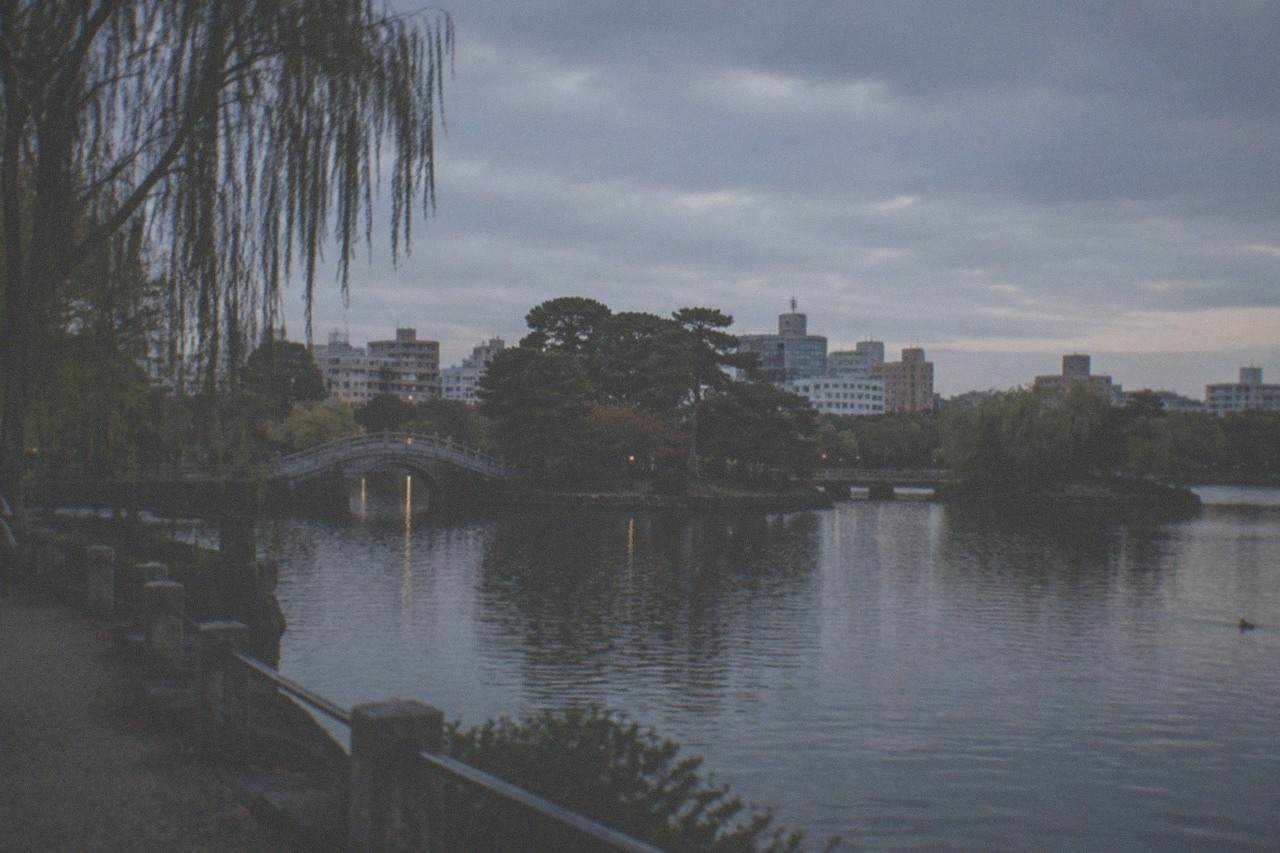
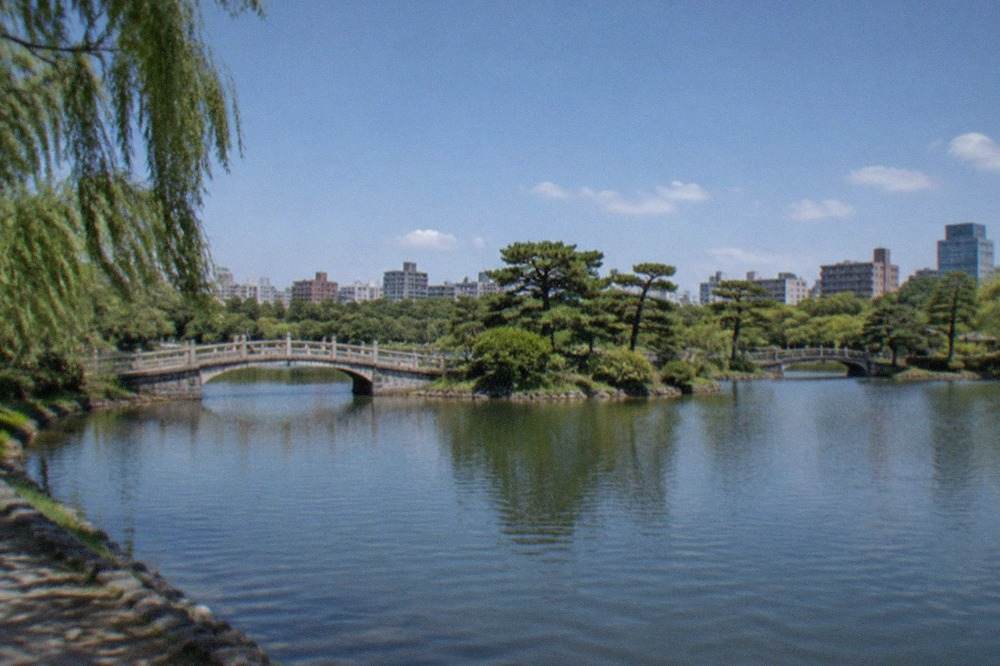
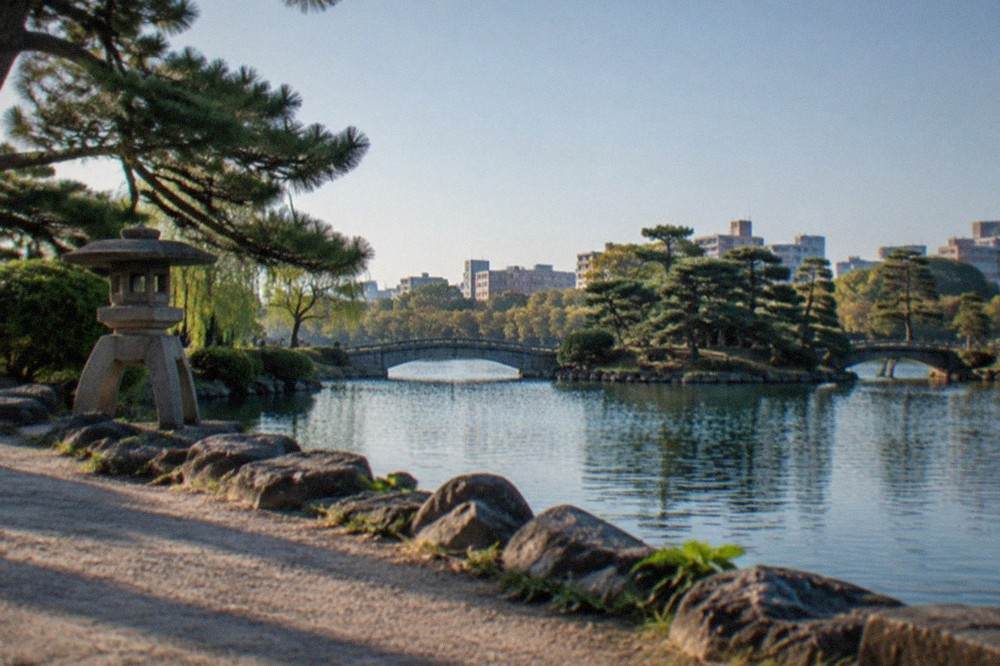
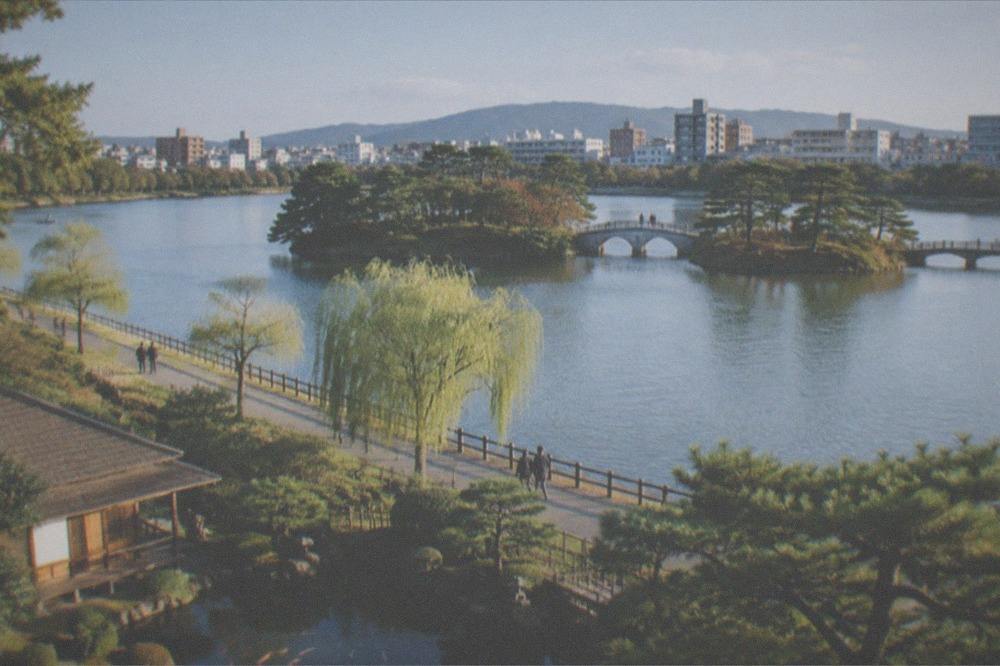
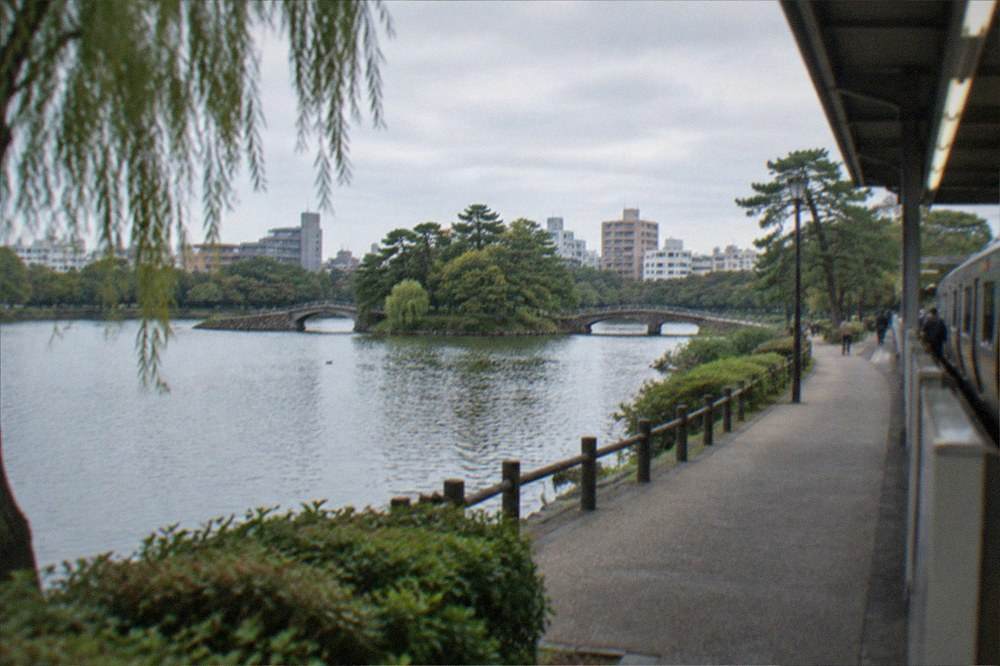
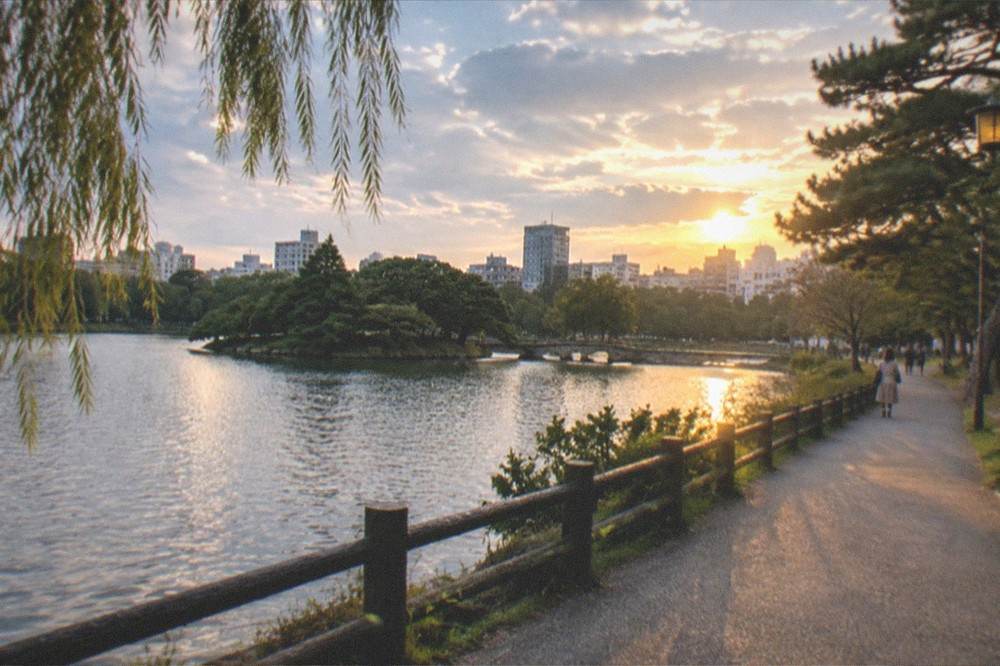
Ohori Park is Fukuoka's central park, a 2 km lake with a perimeter walking path, three islands, and the Fukuoka Art Museum on its western shore. The park itself is free and open; the Japanese Garden inside it charges ¥250 for adults, ¥120 for children, closes Mondays and from December 29 to January 3, and stays open until 18:00 in the May to September season.
The name gives it away: ohori means moat. The lake is a surviving section of the moat system of Fukuoka Castle, reshaped into a pleasure park in the early twentieth century. The walk around it takes most people 30 to 40 minutes at a stroll, and the path is flat and paved the whole way, which makes it one of the few central routes that works for wheelchairs and strollers without planning. Two bridges, including the distinctive piped bridge across the middle, cut the circuit into shorter loops if you are short on time.
The Japanese Garden on the corner near the art museum is the part worth paying for. The official garden site lists adult admission at ¥250, children under 15 at ¥120, and free entry for visitors 65 and over, holders of a disability certificate plus one carer, and children under 6. Last entry is 17:45 in the May to September season and 16:45 from October to April, with Monday closures and a New Year shutdown. It is a compact stroll garden rather than a vast one, which suits a visit of 45 minutes to an hour.
Practical details are simple. The park sits between Ohori and Tojinmachi subway stations on the Airport Line, either of which lands you within a few minutes' walk of the water. The Fukuoka Art Museum on the west shore charges ¥200 for its collection exhibitions and is free for junior high school age and under, so a garden-plus-museum morning costs very little. If you are building a first-day plan around the city centre, the getting around Fukuoka transport guide covers the subway fare zones you will use to get here.
| Ohori Park element | Admission | Notes |
|---|---|---|
| Park grounds and lake path | Free | Open daily, flat paved circuit |
| Japanese Garden | ¥250 adult, ¥120 child | Free for 65+, under 6; closed Mondays and Dec 29 to Jan 3 |
| Fukuoka Art Museum collection | ¥200 general, ¥150 high school and university | Free for junior high and under; closed Mondays |
| Boat rental on the lake | Fee at the dock | Seasonal operation, weather dependent |
Maizuru Park and the Fukuoka Castle Ruins
Maizuru Park wraps the Fukuoka Castle ruins in lawns and roughly 1,000 cherry trees, and it is free to enter. The stone walls, turrets and gate ruins of the castle survive from the feudal period, and the park's Tenshudai, the keep's stone base, is closed to entry from 2026-05-26 until the end of December 2026 for an archaeological excavation.
The castle story is one of the better ones in Japanese urban history, and 2026 made it stranger. A document discovered in December 2024 described a keep having been built on the Tenshudai, which contradicts the long-standing belief that Fukuoka Castle never had one. The city dug a trial excavation in 2025, and in 2026 it tripled the excavation area, closing the Tenshudai to visitors from May 26 until the end of December. The castle's official site carries the closure notice, and the park grounds around it stay open throughout. Whether the "phantom keep" ever existed is still an open question, which is a rare thing to be able to say about a city park.
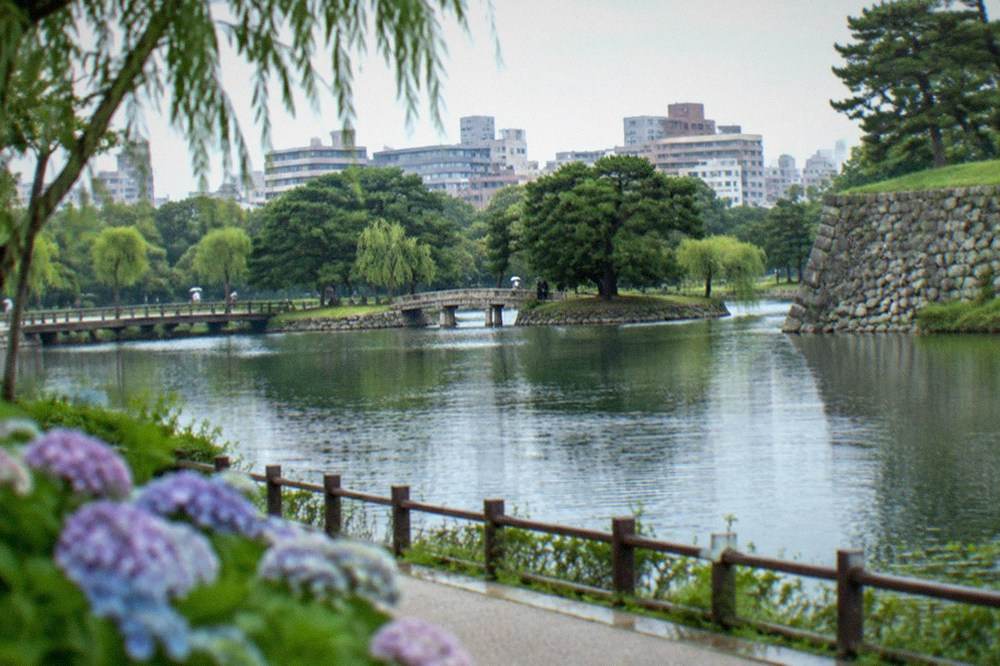
Outside sakura season the park is a quiet walk with wide lawns, and it connects directly to Ohori Park on its western side, so the two combine naturally into one long loop. The Korokan ruins, an ancient diplomatic guesthouse site from when this coast traded directly with China and Korea, sit at the edge of the park near the sports ground. In late March and early April the cherry trees turn Maizuru into the city's main hanami ground, with picnickers claiming spots from mid-morning; the best time to visit Fukuoka guide puts the blossom window in context with the rest of the year.
For families weighing which green spaces suit children, the Fukuoka with kids guide ranks the parks against alternatives like Marine World and the zoo. Maizuru's strength is space: there is no admission gate, no closing time on the lawns, and enough slope and stone wall to keep children interested without any equipment at all.
Uminonakamichi Seaside Park: The Big Bay Option
Uminonakamichi Seaside Park is a large seaside park on a sandbar in Hakata Bay, charging ¥450 for adults 15 and over, ¥210 for visitors 65 and over, and nothing for junior high school age and under. It runs 9:30 to 17:30 from March to October and 9:30 to 17:00 from November to February, and the gate takes cash only.
This is the park to pick when the city centre parks feel small. Uminonakamichi stretches along a narrow peninsula that shields Hakata Bay, with lawns, cycling routes, water play areas in summer, and an Animal Forest and dog run that close 30 minutes before the rest of the park. The official park site states plainly that admission at the gate is cash only, which is worth knowing in a country where visitors increasingly assume card acceptance everywhere. Bring yen notes.
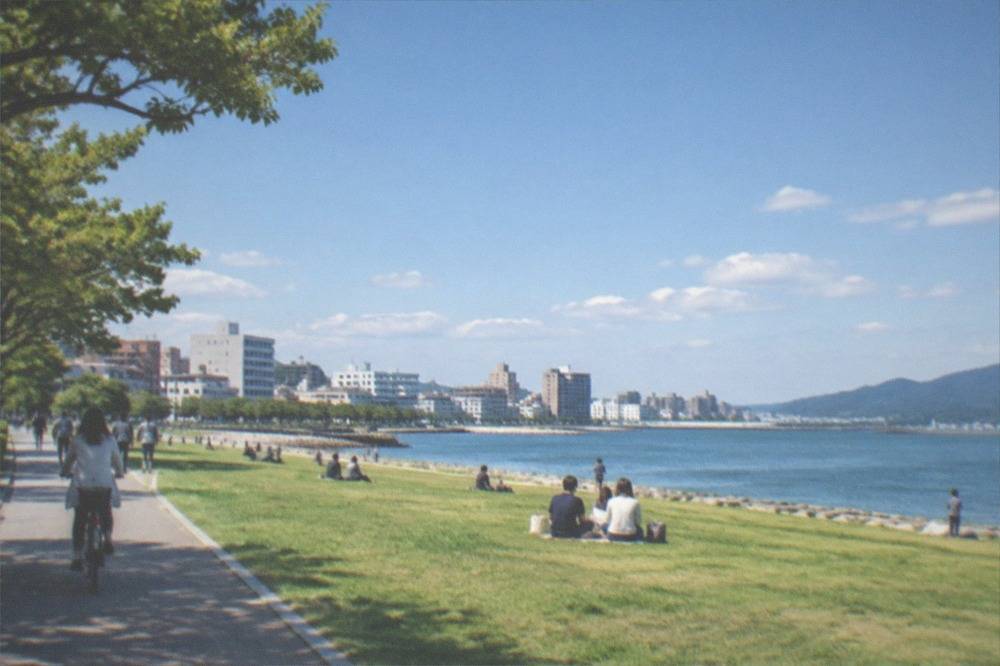
Getting there is half the fun. The JR Kagoshima Line runs out along the peninsula to Uminonakamichi Station, next door to Marine World, and a ferry also crosses the bay from Bayside Place Hakata near the city centre. Marine World itself charges ¥2,500 for adults and high school students, ¥1,200 for junior high and elementary ages, and ¥700 for ages 3 and over, with hours that vary by calendar date, so check the aquarium's own calendar rather than assuming a year-round figure. The Marine World Uminonakamichi guide covers the combination visit in detail.
One planning trap: the park closes on selected Tuesdays that differ by season, plus December 31 and January 1 and a mid-January block, so a flat "open daily" claim would be wrong. The official calendar on the park site lists the exact dates. If a Tuesday visit is in your plan, verify it the night before.
| Uminonakamichi Seaside Park | Details |
|---|---|
| Hours, March 1 to October 31 | 9:30 to 17:30, entry until one hour before close |
| Hours, November 1 to February 28 | 9:30 to 17:00 |
| Admission | ¥450 adult (15+), ¥210 for 65+, free junior high and under |
| Payment at the gate | Cash only |
| Animal Forest and Dog Run | Close 30 minutes before the park |
| Closures | Selected Tuesdays by season, Dec 31 and Jan 1, mid-January block |
Cherry Blossoms, Autumn Colour and the Seasonal Calendar
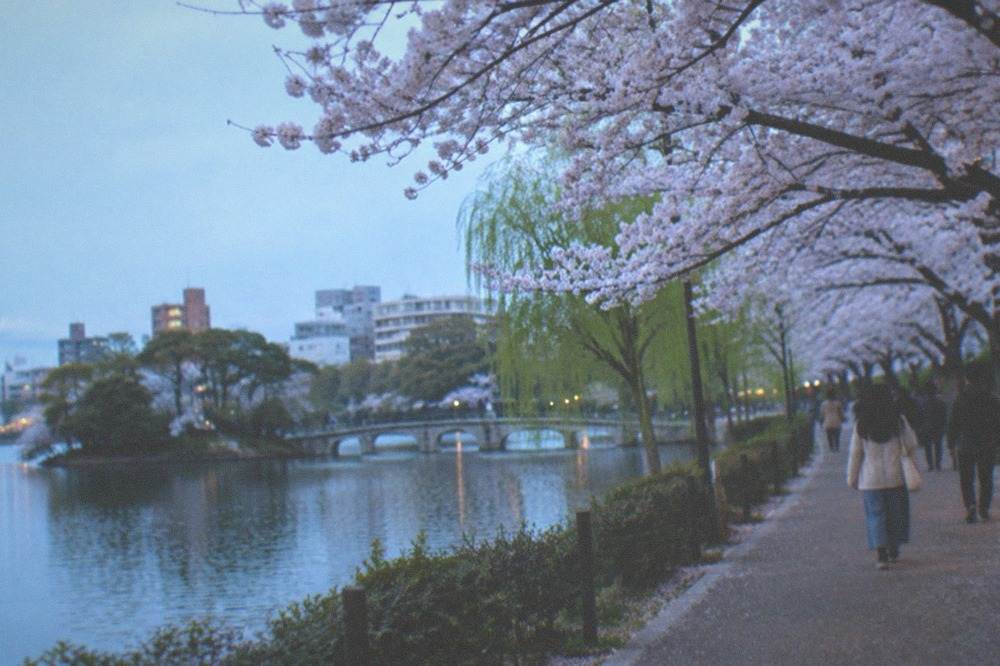
Maizuru Park is Fukuoka's main cherry blossom park with roughly 1,000 trees, Ohori Park and Nishi Park are the other reliable hanami spots, and autumn colour peaks in the city parks from mid to late November into early December. Both seasons are free to view from the park grounds, and neither needs a ticket or a tour.
Spring is the park calendar's headline. Maizuru's trees are the city's concentration, with illuminations during the blossom festival, and Nishi Park on the hillside to the west is a long-standing favourite with bay views through the flowers. Ohori Park's lake edge also blossoms, and the combination of water and petals is the shot most photographers come for. Blossom timing moves every year, so treat late March into early April as the window and check the forecasts in the days before rather than locking a date months out.
Autumn is quieter and, in the parks, longer-lasting. The city parks hold their colour into early December, and the Japanese maples around Ohori's garden and the ginkgo lines elsewhere in the city make mid to late November the target. Summer is the season visitors underestimate: July is statistically Fukuoka's wettest month, wetter than June, at 299.1 mm against 249.6 mm in the JMA's 1991 to 2020 normals, even though June carries the tsuyu rainy season label. August is hotter and drier, with 200.9 sunshine hours, the second sunniest month after May, which makes it the better park month of the two. The Fukuoka weather guide carries the full monthly table.
| Season | Best parks | What you get |
|---|---|---|
| Late March to early April | Maizuru, Nishi, Ohori | Roughly 1,000 cherry trees at the castle ruins, festival illuminations |
| May | Ohori, Uminonakamichi | The sunniest month of the year, 204.1 hours |
| July to August | Uminonakamichi, Ohori | Water play areas on the bay; July is the wettest month, August the drier one |
| Mid-November to early December | Ohori, Maizuru, Rakusuien | Maple colour in the gardens, ginkgo gold in the streets |
The other seasonal factor is festivals rather than flowers. In July the Hakata Gion Yamakasa takes over the streets around Kushida Shrine, and in May Hakata Dontaku fills Meiji-dori with parades; neither has ticketing, and both pull enormous crowds into areas beside the parks. The Fukuoka festivals guide explains the calendar.
The Smaller Gardens Worth the Detour
Rakusuien is a compact Edo-period garden near Hakata Station, the Ohori Park Japanese Garden is the refined one, and Atago Shrine's hilltop grounds give the best free view over the city. Each is a short add-on to a park day rather than a destination on its own, and none takes more than an hour.
Rakusuien is the one most visitors miss because it hides in the streets south of Hakata Station. It is a stroll garden with a tea house, small enough that you can see the whole design in twenty minutes, and its location makes it the natural green stop on a Hakata morning. The garden's own guide page on this site carries the current admission and hours, which change with restoration work, so check before going rather than trusting a figure printed here.
Atago Shrine sits on a hill west of Ohori Park, and the climb up its long stone stairway is rewarded with a tree-framed view over Hakata Bay and the city. The shrine grounds are free, always open, and function as a park in practice: locals walk the stairs for exercise, and the view platform at the top is one of the entries in the Fukuoka viewpoints guide. Combine it with Ohori in a single west-side loop, since the shrine's foot is a fifteen-minute walk from the lake.
For a different register entirely, the Fukuoka City Zoo and Botanical Garden sits on a hill in Minami-ku with the botanical garden wrapped around the animal enclosures. Admission is ¥600 for adults, ¥300 for high school students, and free for junior high age and under, with last entry at 16:30. The zoo announced free-admission days on 3 and 4 October 2026, an offer tied to a local summit that expires immediately afterwards. The zoo and botanical garden guide has the details of getting up the hill, which involves a short walk from Yakuin or a bus.
Getting to the Parks Without a Car
Every major park in Fukuoka is reachable by subway, JR or ferry, and none needs a car. Ohori and Maizuru sit on the Airport Line, Uminonakamichi is at the end of a JR peninsula line or a bay ferry, and the subway's 1-day pass at ¥640 covers unlimited rides on all three lines for a day of park-hopping in the city.
The subway fare table runs from ¥210 for the shortest zone up to ¥380 for the longest, and the 1-day pass at ¥640 pays for itself on a three-ride park day. The pass is sold at station machines and at the international tourist information offices at Tenjin, Hakata Station and Fukuoka Airport. Overseas visitors on a short-stay visa can also buy the Fukuoka Tourist City Pass at ¥2,500, or ¥2,800 with Dazaifu coverage included, with a passport checked at the counter, a detail most competing guides still get wrong by quoting a stale price. The subway operator's pass page lists the current terms.
The airport connection matters for the first park stop. Fukuoka Airport is unusually close to the city centre, on the subway's Kuko Line, and the fare to Hakata Station is ¥260. No official page confirms the journey time in minutes that circulates online, so this guide will not print one; what is verifiable is that the airport sits inside the urban fare zones, closer to the centre than almost any other major airport in Asia. The Fukuoka Airport to city guide covers the options, including the private transfer below for travellers who prefer a door-to-door start after a long flight.
If you are arriving with luggage and want the parks to start on day one rather than day two, a private transfer from the airport to your hotel removes the first navigation step. It runs from about $149 per person, rated 5.0 from 2 reviews, and takes 30 minutes to an hour depending on traffic and destination. Check availability on the operator's live listing if a stress-free start appeals.
For travellers who prefer to compare, the transfer sits alongside the subway as the two sensible airport options: the train is cheaper and frequent, the transfer is door to door and needs no ticket machines at the end of a long flight. Both land you in the city centre within the same fare zones, and the choice usually comes down to how much luggage you are carrying and how many people you are.
Pairing Parks with the Rest of the City
The strongest park pairings are Ohori plus Maizuru as one west-side loop, Uminonakamichi plus Marine World as one bay day, and Rakusuien plus the Hakata temple quarter as one station-side morning. Each pairing works on a single transit ticket and fills a half day without rushing.
The west-side loop is the one to do first. Come out at Ohori or Tojinmachi station, walk the lake, pay the ¥250 into the Japanese Garden, then cross into Maizuru Park through the connecting path and finish at the castle walls. Add Atago Shrine if your legs are willing. The whole circuit is flat except the shrine stairway, and it lands you back at Ohori station for the ride home.
The bay day works best from spring through autumn. Take the JR line out to Uminonakamichi in the morning, use the cash-only gate, spend the middle of the day on the lawns or at Marine World, and ferry back to Bayside Place in the afternoon so the approach to the city comes across the water. The ferry crossing is short and the skyline view from the deck is one of the better free sights in the city.
For the station-side morning, Rakusuien pairs with Tochoji's Great Buddha and the Hakata Old Town temples, all within a fifteen-minute walk of Hakata Station. That is the pairing for a layover or a first morning when you have not yet worked out the subway. The Hakata station area guide maps the walk.
If parks fill your days and food fills your evenings, the city's about 100 yatai stalls are the classic Fukuoka finish, and the yatai guide explains the etiquette, including the fact that the city ordinance requires every stall to post its prices. The Fukuoka food guide covers the restaurant alternatives.
One more pairing worth naming: Fukuoka Tower stands at the Momochi end of the bay, a short bus or subway-plus-walk from Ohori, and its observation decks at 123 m make a good sunset bookend to a park day. Admission is ¥1,000 for adults, ¥500 for elementary and junior high ages, and ¥200 for children 4 and over, with the tower open 9:30 to 22:00. The Fukuoka Tower guide covers the viewing decks and the annual two-day June closure.
Common Questions About Parks in Fukuoka
What Are The Best Parks In Fukuoka?
Ohori Park for the lake and Japanese Garden, Maizuru Park for the castle ruins and cherry blossoms, Uminonakamichi Seaside Park for the bay, and Rakusuien for a compact garden near Hakata Station. Ohori and Maizuru are free; the Japanese Garden is ¥250 and Uminonakamichi is ¥450.
Is Ohori Park free to enter?
Yes, the park grounds and the 2 km lake path are free and open every day. Only the Japanese Garden inside the park charges, at ¥250 for adults and ¥120 for children, with free entry for visitors 65 and over and children under 6.
Can you still walk around Fukuoka Castle ruins in 2026?
The castle grounds and stone walls in Maizuru Park remain open and free. The Tenshudai, the stone base of the keep, is closed to entry from 2026-05-26 until the end of December 2026 for an archaeological excavation, so you can walk the park but not climb the keep base.
How do you get to Uminonakamichi Seaside Park?
Take the JR Kagoshima Line to Uminonakamichi Station, next to Marine World, or the ferry from Bayside Place Hakata across the bay. Admission is ¥450 for adults and the gate takes cash only, so carry yen notes.
Which Fukuoka park is best for cherry blossoms?
Maizuru Park around the Fukuoka Castle ruins, with roughly 1,000 cherry trees and festival illuminations in season. Nishi Park and the Ohori Park lake edge are the other reliable spots, and all are free to view from the grounds.
Are Fukuoka's parks good for children?
Yes. Uminonakamichi has the Animal Forest, a dog run and summer water play, the Fukuoka City Zoo and Botanical Garden charges ¥600 for adults with children of junior high age and under free, and Ohori's flat lake path works for strollers. Maizuru's open lawns need no equipment at all.