Fukuoka in Spring
Spring is the season Fukuoka does best: cherry blossoms along the castle moat, late-season yatai nights, and day trips into green Kyushu countryside, all before the summer heat arrives.
Short answer
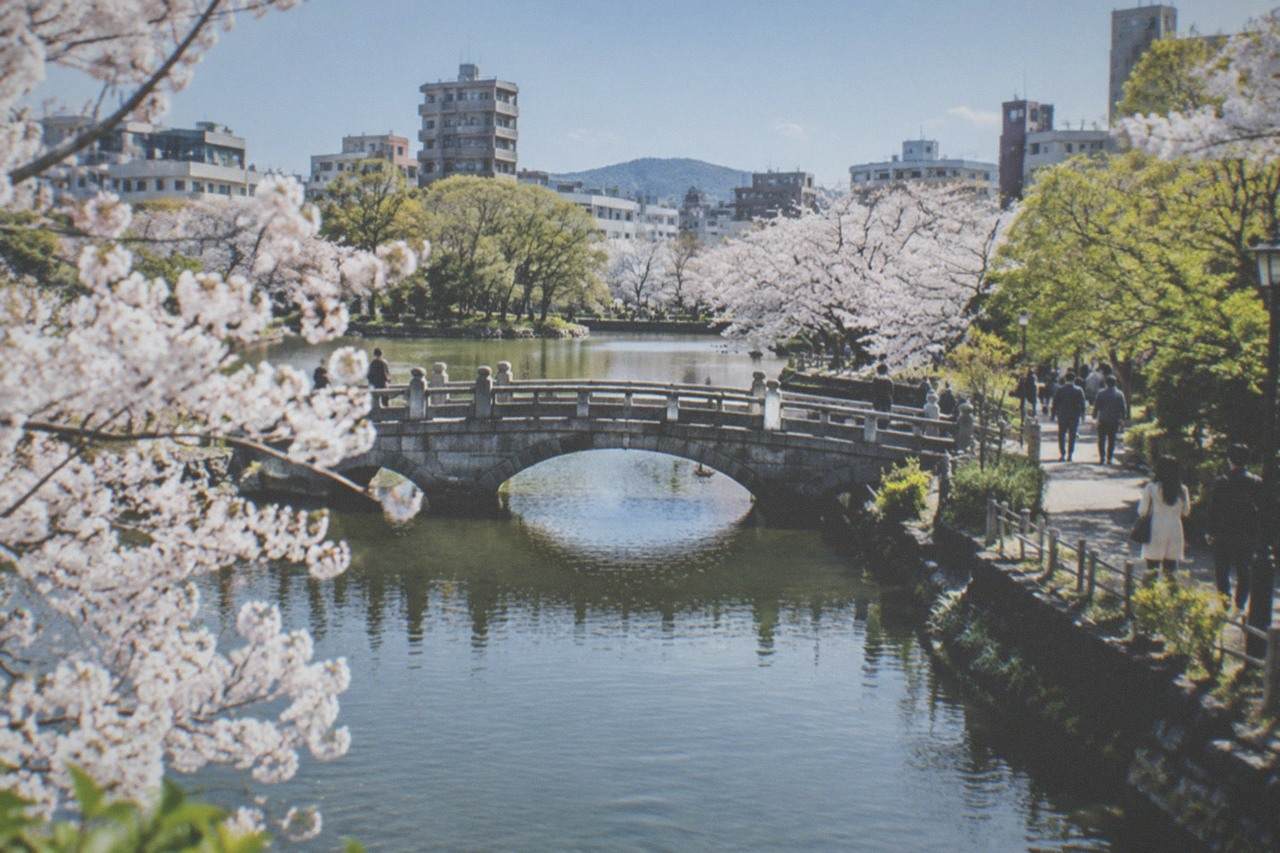
Cherry blossoms in Fukuoka typically open in late March, around March 20 to 24, and reach full bloom between roughly March 28 and April 2. Spring temperatures run from a March mean of 10.8°C to a May mean of 19.9°C. Maizuru Park, Nishi Park and Tenjin Central Park are the city's main sakura spots.
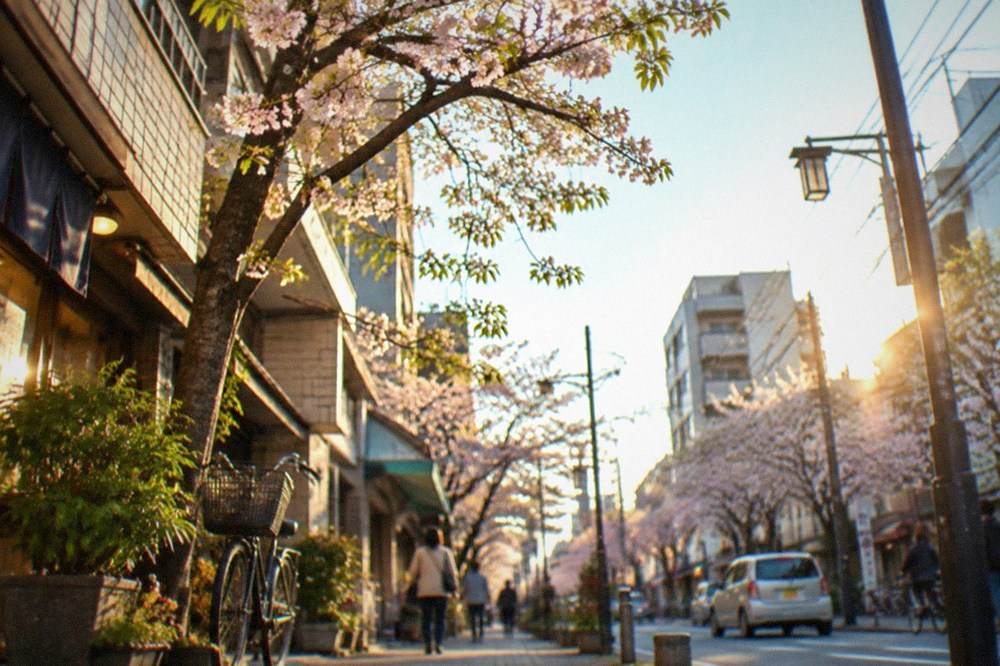
Fukuoka sits on Hakata Bay on the Genkai Sea side of northern Kyushu, and by late March the city has shaken off winter completely. The cherry trees along the old castle moat open first, the yatai stalls that closed for the coldest weeks reappear along the Naka River, and the countryside an hour out of town turns green almost overnight. Spring here is short, mild and busy: it is the season with the city's most photogenic weeks and its most changeable weather, and a small amount of planning changes the trip entirely.
This guide covers the timing question first, because almost every spring trip to Fukuoka is built around it. Then it moves through the verified climate numbers, the blossom spots, the festivals and food, the day trips that work best in this window, and the practical layer of transport passes and packing. Where a figure matters, it comes from official Japanese sources, and where something is genuinely unknown, this page says so rather than guessing.
When Does Cherry Blossom Season Arrive in Fukuoka?
Cherry blossoms in Fukuoka typically begin opening in late March, with first bloom falling around March 20 to 24 in a normal year, and full bloom arriving roughly March 28 to April 2. That makes the last week of March through the first days of April the peak viewing window, and the city's parks hold their color for about a week beyond that if the weather cooperates. Fukuoka blooms slightly ahead of Tokyo most years.
The timing shifts every year, which is why the Japan Meteorological Agency publishes blossom forecasts rather than fixed dates, and why any guide printing a single date is guessing. The pattern, though, is stable. Buds open in the third week of March, the parks reach full bloom within about ten days, and the petals come down across the first half of April. Rain and wind are what end the season, and April averages 118.2 mm of rain, so a storm can cut a viewing window short.
Two practical points follow from this. First, book accommodation for the final week of March and the first few days of April if the blossoms are the point of the trip, because that is when Fukuoka's hotels fill fastest. Second, keep a full day flexible: blossom viewing in Maizuru Park costs nothing, and a spare day lets you chase the best weather rather than the calendar. The dedicated Fukuoka cherry blossom guide goes deeper on varieties and viewing tactics, and the Fukuoka cherry blossom itinerary lays out a ready-made three-day plan.
What Is Spring Weather Actually Like in Fukuoka?
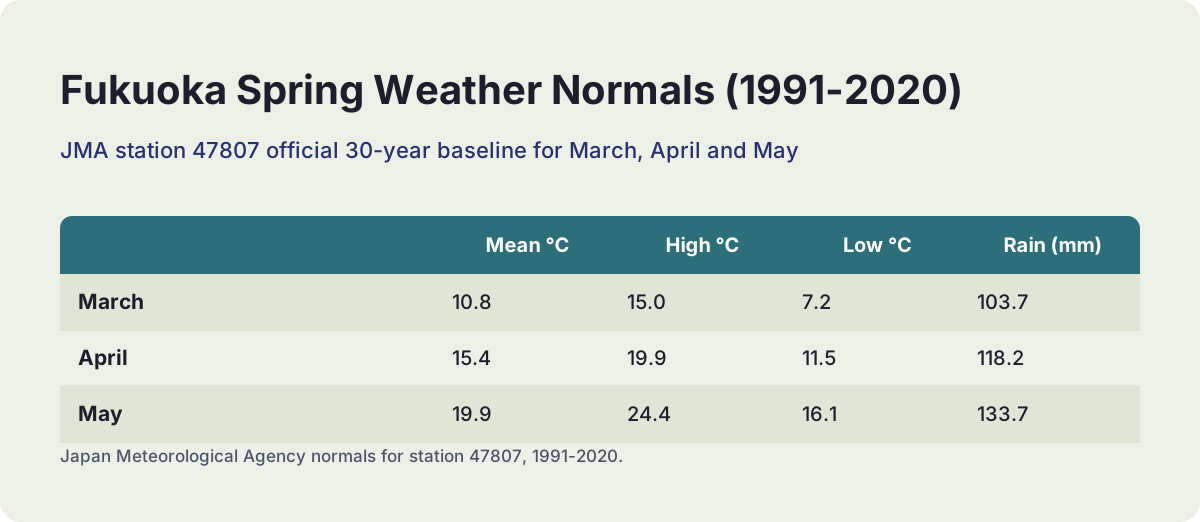
Spring in Fukuoka runs cool to warm: March averages 10.8°C with daily highs of 15.0°C, April 15.4°C with highs of 19.9°C, and May 19.9°C with highs of 24.4°C. Rain rises steadily through the season, from 103.7 mm in March to 133.7 mm in May, and sunshine climbs to 204.1 hours in May, the sunniest month of the entire year. Layers are the answer.
These are the Japan Meteorological Agency's 1991-2020 normals for the Fukuoka station, the official 30-year baseline, and they describe a genuinely four-season city rather than a subtropical one. March mornings sit at 7.2°C, cold enough for a proper coat. By May the overnight low is 16.1°C and afternoons feel like early summer. Visitors packing for one temperature will be wrong on at least two days out of five.
| Month | Mean °C | Daily high °C | Daily low °C | Rain (mm) | Sunshine (hours) |
|---|---|---|---|---|---|
| March | 10.8 | 15.0 | 7.2 | 103.7 | 161.2 |
| April | 15.4 | 19.9 | 11.5 | 118.2 | 188.1 |
| May | 19.9 | 24.4 | 16.1 | 133.7 | 204.1 |
The official normals are published by the Japan Meteorological Agency for station 47807, and they carry one detail most guides miss. May, not a summer month, is Fukuoka's sunniest month of the year at 204.1 hours. The rainy season, tsuyu, sits in June, and July is actually the wettest month of all at 299.1 mm, which surprises people every year. Spring sits in the sweet spot before both. The fuller picture, including summer and typhoon planning, is in the Fukuoka weather guide and the best time to visit Fukuoka, and typhoon season, which runs roughly July to October, is a non-issue for a spring trip.
A spring trip also rewards a little forward thinking on guided days out, because the good-weather windows fill first. Three options stand out for this season.
Where Are the Best Cherry Blossom Spots in Fukuoka?
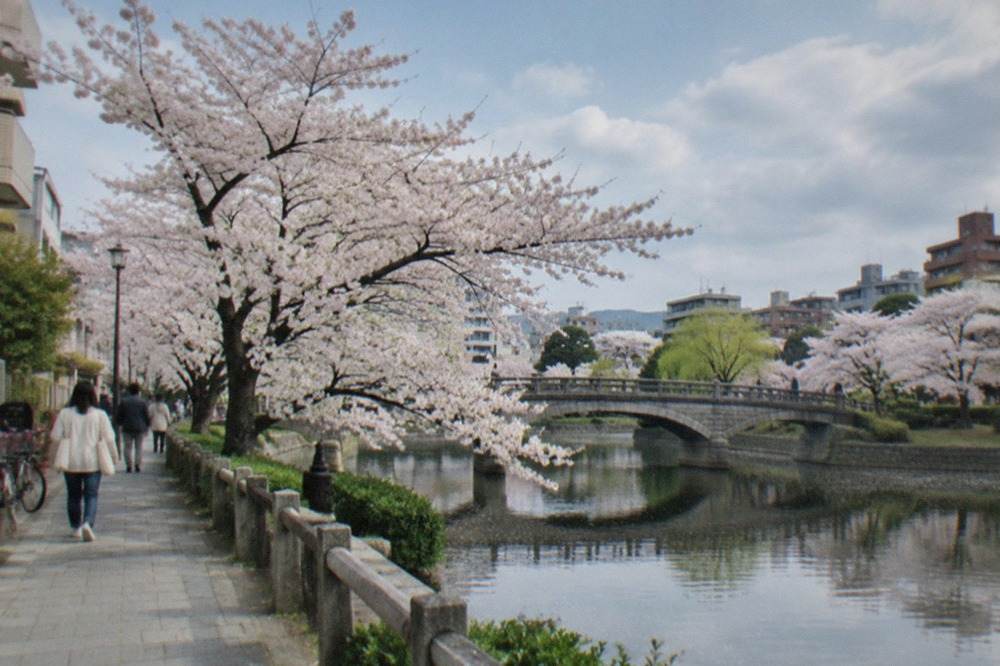
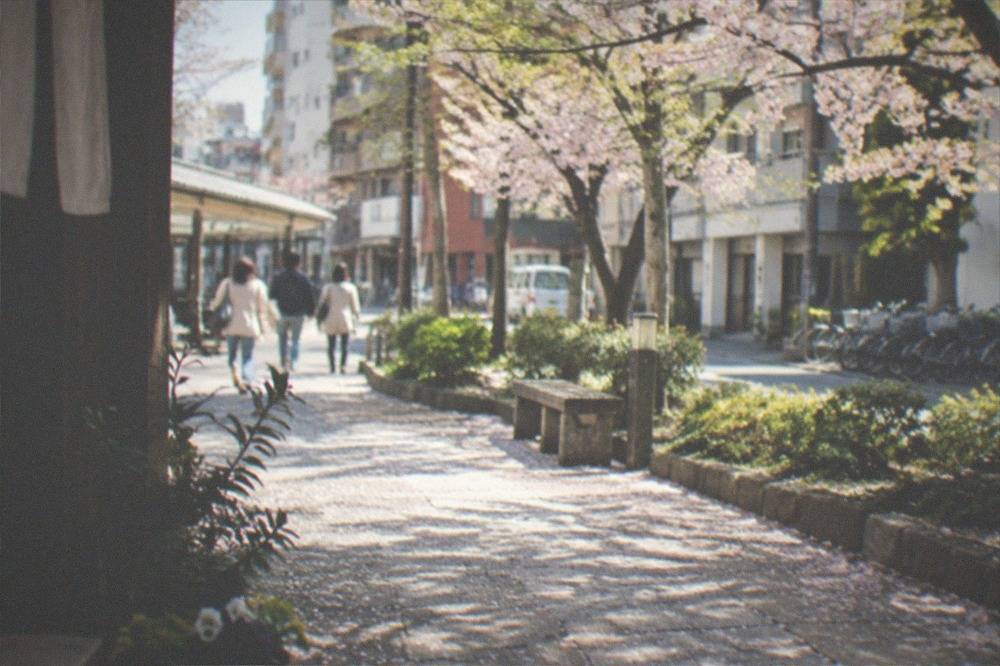
Maizuru Park, the grounds of the Fukuoka Castle ruins, is the city's main sakura site with roughly 1,000 cherry trees, and it is free to enter and open around the clock. Nishi Park, a hillside park counted among Japan's top 100 sakura spots, and Tenjin Central Park in the business district complete the big three. All three are walkable or a short subway ride apart.
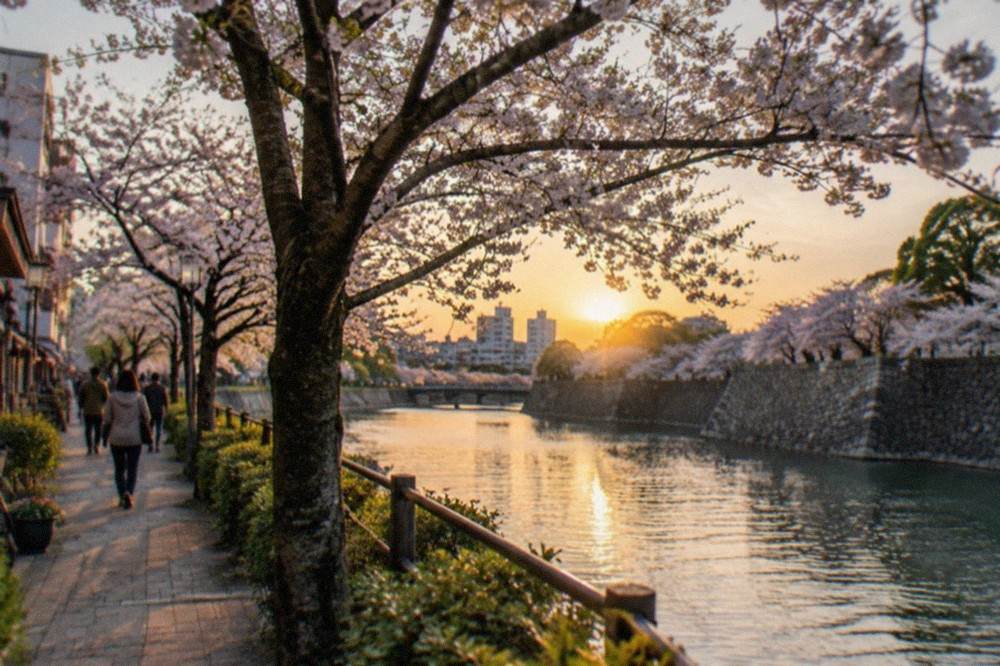
Maizuru Park earns its place on volume and setting together. The trees line the moats and stone walls of the castle ruins, and during the blossom festival the park runs evening illuminations, so the same trees repay a second visit after dark. One honest note for spring 2026 and the start of 2027: the Tenshudai, the main keep base, is closed to entry from May 26, 2026 until the end of December 2026 for an archaeological excavation, prompted by a document found in December 2024 that describes a keep historians thought might never have existed. The park itself, the moats and the blossom lawns stay open, and the dig is itself a genuinely unusual thing to see. The closure expires at the start of 2027.
Nishi Park sits on a hill west of the centre and trades the castle walls for height, with blossom over the harbor views. Tenjin Central Park is the smallest and most convenient, five minutes from the Tenjin shopping district, which makes it the natural stop between shops rather than a destination of its own. Beyond the big three, Ohori Park is worth a spring lap even without dense blossom, and its Japanese Garden charges adult ¥250, child ¥120, with visitors 65 and over free.
| Spot | Roughly | What it offers | Cost |
|---|---|---|---|
| Maizuru Park (castle ruins) | ~1,000 trees | Moats, stone walls, festival illuminations | Free |
| Nishi Park | Hillside | Top-100 sakura spot, harbor views | Free |
| Tenjin Central Park | Small, central | Convenient blossom stop near shopping | Free |
| Ohori Park | Lakeside | Water reflections, Japanese Garden beside it | Park free, garden ¥250 |
The blossom week is also the busiest week, and a local guide takes the logistics off your plate entirely.
What Is There to Do in Fukuoka in Spring Beyond the Blossoms?
Spring in Fukuoka is food and festival season as much as blossom season. The yatai street stalls, about 100 of them across the city, are back at full strength by April, Hakata Machiya Folk Museum and the city's art museums are at their most comfortable before summer crowds, and the Ohori Park Japanese Garden's spring planting peaks in late April. Evening is when the season really earns its keep.
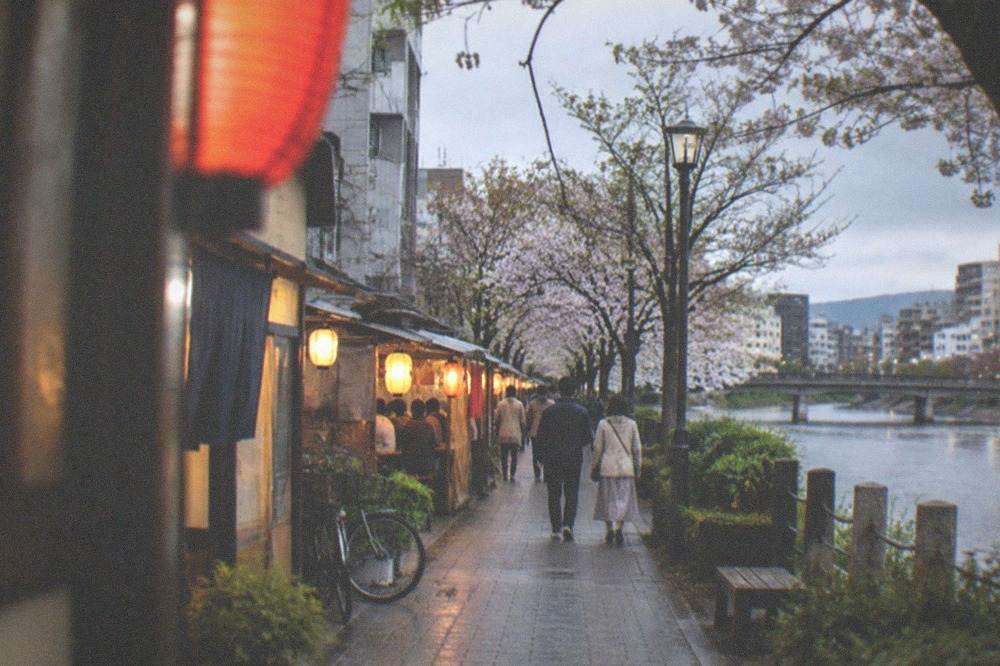
The yatai are the thing to build a spring evening around. Fukuoka has about 100 licensed stalls, more than any other Japanese city, concentrated in Nakasu along the Naka River, in Tenjin along Watanabe-dori and Showa-dori, and in Nagahama near the old fish market. They open from around 18:00 into the small hours, and the city's own ordinance requires every stall to display its prices where customers can easily see them, with no vague "market price" items, so a first visit is far less intimidating than it looks. The Fukuoka yatai guide covers how the stalls work and where to find them, and the wider Fukuoka food guide handles the sit-down side of the city's food culture, from tonkotsu ramen to mentaiko.
Spring also carries the city's festival calendar into view. Hakata Dontaku, one of Japan's largest festivals, fills Meiji-dori with parades on May 3 and 4 every year, drawing spectators into the millions across two days, and it lands squarely inside the spring window. Earlier in the season, the blossom festivals at Maizuru Park bring food stalls and evening light-ups to the castle moats. If the trip runs late enough into May, Dontaku alone justifies timing the whole visit.
For a calmer afternoon, both city art museums are spring-perfect. The Fukuoka Art Museum sits on the edge of Ohori Park, charges just ¥200 for its collection exhibition, and is free for visitors 15 and under. The Fukuoka Asian Art Museum is free to enter, with only the Asia Gallery charging, at ¥200 general admission, and holds about 5,000 works from 23 Asian countries and regions. Evening brings the bar districts of Daimyo and Imaizumi into play, and families have plenty of spring-friendly options in the city's parks and waterfront.
Which Spring Day Trips Work Best from Fukuoka?
The best spring day trips from Fukuoka are Dazaifu and Yanagawa to the south, Itoshima's coast to the west, and the big Kyushu circuits to Takachiho Gorge, Mount Aso, Yufuin and Beppu. All are comfortable full days from Hakata Station or Tenjin. The blossom window adds a reason to go early: Dazaifu's plum and cherry trees peak in the same late-March weeks as the city's.
Dazaifu Tenmangu is the classic half-day-plus trip, reached on the Nishitetsu line from Tenjin with one transfer at Futsukaichi, and the shrine states plainly that there is no entrance fee. The approach street, with its umegae mochi stalls, and the neighboring Kyushu National Museum fill the rest of the day. Yanagawa adds canal boats to the same rail line, and the two combine naturally. The Dazaifu day trip guide covers the shrine route in detail, and there is a separate page for the canal town.
Itoshima is the spring coast option. The peninsula west of the city delivers Shiraito Falls, Sakurai Futamigaura's wedding rocks on the beach, and a string of fishing villages and cafes, all within an easy day of driving. The Itoshima day trip guide maps it out for independent travelers.
The Itoshima Hidden Gems Day Tour, from $69 per person and rated 4.6 from 31 reviews over 8 hours 30 minutes, handles that same coast with a guide and transport included, which matters in spring when the coastal buses run thin. Travelers who would rather compare the full peninsula spread, including a longer 10-hour coastal circuit, can weigh the guided options against the independent route.
For the big inland scenery, Takachiho Gorge is the headline. The gorge's cliffs and the Amaterasu railway sit deep in Miyazaki Prefecture, far beyond practical day-trip distance by local transport, which is why guided tours dominate this route.
The Takachiho Gorge and Amaterasu Railway tour, from $48 per person and rated 4.8 from 713 reviews over roughly 11 hours, includes the gorge and the railway with an optional boat ride on the water, and its review pool is one of the deepest on the whole roster. A second option, the Mt. Aso and Takachiho Gorge tour at from $48 and 4.7 from 674 reviews, adds the volcano. Both have their own pages, and the Takachiho Gorge trip guide compares the routes.
| Day trip | Direction | Time needed | Best for |
|---|---|---|---|
| Dazaifu | South | Half day plus | Shrine, mochi, national museum |
| Yanagawa | South | Half day | Canal boats, old town |
| Itoshima | West | Full day | Coast, falls, cafes |
| Takachiho Gorge | Southeast | Full day, guided | Gorge cliffs, boat ride |
| Yufuin and Beppu | East | Full day | Onsen towns, the "hells" |
Yufuin and Beppu make a gentler full day to the east, and one tour packages them with an unusual twist.
The Yufuin and Beppu tour with the Sapporo Brewery and the AoT museum runs from $55 per person, rated 4.7 from 51 reviews over 9 hours 30 minutes, and it suits travelers who want the onsen towns without the full hiking-and-boots agenda. The Yufuin day trip guide covers the independent version of the same route, and Beppu pairs with it on the same rail line.
How Should You Get Around the City in Spring?
The subway is the spine of a Fukuoka spring trip: single fares run ¥210 to ¥380 by distance, a one-day pass costs ¥640 for adults, and the airport-to-Hakata leg is a verified ¥260. The Fukuoka Tourist City Pass, at ¥2,500 for the city version and ¥2,800 with Dazaifu, covers subway, buses, trains and ferries for a day, but only for overseas visitors on a short-stay visa, with a passport check at the counter.
Those city pass prices are the current official figures, published by the city's own tourism site, and most competing guides still quote an outdated ¥820 to ¥1,340 pair that has not been correct for some time. The pass is genuinely good value if a day involves three or more subway rides plus a bus or ferry; the plain subway day pass at ¥640 wins on any purely underground day. The official pass page is run by Fukuoka City at gofukuoka.jp, and it lists exactly where paper passes are sold, including the airport and both subway customer centres.
| Ticket | Adult price | Covers |
|---|---|---|
| Subway single fare | ¥210 to ¥380 | One ride, by distance zone |
| Subway one-day pass | ¥640 | All three subway lines, one day |
| Fukuoka Tourist City Pass | ¥2,500 | Subway, buses, trains, ferries, one day |
| City Pass + Dazaifu | ¥2,800 | The above, plus Dazaifu coverage |
One point worth repeating because the whole internet gets it wrong: there is no JR Fukuoka Station. The city's main rail hub is Hakata Station, and Hakata is a ward of Fukuoka, not a separate place. The airport connection is on the subway's Kuko line at a verified ¥260 fare, and the airport is unusually close to the centre, but no official page confirms the famous five-minute journey time, so this guide does not print one. The Fukuoka subway guide and the getting around Fukuoka guide handle the details, and the airport to city guide covers the arrival leg.
What Should You Pack for a Spring Visit?
Pack for a 7°C to 24°C range: a proper coat for March mornings, light layers for April, and short sleeves with a jacket for May. Bring a compact umbrella regardless of month, since rain runs 103.7 mm in March rising to 133.7 mm in May, and comfortable walking shoes, because the blossom spots, yatai districts and day-trip towns are all pedestrian. Cash in yen still matters for smaller vendors.
The layering advice is not filler. A March evening at a Nakasu yatai stall is a coat-and-scarf experience, and the same trip in May is short sleeves. The rain numbers are modest by Japanese standards, tsuyu arrives in June, but spring showers are frequent enough that an umbrella earns its place in a daypack. Footwear matters more than visitors expect: Maizuru Park's moat paths, Dazaifu's approach street and the Itoshima coast all involve an hour or more on foot, often on uneven surfaces.
A full packing breakdown lives on the site's packing list page, and spring travelers continuing around the region will find the Kyushu overview useful for onward legs. This Fukuoka Japan Travel Guide site carries all of those pages, and the seasonal ones are worth reading together before locking an itinerary.
Where Should You Stay for a Spring Trip?
Stay in Hakata for transport convenience, Tenjin for shopping and dining, or Nakasu for yatai and nightlife at the doorstep. During the blossom window, the last week of March and first days of April, book well ahead: this is the tightest accommodation week of Fukuoka's spring, and the areas around Hakata Station fill first because they serve both the subway and the JR and Shinkansen lines.
The Hakata versus Tenjin question is the one every first-time visitor asks, and the honest answer is that both work because the subway connects them in minutes. Hakata wins for day trips, since the Nishitetsu and JR trains leave from there, and it wins for arrival, with the airport two subway stops away. Tenjin wins for evenings on foot, with the largest concentration of restaurants, bars and the underground mall. Nakasu sits between the two and is the pick for travelers whose spring priority is the yatai. The full comparison, including budget picks, is in where to stay in Fukuoka.
Spring adds one timing note that no other season carries. Because the blossom window is both short and forecast-dependent, a hotel with a free-cancellation rate is worth a small premium in late March, in case the forecast shifts your best viewing days by 48 hours either way. Book the dates, watch the forecast in the fortnight before travel, and adjust the day-to-day plan rather than the dates.
With the city sorted, the season's best guided days are worth locking early as well, since the good-weather spring dates are the first to fill.
Common Questions About Spring in Fukuoka
When Does Cherry Blossom Season Arrive In Fukuoka?
Typically in late March. First bloom falls around March 20 to 24 in a normal year, with full bloom roughly March 28 to April 2, so the last week of March into the first days of April is the peak viewing window.
Is spring a good time to visit Fukuoka?
Yes. March through May offers mild temperatures from a 10.8°C monthly mean in March to 19.9°C in May, the city's biggest blossom displays, and May is the sunniest month of the entire year at 204.1 sunshine hours. The rainy season does not arrive until June.
Where is the best place to see cherry blossoms in Fukuoka?
Maizuru Park, the Fukuoka Castle ruins grounds, with roughly 1,000 cherry trees, festival illuminations and free entry. Nishi Park and Tenjin Central Park are the other two main spots, and all three are free.
What should I wear in Fukuoka in spring?
Layers. March mornings sit around 7°C and need a proper coat, April days average 15.4°C, and May afternoons reach 24.4°C. Bring a compact umbrella in any spring month, as rainfall rises steadily through the season.
Is Fukuoka rainy in spring?
Moderately. March averages 103.7 mm of rain, April 118.2 mm and May 133.7 mm, all well below the July peak of 299.1 mm. Showers are common but the heavy tsuyu rains begin in June, after the spring window closes.
Are the yatai food stalls open in spring?
Yes. The roughly 100 licensed stalls across Nakasu, Tenjin and Nagahama operate through spring, opening from around 18:00 into the small hours. Every stall must display its prices visibly under the city's ordinance, and rain closes many of them, so check the weather before planning a yatai evening.