Cherry Blossom in Fukuoka
Fukuoka is one of the first major cities in Japan to see cherry blossoms open each year, and its bloom window sits right at the end of March. This guide covers the timing, the best spots, and how the city's spring weather shapes the season.
Short answer
Cherry blossoms in Fukuoka typically open in late March, with full bloom arriving around the end of March into the first days of April. The peak viewing window is late March to early April. Maizuru Park holds roughly 1,000 trees, and spring temperatures run from a March mean of 10.8 C to 15.4 C in April.
Fukuoka sits on Hakata Bay on the Genkai Sea side of northern Kyushu, and that position does something useful for flower watchers: the city is consistently among the first big urban centres in Japan where cherry blossoms open. The bloom usually starts in late March, fills out across the final week of the month, and peaks in the first days of April. Because the city is compact, with its main viewing spots clustered inside a few kilometres of each other, a short window is enough to see a lot of petals.
This guide lays out the timing, the spots worth building a day around, the weather that drives the season, and the transport that ties it together. Fukuoka's spring has a specific character, warmer and earlier than Honshu but with its own rainy stretch, and planning around it is easier than most first-time visitors expect.
When Do Cherry Blossoms Bloom in Fukuoka?
Cherry blossoms in Fukuoka typically open in late March, with first bloom landing around the third or fourth week of the month, and full bloom following within about a week, so the end of March into the first days of April. The practical peak viewing window is late March to early April. In 2026 the first bloom arrived around March 24 and full bloom held from late March into the first days of April, which fits the long-run pattern closely.
The Japan Meteorological Agency tracks blossom timing for the whole country, and its 1991 to 2020 climate normals for the Fukuoka station explain why the city flowers early: March already averages a mean of 10.8 C with daily highs of 15.0 C, and April warms to a 15.4 C mean with highs near 19.9 C. That is enough accumulated warmth to push buds open before Tokyo's parks have caught up. The JMA publishes the monthly normals for the Fukuoka station on its own site, which is the primary record for anyone comparing years.
Two things shorten a Fukuoka blossom trip if you catch them wrong. Rain, and wind. A single stormy day can strip a tree that was at peak the evening before, so the honest advice is to build flexibility into the itinerary rather than betting everything on one date. The city's own spring guide material, including the seasonal coverage on this site's Fukuoka in spring overview, suggests planning a two to three night stay across the boundary of March and April to give yourself a shot at full bloom.
A note on the wider calendar: if you are weighing Fukuoka against other months, the best time to visit Fukuoka comes down to what you want, and the blossom fortnight is the most crowded and most photogenic stretch of the year. Book rooms early, because the window is short and everyone in the city knows it. Hotel rates in the Tenjin and Hakata corridors climb noticeably in the last week of March, and the rooms with a view over Maizuru or Ohori go first.
| Stage | Typical timing | What it looks like |
|---|---|---|
| First bloom (kaika) | Late March, around the third or fourth week | Buds opening, scattered colour, thin crowds |
| Full bloom (mankai) | End of March into the first days of April | Dense canopies, peak photos, peak crowds |
| Petal fall | First week of April onward | Falling petals, hanami parties wind down |
Where to See Cherry Blossoms in Fukuoka?
The best cherry blossom spots in Fukuoka are Maizuru Park at the Fukuoka Castle ruins, which holds roughly 1,000 cherry trees and lights them during the bloom season, Nishi Park on the hillside, one of Japan's officially recognised top 100 sakura spots, and Tenjin Central Park in the city centre. Ohori Park's waterline and the Hakata ward's older temple grounds add quieter alternatives.
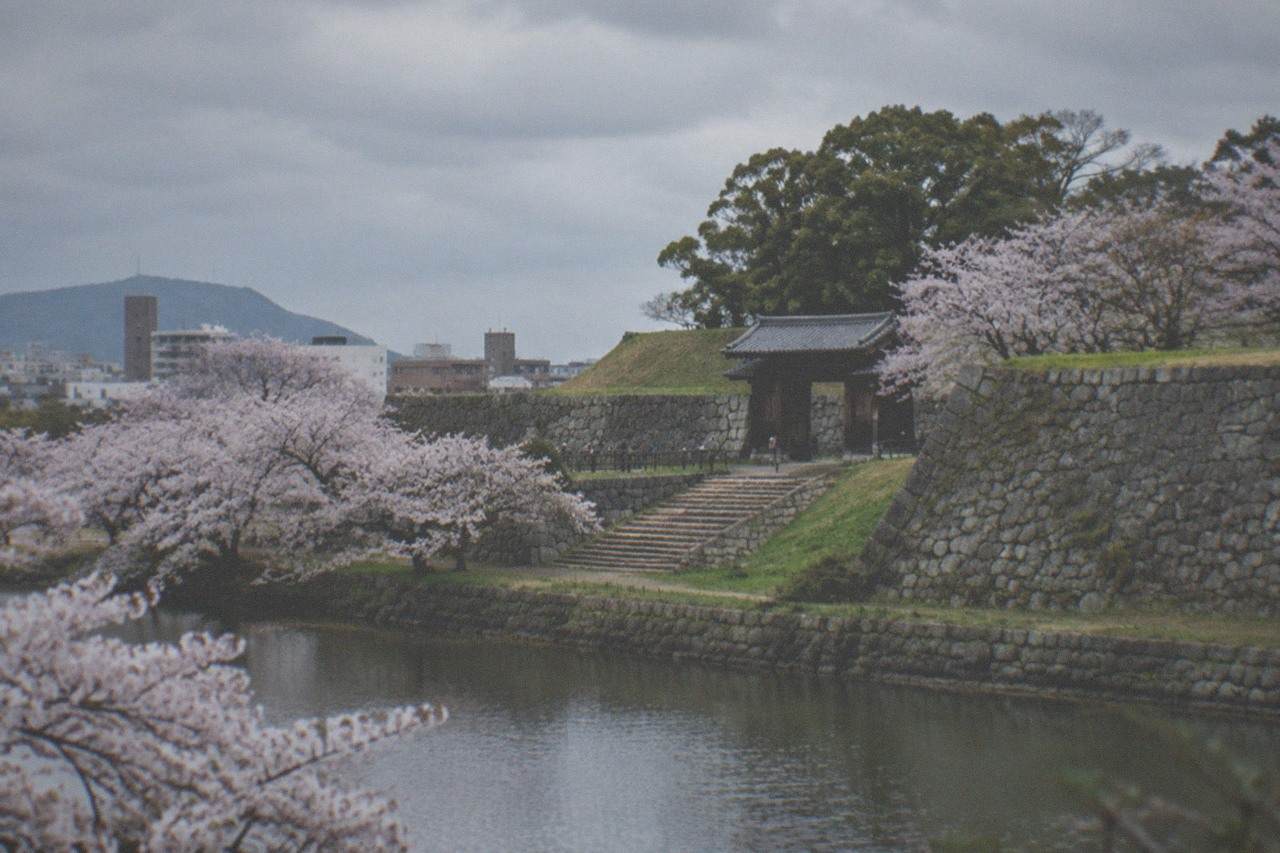
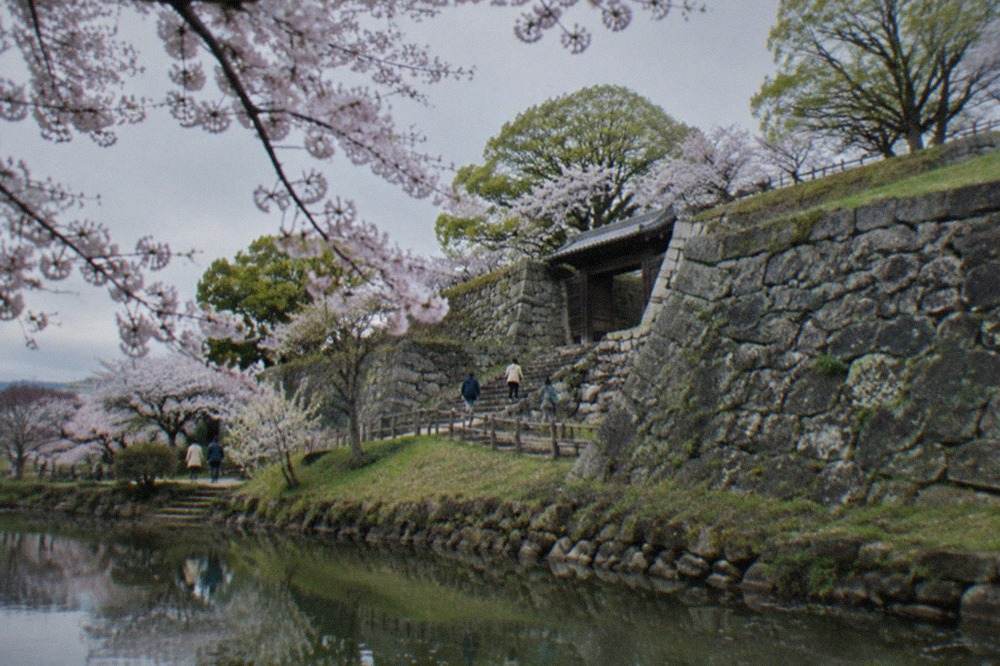
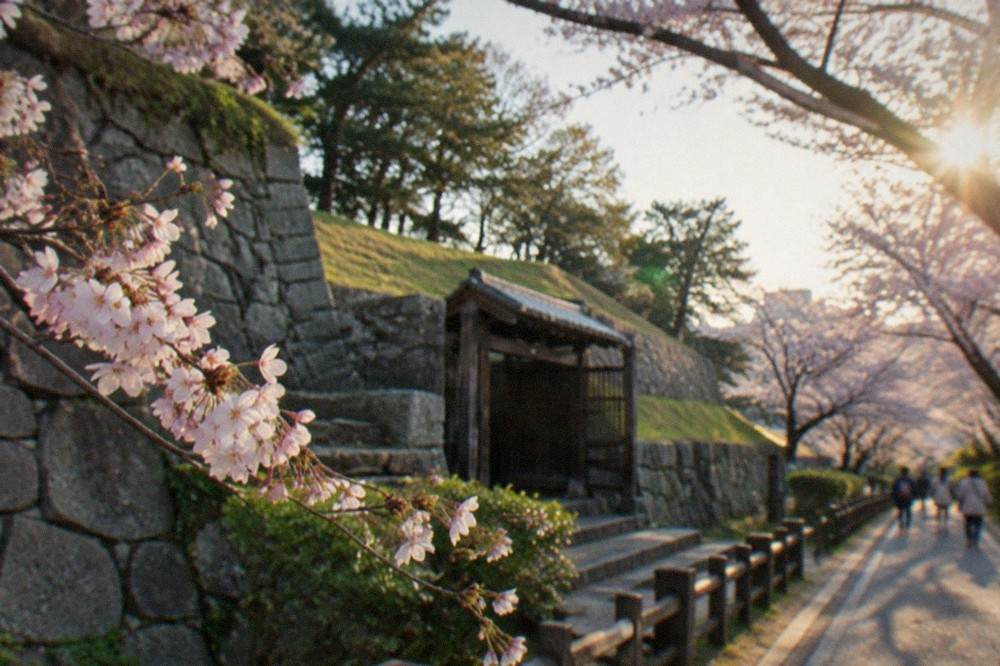
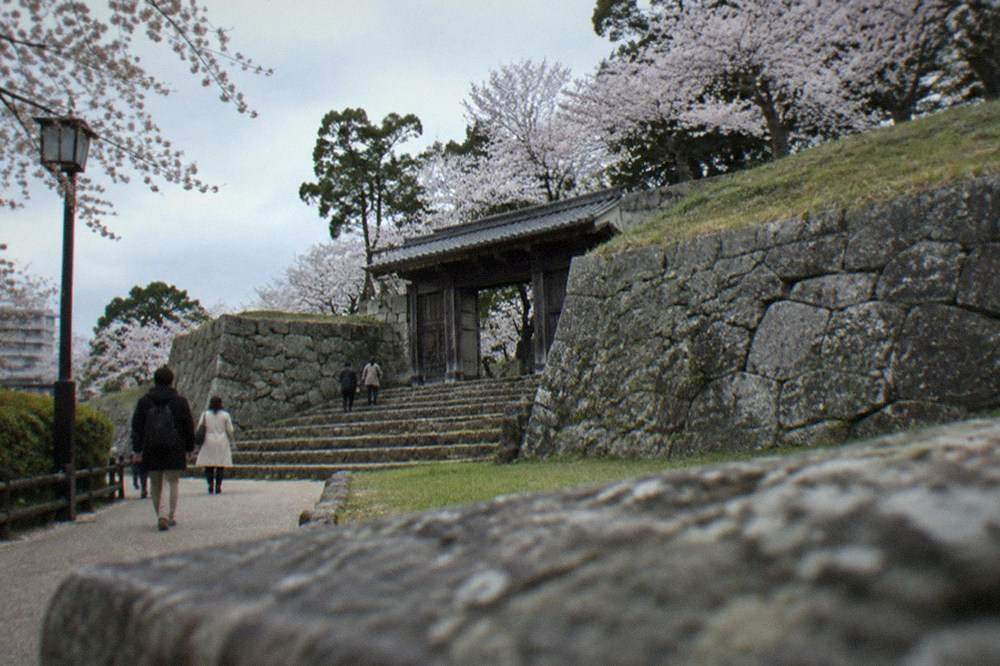
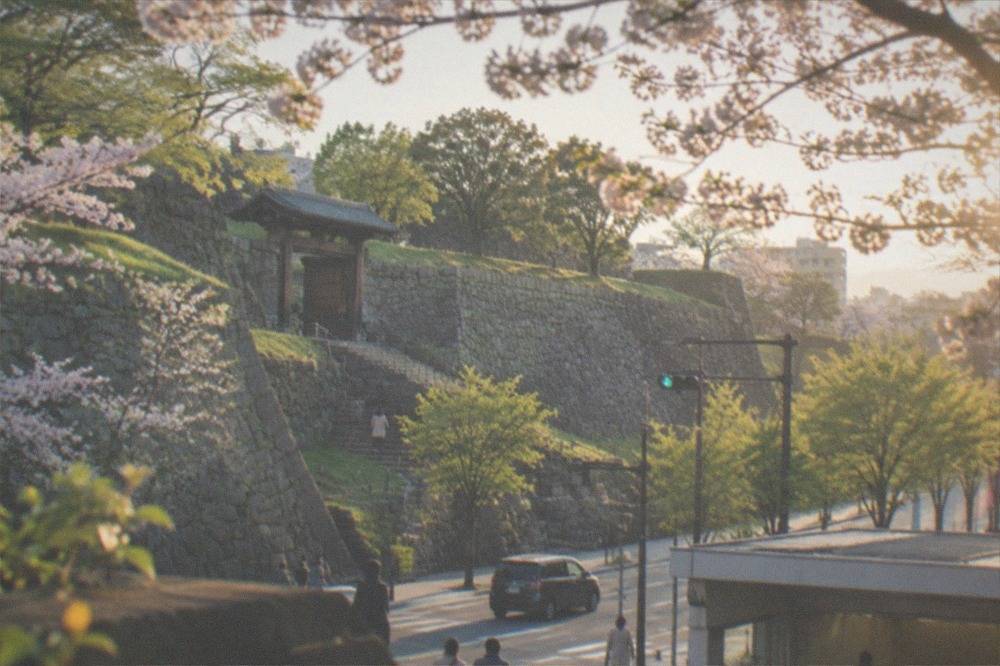
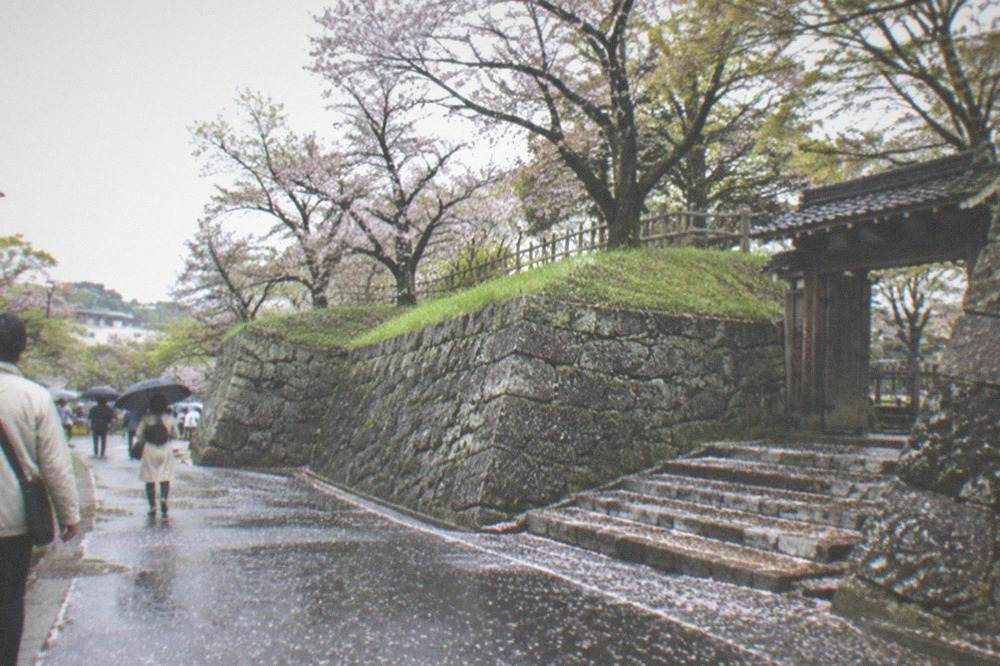
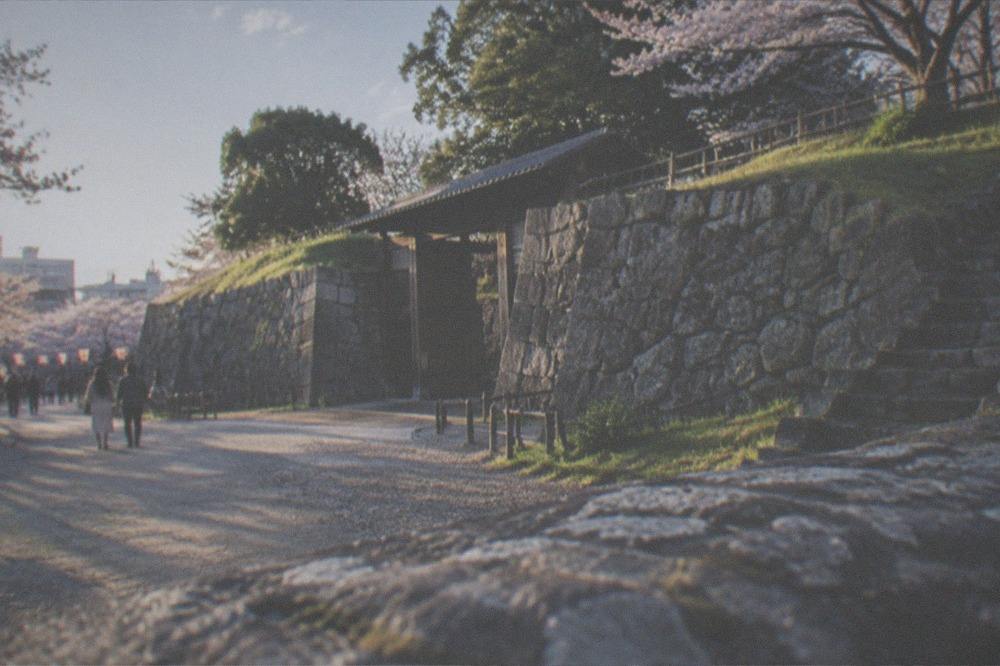
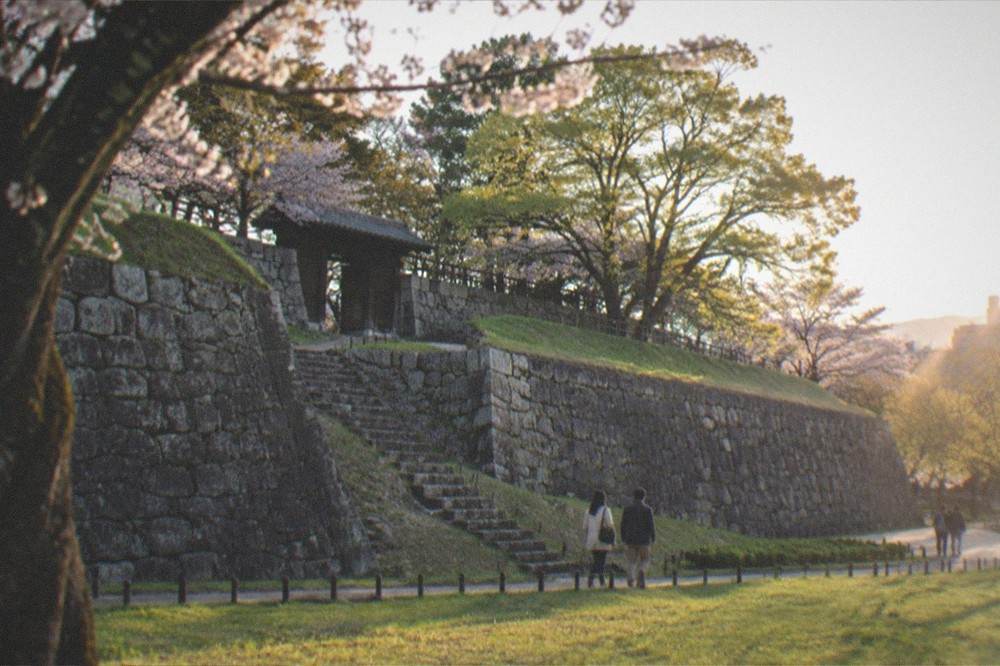
Maizuru Park is the headline. The castle ruins and roughly 1,000 cherry trees share the same grounds, and the park runs illuminations during the bloom festival, which makes it one of the few spots where the flowers work both at noon and at night. The park's own operator confirms grounds access is free, with the exception of ticketed events. One current caveat: the Tenshudai, the main keep base, is closed to entry from May 26, 2026 until the end of December 2026 for an archaeological excavation, prompted by a document found in December 2024 that describes a keep which may never have been built. The rest of the grounds, and the cherry trees, remain open through that closure, and the park's excavation notice carries the details.
Nishi Park sits on a hill facing the harbour, and its recognition as one of Japan's top 100 sakura spots means it draws a steadier, more local crowd than the castle grounds. Tenjin Central Park is the convenient option, a short walk from the Tenjin subway station and the underground mall, which makes it an easy add-on to a shopping afternoon. Ohori Park, the large pond park west of Tenjin, is worth the trip at any time of year, and the Ohori Park guide covers its layout in detail; during the bloom the waterside trees double themselves in the reflection.
For families, the pairing of flowers and animals is hard to beat. Uminonakamichi Seaside Park, out on the sandbar across the bay, combines open lawns with a zoo section, and the Fukuoka with kids guide walks through the whole circuit. The park is pay-at-gate, and the gate takes cash only, which is worth knowing before you ride out there.
| Spot | Trees and character | Why go |
|---|---|---|
| Maizuru Park / castle ruins | Roughly 1,000 trees, festival illuminations | The signature view, stone walls under blossom |
| Nishi Park | Hillside grove, top 100 sakura spot | Harbour views, more local crowd |
| Tenjin Central Park | City-centre plantings | Convenience, pairs with shopping |
| Ohori Park | Waterside trees around the pond | Reflections, easy walking loop |
| Uminonakamichi Seaside Park | Lawns and seasonal flowers, pay-at-gate | Families, space to spread out |
How Do You Get to the Blossom Spots?
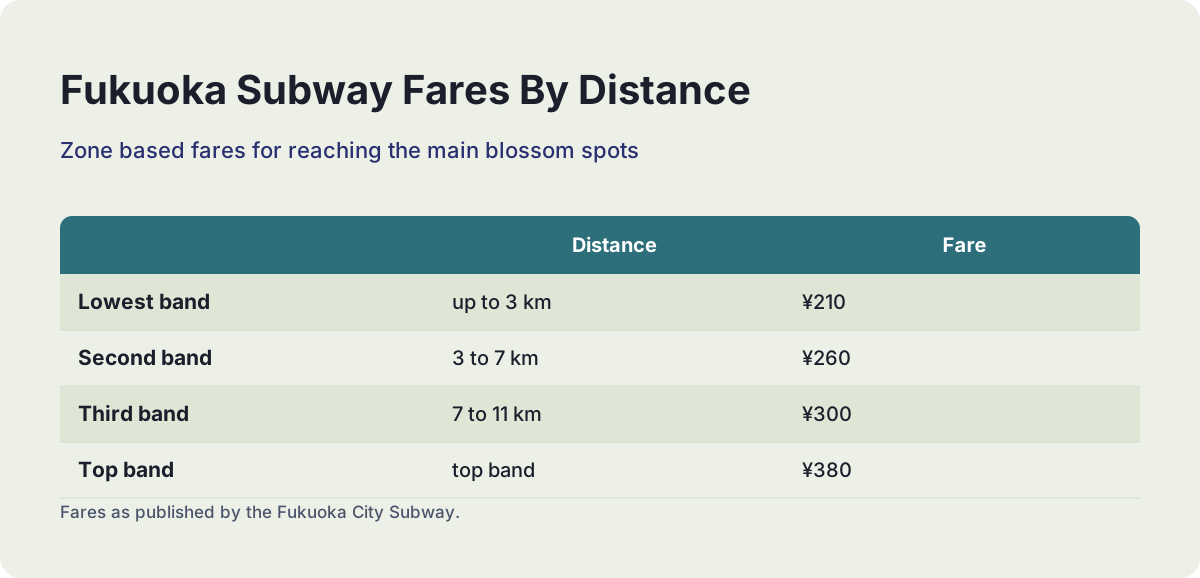
Fukuoka's subway carries you to nearly every major blossom spot for a single fare of ¥210 to ¥380 depending on distance, and the airport is unusually close to the city centre, with the airport-to-Hakata leg costing ¥260 on the Kuko line. There is no JR Fukuoka Station, the main rail hub is Hakata Station, and Hakata and Fukuoka are the same city, not two places you travel between.
The subway's three lines cover the ground you need for blossom season. The Airport line runs from Meinohama through Hakata out to Fukuoka Airport, the Hakozaki line reaches the eastern temple district, and the Nanakuma line serves the southwest. Fares are zone based: ¥210 for up to 3 km, ¥260 for 3 to 7 km, ¥300 for 7 to 11 km, and up to ¥380 at the top band, all published on the city subway's official fare table. A one-day pass costs ¥640 for adults and ¥320 for children, valid on all three lines from first to last train, and it pays for itself after about three rides. The Fukuoka subway guide maps the lines against the sightseeing stops.
One point worth repeating because so many guides get it wrong: the airport is genuinely close to the centre, and the ¥260 fare to Hakata is the verified figure, but no official page confirms the famous five-minute journey time you will read elsewhere. Say it is unusually close, which is true and sourced, and let the timetable speak. The Fukuoka Airport to city guide covers every option in detail.
If you are arriving in the middle of the blossom window with luggage and a narrow evening of light left, a private transfer removes the one variable you cannot control, the time spent orienting yourself at the airport.
For travellers coming from farther afield, the Tokyo to Fukuoka guide and the Osaka to Fukuoka guide compare flights and rail options, and the Kyoto to Fukuoka route is useful for anyone stringing the classic Kansai stops in front of the blossom window. The Hakata Station guide covers the station itself, which is the anchor for almost every day trip out of the city.
| Journey | Line and fare | Notes |
|---|---|---|
| Fukuoka Airport to Hakata | Subway Kuko line, ¥260 | Two stops, unusually close to the centre |
| Hakata to Ohori Park | Subway Airport line toward Meinohama, about ¥260 | Exit at Ohori or Tojinmachi |
| Tenjin to Maizuru Park | Short subway hop or a 20 minute walk | Castle grounds open free |
| City centre to Uminonakamichi | Subway to Uminonakamichi station | Park gate is cash only |
What Is Fukuoka's Spring Weather Really Like?
Fukuoka's spring warms quickly, from a March mean of 10.8 C to 15.4 C in April and 19.9 C in May, with March rain of 103.7 mm and April rain of 118.2 mm per the JMA 1991 to 2020 normals. The tsuyu rainy season arrives roughly in June, not during the blossom window, and typhoon season runs roughly July through October, so neither affects a late-March visit.
The JMA normals for the Fukuoka station give the full picture, and they carry one genuinely surprising fact: July, not June, is Fukuoka's wettest month, at 299.1 mm against June's 249.6 mm, even though June is the rainy-season month. For blossom planning this is good news, because March and April sit well below both, at 103.7 mm and 118.2 mm respectively. You may still catch a wet day, but you are not planning around a monsoon.
Temperatures during the peak window are mild. March days average 15.0 C at their warmest with nights near 7.2 C, and April lifts the range to 19.9 C by day and 11.5 C by night. A light jacket covers the evenings, and the sunshine hours climb from 161.2 in March to 188.1 in April, so the light for photography is generous. The Fukuoka weather guide unpacks the monthly numbers in full.
| Month | Mean C | Daily max C | Daily min C | Rain mm | Sunshine hours |
|---|---|---|---|---|---|
| March | 10.8 | 15.0 | 7.2 | 103.7 | 161.2 |
| April | 15.4 | 19.9 | 11.5 | 118.2 | 188.1 |
| May | 19.9 | 24.4 | 16.1 | 133.7 | 204.1 |
| June | 23.3 | 27.2 | 20.3 | 249.6 | 145.2 |
| July | 27.4 | 31.2 | 24.6 | 299.1 | 172.2 |
The pattern matters for expectations. Because the city warms fast, the bloom moves quickly too, and a tree that opened on a Monday can be at full bloom by the following weekend. Local forecasters publish first-bloom and full-bloom estimates through the season, and the JMA's own records for the Fukuoka station are the primary reference behind them. Build your days so that a shift of three or four days in either direction does not break the trip.
How Do You Plan a Blossom Day in Fukuoka?
A good blossom day in Fukuoka pairs one headline park with one neighbourhood stop: Maizuru Park in the morning before the crowds build, Ohori Park's pond loop at midday, and an evening among the yatai food stalls, which the city's ordinance requires to post their prices visibly, so there is no mystery about what a bowl of ramen costs. The city is compact enough that all three fit inside one day without hurrying.
Mornings matter at the castle grounds. The illuminations run in the evening, but the thin crowds and low light come before nine, and the roughly 1,000 trees photograph better before the picnic blankets arrive. From Maizuru it is a short subway hop or a brisk walk to Ohori Park, where the pond loop takes about half an hour at a strolling pace and the waterside trees double in the reflection.
The evening belongs to the stalls. Fukuoka runs about 100 licensed yatai, more than any other Japanese city, and the city's yatai ordinance bans market-price pricing, so every stall must post its prices where customers can see them. The Fukuoka yatai guide maps the three main areas, Nakasu, Tenjin and Nagahama, and the Fukuoka food guide covers what to order once you have a seat. Stalls open in the early evening, weather permitting, and rain or strong wind closes many of them, which is the honest framing rather than a fixed weekly day off.
For a full ready-made route, the Fukuoka cherry blossom itinerary sequences the spots day by day, and the Fukuoka viewpoints guide lists the elevated angles if you want the city skyline under the flowers. Visitors who prefer company on the food stops can compare the options in the Fukuoka food tours overview, and the evening scene after the stalls close is covered in the city's nightlife pages.
What If You Miss the Peak Bloom?
If you miss full bloom, the first week of April still carries falling petals, which the Japanese call hanachirashi, and the parks hold colour into the second week, while the city's other spring flowers, rapeseed and late plum, extend the season. You can also swap the day plan for a trip out to the coast or the grasslands, both of which are at their best in the same weeks.
A missed peak is a softer loss than most visitors fear. Ohori and Maizuru hold colour longer than the official full-bloom date suggests, and petal fall over water is its own spectacle. The honest move is to stop chasing the perfect tree and spend the day on the water or the coast instead.
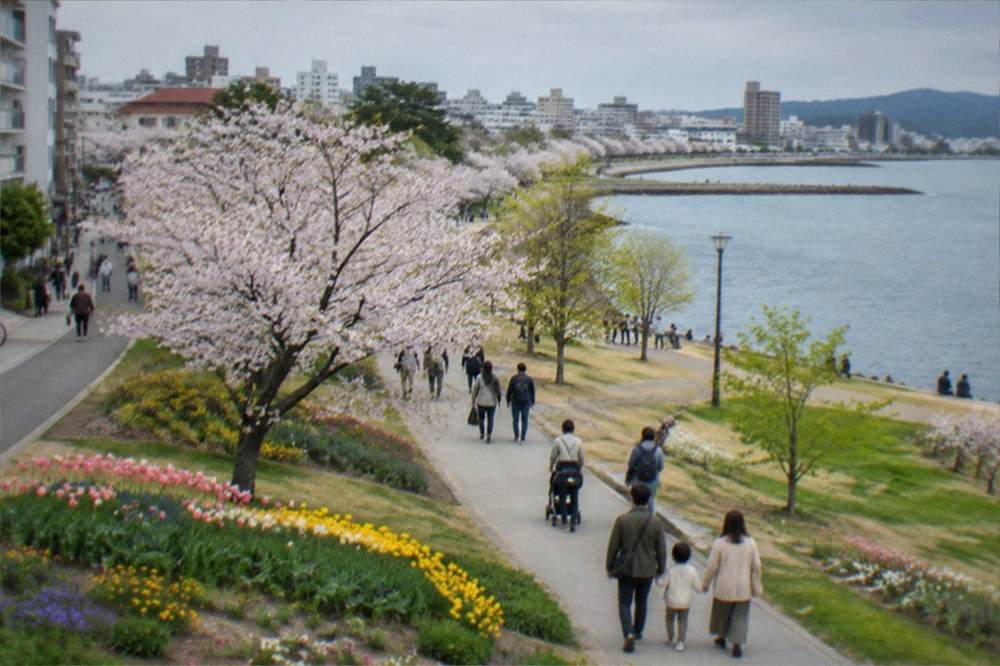
The family option is Uminonakamichi, where the Marine World aquarium sits inside the same sandbar as the seaside park. An e-ticket for Marine World removes the queue at the gate, and the aquarium's hours vary by calendar date, so check the day's schedule before you ride out.
The bigger swap is a day into the Kyushu interior. Mount Aso's Kusasenri grasslands sit under a volcano rim, and in early April the lower slopes carry their own spring flush a week or two behind the coast. The Kyushu overview maps the full range of day trips from the city, and Aso is among the easiest big-landscape options to reach on a tour bus from Hakata.
And if the whole window slips past you, the honest answer is that Fukuoka has a genuine four-season year and the substitute seasons are strong. Late spring brings the Dontaku festival on May 3 and 4, and the Fukuoka festivals guide lays out the full calendar. Autumn reverses the trick in mid to late November, when the maples around the city parks and the Dazaifu area turn.
Where you base yourself shapes all of this more than visitors expect, and the where to stay in Fukuoka guide compares the Hakata and Tenjin sides of the city, both of which sit inside ten minutes of the main blossom spots. This Fukuoka Japan Travel Guide site carries the full set of neighbourhood pages if you want to go deeper.
Common Questions About Cherry Blossom in Fukuoka
When Do Cherry Blossoms Bloom In Fukuoka?
Typically in late March, with first bloom around the third or fourth week of the month and full bloom at the end of March into the first days of April. The practical peak viewing window is late March to early April.
How long does the bloom last in Fukuoka?
Full bloom usually holds for around a week, and the parks keep colour into the first half of April as the petals fall. Rain and wind can shorten any individual tree's display by a day or two.
Where is the best place to see cherry blossoms in Fukuoka?
Maizuru Park at the Fukuoka Castle ruins, which holds roughly 1,000 trees and runs festival illuminations. Nishi Park, one of Japan's officially recognised top 100 sakura spots, and Tenjin Central Park are the other headline options.
Is Fukuoka's bloom earlier than Tokyo's?
Yes, usually. Fukuoka's March mean temperature of 10.8 C pushes buds open in late March, generally ahead of Tokyo's parks, which makes the city a good choice for travellers at the very start of April.
What should I do if I miss full bloom?
Enjoy the petal fall along Ohori Park's pond, spend the day at Uminonakamichi's seaside park and Marine World, or take a day trip to the Aso grasslands, which turn green a week or two behind the coast.
Do I need a car for cherry blossom season in Fukuoka?
No. The subway covers the main spots for ¥210 to ¥380 per ride, and a ¥640 one-day pass pays for itself after about three journeys. The city centre spots are close enough together to walk between several of them.