Cycling in Fukuoka
Fukuoka is one of the easiest big cities in Japan to ride a bicycle in: the core is compact, the terrain between Hakata, Tenjin and Ohori Park is gentle, and rental options sit within a short walk of the main stations.
Short answer
Rent a bike in Fukuoka from a rental shop near Hakata Station or Tenjin, from a city bikeshare stand, or through your hotel. Expect to show ID and pay a deposit or hold. Costs vary by shop, so check the counter. For a first visit, a guided ride such as the Bike is Life Hakata tour, from $73, covers the core in 3 hours 30 minutes.
Few big cities hand cyclists a deal as good as Fukuoka's. The airport is unusually close to the centre, the subway fare from the airport into Hakata is ¥260, and the whole civic core, Hakata Station to Tenjin to Ohori Park, folds into a space you can cross on two wheels without ever needing a gear you do not have. The city sits on Hakata Bay, on the Genkai Sea side of northern Kyushu, and its rivers, canal-side paths and bayside parks make riding genuinely pleasant rather than merely possible. This guide covers how to rent a bike, what it costs, where to ride, and when a guided tour is the smarter call.
One point worth setting straight before anything else: Hakata and Fukuoka are the same city. Hakata is the ward and the station name, Fukuoka is the city. Guides that treat them as two destinations send cyclists off on phantom journeys. There is also no JR Fukuoka Station; the rail hub is Hakata Station, and that is where most rental searches should begin.
Why Fukuoka Works So Well on Two Wheels
Fukuoka rewards cyclists because its sights cluster tightly: Kushida Shrine, Canal City Hakata, the riverside yatai stalls of Nakasu, Ohori Park and the castle ruins all sit within a short ride of one another, and the terrain between them is gentle. The city's subway and bus network covers the gaps, so a bike never becomes a burden. Rain is the main thing that interrupts a ride, and the subway is the fallback.
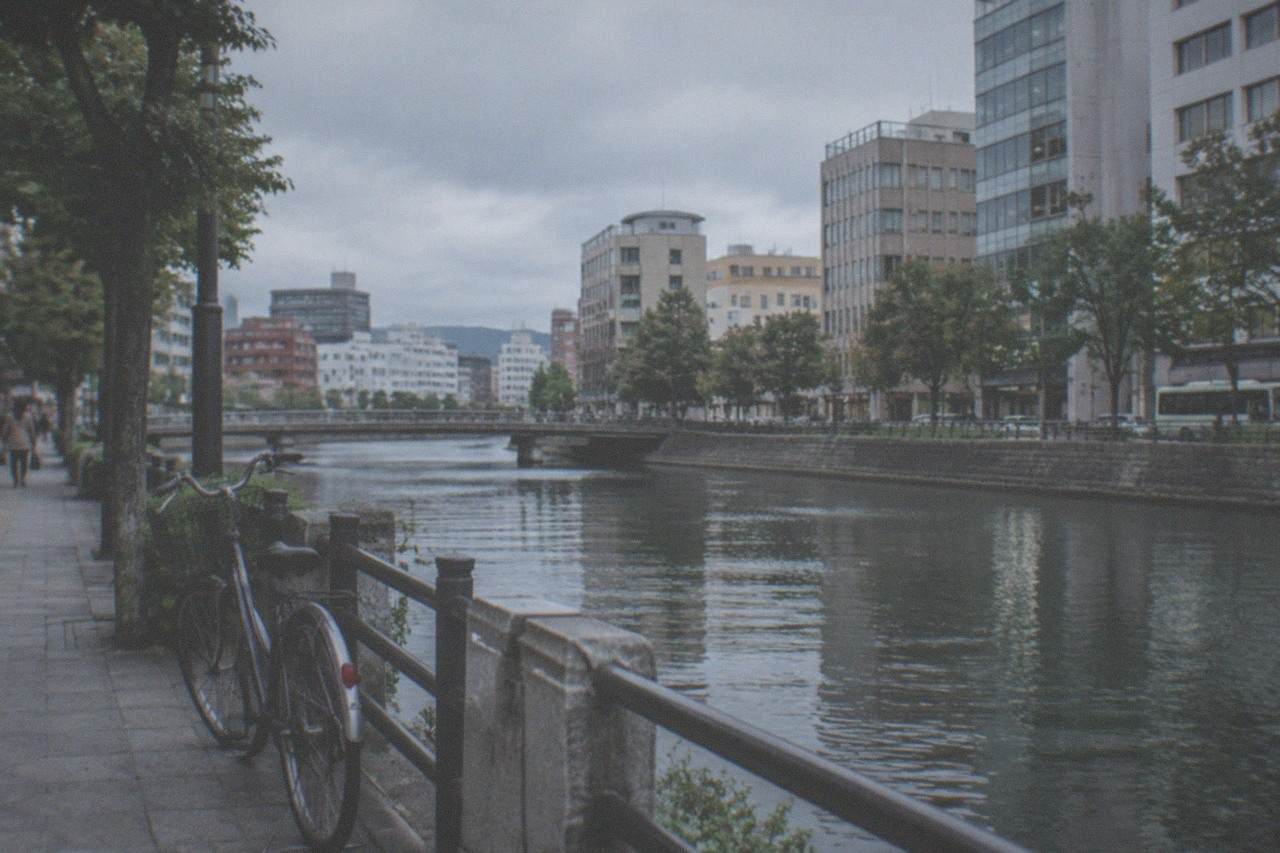
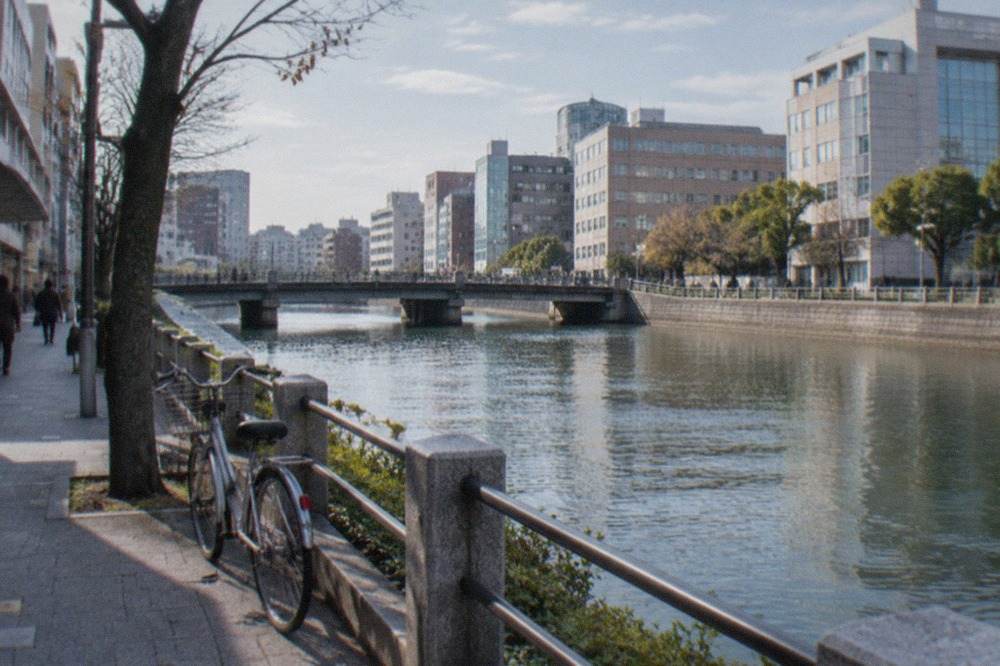
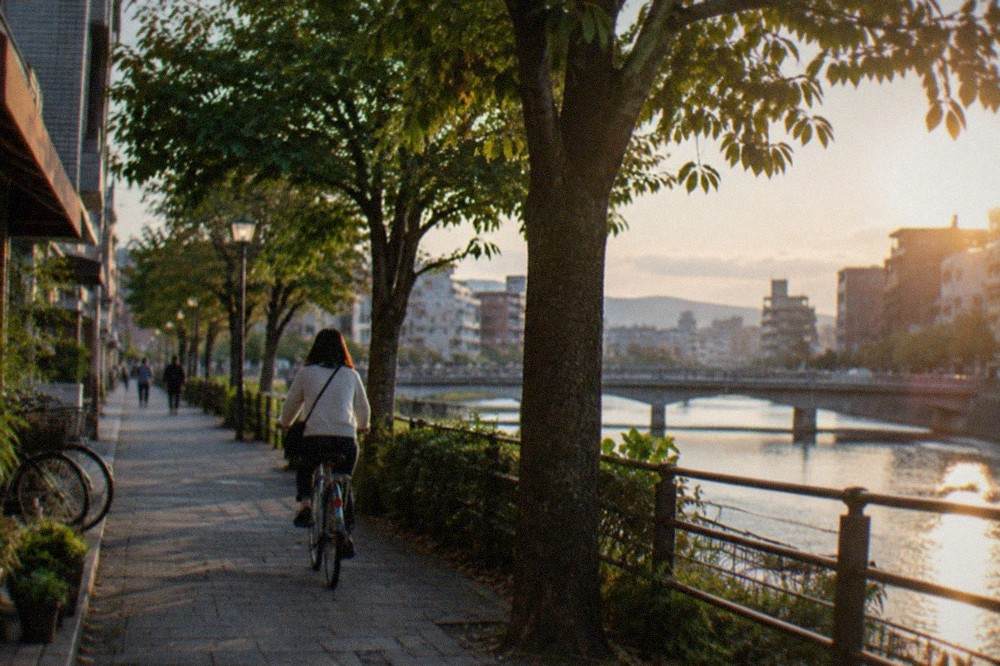
The geography does a lot of the work. The Naka River cuts through the middle of the city, and much of the pleasant riding follows water: the riverbank paths around Nakasu and Seiryu Park, the moat loop at Ohori Park, and the bayside stretch toward Momochi. None of it demands a road bike. A standard city bicycle with a basket, the kind every rental shop in Japan stocks, handles all of it.
The climate cooperates more than you might expect, with one surprise in the data. The Japan Meteorological Agency's 1991 to 2020 normals for Fukuoka show July as the city's wettest month, 299.1 mm of rain against June's 249.6 mm, even though June is the tsuyu rainy season month everyone warns about. August is hotter than July but drier, with 210.0 mm and 200.9 sunshine hours, the second sunniest month of the year after May. For cycling, that makes late spring and early autumn the sweet spots, with May's 204.1 sunshine hours and October's mild 19.6 °C mean the best combination of dry paths and comfortable temperatures. Typhoon season runs roughly July through October and is a genuine planning factor, though it never makes the city unrideable for long. Our best time to visit Fukuoka and Fukuoka weather pages break the months down in detail.
How Do You Rent a Bike in Fukuoka?
Renting a bike in Fukuoka means one of three routes: a dedicated rental shop near Hakata Station or Tenjin, a city bikeshare stand, or your hotel's front desk. Shops typically ask for photo ID and either a deposit or a credit card hold, and most open late morning through early evening. Prices are set shop by shop, so ask at the counter. Same-day rental is almost always possible outside peak festival dates.
The dedicated shops cluster where the demand is: the Hakata Station area and the Tenjin core. These are the two neighbourhoods most visitors stay in anyway, and our where to stay in Fukuoka guide explains the trade-offs between them. A shop near the station lets you collect a bike on arrival and return it before a day trip, which pairs well with a luggage plan; the Fukuoka luggage storage options around Hakata make a ride on your first or last day practical even with bags in tow.
Bikeshare stands work differently: you register through an app or at a kiosk, unlock a bike, and return it to any stand in the network. The advantage is flexibility, since you are not tied to one shop's opening hours. The trade-off is that stands can empty out around morning commute times and fill up in the evening, so a one-way ride may end with a short walk to find a free dock.
Hotel rental is the quiet third option. Many mid-range and business hotels keep a small fleet for guests, sometimes free, sometimes for a token fee, and the front desk handles everything. It is worth asking before you assume you need a shop. Whatever route you take, carry your passport as ID, and check the bike's lights before you ride after dark, since Japanese law expects them lit at night.
If you would rather skip the counter entirely and let someone else handle bike, route and navigation, three options cover most travellers: a guided city ride, a full-day excursion out of the city, or a private local guide who can fold cycling into a custom day.
What Does Bike Rental Cost in Fukuoka?
Rental pricing is set shop by shop, and no official city figure exists, so treat any number a guide prints with suspicion. What is verifiable is the shape of the market: short city-bike rentals priced per hour or per day, deposits or card holds at pickup, and discounts for multi-day hire. Ask for the total, deposit terms and return time together at the counter. The guided alternative starts at $73 per person for a 3 hour 30 minute ride.
Because per-shop prices move and no city body publishes an average, the honest way to budget is in ranges and categories rather than invented yen figures. What follows is a planning table of what each rental route typically involves; confirm every figure at the point of sale.
| Rental route | Where to find it | ID and deposit | Best for |
|---|---|---|---|
| Dedicated rental shop | Around Hakata Station and Tenjin | Photo ID, deposit or card hold | Full-day exploring, returning at your own pace |
| City bikeshare | Stands across the central wards | App registration, card for payment | Short hops between sights |
| Hotel fleet | Your accommodation's front desk | Often none beyond the room booking | Casual evening or morning rides |
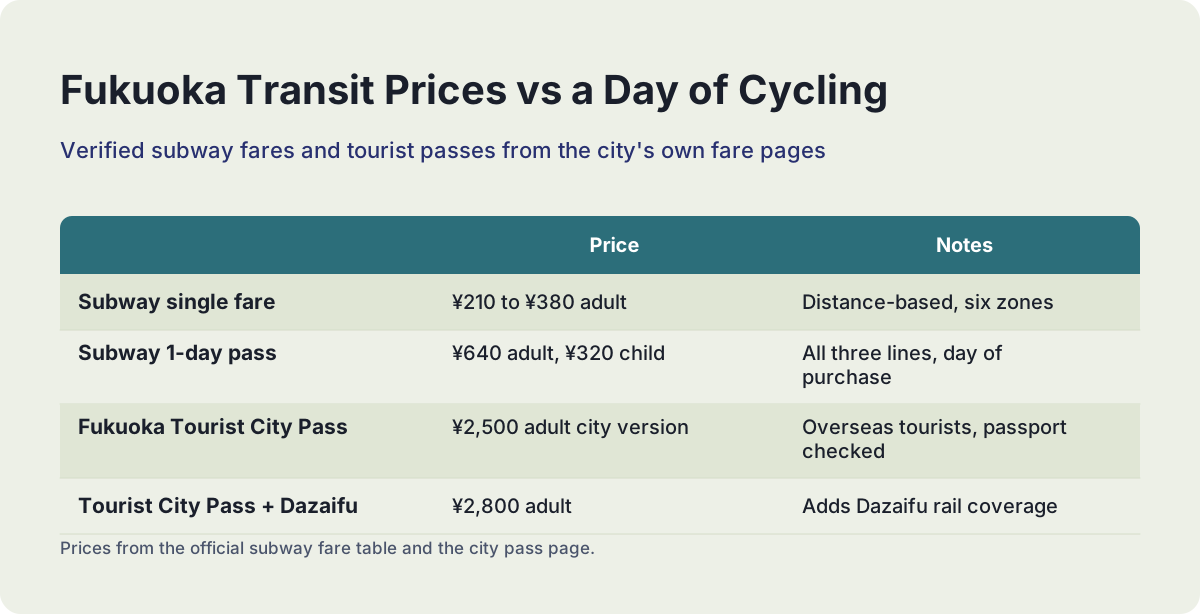
One cost comparison that is verifiable and worth making: set the bike against the transit alternatives. The official subway fare table, published by the city at the subway's fare page, runs from ¥210 for up to 3 km to ¥380 beyond 19 km, with a 1-day pass at ¥640. A day of cycling replaces several single fares, and unlike the subway it gets you door to door.
| Transit option | Price | Notes |
|---|---|---|
| Subway single fare | ¥210 to ¥380 adult | Distance-based, six zones |
| Subway 1-day pass | ¥640 adult, ¥320 child | All three lines, day of purchase |
| Fukuoka Tourist City Pass | ¥2,500 adult city version | Overseas tourists, passport checked |
| Fukuoka Tourist City Pass + Dazaifu | ¥2,800 adult | Adds Dazaifu rail coverage |
The Tourist City Pass deserves a note because most competing guides still quote its old prices. The verified figures are ¥2,500 for the city version and ¥2,800 with Dazaifu coverage, and the pass is restricted to overseas visitors on short-stay visas, with a passport check at the counter, as the city's own city pass page states. It is not a cycling product, but it is the thing to buy on the days you leave the bike behind. Our getting around Fukuoka and Fukuoka subway pages cover it in full.
Where Should You Ride First?
Start with the Ohori Park and castle loop, then ride the Naka River to Nakasu. These two rides cover the postcard Fukuoka, they link up almost without interruption along quiet streets, and both end within a short roll of food. Ohori Park's path circles the moat, Maizuru Park's castle ruins sit next door, and the riverside run to Nakasu passes the yatai stalls. Together they make a half-day.
Ohori Park is the city's favourite ride-and-stop. The pond at its centre was once part of the castle's outer moat, and a path runs the full way around the water, flat, paved and popular with joggers, families and cyclists. The Japanese Garden on the museum side charges ¥250 for adults, with children at ¥120 and free entry for visitors 65 and over, so a garden break costs less than a coffee back home. Next door, the Fukuoka Castle ruins in Maizuru Park are free to wander. One thing to know before you ride up: the Tenshudai, the main keep base, is closed to entry from 26 May 2026 until the end of December 2026 for an archaeological excavation. The story is a good one, and almost nobody tells it: a document found in December 2024 described a keep that may never have existed, the city began digging in 2025, and in 2026 it tripled the excavation area. Whether Fukuoka's "phantom keep" was real is still an open question. The rest of the park stays open through the dig.
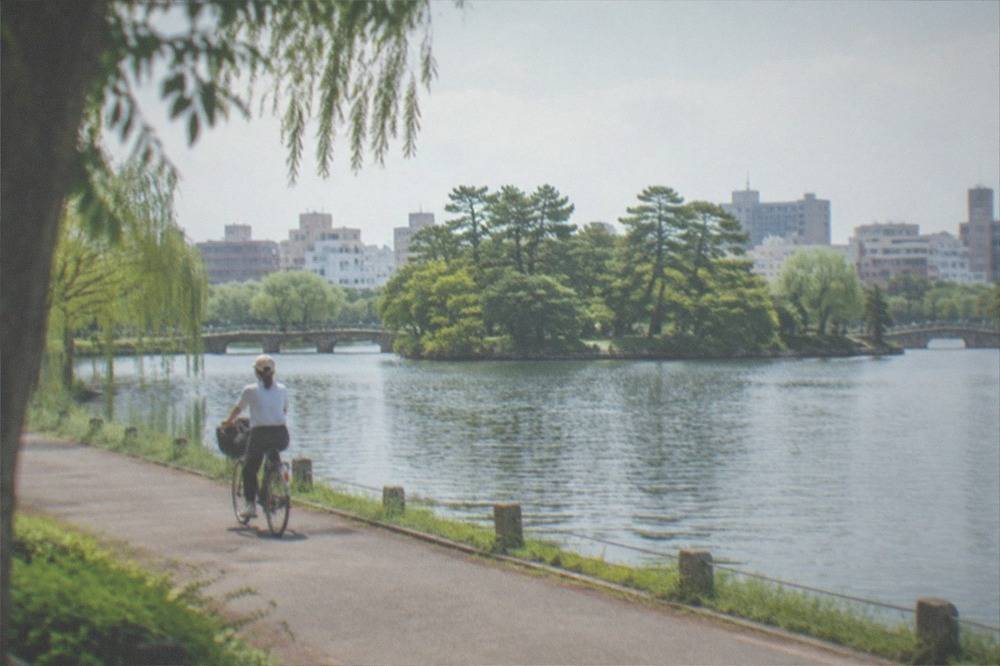
From Ohori, the ride east toward the river takes you through the Ohori Akasaka and Nishijin edges of the city centre, neighbourhoods of low-rise streets that are calm on two wheels. Our Ohori Park page details the garden, the art museum beside it and the loop itself. The Fukuoka Art Museum on the park's edge costs just ¥200 for the collection exhibition, free for junior high age and under, and both city art museums are free for residents over 65.
The river half of the ride is the one most visitors remember. The Naka River banks lead you past Canal City Hakata, whose grounds are free to enter and open every day of the year, down to the Nakasu strip, where the city's famous yatai food stalls line the water near Seiryu Park. About 100 licensed yatai operate across Fukuoka, more than any other Japanese city, and the city ordinance that governs them requires every stall to display its prices where customers can easily see them, banning vague "market price" pricing on variable dishes. The stalls open in the evening, so a late-afternoon ride that ends at Nakasu around dusk turns into dinner. Our Fukuoka yatai guide covers the etiquette, and the Fukuoka food guide takes the crawl further.
| Ride | Character | Surface | Ends near |
|---|---|---|---|
| Ohori Park loop | Flat, scenic, family-friendly | Paved park path | Fukuoka Art Museum |
| Castle ruins, Maizuru Park | Historic, some gentle climbs | Paved and gravel paths | Ohori Park |
| Naka River to Nakasu | Riverside, urban, evening-friendly | Paved embankment | Yatai stalls, Canal City |
| Bayside ride toward Momochi | Open, windier, modern | Seaside promenade | Momochi Seaside Park |
Should You Ride to the Bayside and the Viewpoints?
Yes, and the bayside ride is the one that shows you a different Fukuoka. The stretch toward Momochi Seaside Park runs along Hakata Bay with the tower and the stadium in view, and it links up with the city's best viewpoints for almost no climbing. Give it two to three unhurried hours from Tenjin, and check the wind, because the exposed bay path is noticeably breezier than the river.
Fukuoka Tower anchors this side of the city: 234 m tall, with observation decks at 123 m, 120 m and 116 m, and admission of ¥1,000 for adults, ¥500 for elementary and junior high students and ¥200 for children aged 4 and over. The tower closes on 28 and 29 June 2027 for its annual maintenance, worth knowing if your trip spans that week. Riding out to it from Tenjin is straightforward, and the tower's viewing deck doubles as a preview of the terrain you just covered. The rest of the planning pages sit on Fukuoka Japan Travel Guide.
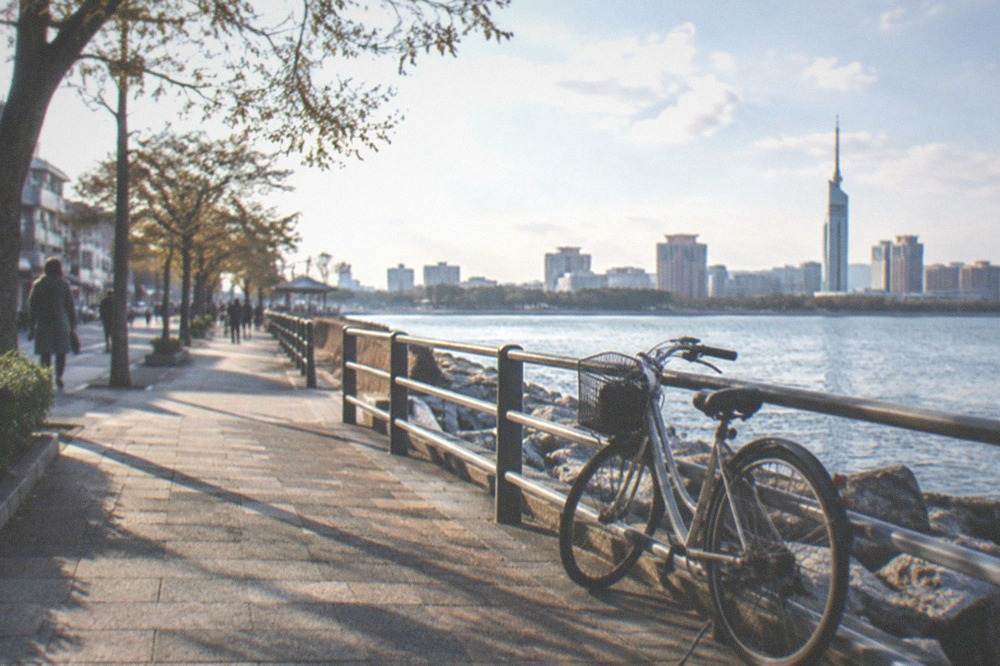
The bayside also connects to the ferry options that make bike-plus-boat days easy. Nokonoshima, the island in the bay whose park blooms with seasonal flowers, is a short ferry ride from Meinohama, and cyclists regularly take bikes across, though you should confirm the ferry's bike policy and fare at the terminal, since the island park's own site publishes its details only in client-side pages. Our Fukuoka viewpoints page ranks the panoramas, and the Momochi and Nokonoshima Island Park guides cover the two destinations in depth.
Evening is the underrated time for this ride. The bay faces west, sunset light hits the tower and the bridge, and the ride back along the river to Nakasu drops you into the city's nightlife district with the yatai lighting up. Our Fukuoka nightlife guide picks up where the bike ride ends.
Guided Bike Tours: When They Beat Renting Solo
A guided bike tour beats solo rental when you want the route, the history and the photo stops decided for you, or when your time is short. The roster's city ride, the Bike is Life Fukuoka Hakata Ride, runs from $73 per person, is rated 4.7 from 22 reviews, and covers the core in 3 hours 30 minutes. Solo rental wins on freedom and price. A guided ride wins on efficiency and local knowledge.
The Bike is Life ride is the cycling product on this site's roster, and it earns its place: it is a small-group guided loop of Hakata and the surrounding core, bike included, which removes every friction this guide has described so far, the counter, the deposit, the route. With 22 reviews behind a 4.7 rating, it has enough of a track record to be judged on it. It suits first-time visitors on a tight schedule and anyone uneasy about finding their way around Japanese street signage alone. You can read the full write-up on the Bike is Life Hakata ride page, or Check availability on the operator's live listing.
If a bike is not the point and a local's time is, the private-guides category offers an alternative shape of day. The Fukuoka Private Tour with a Local: Highlights & Hidden Gems runs from $65 per person, rated 4.9 from 164 reviews, over 2 to 8 hours, and a licensed-guide full-day version from $160 covers 6 hours. Walking rather than riding, these suit visitors who want conversation and customization more than distance covered. The Fukuoka private tours page compares them.
Between the two, the choice is honest and simple: ride if you want to cover ground and see the city's shape in a morning, walk with a local if you want to understand a few streets deeply.
Rules of the Road and Cycling Etiquette in Japan
Ride on the left, obey traffic lights as a vehicle would, and never ride drunk or with an umbrella up, both of which are against Japanese law. Helmets are not mandatory for adults but are recommended. Lights are required at night. Sidewalk cycling is tolerated where signed, but pedestrians have priority there. Lock the bike whenever you leave it; theft is rare but deposits make it your problem.
Japanese road rules are national, and the basics matter more than the details. Keep left, signal turns with an arm, and stop at red lights even when the street looks empty, because the habit is watched and judged. Cycling under the influence of alcohol carries real penalties, and the umbrella rule, no riding while holding one up in the rain, surprises visitors from countries where it is normal. In practice it means the rain that closes the yatai stalls also ends most cycling days, which is a natural signal to switch to the subway.
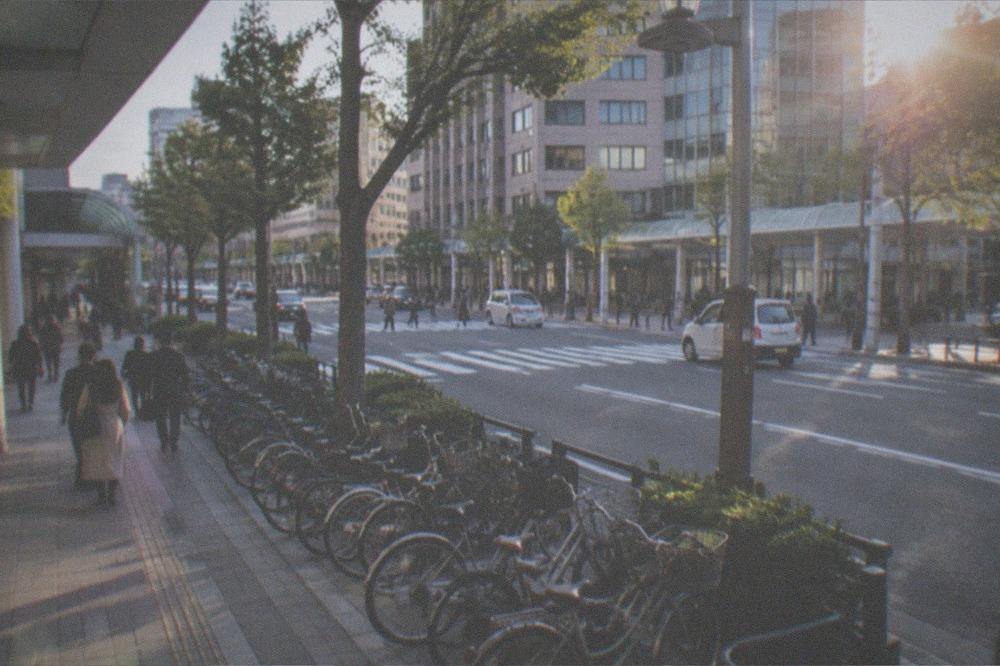
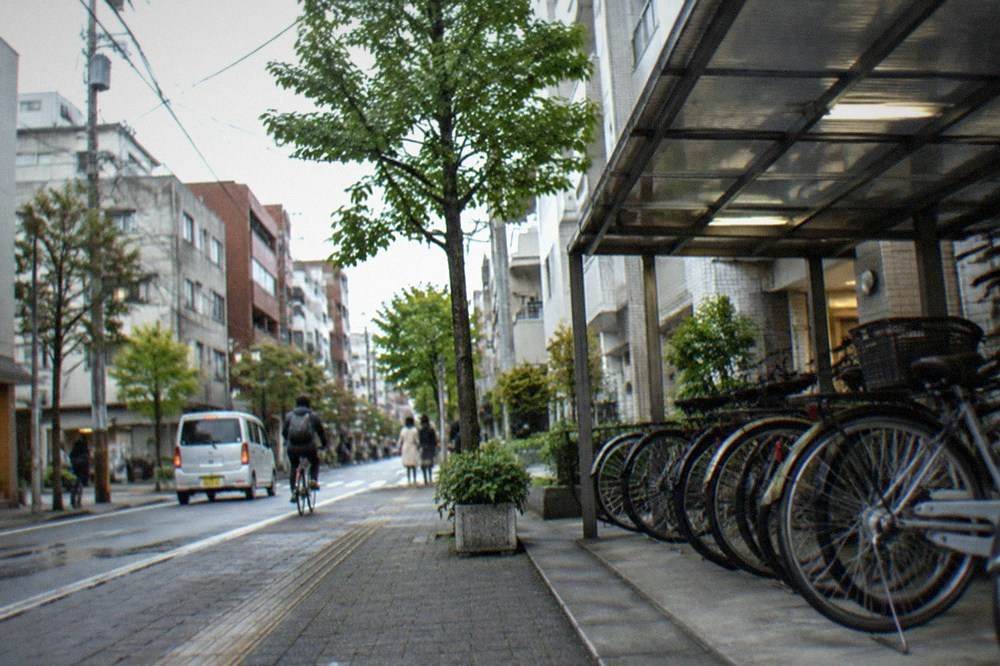
Parking is the etiquette point that actually bites. Central Fukuoka is strict about where bicycles may stand, and bikes left at random on sidewalks around Hakata Station and Tenjin get removed. Use the designated bicycle parking areas near stations and big sights, which are plentiful, and ask your rental shop where the nearest legal lot to your route is. This is also why a rental bike suits the city core better than a car: central Fukuoka is a walk-and-subway city, parking a car is a chore, and no affiliate product on this site covers car parks anyway, so we say it plainly, you do not need one inside the city.
Etiquette at the ride's end matters too. Return the bike on time, since shops charge for late hours, and if you end your evening at a yatai stall, know the house rules before you sit: a stall seats only a handful of people, sharing the counter is expected, and lingering after finishing blocks the queue behind you. Our yatai etiquette page covers the customs in full.
Can You Cycle with Kids in Fukuoka?
Yes, and Fukuoka is one of the better Japanese cities for it. Ohori Park's loop, the bayside paths and Uminonakamichi's flat parkland are all child-friendly riding, rental shops offer child seats on request, and the subway's ¥110 child fare makes bail-outs cheap. The main caveats are traffic around Tenjin and Hakata, and the cash-only gate at Uminonakamichi Seaside Park, which catches families out.
Ohori Park is the natural family ride: the path around the pond is closed to nothing, flat, and short enough for small legs, with ice cream and the art museum as bribes along the way. Uminonakamichi Seaside Park, out on the sandbar across the bay, is even better for a full day, with animal areas and open lawns. Two verified facts to plan around: the park charges ¥450 for adults aged 15 and over while junior high age and under enter free, and the gate takes cash only, a detail almost no guide mentions. The park also closes on selected Tuesdays that shift with the season, so never assume it is open daily. Our Fukuoka with kids and Uminonakamichi Seaside Park pages carry the full family itinerary.
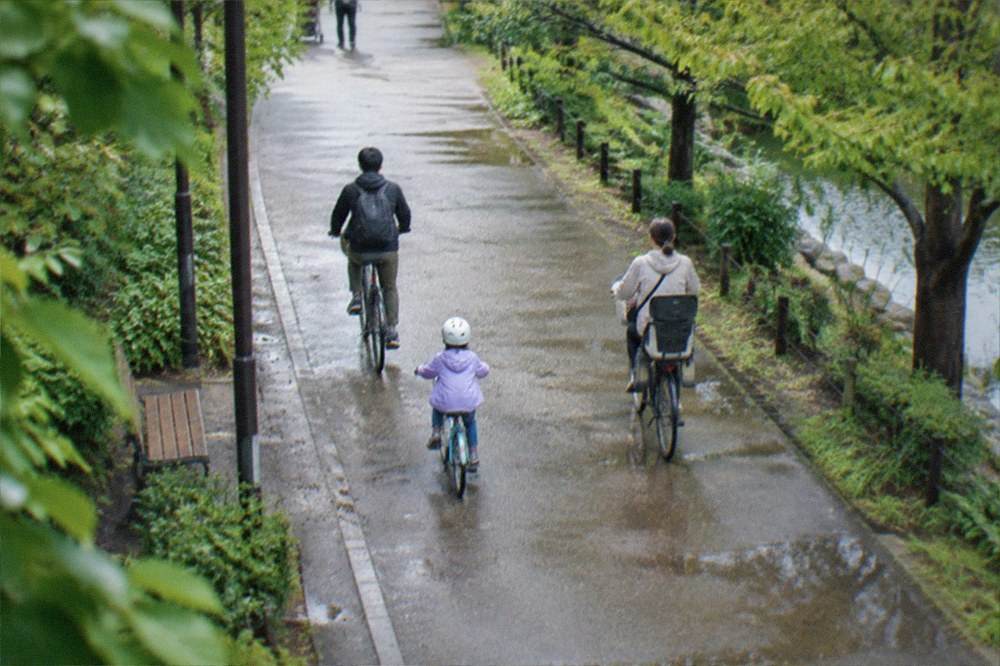
For riding with children, ask the rental shop in advance about child seats and smaller frames, since fleets vary. The guided options help here too: a private local guide can pace a day around playground stops and nap windows, which is exactly the kind of adjustment a fixed-group tour will not make.
Cycling Beyond the City: When to Switch to a Day Tour
Ride the city yourself, but for Itoshima, Takachiho, Aso and the other big Kyushu destinations, a bus day tour or a rail pass beats a bicycle. These trips run 8 to 11 hours and cover serious distances on expressways and mountain roads, which is not cycling territory. The honest split is: bike for Fukuoka's core, tours and trains for everything beyond it.
The day-trip geography around Fukuoka is spectacular and mostly not bikeable in a day. Itoshima's coast, the closest of them, is a genuine cycling region, and our Itoshima day trip and Itoshima tours pages cover it, but even that pairs better with a car or a tour than a city rental bike. Further out, Takachiho Gorge, Mount Aso, Yufuin and Beppu are full-day rail or bus country. The roster reflects this: the Day Tour to Miyazaki, Takachiho Gorge & Shrine runs from $94 per person, rated 4.6 from 78 reviews, over 9 to 10 hours, which tells you exactly what kind of day it is. The wider day trips from Fukuoka page maps all of them, and the Kyushu overview sets the region in context.
For multi-stop rail days, the JR Kyushu passes are the tool, though note that the Hakata to Kokura Shinkansen runs on JR West's Sanyo line and is not covered by JR Kyushu passes. Our JR Kyushu rail pass and Japan Rail Pass Fukuoka pages untangle that. If you are arriving from Tokyo, Osaka or Kyoto and want a bike on day one, the Tokyo to Fukuoka, Osaka to Fukuoka and Kyoto to Fukuoka guides explain the arrival logistics, and the Hakata Station guide shows you where everything in this article starts.
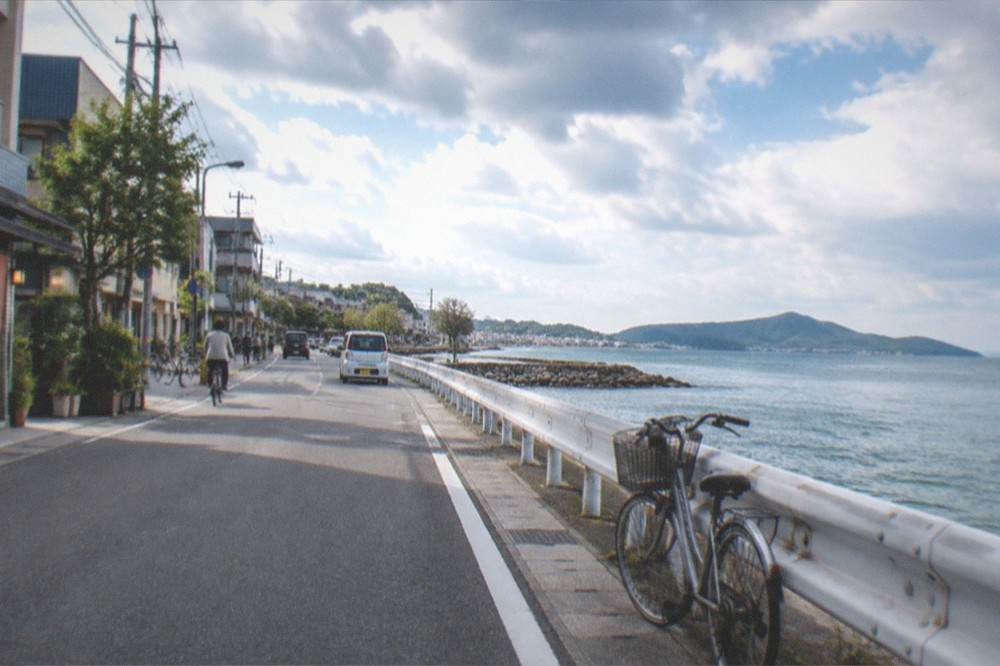
Whichever way you split the trip, the pattern that works for most visitors is simple: two wheels inside the city, trains and tours outside it, and the subway, at ¥210 to ¥380 a ride or ¥640 for a day pass, as the spine that holds it together.
If the bike side of the trip is what you are here for, these three options cover the three most common plans: a guided city ride, a big day tour out of town, and a private local guide for a custom day.
Common Questions About Cycling in Fukuoka
How Do You Rent A Bike In Fukuoka?
Through a rental shop near Hakata Station or Tenjin, a city bikeshare stand, or your hotel's front desk. Shops ask for photo ID and a deposit or card hold, and prices are set individually, so confirm the total and return time at the counter. Same-day rental is normally available outside festival peaks.
Is Fukuoka good for cycling?
Yes. The core sights, Kushida Shrine, Canal City, Ohori Park and the castle ruins, sit close together on gentle terrain, the river and bayside paths are pleasant, and the subway covers any gap. Rain is the main interruption, and July is statistically the wettest month, wetter than the June rainy season.
Do I need a helmet to cycle in Fukuoka?
Helmets are not mandatory for adult cyclists in Japan but are recommended, and rental shops can usually provide one on request. Children are expected to wear them. Lights are required at night, and riding while holding an umbrella or after drinking is against the law.
Can I take a rental bike on the Fukuoka subway?
Subway rules restrict large items, and a full-size bicycle is generally not practical to carry on board. Plan rides as loops that end where they started, or use bikeshare for one-way trips and the subway for the return. Ferries to the bay islands are the more bike-friendly connection.
Is a guided bike tour better than renting on my own?
It depends on your time. The guided Hakata ride, from $73 per person and rated 4.7 from 22 reviews, covers the core in 3 hours 30 minutes with the bike and route handled. Solo rental is cheaper and freer, but you carry the route planning, the parking rules and the logistics yourself.
Where should a first-time visitor ride in Fukuoka?
Start with the Ohori Park loop and the castle ruins next door, then ride the Naka River embankment down to Nakasu and the yatai stalls in the evening. Add the bayside stretch toward Momochi and Fukuoka Tower if you have a second half-day. All of it is flat and signposted.