Nokonoshima Island Park
Nokonoshima Island Park occupies a low hillside on one of the islands scattered across Hakata Bay, the body of water that fronts Fukuoka and opens onto the Genkai Sea. This guide covers what the park actually offers, what a visit costs, how the ferry connection works, and which paid experiences pair well with it.
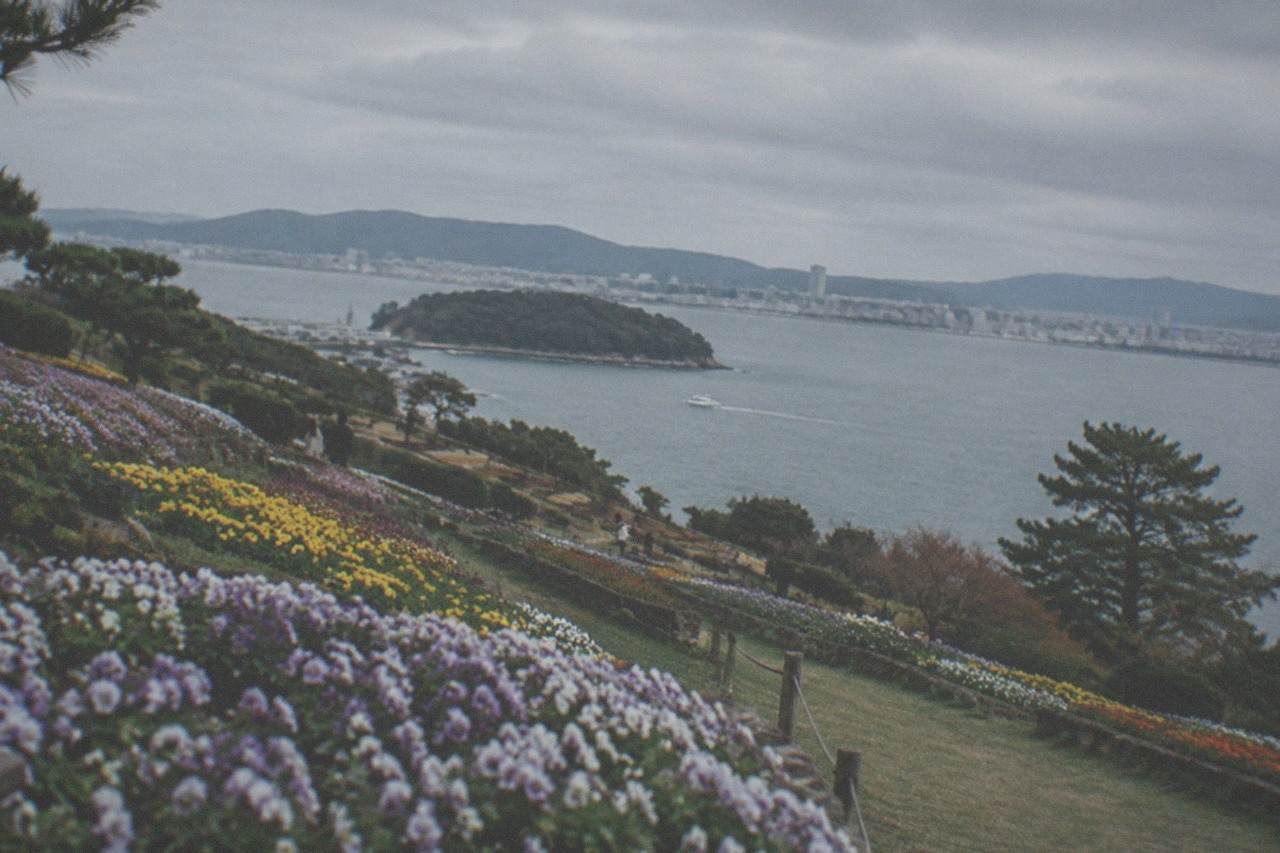
Short answer
Nokonoshima Island Park is a flower-focused island park reached by a short ferry from Meinohama, on Fukuoka's western edge. Admission is pay-at-gate, and the island's appeal rests on seasonal blooms, bay views and a slower pace than the city. Most visitors budget half a day, and a small number of guided tours include the island with lunch.
Nokonoshima is one of the islands sitting in Hakata Bay, the body of water that fronts Fukuoka and opens onto the Genkai Sea on northern Kyushu's coast. It is not a Pacific island and it is not tropical; it is a small, green, residential island whose southern slopes hold a park built around seasonal flowers and wide views back across the bay toward the city. For a visitor based in Tenjin or Hakata, it is one of the easiest genuine island experiences in Japan, closer to the centre than almost any comparable park in the country. This guide sets out what the park offers, what a visit costs, how the ferry connection works, and how it compares with the other waterside sights around the bay.
Is Nokonoshima Island Park Worth Visiting?
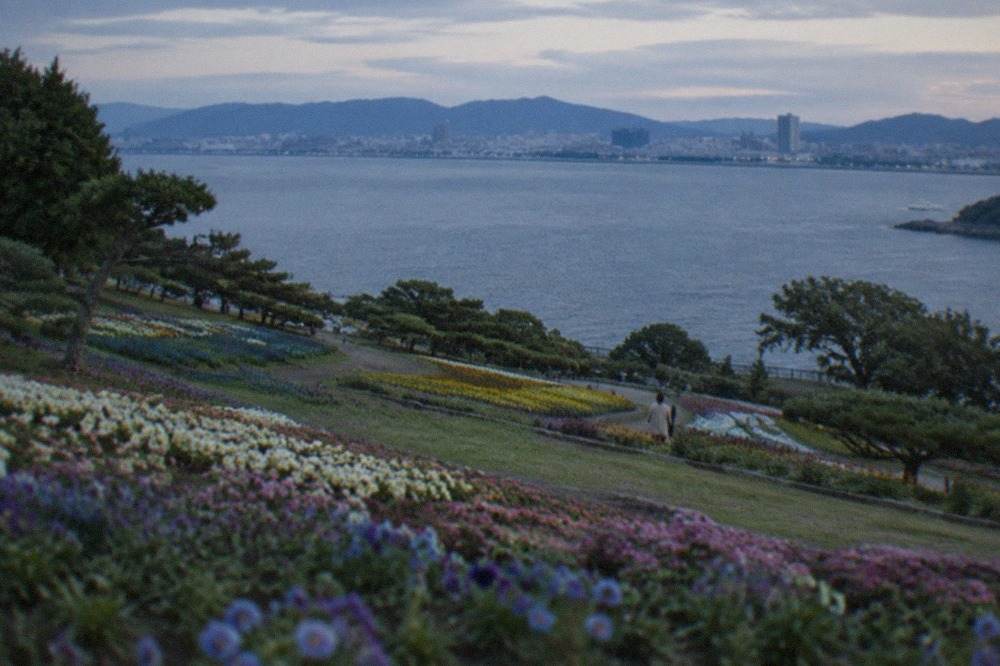
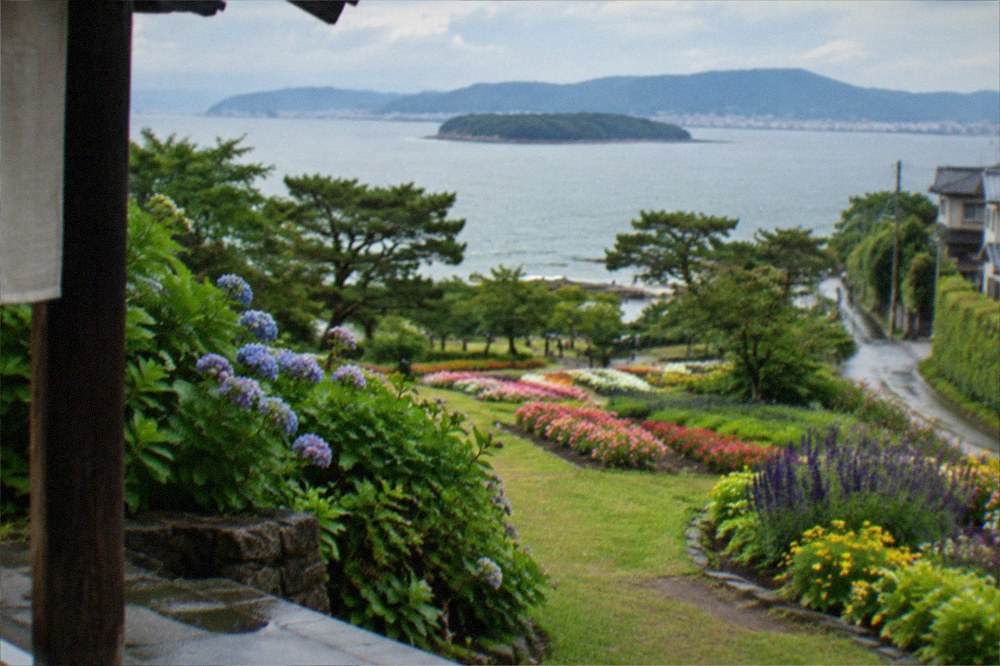
For most travellers spending two or more days in Fukuoka, yes, provided you know what the park is. It is a compact hillside of flower fields, lawns and lookouts rather than a theme park or a nature reserve, and its appeal swings sharply with the season and the weather. Go during a bloom, on a clear day, and the views over Hakata Bay toward Fukuoka Tower and the skyline are excellent. Go out of season and you will find pleasant walking tracks with fewer flowers to justify the trip.
The honest framing matters here, because a lot of competing content oversells the island. It is a municipal island park with a ferry connection, not a remote escape, and its strongest single asset is perspective: from the slopes you see Fukuoka as the bay city it is, with the Genkai Sea horizon beyond. Visitors who enjoy gardens, photography or a slow afternoon tend to rate it highly. Visitors expecting dramatic terrain or a full day of activities often feel the entry fee and the ferry ride bought less than they hoped.
The park also functions as a picnic and barbecue venue, and that is where the paid experiences come in. A small number of guided products bundle the ferry, the park and a wagyu barbecue lunch into one afternoon, which suits travellers who would rather not arrange the logistics themselves. Those are covered further down this page, and they are the only bookable way to experience the island with a guide attached, since the park itself is a walk-in attraction.
What the island is not, is a substitute for Fukuoka's urban sights. If you have one day only, the temples, shrines and food stalls of Hakata and the Nakasu yatai street should come first. Nokonoshima rewards the second or third day, when the checklist is done and the mood shifts toward water, light and a slower pace.
Where Is Nokonoshima and How Do You Get There?
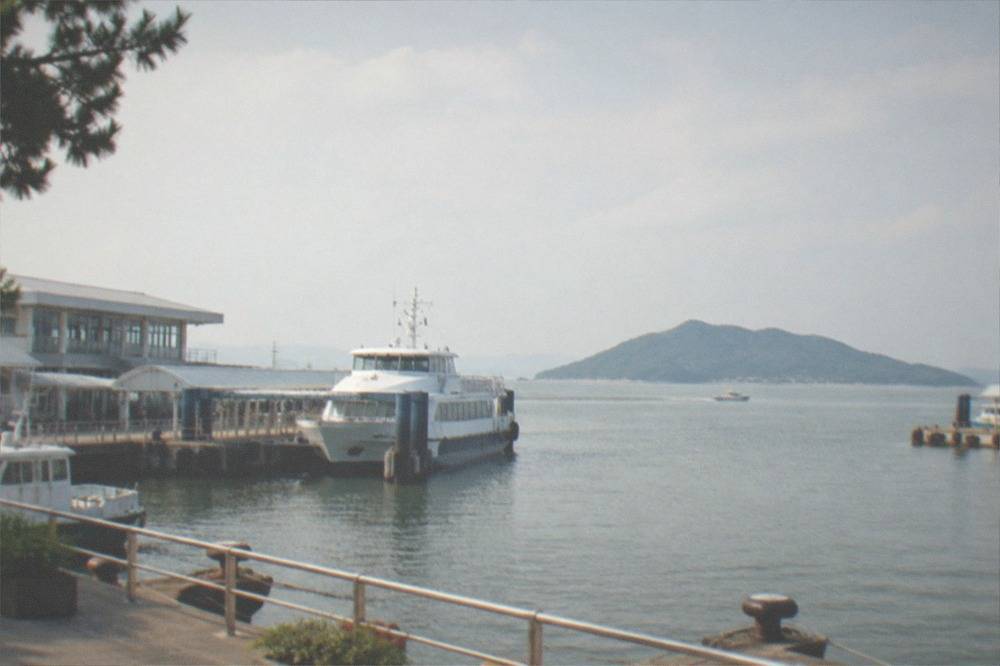
Nokonoshima lies in Hakata Bay, directly north of Fukuoka's Nishijin and Momochi districts, and the standard access is a ferry from Meinohama on the city's western edge. From central Fukuoka you reach Meinohama on the subway's Airport Line, then walk a few minutes to the ferry terminal. The crossing is short, the ferry runs as a scheduled shuttle rather than a cruise, and the park sits uphill from the island's small ferry port, reachable on foot or by the island's local bus.
The subway leg is the easy part. Fukuoka City Subway runs three lines, and Meinohama is the western terminus of the Airport Line, the same line that serves Hakata Station, Tenjin and Fukuoka Airport at the other end. Single fares are distance-zoned, from ¥210 for journeys up to 3 km up to ¥380 for the longest rides, and a one-day pass covering all three lines costs ¥640 for adults if you plan to ride more than a couple of times in the day. The official fare table is published by the subway operator at the city subway's fare page.
| Transport step | Route | Fare basis | Notes |
|---|---|---|---|
| Subway | Central Fukuoka to Meinohama | ¥210 to ¥380 by zone | Airport Line, western terminus |
| Subway day pass | All three lines, one day | ¥640 adult / ¥320 child | Sold at station machines and tourist offices |
| Ferry | Meinohama to Nokonoshima | Pay at the terminal | Scheduled shuttle across Hakata Bay |
| Island bus | Nokonoshima port to the park | Small local fare | Also walkable uphill from the port |
Two practical warnings. First, do not confuse Meinohama with Meinohama-koen or assume a JR connection; the subway is the straightforward route. Second, the ferry is weather-sensitive, as any bay crossing is, and typhoon season runs roughly July through October, so a summer or early autumn visit should carry a fallback plan. The nearby Momochi Seaside Park and the Fukuoka Tower observation deck make good same-day companions on the mainland side, and both survive weather the ferry might not.
Travellers holding a Fukuoka Tourist City Pass should read the fine print before assuming it covers the ferry. The pass, at ¥2,500 for the city version and ¥2,800 for the city plus Dazaifu version, covers subway, buses, trams and designated ferries for one day, but it is restricted to overseas tourists on a short-stay visa and a passport is checked at the counter. The city's official pass page lists exactly which operators are included: the Fukuoka Tourist City Pass details on gofukuoka.jp.
What Can You Actually Do on the Island?
The park's activities divide into three groups: seasonal flower fields, which are the headline draw; open lawns and barbecue spots, which suit families and groups; and viewpoints and walking tracks, which deliver the bay panoramas. Beyond the park itself, the island holds a small village, a couple of beaches on its northern side and quiet lanes that reward a bicycle or a slow walk. None of this is adrenaline; the island's pace is the product, and a visit typically runs two to four hours.
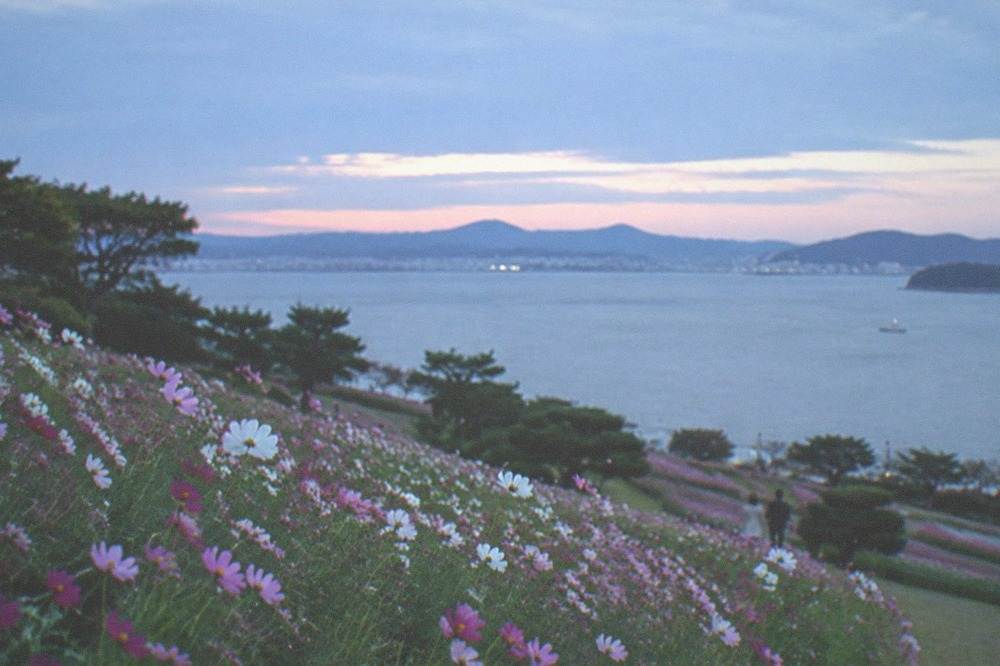
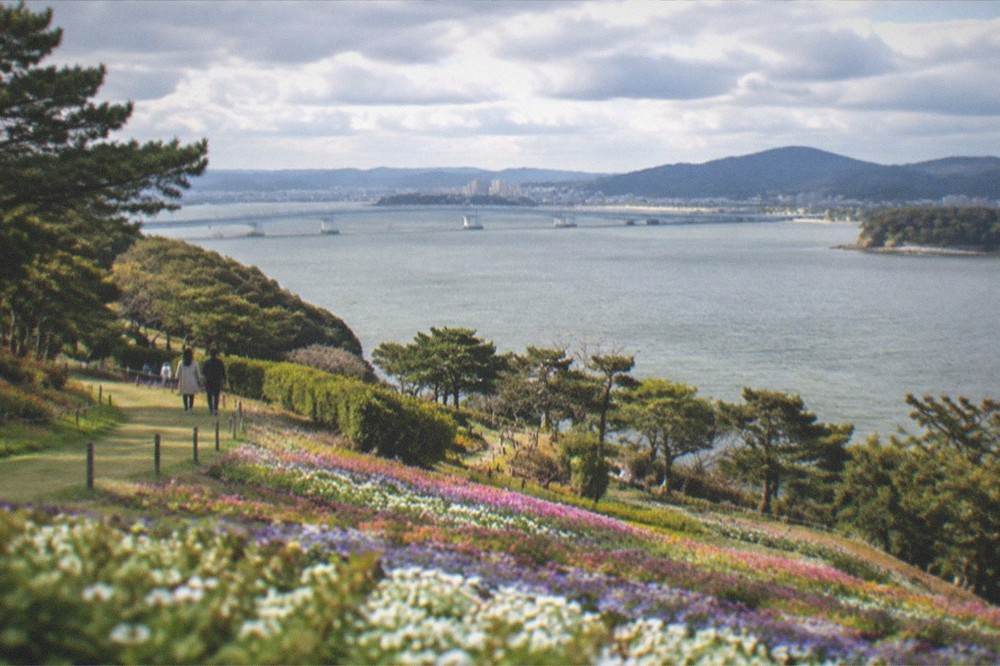
The flower fields are terraced along the hillside and rotate through the year, with spring and autumn the two strong seasons. In spring the low fields turn solid yellow with nanohana, the rapeseed blossom that has become one of Fukuoka's signature photo subjects, and the sight of yellow flowers against the blue of the bay is the image that made the park known. Later in the year the same slopes carry cosmos, the pink and white autumn bloom that draws a second, softer wave of visitors. Between the peaks the park is green and pleasant rather than spectacular, and it is better to arrive with that expectation than to be disappointed by it.
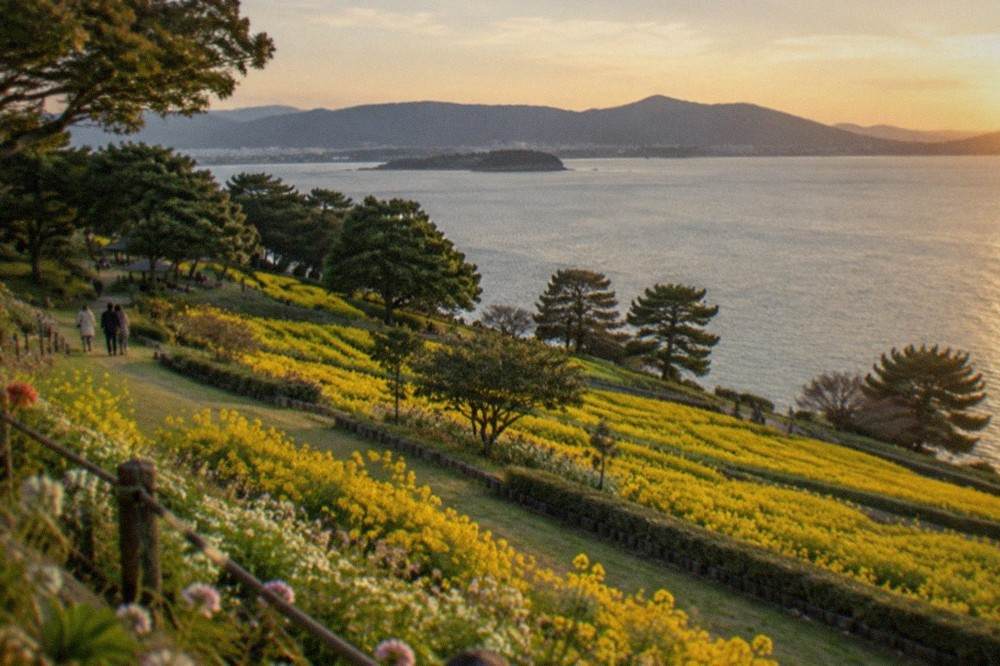
The barbecue lawns are the second pillar. The park sells itself as a cook-your-own venue with rented equipment and bay views, and this is the format the guided wagyu tour plugs into. Families spread out on the grass, children get space to run, and the whole arrangement feels closer to a city park on a holiday than to a tourist attraction. If you are travelling with children, the island pairs naturally with Uminonakamichi Seaside Park on the opposite side of the bay, though the two in one day is ambitious.
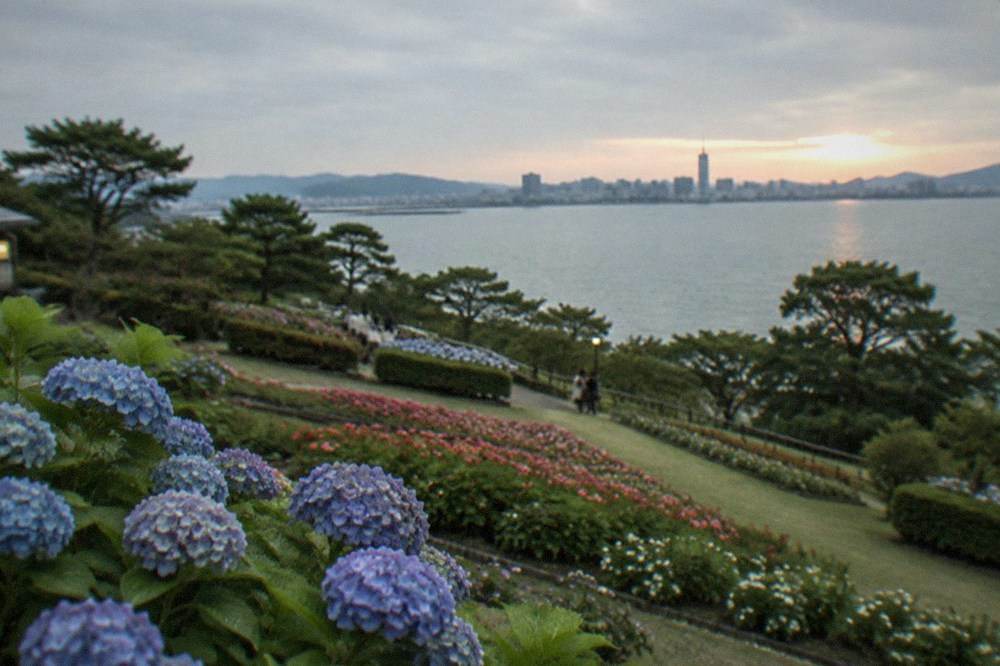
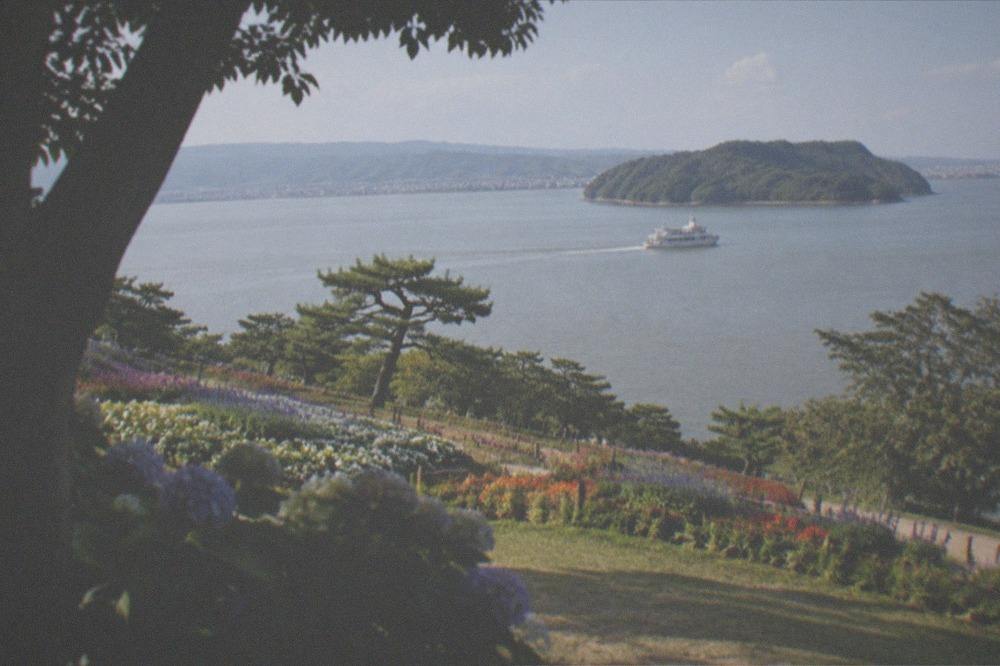
The viewpoints are the quiet third reason to come. From the upper slopes you look south across Hakata Bay toward Momochi's tower blocks and Fukuoka Tower, and west toward the open Genkai Sea. Sunset turns the skyline into a silhouette and is the single best hour on the island for photographers. Bring a lens, stay for the light, and take a later ferry back.
For travellers who want the island handled end to end, the guided option is the Colors of Japan tour, which combines the island park with a wagyu barbecue lunch and runs four to six hours from $152 per person, rated 5.0 from 17 reviews. It suits anyone who would rather not work out the ferry timetable or carry raw meat on public transport.
The three cards above span the range of what a day out from Fukuoka can look like: the island barbecue, a long bus-and-boat circuit through rural Kyushu, and a private city walk with a local. They are different products for different moods, and comparing them honestly is more useful than pretending one suits everyone.
How Much Does a Visit Cost?
Budget the day in three parts: the subway fare to Meinohama, the ferry fare paid at the terminal, and the park's admission paid at the gate. None of the island's own figures are reliably published in English, so treat the gate and terminal as the source of truth. A reasonable planning figure for the whole day, transport and admission combined, is a few thousand yen per adult before food.
That vagueness is deliberate and it is the honest position. The island's own website renders its prices and hours through scripts that published sources could not verify, and this site does not print figures it cannot stand behind. What can be said firmly is that the park charges at the gate, that children pay less than adults, and that no part of the visit requires advance booking unless you choose a guided product. The fixed-price alternative is the wagyu barbecue tour at $152 per person. Bring cash for the ferry and the gate; small island operations in Japan are still cash-first even as the city centre goes cashless.
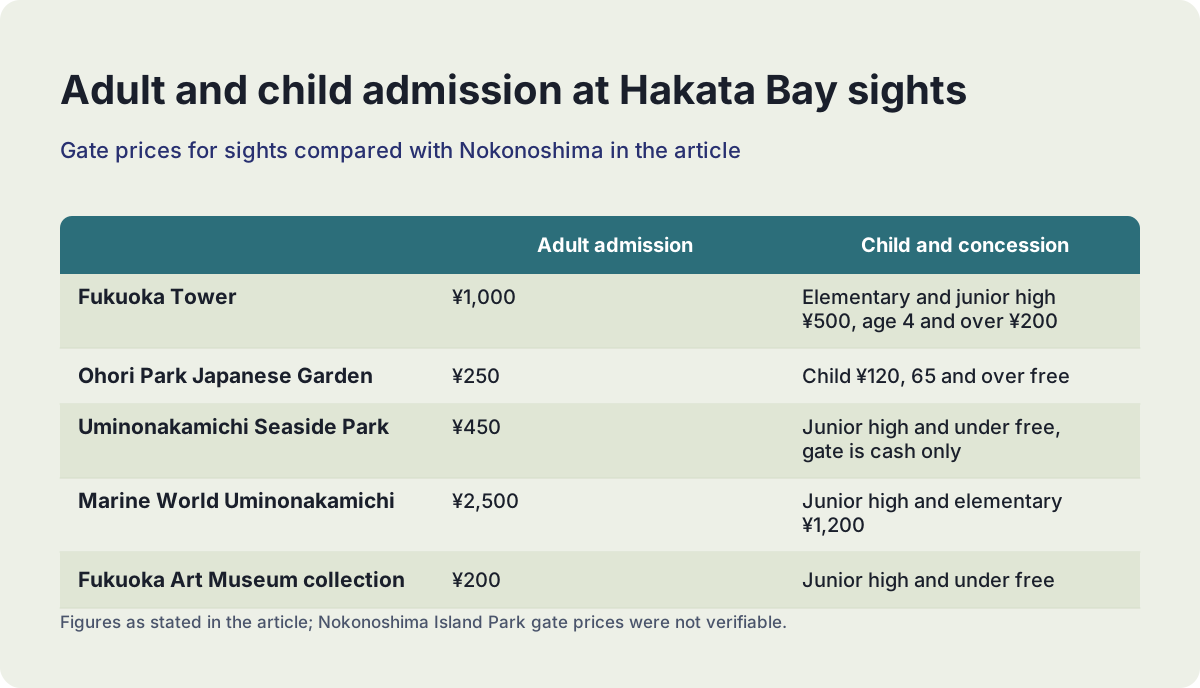
For context, here is what the verified, firmly priced sights around the same bay cost, so you can weigh the island against its mainland rivals with real numbers rather than impressions. These figures come from each venue's own published rates.
| Sight around Hakata Bay | Adult admission | Verified detail |
|---|---|---|
| Fukuoka Tower | ¥1,000 | Elementary and junior high ¥500, age 4 and over ¥200 |
| Ohori Park Japanese Garden | ¥250 | Child ¥120, 65 and over free |
| Uminonakamichi Seaside Park | ¥450 | Junior high and under free, gate is cash only |
| Marine World Uminonakamichi | ¥2,500 | Junior high and elementary ¥1,200 |
| Fukuoka Art Museum collection | ¥200 | Junior high and under free |
Two of those details deserve a flag. Uminonakamichi's gate takes cash only, which catches card-carrying visitors out every year, and the two city art museums are ¥200 with free entry for under-15s and for residents over 65. If you are building a budget Fukuoka day, the Ohori Park Japanese Garden at ¥250 is the best value on that list.
If a fixed, pre-paid price appeals more than ferry-and-gate arithmetic, the wagyu barbecue tour is the one product that puts the island, the transport coordination and lunch into a single booking, and the operator's listing carries the current price and cancellation terms.
When Is the Best Time to Go?
Spring and autumn are the two peak seasons, matching the flower calendar: nanohana blooms in spring and cosmos in autumn, and either window gives the park its colour. Within those seasons, weekdays and clear mornings are the calm conditions, while weekends bring local families and fuller ferries. July deserves a special mention as a month to plan around rather than in, because it is statistically Fukuoka's wettest month, wetter even than the June rainy season.
That last point surprises people, and it is one of the few climate facts about this city that almost every competing guide gets wrong. The Japan Meteorological Agency's 1991 to 2020 normals for the Fukuoka station put July at 299.1 mm of rain against June's 249.6 mm, even though June is the tsuyu rainy season and July is festival month. August, by contrast, is hotter than July but drier than both, with 210.0 mm of rain and 200.9 sunshine hours, the second sunniest month of the year after May. For an island visit, where the whole product is outdoors, that distinction matters more than it would for a museum day.
Typhoon season runs roughly July through October, and a bay ferry will suspend in rough weather even when the city itself feels merely blustery. The practical advice is a flexible one: keep the island for a day with a clear forecast, and hold a backup such as the Fukuoka Asian Art Museum or Canal City Hakata in reserve, both of which are indoor and open every day of the year in Canal City's case. Winter visits are possible and quiet, but the flower fields rest and the wind off the Genkai Sea is sharp, so dress for it.
What About Food and the Wagyu BBQ Tour?
Food on the island splits between the park's own barbecue setup, where you cook over rented equipment on the lawn, and the small cafés and shops near the port. The guided alternative is the Colors of Japan tour, which pairs the island park with a wagyu barbecue lunch and runs four to six hours from $152 per person, currently rated 5.0 from 17 reviews. It is the strongest option for visitors who want the island's food experience without planning it, and the one most worth booking ahead.
The self-run barbecue is the local way of doing it, and it fits the island's municipal-park character: you bring or buy ingredients, rent the spot and the gear, and cook with the bay in front of you. The catch is language and logistics, since equipment rental, fuel and ordering all happen in Japanese at a small island facility, and that friction is exactly what the guided tour removes. The tour version upgrades the meat to wagyu and handles timing so the park visit and the meal sit in the right order.
For a different flavour of countryside day out, the YokaBus tea fields and Yanagawa river boat tour runs 9 hours 30 minutes from $92 per person, rated 4.9 from 29 reviews, and pairs the Yame tea country with a canal boat ride through Yanagawa. It is a bigger day than the island and a completely different register, rural rather than maritime, but it fills the same slot in a trip: the day you leave the city behind.
Back on the island itself, do not over-plan the food. The port area has enough for coffee and snacks, and the honest strategy is to treat lunch as part of the park visit, either the barbecue or the tour, rather than hunting for restaurants on a small island that does not really have them.
Nokonoshima Compared with Other Fukuoka Bay Sights
The island's niche is flowers plus a ferry plus a view, and nothing else around the bay offers that exact combination. Uminonakamichi offers a far bigger park with animals and an aquarium-grade neighbour, Momochi offers the beach and the tower without leaving the mainland, and Shikanoshima, the island at the bay's northern tip, offers history and wilder coastline. Nokonoshima wins on compactness and on the quality of its flower seasons, and loses on raw activity count.
| Bay sight | Main draw | Getting there | Best for |
|---|---|---|---|
| Nokonoshima Island Park | Flower fields, wagyu barbecue, bay views | Subway to Meinohama, then ferry | Photographers, families, slow afternoons |
| Uminonakamichi Seaside Park | Large seaside park, animal forest, cycling | Subway plus ferry or rail loop | Families with children |
| Momochi Seaside Park | Beach, promenade, Fukuoka Tower | Subway plus short walk | Sunsets without a ferry |
| Shikanoshima | Wild coastline, ancient gold-seal find site | Bus or car across the sandbar | Drivers, history, solitude |
The comparison is really about how much friction you want. Momochi is zero-friction: you walk there. Nokonoshima adds one ferry and rewards it with the water crossing itself, which children treat as the best part of the day. Uminonakamichi is the full-day commitment, big enough to absorb a family until evening, and its cash-only gate is worth remembering before you go. Shikanoshima suits travellers with a car or a long window, and it is the one to pick if flowers feel beside the point.
One more comparison worth making is with a guided city day. The Fukuoka Private Tour with a Local, from $65 per person and rated 4.9 from 164 reviews, runs two to eight hours and covers the city's highlights and hidden corners with a local guide. If your Fukuoka time is short, that product answers a different question, what the city itself holds, and the island should wait for a longer trip.
Planning Tips for a Smooth Day
Start early, watch the weather, carry cash, and keep the island flexible rather than fixed. Take the subway to Meinohama, buy the ferry ticket at the terminal, pay the park at the gate, and let the flower season set your expectations rather than the marketing. The single best structural tip is to treat Nokonoshima as a half-day morning or a late-afternoon sunset visit, not a full-day anchor, and to pair it with a mainland sight in the same western half of the city.
The morning version works best for photographers, because the light falls across the bay toward the city and the fields are quiet before the late-morning ferries. The sunset version works best for couples and for anyone whose main goal is the skyline silhouette; the trade-off is that evening ferry frequency thins, so check the last sailing before you commit to the golden hour. Either way, the subway's Airport Line makes the timing easy from anywhere on its spine, and the one-day pass at ¥640 pays for itself on the third ride.
Pack for a park, not a resort. Comfortable shoes for the uphill walk from the port, a hat and water in the warmer months, and layers in the cooler ones, because the wind off the Genkai Sea is a real feature of the island's climate and the exposed slopes offer little shelter. Cash covers the ferry, the gate and any small purchases, and it is the one packing decision that can actually end a plan if ignored.
Finally, keep the island in the same half of the city as its neighbours. Meinohama, Momochi, Nishijin and the Ohori Park corridor all sit on Fukuoka's western side, and a day that strings the island, the tower and the garden together travels far less than one that zigzags across the city. Travellers who want the whole picture of what this city offers across its bay and its neighbourhoods will find the broader round-up on Fukuoka Japan Travel Guide, and the itineraries there slot the island into second and third days exactly the way this page recommends.
Whichever way you assemble the day, the guided products below cover the three most useful shapes it can take: the island with lunch included, the rural Kyushu circuit, and a private walk through the city you leave behind to reach the water.
Common Questions About Nokonoshima Island Park
Is Nokonoshima Island Park Worth Visiting?
Yes, for most travellers with two or more days in Fukuoka. The park is a compact hillside of flower fields, barbecue lawns and bay viewpoints rather than a full-day attraction, and it is at its best during the spring and autumn blooms or at sunset. If your time is short, the city's temples, shrines and food stalls should come first.
How do I get to Nokonoshima from Fukuoka?
Take the subway's Airport Line to Meinohama, the western terminus, then walk a few minutes to the ferry terminal and take the scheduled ferry across Hakata Bay to the island. The park sits uphill from the island port and can be reached on foot or by the island's local bus.
Do I need to book anything in advance?
No. The park is a walk-in attraction, the ferry is paid at the terminal and the park is paid at the gate. The only bookable way to visit with a guide is the wagyu barbecue tour, which bundles the island visit with lunch, and even that is best checked for availability rather than assumed.
What is the best season for the flowers?
Spring brings the yellow nanohana rapeseed bloom and autumn brings the pink and white cosmos, and those two windows are the park's peaks. Between them the island is green and pleasant but not spectacular. Avoid planning the visit around July, which is statistically Fukuoka's wettest month, wetter than the June rainy season.
Can I eat on the island?
Yes, mainly through the park's barbecue setup, where you rent equipment and cook on the lawn, or through small cafés and shops near the port. The guided wagyu barbecue tour is the fixed-price alternative that handles ingredients and logistics for you.
Is Nokonoshima good for children?
Yes. The ferry ride, the open lawns and the space to run make it a family-friendly half day, and the barbecue format suits groups with children. For a bigger, longer family day on the same bay, Uminonakamichi Seaside Park on the opposite side is the larger option, though its gate takes cash only.