Ohori Park Japanese Garden
The Japanese garden inside Ohori Park is one of Fukuoka's calmest corners: a ¥250 gate, a pond designed for slow walking, and a landscape that changes completely with the seasons. Here is what to expect, what it costs, and how to plan a visit.
Short answer
Yes. The garden charges ¥250 for adults and ¥120 for children, opens 9:00 to 18:00 in summer and 9:00 to 17:00 in winter, and closes Mondays. It is a compact, deliberately paced stroll garden beside the Ohori Park lake, walkable in 30 to 45 minutes, and one of the few traditional gardens in central Fukuoka.
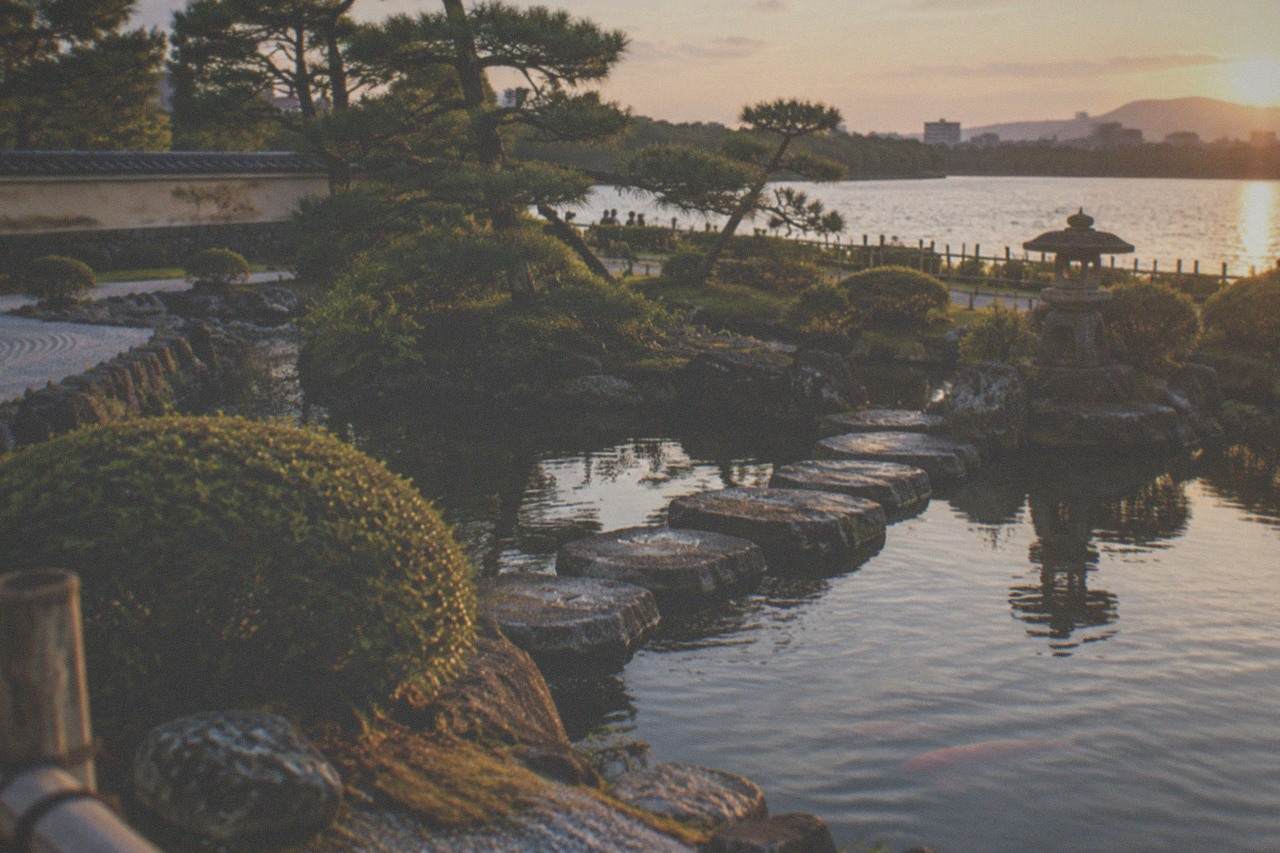
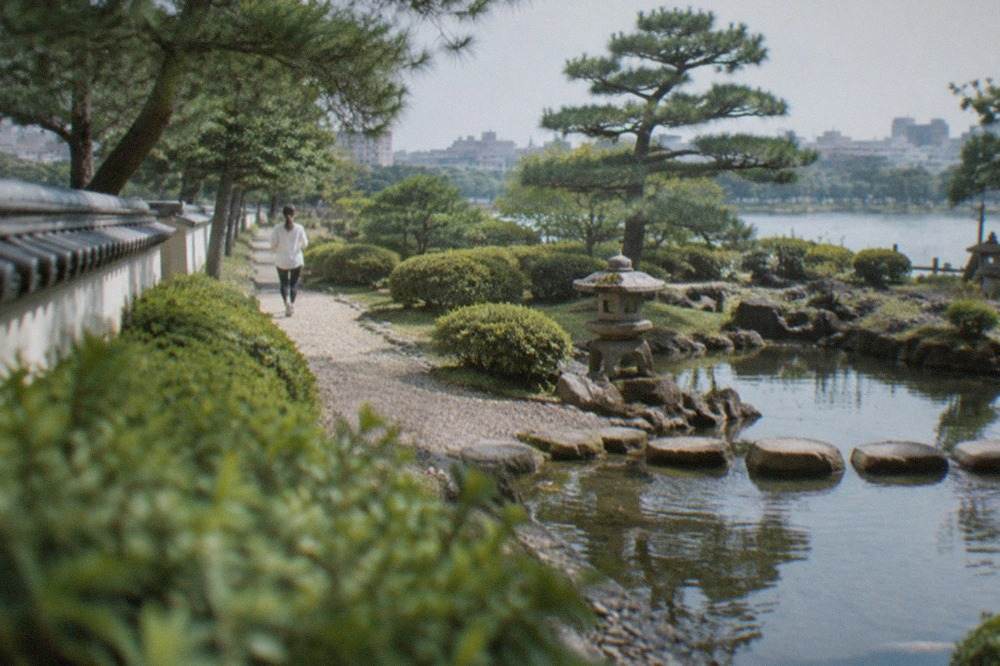
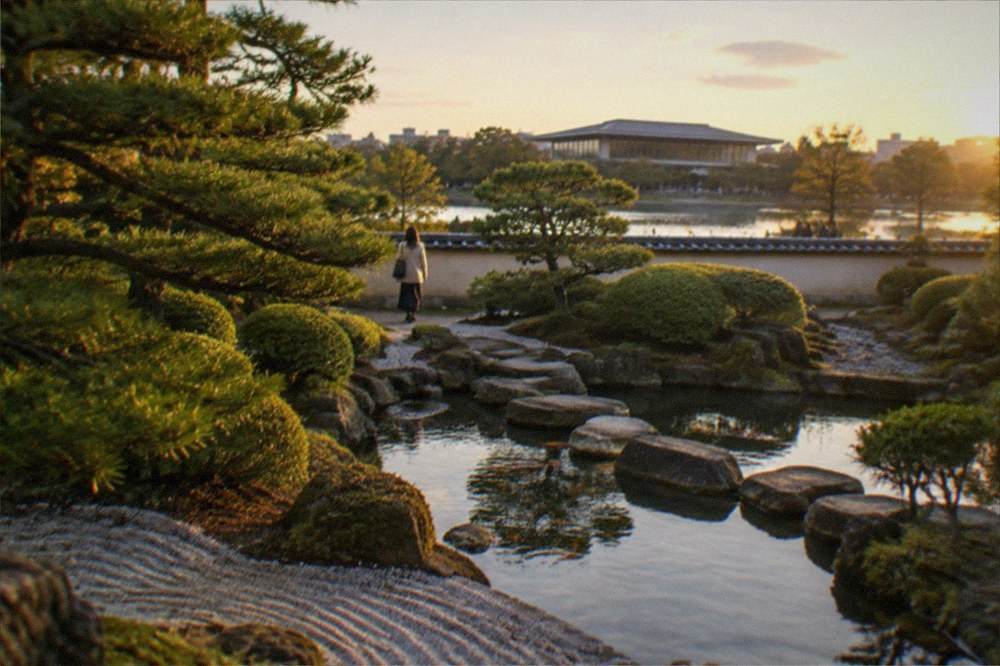
Fukuoka has surprisingly few traditional gardens for a city of 1.66 million people, and the one inside Ohori Park is the easiest to reach. It sits on the western shore of the lake that gives the park its name: Ohori means "moat", and the water is a genuine remnant of the moat system that once protected Fukuoka Castle. The garden itself is a modern creation, laid out on what were the estate grounds of a feudal lord's secondary residence, and it borrows the classic Kyoto stroll-garden form: a pond, an arched bridge, stone groupings, borrowed scenery, and a path that never shows you everything at once.
For travellers, the practical appeal is simple. The gate fee is small, the walk is short, and the garden sits inside a free public park that most visitors to Fukuoka already have on their list. This page covers the honest answer to whether the garden is worth the ticket, the exact fees and hours, how the design works, transport, seasons, and what to combine with a visit.
Is Ohori Park Japanese Garden Worth Visiting?
For most travellers, yes, with one caveat. The garden is small, typically a 30 to 45 minute stroll, and it is not a half-day destination on its own. What you get for ¥250 is a genuinely well-built example of a Japanese stroll garden, a pond view that changes with every season, and a level of quiet that the free park around it rarely manages. If your itinerary already includes Ohori Park, the castle ruins or the art museum, the garden earns its ticket easily.
The honest framing is this: Ohori Park itself is free, and the lake path around it is one of Fukuoka's most pleasant free walks, covered in detail on our Ohori Park attraction page. The Japanese garden is the one enclosed, ticketed space inside that park, and the question is whether the enclosure adds anything. In practice it does. The pond inside the garden is separate from the big lake, the planting is denser and more deliberate, and the path is arranged so that the scenery is revealed in stages rather than all at once.
Visitors who come expecting Kyoto's most famous gardens will find this one modest in scale. Visitors who come expecting a pleasant, well-kept garden with a tea-ceremony pavilion, iris beds in late spring and maples in late autumn will leave satisfied. The garden also solves a real problem for photographers: the big lake is wide and open, while the garden gives you tight, composed frames, stone lanterns, a bridge and reflections, all within a few hundred metres of walking.
One more point in its favour: location. The garden is a short walk from Ohori-Koen subway station, which puts it within easy reach of both Hakata and Tenjin. Very few traditional gardens in Japan sit this close to a major city centre's subway network, and that alone makes it a realistic stop on a tight itinerary rather than a special trip.
What Are the Opening Hours and Admission Fees?
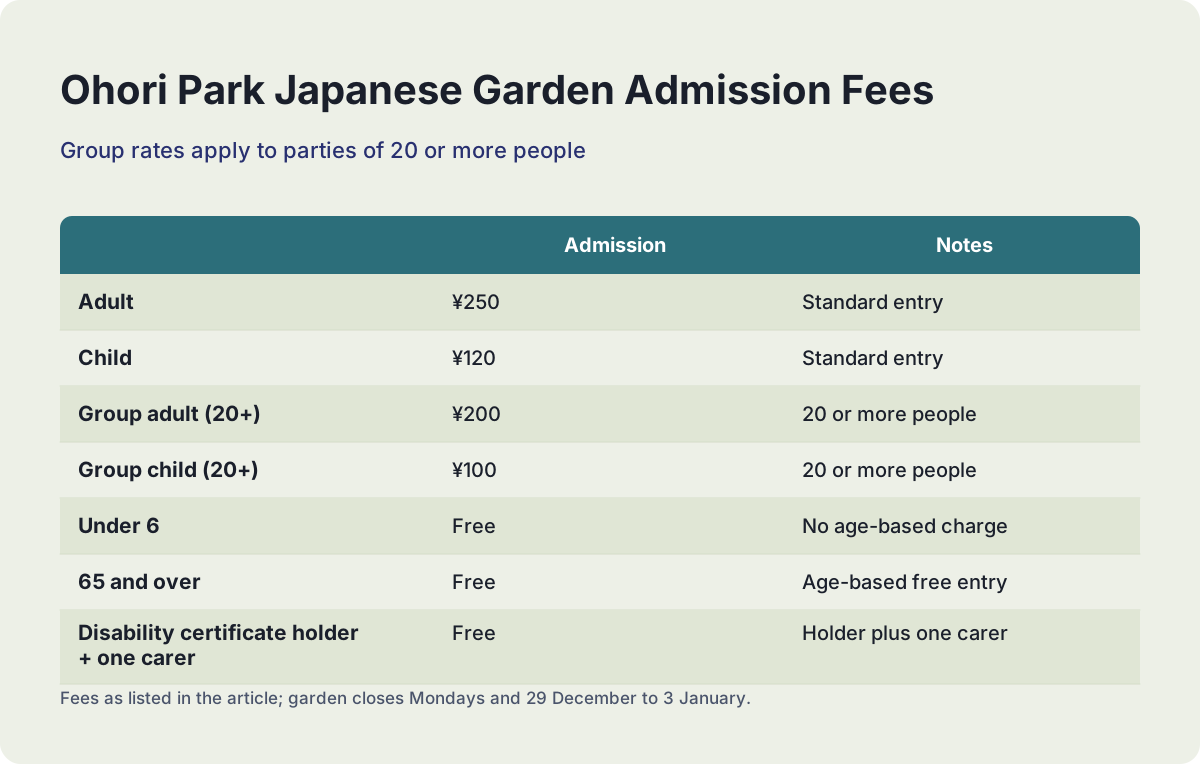
Admission is ¥250 for adults and ¥120 for children, with group rates of ¥200 and ¥100 for 20 or more people. Children under 6 enter free, visitors 65 and over enter free, and holders of a disability certificate plus one carer enter free. The garden opens at 9:00 year-round, closing at 18:00 from May to September and 17:00 from October to April, with last entry 15 minutes before each closing time.
The two seasonal schedules are worth noting because they catch people out. In the May to September window the last entry is 17:45, and from October to April it is 16:45. An arrival after 17:00 in winter means a closed gate. The garden also closes on Mondays, or the next weekday when a public holiday falls on a Monday, and for the year-end period from 29 December to 3 January.
| Category | Admission |
|---|---|
| Adult | ¥250 |
| Child | ¥120 |
| Group adult (20+) | ¥200 |
| Group child (20+) | ¥100 |
| Under 6 | Free |
| 65 and over | Free |
| Disability certificate holder + one carer | Free |
The full hours and fee schedule is published by the garden's own operator at the official Ohori Park Japanese Garden site, which is the right place to confirm before an early morning or late afternoon visit. The official pages also state that even tour guides accompanying a group pay the standard admission, a detail group leaders occasionally miss.
| Season | Opening hours | Last entry |
|---|---|---|
| May to September | 9:00 to 18:00 | 17:45 |
| October to April | 9:00 to 17:00 | 16:45 |
| Closed | Mondays (next weekday if a public holiday) | |
| Year-end closure | 29 December to 3 January |
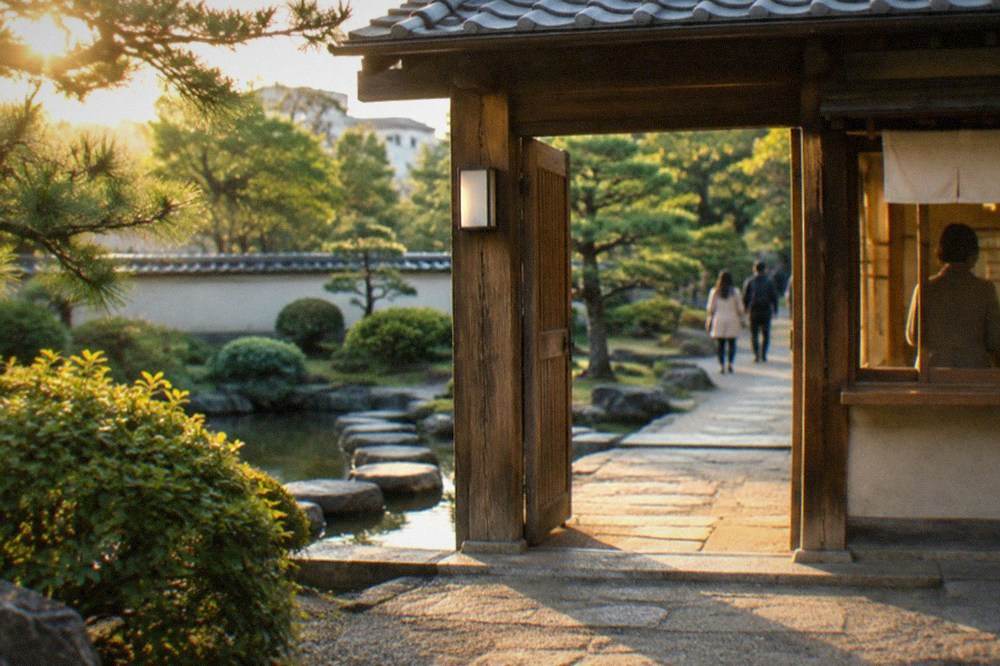
Payment at the gate is straightforward, and the two entrances matter for planning. The main Kabukimon entrance sits on the Fukuoka Art Museum side of the park, and a west gate serves the Ohori Terrace side. If you arrive from Ohori-Koen station, the art museum entrance is the closer one; if you are walking the lake circuit clockwise from the castle side, the west gate appears first.
What Makes the Garden Design Special?
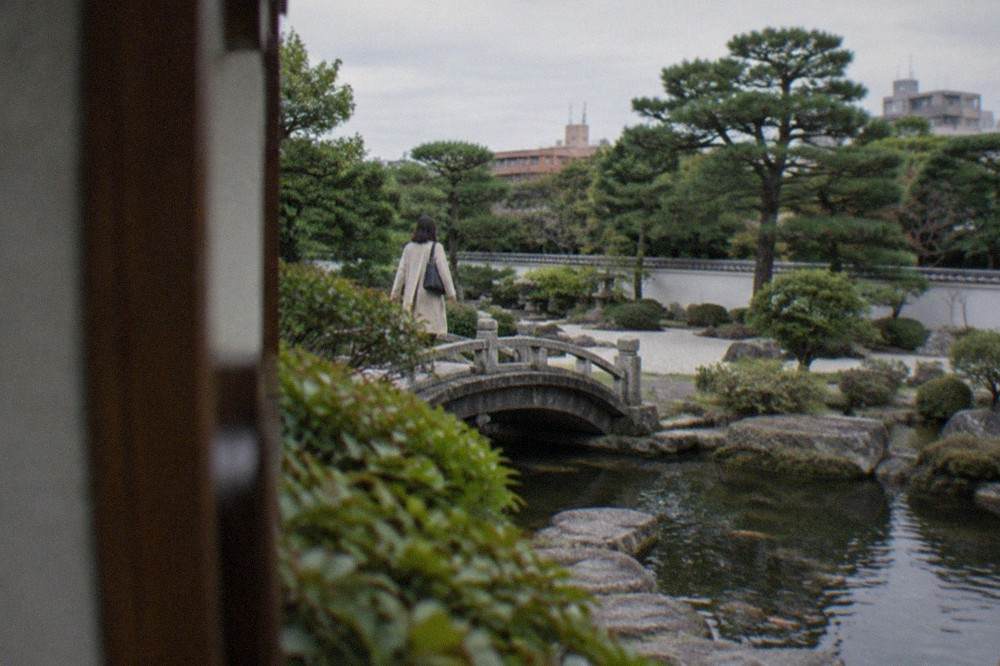
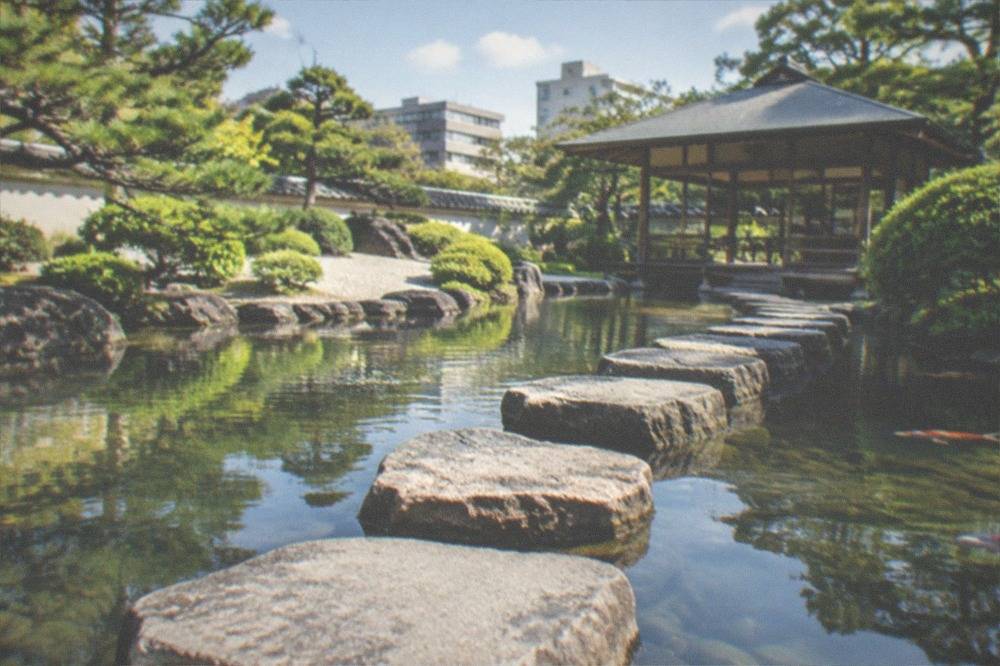
The garden is a kaiyū-shiki, or circular stroll garden, built around a pond crossed by stepping stones and an arched bridge. The design uses the classic devices of the form: borrowed scenery from the trees beyond the fence, a teahouse pavilion over the water, iris beds at the pond edges, and a path that hides each view until you turn into it. It was laid out on the former grounds of a samurai residence.
That history shapes what you see. Before the garden existed, the site held the secondary residence of the Kuroda family, the clan that ruled Fukuoka from the castle next door. When the park was laid out after the war, the residential plot became a garden, and the designers worked the old estate's water features into the new pond. The result reads as a modern garden with an old skeleton, which is exactly what it is.
The pond is the organising element. The path circles it, and the designers placed the crossings, a line of stepping stones and a low arched bridge, where they break the walk into segments and force you to slow down. The teahouse on the water is the garden's focal point, and in the iris season the beds along the pond's northern edge draw most of the photographers. In late autumn the maples do the same work in a different register.
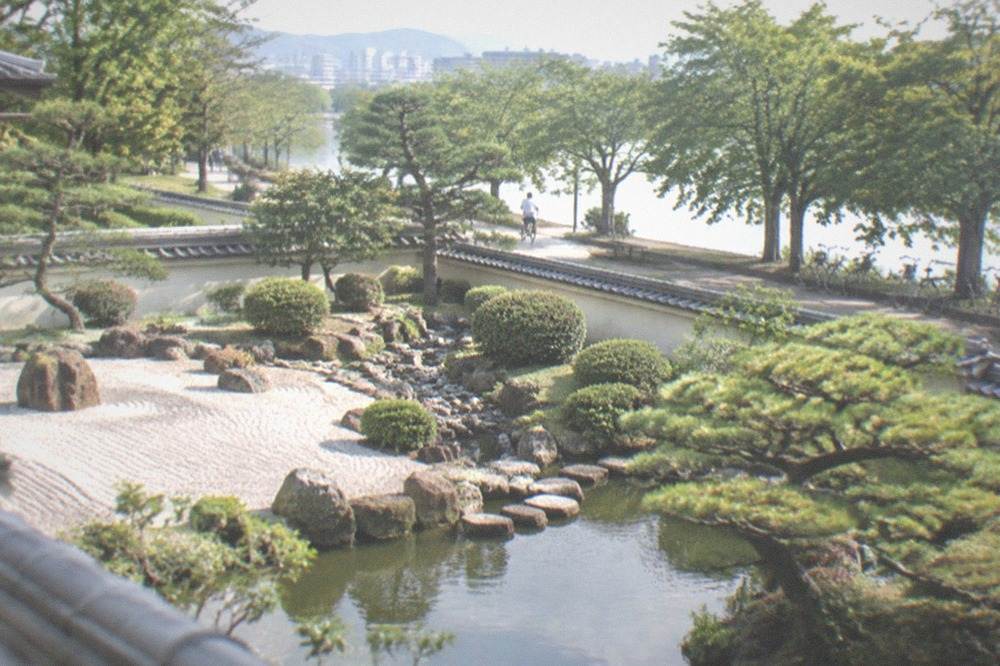
The borrowed scenery is a subtle pleasure that most visitors walk past without noticing. From certain points on the path, the trees and reeds of the free park outside the fence are composed into the garden's own frame, so the boundary between garden and park quietly disappears. It is a technique with centuries of history behind it, and this garden applies it to a municipal park rather than a mountain, which is part of its charm.
For travellers deciding how to spend a whole day rather than one garden stop, the choice usually comes down to a city experience or a trip out of town, and the options above span both. The bike tour circles Ohori Park itself; the Yufuin and Beppu tour trades the city for onsen country; the Nyoirinji and Beppu Hells trip pairs a temple visit with the famous hot spring pools.
How Do You Get to Ohori Park Japanese Garden?
The garden is a roughly 10 minute walk from Ohori-Koen subway station, on the line that runs between Meinohama and Fukuoka Airport. A single subway fare from Hakata or Tenjin costs ¥260, and the subway one-day pass is ¥640 if you plan to ride more than twice in a day. From the station, follow the lake's northern shore west until the Fukuoka Art Museum appears; the garden's Kabukimon gate is beside it.
The subway is the sensible option from almost anywhere in the city centre. Fukuoka City Subway fares run from ¥210 for trips up to 3 km to ¥380 for the longest zones, and the airport-to-Hakata leg sits in the ¥260 band. The 1-day pass, sold as the Chikamaru-kun, costs ¥640 for adults and ¥320 for children, covers all three subway lines from first train to last, and carries discounts at partner facilities on the day of use. If your day pairs the garden with, say, a trip out to Momochi or a stop at Momochi Seaside Park, the pass usually pays for itself.
| Option | Cost | Notes |
|---|---|---|
| Subway single, central city | ¥210 to ¥380 | Distance-based zones |
| Subway 1-day pass | ¥640 adult / ¥320 child | All three lines, day of purchase |
| City bus flat fare zone | Check the operator's current fare | Central Tenjin and Hakata zone |
| On foot from Tenjin | About 30 minutes | Via the lake's northern path |
Cycling is the other realistic answer, and Fukuoka is unusually bike-friendly for a Japanese city of its size. The lake path around Ohori Park is flat, wide and closed to cars, which makes the park one of the natural anchors of any ride through the city. Riders coming from the Hakata side can thread through Tenjin, reach the park, and continue north to the Momochi waterfront in a single loop of under two hours.
If you would rather have a local lead the loop, a guided ride is an option, and the Hakata guided bike ride is the tour that covers this exact territory: the park, the castle ruins and the Hakata old streets in about three and a half hours. For visitors who prefer to walk, a private guided walk is a workable alternative, and the city's compact centre makes a self-guided stroll entirely practical too.
When Is the Best Time to Visit?
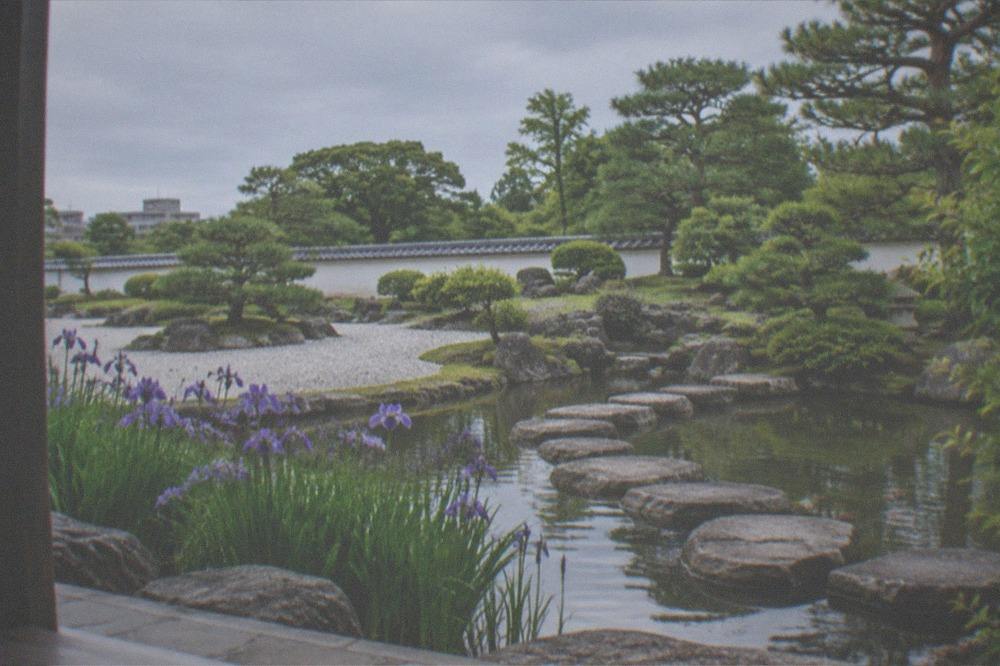
Late May into early June is the garden's strongest window, when the iris beds along the pond reach full flower. Late November into early December is the second peak, when the maples turn and the garden holds its colour longer than most of the city. Spring brings cherry blossom on the surrounding park, summer offers long evening hours, and winter mornings are the quietest of the year.
The iris season deserves its reputation. The garden's pond-edge iris beds flower in the late spring window that also brings the city's plum rains, and the blooms sit directly on the water line, which is the composition Japanese iris gardens are built around. The garden's summer hours, open until 18:00, mean you can catch the flowers in the softer light after the day-trippers have gone.
Autumn is arguably the better overall visit. The maples in and around the garden turn in mid to late November, and Fukuoka's city parks tend to hold their colour into early December, which gives the season a longer tail than in colder parts of Japan. The free park outside puts on its own display, and the Fukuoka Castle ruins a few minutes east are one of the city's main autumn-walking spots, with roughly a thousand cherry trees that make the same grounds a spring destination.
| Season | What you get | Best time of day |
|---|---|---|
| Late March to early April | Cherry blossom in the surrounding park | Morning, before crowds build |
| Late May to early June | Iris beds at the pond edge | Late afternoon, garden open to 18:00 |
| July to August | Deep green, long hours, cicadas | Early morning or after 17:00 |
| Mid to late November | Maples at peak, garden colour into December | Morning light on the water |
| December to February | Bare trees, quiet paths, winter skies | Midday for warmth |
One planning note that competitors rarely mention: July is Fukuoka's wettest month, at 299.1 mm against June's 249.6 mm in the Japan Meteorological Agency's 1991 to 2020 normals, even though June is the month everyone labels as the rainy season. If you are scheduling a garden visit around the iris, a morning slot in late May beats an afternoon slot in July for both flowers and weather. Typhoon season runs roughly July through October, and a garden built around a pond closes or empties quickly when a system approaches, so check the forecast rather than the calendar.
For travellers using the garden as one stop on a longer city day, the practical move is to pair it with a morning walk or ride. The half-day city essentials tour covers Fukuoka's core sights in three to six hours and routes naturally past the park, which suits visitors who want the garden's scenery without planning the walk themselves.
What Else Is Around Ohori Park?
The garden sits inside a cluster of attractions that share the same subway station: the free Ohori Park lake path, the Fukuoka Art Museum beside the garden's main gate, the Fukuoka Castle ruins and Maizuru Park a short walk east, and the small Rakusuien teahouse garden south of the lake. All of them are walkable in a single half-day loop, and none of them needs a ticket except the art museum's collection galleries.
The art museum is the most natural pairing. It stands immediately beside the garden's Kabukimon entrance, so the two share a gate area, and its collection exhibition costs ¥200 for adults and ¥150 for university and high school students, with free entry for junior high school students and younger and for visitors 65 and over resident in Fukuoka, Kitakyushu, Kumamoto or Kagoshima. The museum's own visitor guide at the official Fukuoka Art Museum page lists the current hours, including the Friday and Saturday evening openings that run from July to October, which pair neatly with the garden's own summer schedule.
| Nearby attraction | Walking time from the garden | Cost |
|---|---|---|
| Ohori Park lake path | Immediate | Free |
| Fukuoka Art Museum | 1 minute | ¥200 collection, some exhibits more |
| Fukuoka Castle ruins / Maizuru Park | 10 to 15 minutes | Free |
| Rakusuien garden | 10 minutes | Small fee at the gate |
| Ohori Park boat rental | 5 minutes | Check the operator's counter |
East of the lake, the castle grounds add history to the garden's scenery. The castle ruins are free to walk, though one part, the Tenshudai main keep base, is closed to entry from 26 May 2026 until the end of December 2026 for an archaeological excavation. The story behind that closure is one of the best in the city: a document found in December 2024 describes a keep that may never have existed, and the city is digging to find out. South of the lake, Rakusuien is a much smaller garden built around a historic teahouse, a good second stop for visitors who want to compare two gardens in one afternoon.
The neighbourhood also handles the practical side of a visit well. Cafes cluster along the park's western side, the Ohori Terrace area serves as a rest stop, and the lake path itself is one of the city's most-used running routes. Visitors with children often continue from the park to the Fukuoka City Zoo and Botanical Garden a short subway ride away, which pairs animals with its own botanical collection.
What Should You Know Before You Go?
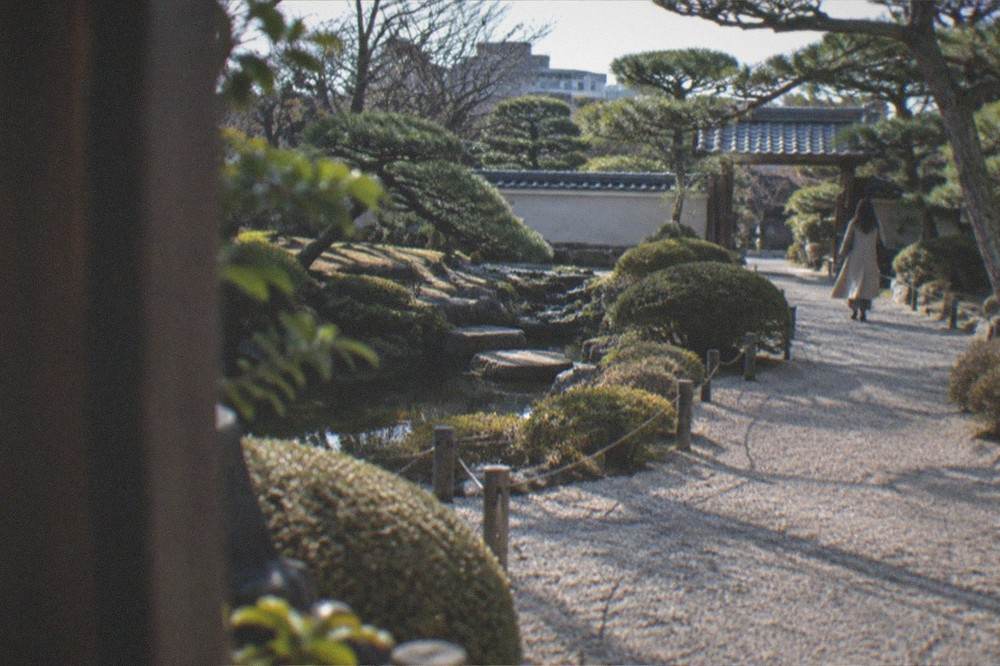
Plan 30 to 45 minutes inside the garden, arrive before the last entry time for your season, and carry cash for the gate. The path is gravel and includes stepping stones and an arched bridge, so sensible shoes matter more than they do on the free park's paved circuit. The garden closes on Mondays, and the quietest visits are weekday mornings, shortly after the 9:00 opening.
Footwear is the detail that surprises people. The stepping-stone crossing is a genuine feature of the route, not a decoration, and it is skipped in wet weather or by visitors who are unsteady on their feet. The rest of the path is a soft gravel surface that wheelchairs can manage with assistance, though the stones and bridge make the full circuit difficult; visitors with mobility concerns should ask at the gate about the practical route before paying.
Photography is welcome and the light matters. Morning sun comes over the lake and lights the teahouse from the east; late afternoon in the summer season puts warm light across the iris beds and the water. The garden's compact size means a serious photographer can work the whole circuit in an hour and still have time to wait for the light to move.
Visitors who enjoy the garden's teahouse atmosphere often want the experience rather than just the view, and a tea ceremony session in the city is the natural extension. The tea ceremony with a maiko runs about an hour and is one of the least expensive cultural bookings in the roster, which makes it an easy add-on to a garden morning.
A final note on pace. Fukuoka rewards slow mornings more than most Japanese cities, and the Ohori Park area is where the city itself goes to slow down. Locals jog the lake loop, elders practise taiko on the shore, and the garden sits in the middle of all of it, quietly fenced off. Building the garden into a morning, with the art museum or the castle ruins after, is the way the district works best; treating it as a drive-by photo stop undersells both the garden and the park around it. For more on how the pieces fit together, the itineraries on Fukuoka Japan Travel Guide sequence the park into first-visit plans of every length.
Common Questions About Ohori Park Japanese Garden
Is Ohori Park Japanese Garden Worth Visiting?
Yes, for most travellers. The ¥250 admission buys a well-built circular stroll garden with a pond, a teahouse, iris beds and maples, all inside a free park you are likely to visit anyway. It is a 30 to 45 minute experience rather than a half-day one, so it works best paired with the lake path, the Fukuoka Art Museum or the castle ruins.
How much does Ohori Park Japanese Garden cost?
Adults pay ¥250 and children ¥120, with group rates of ¥200 and ¥100 for parties of 20 or more. Children under 6, visitors 65 and over, and disability certificate holders with one carer enter free. Tour guides accompanying groups also pay the standard admission.
What are the opening hours?
The garden opens at 9:00 every day. From May to September it closes at 18:00 with last entry at 17:45; from October to April it closes at 17:00 with last entry at 16:45. It closes on Mondays, or the next weekday when a public holiday falls on a Monday, and from 29 December to 3 January.
How do I get to the garden from Hakata or Tenjin?
Take the subway to Ohori-Koen station; a single fare from the central city sits in the ¥260 band. The garden is about a 10 minute walk from the station, with the main Kabukimon gate beside the Fukuoka Art Museum on the lake's northern side.
When is the best season to visit?
Two peaks stand out: the iris beds flower from late May into early June, and the maples turn from mid to late November, often holding colour into early December. Summer visits benefit from the later 18:00 closing time, and winter weekday mornings are the quietest.
Can you combine the garden with other attractions?
Easily. The free Ohori Park lake path surrounds it, the Fukuoka Art Museum stands beside the main gate, the Fukuoka Castle ruins and Maizuru Park are a 10 to 15 minute walk east, and the small Rakusuien teahouse garden sits south of the lake. All of them fit a single half-day loop.