Hiking Near Fukuoka
Fukuoka is one of the easiest walking cities in Japan, and the trails start inside the city limits, not two hours outside them.
Short answer
You can hike near Fukuoka without a car along the Ohori Park and Maizuru Park loops in the city centre, out to Uminonakamichi Seaside Park for ¥450, and across to island and coastal paths by ferry and local train. A subway day pass costs ¥640 and covers all three lines.
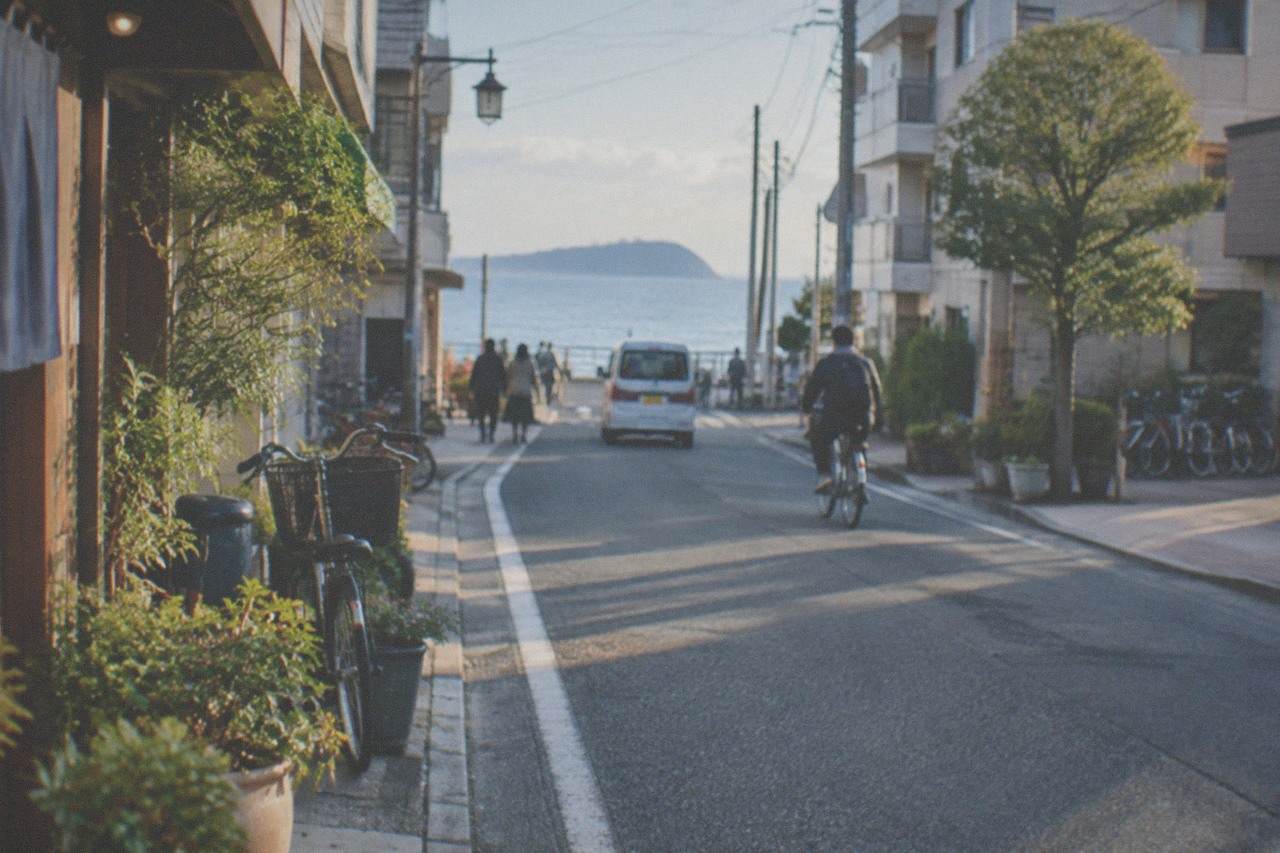
Fukuoka packs more walkable ground inside its city limits than almost any other Japanese city its size. The centre is flat, compact and stitched together by three subway lines, the coastline of Hakata Bay sits a short ride from the main station, and the mountains of northern Kyushu begin at the edge of the suburbs. A visitor does not need a rental car to walk here, and in Hakata or Tenjin a rental is actively unhelpful. This page lays out the car-free options honestly: what is genuinely a hike, what is a pleasant stroll wearing hiking boots, what each leg costs in verified fares, and when the weather says stay home.
Where Can You Hike Near Fukuoka Without a Car?
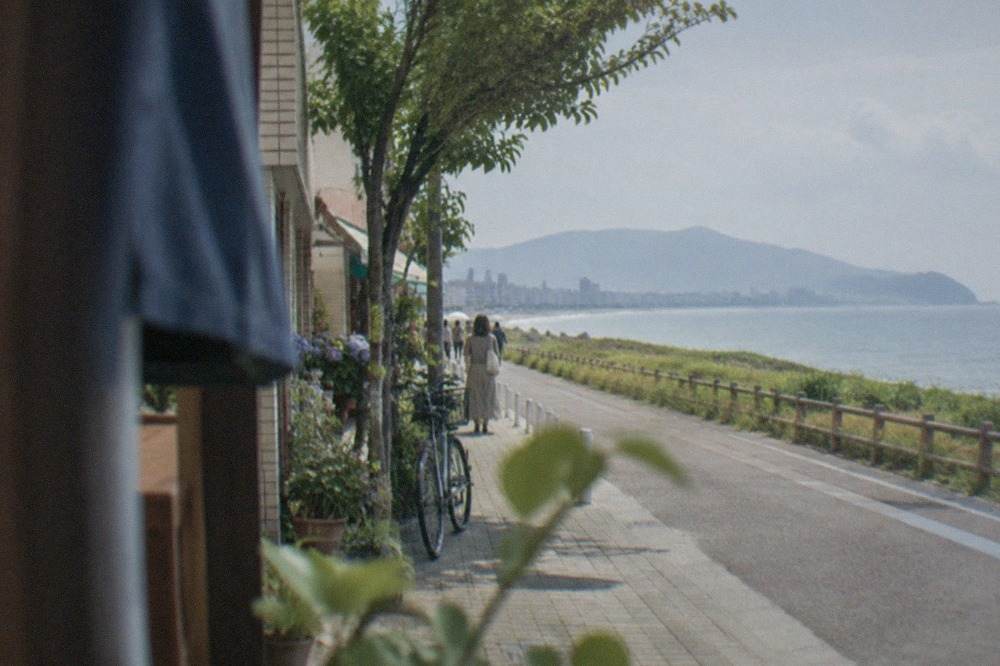
Yes, and the honest answer splits into three tiers: proper city walks around Ohori Park and Maizuru Park, half-day coastal rambles at Uminonakamichi and Momochi, and full-day island and headland trails at Shikanoshima and Nokonoshima reached by local train and ferry. Every one of them is reachable on public transport, and none requires anything more than a transit card and a pair of comfortable shoes.
The word "hike" does a lot of work in travel content, so it is worth being precise. Fukuoka is not a mountain-trekking base the way Takayama or Kamikochi is, and pretending otherwise sets the wrong expectations. What it offers instead is unusual for a city of 1.66 million people: a bay shoreline you can walk for hours, parkland that used to be a castle, and islands a ferry ride from the downtown core. The city's own statistics office counted 1,663,892 residents as of October 2025, the fastest growth of any designated city in Japan, and much of that growth clusters around a walkable waterfront.
For context on getting around generally, the site's Fukuoka subway guide covers the three lines in detail, and the broader getting around Fukuoka overview explains when buses beat trains. This page stays on walking.
The Best Car-Free Walks Inside the City
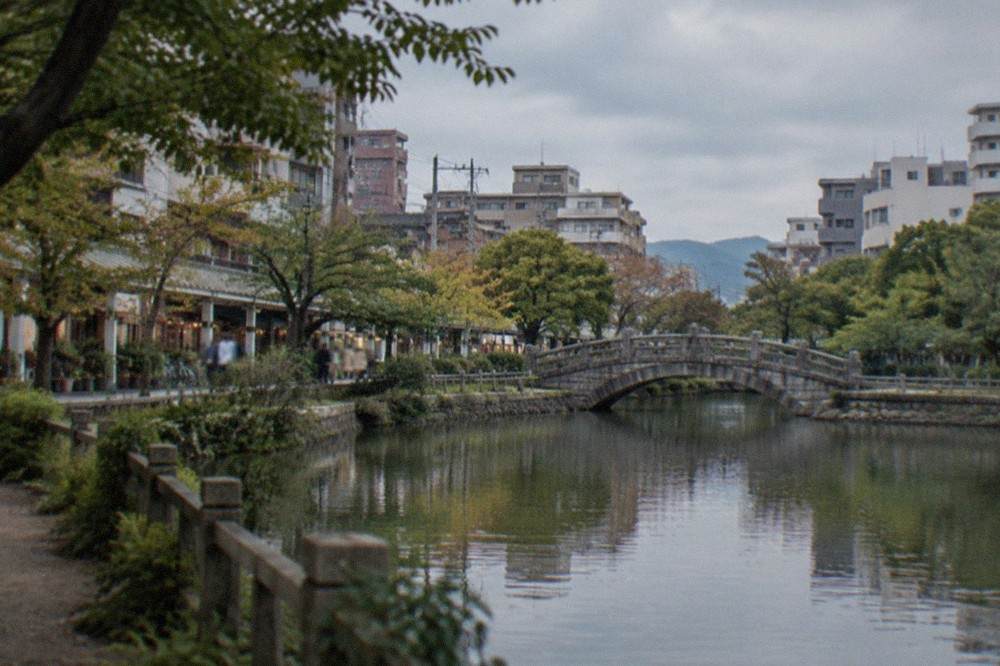
The two anchor walks are Ohori Park, a free park built around a former castle moat, and the adjoining Maizuru Park with the Fukuoka Castle ruins, and together they give you a couple of hours of easy trail on flat ground without leaving the central district. Both are free to enter, both connect to the subway, and neither needs a plan beyond showing up.
Ohori Park is the city's walking heart. The pond is a remnant of the moat system, the path around it is paved and level, and locals treat the loop as a daily institution, joggers before work, strollers all day. The park itself is free and open, with entrances on the Fukuoka Art Museum side and the Ohori Terrace side. The Japanese Garden inside the park charges admission, adult ¥250 and child ¥120, with visitors 65 and over admitted free, and it is worth the small fee for a slower, shaded circuit. The Ohori Park guide covers the garden and the surrounding museums.
Maizuru Park sits next door, holding the Fukuoka Castle ruins. The grounds are free, and the stone walls and gatehouse make a genuinely atmospheric walk. One honest caveat for 2026: the Tenshudai, the main keep base, is closed to entry from May 26, 2026 until the end of December 2026 for an archaeological excavation. The story behind the closure is better than the closure is annoying. A document found in December 2024 described a keep that may never have existed, the city dug in 2025, and in 2026 it tripled the excavation area. Whether the "phantom keep" was real is still an open question, which makes the rest of the ruins walk more interesting, not less. The Fukuoka Castle ruins guide has the detail.
South and east of the centre, Atago Shrine sits on a hill above the Muromi River and rewards a short, steep stair climb with one of the best elevated views over the city and Hakata Bay. The Atago Shrine page describes the approach. None of these inner-city walks needs gear. Water, sun protection in summer, and that is about it.
A reasonable question at this point is what to do with the rest of a trip built around walking. If you are landing with luggage and heading straight for a trail, the practical move is a transfer rather than a drag-along.
The picks above are not hikes, and that is the point. The transfer solves the boots-and-bags problem on arrival day, the teamLab Forest ticket is the indoor fallback when the weather turns, and the Beppu and Yufuin day trip is the hot-spring reward after a long week of walking. Each earns its place at a genuine decision moment rather than as decoration.
How to Reach the Coastal and Island Trails by Train
The car-free coastline runs from Momochi Seaside Park west along Hakata Bay to Uminonakamichi Seaside Park, and the island trails at Shikanoshima and Nokonoshima sit beyond it, reached by local train and ferry respectively. Uminonakamichi charges ¥450 for adults and its gate takes cash only, a detail almost no guide mentions, and the subway day pass at ¥640 covers the city legs of these trips.
Uminonakamichi Seaside Park is the biggest car-free walking destination in the city. It is a narrow sandbar park between Hakata Bay and the Genkai Sea, with lawns, cycling paths, an animal forest and long flat walking routes along the water. The verified numbers matter here: admission is adult ¥450, 65 and over ¥210, and junior high school age and under free. Hours run 9:30 to 17:30 from March 1 to October 31 and 9:30 to 17:00 from November 1 to February 28, with entry until an hour before closing. The gate takes cash only, so bring yen. The park also closes on selected Tuesdays that shift by season, plus December 31 and January 1 and a mid-January block, so never treat it as open daily. The Uminonakamichi guide has the calendar.
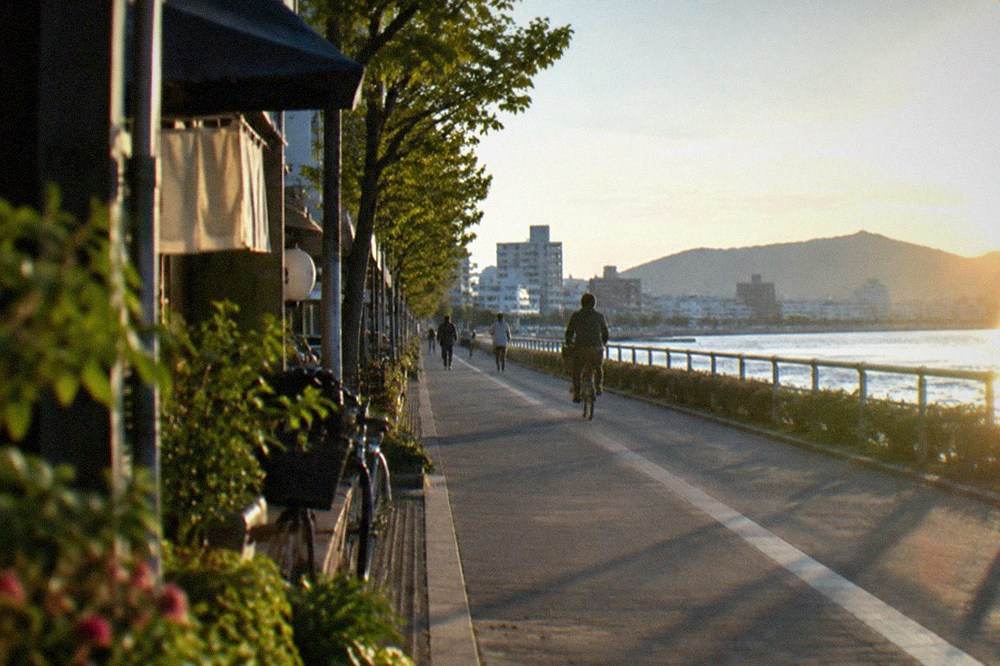
Momochi Seaside Park, closer in, gives you the beachfront stretch with Fukuoka Tower at the far end. The tower charges ¥1,000 for adults, ¥500 for elementary and junior high students and ¥200 for children four and over, and it closes on June 28 and 29 in 2027 for its annual maintenance. Walking the sand at Momochi is free, and the Momochi guide and Fukuoka viewpoints guide cover the photo stops.
Shikanoshima, the island at the northern tip of the sandbar, is the closest thing to a real half-day hike on this list. A local train reaches the island, and the road around it plus the hilltop shrine paths give you a genuine coastal circuit with sea on both sides. Nokonoshima, in the middle of Hakata Bay, is a short ferry from Meinohama on the western edge of the city, and its island park is a flower-field and shoreline walk rather than a strenuous one. The Nokonoshima day trip page and the Shikanoshima day trip page cover both crossings. For the ferry-and-island combination with lunch built in, the Colors of Japan tour pairs the island park with a wagyu barbecue.
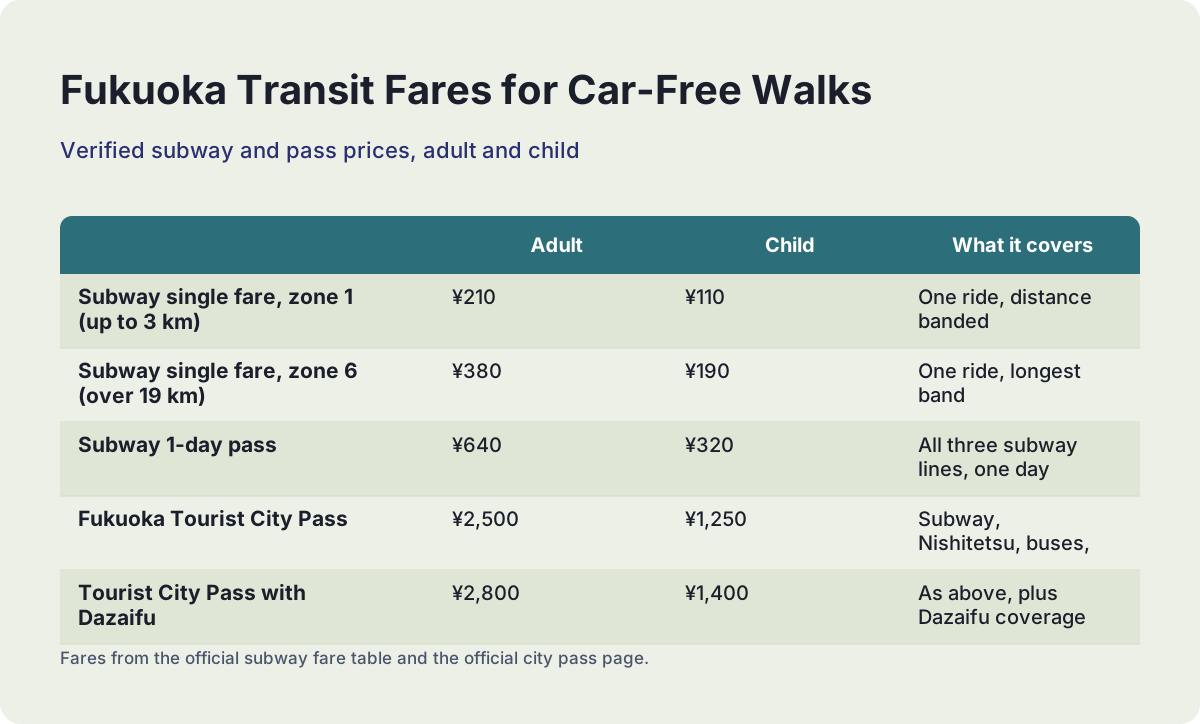
The transit fares are verified and worth printing, because they are the whole argument for car-free walking here. The official subway fare table sets single adult fares by distance band, from ¥210 for journeys up to 3 km up to ¥380 for over 19 km. The one-day pass is ¥640 for adults and ¥320 for children, valid on all three lines from first train to last train on the day of purchase.
| Option | Adult | Child | What it covers |
|---|---|---|---|
| Subway single fare, zone 1 (up to 3 km) | ¥210 | ¥110 | One ride, distance banded |
| Subway single fare, zone 6 (over 19 km) | ¥380 | ¥190 | One ride, longest band |
| Subway 1-day pass | ¥640 | ¥320 | All three subway lines, one day |
| Fukuoka Tourist City Pass | ¥2,500 | ¥1,250 | Subway, Nishitetsu trains and buses, ferries, one day |
| Tourist City Pass with Dazaifu | ¥2,800 | ¥1,400 | As above, plus Dazaifu coverage |
The Tourist City Pass deserves its own paragraph because most competing guides still quote a stale price for it. The official pass page lists ¥2,500 for the city version and ¥2,800 with Dazaifu, and the pass is restricted to overseas tourists on a short-stay visa, with a passport checked at the counter. It covers subway, Nishitetsu trains and buses, some JR lines and ferries for one day, and it is the single ticket that makes an island-and-bay walking day simple. If you are walking rather than riding all day, the ¥640 subway pass is usually the better buy; the Tourist City Pass earns its price when the ferry is in the plan.
What the Weather Does to a Fukuoka Hike
Fukuoka is walkable year round, but the Japan Meteorological Agency's 1991 to 2020 normals show a pattern most guides get backwards: July is the wettest month at 299.1 mm, wetter than June's 249.6 mm despite June being the tsuyu rainy season, and August is hot at a 28.4 degree mean but drier and sunnier than either. Typhoon season runs roughly July through October and is a real planning factor, not a warning to stay away.
The monthly picture, from the JMA's published normals for the Fukuoka station, looks like this.
| Month | Mean temp | Daily max | Daily min | Rainfall |
|---|---|---|---|---|
| January | 6.9 | 10.2 | 3.9 | 74.4 mm |
| April | 15.4 | 19.9 | 11.5 | 118.2 mm |
| July | 27.4 | 31.2 | 24.6 | 299.1 mm |
| August | 28.4 | 32.5 | 25.4 | 210.0 mm |
| October | 19.6 | 23.7 | 16.0 | 94.5 mm |
| November | 14.2 | 18.2 | 10.6 | 91.4 mm |
Read that table as a walking calendar. March through May is the sweet spot: mild means, manageable rain, and the most sunshine of the year in May at 204.1 hours. Late June into July is the soggy stretch, and the surprise is that July, Yamakasa festival month, is wetter than the rainy season itself. August is hot but honest about it, and it banks 200.9 sunshine hours, second only to May. October and November are the second sweet spot, drier than spring and cooler, which is exactly what you want for the longer island circuits. The Fukuoka weather guide and best time to visit Fukuoka guide expand on this, and the typhoon season page covers the July to October window in detail.
One practical note on the yatai, because a walking day in Fukuoka ends at a food stall more often than not. The city has about 100 licensed yatai, more than any other Japanese city, and the city ordinance that governs them bans "market price" pricing, so every stall must post its prices where customers can see them. They are walk-in, you cannot book a stall, and rain closes many of them because they are open-air. The Fukuoka yatai guide and the yatai etiquette page cover the how-to.
Half-Day and Full-Day Trails Beyond the City Edge
Beyond the city limits, the car-free options are Itoshima's coastal paths and Shiraito Falls, reached on guided day tours from Fukuoka, and the Kyushu interior, including Mount Aso and Takachiho, on full-day coach tours. These are genuine full days, not half-day add-ons, and planning them as anything less is the classic mistake.
Itoshima, the peninsula west of the city, is where the hiking gets real. Shiraito Falls, the Sakurai Futamigaura coastline with its famous couple-stone in the sea, and the peninsula's fishing-village paths add up to a full day of varied walking. Public transport out there is thin, which is the honest reason the guided tours exist: the Itoshima Hidden Gems Day Tour runs from $69 per person, rated 4.6 from 31 reviews, and the Itoshima coastal scenery tour runs 10 hours from $77, rated 4.5 from 44 reviews. Both handle the roads so you handle the trails.
Further afield, the big-name Kyushu landscapes are all reachable as full-day tours from Hakata. Mount Aso's volcanic grasslands and the Takachiho Gorge are the two headline walks, and the tour options range from $48 per person for the Takachiho gorge and railway tour, rated 4.8 from 713 reviews, up to private Nagasaki full days at the other end of the price scale. The Kyushu overview and the day trips from Fukuoka guide map the full spread, and the Kyushu itinerary page strings them together.
Be clear with yourself about scale when booking. A 10-hour tour day is a 10-hour day, and the itineraries to Aso, Takachiho, Beppu and Yufuin are full days by any measure. The site's day trip pages flag which destinations work as half days, Dazaifu and Yanagawa among them, and which do not. Treating Beppu as a half-day excursion is how people end up seeing two of the seven hells and a bus station.
| Route | Time needed | Transport | Effort level |
|---|---|---|---|
| Ohori Park loop | Under 1 hour | Subway to Ohori Koen | Flat, easy |
| Maizuru Park and castle ruins | 1 to 2 hours | Subway to Ohori Koen | Gentle, some slopes |
| Momochi beachfront | 1 to 2 hours | Subway to Tojinmachi | Flat, easy |
| Uminonakamichi sandbar paths | Half day | JR to Uminonakamichi | Flat, easy, cash gate |
| Shikanoshima island circuit | Half day | Local train to the island | Moderate, real trail |
| Nokonoshima island park | Half day | Ferry from Meinohama | Gentle, flower fields |
| Itoshima coast and Shiraito Falls | Full day | Guided tour | Moderate, varied |
Where to Rest Your Legs After the Trail
After a walking day, the recovery options are the city's onsen and sento culture, its food, and its compact nightlife, all of which sit within a short subway ride of the central hotels. The Fukuoka onsen guide covers the soak, and the food pages cover everything from motsunabe to the izakaya scene, so the plan is simple: walk, soak, eat, sleep.
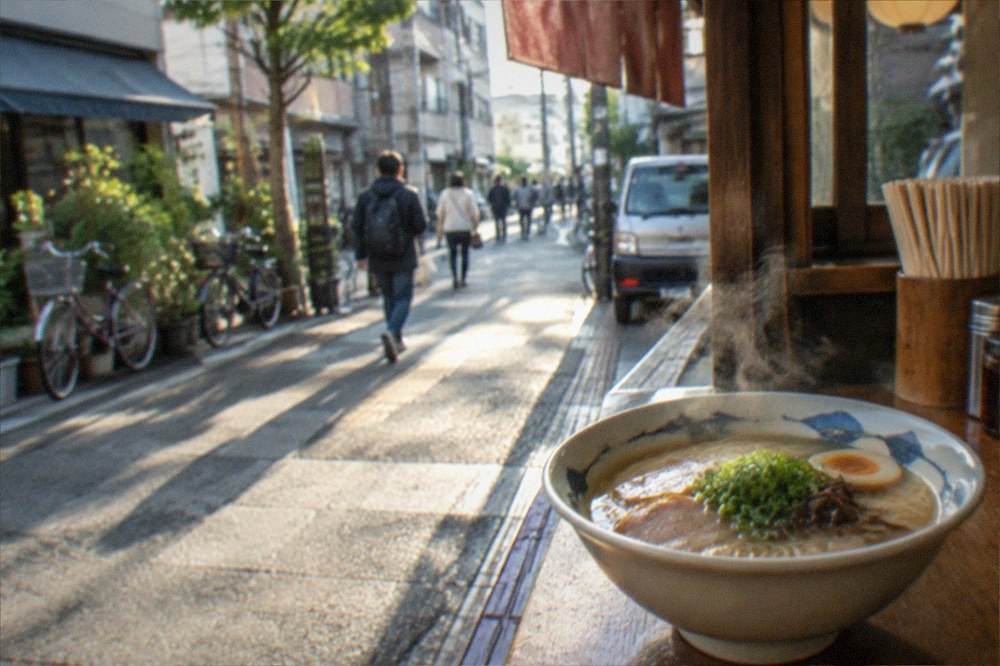
The order matters less than the proximity. Fukuoka's onsen culture is modest compared with Beppu's, but a soak after a long coastal walk is a real thing here, and the onsen guide lists the accessible options. Foodwise, the Fukuoka food guide is the master page, with the izakaya guide for the specifics. A bowl of tonkotsu ramen at a Nagahama stall after a cold-weather walk is the local version of recovery food, and the Hakata ramen guide explains why the broth here is different.
For families, the walking plan barely changes. The flat park loops, the Momochi beachfront and the Uminonakamichi animal forest are all child-friendly, and under-15s enter the city zoo, Uminonakamichi and both city art museums free, which makes a walking-plus-animals day cheap. The Fukuoka with kids guide builds on this. If the weather collapses entirely, the rainy day itinerary is the fallback, and the teamLab Forest ticket is the indoor centrepiece of it.
When a Tour Beats a Self-Guided Walk
A tour beats self-guided walking in three situations: when the trailhead is beyond thin public transport, which is Itoshima and the Aso and Takachiho interior; when the day is long enough that logistics eat the walk; and when an airport arrival leaves you with bags and no hotel yet. Inside the city itself, self-guided wins every time, because the subway and ferries do the work.
The division of labour is clean. City walks, island ferries and sandbar rambles are do-it-yourself territory, and the fare table earlier in this page is the entire toolkit. The peninsula and the interior are tour territory, not because you cannot get there but because the bus timetables are hostile to a walking schedule. And arrival day is transfer territory: the private arrival transfer from Fukuoka Airport, from $149 per person, rated 5 from 2 reviews, is the difference between starting day one at a trailhead and starting it in a luggage queue. The airport is unusually close to the city centre, which is true and sourced, and the subway fare from the airport to Hakata is ¥260, verified against the official 3 to 7 km fare band. No journey time in minutes is printed here because no official page states one, despite what every other guide claims.
For the wider planning, the where to stay in Fukuoka guide settles the Hakata-versus-Tenjin question, and the arrival pages, Fukuoka Airport and airport to city, cover the landing logistics. This site, Fukuoka Japan Travel Guide, keeps the whole walking-and-transit picture in one place, which is the point of it.
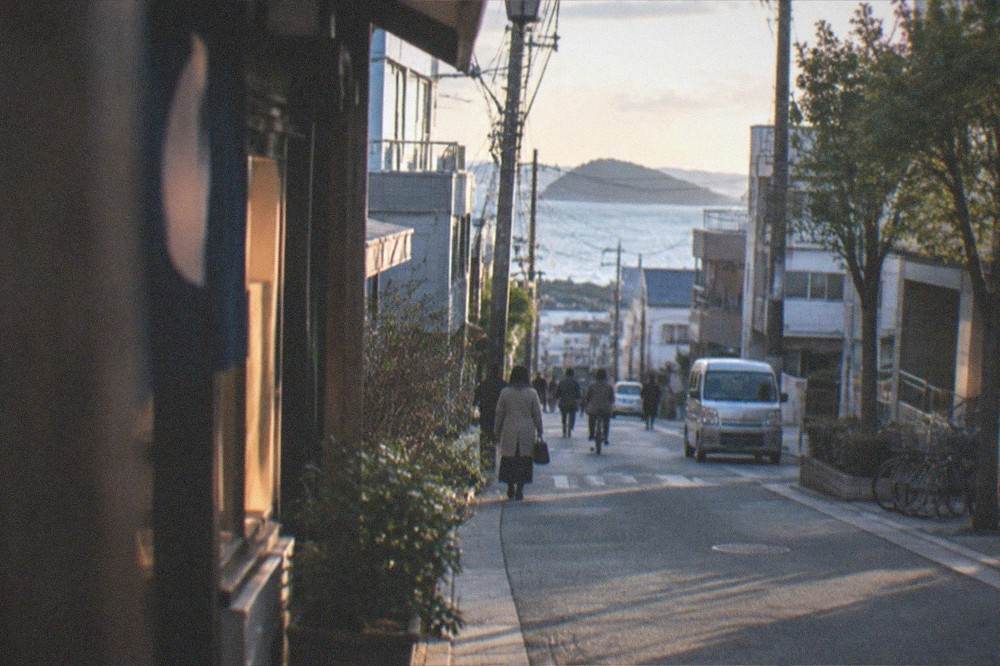
The honest summary: Fukuoka rewards walkers who match ambition to the city's actual shape. It is a bay-and-park city with islands, not an alpine base, and its car-free walking is better than almost anywhere in Japan precisely because the transit is cheap, the trails start downtown, and the recovery food is a bowl of ramen at a riverside stall. Plan around the JMA rainfall numbers, respect the Tuesday closures at Uminonakamichi, carry cash for the park gate, and the rest of it takes care of itself.
Common Questions About Hiking Near Fukuoka
Where Can You Hike Near Fukuoka Without A Car?
Ohori Park and Maizuru Park in the centre, the Momochi beachfront, Uminonakamichi Seaside Park on the sandbar, and the islands of Shikanoshima and Nokonoshima by local train and ferry. All are reachable on public transport and none needs a rental car.
Is Fukuoka good for walking?
Yes. The centre is flat and compact, the subway connects everything, and the bay shoreline plus two large parks put a couple of hours of walking within the city limits. Serious mountain hiking requires a tour or a train into the Kyushu interior.
Do I need hiking boots in Fukuoka?
For the city parks and coastal paths, no. Comfortable walking shoes are enough. For the island circuits and any Itoshima or Aso tour day, something with grip is sensible, especially after rain.
What does it cost to reach the trails?
The subway day pass is ¥640 for adults and covers all three lines. The Tourist City Pass is ¥2,500, or ¥2,800 with Dazaifu, and adds ferries and Nishitetsu trains, but it requires a passport check at purchase.
When is the best season for walking in Fukuoka?
March to May and October to November. July is the wettest month at 299.1 mm, wetter than the June rainy season, and typhoon season runs roughly July through October, so check the forecast rather than the calendar.
Can I walk to Uminonakamichi Seaside Park?
You can reach it by public transport and walk inside the park for hours. Admission is ¥450 for adults, the gate takes cash only, and the park closes on selected Tuesdays, so check the official calendar before you go.