How Do You Get to Shikanoshima from Fukuoka by Ferry or Road?
Shikanoshima guards the mouth of Hakata Bay, where the sheltered water of the bay meets the open Genkai Sea. Two routes reach it from central Fukuoka, one by water and one across the Uminonakamichi sandbar, and both fit comfortably in a single day.
Short answer
You reach Shikanoshima either by passenger ferry across Hakata Bay from the city's waterfront terminals, or by road out along the Uminonakamichi sandbar and across to the island. Subway fares to the bay-side terminals run from ¥210 to ¥380 depending on distance, with a 1-day pass at ¥640; ferry and parking tariffs are posted at the terminal.
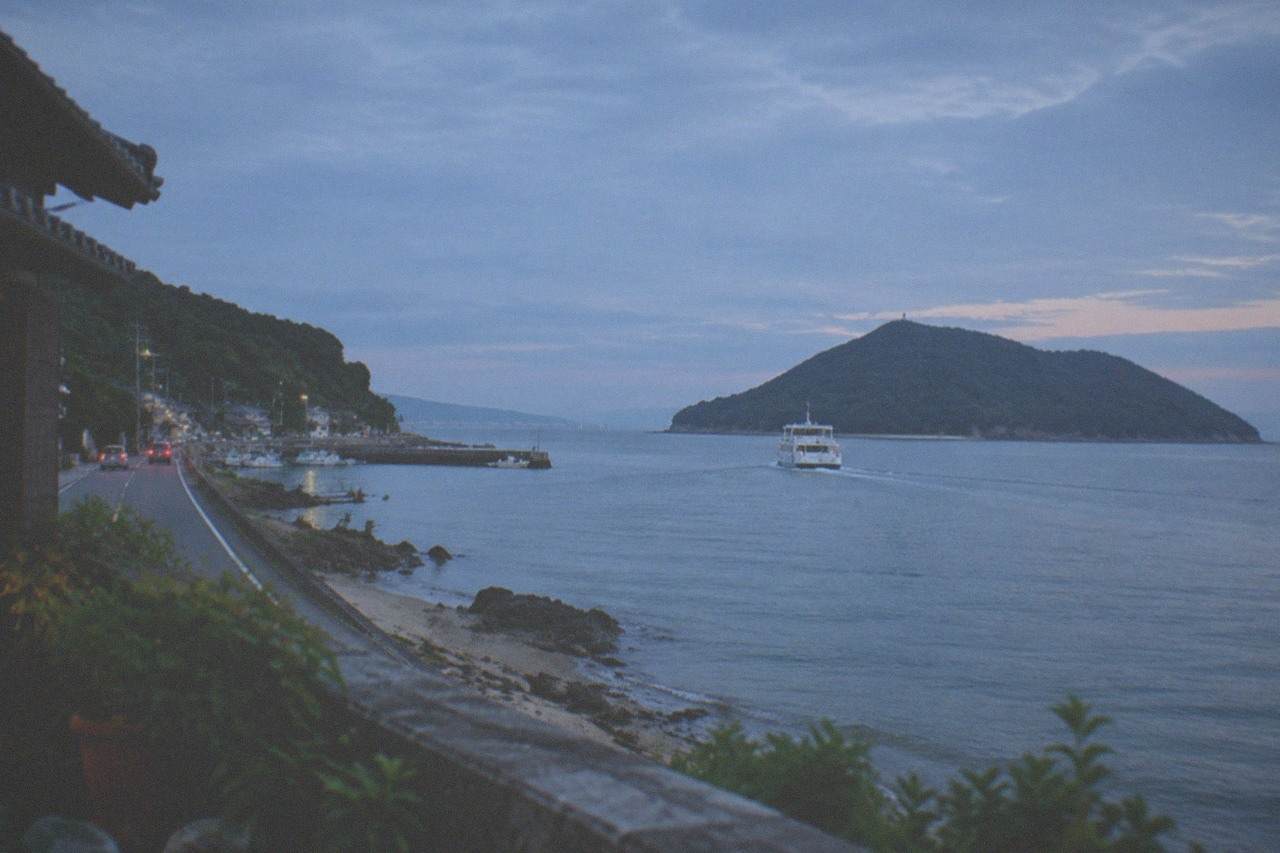
Shikanoshima is the island that sits at the mouth of Hakata Bay, the point where the bay's sheltered water finally gives way to the open Genkai Sea on Kyushu's north coast. It is not a Pacific island and it is not a long-haul destination: it is a bay island, close enough to central Fukuoka that a full day there leaves time for a proper dinner back in the city. The catch, and the reason this page exists, is that reaching it involves a small decision. You can go by water, on the passenger ferries that cross the bay, or by road, driving or cycling out along the Uminonakamichi sandbar that links the island to the mainland. Both routes are straightforward once you know which terminal or which road you are aiming for, and neither requires anything exotic in the way of planning. The pages of Fukuoka Japan Travel Guide cover the whole city and its day trips, and this one handles the island at the bay mouth.
One point of geography settles half the confusion people bring to Fukuoka transport questions. Hakata is a ward and a station name inside the same city as Tenjin, Nakasu and everything else; it is not a separate place you travel between. So "from Fukuoka to Shikanoshima" simply means from the city you are already standing in, whether that is beside Hakata Station or in a Tenjin hotel. There is also no JR Fukuoka Station. The rail hub is Hakata Station, and it is the natural landmark for starting this trip. For a wider view of the region's day trips, the day trips from Fukuoka overview ranks every option by travel effort.
How Do You Get to Shikanoshima from Fukuoka by Ferry or Road?
The honest short answer is that there are two routes and neither is hard: the ferry crossing, which leaves from bay-side terminals in Fukuoka and delivers you to the island without a car, and the road, which runs out along the Uminonakamichi sandbar and across a short bridge onto Shikanoshima itself. Choose the ferry if you are on foot and want the crossing to be part of the day; choose the road if you have a car, a bicycle or a desire to stop at Uminonakamichi on the way.
Both routes begin the same way, with a subway ride to the water. Fukuoka City Subway's three lines cover the whole city, and its fares are set by distance bands: ¥210 for a trip of up to 3 km, rising through ¥260, ¥300, ¥340 and ¥360 to a maximum of ¥380 for anything over 19 km, with children paying roughly half. The official fare table on the subway operator's site spells out every band. If you expect to make three or more subway trips in a day, the 1-day pass at ¥640 for adults already pays for itself and then some, and it is sold at station machines as well as the tourist information desks at Tenjin, Hakata Station and the airport.
Which route suits you depends mostly on what you want the day to feel like. The ferry is a genuine little voyage: you board at a waterfront terminal, watch the city skyline shrink, and arrive with salt in the air. The road is a landscape day instead, a long glide down the Uminonakamichi spit with the bay on one side and the sea on the other, and it puts a bike or a car at your disposal for circling the island. Neither route has a hidden complication. The ferries are ordinary scheduled passenger services, and the road is an ordinary public road, driveable in any rental car and cyclable on a rented bike if you are comfortable with a few dozen kilometres.
There is a third option worth naming only to rule it out: walking. The Uminonakamichi sandbar is a long stretch of ground, and while the determined can cycle it, walking the whole way out and back eats the entire day before you have seen the island. Treat the sandbar as a corridor, not a destination walk.
Where Does the Ferry to Shikanoshima Leave From?
Ferries to Shikanoshima leave from bay-side terminals around Hakata Bay rather than from a single dedicated port, so pick the terminal closest to where you are staying. The waterfront around Hakata and the bay-side areas of the city carry the passenger services that island-hop within the bay, and the crossing to Shikanoshima is a short bay run rather than an open-sea passage. Fares are posted at each terminal, and the schedules follow the operator's own timetable.
The mental model that helps is this: Hakata Bay is a working body of water with several terminals scattered along its shore, and the ferry network links them with the islands in the bay. Shikanoshima is the island at the bay's mouth, and the passenger boats that serve it also connect the bay's other island destinations, including Nokonoshima, the flower island to the west. If you are weighing the two islands against each other, the Nokonoshima day trip guide covers that crossing in detail; the two trips are similar in effort and quite different in character.
Practical details are the part people worry about, so here they are plainly. You do not need to book a bay ferry in advance; these are walk-on services. You buy a ticket at the terminal, and the fare is whatever the operator's tariff board says on the day, which is why this guide does not print a number for the crossing. Bicycles are generally carried on bay ferries for an additional small charge, again at the posted rate, and this is worth knowing because a bike transforms an island day. If you are starting from Hakata Station, the subway leg to the relevant waterfront costs one zone-one or zone-two fare, ¥210 or ¥260, and takes only a few stops.
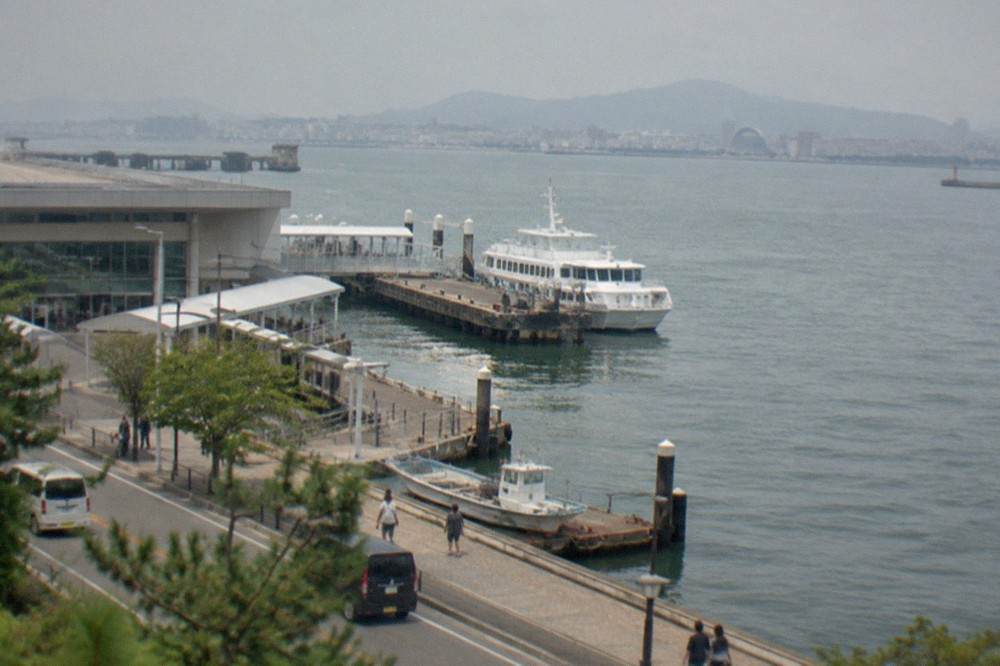
One warning worth stating twice: do not turn up at the last minute of the day expecting a late sailing. Bay ferry services wind down in the early evening, and the last departures are earlier than most visitors guess. Plan to be back at the terminal side of the water with a comfortable margin, or accept that you will be finishing the day the long way round by road, which is possible but not what you planned at breakfast.
The comparison below lays out the realistic choice. The subway figures are official; the ferry fares are deliberately left as posted-on-the-day figures because tariffs belong to the operators, and a guide that invents them dates itself the moment a price moves.
| Route | Starts from | Vehicle | What you can verify in advance | Best suited to |
|---|---|---|---|---|
| --- | --- | --- | --- | --- |
| Bay ferry to Shikanoshima | Waterfront terminals around Hakata Bay | Foot passengers, bicycles for a small charge | Timetable and fare posted at the terminal | Visitors without a car who want the crossing to be part of the day |
| Subway plus ferry | Any subway station in the city | Subway, then the ferry | Subway fare ¥210 to ¥380 by distance band | Anyone starting from Tenjin, Hakata or elsewhere in the centre |
| Road via Uminonakamichi | Central Fukuoka by car or bike | Your own car, rental car or bicycle | Subway 1-day pass ¥640 if you ride transit to pick up a bike | Drivers, cyclists and anyone who wants to stop at the Seaside Park |
| Rainy-day alternative | Anywhere in the city | Whatever the weather permits | See a rainy day itinerary for indoor options | Days when the bay is grey and the island loses its appeal |
If the weather is doubtful, a rainy day itinerary is the honest fallback plan; an island whose whole appeal is sea and sky has little shelter to offer.
Driving to Shikanoshima: The Road Across the Uminonakamichi Sandbar
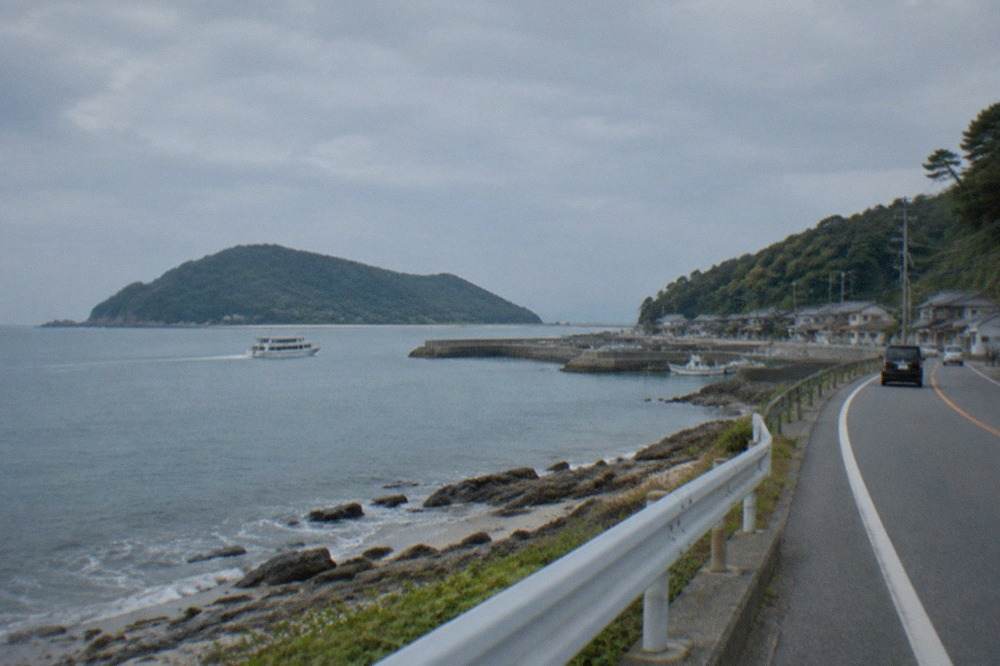
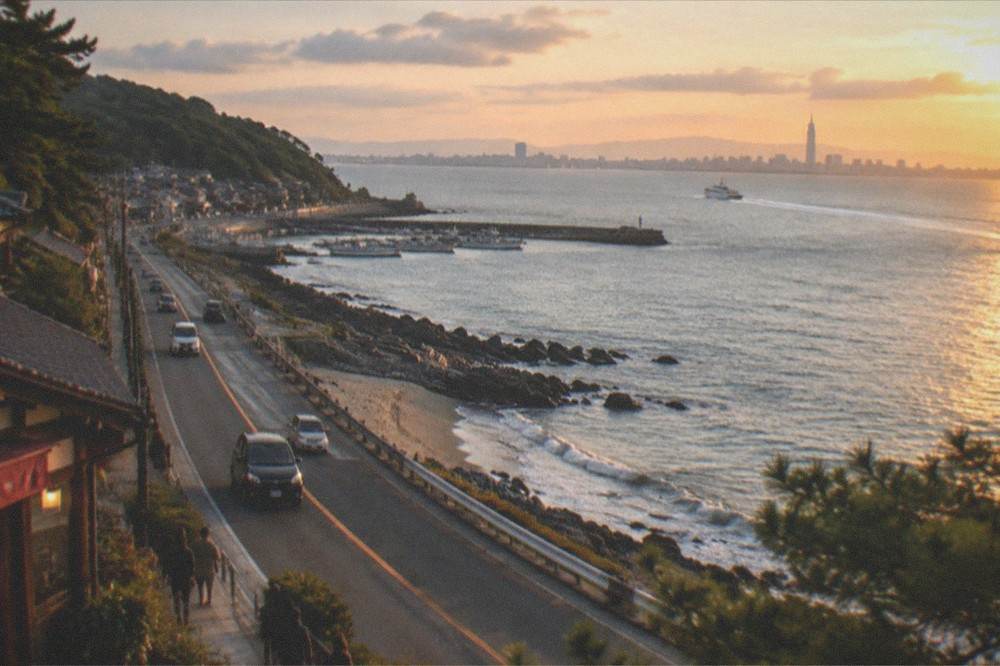
The road route runs out of the city and down the Uminonakamichi sandbar, the long spit that separates Hakata Bay from the Genkai Sea, and crosses onto Shikanoshima at its tip. It is an ordinary public road, passable in any rental car, and it turns the journey itself into the best scenery of the day. The one thing to know in advance is that if you stop at Uminonakamichi Seaside Park on the way, the gate is cash only.
That last detail is small and genuinely useful. The Seaside Park, which straddles the sandbar partway out, charges ¥450 for adults aged 15 and over, with junior high school age and under free, and the park's own guide page states plainly that payment at the park gate is cash only. Anyone who has grown used to Japan's growing card acceptance can be caught out there, so carry notes. The park's official opening hours page is the source for hours and seasonal closures, and it matters: the park closes on selected Tuesdays that differ by season, so a flat assumption of "open daily" can ruin a stop.
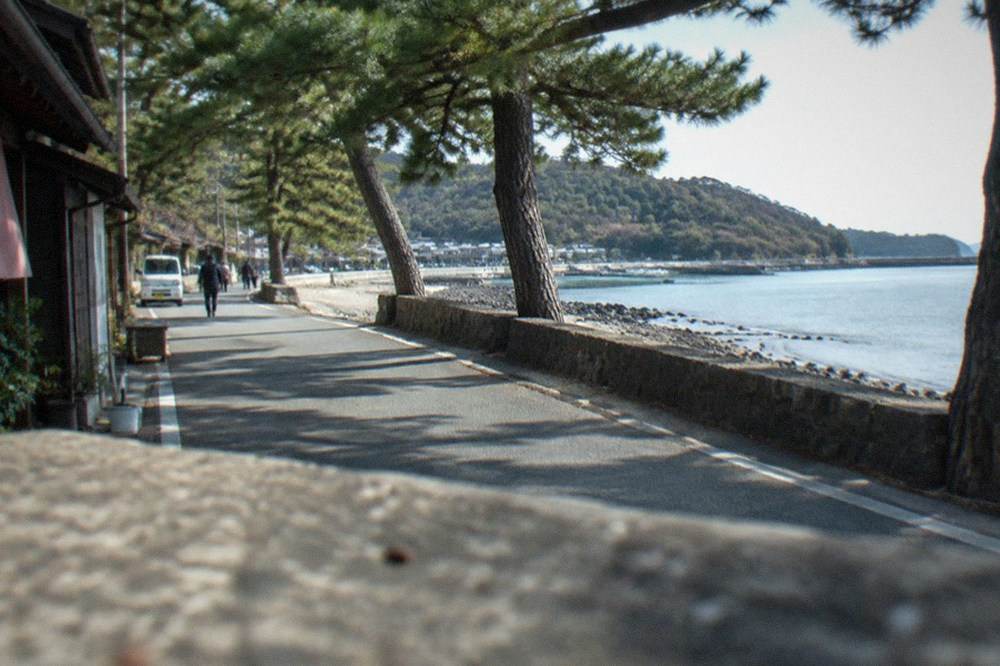
For cyclists, the sandbar is the whole point. The distance is real but manageable for a rider of ordinary fitness, and the profile is almost entirely flat, which is the sea-level nature of a sandbar doing you a favour. Rent a bike in the city, ride the subway out to the western end of the line or to a bay-side start point, and let the road do the rest. Helmets, water and a tyre-repair sense of prudence are the full technical brief. The wind on the exposed stretches is the one honest difficulty: the Genkai Sea side in particular can push hard, and on a windy day you will earn the return leg.
Drivers have less to think about. Rental cars in Fukuoka are hired in the usual way, the roads are signed in the standard Japanese mix of kanji and romaji, and navigation apps handle the sandbar without drama. Park on the island as you find it; the island is a small, settled place, not a resort with a multi-storey car park, and the parking arrangements you meet when you arrive are the ones that exist. Do not expect a stated figure here, because none is verified, and the same honesty applies to any toll you might encounter: budget what the signs say on the day.
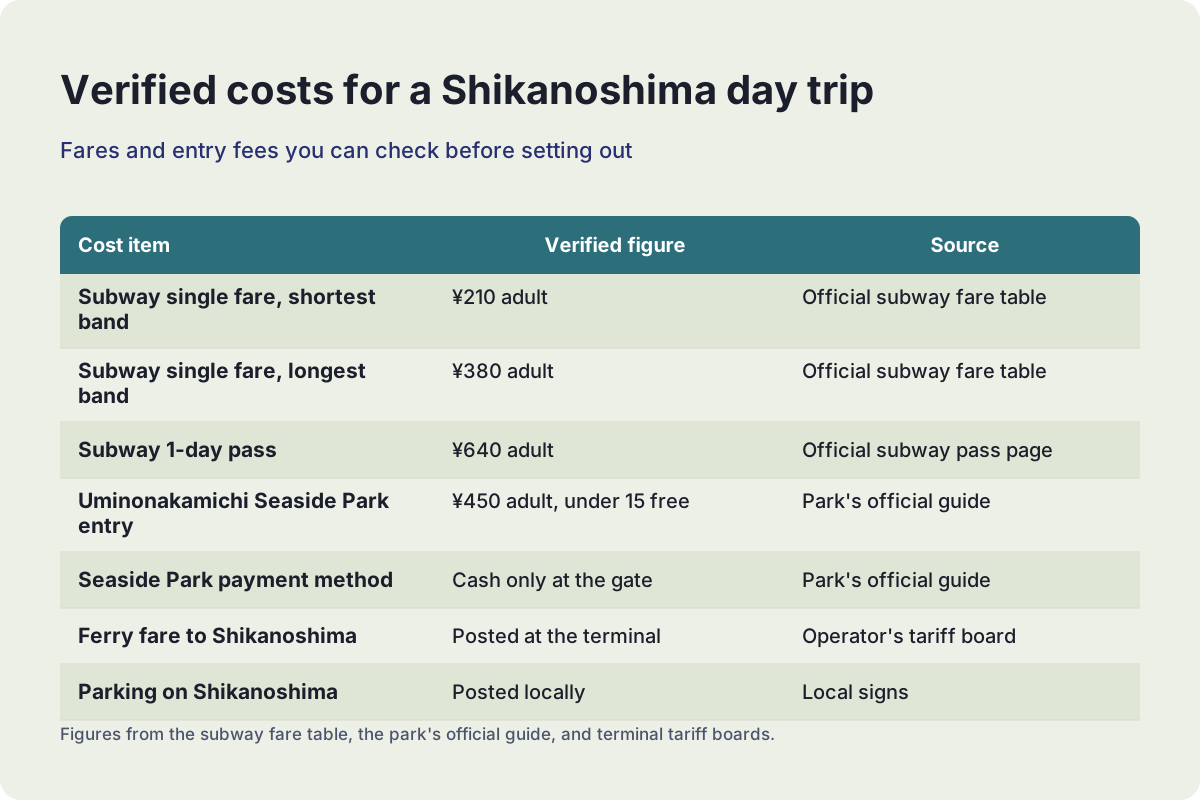
The table below is the cost picture for the whole day, built only from figures that are verified. Anything not in it is not verified, and you should read it off the board or the machine in front of you.
| Cost item | Verified figure | Source of the figure |
|---|---|---|
| Subway single fare, shortest band | ¥210 adult | Official subway fare table |
| Subway single fare, longest band | ¥380 adult | Official subway fare table |
| Subway 1-day pass | ¥640 adult | Official subway pass page |
| Uminonakamichi Seaside Park entry | ¥450 adult, under 15 free | Park's official guide |
| Seaside Park payment method | Cash only at the gate | Park's official guide |
| Ferry fare to Shikanoshima | Posted at the terminal | Operator's tariff board |
| Parking on Shikanoshima | Posted locally | Local signs |
What Is There to Do on Shikanoshima?
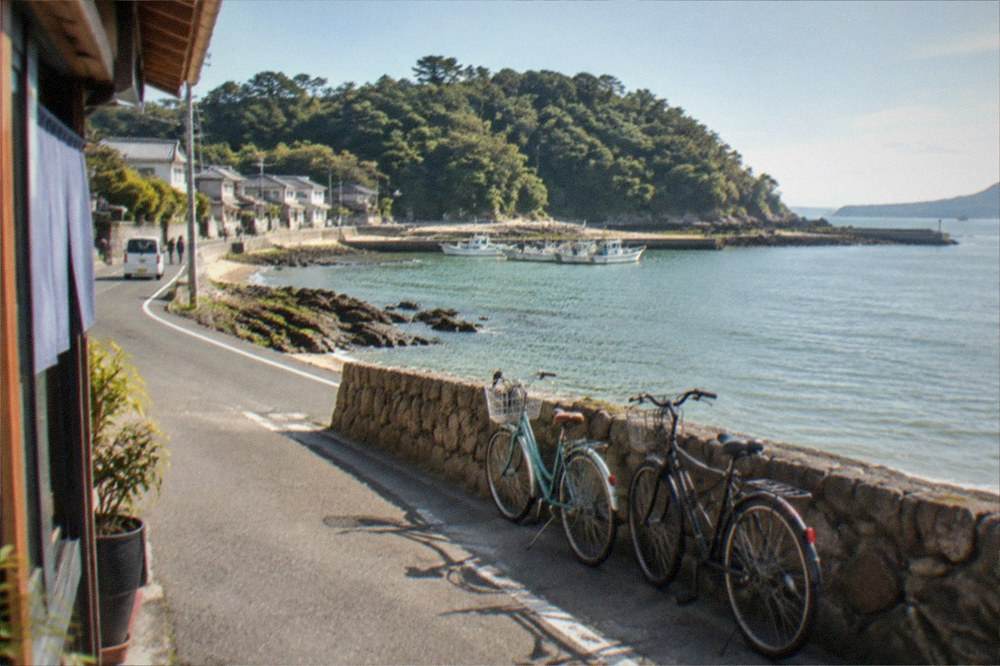
Shikanoshima is a low-key island of fishing harbours, small beaches and quiet roads, and the honest recommendation is to plan around slow things: a walk or ride around the island's rim, a seafood lunch at a harbourside counter, and time on the water's edge where the bay meets the open Genkai Sea. It is not a sightseeing island with ticketed attractions; it is an island you inhabit for a few hours, and that is exactly its appeal.
Start with the loop. The island's road circles its coastline, and a bicycle hired in the city and carried across on the ferry, or rented locally if you find it, turns the loop into the day's spine. You pass through the island's small settlements, along stretches of beach, and out to the headlands where the water changes character: inside the bay it is calm and green-grey, and on the seaward side it is the Genkai Sea, open water all the way to the horizon. That contrast, sheltered bay one moment and open sea the next, is the island's defining experience, and no single viewpoint monopolises it.
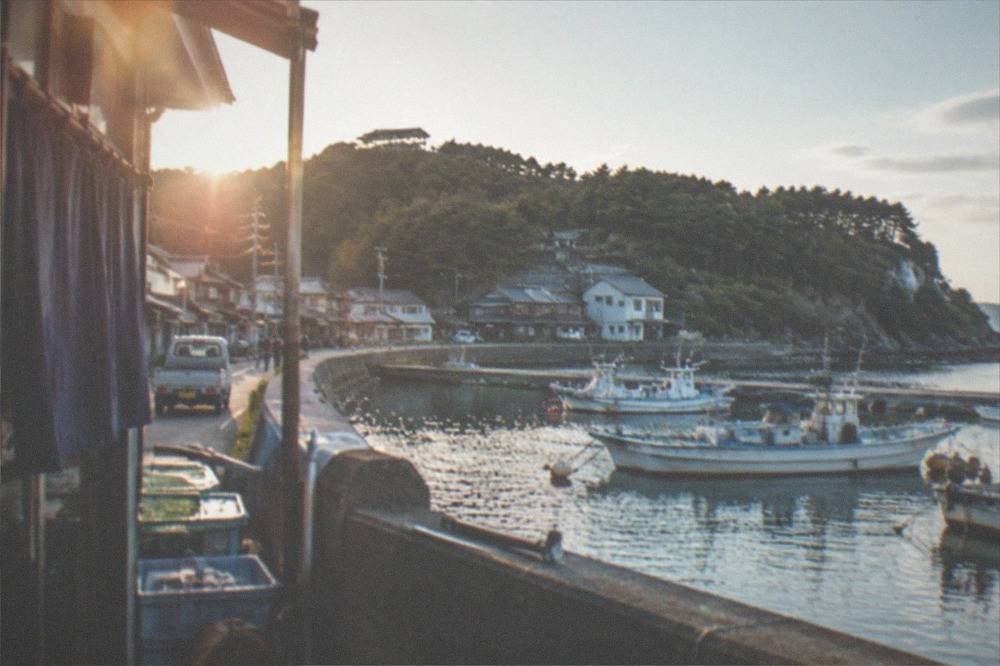
Food is the second reason people make the trip. An island at a bay mouth lives off what the water provides, and the harbourside counters serve the day's catch in the plain, unpretentious way that coastal Japan does best. Do not build the day around a specific restaurant; build it around arriving hungry in the middle of the day and eating what is open near whichever harbour you find yourself in. The seafood culture of the wider region is worth reading up on before any coastal day trip in Kyushu.
Beaches are the third thread. The island's beaches are modest, local and unstaged, and the swimming season in northern Kyushu runs from roughly July into early September, when the water is warm enough that locals are in it. In spring and autumn the same sand is a walking and shell-picking proposition instead. There are no verified lifeguard or facility figures for the island's beaches, so treat swimming as you would at any unsupervised shore: know your own ability, mind the wind, and keep an eye on children.
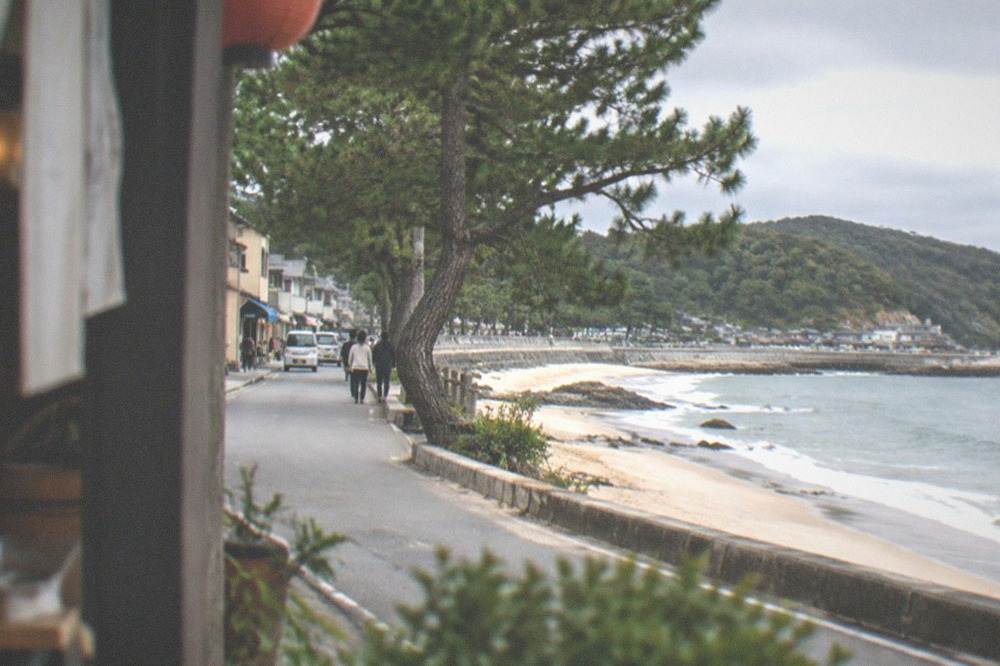
A word on expectations, because they are the difference between a good island day and a flat one. Shikanoshima does not have museums, aquariums or any of the covered attractions that make Marine World Uminonakamichi a rainy-day favourite on the sandbar next door. What it has is the sea, and on a clear day that is plenty. If the forecast is grey, postpone or pivot; the city keeps better options indoors than the island does. If the forecast is clean and blue, go early, because the light on the Genkai Sea side in the morning is the thing people remember a year later.
What Should a One-Day Shikanoshima Itinerary Look Like?
A comfortable one-day plan takes the morning ferry out, spends the late morning and early afternoon circling the island by bike or on foot with a seafood lunch in the middle, and returns on a mid-to-late afternoon sailing so that you are back in central Fukuoka for the evening. Start from Hakata Station or Tenjin with a subway fare of ¥210 to ¥380 each way, and keep the return sailing time in mind, because the last boats leave earlier than you expect.
The shape of the day matters more than the clock times, since ferry timetables and seasons vary. The table below is a frame, not a schedule; slot your own times into it once you have read the terminal's timetable.
| Slot | What you do | Notes |
|---|---|---|
| Early morning | Subway to the bay-side terminal, buy ferry tickets, check the last return sailing | Ask for a timetable card; the posted tariff is your reference for fares |
| Morning crossing | Ferry across the bay to Shikanoshima | Watch for the city skyline shrinking behind you |
| Late morning | Ride or walk the island loop, harbour first, then the seaward side | The Genkai Sea side is the memorable half; give it the most time |
| Midday | Seafood lunch at a harbourside counter | Eat what is open; the day's catch is the menu |
| Early afternoon | Beach time, a slow loop completion, or a last walk to a headland | Swim only if the season and your own judgement agree |
| Mid afternoon | Return ferry, then subway back to the centre | Aim for a sailing with margin, not the final one |
Fit the day into a longer city stay rather than treating it as isolated. The Fukuoka 3-day itinerary slots an island day neatly into a middle slot after the city's temples and shrines have had their due, and the Fukuoka 2-day itinerary shows how much you would have to leave out if you tried to squeeze the island in too early. A first visit to Fukuoka should probably earn its city legs before it spends a day on the water; a second or third visit is exactly when Shikanoshima starts making sense.
If an island day is not what the weather is offering, one of the strongest substitutions in the whole roster is a gorge rather than a bay. The Takachiho gorge and railway day tour runs from Fukuoka into the Miyazaki interior, with an optional boat leg on the gorge water, and it is built for exactly the kind of day when sitting on a windswept headland sounds miserable. You can also Check availability for that trip without committing.
When Is the Best Season for a Shikanoshima Day Trip?
The best window for Shikanoshima is late spring and early autumn: May and June before the peak of summer heat, and late September and October once it has passed, when the bay is calm enough that the ferry crossing is a pleasure rather than an endurance test. July and August are the swim season but also the peak of both heat and rainfall, and July is statistically the wettest month of the Fukuoka year.
That last fact surprises people, and it is the single most useful piece of climate information on this page. The Japan Meteorological Agency's 1991 to 2020 normals for Fukuoka put July at 299.1 mm of rain against June's 249.6 mm, even though June carries the tsuyu rainy-season reputation. The reason is that by July the post-rainy-season instability and the typhoon season's early edge both land on northern Kyushu. Typhoon season runs roughly July through October, and while it never makes the city unvisitable, it absolutely decides which days an open island is a good idea.
| Month | Mean temperature | Rainfall | Sunshine hours | Island verdict |
|---|---|---|---|---|
| March | 10.8 C | 103.7 mm | 161.2 h | Cool but clear enough; bring a jacket |
| May | 19.9 C | 133.7 mm | 204.1 h | The best balance of warmth and light on the island |
| June | 23.3 C | 249.6 mm | 145.2 h | Warm, green, rain-prone in the tsuyu window |
| July | 27.4 C | 299.1 mm | 172.2 h | Swim season, but the wettest month of the year |
| September | 24.7 C | 175.1 mm | 164.7 h | Warm sea; watch the typhoon feed before committing |
| November | 14.2 C | 91.4 mm | 137.3 h | Quiet and crisp; walking rather than swimming weather |
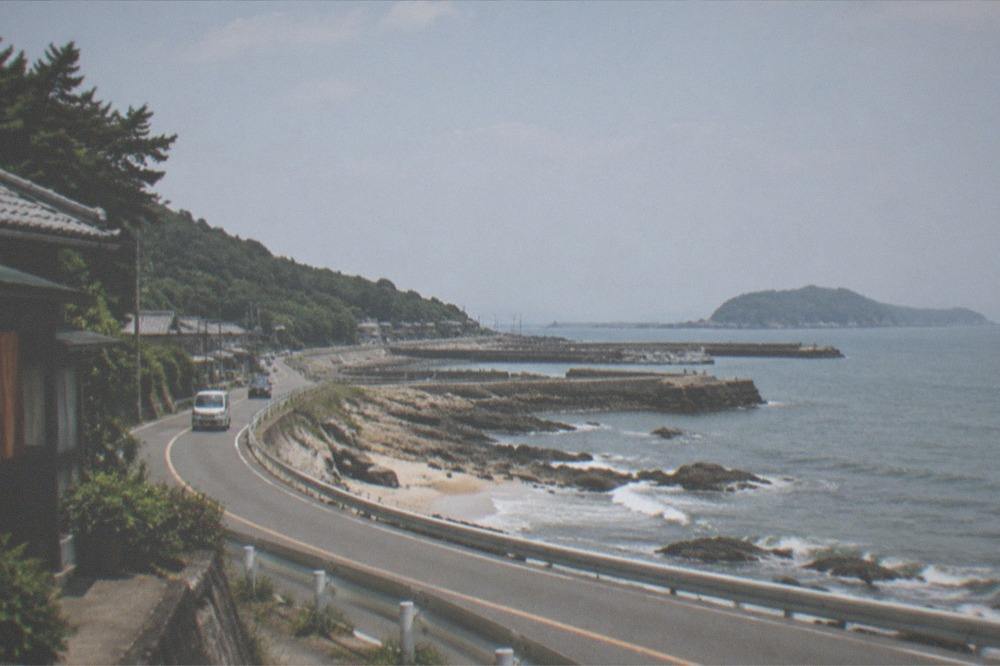
Winter, for the record, is not a write-off. The islands of Hakata Bay sit in a temperate winter climate, and a bright February day on the island is perfectly pleasant with a coat, just as the city's winter season has its own rewards. What winter costs you is the water: no swimming, a cold wind on the seaward side, and a ferry deck that wants a scarf. If your whole trip falls in the cold months, the question is not whether to go but how warmly to dress, and serious layering math is worth doing before you pack.
The one planning habit that beats any seasonal table: check the forecast the evening before, and re-check it in the morning. Bay ferries and island roads are both weather-sensitive, rain and wind close stalls and roughen crossings, and the difference between a memorable island day and a wasted one is often a single day's postponement.
Where Does Shikanoshima Fit Among Fukuoka's Day Trips?
Shikanoshima sits in the easy tier of Fukuoka day trips, alongside the other bay destinations: it needs no bullet train, no rail pass arithmetic and no pre-booking, just a subway fare and a ferry ticket. Against the region's big-hitters, Dazaifu and the Kyushu interior, it trades shrines and gorges for sea, sand and a total absence of crowds. It is the day trip you choose when you want the day itself, not the destination checklist, to carry the memory.
That positioning is worth a paragraph of comparison because Fukuoka's day-trip menu is unusually wide. To the south and west lie the inland classics: Dazaifu with its great Tenmangu shrine, the onsen towns reachable on the Kurokawa onsen trip, and the volcanic interior behind the Beppu day trip. To the north and west lie the coast trips, from the Karatsu day trip with its castle and beaches to the pottery country beyond. Shikanoshima is the only one of these you can do on impulse, deciding at breakfast and standing on the island before lunch.
For visitors who prefer a structured day over an improvised one, a private guided option reframes the whole question. The Fukuoka customized private tour in one day with a licensed guide lets a licensed local guide build a full-day route around whatever you name, and for travellers who land without a plan, that hand-holding is worth the premium over self-organising.
Families and mixed groups should weigh one thing honestly: Shikanoshima's day is slow and self-directed, and children who need constant stimulation will prefer the animal and aquarium attractions on the neighbouring sandbar, which family planning coverage on this site handles in full. Adults and older children who are happy with a bike, a beach and a bowl of seafood will find the island near-perfect. Solo travellers get the simplest version of all; an island with a ferry timetable is about as low-friction as solo travel gets, and the city's transport makes improvised days like this one unusually easy.
A final note on how the island day compares with the city days around it, because this site's honest advice is that most visitors under-plan the city itself. Before you give a whole day to the water, make sure you have given Ohori Park its morning, walked the temple cluster around Tochoji and eaten at the yatai stalls, of which the city licenses about 100. The Fukuoka 5-day itinerary brackets the range: if your trip is short, Shikanoshima is a luxury; if it is long, it is a gift to your middle day. This page sits inside the same planning family as the Fukuoka itinerary planner, which is the right tool once you know how many days you actually have.
For a very different flavour of the same idea, combining a train ride with a sightseeing day, the Yufuin no Mori and Dazaifu day tour pairs the region's most scenic train with the shrine inland, and it makes an instructive contrast with the plain little bay ferry that carries you to Shikanoshima: both are journeys worth taking for the ride alone.
However you build the day, the two rules that decide whether it succeeds are small ones. Carry cash, because the Seaside Park gate takes nothing else and small island counters prefer it. And know your return sailing before you leave the terminal, because the last ferry of the evening is earlier than every visitor expects it to be. Beyond that, Shikanoshima asks very little of you, which is precisely why the island rewards those who go.
Common Questions About a Shikanoshima Day Trip
How Do You Get To Shikanoshima From Fukuoka By Ferry Or Road?
You take a passenger ferry across Hakata Bay from one of the city's bay-side terminals, or you drive or cycle out along the Uminonakamichi sandbar and across onto the island. The subway legs cost between ¥210 and ¥380 by distance band, and ferry fares are posted at the terminal on the day.
Can You Take A Car To Shikanoshima?
Yes. The road across the Uminonakamichi sandbar is a public road that carries ordinary traffic, including rental cars, and it connects the mainland to the island at the bay mouth. If you stop at the Seaside Park on the way, remember that its gate takes cash only.
Is Shikanoshima Worth A Day Trip From Fukuoka?
For visitors who want sea air, a bikeable loop and a seafood lunch rather than ticketed attractions, yes. It is one of the easiest day trips the city offers, needing no rail pass and no advance booking, and it makes the most sense on a clear-weather day in late spring or early autumn.
Do You Need A Bicycle On Shikanoshima?
You do not need one, but it helps. The island's coast road makes a natural loop, and a bike carried on the bay ferry for a small posted charge turns a walking day into a riding day. Visitors who prefer to stroll can enjoy the harbours and nearest beaches entirely on foot.
What Is The Best Season For A Shikanoshima Day Trip?
May and late September to October give the best balance of warmth, light and manageable rain. July is the swimming season but it is also Fukuoka's statistically wettest month at 299.1 mm in the official normals, and typhoon season runs roughly July through October, so check the forecast before committing to an island day.
How Does Shikanoshima Compare With Nokonoshima?
Both are Hakata Bay islands reached by short ferry crossings, but their characters differ: Nokonoshima is the flower-garden island, famous for its seasonal blooms in its park, while Shikanoshima is the sea-and-harbour island at the bay mouth where the water opens onto the Genkai Sea. The choice is gardens or coastline.