Beaches Near Fukuoka
Fukuoka sits on Hakata Bay, on the Genkai Sea side of northern Kyushu, and the sand starts inside the city limits. This guide covers which stretches are worth the trip, what each one costs to reach, and when the water is actually warm enough to swim.
Short answer
Fukuoka's own beach is Momochi Seaside Park, a short subway ride from Tenjin. Uminonakamichi offers a long sandbar with a paid seaside park, entry ¥450 for adults, cash only at the gate. The Itoshima peninsula has the region's best swimming beaches, about an hour from the city. Beach season runs roughly July to early September.
Fukuoka is one of the few Japanese cities where the beach is genuinely part of the city rather than a day's expedition to it. The city wraps the eastern shore of Hakata Bay, the sand at Momochi is a short subway ride from the business district, and the Itoshima peninsula, which holds some of northern Kyushu's best swimming coastline, begins barely an hour up the road. The Genkai Sea that fronts all of this is not tropical: the water is swimmable in high summer, brisk outside it, and the coast is more about long light evenings, seafood and flat sand than about snorkelling.
One framing note before the individual beaches, because it matters for every direction in this guide. Hakata is a ward of Fukuoka and the name of its main station, not a separate place. The subway ride from the airport side of the city to the beach side never involves leaving Fukuoka, and the ¥260 airport fare that gets you into the centre is the same system that carries you onward toward the sand. If you are working out a first itinerary, the three-day Fukuoka itinerary pairs well with a beach day slotted into the afternoon.
Which Beaches Near Fukuoka Are Worth a Day Trip?
The short list is Momochi for convenience, Uminonakamichi for a proper sand-and-park day, Itoshima for the best swimming water, and Nokonoshima or Shikanoshima when you want an island crossing as part of the outing. All four sit inside Fukuoka City or one prefecture west, and none needs a rental car. The honest ranking for a visitor with limited days: Itoshima first for water quality and scenery, Uminonakamichi for families, Momochi for a sunset after a day of sightseeing.
That ranking is not about the sand itself, which is ordinary city sand at Momochi and much finer further out on the peninsula. It is about what surrounds the beach. Momochi gives you Fukuoka Tower, the museum district and a string of cafes within walking distance, which makes it the easiest beach evening in the city. Uminonakamichi gives you a long, narrow sandbar reached by a scenic ferry or a subway-plus-bus run, with a large paid park, an aquarium and cycling paths behind the dunes. Itoshima is the one locals drive to on weekends: a peninsula of coves, beach cafes and the famous paired rocks at Sakurai Futamigaura, which has its own page on this site worth reading before you go.
Time budgeting decides most of these trips. Momochi is a twenty-to-forty-minute hop from Tenjin or Hakata depending on connections, so it fits into the tail of any day. Uminonakamichi is a half-day minimum once you include the crossing. Itoshima is a full day done properly, with the drive or bus ride out along the coast eating a morning, and the same again if you push to the far end of the peninsula. The day trips from Fukuoka guide has the wider picture if you are weighing a beach against Dazaifu or Yanagawa.
Momochi Seaside Park: The City Beach on Hakata Bay
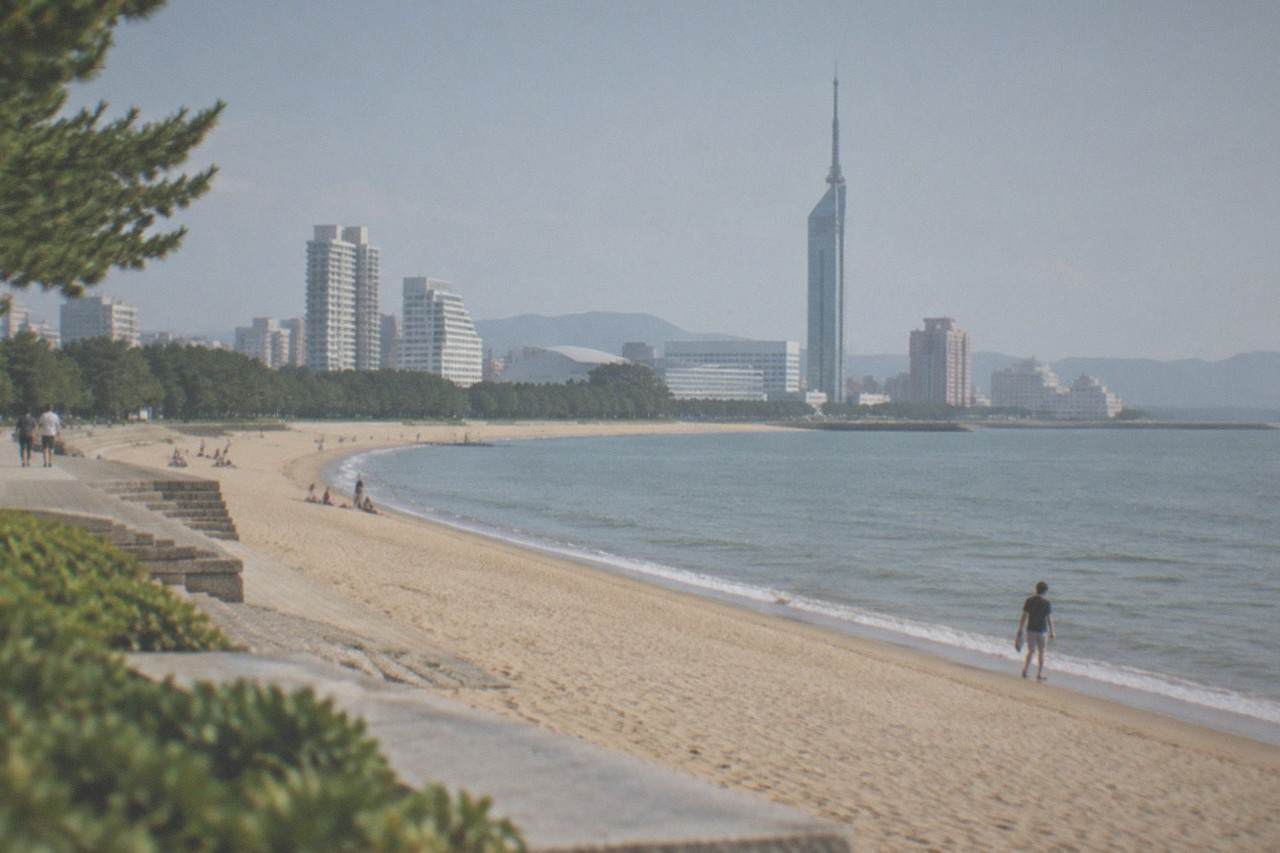
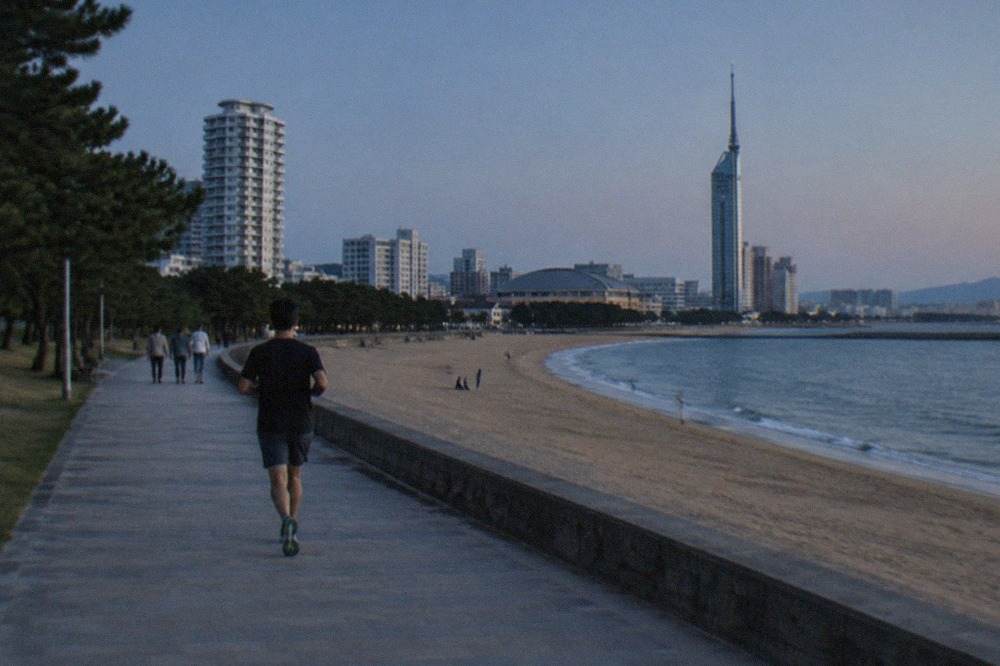
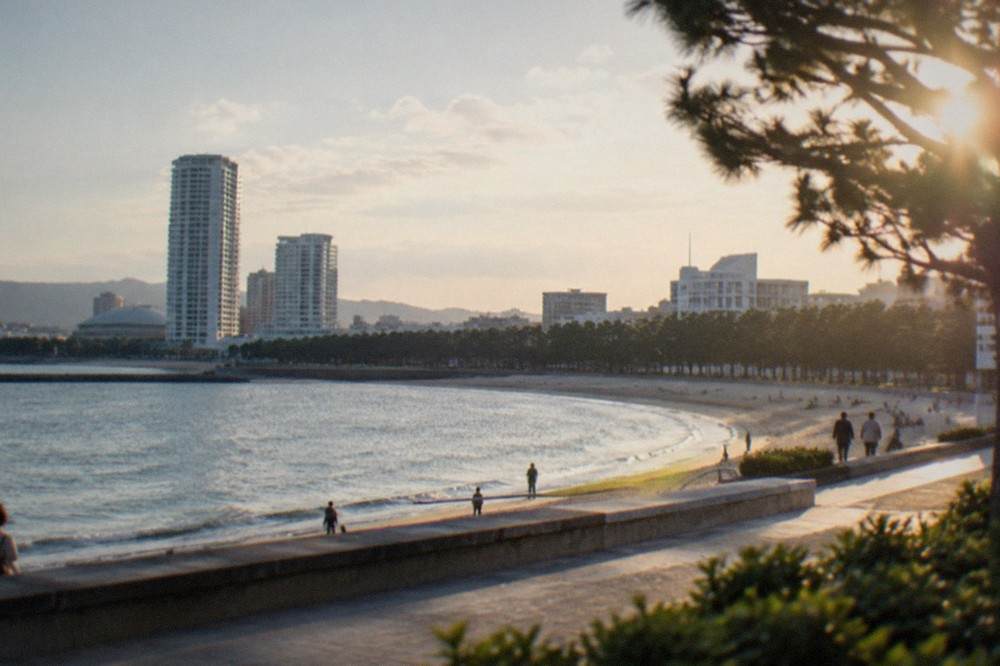
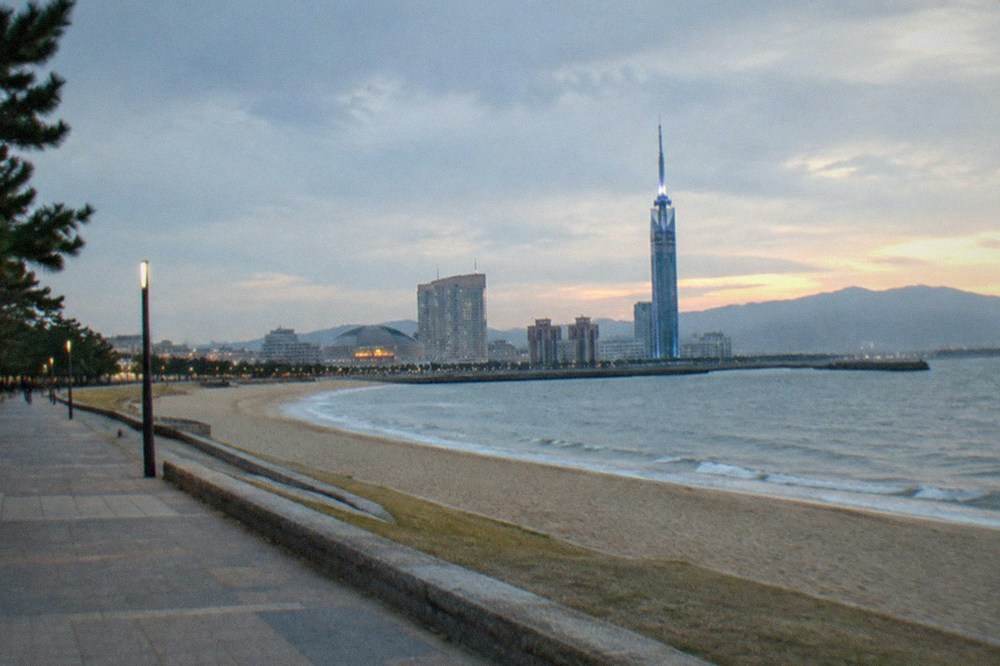
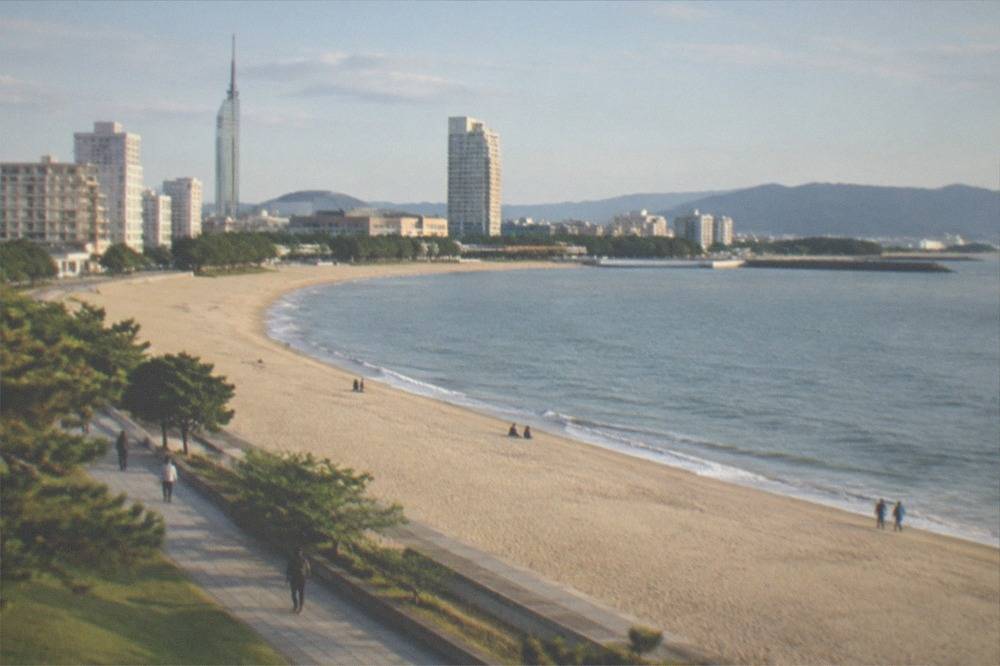
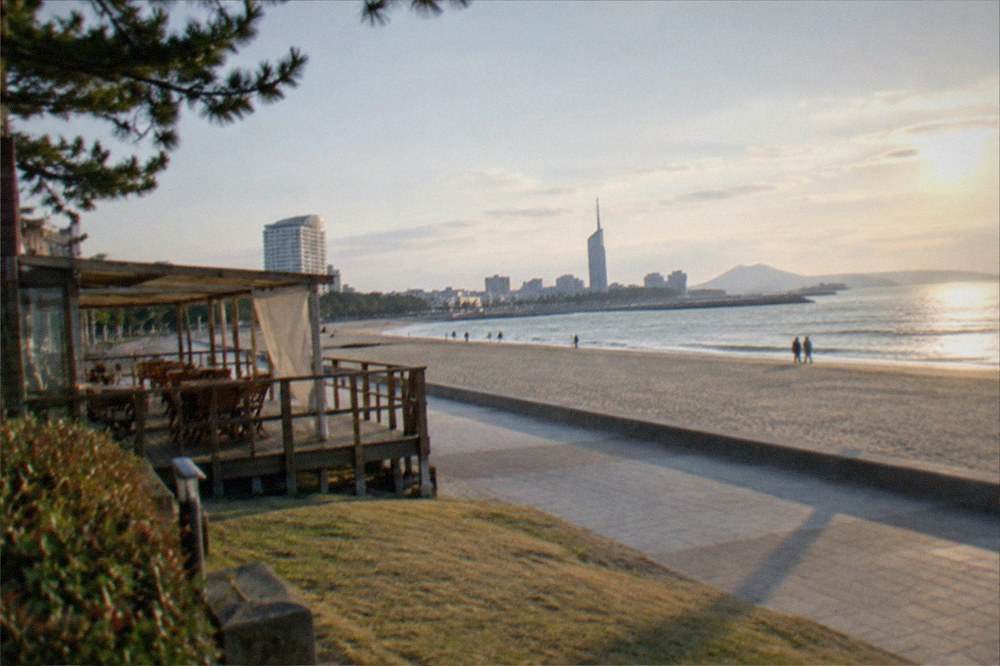
Momochi Seaside Park is Fukuoka's city beach, a stretch of artificial sand along Hakata Bay facing the tower and the Momochi waterfront district. It is free to walk, a short ride from Tenjin, and at its best in the evening when the tower lights up behind the sand. The swimming is modest: the bay is calm and shallow, and the beach functions more as a waterfront promenade than a swimming destination.
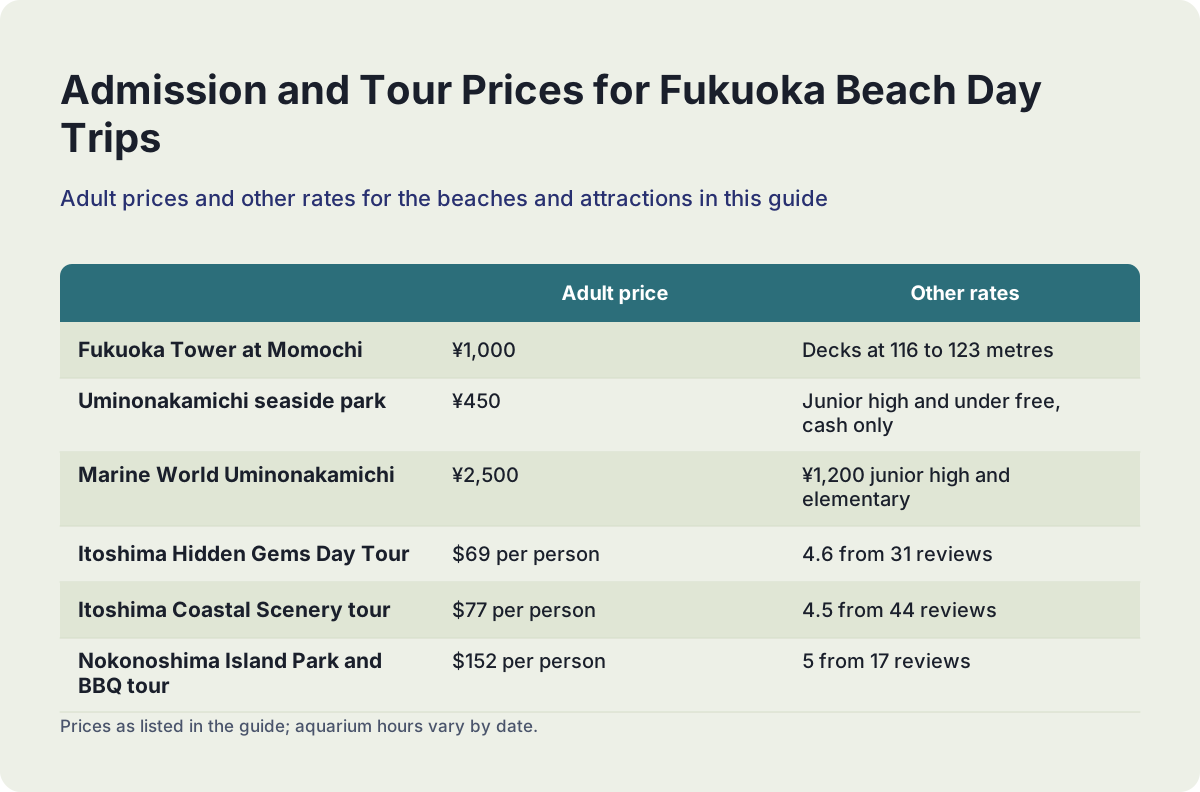
The honest pitch for Momochi is convenience and sunset rather than water. You can walk the sand, rent a spot on the man-made beach in summer, and then continue along the waterfront to Fukuoka Tower, whose observation decks sit at 116 to 123 metres and whose adult admission is ¥1,000. The tower's own hours run 9:30 to 22:00 with last admission at 21:30, which makes the classic Momochi sequence an afternoon on the sand followed by a night view from the deck, all confirmed on the tower's official admission page. The tower closes annually on 28 and 29 June 2027, worth knowing if your trip lands on those dates.
Because Momochi is inside the city, it pairs with almost anything. A morning at Ohori Park, lunch in the Daimyo or Imaizumi cafe streets, and a late-afternoon move to the beach is a full and very Fukuoka day. Cyclists will find the bayfront path one of the pleasantest flat rides in the city, and the tower and beach sit close enough together that a bike makes the whole district effortless.
Uminonakamichi: The Sandbar Beach with a Seaside Park
Uminonakamichi is a long, narrow sandbar enclosing Hakata Bay's northern edge, reached by ferry from Hakata or by subway and bus, and it holds the largest paid seaside park in the city. Adult park entry is ¥450, junior high age and under enter free, and the gate takes cash only. The beaches along the sandbar are calmer and more natural-feeling than Momochi, and the park adds lawns, pools in summer and an aquarium.
The cash-only gate is the detail almost every other guide omits, and it is printed on the park's own site. Plan for it: there are card readers in Japan almost everywhere now, but not at this gate. The park's hours run 9:30 to 17:30 from March through October and 9:30 to 17:00 from November through February, with entry until an hour before closing. It also closes on selected Tuesdays that shift with the season, plus 31 December and 1 January and a mid-January block, so a flat "open daily" assumption will eventually catch someone out. The Uminonakamichi Seaside Park attraction page carries the fuller detail.
The aquarium, Marine World Uminonakamichi, sits inside the same complex and is a separate ticket: adult and high school admission is ¥2,500, junior high and elementary ¥1,200, age three and over ¥700, with a 65-and-over rate of ¥2,200. Its hours vary by calendar date, so check the aquarium's own schedule for the day you plan rather than assuming a year-round figure. Families combining the park, the aquarium and the sand should treat Uminonakamichi as the full day it is, not a quick beach stop.
Getting there is half the fun. The ferry from Hakata across the bay is short and scenic, and it turns the trip into a miniature coastal cruise. The subway-plus-bus combination works too, using the airport line out to the eastern end of the city and a connecting bus over the sandbar. Either way you are spending well under the price of a coffee on transit: the city subway's distance-based fares run from ¥210 for the shortest zone up to ¥380 for the longest, and the one-day subway pass at ¥640 covers unlimited rides on all three lines for a day of hopping between bayside stops.
Itoshima: The Peninsula with the Region's Best Swimming Water
Itoshima, the peninsula west of the city, holds the beaches Fukuoka residents actually swim at: a string of coves and sand stretches facing the Genkai Sea, backed by beach cafes, oyster shacks and the photogenic paired rocks of Sakurai Futamigaura. Reaching the main beaches takes about an hour by car or express bus from Tenjin, and the water is noticeably cleaner and clearer than inside the bay. Done properly it is a full day trip.
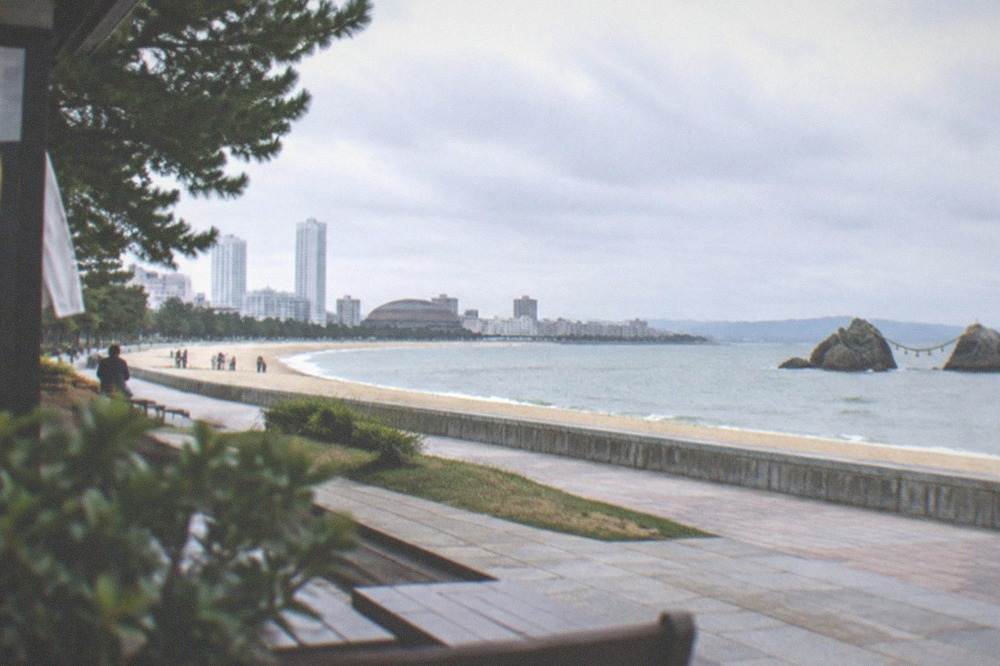
Itoshima is the answer when the question is "where do I actually swim". The peninsula's beaches face open water rather than the enclosed bay, which means clearer water, more wave action and a genuinely coastal feel. The area doubles as one of Fukuoka's food day trips, with the peninsula's oyster season running through the colder months and its beach cafes peaking in summer, so the same trip rewards visiting in almost any season. Sakurai Futamigaura, the shrine-linked beach with the two rocks joined by a shimenawa rope, is the single most photographed spot on the coast and deserves its own stop.
Transport is the one weak point. Local buses out the peninsula exist but are sparse, and most visitors drive, join a guided coastal tour, or take a Nishitetsu train partway and bus onward. This is where a guided option earns its keep. The Itoshima Hidden Gems Day Tour runs from $69 per person, rated 4.6 from 31 reviews, over about eight and a half hours, and it removes the scheduling problem entirely. The Itoshima hidden gems tour page has the itinerary detail.
A second guided option covers the same coast with a scenery emphasis: the Itoshima Nature and Coastal Scenery tour runs from $77 per person, rated 4.5 from 44 reviews, over ten hours. Both tours suit travellers who want the peninsula's scattered coves without a rental car, and both pick up in the city, which removes the transfer question at both ends of the day.
Island Beaches: Nokonoshima and Shikanoshima
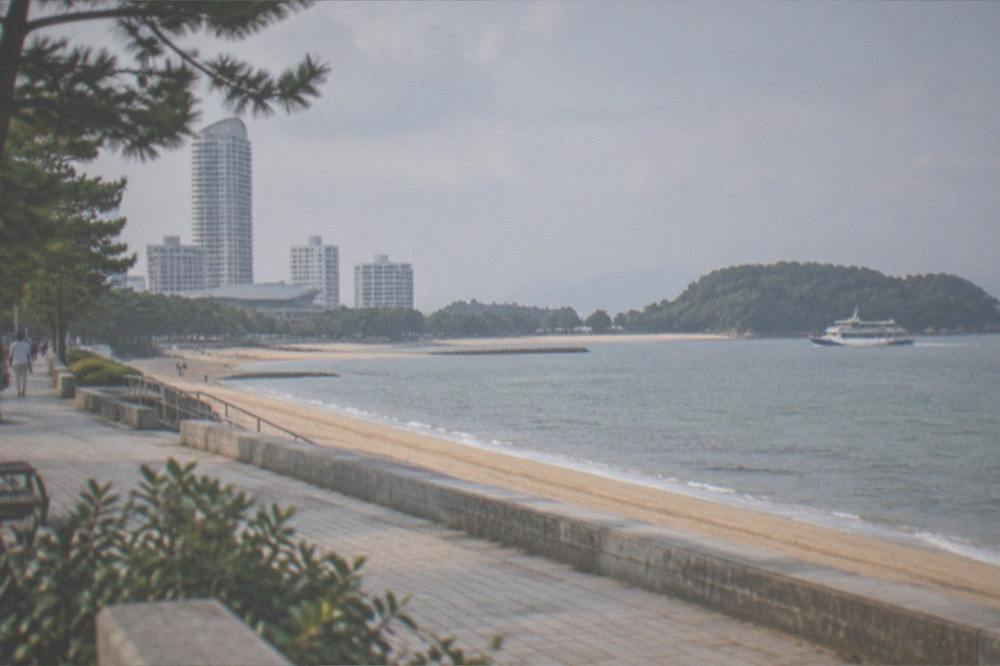
Two islands sit close enough to Fukuoka to work as beach half-days: Nokonoshima, a ten-minute ferry from Meinohama on the western shore, and Shikanoshima, a small island connected by road at the northern mouth of the bay. Nokonoshima is famous for its flower park and its small beaches; Shikanoshima for its quiet sand, campsites and the feeling of having left the city, which in both cases you barely have.
Nokonoshima's island park is a seasonal-flower destination that doubles as the island's main draw, with beaches a short hop from the ferry terminal. The park's own site publishes no extractable hours or prices, so treat entry as pay-at-gate and check on arrival rather than trusting any figure you see quoted elsewhere. The crossing itself is short, and the island is small enough that a bicycle, rented near the terminal, covers it comfortably. Shikanoshima, reached across the causeway at the far end of Uminonakamichi, is the lower-key option: sand, pines, a campsite and a lighthouse monument marking where the gold-sealed King of Na gold seal was unearthed. The rest of the planning pages sit on Fukuoka Japan Travel Guide.
For a guided version of the island day, the Nokonoshima Island Park and Wagyu BBQ tour runs from $152 per person, rated 5 from 17 reviews, over four to six hours, combining the flower park with a beachside barbecue. It suits visitors who want the island's highlights arranged rather than navigated, and it is one of the few tours in the roster built specifically around the bay's island geography.
When Is Beach Season in Fukuoka?
Beach swimming season in Fukuoka runs roughly July through early September, with August the warmest month: the Japan Meteorological Agency's 1991 to 2020 normals put August's mean at 28.4°C with a daily maximum of 32.5°C. July is wetter than most visitors expect, 299.1 mm of rain, more than June's 249.6 mm, and typhoon season spans roughly July to October. May and October are superb for beach walks but not for swimming.
The July rainfall figure surprises people because June is the tsuyu rainy season and gets the blame. The JMA's own station data for Fukuoka says otherwise: July is the wettest month of the year, and it is also the month of Hakata Gion Yamakasa, the city's great festival held July 1 to 15 every year. The practical read for a beach trip is that July delivers festival energy, heat and downpours in roughly equal measure, while August is hotter, drier and sunnier, with 200.9 sunshine hours, the second sunniest month after May.
| Month | Mean °C | Daily max °C | Rain mm | Sunshine h | Beach verdict |
|---|---|---|---|---|---|
| May | 19.9 | 24.4 | 133.7 | 204.1 | Walking, cafes, no swimming |
| June | 23.3 | 27.2 | 249.6 | 145.2 | Warm air, rainy season, grey water |
| July | 27.4 | 31.2 | 299.1 | 172.2 | Swim season, but the wettest month |
| August | 28.4 | 32.5 | 210.0 | 200.9 | Peak swimming, best beach weather |
| September | 24.7 | 28.6 | 175.1 | 164.7 | Early month swimmable, typhoon risk |
| October | 19.6 | 23.7 | 94.5 | 175.9 | Dry, mild, water cooling fast |
Typhoon awareness is a real planning factor, not a warning to stay away. Systems track through the western Pacific roughly July to October, and a typhoon day closes beaches, ferries and sometimes the whole transport network for a day or two before the city snaps back to normal. Build one flexible day into any late-summer itinerary and check the Japan Meteorological Agency's live typhoon feed rather than any static guide page, including this one.
Getting to the Beaches Without a Car
Every beach in this guide is reachable by public transport, and the fares are modest: the subway runs from ¥210 for the shortest zone to ¥380 for the longest, the one-day subway pass is ¥640, and the Fukuoka Tourist City Pass, restricted to overseas visitors on short-stay visas with a passport check, is ¥2,500 for the city version or ¥2,800 with Dazaifu coverage. Buses and ferries fill the gaps out the peninsula and across the bay.
The Tourist City Pass is the one worth explaining, because most competing guides still quote prices from before its revision. The current figures, published by the city's own tourism operation, are ¥2,500 adult for the Fukuoka City version and ¥2,800 for the version that adds Dazaifu, and the pass requires a passport check at the counter because it is restricted to overseas tourists on short-stay visas. It covers subway, Nishitetsu trains and buses in the designated zones, some JR lines and ferries, plus attraction discounts, for one day.
| Option | Adult price | Covers | Best for |
|---|---|---|---|
| Subway single fare | ¥210 to ¥380 by zone | One subway ride | Momochi and city hops |
| Subway 1-day pass | ¥640 | All subway lines, one day | Multiple bayside stops |
| Fukuoka Tourist City Pass | ¥2,500 | Subway, buses, trains, ferries, one day | Overseas visitors, passport required |
| City Pass + Dazaifu | ¥2,800 | As above, plus Dazaifu coverage | Beach morning, shrine afternoon |
| Nishitetsu bus 1-day pass | ¥1,200 | City buses, one day | Itoshima partial access |
For the peninsula, the honest transport note is that buses beyond the train line are infrequent enough that most independent travellers either rent a car for the day or join a guided tour. The Fukuoka private tours guide covers the guided alternative in depth, and the getting around Fukuoka overview handles the wider network. Cyclists should not dismiss the option: the bay-side riding is flat, and Uminonakamichi in particular is built for it.
Guided Coastal and Day Tours from Fukuoka
If the scheduling of buses out the peninsula sounds like work, guided day tours solve it. The Takachiho Gorge and Amaterasu Railway tour runs from $48 per person, rated 4.8 from 713 reviews over 11 hours, and it is the roster's most-reviewed full-day tour. The fully customizable private tour with a licensed guide, from $160 per person, rated 4.9 from 71 reviews, can build a coastal day to order.
The private option deserves a sentence of explanation. A licensed-guide private tour is not a fixed route: you agree the day with the guide, which for a beach-focused trip means Itoshima coves, a Sakurai Futamigaura stop and a seafood lunch arranged as one continuous plan, with the driving handled. The Takachiho gorge and railway tour page covers the most popular fixed itinerary, which pairs a boat ride through the gorge with the Amaterasu railway and suits travellers who want the countryside rather than the coast.
A third format worth knowing is the train-first day out: the Yufuin no Mori and Dazaifu tour runs from $70 per person, rated 4.7 from 54 reviews over eight hours, and it is built around the celebrated Yufuin no Mori limited express rather than a bus. It is not a beach tour at all, but it answers the question that follows most beach mornings, which is what to do with a second day, and the Yufuin day trip guide fills in the destination itself.
What to Pack, and What to Know Before You Go
Pack for sun, salt and cash. Beach season is hot, August daily maxima average 32.5°C, sun protection matters more than most visitors expect on the Genkai Sea's open stretches, and the Uminonakamichi park gate takes cash only. Bring a towel and swimwear for July and August trips, a light layer for ferry crossings, and expect the sea breeze to drop the evening temperature sharply after sunset.
A few practical notes that save actual mistakes. The cash point applies beyond the park gate: smaller beach cafes and oyster shacks on Itoshima are not uniformly cashless, and a day that assumes card-everywhere will hit a wall somewhere. Lockers and showers exist at the main swimming beaches in season but are not year-round infrastructure, so an October visitor should not plan on them. Beach cafes on the peninsula close or shorten hours outside summer, even when the beaches themselves stay walkable and lovely, which is why the shoulder-season version of an Itoshima trip is a food-and-scenery trip rather than a beach trip.
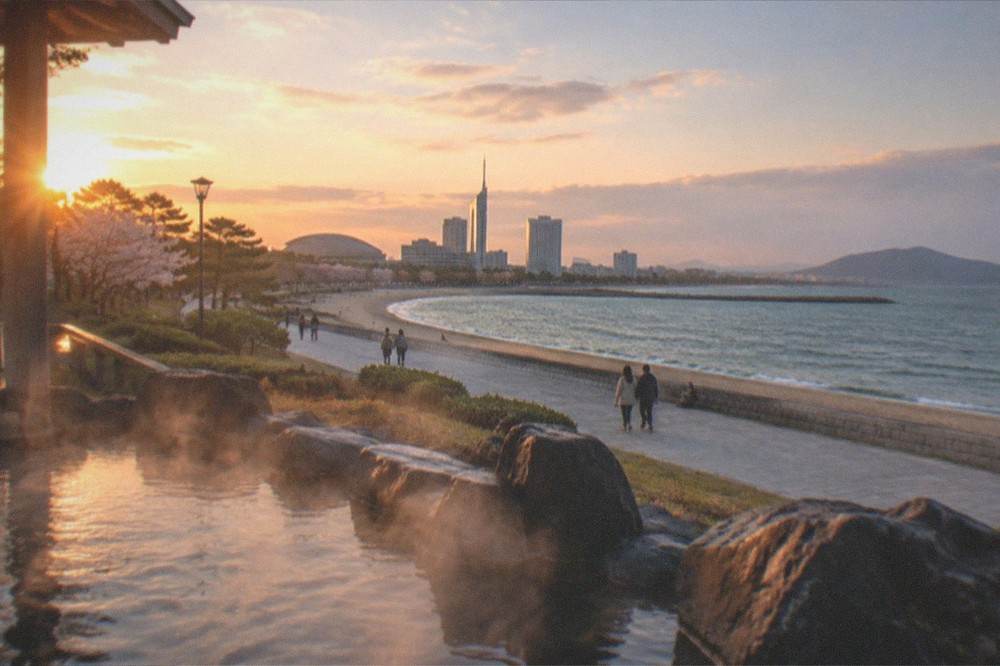
Costs overall are lower than most visitors fear. A Momochi evening costs a subway fare and whatever you spend on dinner. A Uminonakamichi day costs the park entry, the aquarium ticket if you add it, and transit. An Itoshima day costs the tour or the rental car and a notably good lunch. The Fukuoka trip cost guide breaks the whole city down, and the Fukuoka onsen guide is the natural follow-on, because the coastal region's hot springs make an excellent rainy-day or cold-season substitute for the sand.
| Beach | Reach time from the centre | Entry cost | Swim season | Best paired with |
|---|---|---|---|---|
| Momochi Seaside Park | 20 to 40 minutes | Free to walk | July to early September | Fukuoka Tower at night |
| Uminonakamichi | Half day with crossing | Park ¥450 adult, cash only | July to early September | Marine World aquarium |
| Itoshima peninsula | About 1 hour | Beaches free, cafes pay as you go | July to early September | Oyster shacks, Sakurai Futamigaura |
| Nokonoshima | 10-minute ferry plus transit | Park pay-at-gate, check on arrival | July to August | Flower park, island cycling |
| Shikanoshima | Causeway at the bay mouth | Free to roam | July to August | Camping, quiet sand |
Common Questions About Beaches Near Fukuoka
Which Beaches Near Fukuoka Are Worth A Day Trip?
Itoshima's peninsula beaches for the best swimming water, Uminonakamichi for a family sand-and-park day, Momochi for a convenient city sunset, and Nokonoshima or Shikanoshima for an island crossing. Itoshima is the only one that genuinely needs a full day.
Can you swim at Fukuoka's beaches?
Yes, in season, which runs roughly July through early September. August is the peak month with daily maxima averaging 32.5°C. Outside those months the Genkai Sea and Hakata Bay are brisk, and the beaches are better for walking than swimming.
How do you get to Itoshima without a car?
Take a Nishitetsu train partway and a local bus onward, or join a guided coastal tour. Buses on the peninsula are infrequent, so most independent travellers drive or book a tour such as the Itoshima Hidden Gems Day Tour, from $69 per person, rated 4.6 from 31 reviews.
Is Uminonakamichi Seaside Park free?
No. Adult entry is ¥450, with junior high age and under free, and the gate takes cash only. The park is open 9:30 to 17:30 from March to October and 9:30 to 17:00 from November to February, closing on selected Tuesdays that vary by season.
What is the closest beach to Hakata Station?
Momochi Seaside Park, on the bay a short subway ride west of the centre. Because Hakata is a ward of Fukuoka rather than a separate city, the trip never leaves town, and the beach pairs naturally with Fukuoka Tower, whose adult admission is ¥1,000 and whose hours run 9:30 to 22:00.
Do typhoons affect beach trips?
They can, roughly July through October. A typhoon day closes beaches, ferries and some transport for a day or two. Build one flexible day into a late-summer itinerary and check the Japan Meteorological Agency's live typhoon feed for current systems.