Sakurai Futamigaura
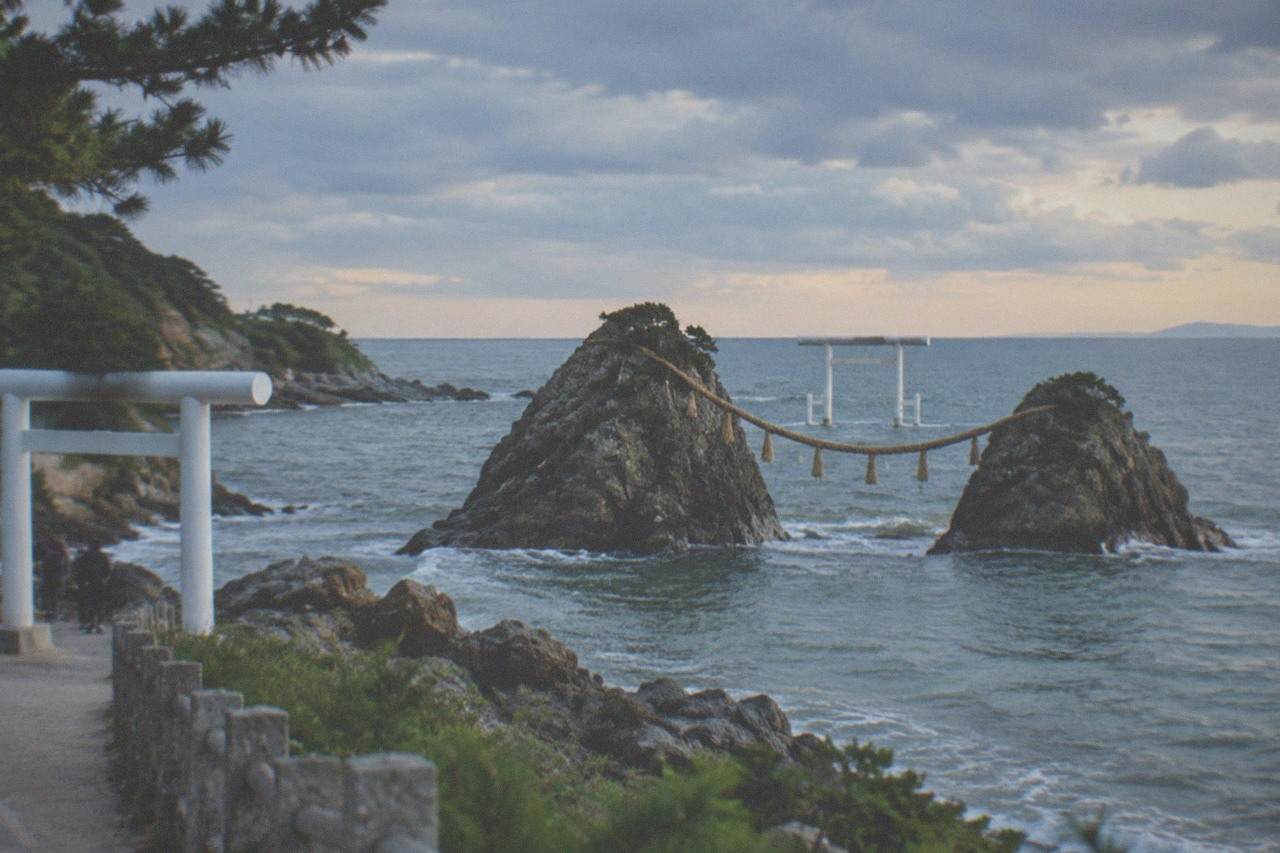
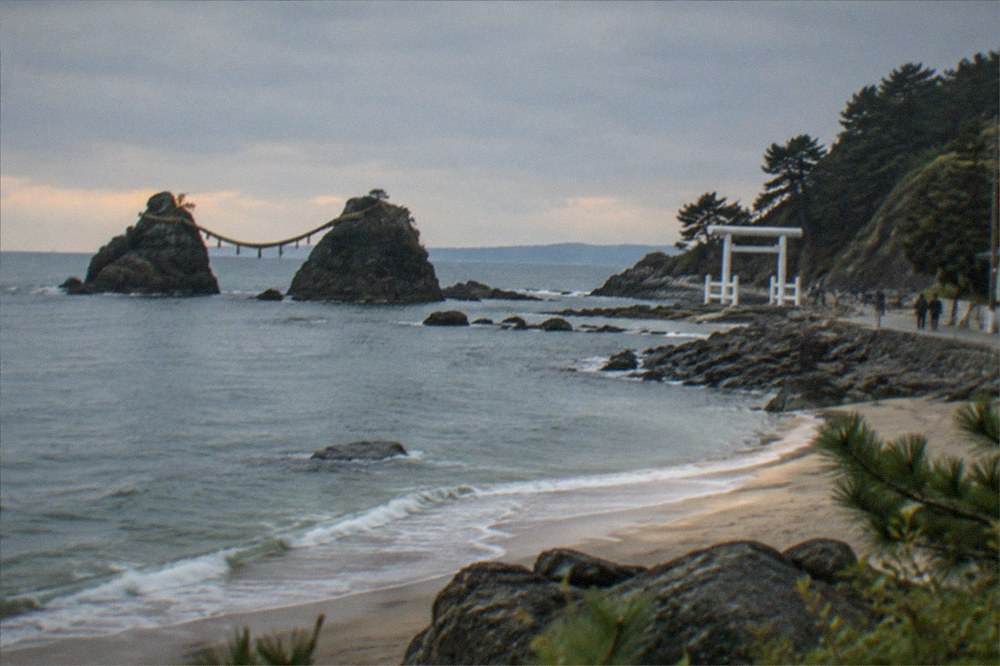
Sakurai Futamigaura is Itoshima's most photographed shoreline: a pair of married rocks in the Genkai Sea, a white torii rising from the water, and a sunset that pulls photographers out from Fukuoka every clear evening.
Short answer
Yes, if a sea sunset is what you came to Kyushu for. Sakurai Futamigaura pairs the Meoto Iwa couple rocks with a white torii standing in the Genkai Sea, about an hour from central Fukuoka on the Itoshima peninsula. It costs nothing to stand on the beach, and the sun sets directly behind the rocks on clear evenings.
Sakurai Futamigaura sits on the southern edge of the Itoshima peninsula, where the Genkai Sea meets a stretch of coast that Fukuoka residents treat as their own escape hatch. The site is built around two sea stacks known as the Meoto Iwa, the married or couple rocks, joined by a thick shimenawa rope in the way that married pairs are joined at shrines across Japan. A short distance offshore, a white torii gate stands in the shallows, and together the two elements make one of the most recognisable sunset compositions in northern Kyushu. This page sets out what the spot actually is, whether it earns the travel time, how to reach it, and how to plan the visit so the light works in your favour.
What Is Sakurai Futamigaura?
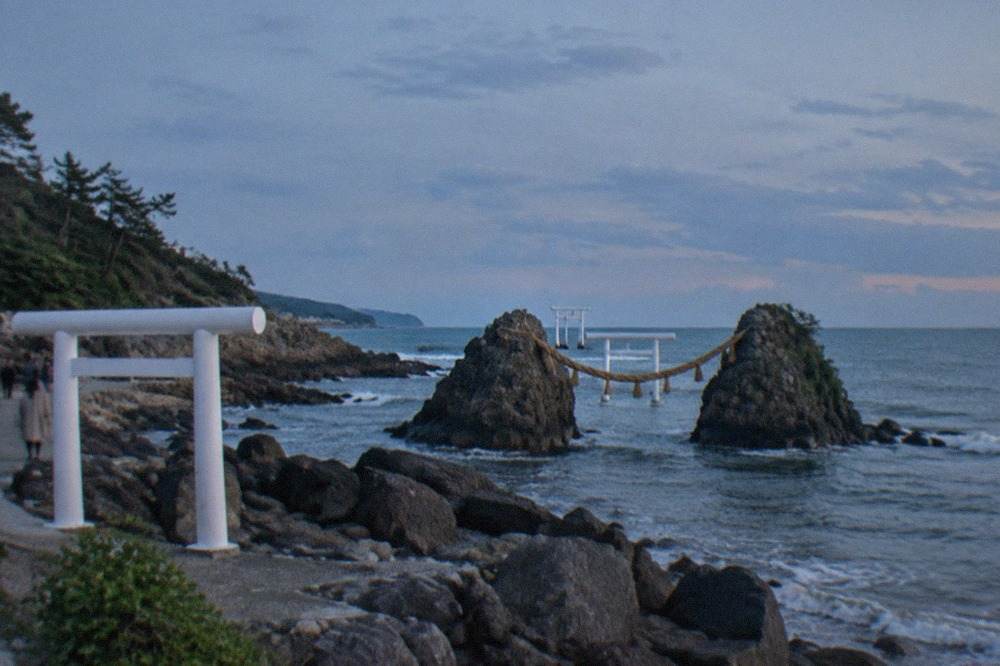
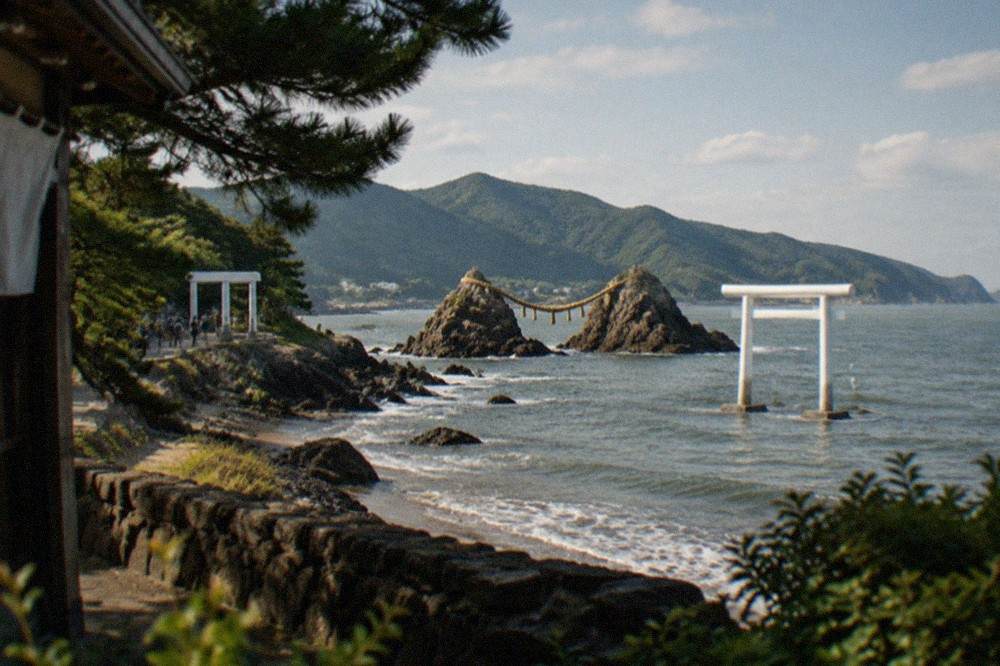
Sakurai Futamigaura is a coastal shrine site on the Itoshima peninsula west of Fukuoka city, centred on the Meoto Iwa, a pair of sea stacks linked by a sacred rope, with a white torii gate planted in the sea nearby. It belongs to Sakurai Shrine, whose grounds sit just inland, and the whole shoreline works as one open, walkable composition of rocks, gate, beach and open water. The rocks carry the marriage symbolism common to futami sites in Japan: two stones standing close together, treated as a couple. The rope that joins them is replaced in a periodic ceremony, as these ropes always are, because weather and salt wear through even the heaviest shimenawa. The torii in the water is the element that has made the spot a modern favourite, because it gives the sunset a frame that few Japanese coastlines can offer.
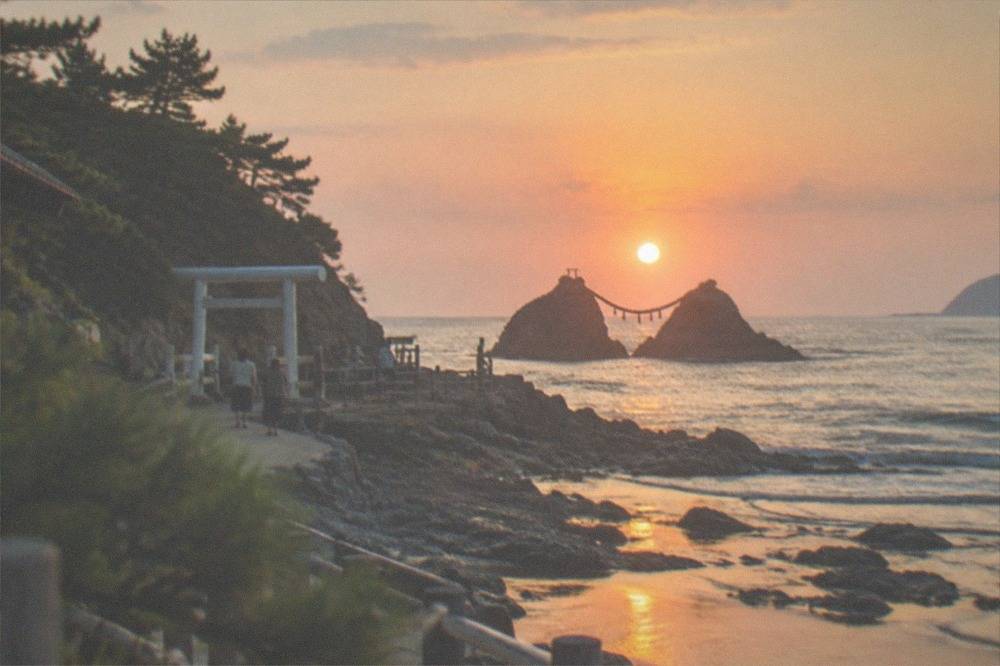
The site is small. You can walk the beach, see the rocks, photograph the torii and stand at the water's edge inside half an hour, which is exactly why the timing of your visit matters more than the length of it. Arrive at midday and you will get rocks, sea and sky, all pleasant, none of it remarkable. Arrive in the last hour before sunset on a clear evening and the whole composition changes character as the sun drops behind the couple rocks and the torii turns into a silhouette.
The shrine itself is modest and worth ten minutes. It is the reason the site exists at all, and the marriage symbolism that draws couples for wedding photographs is not a modern invention bolted onto a pretty view; it is the original function of the place. That is the honest framing for any visit: this is a working shrine's shoreline first and a photo spot second, and the two coexist easily as long as visitors treat the rope, the rocks and the gate as shrine property rather than props.
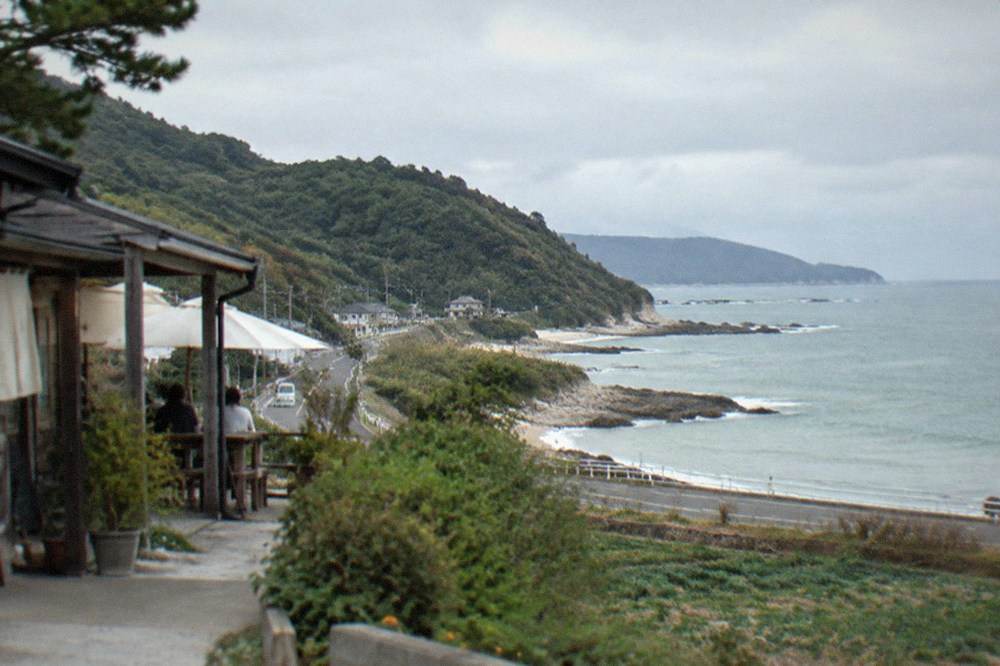
Itoshima as a whole is the context that makes the trip worthwhile. The peninsula runs west of the city along the Genkai Sea, and it has become Fukuoka's day-out region, with oyster shacks, beach cafes, craft shops and quiet coves strung along a coast road. Sakurai Futamigaura is the single most famous point on that coast, and most itineraries treat it as the anchor stop, either as the finale of a day spent working west along the peninsula or as the destination in itself with a late lunch attached.
Is Sakurai Futamigaura Worth Visiting?
Yes for most travellers, with one condition: you should want the sunset, the coast or the photographs, because the site itself is a thirty-minute experience. On a clear evening the composition of couple rocks, sea torii and setting sun is genuinely one of the best in Kyushu, and it costs nothing to see. If your time is short and limited to the city centre, central sights will serve you better. The case for going is strong when any of three things is true. You have a free late afternoon and a clear forecast. You are already exploring Itoshima, in which case the site is on your route and skipping it would be odd. Or you are a photographer, in which case the sea torii at sunset is the kind of subject that justifies a trip on its own, and the golden hour here lasts long enough to work through several compositions.
The case against is equally simple. It is not near a subway station. The weather that makes the shot also makes the trip, and a grey, humid evening delivers a flat sea and a forgettable visit. The site has no museum, no castle keep, no shopping street; there is a beach, a shrine, a car park and a small cluster of local businesses whose opening status varies with the season and the day. Travellers who want density of activity per hour should stay in the city and spend the same hours in Hakata or Tenjin instead.
The middle position, and the one that fits most visitors, is to fold the site into a wider Itoshima outing. The peninsula rewards a slow loop, and the sunset at Sakurai Futamigaura is the natural endpoint. That is also why guided tours of the peninsula, which handle the driving and the timing, have become the standard way for visitors without a rental car to see it, and the best of them time the last stop so that the group arrives while the light is still working.
For a self-guided comparison, the same afternoon could be spent at the Nanzoin reclining Buddha, which is closer to the city and reachable by train, or at Canal City Hakata if the weather turns. Neither offers the sea or the sunset, though, and that is the trade this page keeps returning to: Sakurai Futamigaura is a coastal experience, and it only competes with other coastal experiences.
How Do You Get to Sakurai Futamigaura from Fukuoka?
There is no direct rail link; the site sits on the Itoshima coast, reached by bus from central Fukuoka, by rental car along the peninsula's coast road, or as a stop on a guided day tour. The drive is straightforward and the peninsula's roads are quiet outside summer weekends. Public transport works but ties you to sparse return timetables, which matters when the whole point of the visit is the sunset. By car, the route runs west out of the city along the Itoshima coast, and the site has its own parking area. A rental car is the most flexible option and the one most local guides recommend for the peninsula, because Itoshima's appeal is scattered: oyster huts, beaches, viewpoints and small towns that no single bus route strings together. In summer weekends and on clear autumn evenings the parking fills, so arriving early for the sunset is the standard advice.
By bus, services run from central Fukuoka toward the Itoshima coast, and the stop for the site is a short walk from the shore. The constraint is not the outbound journey, which is easy enough in daylight, but the return: evening services thin out, and a visitor who stays for the full sunset can find that the last convenient bus has already gone. Check the day's return timetable before you travel, or plan a taxi back to a station on the JR Chikuhi line, which connects Itoshima to Hakata.
By tour, a guided day trip removes both the driving and the timing risk. The Itoshima tours in this site's roster handle the peninsula's scattered stops and schedule the coast so that the driving happens in the middle of the day and the shoreline happens when the light is good. For a visitor whose Fukuoka stay is measured in days rather than weeks, that efficiency is worth real money, and the cancellation terms on the live listings are generous enough that booking ahead carries little risk.
The wider transport picture in Fukuoka is covered in detail elsewhere on this site, but one point matters here: the city's subway is excellent and the peninsula is beyond it. The subway's Kuko line runs from the airport through Hakata and Tenjin to Meinohama on the city's western edge, and Meinohama is where the coastal journey to Itoshima effectively begins. A single subway fare runs from ¥210 for the shortest hops up to ¥380 for the longest, and a one-day pass costs ¥640 for adults, details on the official subway fare page. Visitors holding the Fukuoka Tourist City Pass, sold to short-stay overseas tourists with a passport check at ¥2,500 for the city version, should note that the pass covers city transport, not a rental car, and the official pass page lists exactly what it includes.
| Method | Route | Best For | Main Constraint |
|---|---|---|---|
| Rental car | City to Itoshima coast road | Flexibility, full peninsula loop | Summer weekend parking pressure |
| Bus | Central Fukuoka to coast stop | Budget, one-way visits | Sparse evening return timetables |
| Guided day tour | Hotel pickup to multiple Itoshima stops | Visitors without a car, photographers | Fixed itinerary and group pace |
| Train plus taxi | Hakata on the Chikuhi line, then taxi | Compromise between cost and flexibility | Taxi availability in the evening |
When Is the Best Time of Day and Year to Visit?
The last hour before sunset on a clear evening is the whole point of the site, and between late spring and early autumn that means arriving in the early evening and staying until the sun drops behind the couple rocks. The best months are the clear ones: October and November combine reliable evening light with comfortable temperatures, while July and August deliver the strongest sunsets but also the heat and the crowds. Midday visits work but waste the site's one great trick.
The sun's position matters more here than at most viewpoints, because the composition is directional. The rocks and the torii face open water to the west, and the shot that made the site famous is the sun setting behind them. On a cloudy evening the site is still pleasant and still free, but the photograph that justified the trip does not happen. The practical advice is to treat the forecast, not the calendar, as the deciding factor, and to build a fallback into any Itoshima day.
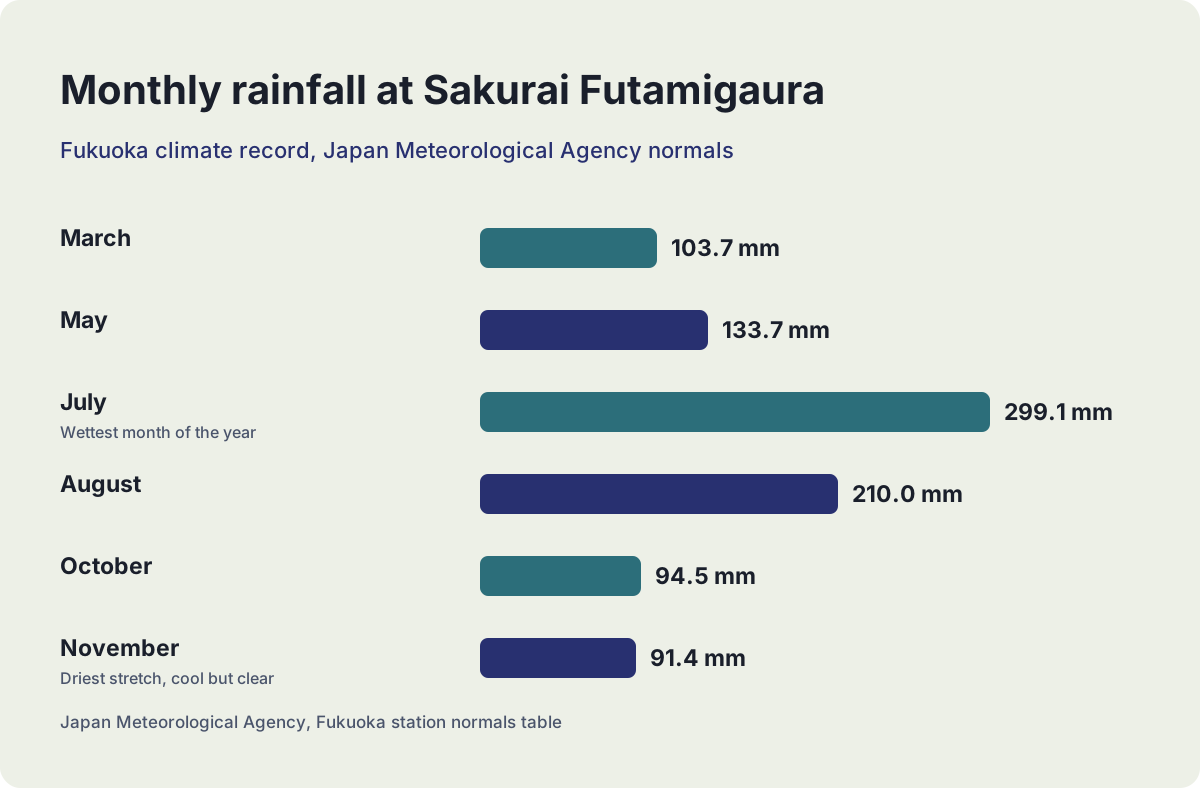
The seasonal numbers for Fukuoka support that planning. The city's climate record, kept by the Japan Meteorological Agency at its Fukuoka station, shows the pattern on the official normals table: July is actually the wettest month of the year at 299.1 mm, ahead of June's 249.6 mm despite June being the tsuyu rainy season, while October and November drop to 94.5 mm and 91.4 mm respectively. That is the quiet information gain most guides miss: the months everyone assumes are the rainy ones are not the wettest, and the autumn is measurably the driest stretch of the year.
| Month | Mean temperature | Rainfall | Sunset verdict |
|---|---|---|---|
| March | 10.8 °C | 103.7 mm | Cold evenings, clear spells possible |
| May | 19.9 °C | 133.7 mm | Warm, green hills, good light |
| July | 27.4 °C | 299.1 mm | Strong sunsets but the wettest month |
| August | 28.4 °C | 210.0 mm | Hot, crowded, reliable evening light |
| October | 19.6 °C | 94.5 mm | Comfortable and drier, excellent |
| November | 14.2 °C | 91.4 mm | Driest stretch, cool but clear |
Typhoon season runs roughly July through October across Kyushu, and it is a real planning factor rather than a warning: a passing system can shut the coast for a day or two, then hand back a week of clean air and exceptional sunsets. If your Fukuoka dates fall in that window, keep the Itoshima evening flexible and check the forecast the same day. Winter visits are underrated for a different reason: the air is clear, the crowds are thin, and a crisp February evening at 7.8 °C mean is entirely manageable with a coat.
Tide is the second timing variable, and one that photographers take seriously. The torii and the rocks read differently at high and low water, with the gate's base and the foreshore changing the whole foreground of the shot. No single tide state is the correct one; the practical move is to know the day's tide times and decide whether you want water lapping the gate's pillars or exposed sand and rock in front of them.
What Can You See and Do Around Sakurai Futamigaura?
The site itself offers the couple rocks, the sea torii, the beach and the inland shrine grounds, all walkable in under an hour. Around it, the Itoshima peninsula supplies the rest of a day: oyster huts and seafood shacks along the coast, quiet beaches, roadside farm stands, and viewpoints along the coast road that most first-time visitors never reach without a car or a guide. The honest framing is that Sakurai Futamigaura is the headline, and Itoshima is the story.
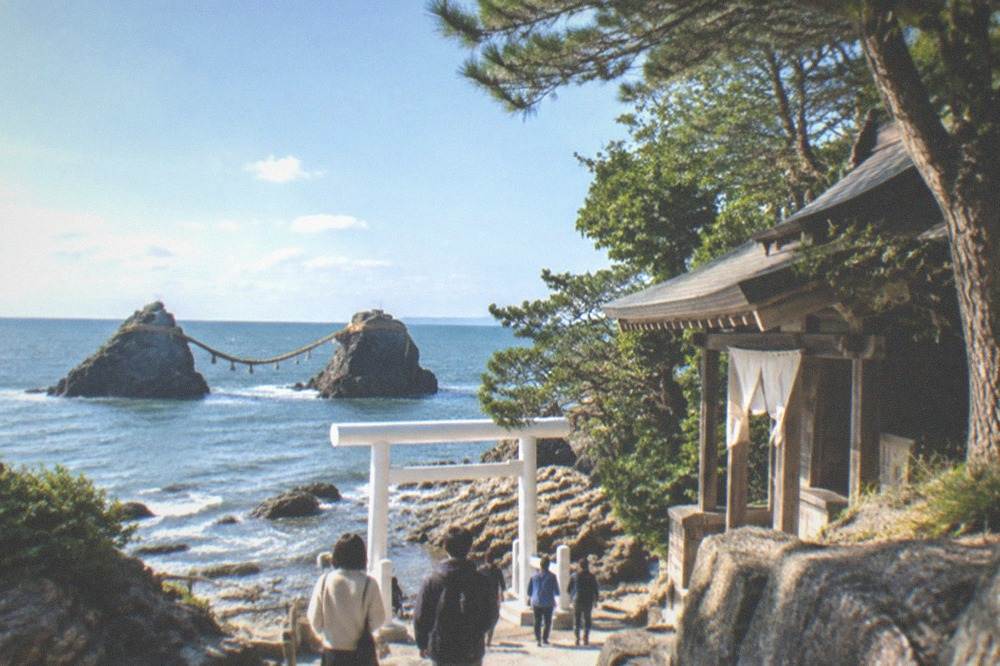
Start with the shrine grounds behind the beach. Sakurai Shrine is the site's owner and its reason for existing, and the marriage symbolism of the Meoto Iwa is the shrine's own theme, which is why couples come here for wedding photographs and why the spot has a quietly celebratory atmosphere on weekends. The grounds are compact, free to walk and, unlike the beach, shaded, which matters in an August afternoon.
The beach and foreshore are the main event. The couple rocks stand a short distance offshore, the shimenawa rope between them clearly visible from the sand, and the white torii stands in the shallows to one side. At low tide you can walk closer to the waterline and shoot across wet sand; at high tide the gate appears to float. The site's small size is a virtue here: every reasonable composition lies within two hundred metres of the car park, tripods and all.
Beyond the site, the peninsula's other stops are what turn a two-hour visit into a day. The Itoshima coast is lined with seafood operations, and the oyster season in particular draws Fukuoka residents out on winter weekends. Beach cafes and craft shops cluster in the same villages, and the coast road itself is a pleasure in good weather. None of these individual stops is a major attraction in the guidebook sense, and that is precisely the appeal: Itoshima is a region of small pleasures, and it rewards travellers who slow down to the speed of the peninsula.
Guided tours have become the practical answer for visitors who want those small stops without renting a car. The Itoshima Hidden Gems day tour from Fukuoka covers the peninsula's coast in a loop from the city, timed so that shoreline stops fall in good light, and it is the tour most visitors with a camera and no car should look at first.
A longer coastal alternative runs the same peninsula at a fuller ten-hour pace, trading some free time for coverage of Itoshima's nature and shoreline spots. The Itoshima coastal scenery tour from Fukuoka is that option, and the choice between the two is mostly a question of stamina and of how much of the day you want to belong to the road.
For visitors who would rather stay in the city on a grey day, the alternatives are covered elsewhere on this Fukuoka Japan Travel Guide: the Fukuoka Tower observation deck gives a sunset over the same Genkai Sea from 123 metres up without leaving the city, and the Nakasu yatai street turns the evening into a food experience instead. Both pair naturally with a Sakurai Futamigaura sunset on different days of the same trip.
| Stop | Type | Time needed | Notes |
|---|---|---|---|
| Sakurai Shrine grounds | Shrine | 15-20 minutes | Shaded, free, marriage symbolism |
| Meoto Iwa and beach | Coastline | 30-60 minutes | The headline view, tide-dependent |
| Itoshima oyster huts | Food | 1 hour | Seasonal, winter peak |
| Coast road viewpoints | Scenic drive | Variable | Best with a car or tour |
| Peninsula beaches | Coastline | 1-2 hours | Summer swimming season |
How Do You Photograph the Couple Rocks Well?
Arrive at least forty-five minutes before sunset, work from the sand at low tide or from the upper beach at high tide, and put the sun behind the rocks as it drops. A tripod, a lens in the standard to short telephoto range and a willingness to move along the foreshore cover almost every composition. The single most common mistake is arriving at the sunset itself, when the best light has already been and gone.
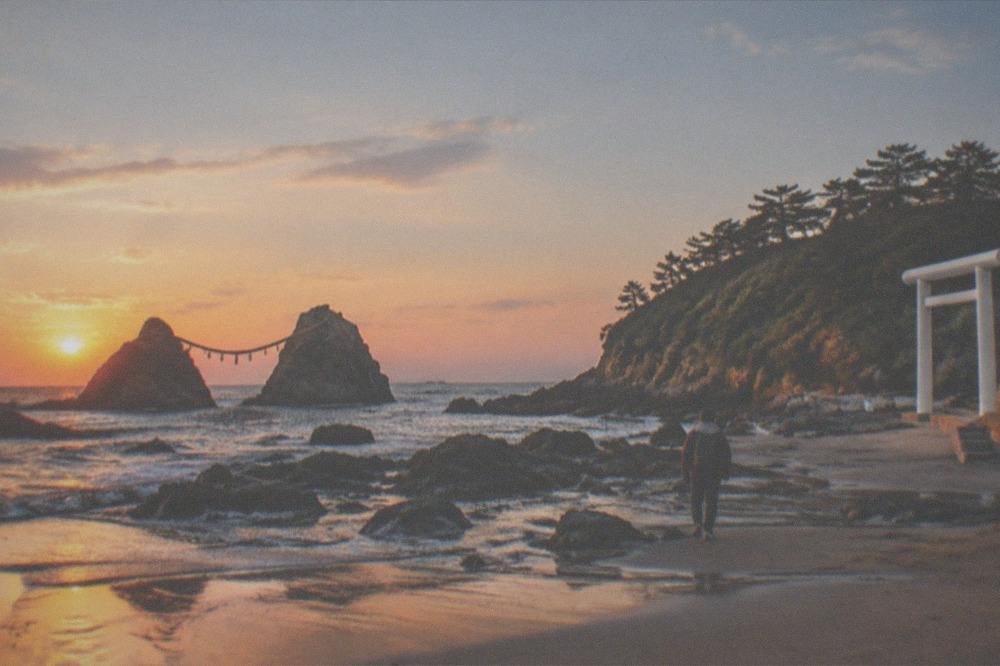
The golden hour here is generous, and the site is small enough that you can walk the full set of angles in that time. The classic frame puts the couple rocks in the foreground with the torii behind and to the side, the sun dropping into the gap. As the light goes, the sky behind the rocks does most of the work, and silhouettes of the gate and the shimenawa read beautifully against orange water. After the sun is gone, stay ten more minutes: the afterglow along the Genkai Sea is frequently the better photograph.
Tide changes the geometry. At low water, wet sand in front of the gate gives reflections and leading lines, and you can shoot from closer to the waterline. At high water the gate's pillars sit in the sea and the composition tightens, and the upper beach becomes the working position. There is no wrong answer, which is why checking the day's tide table before you leave Fukuoka is the one piece of homework that reliably improves the pictures.
Respect is part of the craft here. The rope joining the rocks is a sacred object and the torii is a shrine gate in the sea, not a climbing frame or a drone perch. The site's popularity means a dozen photographers on a good evening is normal, and the ones who leave with the best work are the ones who arrived early, stayed back from the water's edge when the crowd pressed in, and let the light do the talking.
What Does a Trip to Sakurai Futamigaura Cost?
The shoreline, the beach and the shrine grounds cost nothing to visit, and no admission is charged at the site. Your real costs are transport and time: a bus fare or a rental car for the self-guided trip, or a guided day tour from the city that includes the coast among its stops. Budget for food if you plan to eat along the Itoshima coast, where seafood is the peninsula's main industry and its main expense.
For the self-guided visitor, the cost structure is simple. The subway fare to the city's western edge runs a few hundred yen, the bus or the fuel costs more, and the return journey is the same again. A rental car for a day, split between two or more travellers, is usually the most economical way to cover the peninsula properly, and it is the only way to reach the oyster huts, the beaches and the viewpoints in one outing without a tour's fixed schedule. Parking at the site is provided, and in the off season it is rarely a problem.
For the guided option, the Itoshima day tours from Fukuoka start from $69 per person for the hidden-gems loop, which covers the peninsula's coastal highlights in a full-day format. That price buys the driving, the guide and the timing, and for a solo traveller it is often cheaper than a rental car plus fuel once everything is counted. The tour's live listing carries the current price, the departure details and the cancellation terms, and those are the figures to check when you actually book, since prices move with the season.
The honest cost comparison is against the alternative uses of the same day. A city day in Fukuoka can be close to free: the castle ruins at Maizuru Park, Ohori Park's lake, Tochoji's great Buddha and the grounds of Kushida Shrine all cost nothing to enter, as covered on this site's pages about the Fukuoka Castle ruins and Tochoji temple. A day on the Itoshima coast costs more, in money and in hours, and it returns something the city cannot: the sea, the sunset and the drive. Which trade you take depends entirely on what your trip is missing.
| Option | Rough cost driver | Time from city | Includes |
|---|---|---|---|
| Bus, self-guided | Fares each way | Half day minimum | The site only |
| Rental car, self-guided | Car hire plus fuel | Half or full day | The whole peninsula |
| Guided Itoshima day tour | Tour price per person | Full day | Coast stops, guide, transport |
| City sightseeing instead | Mostly free entry | Within the city | Shrines, parks, museums |
What Should You Know Before You Go?
Bring water, a light layer for the coast wind, and shoes you do not mind getting sandy. Check the sunset time, the tide table and the return bus timetable before you leave the city, because all three decide whether the visit works. The site is exposed, has no shelter on the beach, and in summer the evening heat lingers, so plan around the conditions rather than against them.
Weather closes options on this coast more than in the city. Rain and wind take the photographs away, and the exposed beach offers nowhere to wait them out, so a grey forecast is a reason to swap the Itoshima day for a city day and keep the coast for the next clear evening. Typhoon season, roughly July through October, makes this a live decision rather than a formality, and the same flexibility applies to winter, when the light is lovely and the wind is cold.
Facilities on the site are modest and seasonal. There is parking, and the small businesses nearby, the seafood shacks and cafes that serve the peninsula's visitors, open and close with the season, the day of the week and the weather, so do not plan a full meal around any single one of them without checking. The shrine grounds are the only shaded, seated part of the site. If you are visiting with children or with anyone who struggles on sand, the short walk from parking to shore is flat and manageable, and the site's small size works in your favour.
Photographers should note that the site faces west across open water, and the last light goes fast once the sun touches the horizon. Give yourself the full hour. Travellers combining the visit with a wider Itoshima loop should do the driving stops first, the shoreline last, and let the sunset be the final act, which is also exactly how the good guided tours sequence the day.
For visitors who want the coast but would rather fold it into a private plan, a customisable private tour with a local guide can build the Itoshima coast into a personal itinerary alongside city stops, and the private format suits families and small groups best.
How Does Sakurai Futamigaura Compare with Other Fukuoka Coast Spots?
Itoshima's couple rocks are the best sunset composition on Fukuoka's coast, and the only local rival in fame is the pair of beaches and parks on the city's own bay, which are easier to reach and less photogenic. Nokonoshima island park offers flowers and sea views a short ferry from the city, while Uminonakamichi offers a full seaside park and aquarium on the eastern edge of the bay. Sakurai Futamigaura wins on the photograph; the others win on convenience.
The comparison matters because Fukuoka is a coastal city with several ways to see the water, and travellers with limited evenings should choose deliberately. Momochi Seaside Park and the beach by Fukuoka Tower put a sunset over the same Genkai Sea within a short bus ride of Tenjin, with the tower's silhouette as the foreground instead of a shrine gate. It is the easy evening, and on a short trip it is a defensible substitute. What it does not have is the shrine symbolism, the married rocks or the sense of a destination earned by distance.
The island and park options sit in between. Nokonoshima, a short ferry from Meinohama, combines a flower park with sea views across the bay, and Uminonakamichi on the bay's eastern arm is a large seaside park with the Marine World aquarium attached. Both are family-friendly, both are reachable by public transport, and neither requires the planning that an Itoshima evening does. Their pages on this site carry the verified entry details, including the fact that Uminonakamichi's gate takes cash only, a detail worth knowing before you go.
The honest ranking for a photographer is: Sakurai Futamigaura first, with the caveat of travel time; the city bay front second, for convenience; and the parks third, for families. The honest ranking for a family with young children inverts almost exactly, because a two-hour round trip for a beach that you cannot swim at, in the evening, with tired children, is not a better plan than a ferry to an island park. Know which traveller you are before you choose.
| Coastal spot | Setting | Best for | Reachable by |
|---|---|---|---|
| Sakurai Futamigaura | Open sea, shrine rocks | Sunset photographs | Bus, car or tour |
| Momochi and Fukuoka Tower | City bay front | Easy evenings | City bus |
| Nokonoshima island park | Island in the bay | Flowers, families | Ferry from Meinohama |
| Uminonakamichi | Seaside park, aquarium | Families, aquarium | Train and bus |
Whichever coast you choose, the guided options cover the alternatives too, and the trio below spans the Itoshima loop, a full-day Kyushu coast-and-cave itinerary for travellers with more time, and a private city-plus-coast format for those who want both in one customised day.
Common Questions About Sakurai Futamigaura
Is Sakurai Futamigaura worth visiting?
Yes, if you want a sea sunset, coastal scenery or the photographs. The couple rocks and sea torii make one of Kyushu's best sunset compositions and the site is free to visit. If your time in Fukuoka is limited to the city centre and you have no clear evening forecast, the honest answer is to spend those hours on the city's own sights instead.
How do I get to Sakurai Futamigaura from Fukuoka?
There is no direct train. Take a bus from central Fukuoka toward the Itoshima coast, drive a rental car along the peninsula's coast road, or join a guided Itoshima day tour from the city. If you go independently, check the return bus timetable before you travel, because evening services are sparse and the sunset is the whole point of the visit.
What is the best time to visit Sakurai Futamigaura?
The last hour before sunset on a clear evening. October and November combine the driest weather of the year with comfortable temperatures, while July and August deliver strong sunsets but also heat, crowds and the highest rainfall of any month. Check the tide table too, because the torii photographs differently at high and low water.
Does it cost anything to visit Sakurai Futamigaura?
The shoreline, beach and shrine grounds are free to walk. Your costs are transport, food along the coast if you eat there, and parking if you drive. Guided Itoshima day tours from Fukuoka start from $69 per person and include the driving and the guide.
Can you visit Sakurai Futamigaura without a car?
Yes, by bus or by guided tour. The bus works for a one-way daytime visit but ties you to sparse evening returns, so check the last services or plan a taxi back to a station on the JR Chikuhi line. A guided tour is the standard choice for visitors without a car who want the sunset and the peninsula's other stops in one day.
How long do you need at Sakurai Futamigaura?
The site itself is a thirty-minute experience on foot, covering the couple rocks, the sea torii, the beach and the shrine grounds. Plan a half day for the round trip from Fukuoka by car or tour, or a full day if you want to loop the wider Itoshima peninsula's beaches, oyster huts and viewpoints.