Kurokawa Onsen from Fukuoka
Kurokawa Onsen is one of Kyushu's most atmospheric hot spring villages, a half-day trip inland from Fukuoka into the mountains of Kumamoto Prefecture, and there are exactly two honest ways to organise the journey: a guided day tour, or self-drive.
Short answer
Kurokawa Onsen sits in the mountains of Kumamoto Prefecture, roughly two to three hours from Fukuoka by road depending on route and season. There is no Shinkansen or direct rail link, so the day trip runs on highway bus, rail plus bus, private car, or a guided tour from around $58 per person.
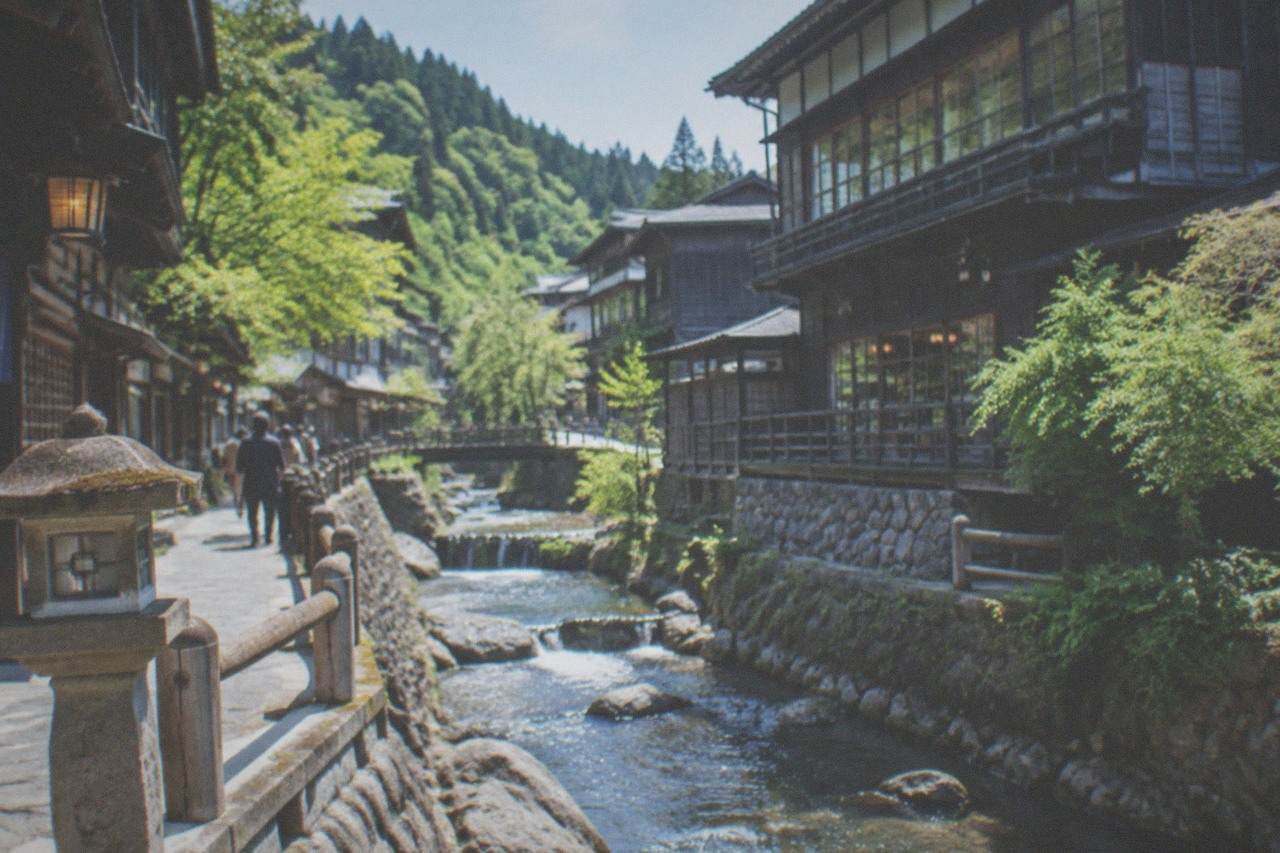
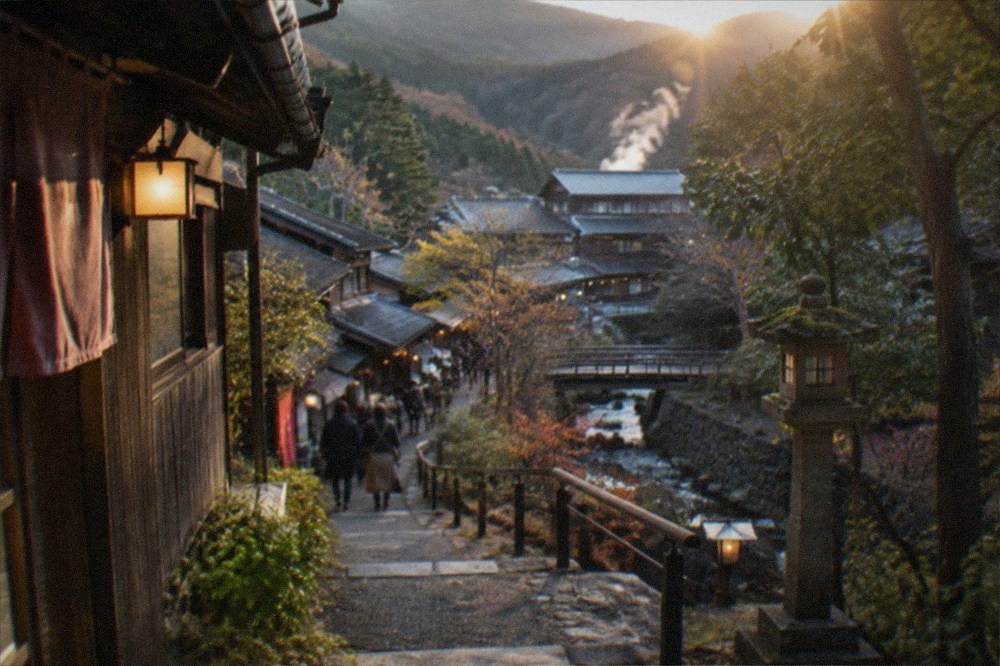
Kurokawa Onsen is a preserved hot spring village in the mountains of Kumamoto Prefecture, about as far from Fukuoka's Hakata Bay waterfront as a day trip can comfortably stretch. The village is a cluster of wooden ryokan arranged along a river gorge, with milky white and amber baths, rotenburo pools open to the sky, and a main street that still reads as Edo period in texture even if the tatami has been replaced a few times. Fukuoka, on the Genkai Sea side of northern Kyushu, is a coastal city of 1,663,892 people; Kurokawa is an inland village in the volcanic interior, and the trip between them crosses most of the Aso caldera region to get there.
That contrast is the whole appeal. You leave a ramen-and-yatai city, ride into the mountains, and spend the middle of the day soaking in a village that closes early and wakes late. This page covers the honest routes from Fukuoka, what a day there actually costs in time, which guided tours do the trip, and how to decide between them.
How Do You Get to Kurokawa Onsen from Fukuoka?
There is no rail line to Kurokawa Onsen, no Shinkansen station and no direct JR service of any kind: every route from Fukuoka is road-based for at least the final leg. Travellers reach the village by highway bus, by train to a connecting bus, by private car or taxi, or by guided day tour. The journey crosses from Fukuoka Prefecture into Kumamoto Prefecture, most of it through or near the Aso region.
The starting point in Fukuoka is Hakata, the city's main station. There is no JR Fukuoka Station, the station is Hakata, and Hakata is a ward of Fukuoka, so any instruction telling you to travel "from Hakata to Fukuoka" is describing a place inside itself. For a deep-Kyushu day trip this matters less than it does inside the city, because you are leaving the city entirely, but every timetable, bus terminal and tour departure point you will use is labelled Hakata.
From Hakata, the practical choices look like this:
- Guided day tour: the most common route, and the only one that covers the full distance without transfers. The tour rostered on this site runs from $58 per person, rated 4.6 from 101 reviews, over about 10 hours.
- Rail plus bus: travel by JR or highway transport toward Kumamoto or Aso, then connect to a local bus for the mountain leg. This is the slowest option and the one most sensitive to missed connections.
- Highway bus: direct intercity coaches toward the Aso and Kumamoto interior, then a local connection into the village.
- Rental car or private transfer: the most flexible option, and the one local tourism bodies generally favour for Kurokawa specifically, because the village sits at the end of winding mountain roads where bus frequency is thin.
The single biggest planning factor is that Kurokawa is not on the way to anything else. Nagasaki, Dazaifu, Itoshima and Yanagawa all sit on convenient rail or bus spines from Hakata, and this site covers those as straightforward day trips from Fukuoka. Kurokawa does not. It is a detour into the volcanic interior, and the reward for the detour is that most day-trippers from Fukuoka never make it there.
Why Is Kurokawa Onsen Worth the Long Trip?
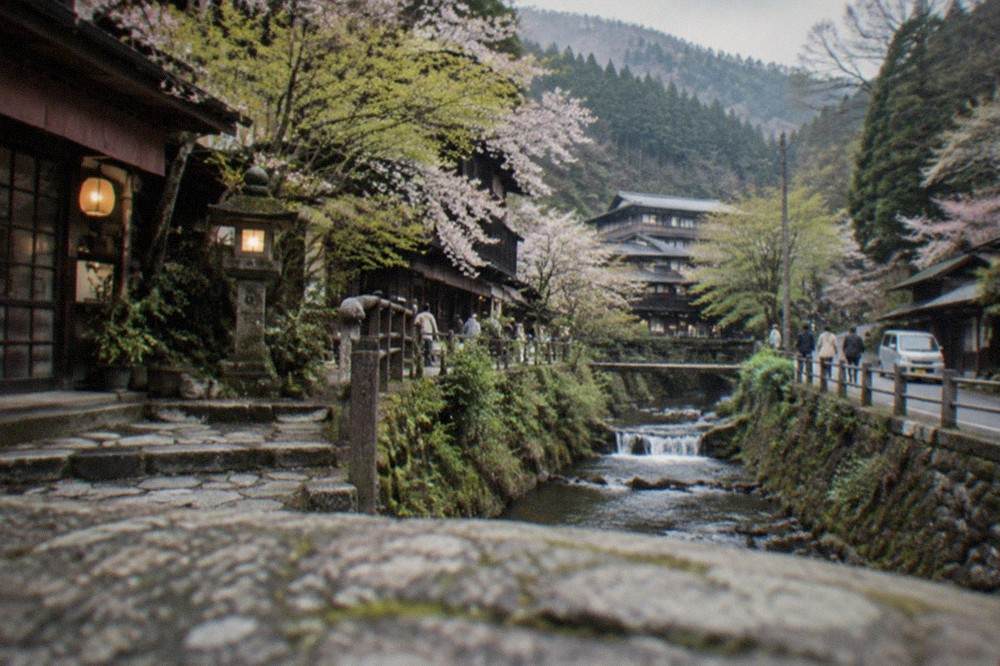
Kurokawa Onsen is worth the journey because it is one of the few onsen towns in Japan that still presents itself as a single, coherent historic village rather than a strip of hotels around a modern station. Roughly two dozen ryokan line a river gorge, and the village publishes a shared bathing system where day visitors can buy a wooden pass and rotate between several inns' outdoor baths.
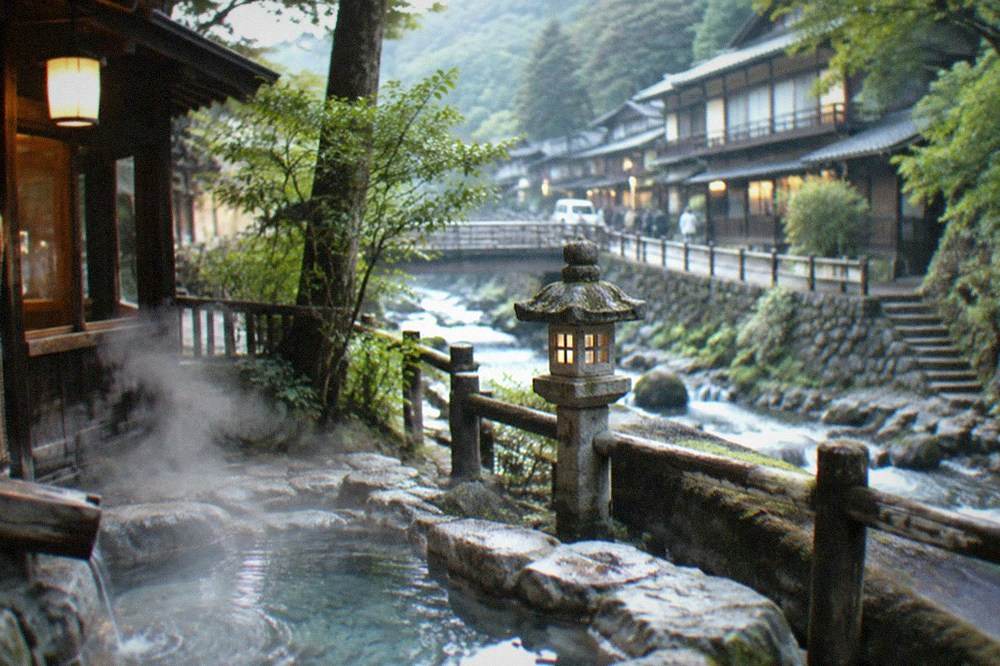
The shared bathing pass is the thing that makes a day trip work. In most onsen towns, an outsider can only bathe at their own hotel, which locks day visitors out entirely. Kurokawa's inns sell individual bath entry and a wooden tegata pass honoured across participating ryokan, as the village's own official visitor information explains, so a day visitor can move through three or four different baths in an afternoon, each with a different water chemistry and a different position on the gorge. The milky, sulphurous waters of the region are the draw, and the open-air pools sit close enough to the river that steam and water sound overlap.
The village also behaves like a village. Shops close early, the street is dark by late evening outside festival periods, and the pace is set by the ryokan rather than by retail. For a traveller coming from Fukuoka's Nakasu entertainment district, that inversion is the point: this is a trip built to slow down, not to see more things.
Kurokawa's position helps it. Sitting high in the mountains of Kumamoto Prefecture, inland from both the Genkai Sea coast and the Ariake coast, it stays cooler than Fukuoka in summer and colder, with real snow risk, in winter. The Fukuoka Onsen guide covers the city's own bathing options for days when a mountain trip is too much, but none of them offer the village atmosphere, which is why people make this specific journey.
What Does a Guided Kurokawa Onsen Tour from Fukuoka Include?
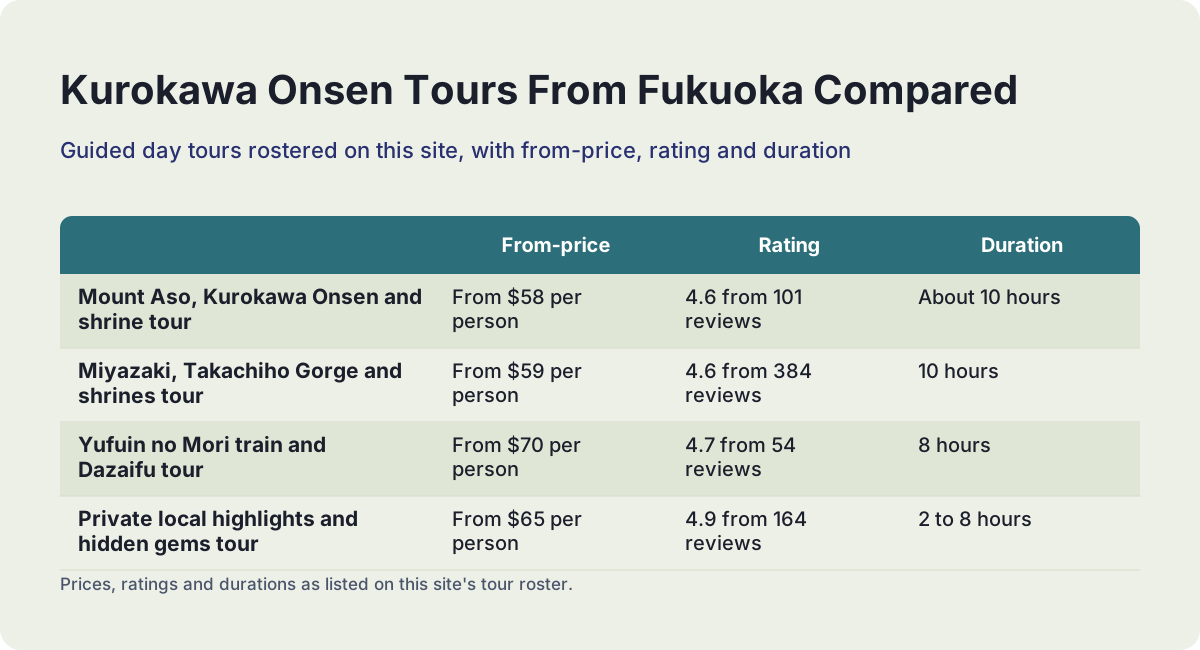
The Mount Aso, Kurokawa Onsen and shrine day tour from Fukuoka runs from $58 per person, is rated 4.6 from 101 reviews, and takes about 10 hours, covering the round trip into the Aso region and the onsen village in a single day. It is the only rostered tour on this site that reaches Kurokawa at all, and it bundles the mountain roads and the bathing stop into one itinerary.
For most travellers the guided option is not about comfort, it is about the transfer problem. Kurokawa's local bus connections are thin, run infrequently, and do not line up neatly with Fukuoka departure times, so a self-guided rail-and-bus day burns most of its margin waiting for connections. A tour bus covers the whole distance door to door, and the itinerary builds in the Aso region on the way, which is where the best scenery of the trip actually sits.
| Tour | Route highlights | Price | Rating | Duration |
|---|---|---|---|---|
| Mount Aso, Kurokawa Onsen and shrine tour | Aso volcano region, Kurokawa Onsen, shrine stop | From $58 per person | 4.6 from 101 reviews | About 10 hours |
| Miyazaki, Takachiho Gorge and shrines tour | Takachiho Gorge, Miyazaki shrines | From $59 per person | 4.6 from 384 reviews | 10 hours |
| Yufuin no Mori train and Dazaifu tour | Yufuin no Mori sightseeing train, Dazaifu | From $70 per person | 4.7 from 54 reviews | 8 hours |
| Private local highlights and hidden gems tour | Fukuoka city, customised with a local | From $65 per person | 4.9 from 164 reviews | 2 to 8 hours |
The comparison row that matters is the second one. Takachiho, covered in detail on the Takachiho Gorge trip page, is the other deep-interior day trip from Fukuoka, and many travellers weigh Takachiho against Kurokawa when they only have one free day. The Miyazaki and Takachiho tour runs from $59 per person at 4.6 from 384 reviews, and its itinerary is built around a gorge and shrines rather than hot springs. If bathing is the priority, Kurokawa wins; if mythological sites and a dramatic ravine appeal more, Takachiho is the stronger day.
Cancellation terms, departure point and the exact bathing stop are on the operator's live listing rather than fixed in this page, because they move with the season. The rostered facts that are stable: the from-price, the rating, the review count and the roughly 10-hour duration.
Can You Do Kurokawa Onsen Without a Tour?
Yes, Kurokawa Onsen is reachable without a tour, but the self-guided route is a rail-plus-bus or driving day, and the honest framing is that it is harder than any coastal day trip from Fukuoka. There is no direct rail to the village, no Shinkansen stop and no station at all in Kurokawa itself; the final leg is always by road. Most independent travellers rent a car in Fukuoka or ride rail toward Kumamoto and connect to a local bus.
Driving is the straightforward answer. The route from Fukuoka runs southeast across Kyushu into the mountains of Kumamoto Prefecture, and mountain roads mean the drive is long in hours rather than in kilometres, especially in winter. A rental car also unlocks the stops a tour bus skips: roadside onsen, viewpoint pull-offs on the caldera rim, and the small towns of the Aso region. The trade-off is that mountain driving in Japan in winter, when Kurokawa sees snow, is not for everyone, and parking in the village itself is managed and limited.
The rail-plus-bus route is the budget option. From Hakata, ride rail toward Kumamoto, then connect to the local bus network that serves the Aso and Kurokawa interior. The weak point is frequency: connections are thin, a missed one can cost an hour or more, and the last buses back run early enough that a very late soak is not possible. Anyone planning this route should read the getting around Fukuoka guide for the city-side legs, and treat the interior leg as a separate problem with its own timetables.
What the self-guided day buys you is control. You choose your baths, you stay as long as you want, and you eat where the village eats rather than where a tour stops. What it costs you is certainty. The guided tour from $58 per person removes every transfer risk on a route where transfer risk is the whole game, which is why most first-time visitors to Kyushu take the tour and most repeat visitors drive.
How Long Does the Kurokawa Onsen Day Trip Take?
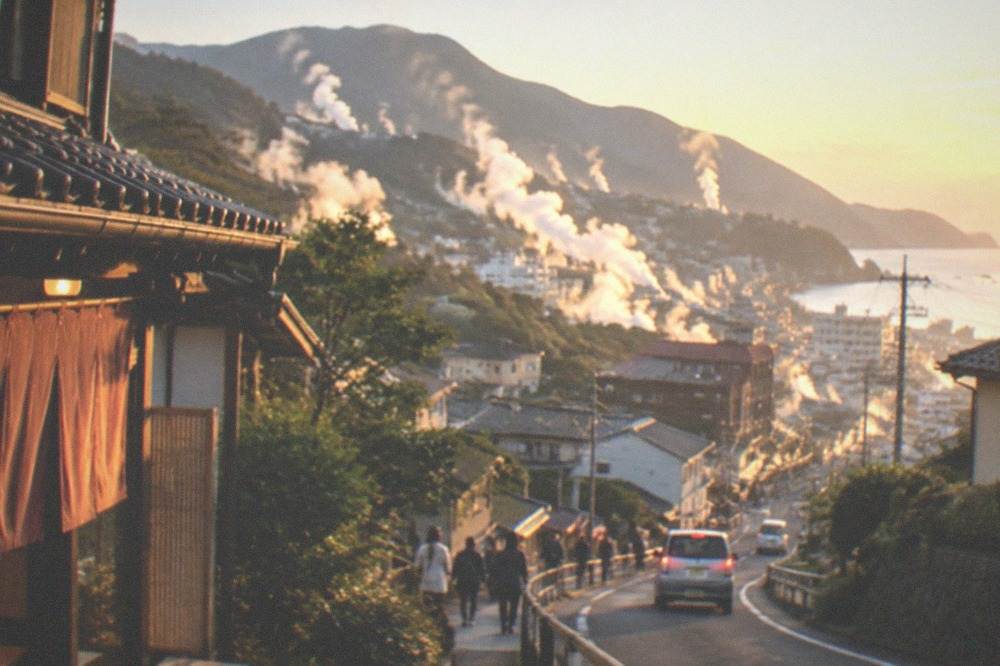
A realistic Kurokawa Onsen day trip from Fukuoka takes about 10 hours door to door, which is what the guided tour delivers, and a self-guided version with connections can run longer. The village sits deep in the Kumamoto mountains, and the distance each way is substantial enough that the drive or ride occupies most of the morning and a good part of the late afternoon.
Ten hours sounds abstract until you lay it against a day. The guided itinerary typically means a morning departure from the Hakata area, several hours of mountain travel with the Aso region on the way, a midday arrival at Kurokawa, an afternoon of bathing and walking the village street, and a return that lands you back in Fukuoka after dark. For comparison, the Dazaifu day trip can be done comfortably in half a day, and coastal trips like the Shikanoshima day trip fit easily inside a morning. Kurokawa is not that kind of trip.
| Day trip from Fukuoka | Approximate character | Typical tour duration | Tour from-price |
|---|---|---|---|
| Kurokawa Onsen and Mount Aso | Mountain interior, hot springs, volcano region | About 10 hours | From $58 |
| Takachiho Gorge and Miyazaki | Deep interior, gorge, shrines | 9 to 10 hours | From $59 |
| Yufuin and Beppu | Onsen towns, volcano hells, coastal return | 9 to 10 hours | From $48 |
| Dazaifu | Historic shrine town, short rail trip | Half day, no tour needed | Self-guided |
The reason the hours stack up is geometry. Fukuoka sits in the northwest corner of Kyushu; Kurokawa sits northeast of the Aso caldera in the island's volcanic middle. There is no direct line between them that a train can take, so every route doglegs. Guided tours absorb the dogleg into their itinerary by stacking Aso and shrine stops along the way, which converts dead travel time into the day's actual sightseeing.
One honest caution: this is a long day for small children or for anyone who finds long bus rides hard. The Fukuoka rainy day itinerary and the city's own museum and garden cluster are the right call when energy or weather is short. Save Kurokawa for a day with a clear forecast and an empty evening ahead of it.
What Is the Best Time of Year to Visit Kurokawa Onsen?
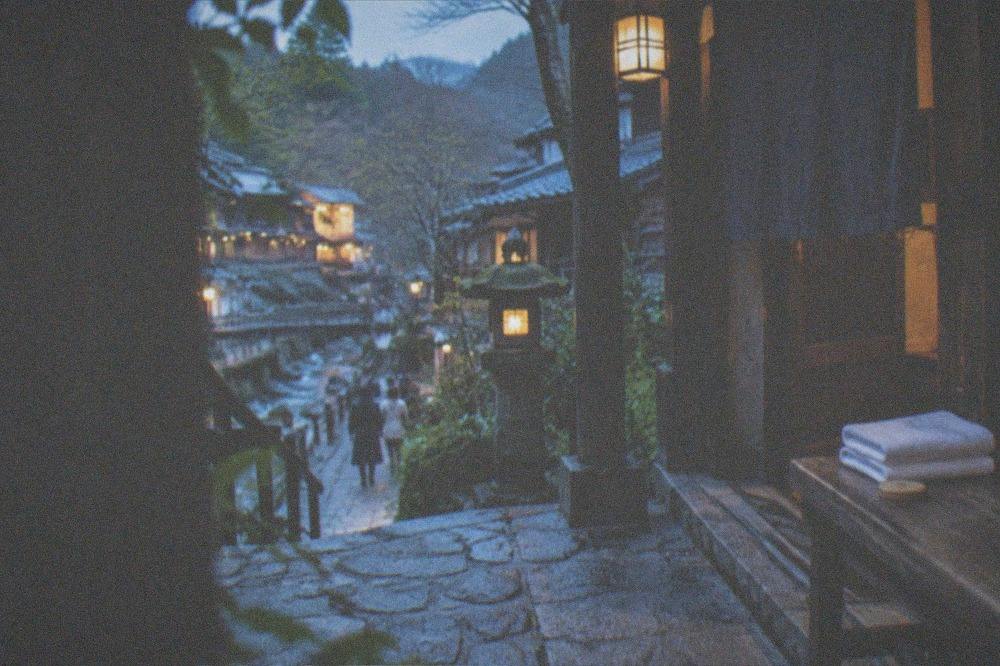
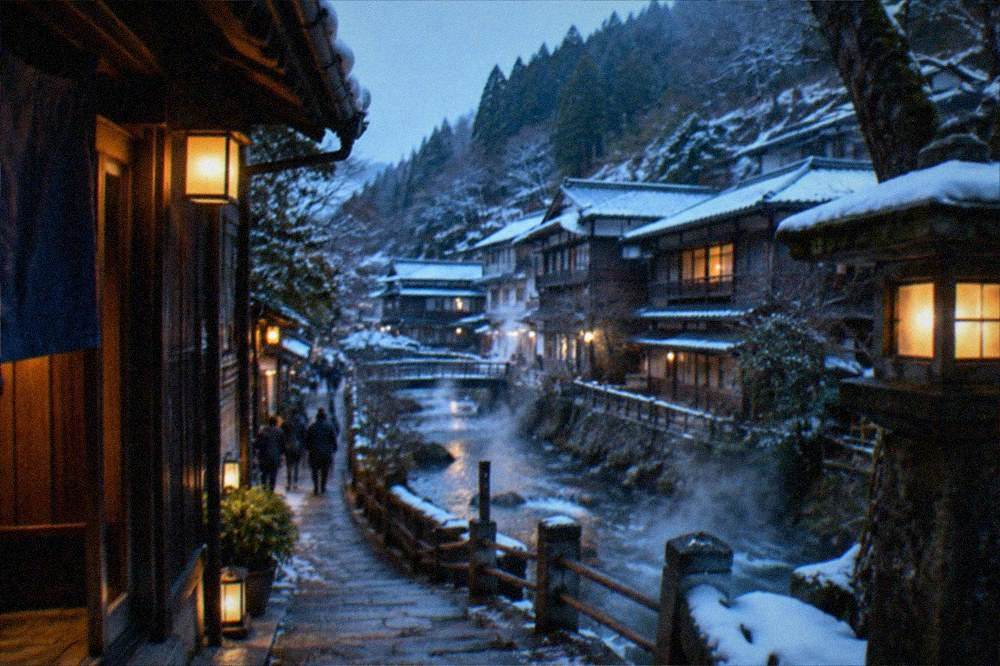
The best time to visit Kurokawa Onsen from Fukuoka is late autumn into winter, roughly November through February, when the village is at its most atmospheric: cold air, snow dusting on the rooftops, and maximum visual contrast between the steaming outdoor baths and the mountain air. Spring and early summer work well too. The JMA's 1991-2020 normals show the city side of the trip is driest and sunniest from October through February, which matters because the mountain leg is weather-sensitive.
The climate data below is the Fukuoka station record, the city you start from, not the village you end in, but it is the verified series published by the Japan Meteorological Agency, and it frames the journey's start and end. Kurokawa itself, higher and inland, runs colder than every figure here.
| Month | Mean temp | Daily max | Daily min | Rainfall |
|---|---|---|---|---|
| January | 6.9 °C | 10.2 °C | 3.9 °C | 74.4 mm |
| February | 7.8 °C | 11.6 °C | 4.4 °C | 69.8 mm |
| October | 19.6 °C | 23.7 °C | 16.0 °C | 94.5 mm |
| November | 14.2 °C | 18.2 °C | 10.6 °C | 91.4 mm |
| December | 9.1 °C | 12.6 °C | 5.8 °C | 67.5 mm |
The pattern worth knowing before every competitor repeats it badly: July, not June, is Fukuoka's wettest month at 299.1 mm against June's 249.6 mm, even though June is the tsuyu rainy season month. The Fukuoka in summer guide covers what that means for the city. For Kurokawa the summer question is different: mountain roads, volcanic terrain and summer thunderstorms make the interior leg less reliable, and August at 28.4 °C mean in the city is a month better spent on the coast.
Winter needs a caveat rather than a warning. Snow is part of Kurokawa's winter appeal, but mountain roads plus snow plus a rental car is a combination to respect, and the typhoon season, which runs roughly July through October across Kyushu, can disrupt any interior itinerary. Neither season makes the trip impossible, and neither should be written as a blanket warning; they just change which route you should choose.
Should You Stay Overnight Instead of Day-Tripping?
An overnight stay in Kurokawa is the better experience if you can spare the night, and it is what the village is actually built for: the ryokan, the multi-course dinners, and the evening and early-morning baths are all designed around guests rather than day visitors. A day trip from Fukuoka gives you the baths and the street but not the evening, when the village empties of tour groups and the gorge goes quiet.
The day-versus-night decision is really a crowds decision. Day visitors, tour buses and pass-holders dominate the street from late morning to mid afternoon. Guests have the village before that wave and after it, and the baths follow the same curve: the early-morning bath, before breakfast, is the single best bathing window the village offers and it belongs exclusively to overnighters. Anyone whose main interest is photography or long soaks should lean toward a night.
Two practical realities shape the choice. First, capacity: Kurokawa's ryokan stock is modest, and the inns that do accept single-night foreign bookings fill early, especially for winter snow season. Second, transport: without a car, arriving and leaving on the village's thin bus connections makes an overnight logistically smoother than a same-day return, because you are no longer hostage to one afternoon departure.
If a night in the mountains does not fit the itinerary, the compromise is the pairing day: Kurokawa plus Aso in one guided day, which is what the tour does, then a second, slower night in Fukuoka itself. The Beppu day trip and Yufuin day trip pages cover the other onsen towns reachable from Hakata, both of them closer and both of them easier to combine with a city evening.
What Else Combines Well with Kurokawa Onsen from Fukuoka?
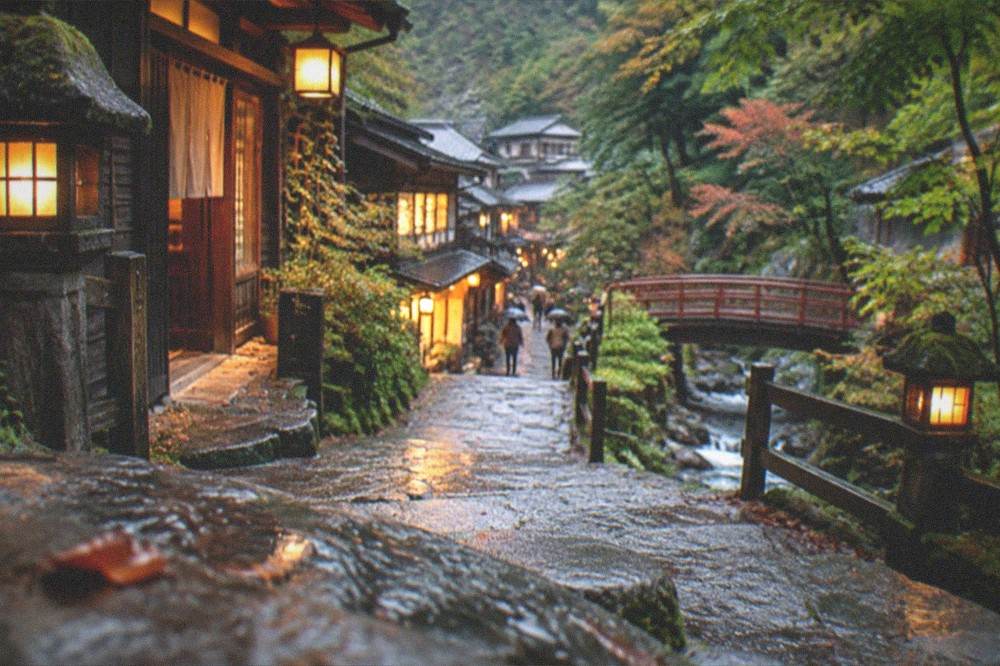
Mount Aso is the natural pairing with Kurokawa Onsen, because the volcano region sits between Fukuoka and the village and any route to Kurokawa crosses its edges; the guided tour builds exactly that day, pairing the volcano region, the onsen village and a shrine visit into about 10 hours. Other strong combinations from Fukuoka are Takachiho Gorge and Miyazaki shrines to the southeast, and Yufuin and Beppu to the east.
The Aso region is worth understanding before you dismiss it as a drive-through. The caldera is one of the largest in the world, its grasslands and volcano viewpoints are among Kyushu's signature landscapes, and the drive across it is a large part of what makes the Kurokawa tour feel like a journey rather than a commute. Volcanic activity in the Aso region is monitored and access to the crater area is managed accordingly, so crater viewpoints close and reopen with conditions, which is another quiet argument for the guided option: the driver knows what is open today.
| Combination day from Fukuoka | What you get | Tour from-price | Rating |
|---|---|---|---|
| Mount Aso + Kurokawa Onsen + shrine | Volcano region, hot spring village, shrine | From $58 | 4.6 from 101 reviews |
| Miyazaki + Takachiho Gorge + shrines | Gorge, mythology shrines, Miyazaki | From $59 | 4.6 from 384 reviews |
| Yufuin no Mori train + Dazaifu | Sightseeing train, onsen town, shrine town | From $70 | 4.7 from 54 reviews |
| Yufuin, Beppu, Sapporo Brewery, museum | Onsen towns, brewery, art museum | From $55 | 4.7 from 51 reviews |
The rows above are all real rostered tours from Hakata, and the last two show the gentler onsen-town alternatives: Yufuin and Beppu deliver hot spring bathing at a fraction of the travel commitment. If the question is "bathing, and I have one day," Yufuin is the pragmatic answer. If the question is "the most atmospheric onsen village in Kyushu, regardless of hours," it is Kurokawa, and the hours are the price.
For travellers stitching together a wider Kyushu route rather than single days out of Fukuoka, the Kagoshima from Fukuoka and Miyazaki from Fukuoka pages cover the southern legs, and the Saga day trip page covers the western side. Kurokawa fits a southern loop far more naturally than a day trip, which is exactly the tension this page keeps running into.
Is the Kurokawa Onsen Day Trip Right for You?
The Kurokawa Onsen day trip is right for you if hot springs are a genuine priority rather than a maybe, if a 10-hour day and an early start do not bother you, and if you would rather see one extraordinary village than three ordinary ones. It is the wrong trip if you need flexibility, travel with very small children, or are visiting in a typhoon-affected window with no buffer day.
The simplest framing is against the alternatives. Fukuoka itself, as this site's Fukuoka Japan Travel Guide homepage lays out, is a compact city whose major sights, from Kushida Shrine to the Ohori Park gardens and the temple cluster of Hakata old town, sit minutes apart on the subway, with a flat adult fare between ¥210 and ¥380 by distance zone. Every one of those city days costs less travel time than the drive to Kurokawa alone. If you have not yet done the city, do the city first, and the Fukuoka on a budget guide shows how cheaply those city days can be assembled.
Then there is the question of what kind of traveller you are. The visitor who will love Kurokawa books one deep trip instead of three shallow ones, wants steam and cold air rather than shopping and nightlife, and is comfortable with the idea that the best bath of the trip costs a full day to reach. The visitor who will not is counting hours, and for that traveller the honest recommendation is Yufuin, Beppu, or an evening at the yatai stalls in Fukuoka itself, where the city's own ordinance requires about 100 licensed stalls to post their prices visibly, with no market-price guessing allowed.
Whichever way you build the day, the decision that matters most is tour versus self-drive, not which bath to pick. The baths will take care of themselves. The mountain roads, the thin bus connections and the 10 hours are the actual trip, and choosing honestly between those is what makes the day work.
Common Questions About the Kurokawa Onsen Day Trip
How Do You Get To Kurokawa Onsen From Fukuoka?
There is no rail line to Kurokawa Onsen and no station in the village; every route from Fukuoka is road-based for at least the final leg. The practical options are a guided day tour from about $58 per person, a rail-plus-local-bus combination via the Kumamoto or Aso direction, a highway bus with a connection, or a rental car covering the mountain roads yourself. Most first-time visitors take the tour because the local bus connections are thin and a missed one can cost an hour or more.
How long does the trip from Fukuoka to Kurokawa Onsen take?
A guided day tour runs about 10 hours door to door, and a self-guided version with bus connections can run longer. The village sits deep in the mountains of Kumamoto Prefecture, so travel occupies most of the morning and a good part of the late afternoon, and an early start from the Hakata area is effectively mandatory.
Is Kurokawa Onsen worth a day trip or should you stay overnight?
An overnight stay is the better experience, because the ryokan, the multi-course dinners and the early-morning baths are all designed around guests, and the village empties of day visitors in the late afternoon. A day trip delivers the baths and the village street but not the quiet evening or the morning bath. Day-tripping is the right call when the itinerary has no spare night, and the guided Aso-and-onsen tour is the strongest way to spend it.
Can you bathe at Kurokawa Onsen without staying at a ryokan?
Yes. Kurokawa's inns participate in a shared bathing system where day visitors can buy a wooden tegata pass honoured across participating ryokan, or pay for individual bath entry, which is exactly what makes the village work as a day trip. You rotate between several inns' outdoor baths along the gorge rather than being locked out as an outsider.
What is the best time of year for a Kurokawa Onsen trip?
Late autumn into winter, roughly November through February, is the most atmospheric window, with cold air, occasional snow on the rooftops and maximum steam contrast off the outdoor baths. Spring also works well. Summer carries the region's typhoon-season risk and August is hot; July is Fukuoka's wettest month at 299.1 mm, which makes the mountain leg less reliable.
What combines well with Kurokawa Onsen on a day trip from Fukuoka?
Mount Aso is the natural pairing, because the volcano region sits between Fukuoka and the village and the guided tour builds exactly that day, pairing Aso, Kurokawa and a shrine visit into about 10 hours. Adding any second destination to a self-guided Kurokawa day is usually too much; Takachiho Gorge and Miyazaki to the southeast, or Yufuin and Beppu to the east, are better treated as their own separate days.