Fukuoka in Summer
Fukuoka summers are hot, humid and wetter than most guides admit: Japan's own meteorological data shows July, not June, is the city's wettest month. Here is what the numbers actually say, and how to plan around them.
Short answer
Fukuoka averages 27.4°C in July and 28.4°C in August, with overnight lows above 25°C. July is the wettest month at 299.1 mm, ahead of June's 249.6 mm despite June being the tsuyu rainy season. Typhoon season runs roughly July to October. None of this makes the city unvisitable; it makes planning worthwhile.
Fukuoka sits on Hakata Bay, on the Genkai Sea side of northern Kyushu, and its summer is a genuine three-act season: a soggy June, a fiercely hot and surprisingly wet July, and an August that is the hottest month of all. The city's own meteorological record contradicts several things competing guides print, starting with the claim that the rainy season is the wet part and summer is the dry part. It is not. The numbers below come from the Japan Meteorological Agency's 1991 to 2020 normals for the Fukuoka observation station, and they paint a more interesting picture than the usual warnings do. This page on Fukuoka Japan Travel Guide walks through what the data says, when the festivals land, and how to build an itinerary that survives 31°C afternoons without retreating to your hotel.
How Hot and Humid Does Fukuoka Get in Summer?
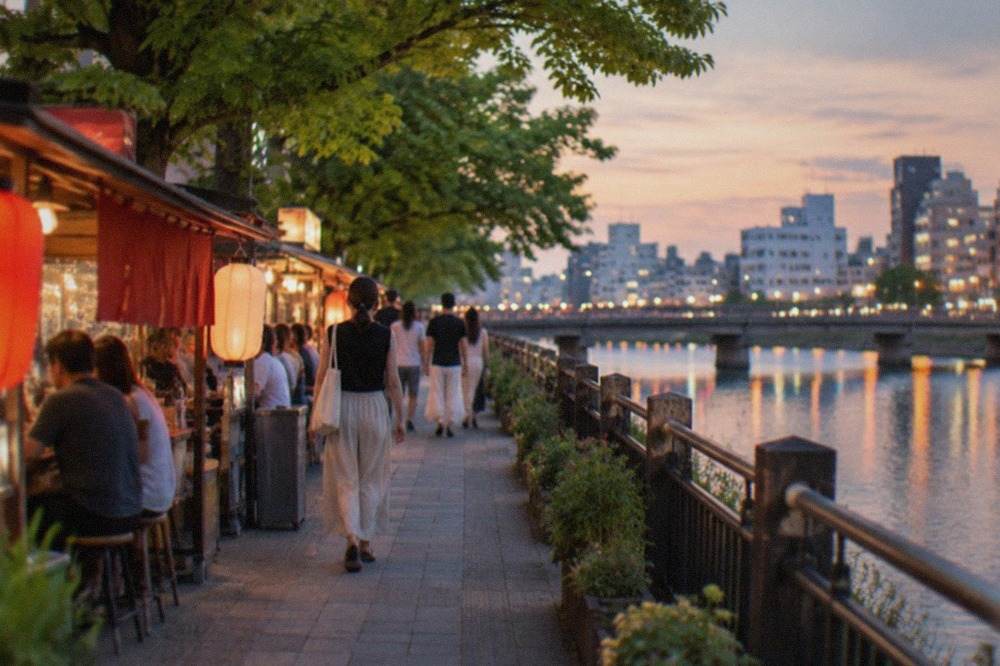
Fukuoka's summer runs hot and genuinely humid: July averages 27.4°C with daily highs of 31.2°C and lows of 24.6°C, and August is hotter still at 28.4°C mean, 32.5°C highs and 25.4°C lows. Because overnight temperatures stay above 24°C, the city rarely cools down before dawn, so humidity relief has to come from air conditioning, shade and timing rather than from the evening air.
Those figures are the 30-year normals from the Japan Meteorological Agency's Fukuoka station, the official climate baseline rather than a cherry-picked heatwave year. The humidity is the part that surprises visitors from drier climates. The JMA table tracks rainfall, and Fukuoka collects 1,686.9 mm across a typical year, which is more than Tokyo receives. Much of it falls between June and September, and the distribution is not what most guides describe.
The summer months at a glance, from the JMA normals for station 47807:
| Month | Mean °C | Daily high °C | Daily low °C | Rainfall mm | Sunshine hours |
|---|---|---|---|---|---|
| June | 23.3 | 27.2 | 20.3 | 249.6 | 145.2 |
| July | 27.4 | 31.2 | 24.6 | 299.1 | 172.2 |
| August | 28.4 | 32.5 | 25.4 | 210.0 | 200.9 |
| September | 24.7 | 28.6 | 21.6 | 175.1 | 164.7 |
Read that table twice, because the second reading is where this guide earns its keep. August is hotter than July but drier than both June and July, and it banks 200.9 sunshine hours, the second sunniest month of the entire year after May. If your priority is clear skies rather than cool air, August is statistically the better bet, not the worse one.
Is July Really Wetter Than the Rainy Season?
Yes, and by a wide margin: July delivers 299.1 mm of rain against June's 249.6 mm, even though June is the tsuyu rainy season and July is when the city stages its biggest festival. The JMA normals make July Fukuoka's single wettest month of the year, a fact almost every competing guide gets backwards by assuming the rainy season owns the peak.
The reason is simple meteorology. The tsuyu front parks over northern Kyushu in June and delivers steady, greying drizzle, but the truly heavy totals arrive in July when the front departs and hot, moisture-laden air fuels violent afternoon downpours. A July day in Fukuoka often starts blue and finishes with a thunderstorm, and the rain arrives in concentrated bursts rather than all-day drizzle. That distinction matters for planning: June punishes your morale, July punishes your umbrella.
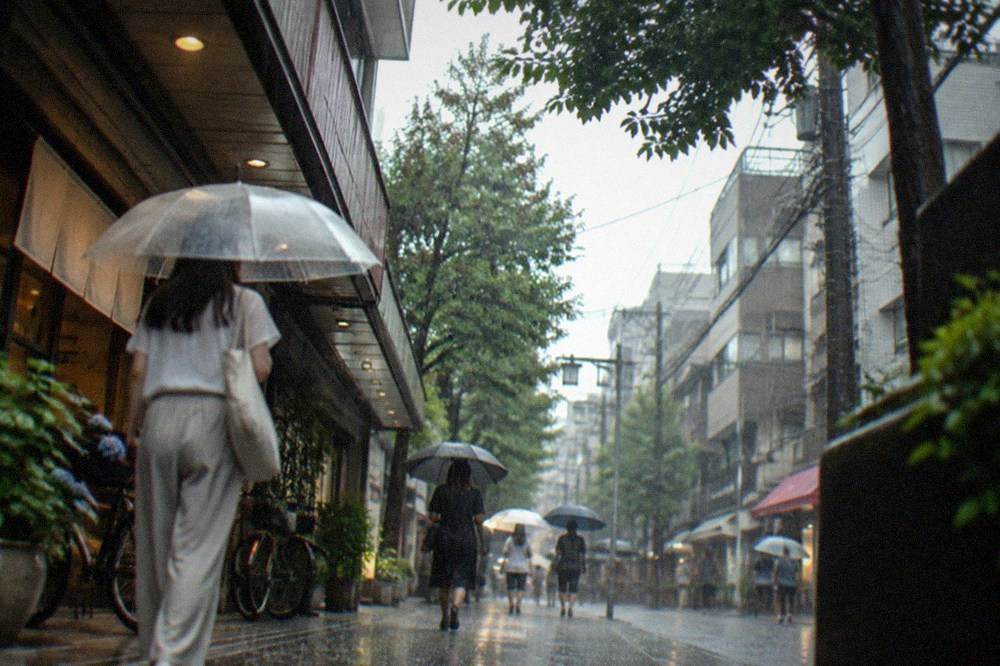
Practically, this shapes how you should allocate your days. In July, front-load outdoor sights into the morning, when the JMA normals imply the fresher air and the lower storm risk, and keep a flexible indoor option for the afternoon. The Fukuoka rainy day itinerary exists for exactly this kind of day, and a summer trip should treat it as a real plan rather than a fallback.
If you would rather hand the scheduling problem to somebody who deals with it daily, a private guide can reroute a walking day around the sky. The three options below cover different budgets and styles, from a sumo show with a hot pot meal to a fully customisable private tour and a full-day escape into the Kyushu mountains.
What Is Tsuyu, and How Much Does It Disrupt a Trip?
Tsuyu is the East Asian rainy season, and in northern Kyushu it falls roughly across June, declared year by year by the Japan Meteorological Agency rather than fixed by the calendar. Expect overcast, humid days with intermittent rain rather than continuous storms; trains, restaurants and attractions all operate normally, so the disruption is to comfort and photographs, not to logistics.
The JMA declares the season's start and end dates regionally each year, which is why no honest guide can print a fixed window. What the normals do show is the shape of the month: June averages 23.3°C, which is genuinely pleasant, and its 249.6 mm of rain falls across 145.2 sunshine hours, meaning grey, broken weather rather than a monsoon. Visitors who come in June routinely report more usable hours than they feared.
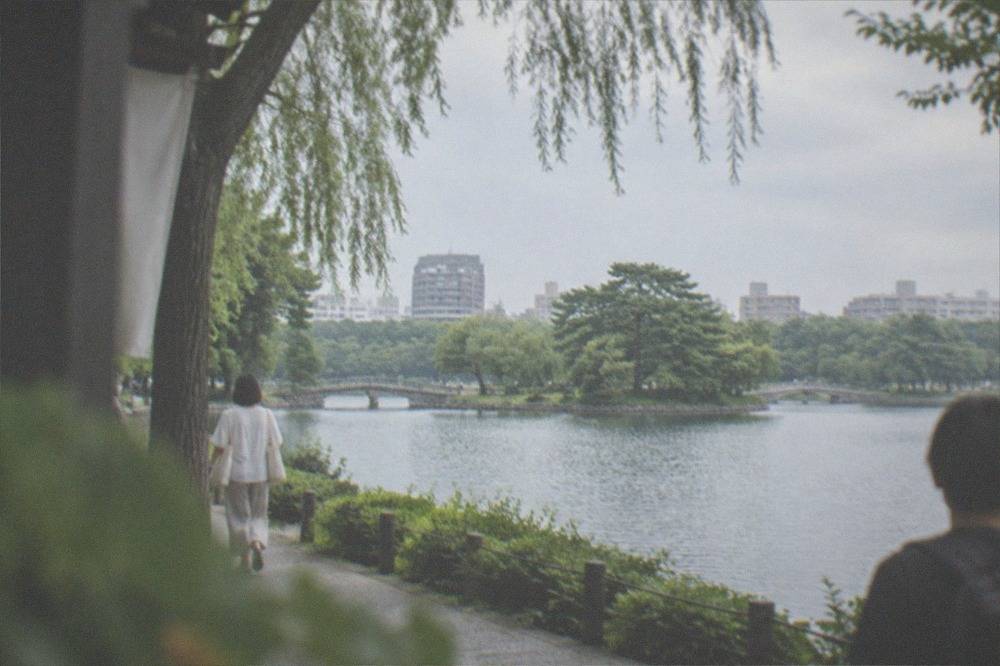
Tsuyu has an upside that photographers know well. The hydrangeas and the moss gardens of Kyushu peak in exactly this window, and the soft, flat light of an overcast June morning is far kinder to pictures of temples and gardens than the harsh noon glare of August. Kushida Shrine's grounds, free to enter, and the shaded paths of Ohori Park are at their greenest in June, and the crowds are thinner than in any other month that has decent weather.
The practical packing response to tsuyu is modest: a compact umbrella, quick-drying shoes and a light layer for aggressive air conditioning. The city's covered assets do the rest. The Tenjin Underground Mall keeps an entire shopping district below street level, Canal City Hakata is an enclosed complex open every day of the year with shops from 10:00 to 21:00, and the Kawabata Shopping Arcade puts a roof over a traditional shopping street a short walk from Hakata Station. A rainy June day in Fukuoka can be spent almost entirely without going outdoors.
Should You Plan Around Typhoon Season?
Typhoon season in the western Pacific runs roughly July through October, and Fukuoka, facing the Genkai Sea, does sit in the path of some of those systems. The honest framing is risk management, not avoidance: most summer weeks see no typhoon at all, but a direct approach can stop trains, flights and ferries for a day or two, so keep your arrival and departure days slightly flexible.
The Japan Meteorological Agency publishes a live typhoon feed, and that is the only source worth watching, because storm tracks shift by the day. A typhoon day in Fukuoka is genuinely disruptive: the airport is unusually close to the city centre, but that does not help when flights are scrubbed, and the subway fare from Fukuoka Airport to Hakata, a verified ¥260, is irrelevant if the trains are held at their platforms. The standard advice is to book refundable accommodation, keep a buffer day before any fixed commitment, and know which of your plans can move indoors.
Between typhoons, summer weather in Fukuoka is simply hot and humid, and that is a manageable problem. Locals shift their lives toward the evening, and the city's food culture follows them. About 100 licensed yatai food stalls operate across the city, more than anywhere else in Japan, and a city ordinance requires each one to post its prices visibly, so a stall cannot charge a vague "market price". Stalls set up from around 17:00 and the atmosphere peaks after dark, which makes the yatai scene a naturally heat-avoiding way to spend a summer evening. The guide to Fukuoka's yatai covers where the three main rows sit and how the etiquette works.
How Do You Cool Down Between the Sights?
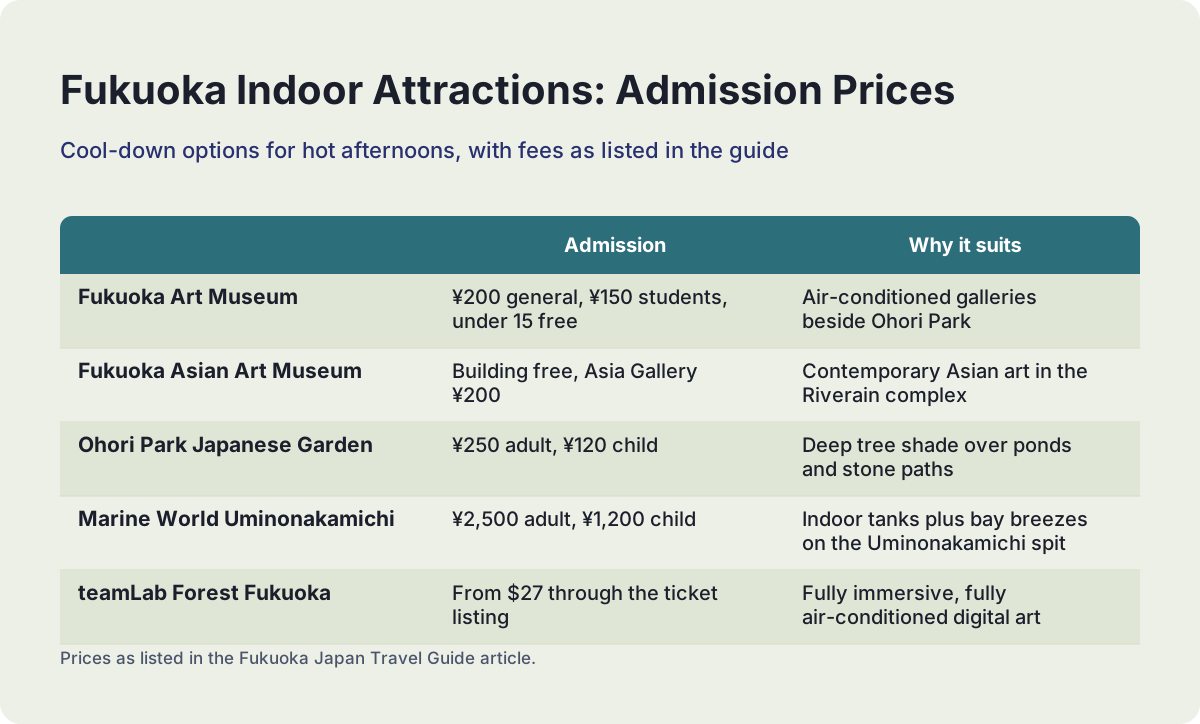
Fukuoka's best summer strategy is the one residents use: do the outdoors before 10:00, spend the peak heat indoors, and come back outside after 18:00. The city has an unusually strong indoor bench of museums, aquariums and gardens, most charging between ¥200 and ¥2,500, so the afternoon cooldown can be a highlight rather than a compromise.
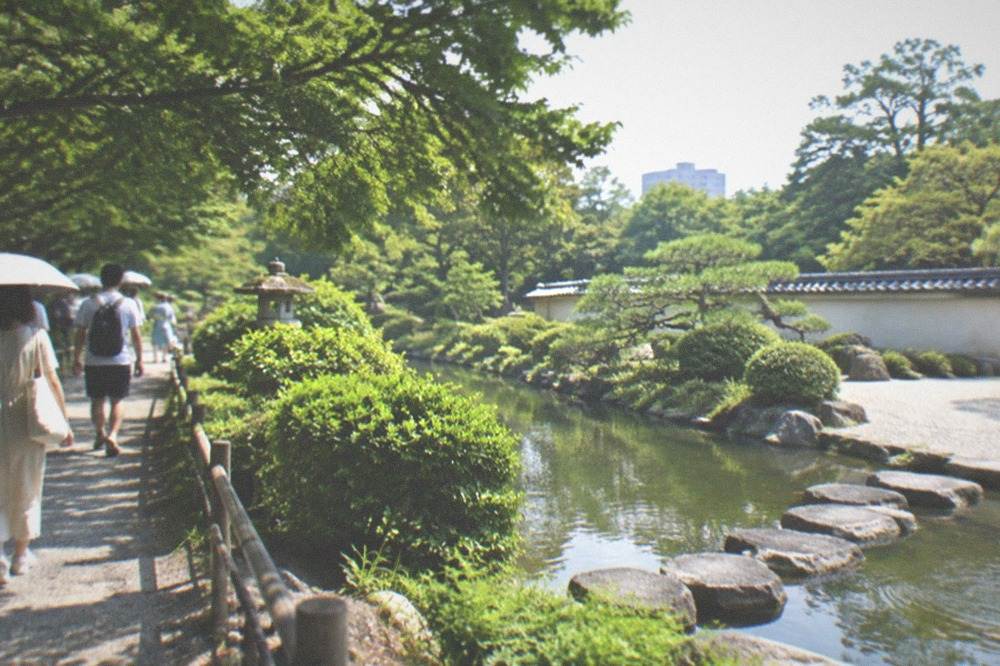
The numbers work in your favour. Both city art museums charge just ¥200 general admission for their collections, with junior high schoolers and under free, and the Fukuoka Asian Art Museum lets you into the building itself for free, charging only for the Asia Gallery. Marine World Uminonakamichi, on the bay side of the city, is ¥2,500 for adults and ¥1,200 for junior high and elementary students, and its dolphin and sea life shows run in shaded and indoor spaces. The Ohori Park Japanese Garden charges ¥250 and its trees give real shade on the water.
| Indoor or shaded option | Admission | Why it suits a hot afternoon |
|---|---|---|
| Fukuoka Art Museum | ¥200 general, ¥150 students, under 15 free | Air-conditioned galleries beside Ohori Park |
| Fukuoka Asian Art Museum | Building free, Asia Gallery ¥200 | Contemporary Asian art in the Riverain complex |
| Ohori Park Japanese Garden | ¥250 adult, ¥120 child | Deep tree shade over ponds and stone paths |
| Marine World Uminonakamichi | ¥2,500 adult, ¥1,200 child | Indoor tanks plus bay breezes on the Uminonakamichi spit |
| teamLab Forest Fukuoka | From $27 through the ticket listing | Fully immersive, fully air-conditioned digital art |
One afternoon option deserves special mention for summer visitors: the sumo connection. Fukuoka hosts the November Kyushu Basho, the only time sumo is competitively staged in the city, but the stables train here year round, and a morning practice viewing puts you a few metres from the wrestlers in a shaded indoor hall. The Fukuoka morning sumo practice and Hakata old town tour, from $77 per person and rated 4.2 from 22 reviews, pairs a practice session with a walk through Hakata's historic streets before the day heats up.
After dark, the heat breaks slowly and the city turns to the water. A night cruise on Hakata Bay runs three hours of sea air and city lights, rated 5 from a small pool of 4 reviews, which is a young listing worth reading closely rather than treating as established. It is one of the few summer activities where the temperature is an asset instead of an obstacle.
What Happens at the Hakata Gion Yamakasa Festival?
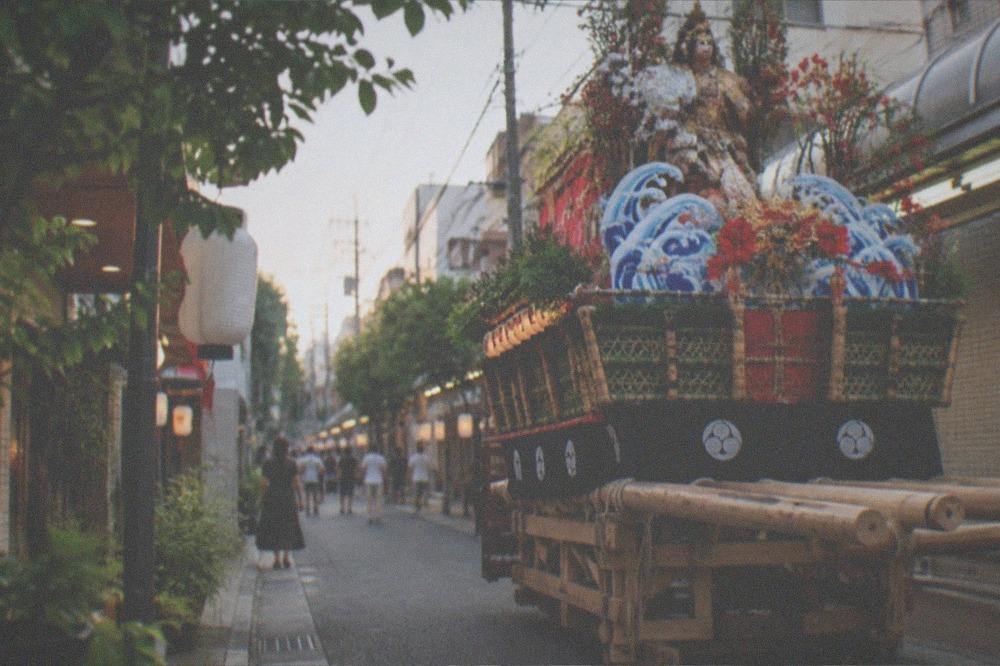
Hakata Gion Yamakasa runs July 1 to 15 every year, centred on Kushida Shrine, and it is the defining summer event of Fukuoka. The climax, the Oiyama race on July 15, starts at 4:59 a.m., when teams carry roughly one-ton floats over a 5 km course through the streets of Hakata, and the whole spectacle is free to watch from the roadside.
The festival's rhythm rewards knowing the calendar. Ornate kazariyama display floats go up around the city from July 1, and from around July 10 the carrying events intensify, with practice runs and public showings building toward the finale. The 4:59 a.m. start is not a typo: the race is run before the summer sun gets high, and spectators stake out positions along the course through the night. Coming to Fukuoka in July means sharing the city with Yamakasa, and it is a genuine reason to choose the city's wettest month.
| Summer event | Timing | What it involves |
|---|---|---|
| Hakata Gion Yamakasa | July 1 to 15 annually | Display floats, practice runs, Oiyama race July 15 at 4:59 a.m. |
| Nakasu Jazz | Mid-September, typically a weekend | Free street jazz on multiple stages in Nakasu |
| Hojoya at Hakozakigu | September 12 to 18 | Seven-day shrine festival with hundreds of food and game stalls |
| Fukuoka Tower illuminations | Seasonal, including a Christmas theme from early November | Exterior light displays on the 234 m tower |
The festival has no ticketing at all; it is a neighbourhood event that takes over public streets, so the only planning involved is where to stand and how early. The sumo world overlaps with it neatly. The Hakata sumo stable show and chanko hot pot experience, from $132 per person, runs about three hours and has no rating published yet, which makes it a genuinely new listing rather than an unloved one. On a hot July afternoon it is one of the few ways to see sumo culture up close while sitting in air conditioning, and the included chanko hot pot, the stew wrestlers eat, is a meal that suits the weather far better than it sounds.
If the tournament itself is what you came for, note that the Kyushu Basho is in November, not summer. The 2026 Kyushu Grand Sumo tournament viewing tour, from $87 per person and rated 4.8 from 13 reviews, covers that window, so a summer visit is the practice-and-show season rather than the competition season.
Where Can You Escape the City Heat?
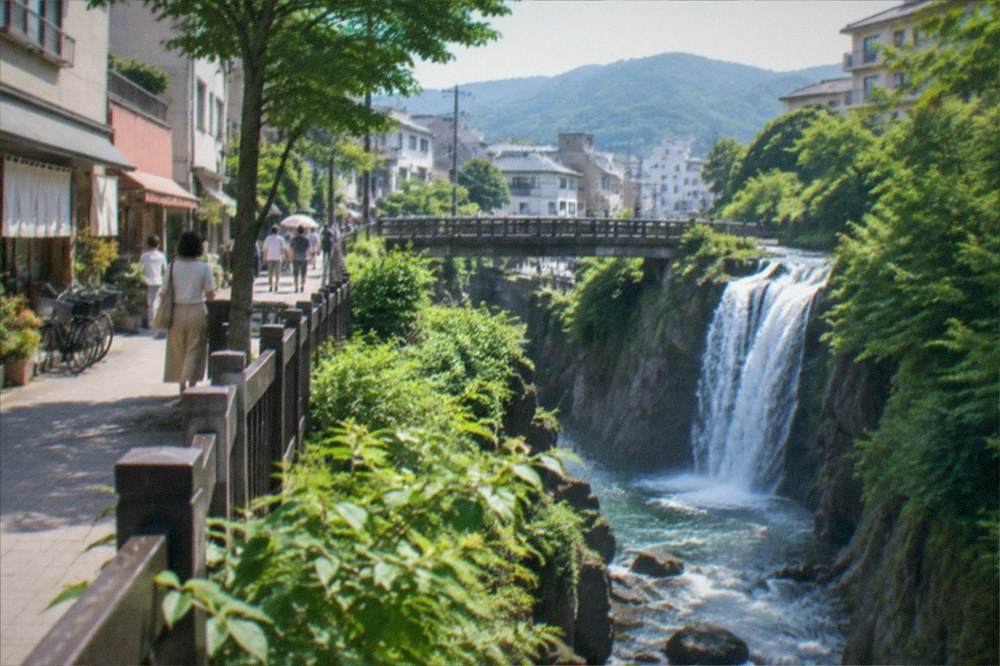
The Kyushu highlands are the region's natural air conditioner, and Fukuoka's transport links put them within a day trip. Mount Aso's grasslands sit at altitude, Takachiho Gorge runs cold river water between sheer cliffs, and Kurokawa Onsen is a mountain onsen town where summer bathing outdoors is comfortable. All three are full-day trips, not half-day ones, so plan a single destination per day.
The most popular summer escape is the combined Mount Aso and Takachiho Gorge tour with an optional boat ride, from $48 per person and rated 4.7 from 674 reviews, which is one of the most-reviewed products on this site's roster. The gorge's rowing boats pass beneath the Minainotaki waterfall, and the spray alone justifies the trip on a 32°C day. The Kurokawa onsen trip guide covers the onsen town option, where the mountain climate runs noticeably cooler than the Fukuoka plain.
| Heat-escape day trip | Travel basis | Summer appeal |
|---|---|---|
| Mount Aso and Kusasenri grasslands | Full-day coach tour, from $46 | Volcanic highlands, cooler altitude |
| Takachiho Gorge | Full-day tour, from $48 | Waterfall spray, gorge boat ride option |
| Kurokawa Onsen | Full-day trip, see our guide | Mountain onsen town, open-air baths |
| Beppu and Yufuin | Full-day tour, from $48 | Onsen capital plus a highland resort town |
| Itoshima coast | Half to full day, from $69 | Sea breeze, beaches and coastal cafes |
The coast is the other escape, and Fukuoka's own bay helps here. Itoshima, the peninsula west of the city, trades asphalt heat for sea breeze, and the Itoshima hidden gems day tour, from $69 per person and rated 4.6 from 31 reviews, gets you to the coast without a rental car. Closer still, a ferry across to Nokonoshima or out along the Uminonakamichi spit puts you on the water quickly, though note that Uminonakamichi Seaside Park's gate takes cash only, a detail almost nobody warns you about.
What Should You Pack and Know Before You Go?
Pack for heat and humidity above all: breathable fabrics, a compact umbrella for July downpours, a hand towel, and a light layer for trains and malls where air conditioning runs hard. On transport, the subway's flat ¥210 to ¥380 single fares and the ¥640 one-day pass make hopping between indoor refuges cheap, and the Tourist City Pass at ¥2,500, or ¥2,800 with Dazaifu included, covers nearly everything for overseas visitors with a passport check.
The pass detail matters because most competing guides still quote a stale price for it. The verified figures are ¥2,500 for the city version and ¥2,800 for the Dazaifu version, both restricted to overseas tourists on short-stay visas, with a passport checked at the counter. It covers subway, buses, trains and ferries for one day, though the Dazaifu liner bus is excluded. The getting around Fukuoka guide compares it against the plain subway day pass so you can see where each one pays off.
A few closing practicalities for a summer visit. Stay near the subway if you can; the where to stay in Fukuoka guide compares Hakata, Tenjin and the riverside areas, and in summer the walkability of your neighbourhood matters more than in any other season. Eat late, as locals do, and let the yatai ordinance work in your favour: posted prices, about 100 stalls, and an evening scene that starts when the heat does. Carry cash for park gates and small stalls, because card acceptance varies stall to stall even as more take QR payments. And if a typhoon is approaching, follow the JMA feed rather than a rumour, and let the buffer day do its job.
Where you go after Fukuoka is worth deciding before the heat, not during it. The mountains of Kumamoto and the onsen towns of Beppu and Yufuin are summer's best friends, and every one of them is a full-day trip from Hakata Station, which is the city's only major rail hub, since there is no JR Fukuoka Station.
Common Questions About Summer in Fukuoka
How Hot And Humid Does Fukuoka Get In Summer?
July averages 27.4°C with highs of 31.2°C, and August averages 28.4°C with highs of 32.5°C. Overnight lows stay above 24°C in both months, so humidity relief comes from air conditioning and timing rather than from the evening air.
Is July or August hotter in Fukuoka?
August is hotter, averaging 28.4°C against July's 27.4°C. July is wetter, at 299.1 mm of rain against August's 210.0 mm, and August is the second sunniest month of the year with 200.9 sunshine hours.
When is the rainy season in Fukuoka?
Tsuyu falls roughly across June in northern Kyushu, with the Japan Meteorological Agency declaring exact start and end dates each year. June averages 249.6 mm of rain, but July is actually the wettest month at 299.1 mm.
Does typhoon season make summer a bad time to visit?
No. Typhoon season runs roughly July to October, and most summer weeks see no typhoon at all. A direct approach can disrupt transport for a day or two, so keep refundable bookings and a buffer day, but the season does not close the city.
What is the best summer festival in Fukuoka?
Hakata Gion Yamakasa, from July 1 to 15, is the defining one. The Oiyama race on July 15 starts at 4:59 a.m. and is free to watch from the streets of Hakata. Hojoya at Hakozakigu Shrine follows in September, from the 12th to the 18th.
How do I get from Fukuoka Airport to the city in summer heat?
The subway's Kuko line runs from the airport into the centre, with the fare to Hakata at ¥260. The airport is unusually close to the city centre, which keeps the transfer short even in full summer heat.