Grand Sumo Tournament in Fukuoka
Every November the professional sumo world moves to Fukuoka for the Kyushu Basho, the one tournament of the six held outside Tokyo, Osaka and Nagoya, and the only time the sport is competitively staged in the city.
Short answer
The Grand Sumo Tournament in Fukuoka is the Kyushu Basho, held every November and the only time professional sumo is competitively staged in the city. A guided viewing tour runs from $87 per person, rated 4.8 from 13 reviews. At other times of year, morning sumo practice visits in Hakata run from $77.
Every November the professional sumo world moves south. The Kyushu Basho, one of the six annual grand tournaments on the professional calendar, is staged in Fukuoka, and it is the only one of the six held in Kyushu. For roughly two weeks the city fills with wrestlers, stable masters, national media and fans who plan entire trips around the bouts. It is also the only time of year sumo is competitively staged here: outside the November tournament, the sumo you can see in Fukuoka is morning practice and stable shows, not ranked competition.
That distinction matters for planning. A visitor who arrives in, say, March hoping to catch tournament sumo will miss it, while a visitor who times a November trip around the basho gets one of the most atmospheric sporting weeks in Japan, in a city that is arguably easier to navigate than Tokyo. This guide from Fukuoka Japan Travel Guide covers when the tournament runs, what a viewing tour includes, what you can see the rest of the year, and how to build the rest of the trip around it.
When Is the Grand Sumo Tournament in Fukuoka?
The Grand Sumo Tournament in Fukuoka is the Kyushu Basho, held every November, and it is the only one of professional sumo's six annual grand tournaments staged in the city. It is competitive, ranked sumo, the real thing. Outside November there is no tournament sumo in Fukuoka at all; what runs instead are morning practice visits and stable shows, which are training experiences rather than competition.
The professional calendar rotates through four host cities: Tokyo holds three tournaments, Osaka one, Nagoya one, and Fukuoka one. Fukuoka's slot is November, which makes the Kyushu Basho both the year's final grand tournament and the city's biggest regular sporting event. Wrestlers and their stables relocate to the region for the duration, and local interest runs high because Kyushu has produced a long line of top-division wrestlers.
Two practical points follow from the November slot. First, the tournament is an annual fixture, so a trip planned for November in any year will land in sumo season, though exact session dates and ticket release windows shift each year and should be confirmed on official channels. Second, because the basho is the only competitive staging, demand concentrates: flights into Fukuoka Airport, hotels around Hakata and Tenjin, and tournament seats all tighten during the tournament window. Booking early is not a slogan here, it is the difference between a seat and a television.
November is also, frankly, a good month to be in the city. The Fukuoka weather in late autumn is mild, the autumn colour in the parks peaks from mid to late November, and the tournament gives the evenings a festival hum. If you are weighing months, the best time to visit Fukuoka page breaks the whole year down, but November is hard to beat for a first trip with sumo attached.
What Can You See at Sumo in Fukuoka Outside November?
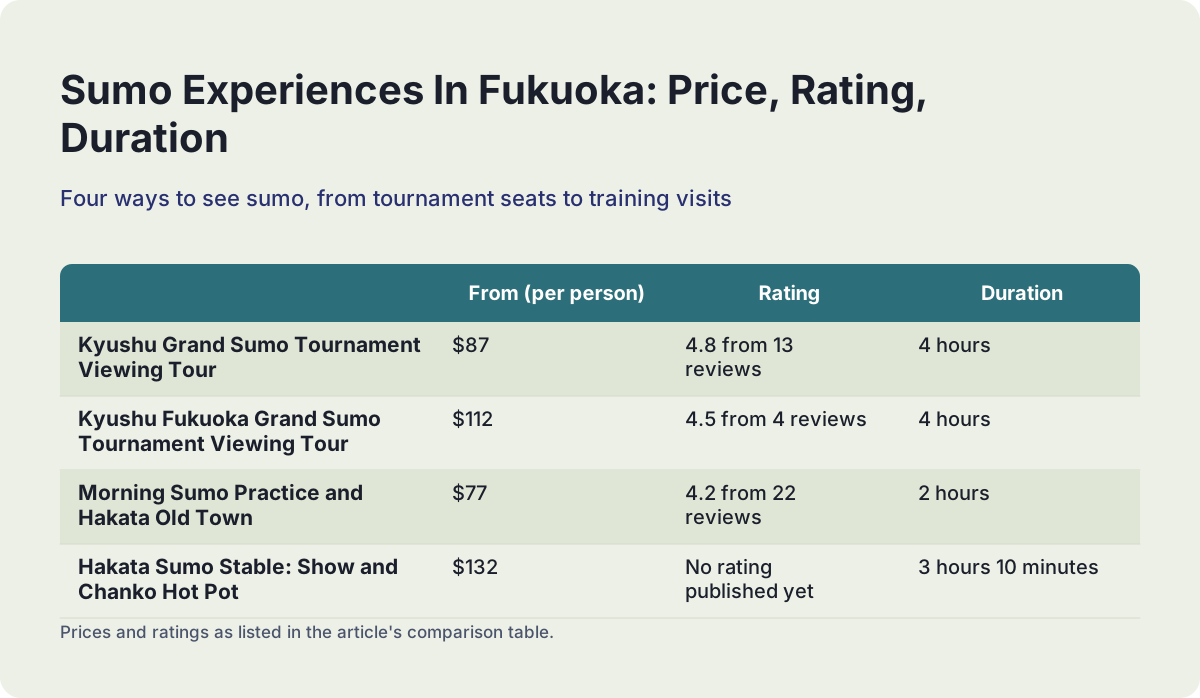
Outside the November tournament, sumo in Fukuoka means training rather than competition. A morning practice visit with a walk through Hakata's old town runs from $77 per person, rated 4.2 from 22 reviews, and a sumo stable show with a chanko hot pot meal runs from $132 per person with no rating published yet. Neither is ranked sumo; both put you close to wrestlers in a way tournament seats cannot.
The morning practice format is the more traditional of the two. Stables train early, and a guided visit gets you into the practice hall to watch wrestlers drill, spar and go through their conditioning while a guide explains what you are seeing. The Fukuoka Morning Sumo Practice and Hakata Old Town tour pairs roughly two hours of that with a walk through the historic Hakata streets nearby, which works well as a half-day anchor on one side of your trip.
The stable show format is built around spectacle and food. The Hakata Sumo Stable: Show and Chanko Hot Pot experience runs a little over three hours and finishes with chanko nabe, the protein-heavy hot pot that wrestlers eat to build mass. It is a genuinely new listing with no rating published yet, which is worth knowing rather than reading too much into: nobody has reviewed it, so you are buying on the format, not a score.
If your trip cannot land in November, these two experiences are the honest answer to "can I still see sumo in Fukuoka", and the answer is yes, in training form. If your trip can land in November, they make a good warm-up: watching practice first teaches you what to look for when the ranked bouts start.
What Does a Tournament Viewing Tour Include?
The guided Kyushu Grand Sumo Tournament viewing tour runs about four hours and costs from $87 per person, rated 4.8 from 13 reviews. It covers entry to the tournament with a guide who walks you through the day's schedule, the rankings and what is actually happening on the clay, which is the difference between watching sumo and understanding it. An alternative tournament viewing option runs from $112, rated 4.5 from 4 reviews.
The case for a guided seat is knowledge, not access alone. Tournament days are long, structured and full of ritual: lower-division bouts fill the morning, the top division enters in the afternoon, and the ceremony around each matchup, the salt, the stomping, the stare-down, has a logic that is invisible the first time you see it. A guide who explains the banzuke rankings and the story lines of the tournament turns several hours of sitting into a narrative. The Fukuoka 2026 Kyushu Grand Sumo Tournament Viewing Tour is the roster's main offering here, and its review pool, 13 reviews at 4.8, is small but consistently positive. Check availability
The alternative is the Kyushu Fukuoka Grand Sumo Tournament Viewing Tour, from $112 per person and rated 4.5 from 4 reviews. Four reviews is a thin pool, so treat the score as indicative rather than settled; the price difference between the two roughly buys a different package shape rather than a demonstrably better experience. Whichever you choose, book well before you fly, because November seats are the single scarcest item on this entire itinerary.
| Sumo experience in Fukuoka | Format | From (per person) | Rating | Duration |
|---|---|---|---|---|
| Kyushu Grand Sumo Tournament Viewing Tour | Guided tournament seats | $87 | 4.8 from 13 reviews | 4 hours |
| Kyushu Fukuoka Grand Sumo Tournament Viewing Tour | Guided tournament seats | $112 | 4.5 from 4 reviews | 4 hours |
| Morning Sumo Practice and Hakata Old Town | Training visit plus walk | $77 | 4.2 from 22 reviews | 2 hours |
| Hakata Sumo Stable: Show and Chanko Hot Pot | Show plus meal | $132 | No rating published yet | 3 hours 10 minutes |
Where Should You Stay and Eat During the Tournament?
Stay in Hakata or Tenjin, the two core districts that bracket the city centre, because the tournament, the stations and the food streets all sit within a short subway or bus ride of both. Book accommodation early: November is the year's tightest hotel month in Fukuoka. For eating, plan around yatai food stalls and motsunabe restaurants, and remember that the city's ordinance requires every yatai to post its prices where you can read them before you sit down.
Hakata is the station-and-business side, closest to the main rail hub and the tournament's transport spine; Tenjin is the shopping and dining core a couple of subway stops away. Both work. The trade-offs, down to specific neighbourhoods and price bands, are laid out in where to stay in Fukuoka, and nothing about the tournament changes that advice except urgency: rooms in November go first.
Food is where a sumo trip gets easy. Fukuoka is Japan's yatai capital, with about 100 licensed food stalls across the city, more than any other Japanese city, and the stalls cluster in three areas: Nakasu along the Naka River, the photogenic postcard row; Tenjin, scattered through the business district with an after-work crowd; and Nagahama, the traditional ramen row near the old fish market. The city's yatai ordinance bans "market price" pricing, so a stall must display its prices clearly, and the city's official yatai pages track the licensed stalls and the rules that govern them. That is the honest answer to whether you will be overcharged at a stall: the menu is posted, the price is the price, and the Fukuoka yatai guide covers etiquette, areas and what to order. Beyond the stalls, the wider Fukuoka food guide runs through motsunabe, mentaiko and the rest of the local canon, and the evenings around the tournament pair naturally with the Fukuoka nightlife scene in Nakasu and Daimyo.
| Yatai area | Character | Best for |
|---|---|---|
| Nakasu | Riverside row along the Naka River, the most photographed stretch | First-time visitors, atmosphere, photos |
| Tenjin | Scattered stalls in the business district, after-work local crowd | Variety, newer "neo-yatai" formats |
| Nagahama | Traditional ramen row near the old fish market | Tonkotsu ramen, late bowls |
How Do You Get to the Venue and Around Fukuoka?
Fukuoka Airport sits unusually close to the city centre, and the subway fare from the airport to Hakata is ¥260, within the official 3 to 7 km fare band. There is no JR Fukuoka Station: the city's main rail hub is Hakata Station, and Hakata is a ward of Fukuoka, not a separate city. A subway day pass costs ¥640, and the Tourist City Pass costs ¥2,500, or ¥2,800 with Dazaifu included, for overseas visitors with a passport check.
Start with the geography that trips up most first-time visitors. Hakata and Fukuoka are the same city: Hakata is the ward and the station name, Fukuoka is the city, and no local would ever describe travelling "from Hakata to Fukuoka". The airport, Fukuoka Airport (FUK), sits on the subway's Kuko line, and its closeness to the centre is genuinely unusual for a major Asian city. The official fare table, published by the subway operator at the city subway fare page, sets the airport-to-Hakata leg at ¥260, and the airport's own access pages state no journey time, so this guide does not print one either, despite how many other sites do. The Fukuoka airport to city page covers the transfer in full, and the Fukuoka subway page maps all three lines.
| Subway zone | Distance | Adult fare | Child fare |
|---|---|---|---|
| 1 | up to 3 km | ¥210 | ¥110 |
| 2 | 3 to 7 km | ¥260 | ¥130 |
| 3 | 7 to 11 km | ¥300 | ¥150 |
| 4 | 11 to 15 km | ¥340 | ¥170 |
| 5 | 15 to 19 km | ¥360 | ¥180 |
| 6 | over 19 km | ¥380 | ¥190 |
For a tournament trip, the passes are worth ten minutes of arithmetic. The subway one-day pass is ¥640 for an adult, so it pays off after roughly three longer rides; the tourist city pass at ¥2,500, or ¥2,800 with the Dazaifu extension, covers subway, Nishitetsu trains and buses, some JR lines and ferries for a day, but it is restricted to overseas visitors on short-stay visas and a passport is checked at the counter. Most competing guides still quote a stale price a fraction of these figures; the verified pair is ¥2,500 and ¥2,800. If you are arriving from elsewhere in Japan, the Tokyo to Fukuoka and Osaka to Fukuoka pages cover the long-haul options, and the Hakata station guide sorts out the hub itself.
What Else Should You Do in Fukuoka in November?
November is one of Fukuoka's best months beyond sumo: autumn colour peaks in the city parks from mid to late November, the Ohori Park Japanese Garden charges just ¥250 for adults, both city art museums charge ¥200 for their collections, and Fukuoka Tower is ¥1,000 with observation decks at 123 metres. One caveat: Fukuoka Castle's main keep base, the Tenshudai, is closed until the end of December 2026 for an excavation, so plan the castle visit around the park itself rather than the keep base.
Build the non-sumo days around parks and viewpoints. Ohori Park is free to wander, and its Japanese Garden, with last entry at 17:45 in the longer season and a ¥250 adult ticket, is at its best with the maples turning. Maizuru Park next door holds the castle ruins and around a thousand cherry trees, which are bare in November but make a fine walk regardless; just know the Tenshudai excavation closes the keep base through the end of December 2026. Fukuoka Tower, at 234 metres with decks at 123, 120 and 116 metres, is ¥1,000 for adults and open 9:30 to 22:00, and the Fukuoka viewpoints page ranks the whole set.
The museums are cheap and good. The Fukuoka Art Museum's collection exhibition is ¥200 for general admission, free for junior high and under, and the Fukuoka Asian Art Museum charges nothing to enter the building, with only the Asia Gallery at ¥200. If the tournament leaves you with a spare full day, the Mt Aso volcano and grasslands day tour from the trio above is the roster's most popular escape, from $46 per person and rated 4.7 from 224 reviews, and the wider Kyushu page lays out everything reachable from the city.
| November sight | Adult entry | Notes |
|---|---|---|
| Ohori Park Japanese Garden | ¥250 | Under 6 free, 65 and over free |
| Fukuoka Tower | ¥1,000 | Open 9:30 to 22:00, last entry 21:30 |
| Fukuoka Art Museum collection | ¥200 | Junior high and under free |
| Fukuoka Asian Art Museum, Asia Gallery | ¥200 | Building entry free, gallery charges |
| Uminonakamichi Seaside Park | ¥450 | Gate takes cash only |
| Fukuoka Castle ruins and Maizuru Park | Free | Tenshudai closed until end of December 2026 |
How Should You Plan a Sumo Trip to Fukuoka?
Plan backwards from the tournament: lock the viewing tour or seats first, then the hotel in Hakata or Tenjin, then flights, because November inventory tightens in that order of severity. Budget the tournament experience at $87 to $112 per person for a guided seat, add a morning practice visit at $77 if you want the training side, and keep one full day free for Kyushu itself, whether Aso, Dazaifu or the coast. The whole trip works comfortably in four to five days.
The sequencing is the part people get wrong. Tournament seats are scarcer than hotel rooms, and hotel rooms are scarcer than flights, so book in that order. A guided viewing tour is the simplest route to a seat plus context; if you would rather arrange tickets independently, confirm the session schedule on official sumo channels before booking anything else, because the exact dates shift year to year even though the November slot does not.
For the rest of the stay, a workable shape is: one day anchored by the tournament, one morning at practice or the stable show, one day in the city parks and museums, and one full-day escape into Kyushu. The customisable private tour in the trio below, from $59 per person and rated 4.9 from 106 reviews, is the flexible option for the city day, since you set the route with a local guide. Families should skim Fukuoka with kids for age-appropriate swaps, and anyone travelling in a shoulder month instead should read the practice sections above rather than expecting tournament sumo.
| Trip element | Plan | Ballpark cost |
|---|---|---|
| Tournament seat | Guided viewing tour, book first | from $87 per person |
| Morning practice visit | Half-day, pairs with Hakata old town | from $77 per person |
| Hotel | Hakata or Tenjin, book as soon as seats are fixed | varies by November demand |
| Airport transfer | Subway from Fukuoka Airport, ¥260 to Hakata | ¥260 |
| City transport | Subway day pass if riding 3+ legs | ¥640 |
| Full-day Kyushu escape | Mt Aso day tour or Dazaifu by train | from $46 per person |
Common Questions About the Fukuoka Sumo Tournament
When Is The Grand Sumo Tournament In Fukuoka?
The Kyushu Basho is held every November and is the only one of professional sumo's six annual grand tournaments staged in Fukuoka. Exact session dates shift each year, so confirm the schedule on official channels before booking travel.
Can You See Sumo In Fukuoka Outside November?
Not competitive sumo. Outside the November tournament, the options are a morning practice visit from $77 per person, rated 4.2 from 22 reviews, and a sumo stable show with chanko hot pot from $132 per person, which has no rating published yet.
How Much Does A Sumo Viewing Tour In Fukuoka Cost?
The guided Kyushu Grand Sumo Tournament viewing tour costs from $87 per person and is rated 4.8 from 13 reviews, running about four hours. An alternative tournament viewing tour costs from $112 per person, rated 4.5 from 4 reviews.
Where Should You Stay For The Sumo Tournament?
Hakata or Tenjin. Both core districts sit within a short subway or bus ride of the tournament, and Hakata Station is the city's main rail hub. Book early, because November is the tightest hotel month of Fukuoka's year.
Is Fukuoka Easy To Reach From The Airport?
Yes. Fukuoka Airport sits unusually close to the city centre on the subway's Kuko line, and the fare to Hakata is ¥260. There is no JR Fukuoka Station; the main hub is Hakata Station, and Hakata is a ward of the same city.
What Else Is Worth Doing In Fukuoka In November?
Autumn colour peaks from mid to late November. The Ohori Park Japanese Garden is ¥250, Fukuoka Tower is ¥1,000 with decks at 123 metres, both city art museums charge ¥200, and the castle ruins park is free, though the Tenshudai keep base is closed until the end of December 2026.