Halal Food in Fukuoka
Fukuoka is a pork-forward food city, which makes halal eating here a planning question rather than a lost cause. Here is how to find certified restaurants, which local dishes are safe, and where the traps are.
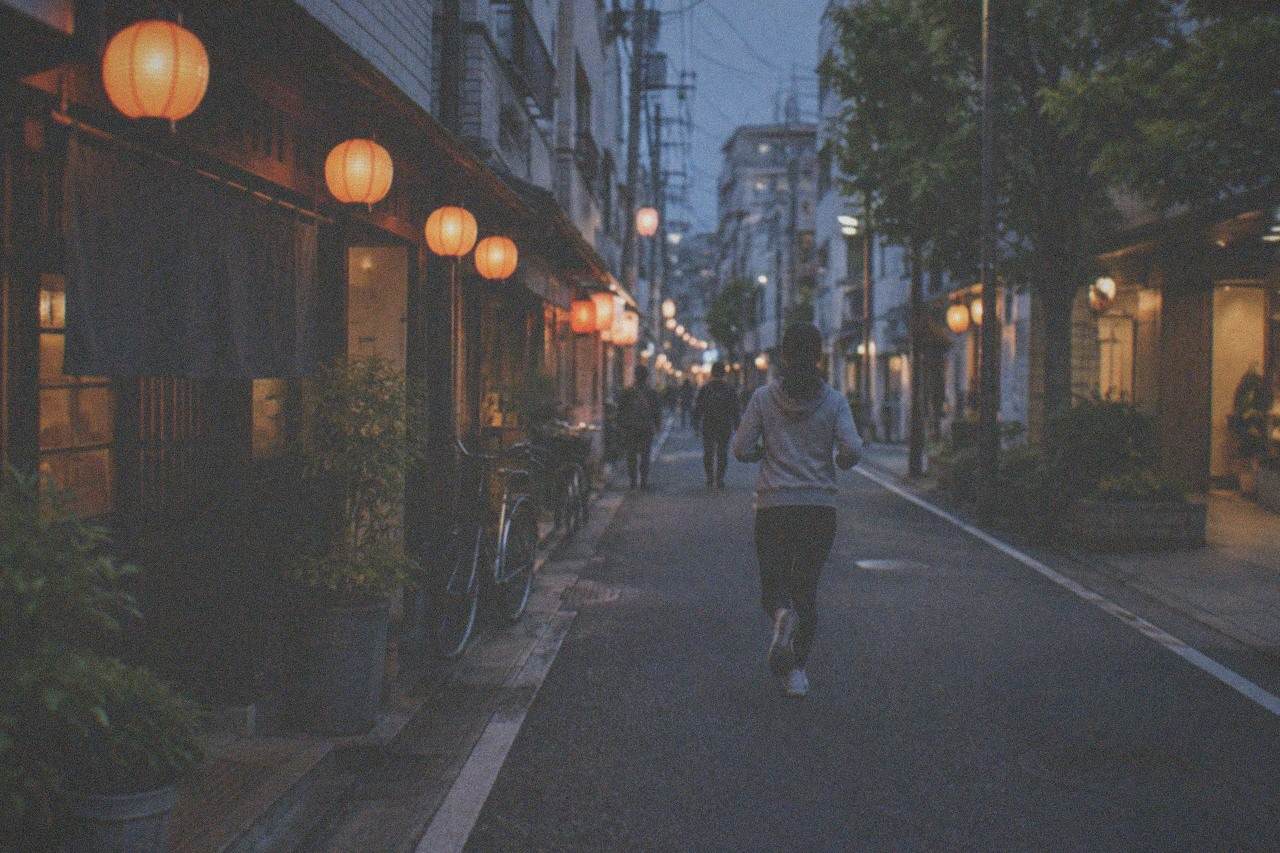
Short answer
Fukuoka has no large certified-halal dining district, but Muslim travellers eat well here with planning. Certified and Muslim-friendly restaurants cluster around the city centre and near the mosque community, halal ingredients are sold in supermarkets, and the biggest hazards are the city's signature dishes: tonkotsu ramen broth and anything cooked with pork or mirin.
Fukuoka sells itself on food. Tonkotsu ramen, motsunabe, mentaiko, grilled skewers, and about 100 licensed yatai stalls trading along the rivers and streets of the city centre. For a Muslim traveller, that lineup is mostly a hazard map: the city's most famous dishes are built on pork bone, offal and cooking wine. None of that means halal eating in Fukuoka is difficult. It means it rewards planning, the same way vegetarian and allergy-safe eating here does, and the city is small and navigable enough that a little preparation goes a long way.
This guide walks through where certified halal restaurants sit in Fukuoka's food landscape, how to verify a certificate you are shown, which local dishes are naturally safe or easily adapted, what the yatai scene can and cannot offer, and how to plan days out, airport arrivals and hotel breakfasts around halal requirements. Where a figure is verified, it is printed. Where the honest answer is "it depends on the individual restaurant", that is what it says.
Where Can You Find Certified Halal Restaurants in Fukuoka?
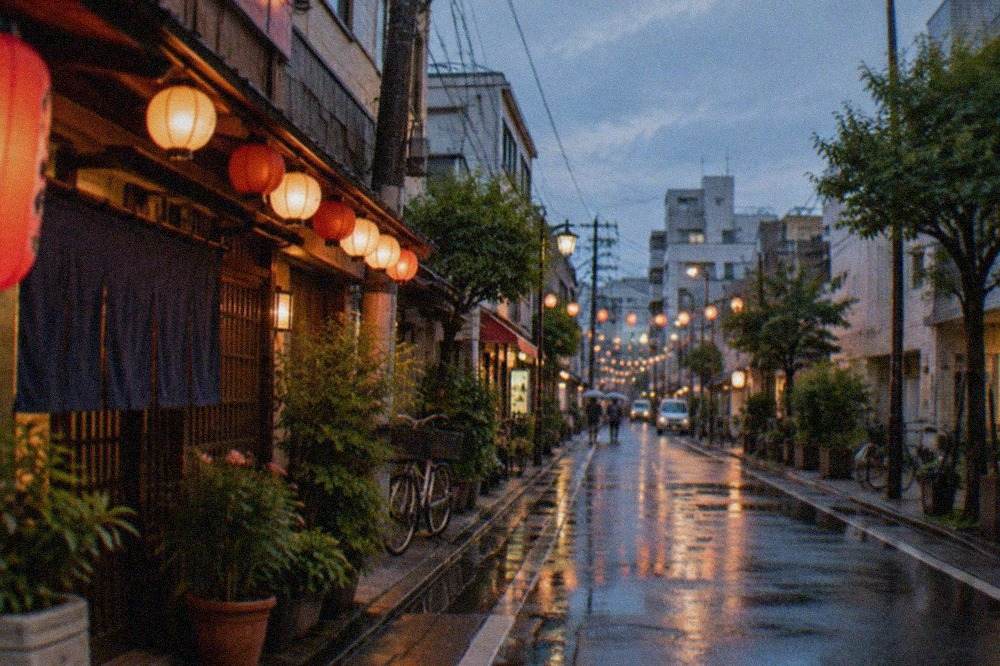
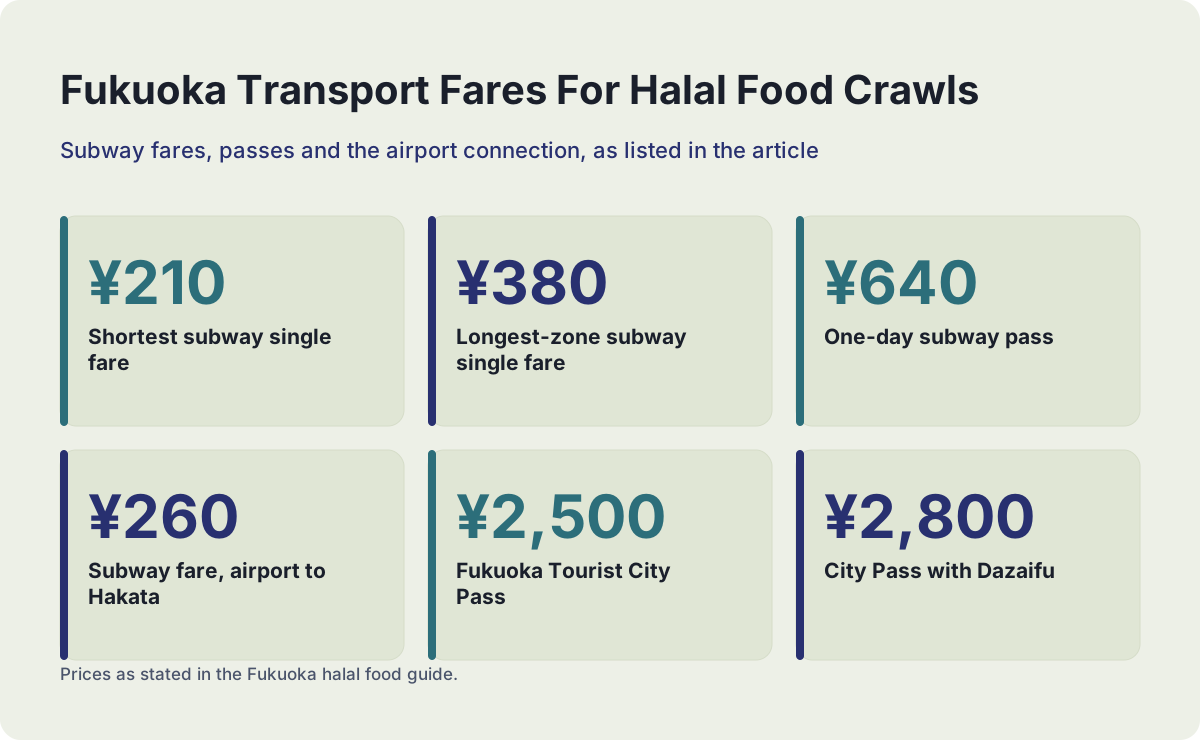
Fukuoka does not have a single halal dining district the way some larger Asian cities do. Certified and Muslim-friendly restaurants are scattered rather than concentrated, and they sit mostly in and around the city centre: Hakata, Tenjin and the areas in between, with a handful near the mosque community further out. The practical approach is to build a shortlist before you arrive, then move between spots using the subway, where a single adult fare runs from ¥210 to ¥380 depending on distance.
The honest framing matters here. Fukuoka's food fame rests on pork and alcohol, so the halal infrastructure is thinner than in Tokyo or Osaka, and it is also less documented in English. What the city offers instead is compactness. Hakata and Tenjin, the two cores where most visitors stay and eat, are a few subway stops apart, and a certified restaurant you find in one is reachable from the other without a long detour. The city's transport basics are simple: three subway lines, flat fare zones, and IC cards that work everywhere.
When you build that shortlist, treat labels with the care you would anywhere in Japan. A restaurant calling itself "Muslim-friendly" may simply mean it serves no pork, while alcohol is served elsewhere on the menu and mirin or cooking sake appears in the kitchen. A certified restaurant should be able to show you the certificate, and the section below covers how to read one. Search tools and halal-specific apps are genuinely useful in Fukuoka because the certified scene is small enough that word of mouth travels slowly and listings lag reality. Cross-check any app result against the restaurant's own current information before you commit an evening to it.
For context on what Fukuoka food culture actually is, which helps you plan around it, read the Fukuoka food guide and the answer to what food is Fukuoka famous for. Knowing that tonkotsu, motsunabe and mentaiko define the local table tells you exactly which dishes need substituting and which restaurants are structurally unsuitable no matter how friendly the staff are.
Which Fukuoka Dishes Are Naturally Halal-Friendly?
The safe list is short but real: plain rice, seafood grilled without marinade, vegetable tempura cooked in fresh oil, udon and soba in broth you have verified, and mentaiko, which is pollock roe and contains no pork. The danger list is longer: tonkotsu ramen is pork-bone broth by definition, motsunabe is an offal hot pot usually built with pork ingredients, and most yakitori glazes and restaurant sauces contain mirin or cooking sake, both alcohol.
Start with mentaiko, because it is the one signature Fukuoka food a halal traveller can engage with. It is seasoned pollock roe, the city's most famous edible souvenir, and it appears on rice, in onigiri and as a topping. The roe itself is halal-suitable; the preparation is where you check, because some producers use mirin in the seasoning. Verify the ingredient list on packaged mentaiko, which is printed, or ask in a restaurant whether theirs contains alcohol. This is the same discipline the Fukuoka street food conversation requires for every sauce in the city.
Seafood is the strongest category. Fukuoka sits on Hakata Bay, on the Genkai Sea side of northern Kyushu, and grilled fish, sashimi and seafood rice bowls are everywhere. The risks are the same as anywhere in Japan: soy sauce is generally fine, but ponzu and many glazes carry mirin, and some kitchens braise fish in sake. Grilled fish with salt, "shioyaki", is the low-negotiation order. The goma-saba style of sesame mackerel is another local preparation worth asking about, since mackerel itself is unambiguous.
| Dish | Halal status | What to check |
|---|---|---|
| Mentaiko (pollock roe) | Often suitable | Seasoning may contain mirin; read the label or ask |
| Grilled fish (shioyaki) | Usually suitable | Confirm no sake in preparation, cooked separately from pork |
| Tonkotsu ramen | Not suitable | Broth is pork bone by definition |
| Motsunabe | Not suitable as standard | Offal hot pot, typically includes pork; chicken versions exist but need verification |
| Udon / soba | Broth-dependent | Dashi is usually fish-based, fine; ask about mirin in tsuyu |
| Tempura (vegetable) | Usually suitable | Confirm the oil is not shared with pork or pork-battered items |
| Yakitori | Sauce-dependent | Standard tare glaze usually contains mirin or sake |
| Gyoza | Not suitable | Standard fillings are pork; hitokuchi gyoza in Fukuoka is pork-based |
The udon question deserves a note. Fukuoka has its own udon tradition, distinct from Sanuki across the water, with soft noodles and a dashi-forward soup. Fish-based dashi is not a halal problem, but the tsuyu seasoning often includes mirin. A restaurant that can tell you what is in its broth can serve you a compliant bowl; one that cannot, will not. This is the pattern across the whole city: Fukuoka's kitchens are not hostile to the question, they are simply not used to it, and a clear question in writing, or a guide asking for you, gets a clear answer.
The overlap with the vegetarian and vegan scene helps more than you might expect. A restaurant that has already worked out how to serve no-meat, no-dashi-bonito customers has the vocabulary and the willingness to handle no-pork, no-alcohol requests. The vegetarian and vegan guide lists the establishments that engage with dietary requirements at all, and those are the kitchens most likely to adapt a dish for you rather than simply pointing at the menu.
If you want help with exactly this kind of translation and negotiation, three options fit a halal traveller's needs in different ways:
Can Muslim Travellers Eat at Fukuoka's Yatai Stalls?
Mostly no, and it pays to be direct about that. The classic yatai menu is tonkotsu ramen, yakitori and oden, which means pork broth, mirin glazes and dashi pools shared across a counter seating perhaps seven people. A private guided stall tour changes the equation: a guide can brief stalls in advance, find the one or two that can serve you something compliant, and handle the conversation that a solo visitor cannot.
The yatai are Fukuoka's most photogenic food institution. About 100 licensed stalls operate across the city, concentrated in Nakasu along the Naka River, in Tenjin and in Nagahama, and they are the reason the city's street-food reputation exists. The city's own ordinance governs them strictly on the points it cares about: prices must be displayed where customers can see them, and a dish priced on the day's market must show that day's actual price rather than a vague "market price" label, a rule the city's yatai Q&A spells out. That transparency is about money, not ingredients, and it does not extend to a halal guarantee.
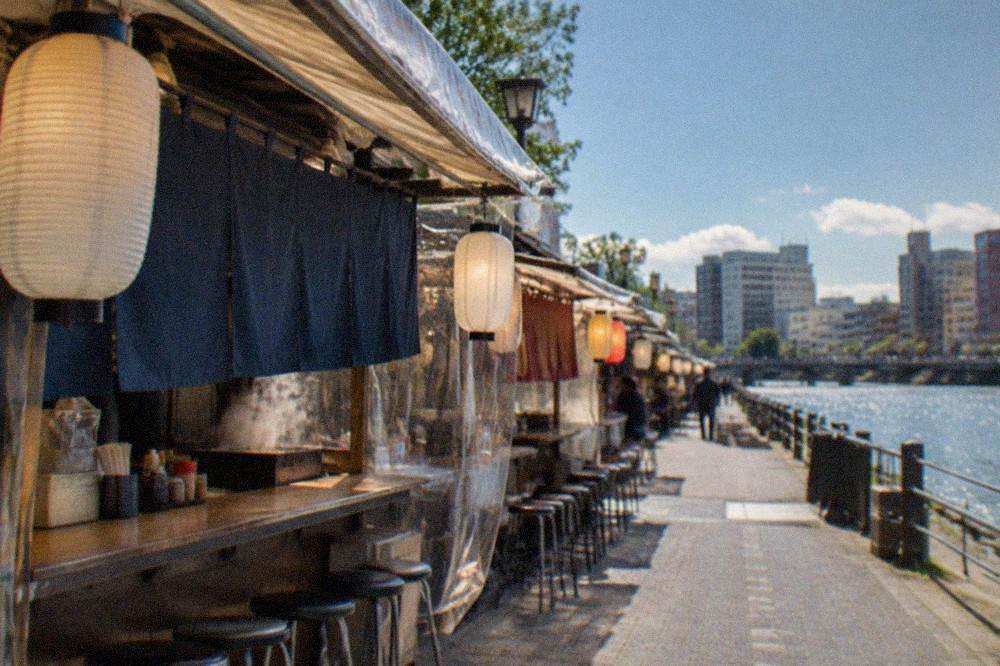
What this means in practice is that a yatai visit for a halal traveller is a social experience first and a meal second. The stalls are tiny, the seating is communal, and the pleasure is the conversation with the operator and the strangers beside you. Going with a guide who has called ahead converts the visit from a risk into an evening: the guide knows which operators can prepare something without pork or alcohol, can explain your requirements in Japanese before you sit down, and can steer you to a stall where the answer is yes rather than one where the polite answer is a bowl you cannot eat. The etiquette of sitting, ordering and paying at a stall is its own small skill set, covered in the yatai etiquette guide, and knowing it in advance makes the halal conversation easier, not harder.
The private Nakasu stall tour with tastings is the strongest fit for this. It runs about two hours, is rated 4.7 from 70 reviews, and starts from $94 per person. Because it is private, the dietary brief is between you and your guide, not negotiated across a counter of seven strangers. A general Fukuoka yatai visit without that support is still worth the walk for the atmosphere, but plan to eat beforehand and treat the stall as a standing drink and a chat, which many travellers of all dietary backgrounds end up doing anyway.
How Do You Verify a Halal Certificate in Japan?
Ask to see it, then read three things: the certifying body's name, the expiry date, and whether the certificate covers the kitchen or only specific menu items. Japanese halal certification comes from several private organisations rather than one national regulator, certificates expire, and a restaurant certified for its ingredients may still serve alcohol on the premises, which matters if your standard requires otherwise.
There is no Japanese government halal scheme. Certification is issued by private bodies, some affiliated with mosques, some commercial, and the rigour varies. A certificate on a wall or a logo on a menu is a starting point, not a conclusion. The name of the body lets you check what its standard actually requires; some certify only that no pork is used, others certify full kitchen separation including no alcohol in preparation. The expiry date matters because restaurants change suppliers and kitchens, and a lapsed certificate tells you the current kitchen is unverified.
In Fukuoka specifically, keep two practical habits. First, carry your requirements written in Japanese, either from an app or prepared before you travel. "No pork, no alcohol including mirin and cooking sake, no lard" is a sentence restaurant staff can act on, and Fukuoka's kitchens respond far better to a specific written request than to a general question at the door. Second, accept that "we cannot guarantee it" is an honest answer and a signal to move on. The restaurants that can serve you properly will say so plainly, and the city is compact enough that the next option is rarely far.
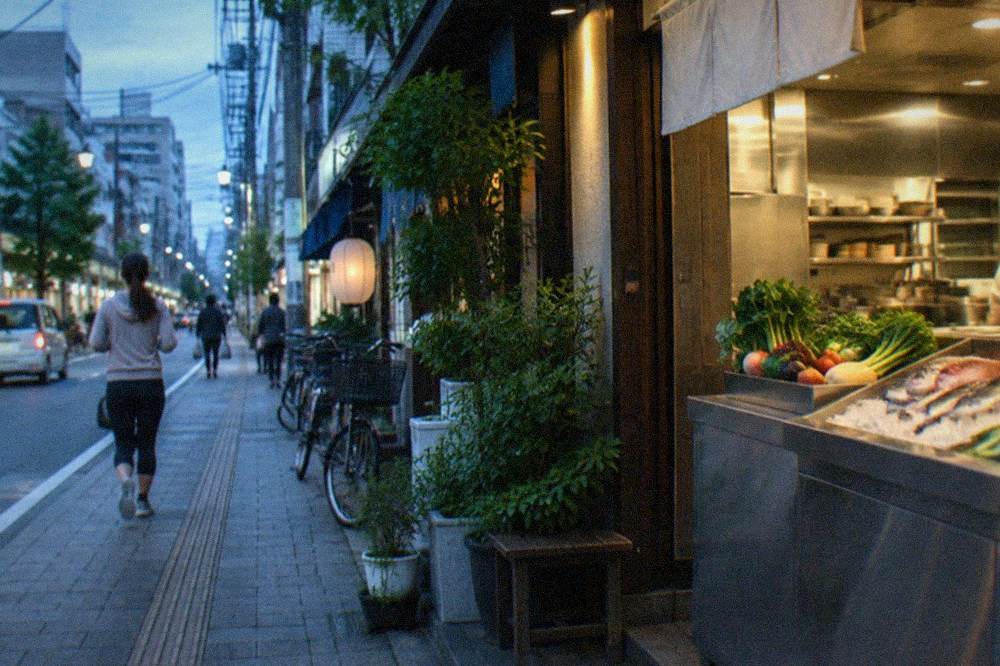
Supermarkets deserve a place in this section because they are the most reliable halal supply in the city. Large grocery stores in the city centre stock imported halal-certified goods, and ingredient labels in Japan are printed and specific, listing pork derivatives and alcohol where present. For breakfast, self-catering days and long day trips, a supermarket run solves problems a restaurant search cannot. Convenience stores are weaker: onigiri labels are honest but many rice seasonings and sauces contain trace alcohol or pork extract, so read rather than assume.
Where Should You Stay for the Easiest Halal Food Access?
Stay in Hakata or Tenjin. Both put you within a short subway ride of every certified or Muslim-friendly restaurant you will find, both have the supermarket density that makes self-catering easy, and Hakata in particular keeps you close to the station for day trips. The choice between them is about atmosphere rather than halal logistics, and the halal case does not change the standard answer.
Hakata is the ward around Fukuoka's main station, and the station is called Hakata, not "Fukuoka Station", a distinction that trips up visitors and matters when you are searching maps for restaurants near your hotel. Tenjin is the business and shopping core a couple of stops up the line. Both areas are covered in detail in the where to stay in Fukuoka guide and the Hakata vs Tenjin comparison, and the short version is that Hakata wins on transport and Tenjin wins on evening energy. Either works as a halal base because the certified scene is scattered and reachable from both.
Hotel breakfast is the one stay decision with a real halal angle. Japanese hotel breakfasts lean on pork, mirin-seasoned items and alcohol-containing sauces, and a hotel that has never fielded the question will not have an answer at 7 a.m. Email the property before you book, state the requirements in writing, and book the room type without breakfast if the answer is vague. A supermarket breakfast, or a café from your verified shortlist, is more reliable than an unvetted hotel buffet, and the city's breakfast options include simple rice and fish preparations that adapt well.
| Stay area | Halal logistics | Notes |
|---|---|---|
| Hakata | Strong | Main station hub, best for day trips, dense supermarkets, station-area dining |
| Tenjin | Strong | Business core, most restaurant variety, underground mall for shopping |
| Nakasu | Good | Entertainment district, late dining, yatai row on the Naka River |
| Daimyo | Good | Café and independent restaurant quarter, walkable to Tenjin |
| Ohori / Maizuru | Quieter | Parkside, fewer late options, supermarket-dependent |
The subway makes all of this cheap. Single adult fares run from ¥210 for journeys up to 3 km to ¥380 for the longest zones, and a one-day pass costs ¥640 if you are planning a multi-stop food crawl. The Fukuoka subway guide covers the lines; the practical point for this page is that no certified restaurant in the city is more than a few hundred yen away from either core.
What Should You Eat on Day Trips Outside the City?
Pack for the long ones and verify for the short ones. Close-in destinations such as Dazaifu and Yanagawa have ordinary restaurant scenes where the same written-requirements card works, but the full-day excursions to Aso, Takachiho, Beppu and Yufuin involve set lunch stops you cannot choose, so carry food or book a tour where the operator can be briefed in advance.
The geography is on your side for the near trips. Dazaifu is a Nishitetsu ride from Tenjin, Yanagawa is a river-boat town on the same railway, and both are half-day or gentle full-day outings with restaurants you can walk past and choose. The same rules apply as in the city: grilled fish and rice are the safe orders, the souvenir sweets around Dazaifu's shrine approach are mostly rice and bean based but worth a label check, and a written requirements card does the negotiating. The Dazaifu day trip and Yanagawa day trip guides cover the logistics.
The far trips are where preparation earns its keep. Tours to Mount Aso, Takachiho Gorge, Beppu and Yufuin run nine to eleven hours and stop at highway rest areas or set lunch venues chosen by the operator, not by you. Two strategies work. One: carry a substantial packed meal, which Japanese rest areas and tour buses accommodate without comment. Two: book a tour and email the operator your requirements before the day, because a tour company that cannot accommodate a written dietary brief is telling you something useful about the day ahead. The day trips from Fukuoka guide lays out the full menu of destinations and times.
The Mount Aso volcano and grasslands tour is a good example of the format: a full day from $46 per person, rated 4.7 from 224 reviews, with the trade-off being a set itinerary. A private format inverts that trade-off. The fully customizable private tour with a local guide, from $59 per person and rated 4.9 from 106 reviews, lets you set a food-safe route through the city itself, and the same briefing logic applies to any private day arrangement.
How Do You Handle Halal Eating at Fukuoka Airport and on Arrival?
Eat before you fly or plan a supermarket first stop. Fukuoka Airport is unusually close to the city centre, and the subway fare from the airport into Hakata is a verified ¥260, but the airport's own dining is a standard Japanese terminal lineup where halal options are limited and unverified. Treat arrival as a logistics problem solved by the subway, not a dining opportunity.
The airport sits on the subway's Kuko line, and the connection into the city is one of the shortest urban airport transfers in Japan, which is verified and worth planning around even though no official page confirms the journey time that competitor guides print. What matters for this page is what happens after you tap through the gates: you arrive in a city centre dense with supermarkets and convenience stores, and your first halal meal is better sourced from a verified shortlist or a grocery shelf than from whatever is open beside the arrivals hall. The [Fukuoka Airport](/guides/fukuoka-airport/) and airport to city guides cover the transfer mechanics in full.

One pass worth knowing about if you are arriving without one: the Fukuoka Tourist City Pass costs ¥2,500 for the city version, ¥2,800 with Dazaifu included, covers a day of subway, buses, trains and ferries, and is sold to overseas tourists on a short-stay visa after a passport check at the counter, at the airport among other places. It is a transport product, not a food product, but a pass day is exactly the day you want for a first food-crawl sweep of your shortlist, and the official pass page lists the sale points and the coverage map.
How Do You Plan a Halal Food Crawl in Fukuoka?
Build a verified shortlist of three to five places, anchor them around one subway line, and put a supermarket and a mosque-community resource in the plan as backstops. A realistic crawl is one certified or fully briefed restaurant, one adaptable local experience such as a grilled-fish counter or a briefed stall visit, and one café or market stop, strung together in an afternoon and evening rather than crammed into a single rush.
The sequencing works best from the station outward. Start in Hakata, where the Hakata station area puts department-store food halls and supermarkets within walking distance, and department-store basements are genuinely useful for a halal traveller: ingredients are labelled, packaged and priced, and a bento assembled from verified components beats an unvetted restaurant on a tight schedule. Move up to Tenjin for the evening, where the restaurant density is highest and the Tenjin underground mall keeps the whole plan weatherproof, which matters in a city where July averages 299.1 mm of rain.
| Crawl stage | Neighbourhood | What it solves | Verified cost |
|---|---|---|---|
| Afternoon market stop | Hakata station area | Packaged, labelled ingredients for the day | Subway ¥210 to ¥260 per ride |
| Early dinner | Tenjin or Daimyo | The one fully briefed restaurant of the day | Menu prices vary; verify before booking |
| Evening stall visit | Nakasu riverside | Atmosphere with a guide who has called ahead | Private stall tour from $94 per person |
| Weather fallback | Tenjin underground mall | Rain-proof route between stops | 1-day subway pass ¥640 |
A guided format compresses all of this. The half-day city essentials tour, from $74 per person and rated 4.9 from 48 reviews, walks the history and culture core with a guide who can be briefed on where you can and cannot eat, and the food-tour options are compared in the Fukuoka food tours guide. For a crawl planned entirely around dietary requirements, the Fukuoka food crawl itinerary is the skeleton to adapt: same structure, halal-verified stops.
One last planning note: seasonality changes the crawl. The calendar guides on this site cover the best months in detail, but the halal-relevant point is that summer evenings, when the yatai are at their best, are also the wettest and most humid stretch of the year, and a rain plan matters more here than in most Japanese cities. Winter crawls trade the stall atmosphere for grilled-fish counters and hot udon, which, with a verified broth, is the most halal-friendly season the city offers.
Fukuoka rewards travellers who do a small amount of work in advance, and halal eating is the clearest case of that on this site, as the Fukuoka Japan Travel Guide covers across its food pages. The certified scene is small but real, the adaptable dishes are there once you know which questions to ask, and the city's compactness means a good plan holds together in a way it simply would not in a larger city. These three options cover the guided angle from a food-focused evening to a full day out:
Common Questions About Halal Food in Fukuoka
Where Can You Find Certified Halal Restaurants In Fukuoka?
Certified and Muslim-friendly restaurants are scattered across the city centre rather than concentrated in one district, with the main cluster around Hakata, Tenjin and the mosque community. Build a shortlist before you arrive, verify each certificate's issuing body and expiry, and move between stops on the subway, where single fares run ¥210 to ¥380.
Is tonkotsu ramen ever halal?
No. Tonkotsu means pork bone, and the broth is made by boiling pork bones, so it cannot be halal under any preparation. Some restaurants in other cities serve chicken-paitan ramen as an alternative, and a briefed guide or a written requirements card is the way to find whether a Fukuoka shop can do something similar.
Can you eat at a yatai stall as a Muslim traveller?
Not from the standard menu, which is tonkotsu ramen, yakitori and oden. A private guided stall tour with tastings can brief operators in advance and find stalls able to prepare something compliant, which turns the visit into the social evening the yatai are actually for.
Does mentaiko contain pork or alcohol?
The roe itself is pollock and contains no pork. The seasoning is the variable: some producers use mirin, which is alcohol. Read the printed ingredient label on packaged mentaiko or ask in the restaurant before ordering.
Is Japanese soy sauce halal?
Standard soy sauce is brewed from soy, wheat and salt, but some brewed varieties contain trace alcohol from fermentation, and some kitchens add mirin to sauces built on soy sauce. For most travellers plain soy sauce is acceptable; for a stricter standard, ask for the ingredient list or carry your own.
How do you explain halal requirements to restaurant staff?
Carry the requirements written in Japanese: no pork, no alcohol including mirin and cooking sake, no lard. Specific written requests get clear answers in Fukuoka, and a private guide can handle the conversation entirely on a food tour.