What Is the Signature Dish of Fukuoka?
Fukuoka's signature dish is tonkotsu ramen, the pork-bone broth noodle bowl the city invented and still does better than anywhere else in Japan.
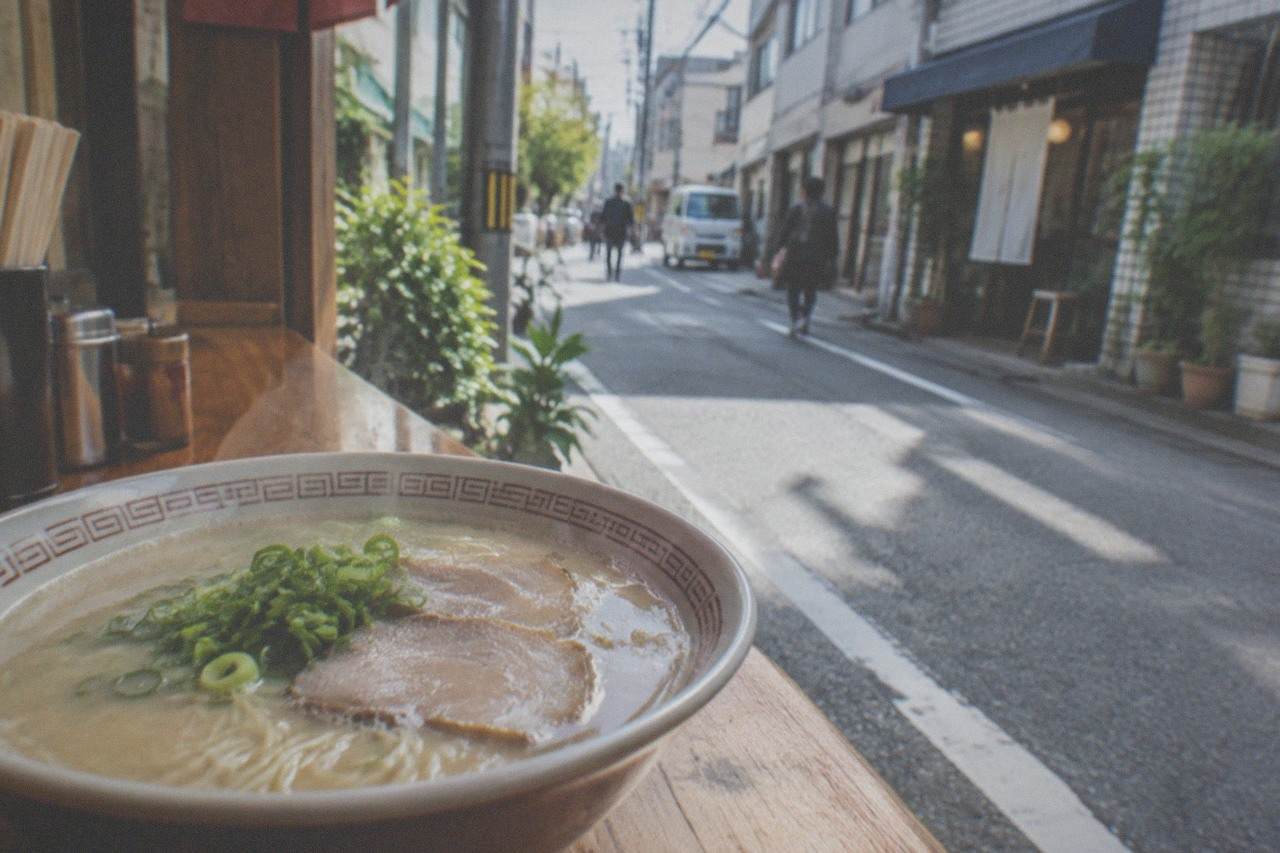
Fukuoka's answer to the signature-dish question is not a matter of debate locally: it is tonkotsu ramen, the milky pork-bone broth soup served with thin, firm noodles, almost always under the name Hakata ramen. The dish was born in this city, it is eaten here at every hour of the day and night, and the vocabulary locals use to order it, from noodle firmness to the kaedama refill, exists nowhere else in quite the same form. Sapporo has miso, Tokyo has shoyu, and Fukuoka has tonkotsu, and the city treats that ownership with genuine pride.
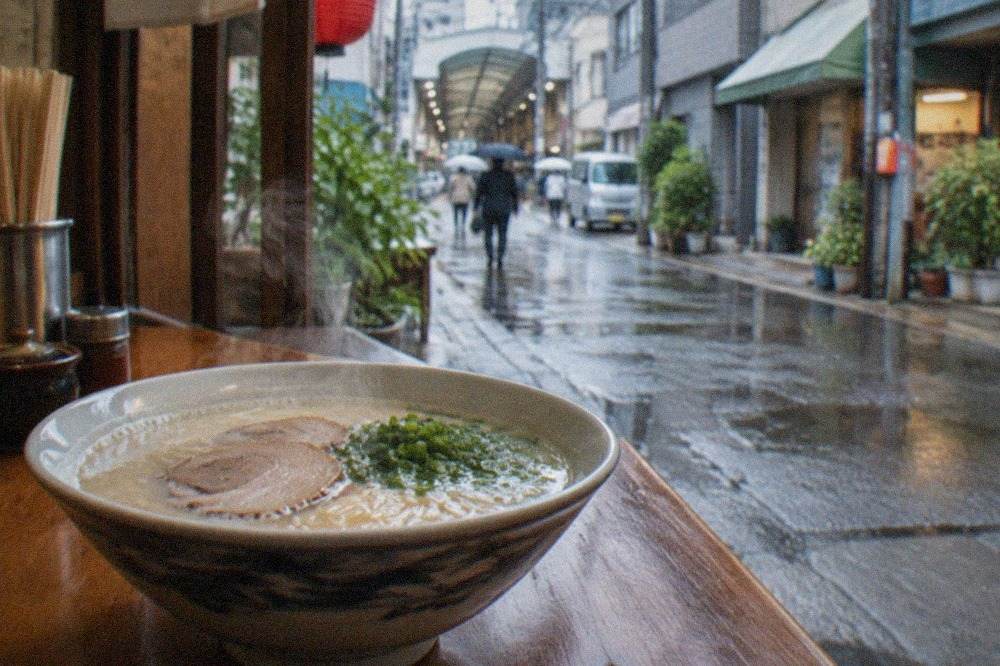
Why Tonkotsu Ramen Owns the Title
Tonkotsu ramen is Fukuoka's signature dish because the city both invented it and never stopped perfecting it. The broth is made by boiling pork bones for many hours until it turns opaque white, and that technique, along with the extra-thin noodles designed for quick slurping, started in Hakata and spread across Japan from here. No other dish is so tied to the city's identity, and no other city's ramen culture is so built around a single style.
The connection runs deeper than food. Hakata is a ward of Fukuoka and the name of its main station, and the dish carries the ward's name rather than the city's, which tells you where it came from. When ramen chains across Japan want to signal authenticity, they put "Hakata" on the sign. The style has become a national shorthand for the whole city.
What makes the local version distinct is the interplay of broth and noodle. The soup is rich, heavy with collagen rendered out of the bones, and it needs a noodle that can hold its own without going soft. Fukuoka's answer was to make the noodles thinner than anywhere else and to serve them in smaller portions, which sounds like a disadvantage until you learn about kaedama, the refill system that turns a small bowl into exactly as much ramen as you want.
Where the Dish Came From
Hakata ramen grew out of the Nagahama district of Hakata, next to the old fish market, in the years after the Second World War. Stall operators there worked with cheap pork bones and needed a broth that could be kept hot and served fast to market workers, which produced the concentrated, quickly replenished soup that defines the style today. The yatai food-stall culture and the ramen grew up together, and the two are still inseparable in the city's food identity.
The Nagahama connection survives in the name of the local ramen style itself: many shops in Fukuoka still list "Nagahama ramen" on their menus as a near-synonym for Hakata tonkotsu. The dish was street food first, sit-down restaurant food second, and that origin explains its two most distinctive habits. Small bowls came from serving people standing at a counter, and kaedama came from the need to keep a bowl hot rather than letting a large portion go lukewarm.
The yatai stalls that helped create the dish are still a living institution, and the city regulates them directly. Fukuoka has about 100 licensed stalls, more than any other Japanese city, according to the city's own yatai Q&A page, and a public recruitment system introduced in recent years keeps that number stable as older operators retire. A ramen pilgrimage here can genuinely be done standing at a stall by the Naka River, the way the dish began.
That trio is worth a moment of explanation, because a food-first trip to Fukuoka usually needs all three kinds of support: a way from the airport to the hotel without hauling luggage through the subway, a family-friendly ticket for a non-eating day, and a big day trip into Kyushu once you have eaten your way through the city. Each one is covered in detail further down this page.
How to Order It Like a Local
Ordering Hakata ramen involves three local decisions you will not face with other ramen styles: noodle firmness, broth richness, and the kaedama refill. Fukuoka shops let you specify how hard or soft you want your noodles, many let you adjust the strength of the soup, and kaedama means ordering an extra serving of noodles, dropped into your remaining broth, for a fraction of the price of a new bowl. Learning these three words changes the whole experience.
The system rewards a little preparation, so here is the vocabulary that matters at the counter.
| Term | What it means | What to do with it |
|---|---|---|
| Katame | Extra-firm noodles | The most popular local choice; noodles stay chewy to the last slurp |
| Futsuu | Standard firmness | Safe pick if it is your first bowl |
| Yawame | Soft noodles | Rarely ordered locally; suits a gentler broth |
| Kaedama | Noodle refill into your existing soup | Order before you finish the broth; ask for a firmness change if you like |
| Kaedama topping | Extra chashu pork or egg with the refill | The standard way to build the bowl back up |
Kaedama deserves its own sentence of warning: the refill is noodles only. If you have drunk most of your soup, you are asking someone to drown dry noodles in a thin remainder, so time the order while the bowl is still generous. Locals often change the noodle firmness on the refill, firmer on the second round, because the broth has cooled slightly by then.
The other local habit is speed. Hakata ramen is designed to be eaten fast, while it is scalding, and nobody in Fukuoka will think a ten-minute bowl is rude. Shops here turn counters over quickly, and in the busiest spots near Hakata Station, sharing a table with strangers during the lunch rush is normal and expected.
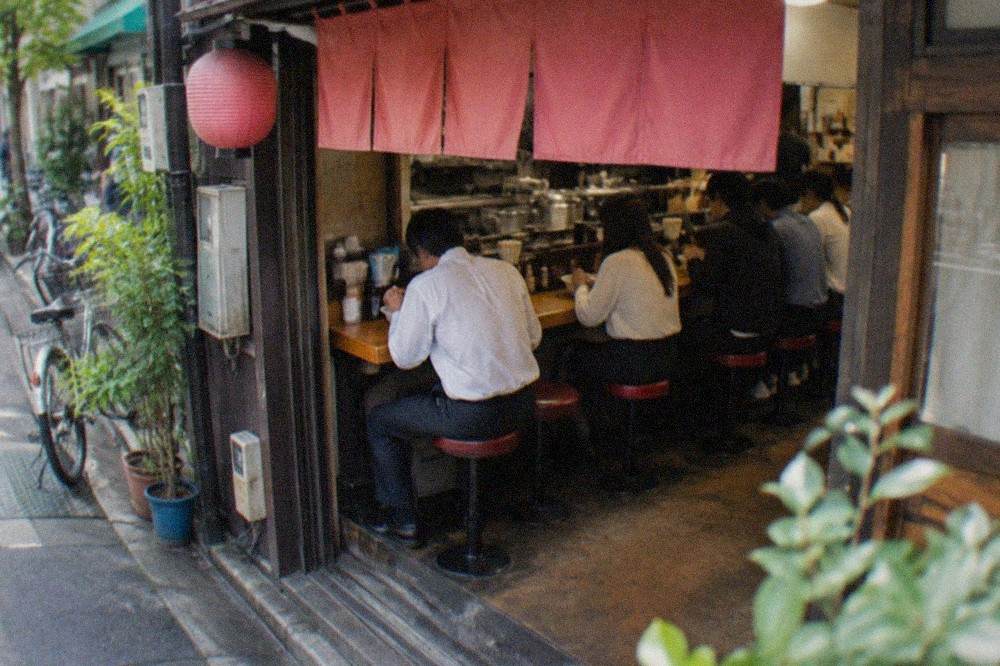
The Other Dishes Competing for the Title
Tonkotsu ramen wins the signature-dish contest, but Fukuoka has two serious runners-up: motsunabe, a hot pot of beef or pork offal simmered with cabbage and garlic in a miso or soy broth, and mentaiko, spicy pollack roe that originated here and appears on rice, in onigiri and inside everything. Both are Fukuoka inventions in their modern form, and a visitor who eats only ramen leaves having missed half the city's food story.
Motsunabe is the cold-weather half of the local diet, the dish groups of friends share around a gas burner in the middle of the table, and it pairs with the ramen seasonally: ramen year-round, motsunabe from late autumn through winter. Mentaiko travels further. It is the city's most exported food, sold vacuum-packed at every station shop as a souvenir, and it is the one Fukuoka food you can credibly bring home. The full index of guides sits on Fukuoka Japan Travel Guide.
| Dish | What it is | Where it shines | Best season |
|---|---|---|---|
| Tonkotsu ramen | Pork-bone broth, thin noodles, kaedama refills | Ramen shops and yatai stalls everywhere | Year-round, best late at night |
| Motsunabe | Offal hot pot with cabbage, garlic and chives | Hakata and Nakasu restaurants | Autumn and winter |
| Mentaiko | Spicy seasoned pollack roe | Breakfast rice, onigiri, as a souvenir | Year-round |
If you are planning the eating rather than just reading about it, the Fukuoka food guide breaks the whole scene down dish by dish, and the companion question on what food Fukuoka is famous for covers the wider list, including goma saba, hitokuchi gyoza and the local udon tradition that predates ramen entirely.
A food-first itinerary does start with logistics, and the airport is unusually close to the city centre, which is one of Fukuoka's quiet advantages as a food destination. The subway fare from Fukuoka Airport into town is ¥260, and the station you arrive at is Hakata, not a "Fukuoka Station", because there is no JR Fukuoka Station: Hakata is the station and Hakata is a ward of Fukuoka, the same city. A private arrival transfer removes even that short hop from your first evening, which matters when the goal is a bowl of tonkotsu before midnight.
Eating at a Yatai: The Signature Dish in Its Original Home
The most Fukuoka way to eat the signature dish is standing at a yatai, one of the roughly 100 licensed street stalls the city maintains across Nakasu, Tenjin and Nagahama. The stalls seat only a handful of people at a time, the menu is short, and the city's yatai ordinance requires every stall to display its prices clearly, banning the vague "market price" labelling that catches visitors out elsewhere. It is ramen served in the format the dish was invented in.
The price-display rule is worth knowing about because it answers the question visitors are often too polite to ask. The Fukuoka City Yatai Basic Ordinance, in force since 2013, requires prices to be posted where customers can easily see them, and any dish whose cost varies with the day's market must show that day's actual price rather than a vague marker. City inspectors check periodically. You can read a stall's menu and trust it.
Practical etiquette is simple. Stalls open in the early evening, typically setting up from around 17:00 under the city's road-occupancy rules, and close in the small hours, but no stall opens every night and rain closes many of them, so the honest advice is to wander and take what is open rather than fixating on one name. Seats are shared, conversation with strangers is normal, and ordering a bowl of ramen at a Nagahama stall puts you as close to the dish's birthplace as it is possible to eat. The yatai etiquette guide covers the customs in detail.
Planning the Trip Around the Bowl
A tonkotsu-focused trip to Fukuoka works best as a two- or three-day eating plan: one evening for yatai, one for a dedicated ramen shop, and daylight hours for motsunabe, mentaiko and the city's non-food sights. The eating is concentrated in Hakata, Tenjin and Nakasu, all connected by a subway fare of ¥210 to ¥380 per single ride, and the city's compactness is the reason a short stay is enough to eat it properly.
First-timers should read the question on what to do in Fukuoka for first timers before locking an itinerary, and the debate on how many days in Fukuoka is enough matters here too, because ramen appetite has a daily ceiling. Two days is enough for the signature dish plus one yatai evening; three lets you add motsunabe and a proper mentaiko breakfast.
Once you are installed, the geography does the rest. Hakata Station alone holds a ramen street and a department-store basement food hall, the Nakasu stalls line the Naka River a short walk away, and Tenjin's back lanes hold the sit-down shops where locals argue about broth. Everything in this plan sits inside a couple of subway stops of everything else, which is why Fukuoka works as an eating city in a way larger Japanese cities do not.
One seasonal note if you are choosing a month. July is Fukuoka's wettest month, wetter than the June rainy season, with 299.1 mm of rain against June's 249.6 mm in the Japan Meteorological Agency's 1991 to 2020 normals, and rain closes yatai stalls. That same July hosts the Hakata Gion Yamakasa festival, so the trade-off is real: festival spectacle against a higher chance of eating your signature dish indoors. The page on the best month to visit Fukuoka weighs the whole calendar.
Common Questions About Fukuoka's Signature Dish
What Is The Signature Dish Of Fukuoka?
Tonkotsu ramen, locally called Hakata ramen: a rich, opaque pork-bone broth with extra-thin noodles, invented in Hakata's Nagahama district and served across the city in dedicated shops and roughly 100 licensed yatai street stalls.
Is Hakata ramen the same as tonkotsu ramen?
In Fukuoka the two names are used almost interchangeably. Hakata ramen is the local version of tonkotsu ramen, defined by its very thin noodles, small bowl size and the kaedama refill system.
What is kaedama?
Kaedama is a noodle refill. You order an extra serving of noodles and the shop drops them into your remaining broth, usually for a fraction of the price of a new bowl. It is noodles only, so order it while you still have plenty of soup left.
Where did tonkotsu ramen originate?
In Hakata, the ward of Fukuoka that also gives the city's main station its name. The style grew up around the Nagahama fish market area in the postwar years, served from yatai stalls to market workers who needed fast, hot food.
Is Fukuoka only famous for ramen?
No. Motsunabe, a garlic-heavy offal hot pot, and mentaiko, spicy pollack roe, are both Fukuoka foods with national reputations, and the city also has a strong udon tradition. But tonkotsu ramen is the dish the city is known for first.
Can you eat the signature dish at a yatai stall?
Yes, and many visitors say a bowl at a street stall is the definitive version. The stalls are licensed by the city, required to display prices clearly under a local ordinance, and concentrated in Nakasu, Tenjin and Nagahama. They open in the early evening and close in the small hours, weather permitting.