TeamLab Forest Fukuoka
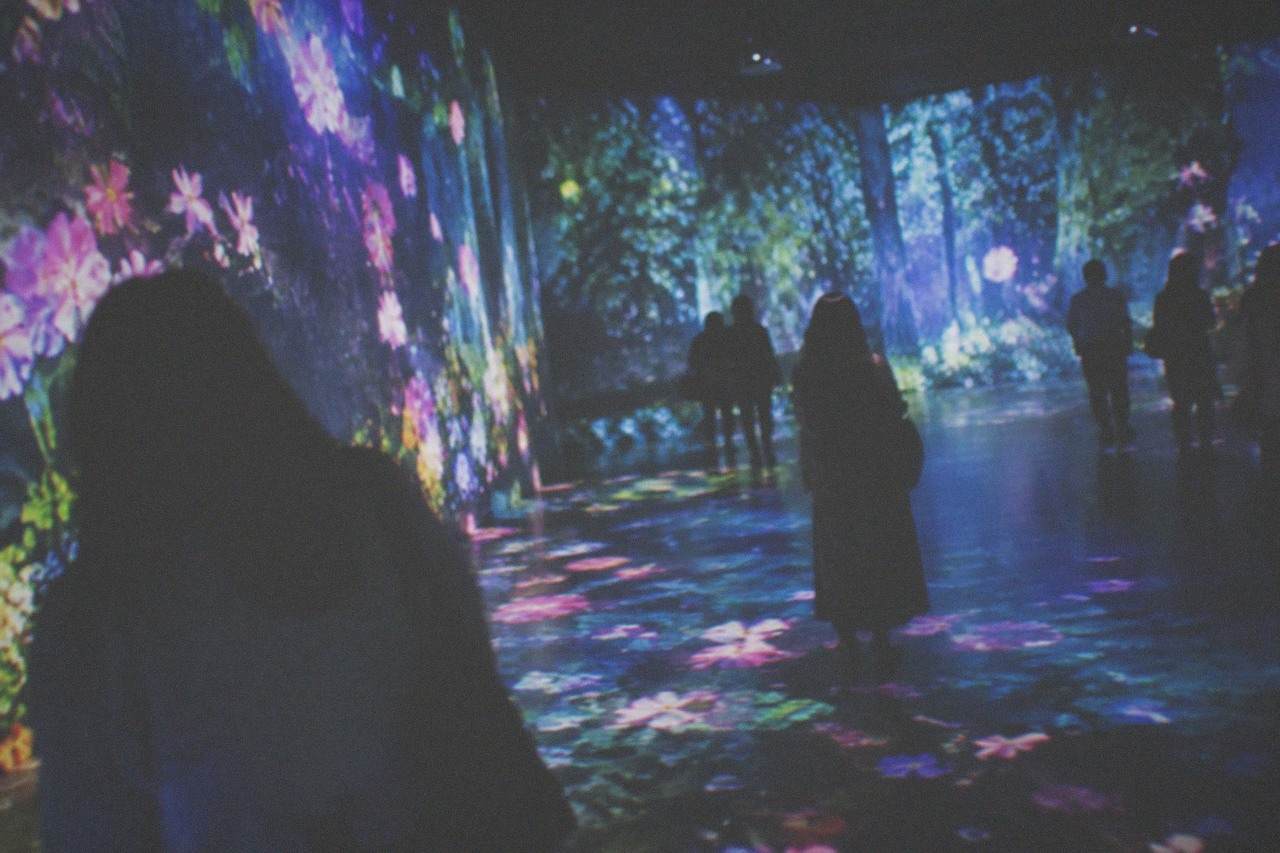
teamLab Forest Fukuoka is the city's permanent digital art museum, sitting in the Hakata Station area, and it slots into a Hakata afternoon more easily than almost any other ticketed attraction in Fukuoka.
Short answer
teamLab Forest Fukuoka is Fukuoka's permanent interactive digital art museum in Hakata, a short walk from Hakata Station and close to the subway's Airport Line. A typical visit runs 1 to 2 hours. It suits families, couples and anyone wanting a sensory break from shrines and shopping, and it slots easily into a half day in Hakata.
Fukuoka keeps one of Japan's few permanent teamLab museums in the middle of Hakata, the ward wrapped around the city's main station, and that single fact shapes most visits: this is not a suburban half-day expedition, it is an indoor stop of one to two hours that fits neatly between a shrine, a shopping complex and a bowl of tonkotsu ramen. Hakata and Fukuoka are the same city, a distinction this Fukuoka Japan Travel Guide keeps having to make because so many competing guides treat them as two destinations. There is no such thing as travelling from Hakata to Fukuoka, and there is no JR Fukuoka Station either; the station is Hakata, and the museum sits in its shadow. What follows is a full planning guide to the attraction itself: what it is, how to reach it, what tickets involve, what is inside, and how it stacks up against everything else you might pay for in this city.
What Is TeamLab Forest Fukuoka?
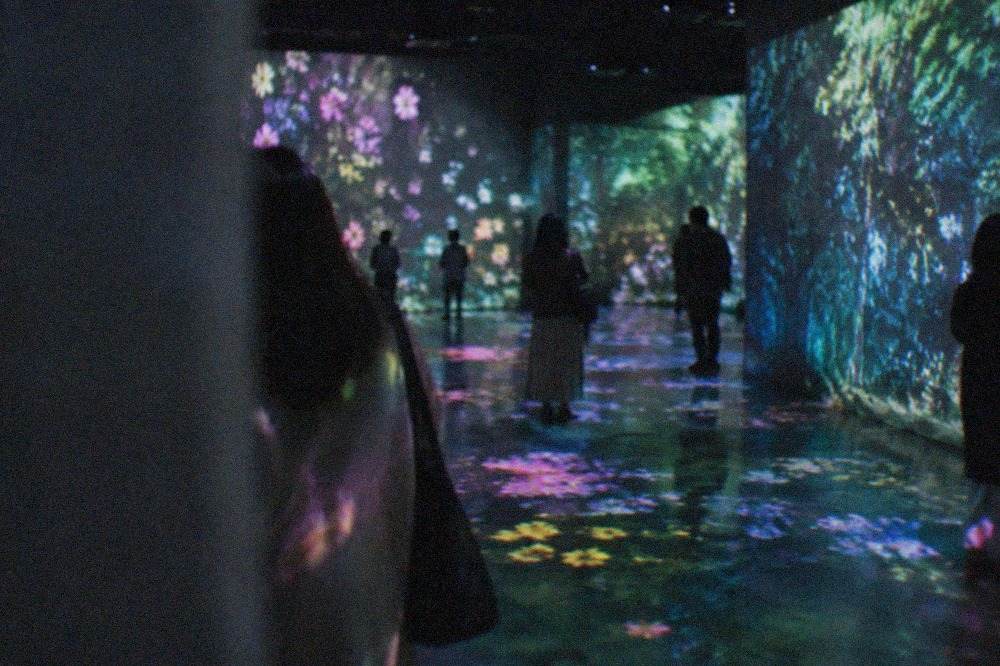
teamLab Forest Fukuoka is a permanent, fully indoor digital art museum created by the Tokyo art collective teamLab, located in a commercial tower in the Hakata Station area rather than out in the suburbs. Its rooms are built from projections, sensors and sound rather than framed works, the installations respond to where you stand and how you move, and a typical visit runs about one to two hours.
The collective behind it is the same one responsible for some of the most-visited art spaces in Japan, the enormous walk-through museums in Tokyo that have filled social feeds for the better part of a decade. Fukuoka's version is deliberately smaller and more focused. Where the Tokyo complexes sprawl across dozens of rooms, this one concentrates its footprint into a handful of large spaces, each one engineered around a single idea from the forest theme that gives the museum its name.
The format rewards participation over observation. Stand still and a room is a wall of light. Move through it and the projections ripple, scatter, bloom or flee, depending on the space. Children chase glowing creatures across the floor, adults lie down on benches watching colour drift overhead, and nobody is expected to know anything about art history to get their money's worth. That is the pitch, and it is a genuinely different experience from the city's conventional museums, where the Fukuoka Art Museum collection exhibitions cost just ¥200 for a quiet hour of painting and sculpture.
Because it is permanent, the museum does not tour or close between exhibitions in the way pop-up shows do. That permanence matters for planning: it is a reliable rainy-day option in a city where July, not June, is statistically the wettest month, with 299.1 mm of rain against June's 249.6 mm in the Japan Meteorological Agency's 1991 to 2020 normals. Most guides assume June is the month to hide indoors. The data says the peak downpours arrive a month later, and an indoor attraction like this one is the right answer to either.
Is TeamLab Forest Fukuoka Worth Visiting?
For most visitors it earns its ticket price, especially families, couples on a rainy evening and anyone whose Fukuoka days are heavy on shrines, markets and ramen. The honest caveat is scale: this is a compact museum by teamLab standards, closer to a focused gallery than an all-day complex, so adults chasing Tokyo's biggest rooms may find it short.
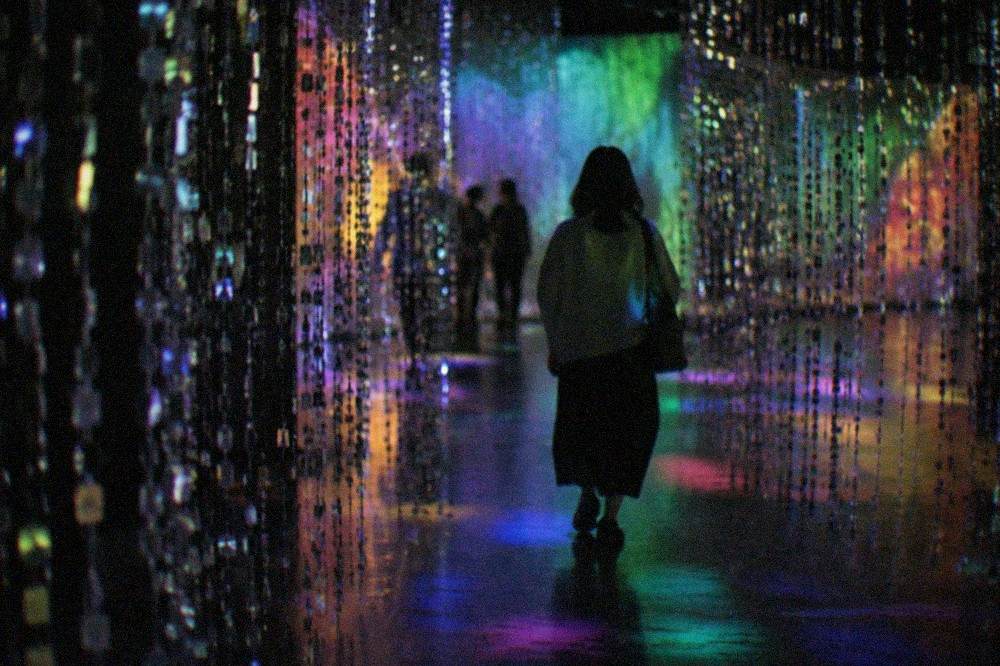
Who it works for is the easier half of the answer. Families with school-age children get the most out of it by a wide margin, because the rooms invite climbing, chasing and touching rather than quiet contemplation. Couples and solo travellers looking for a sensory interlude between shrine visits get a genuinely atmospheric hour or two. Photographers get rooms designed to be photographed. If your Fukuoka itinerary is a sequence of meals, markets and temple grounds, this is the attraction that breaks the pattern without breaking the budget or the schedule.
Who it works less for is equally worth saying. The rating attached to the ticket listing in our roster comes from a small pool of reviews, which makes it a weak signal in either direction, but the pattern in that feedback is consistent: visitors expecting Tokyo-scale scale are the disappointed ones. Adults who prefer their art stationary and annotated will be happier spending ¥200 at the Fukuoka Asian Art Museum, where entry to the building itself is free and only the Asia Gallery charges, or reading up on whether Fukuoka is worth visiting at all before committing an afternoon.
The fairest framing is this: as a proportion of cost to hours to delight, the museum is one of the better-value tickets in a city that is, in general, remarkably cheap to enjoy. Most of Fukuoka's best experiences cost nothing at all. This one costs a modest amount and reliably delivers two hours of something none of the free sights offer. Whether that trade makes sense depends entirely on your appetite for projected light, and only you know that.
How Do You Get to TeamLab Forest Fukuoka?
The museum sits in the Hakata Station area, one of the best-connected spots in northern Kyushu: Hakata Station is served by the Airport and Nanakuma subway lines, with the Hakozaki Line a single connecting stop away at Nakasu-Kawabata, and both JR and Nishitetsu converge nearby. From Fukuoka Airport, the subway fare to Hakata is ¥260.
The subway is almost always the right answer. Fukuoka City Subway runs three lines, and the fare structure is a simple distance band system: ¥210 for any trip of up to 3 km, rising zone by zone to ¥380 for anything over 19 km, as set out in the subway's official fare table. The airport-to-Hakata leg falls in the ¥260 band, and the airport itself is unusually close to the city centre, which is one of Fukuoka's genuine structural advantages as a destination. No official timetable we could verify states the journey in minutes, so this page will not either, but the fare is confirmed and the connection is direct.
| Zone | Distance | Adult fare | Child fare |
|---|---|---|---|
| 1 | up to 3 km | ¥210 | ¥110 |
| 2 | 3 to 7 km | ¥260 | ¥130 |
| 3 | 7 to 11 km | ¥300 | ¥150 |
| 4 | 11 to 15 km | ¥340 | ¥170 |
| 5 | 15 to 19 km | ¥360 | ¥180 |
| 6 | over 19 km | ¥380 | ¥190 |
If you are riding more than a couple of times in a day, the passes deserve a look before you tap anything. The subway's own one-day pass costs ¥640 for adults and ¥320 for children and covers all three lines from first train to last. Nishitetsu sells a bus version at ¥1,200 for adults and ¥600 for children across the city network. And the one that most visitors miss is the Fukuoka Tourist City Pass, which covers subway, buses, trams, trains and ferries for a day at ¥2,500 for the city version and ¥2,800 for the version that adds Dazaifu.
| Pass | Adult | Child | What it covers |
|---|---|---|---|
| Subway 1-day pass | ¥640 | ¥320 | All three subway lines, one day |
| Nishitetsu bus 1-day pass | ¥1,200 | ¥600 | City buses in Fukuoka, one day |
| Tourist City Pass (city) | ¥2,500 | ¥1,250 | Subway, buses, trams, trains, ferries |
| Tourist City Pass (+ Dazaifu) | ¥2,800 | ¥1,400 | All of the above plus Dazaifu routes |
The City Pass comes with two catches worth knowing before you queue for it, and both are documented on the official city pass page. First, it is restricted to overseas tourists on a short-stay visa, and a passport is physically checked at the counter when you buy it. Second, the Dazaifu version excludes the Dazaifu Liner Bus Tabito, which surprises people who assumed the pricier pass meant total coverage. The older and much lower prices still quoted around the internet are years out of date; the verified figures are the ones above.
For a museum visit paired with a wandering afternoon, a single fare or two is usually all you need, since the Hakata Station area keeps the museum, the shrine cluster and the shopping within a short walk of each other. The pass question only really bites if you are stacking distant sights like Ohori Park or Uminonakamichi onto the same day. If you are, price your rides first; four subway trips at ¥260 each already beats the ¥640 pass threshold, and most visitors cross it without noticing.
How Much Do TeamLab Forest Fukuoka Tickets Cost?
Tickets are sold as timed entry rather than a flat door price: you choose a date and a time slot, the adult price sits at the low end of what Fukuoka's ticketed attractions charge, and discounted child rates bring family costs down further, with the exact figure shown on the live listing for the slot you pick. There is no guide fee and nothing extra to pay inside.
The pricing model is the first thing to understand, because it changes how you plan. A timed-entry ticket means the crowd is metered: each slot admits a bounded number of people, so the museum never accumulates the crush that a free-flow attraction gets on a holiday weekend. It also means the cheap, calm slots tend to be the weekday daytime ones, and the premium slots are weekend evenings. The same ticket that feels like an impulse buy on a Tuesday can require booking ahead on a Saturday.
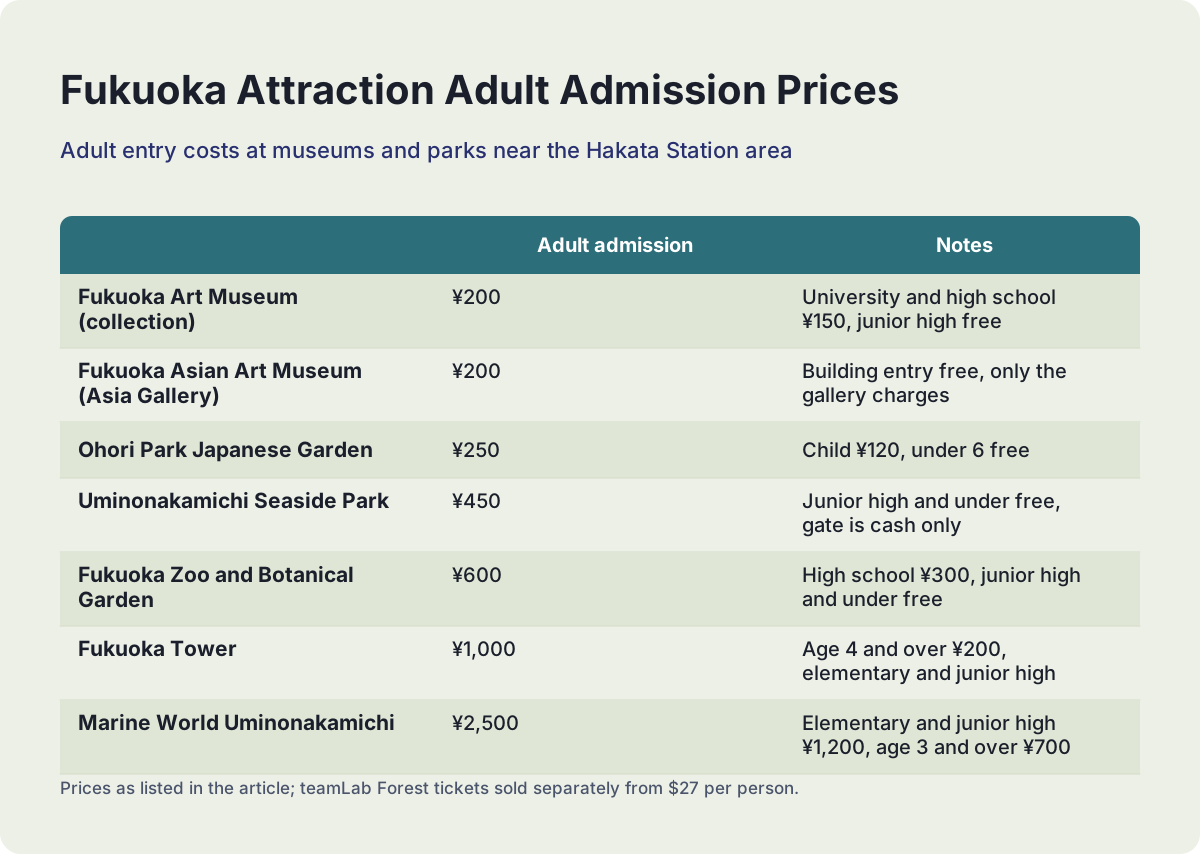
Context helps here, because Fukuoka's paid attractions are, as a class, unusually affordable. The table below shows verified gate prices across the city's main ticketed sights, and the pattern is clear: two of them charge less than a convenience-store lunch, and even the most expensive, the aquarium, costs less than a mid-range dinner.
| Attraction | Adult admission | Notes |
|---|---|---|
| Fukuoka Art Museum (collection) | ¥200 | University and high school ¥150, junior high and under free |
| Fukuoka Asian Art Museum (Asia Gallery) | ¥200 | Building entry free, only the gallery charges |
| Ohori Park Japanese Garden | ¥250 | Child ¥120, under 6 free |
| Uminonakamichi Seaside Park | ¥450 | Junior high and under free, gate is cash only |
| Fukuoka Zoo and Botanical Garden | ¥600 | High school ¥300, junior high and under free |
| Fukuoka Tower | ¥1,000 | Age 4 and over ¥200, elementary and junior high ¥500 |
| Marine World Uminonakamichi | ¥2,500 | Elementary and junior high ¥1,200, age 3 and over ¥700 |
The e-ticket product in our roster, the teamLab Forest immersive art experience ticket, is the straightforward way to buy: a mobile ticket for a timed slot, from $27 per person, rated by a small pool of reviewers so far, and sized for a one to two hour visit. It removes the one friction that matters with timed entry, which is arriving to find your preferred slot gone. Check the cancellation terms on the listing before you lock a time, since slot changes are easier on some tickets than others.
One planning note on the cash question, because it catches people in this city every week. The subway, the museums and the big attractions all take cards without fuss, but Uminonakamichi Seaside Park's gate takes cash only, a detail almost nobody prints. If you are stacking the museum with the seaside park on the same day, carry yen for that gate. Around the museum itself, in the Hakata Station area, you will be fine.
What Can You See Inside TeamLab Forest Fukuoka?
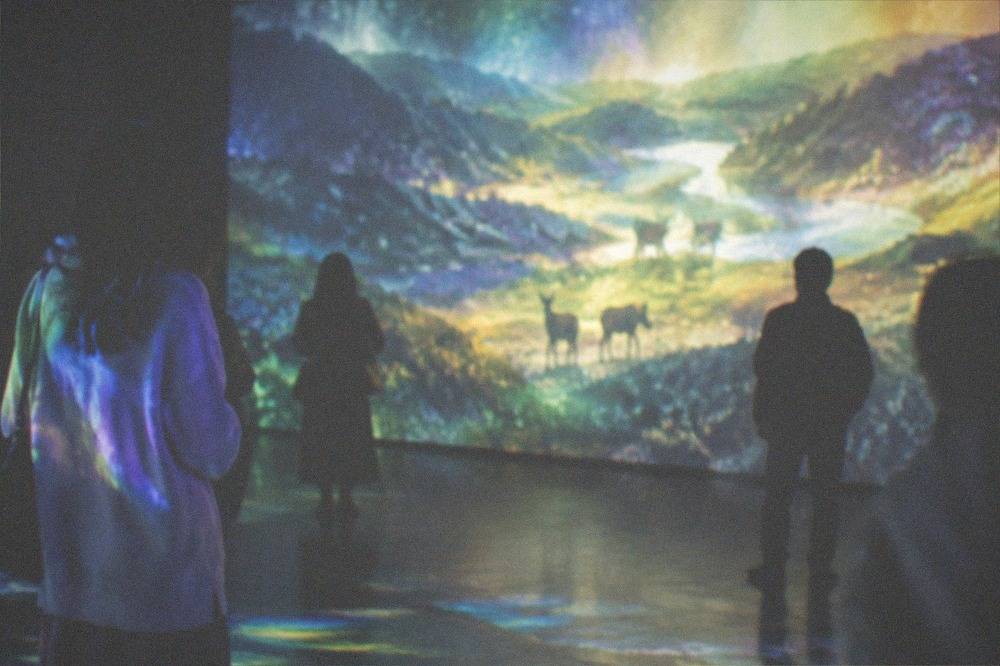
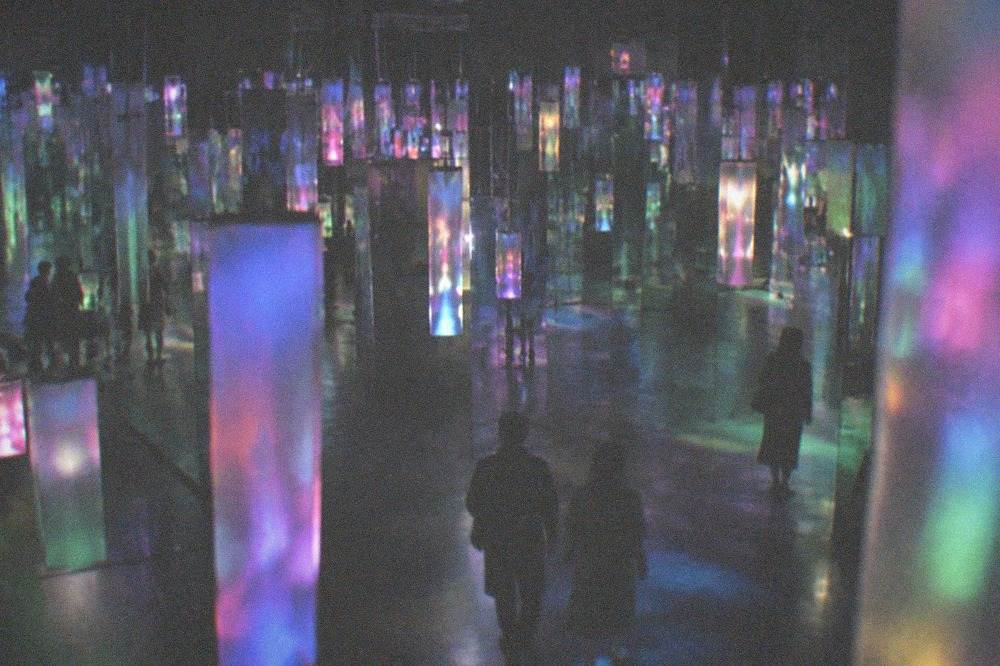
The interior is organised around two interactive worlds rather than a conventional gallery sequence: an athletic zone of projected terrain you climb, balance and jump through, and a catching-and-collecting forest where you capture and study projected creatures using a companion app. Everything reacts to touch and movement, most rooms welcome photography, and the atmosphere is dark, loud and fully immersive by design.
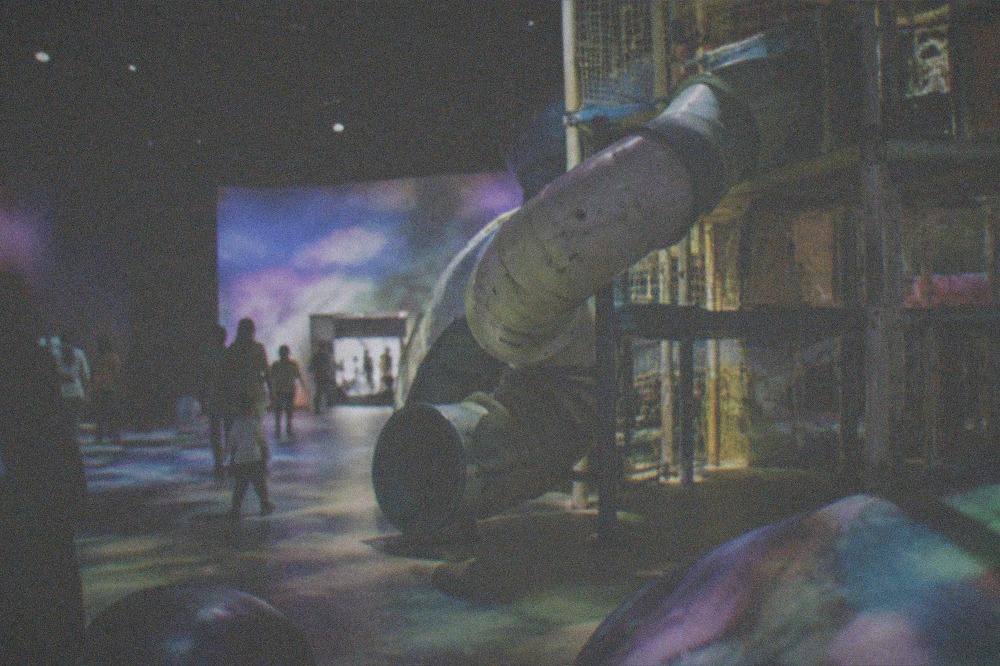
The athletic concept is the more physical half. Projected landscapes turn into terrain: slopes you scramble up, spaces that shift underfoot, surfaces that respond when you land on them. It is closer to a playground rendered in light than a museum room, which is why the space works so well for children and why adults over about 190 cm should mind their heads in the lower structures. The design intent is that your body completes the artwork, and the rooms are genuinely built to that brief.
The catching-and-collecting half is the quieter, stranger one. Projected animals and spirits drift through the space, and visitors catch them with the app, study what they have caught, and release them back into the environment. The creatures you and others release change the room's ecosystem, so no two visits resolve quite the same way. It is a slow-burn idea, and it rewards the visitor who stays twenty minutes in one room over the one who laps the whole floor in ten.
Practical expectations matter here. The rooms are dark, the sound is continuous, and the floors shift between flat and textured. Photography is welcomed in most spaces, though house rules at entry govern the exceptions. Nothing requires reading Japanese to enjoy, and staff manage flow in the busier rooms. Visitors who dislike dark, loud or crowded environments should plan a weekday morning slot, when the metering does its best work.
How Long Does a Visit Take and When Is the Best Time to Go?
Plan on one to two hours, the range the ticket listing itself states, and treat that as the full indoor budget including orientation. Timing matters more than season: weekday daytime slots are the calmest, weekends and Japanese public holidays fill first, and rainy afternoons raise demand across every indoor attraction in the city simultaneously.
The honest range depends on your pace. A determined pair of adults can move through the main rooms in close to an hour if the building is quiet. A family with children who have discovered the athletic zone will use every minute of two hours and ask for more. The visitors who feel short-changed are almost always the ones who arrived at peak, queued for each room, and left with the sense of having seen everything through a crowd. The slot you pick is, in practice, part of the ticket you buy.
| When you visit | What to expect | Best for |
|---|---|---|
| Weekday morning | Calmest rooms, most reactive installations | Photographers, toddlers, sensory-sensitive visitors |
| Weekday evening | Local after-work crowd, livelier energy | Couples, solo travellers |
| Weekend daytime | Full slots, metered flow does the work | Families who book ahead |
| Japanese public holiday | Fills earliest, book well in advance | Anyone already committed to the date |
| Rainy afternoon | Every indoor attraction in the city is busier | Last-minute visitors, expect queues |
Season barely matters for the museum itself, since every room is indoors and climate-controlled, but it matters a lot for what you pair with it. Summer visits pair naturally, because July and August in Fukuoka mean daytime highs of 31 to 32 °C and the museum is a legitimate escape from the heat as much as the rain. Winter visitors pairing the museum with the rest of the city should read up on Fukuoka in winter first, since the seasonal trade-offs are different: shorter days, colder evenings, and a city that is at its most atmospheric after dark.
Is TeamLab Forest Fukuoka Good for Kids and Families?
It is one of the strongest family tickets in the city: the rooms invite climbing, chasing and touching rather than quiet viewing, child pricing is discounted, and nothing inside requires Japanese to enjoy. The caveats are dark rooms and loud soundscapes, which can overwhelm toddlers or sensory-sensitive children, and weekend slots that fill with strollers and school groups.
Against the alternatives, the comparison is instructive. The Fukuoka City Zoo and Botanical Garden charges ¥600 for adults and nothing at all for junior high and younger, with free-admission days announced for 3 and 4 October 2026, so on those two dates the zoo is literally the cheapest family outing in the city. Uminonakamichi Seaside Park charges ¥450 for adults and nothing for junior high and under, though its gate is cash only. Both are full days of outdoor space. The museum is the inverse product: a compact, weatherproof, high-intensity indoor experience priced per person and discounted for children.
Families with children under about four should temper expectations. The athletic zone is built for children who can climb and balance, toddlers can participate but not fully, and the darkness plus the continuous sound is a real variable: some small children are entranced, others are overwhelmed within minutes. A short weekday slot is the low-risk trial, and it is easy to leave early if the answer turns out to be no. Sensory-sensitive children of any age deserve the same caution.
For families who want structure around the visit rather than just the visit itself, a private guide changes the math. A customisable local guide can build the museum into a broader Hakata day, moving at the children's pace and skipping anything that is not landing. The fully customisable private tour with a local guide in our roster is built for exactly that: two to six hours, your route, your stops, and a local making the calls on what is worth the walk.
What Else Is Near TeamLab Forest Fukuoka?
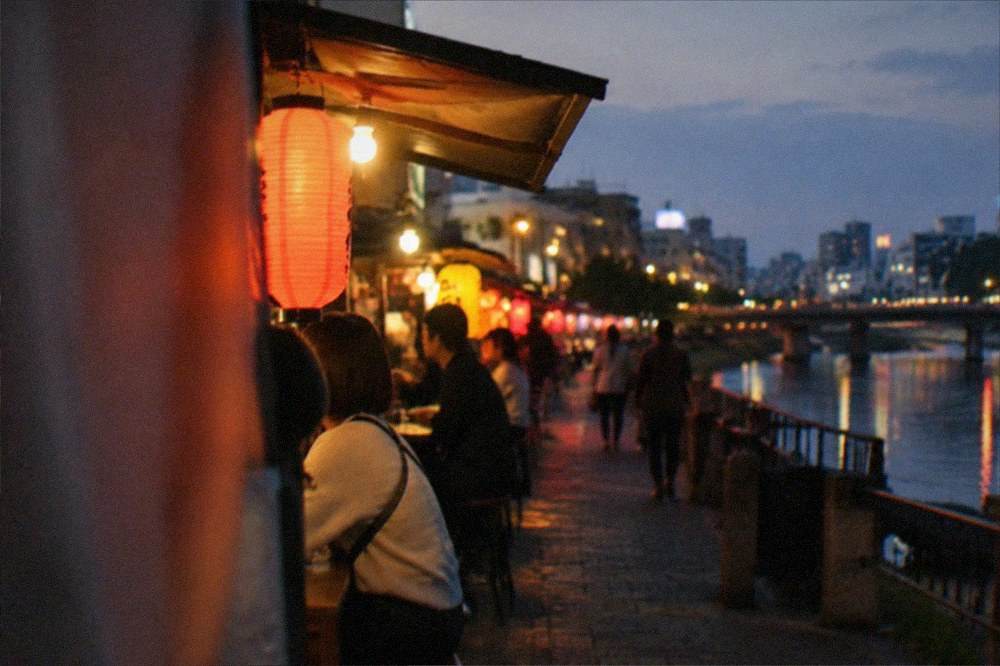
The Hakata Station area puts most of the ward's headline sights within a short subway ride or an easy walk: Kushida Shrine and Hakata's temple cluster, Canal City Hakata for shopping and dining, and the Nakasu yatai rows along the Naka River after dark. A realistic evening pairs the museum with a shrine visit and a street-food dinner, all inside the same ward.
Start with the shrine, because it is the anchor of the whole area. Kushida Shrine, Hakata's oldest and the spiritual home of the July Yamakasa festival, is free to enter and sits a short walk from the station cluster, with the festival's giant decorative floats on display there through the year. From the shrine it is a few minutes more to the temple cluster around Tochoji temple and Shofukuji, the latter being the first Zen temple founded in Japan, a distinction that draws visitors who otherwise skip temples entirely. None of these charges admission, which is the quiet theme of Hakata sightseeing: the ward's most famous things cost nothing.
Canal City Hakata is the other obvious pairing. The complex is free to enter and open every day of the year, with shops running 10:00 to 21:00 and restaurants 11:00 to 23:00, and its canal-side food floor covers the full range from ramen stalls to proper dinners. It is also a five-sided answer to the rainy afternoon: if the weather closes in, the museum and the mall between them cover an entire day without going outdoors.
| Time | Stop | Notes |
|---|---|---|
| Afternoon | teamLab Forest Fukuoka | 1 to 2 hours, timed slot |
| Late afternoon | Kushida Shrine | Free entry, festival floats on display |
| Dusk | Tochoji and the Hakata temple cluster | Free entry |
| Evening | Canal City Hakata | Shops to 21:00, restaurants to 23:00 |
| Night | Nakasu yatai rows | Around 100 stalls citywide, prices posted by ordinance |
Then there is the evening, and Fukuoka's signature street food. The city holds about 100 licensed yatai food stalls, more than any other city in Japan, concentrated in Nakasu along the Naka River, in Tenjin and in Nagahama. You cannot book a stall and you do not need to: they take walk-ins, and the ordinance that governs them requires prices to be displayed where customers can easily see them, with market-price pricing banned, so what is posted is what you pay. A guided yatai crawl is the bookable version of the experience, and worth considering if you want the introductions handled for you.
What Else Could You Do with the Money Instead?
If the museum's format does not appeal, the same money buys a different kind of Fukuoka day: a private half-day with a local guide, a coastal excursion along Itoshima, or a full-day trip into the Kyushu countryside, with several roster options costing no more than a family's museum tickets would. The comparison is worth making before you book anything.
The private-tour route is the closest substitute in kind. A local-led private tour turns the same two or three hours into a curated walk through Hakata's history and food culture, from $65 per person in our roster for the highlights and hidden-gems format, or from $59 for the fully customisable version. These suit travellers who would rather have a person than a projection, and the Hakata guided bike ride covers similar ground at a faster clip for anyone who wants movement without a museum's darkness.
The day-trip route is the furthest stretch of the same budget. Northern Kyushu is unusually generous with full-day tours from Fukuoka in the ¥-equivalent of a modest museum ticket for an adult, and one of the most photographed destinations in the region, the cliffside torii gates of Motonosumi Shrine, is reachable on a Motonosumi Shrine and Kanmon Bridge day tour that runs around nine hours from the city. It is a completely different product from a digital art museum, but it is what the same money converts into if your group would rather see coastline than light.
The decision, in the end, is about what your Fukuoka trip already contains. A trip that is all shrines and castles has room for one modern sensory experience, and this is the best one in the city. A trip with children has arguably no better indoor option anywhere in Fukuoka. A trip led by a traveler who finds projected rooms gimmicky should spend the money on a guide, a bike, or a train ticket to the coast, and be none the worse off.
Whatever you choose, buy the version you actually want before the day arrives, because the calm slots at the museum and the small-group seats on the day tours are the two things in this city that genuinely do run out. The trio below is the shortlist this site would start from: the museum ticket itself, the coastal day tour for the opposite register, and the customisable private tour for the traveller who wants a local to arbitrate.
Common Questions About TeamLab Forest Fukuoka
Is TeamLab Forest Fukuoka Worth Visiting?
For most travellers, yes. It is a compact, high-impact indoor museum that works especially well for families, rainy afternoons and anyone whose itinerary is already full of shrines and food. Adults expecting the scale of Tokyo's teamLab complexes should temper expectations: this is a focused two-hour experience, not an all-day one, and the visitors who enjoy it most arrive knowing that.
How long should I spend at teamLab Forest Fukuoka?
Between one and two hours, the range stated on the ticket listing itself. Families with children who take to the athletic zone tend toward the full two hours; a quiet pair of adults can see the main rooms in close to one. Slot choice affects the experience as much as pace does.
Can I buy teamLab Forest Fukuoka tickets on the day?
Walk-up purchase is sometimes possible, but timed-entry slots are metered and the popular ones, weekend afternoons and Japanese public holidays, sell out first. Buying ahead through the operator's live listing locks your slot and price, and lets you check the cancellation terms before committing.
Is teamLab Forest Fukuoka good for toddlers?
Partly. The rooms are safe and interactive, but they are dark and loud, and the athletic zone is built for children who can climb and balance. Some toddlers are entranced, others are overwhelmed within minutes. A short weekday morning slot is the low-risk trial, and leaving early is always an option.
How do I get from Fukuoka Airport to teamLab Forest Fukuoka?
Take the subway from Fukuoka Airport station to Hakata; the fare is ¥260 and the airport is unusually close to the city centre, sitting on the subway's Kuko line. The museum is then a short walk from the Hakata Station area. No official page we could verify states the journey in minutes, so confirm times against the subway's own timetable when you plan.
Do I need to speak or read Japanese inside?
No. Nothing inside the museum requires reading Japanese to participate, staff manage visitor flow in the busier rooms, and the interaction model is physical and app-based rather than text-based. Basic English signage is present at entry, and the ticketing flow on the live listing handles English throughout.