What Makes Yatai Ramen Unique?
Why Fukuoka's yatai ramen stalls serve a bowl you cannot get anywhere else, from the tonkotsu broth to the sidewalk setting and the city rules that govern the stalls.
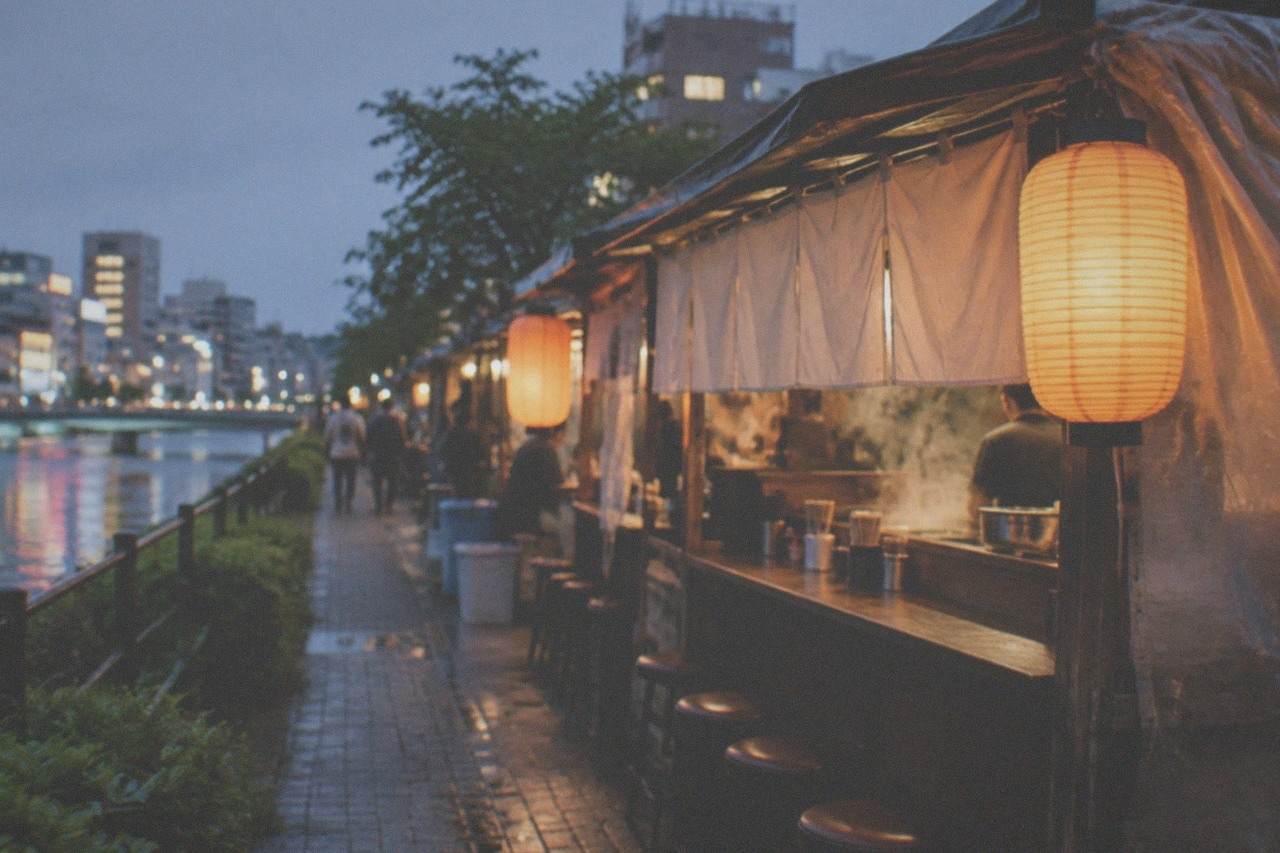
Fukuoka licenses about 100 yatai, the sidewalk food stalls that fold open at dusk and serve until the small hours, and no other Japanese city has anything close to that number. The city's own yatai Q&A page is blunt about it: these stalls are a Fukuoka institution, concentrated in the commercial heart of the city, and ramen is the dish most of them are judged on. What makes the ramen at a yatai unique is not a secret ingredient. It is the combination of a bowl built for the setting, a counter that seats a handful of strangers side by side, and a set of city rules, written into a local ordinance, that shape how every stall operates.
What Makes Yatai Ramen Unique?
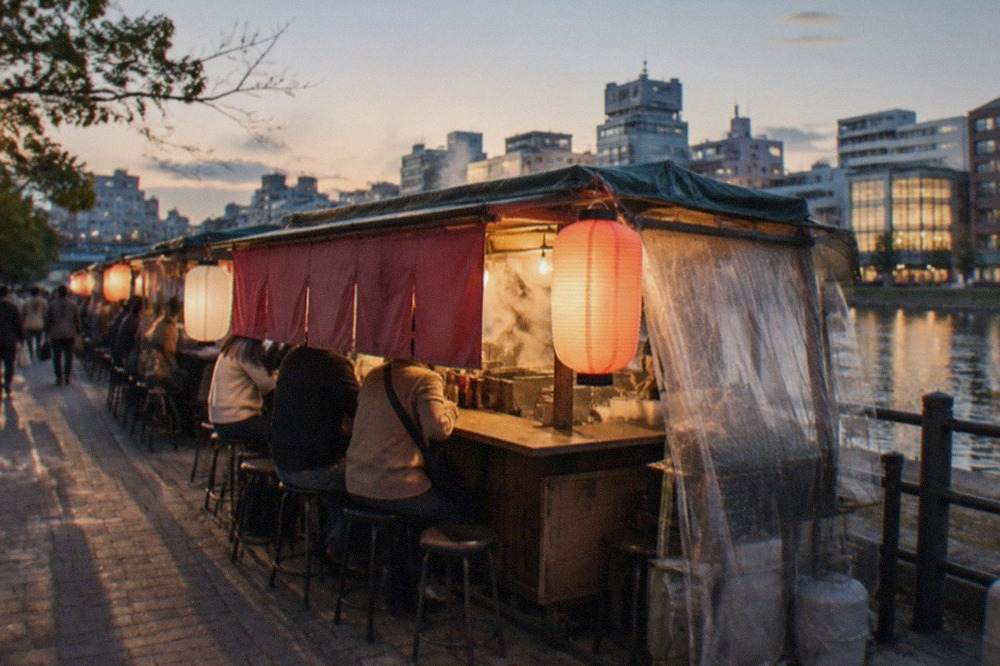
Yatai ramen is unique because the bowl and the stall evolved together: a rich tonkotsu pork-bone broth served fast at a tiny counter, in a city that licenses about 100 of these stalls and requires every one to post its prices openly. The ramen itself is Hakata style, thin noodles in creamy broth, designed so a second helping of noodles can be dropped into the same soup in under a minute. No shop replicates all three at once: the food, the setting, the strangers on the next stool.
The ramen served at a yatai is Hakata ramen, and the two things that define it are the broth and the noodle. The broth is tonkotsu, made by boiling pork bones at a rolling boil until the collagen renders and the liquid turns opaque and creamy. The noodles are thin, straight and low in hydration, which means they cook very quickly but also soften quickly. That sounds like a flaw and is in fact the design: a yatai has one cook, a small pot, and a queue of people who just walked in off the street.
The thin noodle is also what makes kaedama possible. Kaedana is the Fukuoka practice of ordering a refill of noodles, not soup. The cook takes your bowl, drops a fresh bundle of noodles into your remaining broth for about thirty seconds, and hands it back. The soup stays hot, the flavour deepens as the meal goes on, and the portion stays small enough that the bowl never goes cold on you. You can read more about the style itself in what is special about Hakata ramen, and the broader bowl-by-bowl background sits in the site's Hakata ramen guide.
But the uniqueness is only partly the food. A yatai seats roughly seven to ten people on stools along one red lantern-lit counter, and the cook works two steps away from your elbow. You will be seated next to strangers, often poured a drink by the owner, and drawn into whatever conversation the counter is having. The stall is a small room that does not exist during the day. It is towed or assembled in the evening, opened up, and gone by morning, which is why the experience cannot be exported to a permanent shop no matter how faithful the recipe is.
How Does Eating at a Yatai Differ from a Ramen Shop?
A ramen shop is a fixed kitchen with a door that closes; a yatai is a licensed sidewalk stall with one counter, one cook working in the open, and a hard legal window. City rules allow a stall to occupy its road spot from 17:00 and require it cleared by 4:00 the next morning, so the whole experience is bounded by the night. Seating is first come, first served, and the menu is short because the kitchen is the size of a large cupboard.
The practical differences stack up quickly. A shop can seat you at any hour it chooses; a yatai opens when the owner finishes setup, often around 18:00 or later, and closes when the owner decides, which is why the same stall can be open on Tuesday and dark on Wednesday. There is no city-mandated closing day, and rain or strong wind closes many stalls outright because the working area sits in the open air. Planning around a yatai means planning around weather and one person's evening.
The menu difference matters as much as the schedule. A yatai typically serves one ramen, a handful of toppings such as chashu pork, soft-boiled egg and nori, plus a few drinks and side dishes. A shop can run ten bowls and seasonal specials. At a stall, the short menu is the point: the cook makes the same broth every night and has made it for years, and the kaedama system means you build your own portion size rather than choosing between three.
The honest answer to the money question is also different from what most guides imply. Plenty of articles warn readers about vague pricing at food stalls. In Fukuoka the opposite is true: the ordinance requires prices displayed clearly, so a stall that wants to charge by the day's market must post the day's number, not the phrase. The city publishes its yatai rules on its official yatai Q&A page, and the ordinance text sits on the city's ordinance page. For what a bowl tends to cost relative to shop ramen, the site's is yatai ramen expensive page works through it without inventing an average the city does not publish.
Where Are the Yatai Clusters and How Do They Differ?
Fukuoka's yatai sit in three main clusters, Nakasu, Tenjin and Nagahama, and they are not interchangeable. Nakasu is the riverside row, the most photographed and most tourist-facing. Tenjin's stalls are scattered through the business district and draw after-work locals. Nagahama, near the old fish market, is the historically ramen-focused strip. Choosing between them is choosing between atmosphere, crowd and what the stalls cook best.
| Cluster | Setting | Character | Best For |
|---|---|---|---|
| Nakasu | Along the Naka River by Seiryu Park | The postcard row, lanterns reflected in the water, most tourist-facing | A first yatai night, photos, riverside atmosphere |
| Tenjin | Scattered along Watanabe-dori and Showa-dori | Business-district stalls, after-work locals, more variety in what stalls serve | A local crowd, exploring several stalls in one walk |
| Nagahama | Near the former fish market area | Historically the ramen-focused strip | Tonkotsu purists chasing the classic bowl |
Nakasu is the one most visitors picture before they arrive, and the Nakasu yatai street page covers the riverside row in detail. Because it is the most visible cluster, it fills first, and on a warm Friday the wait is for a stool, not a table. Tenjin rewards a slower walk: the stalls sit apart from each other, so you pick a lantern rather than a row. Nagahama's identity is ramen first, and its history is tied to the fish trade that once surrounded it, though the cluster's recent story is one the site treats carefully rather than repeating the decline narrative older guides carry.
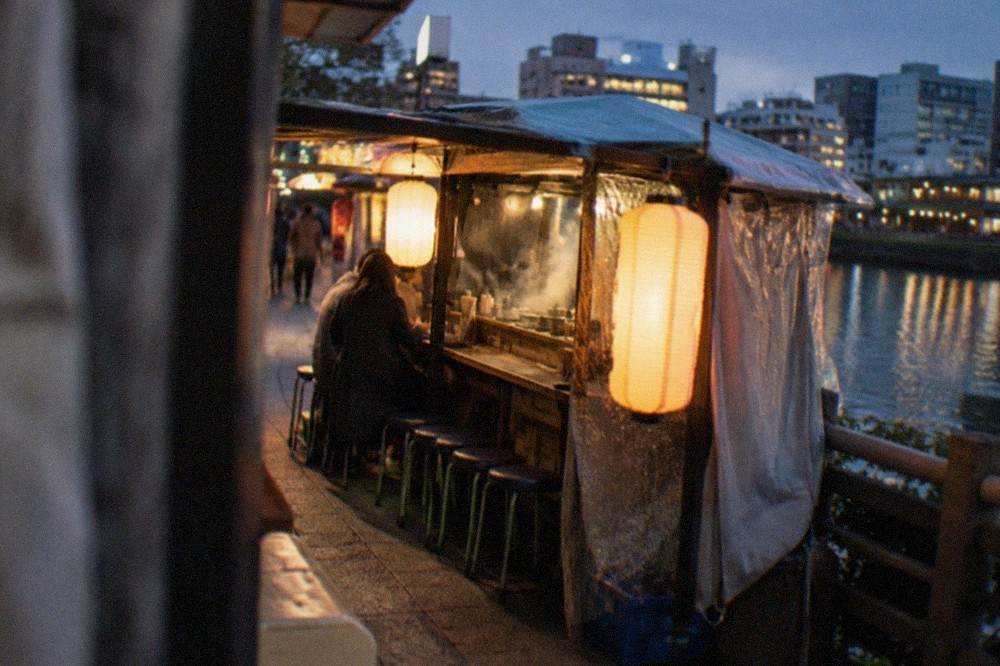
One point worth carrying between clusters: the same ordinance applies everywhere. Wherever you sit, the prices must be posted, the stall operates inside the same 17:00 to 4:00 window, and the seat next to you belongs to whoever sits down in it. The differences between the clusters are atmosphere and menu emphasis, not rules. A fuller area-by-area treatment sits in the site's Fukuoka yatai guide.
Can You Book a Yatai, and What Should You Expect?
No. A yatai takes walk-ins only, there is no reservation system, and this site will not pretend otherwise: the only bookable product in this space is a guided crawl, where a local walks a small group between stalls and handles the seating and the ordering. If you want a stool at a specific popular stall in Nakasu, the strategy is simply to arrive early in the evening or accept a wait. The stall itself cannot be booked by anyone, including us.
That walk-in reality is part of what makes the ramen unique, and it is worth stating plainly because so much online content implies you should reserve something. The bowl at a yatai is sold to whoever is standing there. The cook sizes the night by the weather and the crowd, and the counter resets to strangers every ninety minutes or so. A shop bowl is a product; a yatai bowl is an evening.
The one thing you can book is company and structure. A guided food crawl through the stall rows, such as the private Nakasu stall tour with tastings, buys you a guide who knows which stalls are open that night, which is genuinely useful when rain thins the rows. Drinks are the other bookable angle: the Nishinakasu sake tasting with three appetizers pairs local pours with small dishes in the same district as the riverside stalls, rated 4.6 from 7 reviews and from $51 per person, and it slots neatly before or after a bowl.
What Should First-Time Visitors Know Before Sitting Down?
First-timers should know four things: sit where there is a space rather than waiting to be placed, look for the posted price list before ordering, expect to share conversation with the people beside you, and know that kaedama refills are ordered while soup remains in the bowl. Cash is still the safest assumption at a stall, though payment options vary stall to stall. None of this requires a reservation, and none of it is complicated once you are on the stool.
The etiquette is short and forgiving. You sit, you order, you eat, and you do not linger long after the bowl is finished because the stall seats so few people. The site's yatai etiquette guide covers the details, and the reader-facing version of the same question, what is the etiquette for eating at a yatai, answers it in FAQ form. The short version: order the ramen first, add a topping if the menu tempts you, and ask for kaedama by holding your chopsticks or bowl up when you want the noodle refill.
For a first night, Nakasu is the easiest cluster to start in because the stalls sit together and the setting is forgiving of slow ordering. Tenjin suits a second night, when you know what you want. Wherever you sit, the Fukuoka street food guide places the yatai bowl in its wider context, alongside the other dishes Fukuoka is famous for, and this site's own Fukuoka Japan Travel Guide homepage pulls the whole picture together for anyone still building a trip around it.
The last thing worth knowing is seasonal. July is Fukuoka's wettest month, 299.1 mm against June's 249.6 mm in the Japan Meteorological Agency's 1991 to 2020 normals, and it is also Yamakasa festival month, when the city's energy goes to the float races rather than the counters. A yatai night is at its best on a dry, cool evening, and the stalls that survive the summer heat do most of their trade after dark, which is when you wanted to be there anyway.
Common Questions About Yatai Ramen
What Makes Yatai Ramen Unique?
The combination: Hakata-style tonkotsu broth with thin noodles built for fast kaedama refills, served at a tiny licensed sidewalk counter that seats strangers side by side, in the only Japanese city that licenses about 100 such stalls. The bowl, the setting and the city rules that govern the stalls cannot be separated, and no permanent shop reproduces all three at once.
Can I book a seat at a yatai?
No. Yatai take walk-ins only and there is no reservation system for an individual stall. The only bookable options are guided food crawls, where a guide takes a small group between stalls, or a drinks experience nearby such as a sake tasting in the same district.
Do yatai post their prices?
Yes, and they are required to. Fukuoka's Yatai Basic Ordinance bans "market price" wording: every dish must show its price where customers can easily see it, and any item priced on the day's market must display that day's actual figure. City inspectors check periodically.
What is kaedama?
Kaedama is a refill of noodles only, not soup. The cook drops a fresh bundle of thin noodles into your remaining broth for about thirty seconds and returns the bowl. You order it while soup is still in the bowl, and it is the standard way to extend a Hakata ramen meal.
Which yatai area should a first-timer choose?
Nakasu, for the riverside setting and the clustered stalls that make a first visit easy. Tenjin suits a second night with more local energy, and Nagahama is the historically ramen-focused strip near the old fish market. All three operate under the same city rules, so the choice is atmosphere, not safety or price.
Are yatai open every night?
No, and there is no fixed closing day. A stall opens at its owner's discretion inside the permitted window from 17:00 to 4:00 the next morning, and rain or strong wind closes many stalls because the kitchen sits in the open air. Checking the evening you plan to go is the only reliable approach.