What Is the Most Famous Shrine in Fukuoka?
Kushida Shrine is Fukuoka City's most famous shrine, while Dazaifu Tenmangu is the prefecture's biggest draw. Here is how they differ and which to visit.
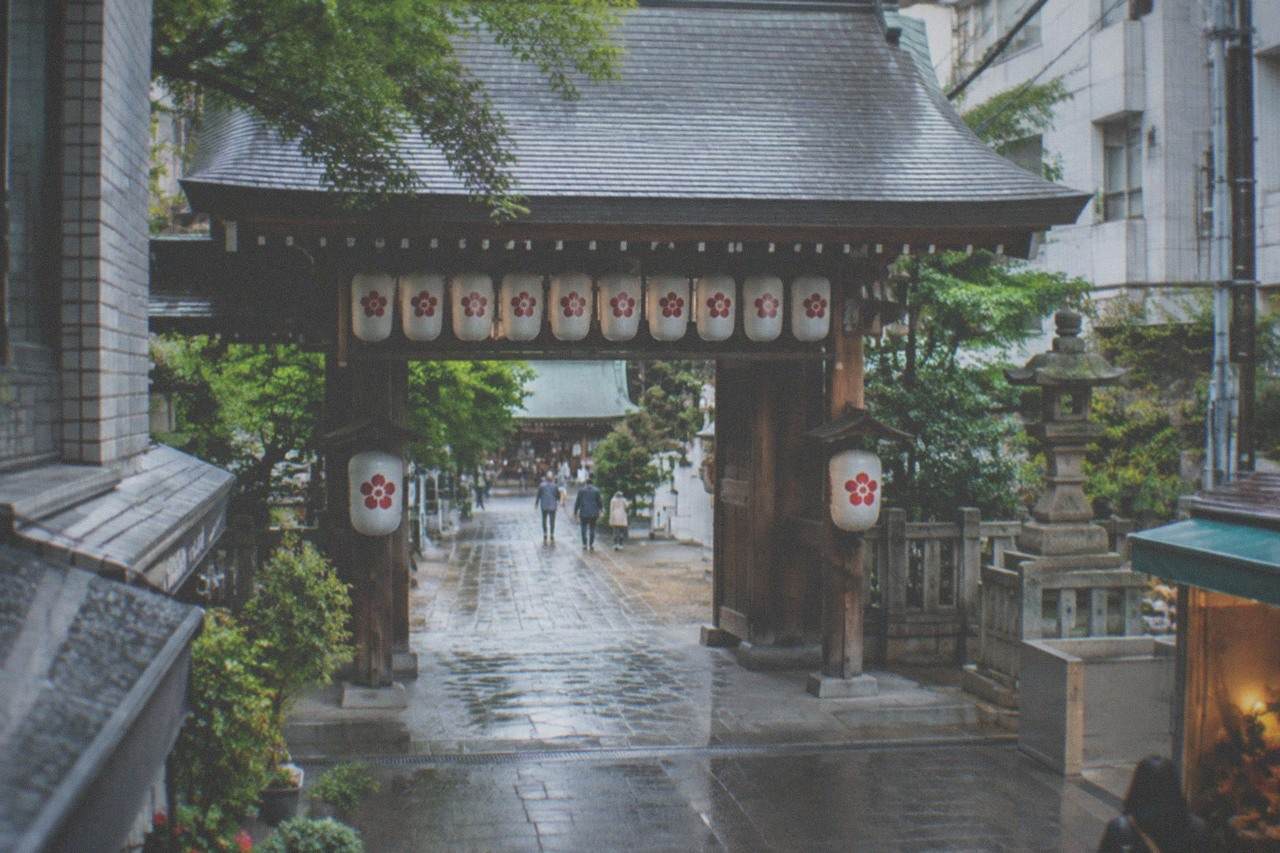
Two shrines compete for the title of Fukuoka's most famous, and the honest answer depends on which Fukuoka you mean. Inside the city itself, the answer is Kushida Shrine, the ancient foundation in Hakata ward that anchors the Hakata Gion Yamakasa festival every July. Across the wider prefecture, Dazaifu Tenmangu pulls far larger crowds as the national headquarters of Tenjin worship, dedicated to the spirit of the scholar Sugawara no Michizane. This page untangles the two, explains what each is famous for, and names the other shrines worth your time while you are here.
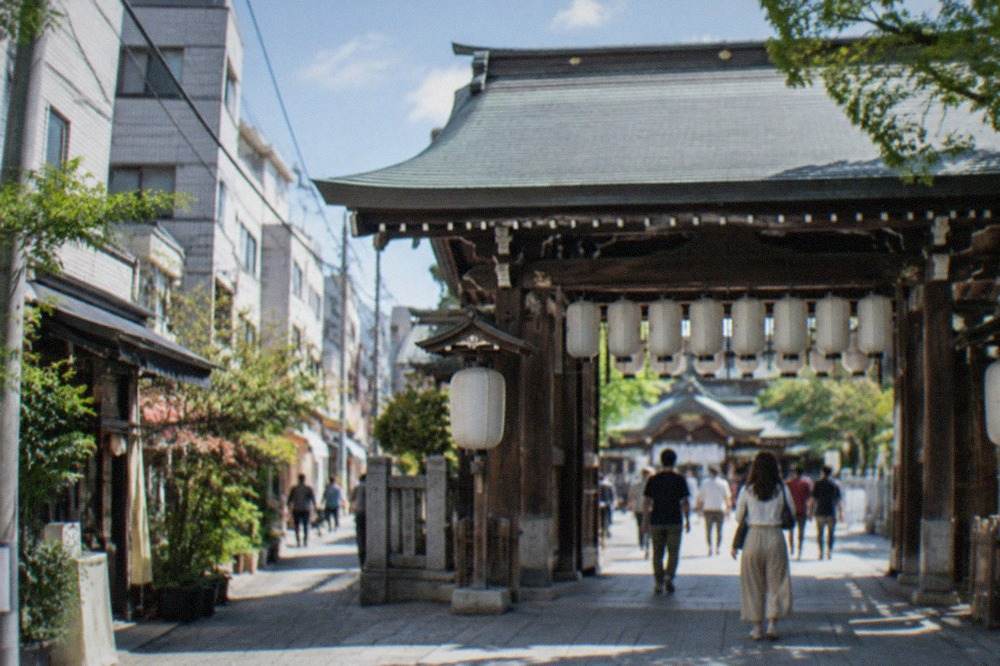
Kushida Shrine: The City's Own Most Famous Shrine
If the question means Fukuoka City, the answer is Kushida Shrine, and it is not close. Hakata's oldest shrine, it is the spiritual home of the Yamakasa festival and the starting point of the July 15 Oiyama race at 4:59 in the morning. It sits free to enter, a few minutes' walk from Hakata Station and the Kawabata Shopping Arcade.
Kushida Shrine is the guardian shrine of Hakata, the merchant ward that predates the modern city around it. That history is why it, rather than any grander complex, is the shrine locals name first. The grounds are compact and free to enter, packed into a block of Hakata old town between the shopping arcade and the Naka River. The shrine's own festival committee centres the whole Yamakasa calendar here, and the decorative kazariyama floats are displayed at Kushida from July 1 each year.
What makes it famous is the Hakata Gion Yamakasa, held annually from July 1 to 15. Teams of men carry roughly one-ton kakiyama floats through the streets, and the climax, the Oiyama race, starts at Kushida at 4:59 a.m. on July 15, signalled by taiko drums, over a course of about 5 km. There is no ticketing at all for the festival; you simply stand on the pavement and watch. If you are planning a summer trip, the Hakata Gion Yamakasa guide covers the schedule in detail.
Even outside July the shrine earns a visit. The ginkgo tree beside the main hall is said to be over a thousand years old, and the grounds hold the kabuto figures used in the Hakata Dontaku parades each May 3 and 4. Dontaku is the other half of Hakata's festival identity: over two days in Golden Week, parades of hana jidosha flower floats and dancers fill Meiji-dori between Hakata Station and Tenjin, and again there is no ticket, just pavement. For the practical details, opening hours and how to reach it, see the full Kushida Shrine page.
Dazaifu Tenmangu: The Prefecture's Biggest Shrine Draw
Outside the city, Dazaifu Tenmangu is the most famous shrine in Fukuoka Prefecture and one of the most visited shrines in Japan. It is dedicated to Sugawara no Michizane, the deified patron of learning, and it is free to enter. Students travel from across the country to pray here before exams.
Dazaifu Tenmangu is a different kind of shrine from Kushida: a national pilgrimage site rather than a neighbourhood guardian. Michizane, a ninth-century scholar exiled to Dazaifu, was deified after his death as Tenjin, the god of learning, and this shrine is his principal resting place. The shrine's own FAQ states plainly that there is no entrance fee. Grounds open from 6:00 or 6:30 depending on season, and closing time runs 18:30 in winter, 19:30 in summer, 19:00 the rest of the year.
The approach is part of the experience. You walk a bridge over a pond shaped like the character for water, past taiko bridges and a row of umegae mochi shops grilling the local rice cake speciality, before reaching the main sanctuary. The surrounding town has grown entirely around the shrine, and the nearby Kyushu National Museum makes the trip an easy half day or more. The Dazaifu Tenmangu guide covers what to see, and the question what Dazaifu Tenmangu is famous for goes deeper on the deity and the customs.
One thing worth knowing before you go: Dazaifu is a shrine town, not a city sight, and it behaves like one. The mochi shops along the approach open with the shrine and close in the early evening, and the whole town slows outside those hours. Arrive mid-morning and you will share the approach with school groups and exam-bound students; arrive at opening and you will have the bridge almost to yourself. The trade-off for that quiet is that the museum and most shops are not yet open, so most visitors settle on a 9 a.m. start.
If you are weighing the two against each other, here is the honest comparison:
| Kushida Shrine | Dazaifu Tenmangu | |
|---|---|---|
| Where | Hakata ward, Fukuoka City | Dazaifu, 30 minutes by train from Tenjin |
| Famous for | Hakata Gion Yamakasa, Hakata's guardian shrine | Tenjin, patron of learning; exam prayers |
| Entry | Free | Free |
| Best paired with | Kawabata arcade, Hakata old town, yatai | Umegae mochi, Kyushu National Museum |
| Time needed | 20 to 30 minutes | Half a day including the town |
Which Other Shrines Should You See in Fukuoka?
Beyond the two headliners, the shrines most worth your time are Sumiyoshi Shrine near Ohori Park, Atago Shrine above Momochi, Hakozakigu in the east of the city, and Nanzoin with its 41-metre reclining Buddha. Each is free or nearly free, and none takes more than an hour unless you want it to.
Sumiyoshi Shrine is one of Japan's oldest Sumiyoshi foundations, tucked into the streets near Ohori Park and Maizuru Park, and it makes a natural pairing with the castle ruins and the Japanese garden. Atago Shrine sits on a hilltop above Momochi Seaside Park and rewards the climb with one of the best city views; the Atago Shrine page explains the approach. Hakozakigu, east of Hakata, is a grand old shrine on the water famous for the January 3 Tamaseseri ball-scramble, in which loincloth-clad teams wrestle for a wooden ball believed to predict the year's harvest, and for the September Hojoya festival with its long rows of food stalls.
Nanzoin lies a short suburban train ride out and holds the largest reclining bronze Buddha in the world, lying 41 metres long in the hillside forest. It is a different register of shrine entirely, and a genuine surprise for visitors who expected only city temples. Pilgrims have come here for centuries, and the moss-covered approach through the trees feels further from the city than the train ride suggests. For etiquette at any of these, from bowing at the torii to omikuji and omamori, the shrine and temple etiquette guide covers the basics so you are not guessing on site.
Can You Visit Fukuoka's Shrines on a Guided Tour?
Yes, and a guided tour makes sense when the shrines sit far outside the city. Inside Fukuoka, Kushida, Sumiyoshi and Atago are all walkable and need no guide. For Aso, Takachiho or Kurokawa, where shrines pair with volcanoes and onsen towns, an organised day tour saves you three or four train transfers.
The Mount Aso, Kurokawa Onsen and Shrine Tour is the clearest example of why people book. It runs about 10 hours from Fukuoka, pairs the Aso volcano and grasslands with Kurokawa, one of Japan's most atmospheric onsen towns, and takes in a shrine along the way. It is rated 4.6 from 101 reviews and starts from $58 per person. Doing that route independently by train is possible but slow, and the mountain weather is easier to read with a local operator.
Closer to the city, the choices change character. The Takachiho Gorge and Amaterasu Railway tour, rated 4.8 from 713 reviews, reaches the gorge where the sun goddess Amaterasu is said to have hidden, with an optional boat ride on the river below. That tour runs about 11 hours and starts from $48 per person, which makes it one of the better-value full days out of the city. And if you would rather have shrines explained inside the city itself, a private guide can route Kushida, Shofukuji and the old town in a single walk, adjusting the pace to whatever interests you most.
Between the two, the question is really pace. A private half day in the city costs from $65 per person and covers the famous shrines on foot; a full-day Kyushu tour costs from $48 to $58 and buys you the countryside most visitors never see. Many travellers do one of each, and the honest advice is to book the countryside day first, because it is the one you cannot improvise on the morning of.
How Do You Plan a Shrine Day Around the City?
Pair Kushida Shrine with Shofukuji, Tochoji and the Kawabata arcade for a walkable morning, then add Ohori Park's Sumiyoshi Shrine in the afternoon. Dazaifu Tenmangu deserves its own half day by train, reached via the Nishitetsu line from Tenjin. Two days in the city is enough to cover all of them comfortably.
The walkable cluster is genuinely walkable. From Hakata Station, Kushida is minutes away, Tochoji with its Great Buddha is on the way, Shofukuji, Japan's first Zen temple, sits just beyond, and the Kawabata arcade runs back toward the river. All are free to enter, which makes this the cheapest full morning of sightseeing in the city. The Hakata old town guide maps the route, and a tonkotsu ramen bowl afterwards is a Hakata tradition in itself, because no shrine crawl in this city ends without one.
For Dazaifu, take the Nishitetsu line from Tenjin with a transfer at Futsukaichi; the fare is ¥480 each way. Go in the morning, eat umegae mochi on the approach, and you will be back in the city by mid-afternoon with time for Ohori Park. If you are working out how long to stay overall, most first-time visitors find two full days enough to cover the city shrines plus one half-day trip, with a third day freeing you for the Aso or Takachiho countryside. As this Fukuoka Japan Travel Guide lays out across its itinerary pages, the city rewards depth over speed: one shrine done slowly tells you more about Hakata than five done in a blur.
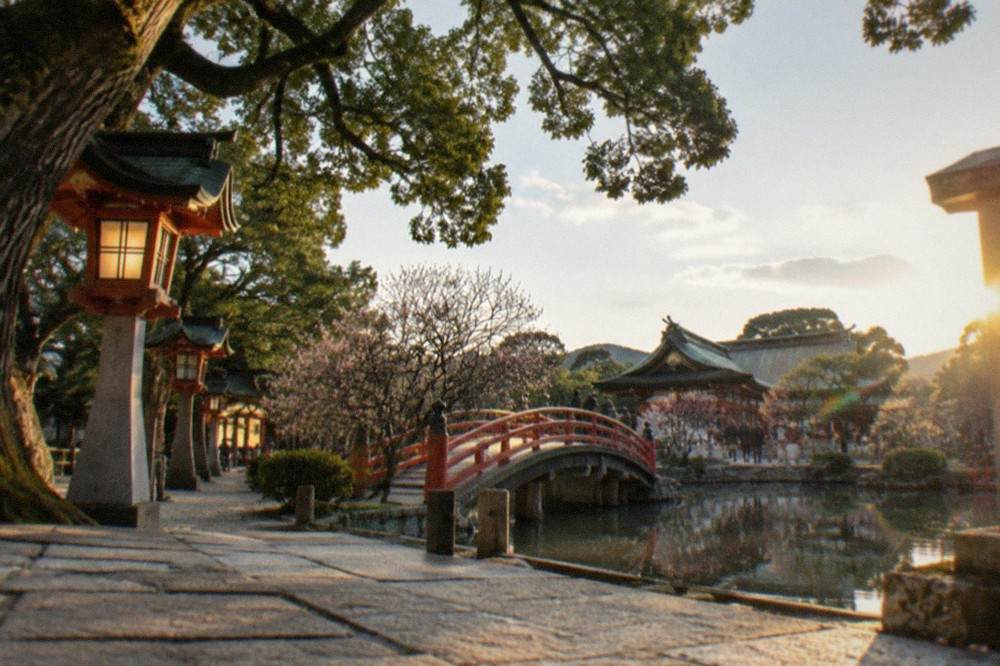
And if the shrines are what pulled you to Kyushu in the first place, think bigger than the city. The Aso and Takachiho tours below both put you inside the mythology the shrines refer to, and a private guide turns the city's own shrines from photo stops into stories.
Common Questions About Fukuoka's Most Famous Shrine
What Is The Most Famous Shrine In Fukuoka?
Kushida Shrine is the most famous shrine in Fukuoka City, Hakata's oldest shrine and home of the Hakata Gion Yamakasa festival. Across the wider prefecture, Dazaifu Tenmangu draws the biggest crowds as the national centre of Tenjin worship.
Is Dazaifu Tenmangu free to enter?
Yes. The shrine's own FAQ states there is no entrance fee for the grounds or main sanctuary. Its museum charges separately.
How far is Dazaifu from Fukuoka City?
About 30 minutes by Nishitetsu train from Tenjin, with one transfer at Futsukaichi, at a fare of ¥480 each way. It is an easy half-day trip.
Which shrine is best for the Hakata Gion Yamakasa festival?
Kushida Shrine. The festival runs July 1 to 15, and the Oiyama race starts at Kushida at 4:59 a.m. on July 15. There is no ticketing; you watch from the street.
Are Fukuoka's shrines open every day?
Kushida, Sumiyoshi, Atago and Hakozakigu have freely accessible grounds with no regular closures. Dazaifu Tenmangu opens from 6:00 or 6:30 and closes between 18:30 and 19:30 depending on the season.