What Is Dazaifu Tenmangu Shrine Famous For?
Dazaifu Tenmangu is famous as the shrine to Sugawara no Michizane, the god of learning, its legend of the flying plum trees and the mochi stalls along its approach.
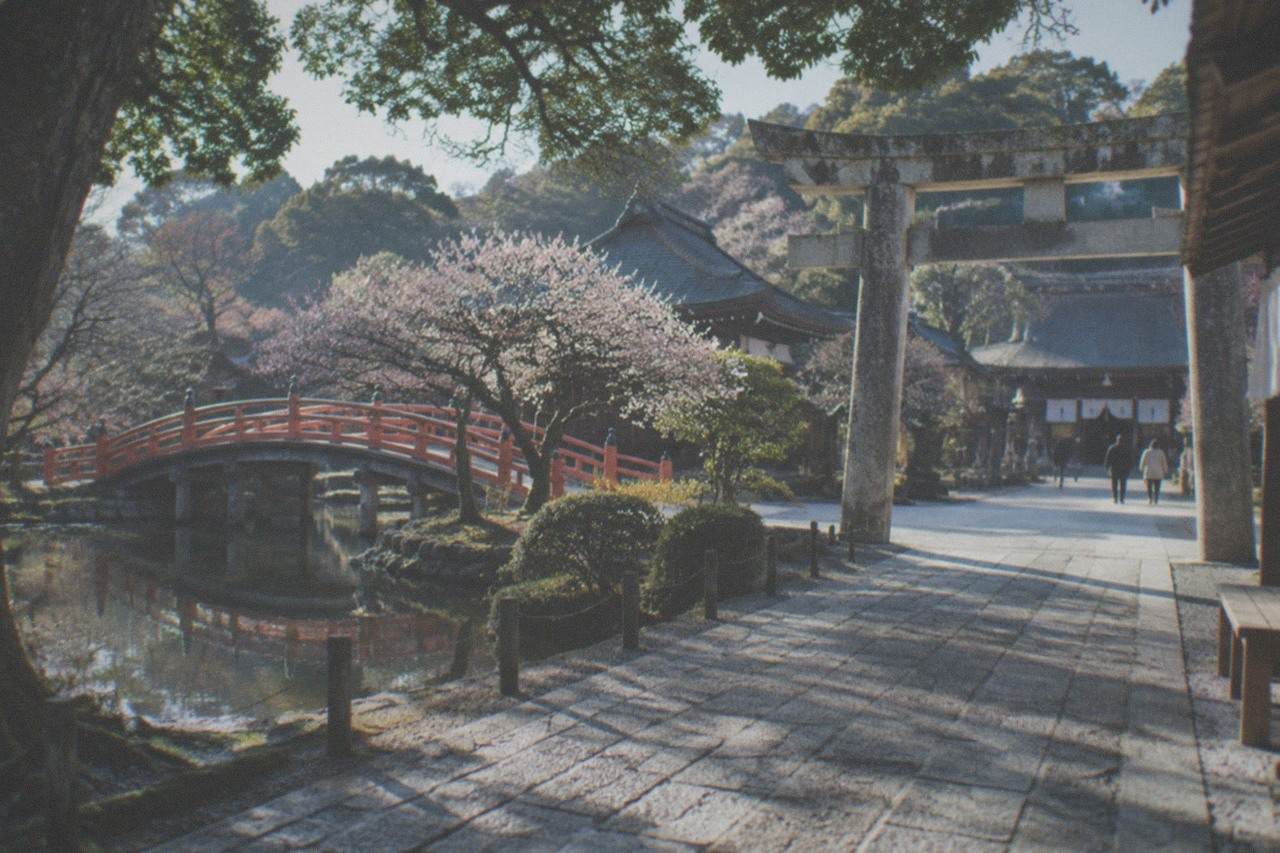
Dazaifu Tenmangu is famous as the shrine to Sugawara no Michizane, the Heian-era scholar deified as Tenjin, the god of learning. Students come from all over Japan to pray for exam success, and the shrine's thousands of plum trees, the legend of the flying plum and the umegae mochi stalls along its approach have made it one of the most visited shrines in Kyushu. The shrine states plainly that there is no entrance fee, and its grounds hold a pond shaped like the character for heart, two arched bridges and a camphor tree said to be well over a thousand years old.
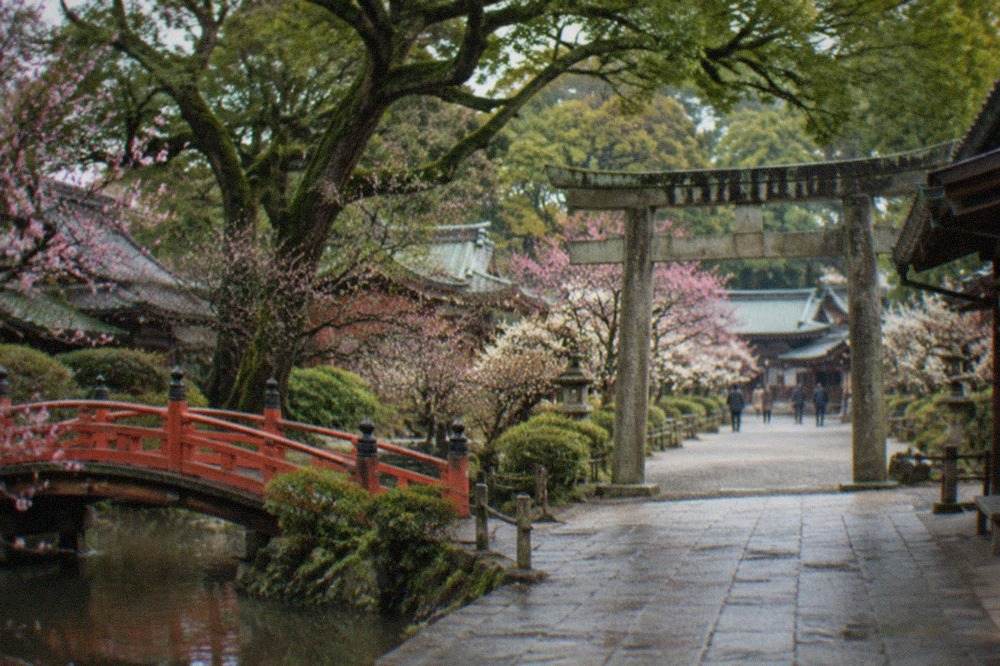
What Is Dazaifu Tenmangu Shrine Famous For?
Dazaifu Tenmangu is famous for being the head shrine of Tenjin worship in Japan, built over the grave of Sugawara no Michizane, the scholar exiled here in the early tenth century and later deified as the god of learning. Its grounds hold thousands of plum trees tied to the legend of the flying plum, and its approach road is lined with stalls selling umegae mochi, a grilled rice cake with sweet red bean filling. Students buy ema plaques and write exam wishes here in enormous numbers, and entry is free.
The shrine sits in Dazaifu, a small city about a subway-and-train ride southeast of Fukuoka, and the two are so linked that most people treat a visit as a single day trip from the regional capital. Dazaifu was the seat of the Kyushu civil government for centuries, which is why Michizane was sent here in exile, a demotion from the imperial court in Kyoto that ended with his death shortly after. Within decades, disasters at the court were blamed on his angry spirit, and he was posthumously promoted, then deified. That is the origin of Tenjin worship, and this is the shrine at the top of it.
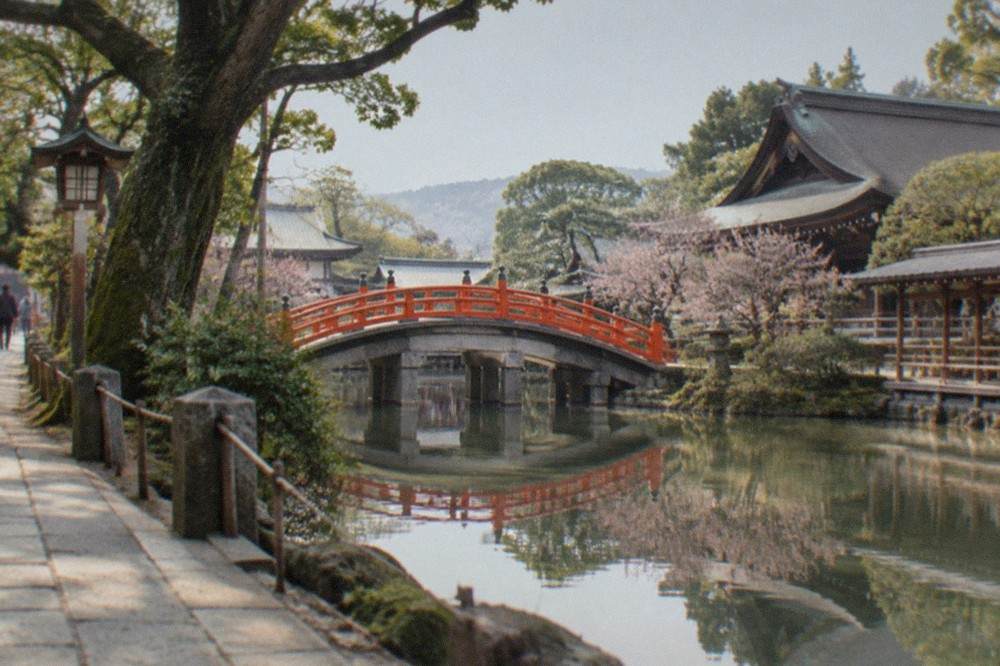
The full sightseeing picture, including the approach street, the neighbouring Kyushu National Museum and how long to allow, is covered in the site's Dazaifu Tenmangu shrine page, and the practical logistics, including the train ride out from Fukuoka, are laid out in the Dazaifu day trip guide.
Who Was Sugawara No Michizane?
Michizane was a scholar, poet and statesman of the Heian period who rose to the second-highest rank at the imperial court before being exiled to Dazaifu on fabricated charges. He died here two years after arriving, and after a run of misfortunes struck the court, he was promoted posthumously and enshrined as Tenjin, the heavenly god of scholarship. Today students facing entrance exams are his principal worshippers, and Dazaifu Tenmangu is his main shrine.
The story matters because it explains everything else on the site. Michizane was a prodigy in Chinese classics and poetry, and his career at court in Kyoto was brilliant enough to attract dangerous enemies. A rival faction accused him of plotting to place his favoured prince on the throne, and the court exiled him to Dazaifu, then a remote administrative posting. He lived in cramped quarters and died within a couple of years.
What followed is one of the great ghost stories of Japanese history. Lightning struck the imperial palace repeatedly, and several of Michizane's accusers died in ways the age read as divine punishment. The court moved to appease his spirit: posthumous titles were granted, and a shrine was raised over his grave within two decades of his death. Worship of Tenjin spread across Japan, and there are now thousands of Tenjin shrines, but this one, over the grave itself, is the origin point. If you are comparing famous shrines in the region, the site's answer on the most famous shrine in Fukuoka sets the city's own Kushida Shrine against Dazaifu's national pull.
Why Are There So Many Plum Trees?
The plum trees come from the legend of the flying plum, tobiume. Michizane loved plum blossoms, and the story says that after his exile a tree in Kyoto uprooted itself and flew across the country to be with him in Dazaifu. The shrine now holds thousands of plum trees, including that original tree in front of the main sanctuary, and plum blossom season in late February and early March is the busiest time to visit.
Plum blossom arrives earlier than cherry blossom, which is part of why the shrine's festival calendar starts early. The blossoms are pink, white and deep red, and the shrine plants varieties that flower across a spread of weeks, so the season is longer than a single burst. When the trees are in bloom the grounds fill with photographers and families, and the approach stalls sell plum-flavoured versions of everything, including the mochi. The full index of guides sits on Fukuoka Japan Travel Guide.
The plum is also the flavour of the shrine's most famous food. Umegae mochi, "plum-blossom mochi", is a thin round of rice dough folded around sweet red bean paste and pressed between hot plates until the outside crisps. Dozens of shops along the approach sell it, some of them for generations, and the standard advice is simple: buy it where the griddle is busy and eat it fresh. The food angle is worth a wider read, since Fukuoka's own food reputation is enormous, and the site covers what food Fukuoka is famous for in full.
What Can You Actually See at the Shrine?
The core sights are the heart-shaped Shinji pond with its two arched bridges, the great camphor tree said to be over a thousand years old, the flying plum tree in front of the main hall, and walls of ema plaques with exam wishes written on them. The approach also holds a row of stone lanterns and a display of ox statues, and the shrine's treasure hall holds items tied to Michizane's story. Entry to all of it, apart from the treasure hall, is free.
The pond is the first thing you cross. Its banks are shaped to resemble the character for heart, shin, and the two bridges carry a meaning: the first is arched and represents the difficulties of the past, the second is flat and represents an easier future. It is a rare piece of designed symbolism that you can walk through in two minutes and remember for years.
The ox statues scattered around the grounds come from the legend that the ox carrying Michizane's funeral bier lay down and refused to move, choosing the burial spot. Rubbing a statue's head is a local habit said to bring wisdom, and the bronze ox by the main gate is usually polished bright by hands. The ema plaques are the loudest statement of what the shrine means to Japan: racks and racks of wooden boards, most written by students, asking for success in a named exam. During exam season the shrine reports handing out thousands of blessing charms daily.
The shrine's own English FAQ page confirms the essentials: no entrance fee, seasonal opening from 6:00 or 6:30, and closing times that shift with the calendar. Checking it before a long trip is worthwhile, since special events can change access to parts of the grounds.
| Sight | What it is | Why it matters |
|---|---|---|
| Shinji pond | Pond shaped like the character for heart, crossed by two bridges | Designed symbolism of hardship then ease |
| Tobiume | The flying plum tree, replanted from the legend | The origin of the shrine's plum connection |
| Great camphor tree | A tree said to be over 1,000 years old | Predates the shrine's founding |
| Ox statues | Stone and bronze oxen around the grounds | From the legend of Michizane's funeral bier |
| Ema racks | Wooden plaques with exam wishes | The clearest sign of Tenjin worship today |
| Treasure hall | Museum of Michizane-related artifacts | Last admission 16:00, separate fee |
How Do You Get to Dazaifu from Fukuoka?
Dazaifu is reached on the Nishitetsu railway from Nishitetsu Fukuoka, the Tenjin station, with one transfer at Futsukaichi, and the ride takes roughly half an hour in total. There is no direct JR service to Dazaifu, so travellers staying near Hakata Station should first ride two subway stops to Tenjin. The shrine is a ten-minute walk from Dazaifu Station down a covered approach street lined with mochi shops and souvenir stalls.
The Nishitetsu line is the practical answer, and the site's Nishitetsu guide covers the ticketing, train types and transfer detail. For a day that combines the shrine with the rest of the city, a sightseeing pass covering subway, buses and ferries is worth knowing about, and the getting around Fukuoka guide compares the options, including the tourist city pass sold only to overseas visitors with a passport check.
Timing shapes the visit more than transport does. Weekday mornings are quiet, and the shrine grounds open at 6:00 or 6:30 depending on the season, so early risers get the pond and the camphor tree almost to themselves. The busiest stretch is plum season in late February and early March, followed by the New Year holidays, when the approach street becomes a slow-moving crowd. If your trip is short and you are weighing whether Dazaifu earns a day against the city itself, the site's answer on how many days in Fukuoka is enough helps you budget the time.
| Planning question | The answer |
|---|---|
| Nearest station | Dazaifu, on the Nishitetsu line from Tenjin |
| Transfer point | Futsukaichi, roughly half an hour total from Tenjin |
| Walk from station | About ten minutes down a covered approach |
| Entrance fee | None for grounds or main sanctuary |
| Grounds open | 6:00 or 6:30 depending on season |
| Grounds close | 18:30 Dec to Mar, 19:30 Jun to Aug, 19:00 otherwise |
| Best season | Late February to early March for plum blossom |
For visitors who want more than photographs, the surrounding town offers hands-on culture worth booking ahead. A calligraphy experience in Fukuoka, the Japanese Calligraphy Experience, runs two hours from $32 per person and is rated 5 from 7 reviews, and pairs naturally with a shrine day: brush, ink and paper are exactly the arts Michizane himself mastered. It is a small-group, sit-down activity, a good counterweight to a morning of walking, and the calm of grinding ink suits the mood the shrine leaves you with.
One practical note before you go: the shrine grounds and the approach street together take most visitors two to three hours at an unhurried pace, longer in plum season when the crowds slow every step. Add the Kyushu National Museum and a proper mochi stop, and Dazaifu comfortably fills a half day, which is why the standard advice is to treat it as a full outing rather than a quick detour. Booking the cultural add-ons in advance keeps the rest of the day flexible, since the shrine itself needs no ticket and no reservation at any hour it is open.
Common Questions About Dazaifu Tenmangu
What Is Dazaifu Tenmangu Shrine Famous For?
It is famous as Japan's head shrine to Sugawara no Michizane, the god of learning, built over his grave in Dazaifu. Students pray here for exam success, and the shrine is known for its thousands of plum trees, the flying plum legend, the heart-shaped pond and the umegae mochi stalls along its approach.
Is there an entrance fee at Dazaifu Tenmangu?
No. The shrine's own FAQ states there is no entrance fee for the grounds or the main sanctuary. The treasure hall charges separately, and its last admission is 16:00.
When is the best time to visit?
Late February to early March, when the shrine's thousands of plum trees bloom. The shrine plants early and late varieties, so the season runs for several weeks. Weekday mornings are the quietest at any time of year.
What is umegae mochi?
A thin round of rice dough folded around sweet red bean paste and grilled on hot plates until crisp. It is named for the plum blossom, and the shops along the shrine's approach are the place to eat it, fresh off the griddle.
How do I get there from Fukuoka?
Take the Nishitetsu railway from Tenjin, transfer at Futsukaichi, and ride to Dazaifu station, roughly half an hour in total. There is no direct JR service. The shrine is a ten-minute walk from the station.
Why do students visit the shrine?
Michizane was deified as Tenjin, the god of learning, after his death in exile. Students buy ema plaques and write their target school or exam on them, and the racks around the grounds hold tens of thousands of these wishes each year.