Cash, Cards and ATMs in Fukuoka
Fukuoka is one of the easiest cities in Japan to spend money in, but a few specific places still want paper yen, and one major park gate takes nothing else.
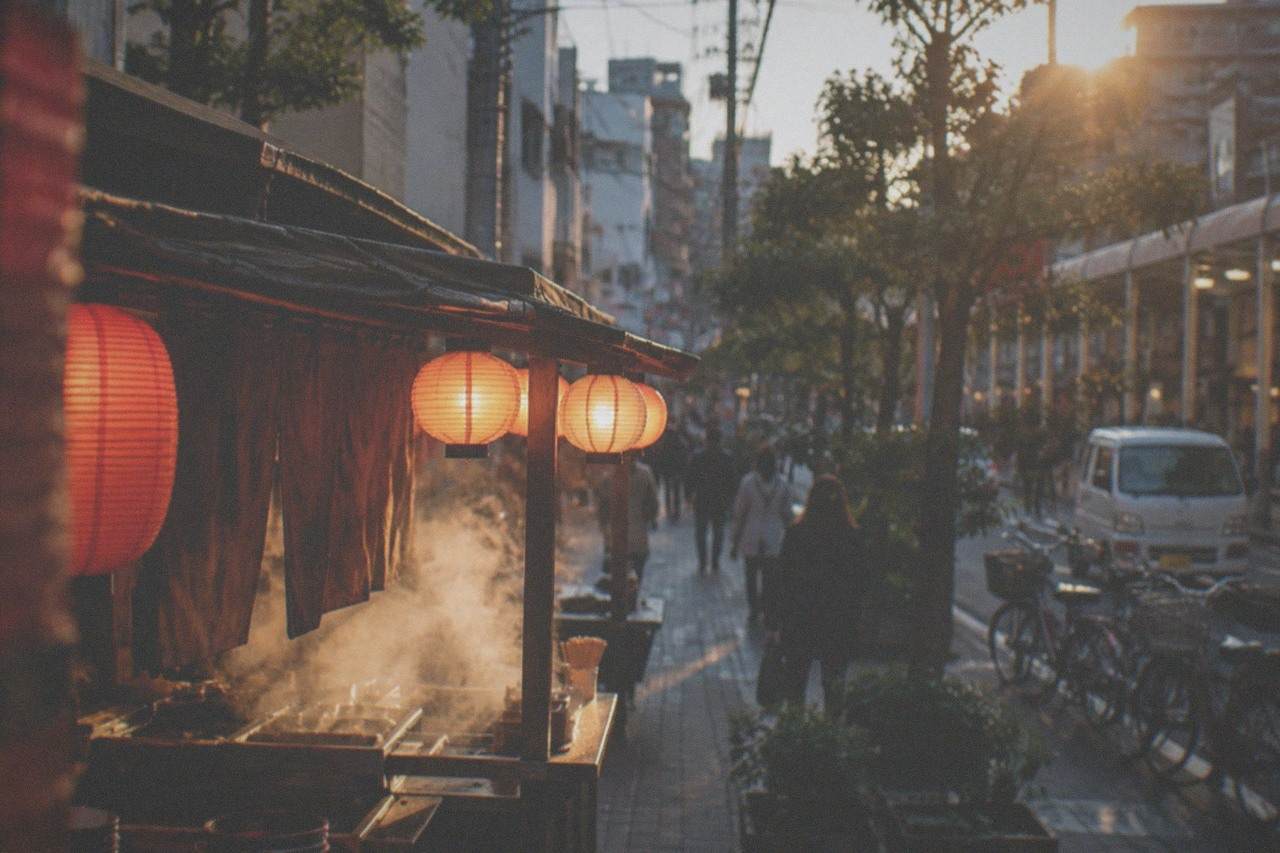
Short answer
Most Fukuoka yatai still prefer cash, though some now take cards and QR payments, so carry yen for stalls. The subway, malls and museums take cards and IC cards easily, while Uminonakamichi Seaside Park's gate is cash only. A one-day subway pass costs ¥640 and single fares run ¥210 to ¥380.
Fukuoka handles money better than almost any city its size in Japan. The subway takes IC cards and contactless credit taps, the malls take everything, and the museums charge so little that a handful of coins covers a whole afternoon. The friction lives at the edges: the yatai food stalls that made the city famous, one large seaside park whose gate refuses anything but notes, and the small difference between what a stall says it accepts and what its card reader does on a rainy Tuesday. This guide walks through where cash still matters, how much of it to carry, and how the city's transit passes and payment rules actually work, with the verified figures only.
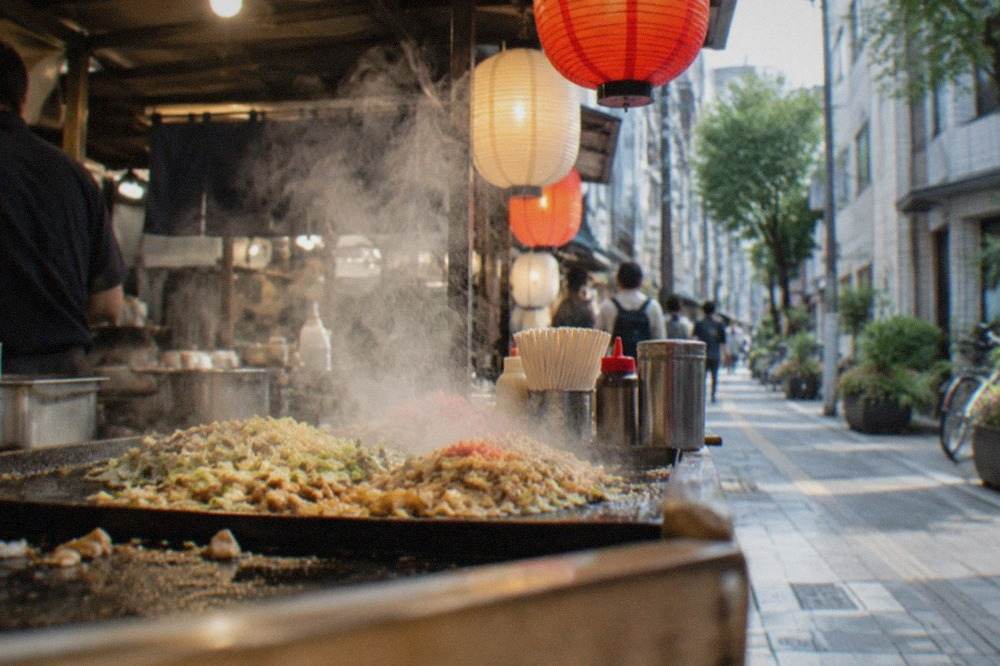
Do Yatai Stalls in Fukuoka Take Cards?
Mostly no, but increasingly some do. The roughly 100 licensed stalls across Nakasu, Tenjin and Nagahama grew up as cash businesses, and many still are, so you should assume a yatai wants yen until you see a card reader or a QR sign on the counter. A growing number of stalls now accept cards and QR payment through tablet-based systems, but acceptance varies stall to stall rather than area to area.
The honest answer is that there is no city-wide rule. Fukuoka City licenses the stalls and regulates how they price, but it does not mandate or publish which payment methods each one takes. What the city does publish, on its official yatai Q&A page, is the count, about 100 stalls, and the rule that matters most to a nervous first-timer: the ordinance requires every stall to display its prices where customers can easily see them. A dish priced by the day's market cost must show that day's actual price, not a vague "market price" tag. City inspectors check periodically. So the fear that a stall will quietly charge a tourist whatever it likes is the exact opposite of how the system is designed: the price is on the wall before you sit down.
That is the part most overseas guides get backwards. They warn readers about opaque pricing at the stalls when the ordinance exists precisely to prevent it. What they usually get right is the cash advice. A stall is a cart with limited power, a till that is often a drawer, and a queue of people who want to eat and leave. Cards slow that down. The practical move is to carry enough yen for a full evening at the stalls and treat card or QR acceptance as a pleasant surprise rather than a plan.
If you want the stalls without the ordering anxiety, a guided crawl solves it. The Nakasu food stall tour with tastings walks the riverside row with a local guide who handles the menu, the seating etiquette and the bill, and this site's full Fukuoka yatai guide covers the three districts and how they differ. For the mechanics of sitting, ordering and leaving gracefully, read the yatai etiquette guide before your first night.
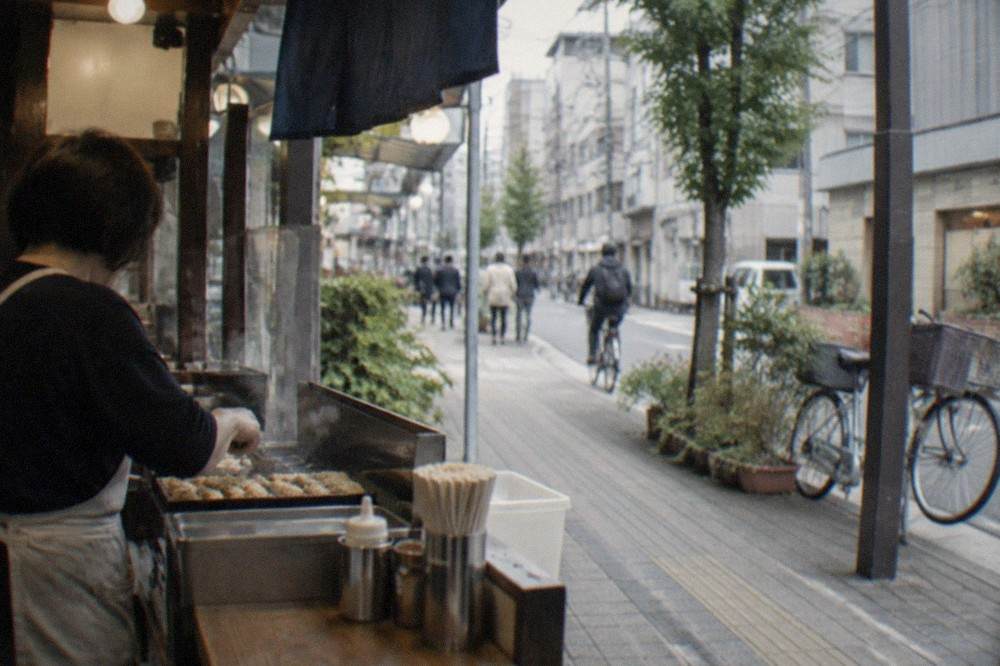
How Much Cash Should You Carry in Fukuoka?
Carry enough yen to cover a night at the yatai, a shrine visit and a transit top-up, roughly a few thousand yen per person for an evening and more if you plan a market morning or a park gate. The city's transit is cheap, single subway fares run ¥210 to ¥380, so the real cash sinks are food stalls, small temples' offering boxes and the odd cash-only gate.
Transit sets the floor of your budget and it is genuinely small. Fukuoka City Subway charges by distance, from ¥210 for a hop of up to 3 km to ¥380 for the longest rides, with child fares at half. The official fare table on the subway's own site breaks the six zones down, and the numbers below are the ones you will actually pay.
| Zone | Distance | Adult fare | Child fare |
|---|---|---|---|
| 1 | up to 3 km | ¥210 | ¥110 |
| 2 | 3 to 7 km | ¥260 | ¥130 |
| 3 | 7 to 11 km | ¥300 | ¥150 |
| 4 | 11 to 15 km | ¥340 | ¥170 |
| 5 | 15 to 19 km | ¥360 | ¥180 |
| 6 | over 19 km | ¥380 | ¥190 |
The airport ride is the one every visitor takes, and the verified figure is ¥260: the airport-to-Hakata leg sits in the official 3 to 7 km band. The airport is unusually close to the city centre, which is true and sourced, though the famous journey time in minutes that every competitor prints is not verified on any official page, so this guide does not print it either. Note also that the station is Hakata, not "Fukuoka Station", which does not exist on JR, and that Hakata and Fukuoka are the same city: Hakata is the ward and the station name. The airport-to-city guide covers the transfer options in full.
Beyond transit, budget cash for three things. First, the stalls: the city publishes no average spend per person, and any guide that quotes one is guessing, but a meal with drinks at a yatai is a modest, casual outlay and the posted menu tells you the damage before you commit. Second, small offerings and temple grounds: Tochoji, Shofukuji and Kushida Shrine are free to enter, but a coin for an offering or a fortune slip is a cash moment. Third, the cash-only gates covered in the next section. A reasonable working rule is a few thousand yen in your pocket at all times and a larger withdrawal reserved for market mornings and festival days. The Fukuoka trip cost guide puts the whole budget in context.
Which Fukuoka Sights Are Cash Only?
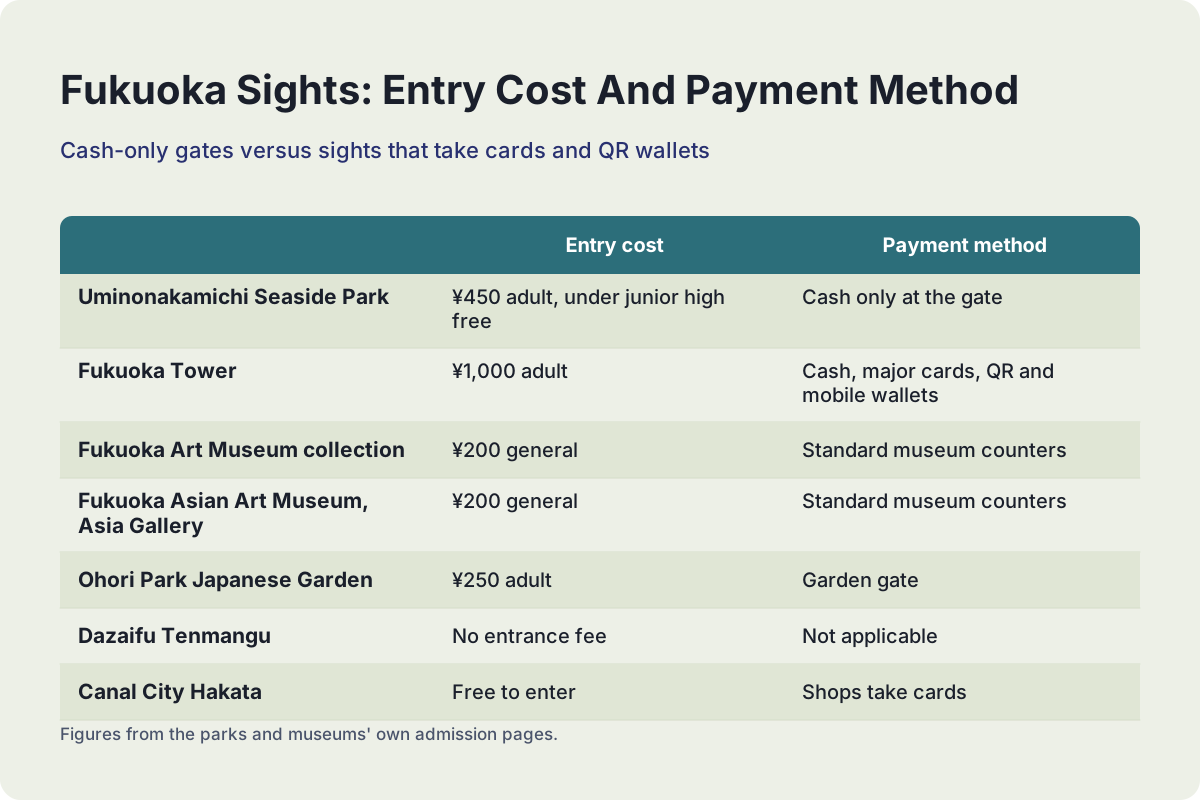
One major sight is officially cash only at the gate: Uminonakamichi Seaside Park states on its own site that entry fees at the park gate are paid in cash, nothing else. The yatai are mostly cash by practice rather than rule. Everywhere else on the usual itinerary, the museums, the tower, the malls and the shrines, takes cards or charges so little that payment method barely matters.
The Uminonakamichi rule is worth stating plainly because almost no overseas guide mentions it, and it catches people who arrive by ferry or bike with nothing but a card. The park's own admission page says it in so many words: payment at the gate is cash only. Entry costs ¥450 for adults, with junior high school age and under free, and the park closes on selected Tuesdays that shift by season, so check the official calendar before you go. The Uminonakamichi guide has the full hours and access detail.
The rest of the list is friendlier than you might expect. Fukuoka Tower, at ¥1,000 for adults, takes cash, the major card networks and a long list of QR and mobile wallets, so the observation deck is not a cash problem. The city's two art museums charge just ¥200 general admission for their collections, free for under-15s, and the Asian Art Museum's building is free to enter with only the Asia Gallery charging. Canal City Hakata is a mall: everything works there. Dazaifu Tenmangu has no entrance fee at all.
| Sight | Entry cost | Payment at the point of sale |
|---|---|---|
| Uminonakamichi Seaside Park | ¥450 adult, under junior high free | Cash only at the gate |
| Fukuoka Tower | ¥1,000 adult | Cash, major cards, QR and mobile wallets |
| Fukuoka Art Museum collection | ¥200 general | Standard museum counters |
| Fukuoka Asian Art Museum, Asia Gallery | ¥200 general | Standard museum counters |
| Ohori Park Japanese Garden | ¥250 adult | Garden gate |
| Dazaifu Tenmangu | No entrance fee | Not applicable |
| Canal City Hakata | Free to enter | Shops take cards |
The pattern to notice: the expensive things in Fukuoka are not the sights, they are the food, the day trips and the nights out. The free things to do guide stretches a budget further than most cities allow, and the souvenirs guide covers what is worth buying and where, which is where cards come in handy for the larger purchases.
If a full day out is on your plan rather than a city afternoon, the day trips into Kyushu are where a prepaid tour earns its keep, since the ticket, the transport and often a meal are settled before you leave. The evening version of the same logic applies in the city: the evening yatai, izakaya and karaoke tour bundles a night of stalls and small venues into one payment made from your phone, no yen counting required.
The same reasoning works on the food-stall side of the evening, and it is where a guided option pays for itself fastest. A private crawl through the Nakasu stalls with tastings included means the ordering, the etiquette and the settling of the bill happen through a guide rather than through your own pocket change, and the stalls themselves still cannot be booked any other way. The tour is listed on the operator's live listing with free cancellation on most bookings.
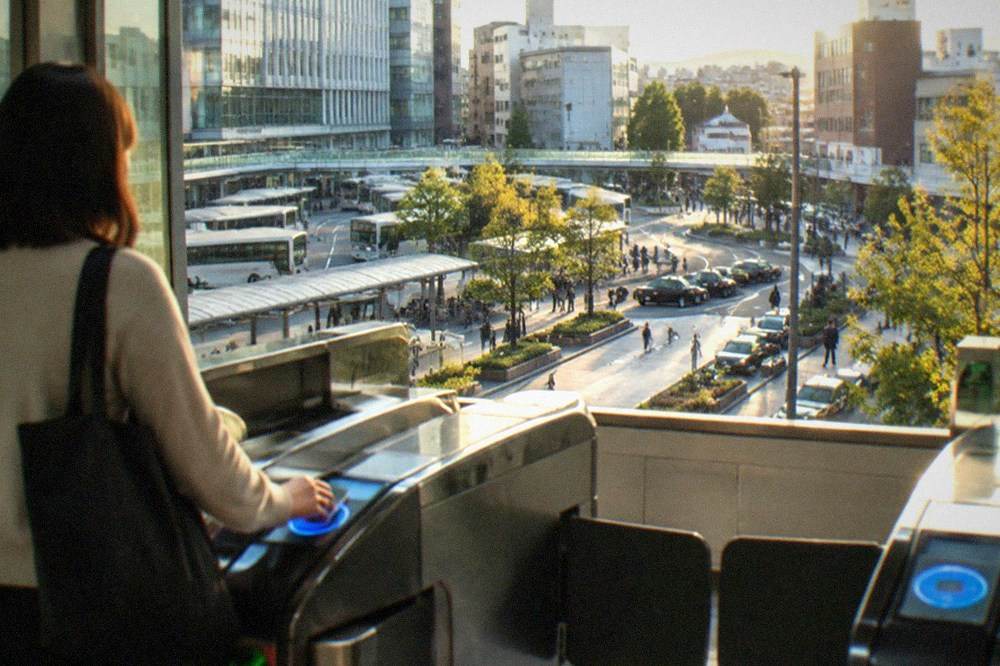
Do Fukuoka's Trains, Buses and Passes Take Cards?
Yes, with one important exception at the counter. The subway and Nishitetsu trains and buses take IC cards widely, and the subway's own one-day pass is a paper ticket bought with cash or card at a machine. The exception is the Fukuoka Tourist City Pass, the best-value visitor ticket, which is restricted to overseas tourists on short-stay visas and requires a passport check at the counter.
Start with the day passes, because they are where the savings are. The subway's one-day pass costs ¥640 for adults, ¥320 for children, covers all three lines from first train to last, and is sold at station machines, customer service centres and the international tourist information offices at Tenjin, Hakata Station and the airport. Three or more subway rides in a day and it has paid for itself. Nishitetsu's bus day pass is ¥1,200 for adults and covers the city's local buses, with cheaper digital versions available.
The big one is the Fukuoka Tourist City Pass, and this is where this site can save you actual money, because most competing guides still quote prices from years ago. The current verified figures are ¥2,500 for the Fukuoka City version and ¥2,800 for the City + Dazaifu version, with children at half. It buys one day of unlimited subway, bus, train and ferry rides plus attraction discounts. The catch that matters: it is sold only to overseas visitors on short-stay visas, and the passport is checked at the counter on the city's official pass page. The digital app version is currently restricted to visitors from South Korea, Taiwan and Thailand; everyone else buys paper at the Tenjin or Hakata bus terminals, the airport, or the subway customer centres.
| Pass | Price | What it covers | Who can buy it |
|---|---|---|---|
| Subway 1-day pass | ¥640 adult, ¥320 child | All three subway lines, one day | Anyone |
| Nishitetsu bus day pass | ¥1,200 adult, ¥600 child | City local buses, one day | Anyone |
| Tourist City Pass, city | ¥2,500 adult, ¥1,250 child | Subway, buses, trains, ferries, discounts | Overseas tourists, passport checked |
| Tourist City Pass, city + Dazaifu | ¥2,800 adult, ¥1,400 child | Above plus Nishitetsu to Dazaifu | Overseas tourists, passport checked |
For everything else, an IC card is the answer. Fukuoka's local cards are Hayakaken for the subway, nimoca for Nishitetsu and SUGOCA for JR, and cards from elsewhere in Japan such as Suica and ICOCA are widely reported to work on the subway and Nishitetsu alike, though this site has not verified that on an operator page, so treat it as very likely rather than guaranteed. Contactless credit card tap-to-ride is also in use on the subway. The Fukuoka subway guide and the wider getting around Fukuoka guide cover the lines, the stations and the transfer logic in detail.
Where Can You Withdraw Yen in Fukuoka?
Everywhere in the practical sense: the airport, the big stations and the convenience stores that sit on every second corner all host ATMs that accept foreign cards, and the machines walk you through the transaction in English. The two things that actually trip visitors up are machine cut-off times late at night and daily withdrawal limits set by your home bank, not by the machine.
The standard advice for Japan holds for Fukuoka, and it works. Convenience store ATMs are the backbone: the stores are open around the clock, the machines handle English menus, and they accept the major international card networks. Post office ATMs are the other reliable option, with the caveat that the counter hours differ from the machine hours at some branches. Airport machines give you yen the moment you land, at a worse effective rate than a city machine, which is the normal trade-off everywhere in the world and worth making once for the train fare into town. More of these guides are collected on Fukuoka Japan Travel Guide.
Two Fukuoka-specific notes. First, the airport is inside the city, on the subway's Kuko line, so you do not need a large withdrawal on arrival to survive a long transfer: ¥260 gets you to Hakata, and the machines in town are better. The Fukuoka airport guide covers the terminals and the connections. Second, plan your withdrawal before a yatai evening rather than during it, because the stalls cluster along the river and the business streets, not in ATM lobbies, and a mid-crawl search for a machine is the one genuinely annoying cash situation the city offers.
Beyond the stalls, cash needs are small and predictable. The Hakata station guide points to the exchange counters and machines around the city's main rail hub, and the where to stay guide helps you pick a district where a convenience store is always a minute away.
Do Shops and Restaurants in Fukuoka Take Cards?
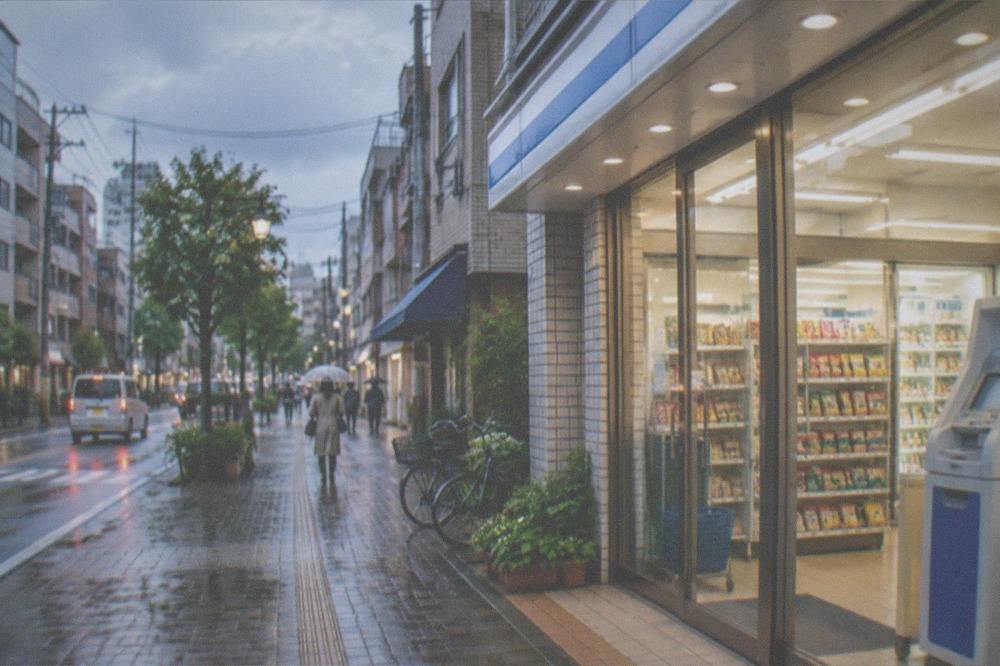
Yes, overwhelmingly. The department stores, the malls, the chain restaurants, the electronics shops and the convenience stores all take cards and mobile wallets without hesitation, and the smaller the shop the more likely cash becomes the easier option. Fukuoka's shopping districts are modern and card-friendly; its street food and market culture is where paper yen still moves fastest.
Canal City Hakata, the canal-side mall complex, is open every day of the year with shops from 10:00 to 21:00 and restaurants to 23:00, and everything in it takes cards. The Tenjin department stores and the underground mall are the same. At the other end of the scale, Yanagibashi market and the independent shops of the old Hakata streets are cash-first territory in the way markets everywhere are, and the Fukuoka markets guide and Hakata old town guide cover those districts properly.
Restaurants follow size. Chain izakaya and ramen shops increasingly take cards and QR; a six-seat counter with one cook takes cash and is happier for it. The Fukuoka food guide sorts the city's eating by dish and district, and the izakaya guide does the same for the evening. If you are eating your way through the Nakasu stalls specifically, the Nakasu food stall private tour with tastings turns the cash-and-ordering question into somebody else's problem for two hours, with a guide who knows which stall is worth which coin.
One habit worth building: keep a small reserve of coins. Shrine offering boxes, temple fortune slips, locker fees and the smallest yatai dishes all run on coins, and Japan's coinage is generous with them. A coin purse is the single most useful money accessory in the country.
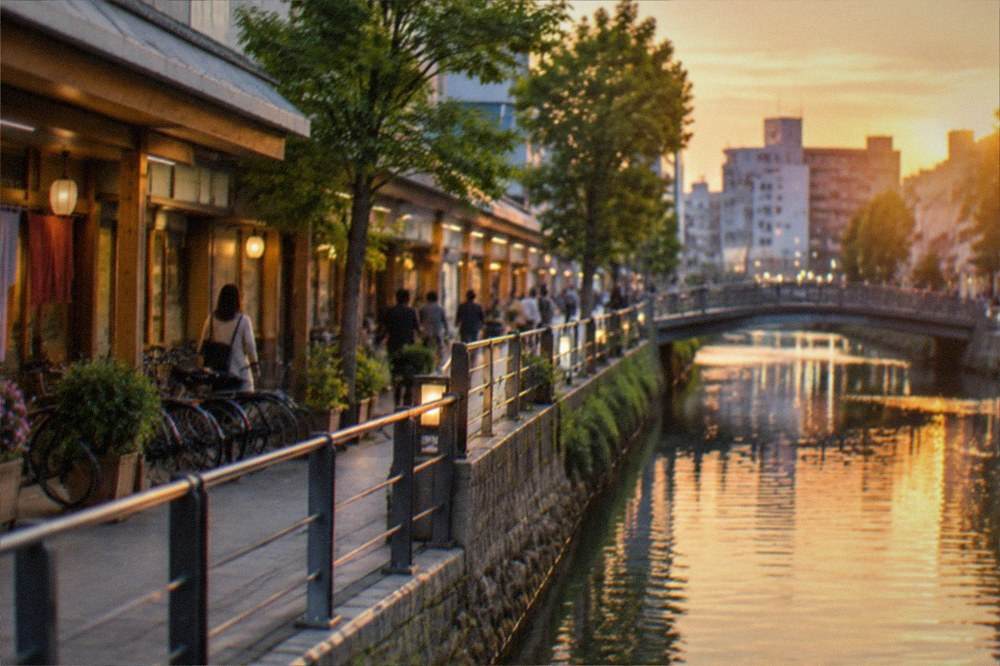
Does the Season Change Your Cash Needs?
Yes, in one specific way: summer and festival days push your cash needs up, because the events that define Fukuoka's calendar, the yatai at their busiest, the festival stall rows and the park gates, are exactly the places where cards move slowest. July is also the city's wettest month, which closes stalls and reshapes evenings at short notice.
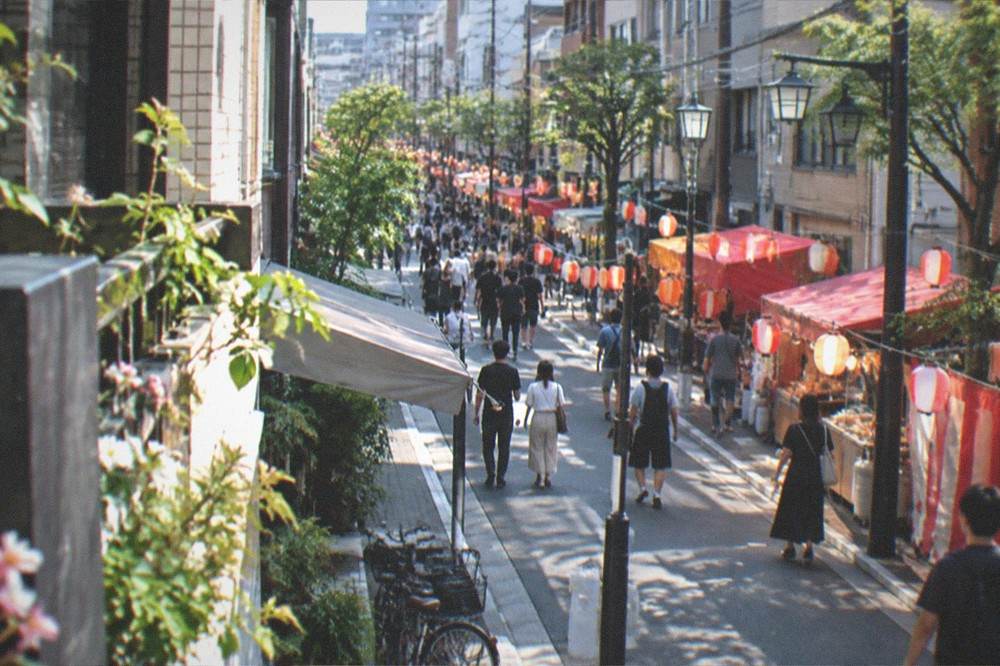
The calendar matters more here than in most cities. Hakata Dontaku fills Meiji-dori with parades in early May, Hakata Gion Yamakasa takes over Hakata for the first half of July, and Hojoya lines the Hakozakigu approach with hundreds of food and game stalls in mid-September. All three are free to watch, and all three are cash economies at the street level: the food stalls, the games and the drinks along the festival rows want yen. Withdraw before you go, because the queues at convenience store machines near a festival are the longest in the city.
The weather angle is one most guides miss entirely. The Japan Meteorological Agency's 1991 to 2020 normals show July as Fukuoka's wettest month, 299.1 mm of rain against June's 249.6 mm, even though June carries the tsuyu rainy-season reputation. Rain closes yatai: stalls are open-air carts, and a wet night empties the rows. That cuts both ways for your wallet, since a rained-off stall evening is a night you spend in an izakaya or a mall, where cards work fine. Typhoon season runs roughly July through October and is a real planning factor, though it is a reason to check forecasts, not a reason to avoid the city. The best time to visit guide and the weather guide put the whole year in order.
If a typhoon-adjacent forecast scatters your plans, a private guide can reroute a day around indoor museums and covered arcades faster than you can rebuild an itinerary alone. The fully customizable private tour with a local guide is built for exactly that kind of pivot.
A Sample Cash Plan for Three Days
Withdraw once, carry moderately, and top up only if you head to the parks or the stalls. A workable pattern for a three-day visit is a comfortable withdrawal on day one, the ¥640 subway day pass on your heaviest transit day, the Tourist City Pass if you hold an overseas passport, and a cash reserve held back for one yatai evening and one festival or market morning.
Day one, arrival: the airport machines give you enough for the ¥260 subway ride and the first evening, then a larger withdrawal at a station or convenience store machine once you are settled. Day two, city sights: the subway day pass covers Ohori Park, the museums and Momochi, all of which take cards at the counter, so cash stays in your pocket. Day three, Dazaifu or the coast: the Tourist City Pass at ¥2,800 covers the Nishitetsu run to Dazaifu if you hold the right passport, or the Itoshima and Nokonoshima options need a cash reserve for gates and snacks. The day trips from Fukuoka guide lays out the options by direction and duration.
| Day | Plan | Cash needed | Card-friendly portion |
|---|---|---|---|
| Arrival day | Airport to Hakata, first evening meal | ¥260 fare plus dinner money | Station shops, restaurants |
| City day | Subway pass, museums, Ohori Park | Coins for garden and offerings | Museums, tower, mall |
| Dazaifu or coast day | Tourist City Pass or regional train | Gate fees, snacks, shrine stalls | Trains, larger restaurants |
| Yatai evening | Nakasu or Tenjin stalls | Full evening budget in yen | Nothing at the stall, cards nearby |
The one line worth repeating: Fukuoka rewards a modest cash habit, not a cash-only one. The city's payment infrastructure is modern, and the stalls are the exception you plan around rather than the rule you suffer under. Carry yen for the carts and the gates, tap everything else, and check the posted price board at the stall, because the ordinance guarantees it is there.
Common Questions About Money in Fukuoka
Do Yatai Stalls In Fukuoka Take Cards?
Mostly cash, with a growing minority taking cards and QR payments. Acceptance varies stall to stall, so carry yen for any yatai evening and treat a card reader as a bonus. The stalls take walk-ins and cannot be booked, and every stall must post its prices visibly under the city ordinance.
How much cash should I carry per day in Fukuoka?
Enough for a meal at the stalls plus transit and small offerings, with a reserve for the cash-only gates. Subway fares run ¥210 to ¥380, so transit is a small part of the budget. The city's sights are cheap or free, which keeps daily cash needs lower than in most Japanese cities.
Can I use a Suica or ICOCA card in Fukuoka?
Widely reported to work on the Fukuoka City Subway and Nishitetsu, alongside the local Hayakaken, nimoca and SUGOCA cards. This site has not verified the interoperability on an operator page, so carry a backup payment, but in practice an IC card from elsewhere in Japan is very likely to work on the city's transit.
Is the Fukuoka Tourist City Pass worth it?
Often yes for overseas visitors, at ¥2,500 for the city version and ¥2,800 with Dazaifu, covering a day of unlimited subway, bus, train and ferry rides plus attraction discounts. It requires a short-stay visa and a passport check at the counter, and the digital version is currently limited to visitors from South Korea, Taiwan and Thailand.
Where should I exchange money in Fukuoka?
Convenience store and post office ATMs generally beat airport counters on rate, and the airport's advantage is only convenience. Since the airport sits inside the city on the subway's Kuko line, a small arrival withdrawal followed by a better one in town is the sensible pattern.