Is 4 Days in Fukuoka Too Much?
Four days is not too much for Fukuoka: it is the sweet spot that covers the city's shrines, food stalls and waterfront plus one full day trip into Kyushu.
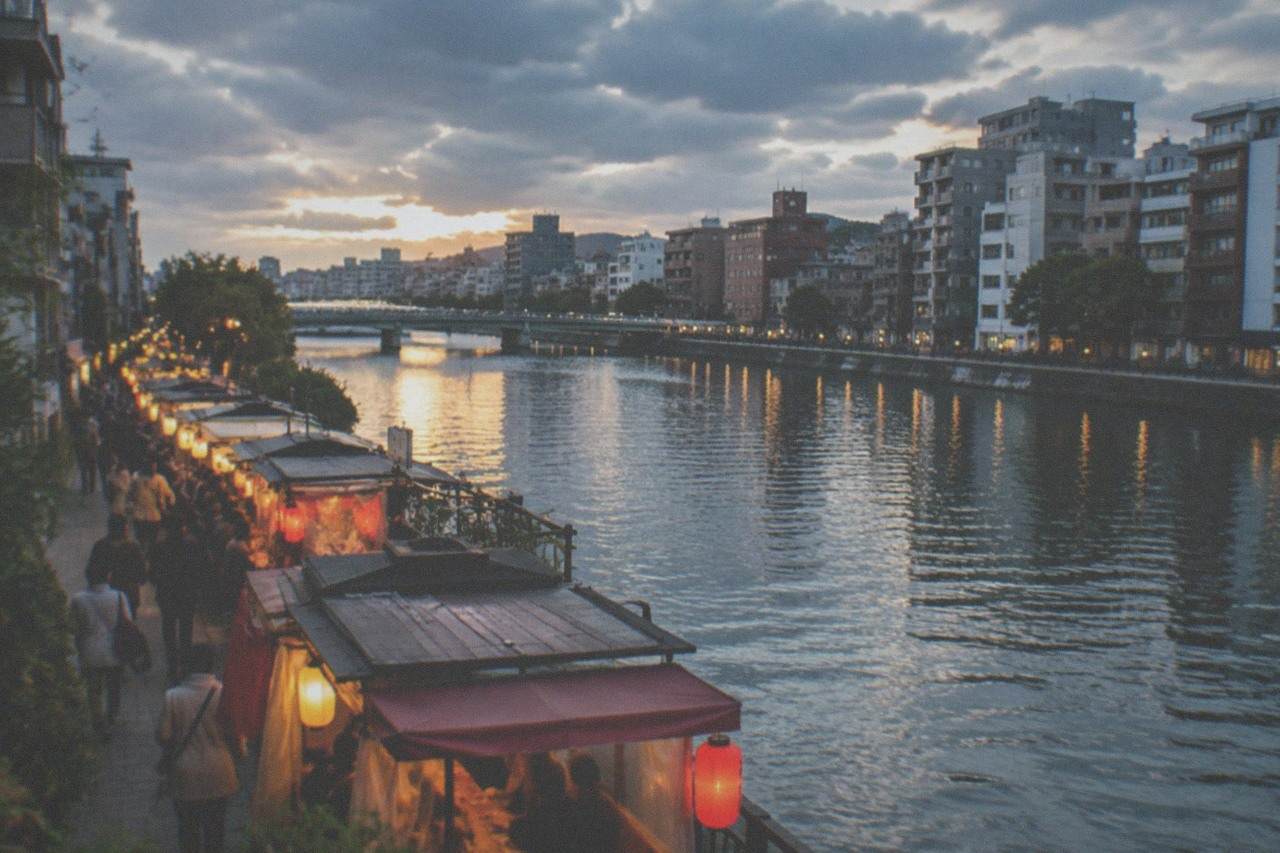
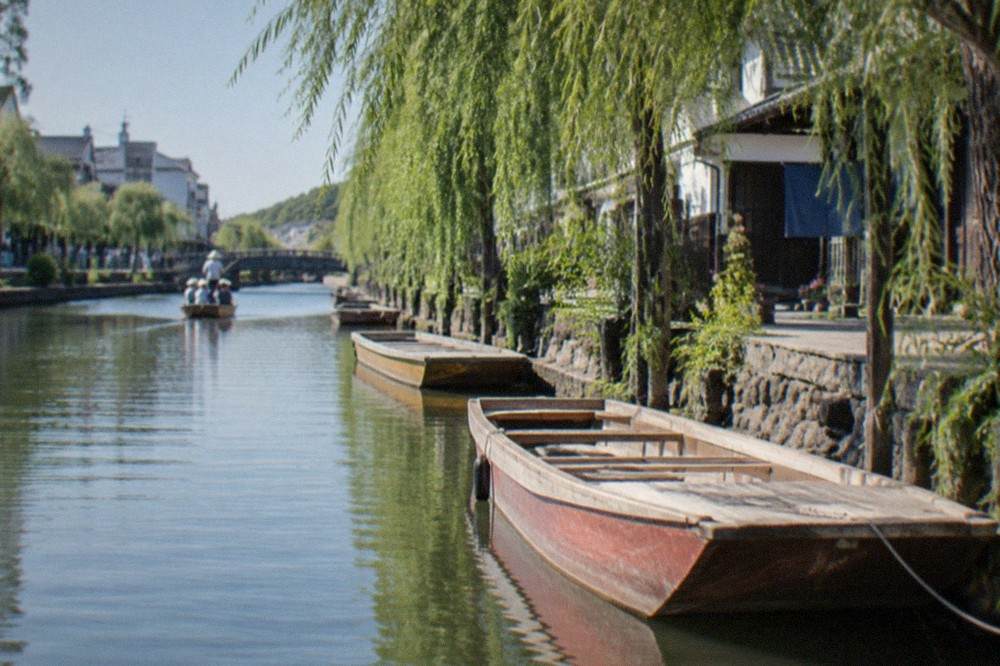
Four days lands almost exactly on the right number for Fukuoka. The city is compact, the subway is cheap, and the food scene rewards repeat visits rather than a single rushed sweep, but the real argument for a fourth day sits outside the city limits: Dazaifu, Yanagawa, Itoshima and the wider Kyushu region are all easy returns from Hakata Station. The question is not whether four days is too much, it is how to spend day four so it does not feel like a rerun of day two.
Is 4 Days in Fukuoka Too Much?
No, four days is not too much for Fukuoka, and for most travellers it is the ideal length. Two days cover the core sights: Kushida Shrine, Ohori Park, the castle ruins, Canal City and the yatai stalls of Nakasu and Tenjin. A third day belongs to a day trip such as Dazaifu or Yanagawa. The fourth day is where the itinerary gets interesting rather than padded, because Fukuoka's location on northern Kyushu puts hot springs, gorges and coastal scenery within a single day's return.
The reason four days works so well here is density. Fukuoka is Japan's fifth largest city by population yet its core districts, Hakata, Tenjin, Nakasu and Ohori, sit within a few kilometres of each other on Hakata Bay. A single subway fare runs from ¥210 for the shortest hops up to ¥380 for the longest, and the official fare table keeps the whole network affordable. You do not lose half a day to commuting the way you can in Tokyo or Osaka.
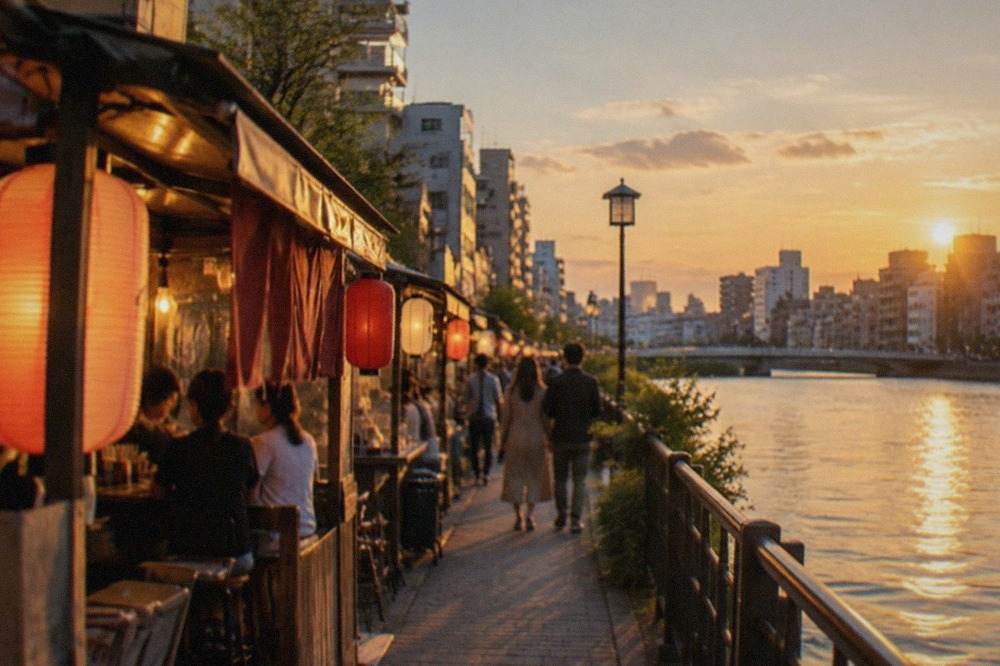
There is a second reason the fourth day never feels wasted: the food. Fukuoka is the home of tonkotsu ramen, motsunabe and mentaiko, and the roughly 100 licensed yatai stalls that anchor the city's nightlife are best spread across several evenings rather than crammed into one. A city ordinance requires every stall to display its prices clearly, so there is no guessing game, but there is also no way to eat your way through Nakasu, Tenjin and Nagahama in a single night.
If you are still weighing the number of days, the deeper comparison lives in how many days in Fukuoka is enough, which breaks down the two-day and three-day cases in detail. The short version: two days is a real city break, three days adds one excursion, and four days is the first length at which you stop choosing.
How Would You Split Four Days in the City?
A proven four-day split runs like this: day one for Hakata's temples, shrines and the yatai stalls; day two for Ohori Park, the castle ruins, the art museums and Tenjin; day three for a full-day excursion such as Dazaifu combined with Yanagawa; and day four for either a second day trip into Kyushu or a slower city day covering the Momochi waterfront, Marine World or a festival date. The split works because each day has a geographic centre, so you never criss-cross the city twice.
The first two days follow the city's grain. Hakata is the historic merchant ward and the station district, and it holds Tochoji with its Great Buddha, Shofukuji, Kushida Shrine and the Hakata Machiya Folk Museum, all within a walkable grid. Tenjin and Ohori, one subway stop or a fifteen minute walk further west, carry the castle ruins, the park, both city art museums and the shopping core. Treating these as two separate days rather than one frantic circuit is what separates a good trip from a checklist.
| Day | Base | What it covers | Pace |
|---|---|---|---|
| Day 1 | Hakata | Tochoji, Shofukuji, Kushida Shrine, Canal City, evening yatai | Walkable, flat |
| Day 2 | Tenjin and Ohori | Ohori Park, castle ruins, art museums, Daimyo and Tenjin shopping | Subway and foot |
| Day 3 | Day trip | Dazaifu Tenmangu, Komyozenji, optionally Yanagawa river boats | Nishitetsu trains |
| Day 4 | Open | A Kyushu excursion, the Momochi coast, or sumo in November | Flexible |
The ready-made version of this structure is the Fukuoka 4 day itinerary, which walks through each day stop by stop. If you would rather compress the city and spend more nights elsewhere in Kyushu, the Fukuoka 3 day itinerary shows what to cut, and it is usually the museum half-day on day two.
For travellers who like structure at the decision level rather than the hour level, the Fukuoka itinerary planner is the better tool: it matches day counts to interests, season and arrival time, which matters more in Fukuoka than in most Japanese cities because the day-trip menu is so large.
What Should Day Four Actually Be?
Day four should be one of three things: a second day trip into Kyushu, a sumo tournament date if you are visiting in November, or a slow coastal day on Momochi and Uminonakamichi. The strongest single option is Takachiho Gorge, roughly eleven hours round trip by guided tour from $48 per person, because it reaches scenery the city itself cannot match. In November, the sumo option wins outright, since the Kyushu Basho is the only tournament of the year staged in Fukuoka.
The day-trip case is the one most visitors underuse. From Hakata, Dazaifu, Yanagawa, Itoshima, Nokonoshima, Karatsu, Mojiko and Kitakyushu are half-day or easy full-day returns, while Yufuin, Beppu, Mount Aso, Takachiho, Kumamoto and Nagasaki work as full days. A four-day trip lets you take two of these without sacrificing the city. The Takachiho Gorge and Amaterasu Railway tour, rated 4.8 from 713 reviews, is the most-booked long excursion on the roster, and the gorge's columnar cliffs and boat ride are a genuine contrast to Fukuoka's urban bay. Everything else covered here is indexed on Fukuoka Japan Travel Guide.
The sumo case is seasonal but decisive. The November Kyushu Grand Sumo Tournament is staged in Fukuoka and it is the only month of the year top-division sumo is competitively contested here. The 2026 Kyushu Grand Sumo Tournament Viewing Tour runs about four hours from $87 per person and is rated 4.8 from 13 reviews; it pairs arena seating with a guide who explains the bouts, which matters because sumo's ritual structure is hard to decode cold.
Outside November, morning sumo practice viewing is the alternative, and the city's evening layer, the yatai, the Nakasu lights and the izakaya rows, can be bought as a guided evening rather than navigated alone. The Experience Fukuoka's Night Views & Local Life tour runs about four hours from $100 per person and is a new listing with no published rating yet, which is worth knowing before you book.
When Would Four Days Feel Like Too Many?
Four days only feels like too many in two situations: if you have no interest in day trips and only want the city core, or if you are visiting in a flat stretch of weather with nothing seasonal on. In the first case, three days is the honest answer. In the second, the fix is to move on to Nagasaki, Kumamoto or Beppu rather than to linger. For a traveller who will take at least one excursion, four days is not too many, it is the correct number.
The no-day-trip traveller is real. Fukuoka's city core is genuinely a two-day proposition, and a third day of museums and shopping fills easily. If day four would be a second lap of Tenjin, cut it. The comparison pages make this trade-off explicit: is 3 days enough for Fukuoka argues the compact case, and is 2 days enough in Fukuoka shows how little you lose on a tight weekend. Both are honest options, because the subway keeps everything close.
The seasonal traveller has the opposite problem. Fukuoka's calendar is unusually dense for a city its size, and a four-day stay that overlaps a festival changes the arithmetic entirely. July is the month to know about: it is Fukuoka's wettest, 299.1 mm against June's 249.6 mm in the Japan Meteorological Agency's 1991 to 2020 normals, which surprises visitors who assume the rainy season owns June. But July is also Hakata Gion Yamakasa month, with the Oiyama float race run on July 15 starting before 5 a.m. A fourth day that catches that is worth more than any excursion.
That pass is the one transport decision a four-day traveller should make early. It covers subway, buses, trains and ferries for a day, and the official city pass page lists the eligibility rules, which most competing guides still get wrong by quoting prices years out of date. For a day built around Dazaifu it pays for itself; for a day of walking Hakata it does not.
Is Four Days the Right Number Compared with Five?
For most first-time visitors, four days beats five, because the fifth day pushes past Fukuoka's natural content and into repetition unless you commit to two long day trips. Five days is the right number only for travellers who want both a Kyushu excursion and a second one, or who are visiting across a festival week and want slack in the schedule. Anyone torn between the two should take four days in the city and spend the fifth night somewhere else in Kyushu.
The five-day case is real but narrow. The Fukuoka 5 day itinerary exists for a reason: it adds a second full excursion, usually Beppu and Yufuin, or a deeper Itoshima coast day. That works if slow travel is the goal. What it rarely adds is a fifth day of city content, because Fukuoka's core does not stretch that far without repeating districts.
The honest framing is that four days in Fukuoka plus nights in Nagasaki, Kumamoto or Beppu is a better nine-day Kyushu trip than nine days in Fukuoka. The city is a superb base and a modest destination in itself, which is exactly why the fourth day, spent outward, is what makes the length feel right rather than excessive.
Common Questions About 4 Days in Fukuoka
Is 4 Days In Fukuoka Too Much?
No. Four days is the sweet spot: two for the city, one for a day trip such as Dazaifu or Yanagawa, and a fourth for a second excursion, the Momochi coast, or sumo in November. It only feels like too many if you refuse all day trips, in which case three days is enough.
Can You See Fukuoka In 2 Days?
Yes. Hakata's temples and shrines, Ohori Park, the castle ruins, Canal City and one yatai evening fit into two full days. What you lose is every excursion: Dazaifu, Yanagawa and the Kyushu interior all need a third day.
What Is The Best Day Trip To Add On Day Three Or Four?
Dazaifu Tenmangu is the easiest and most popular, reachable by Nishitetsu train from Tenjin. For scenery, Takachiho Gorge and the Beppu and Yufuin onsen towns are the strongest full-day options, all reachable from Hakata without an overnight.
Is Fukuoka Expensive For A Four-Day Trip?
It is one of Japan's more affordable major cities. Subway single fares run ¥210 to ¥380, the subway day pass is ¥640, and the city's yatai stalls offer full evening meals at street-food prices with posted menus required by city ordinance. Accommodation and food cost less than Tokyo equivalents.
Do You Need A Car For Four Days In Fukuoka?
No. The subway, Nishitetsu trains and JR lines cover the city and every major day trip. A car only helps for scattered rural stops in Itoshima or the Itoshima coast, and even there guided coastal tours run from the city.